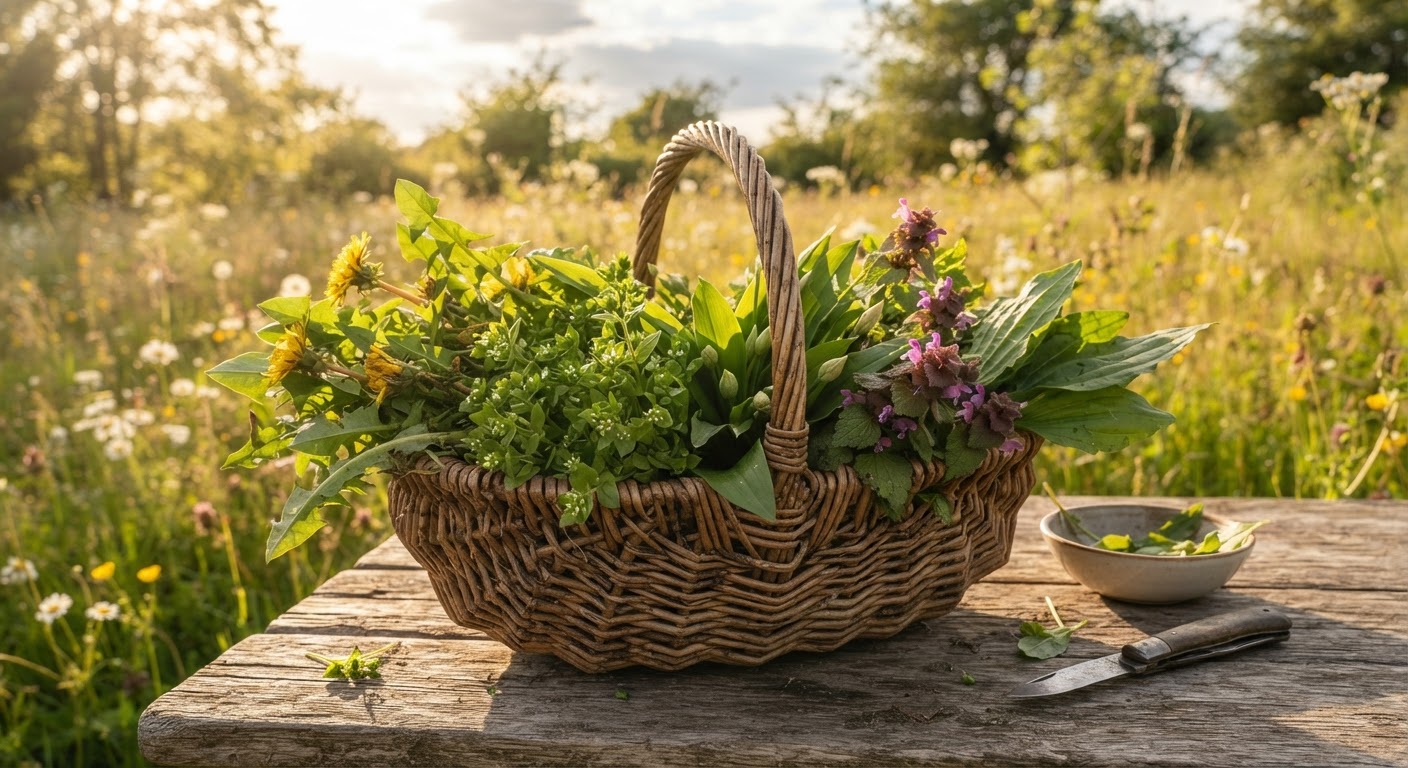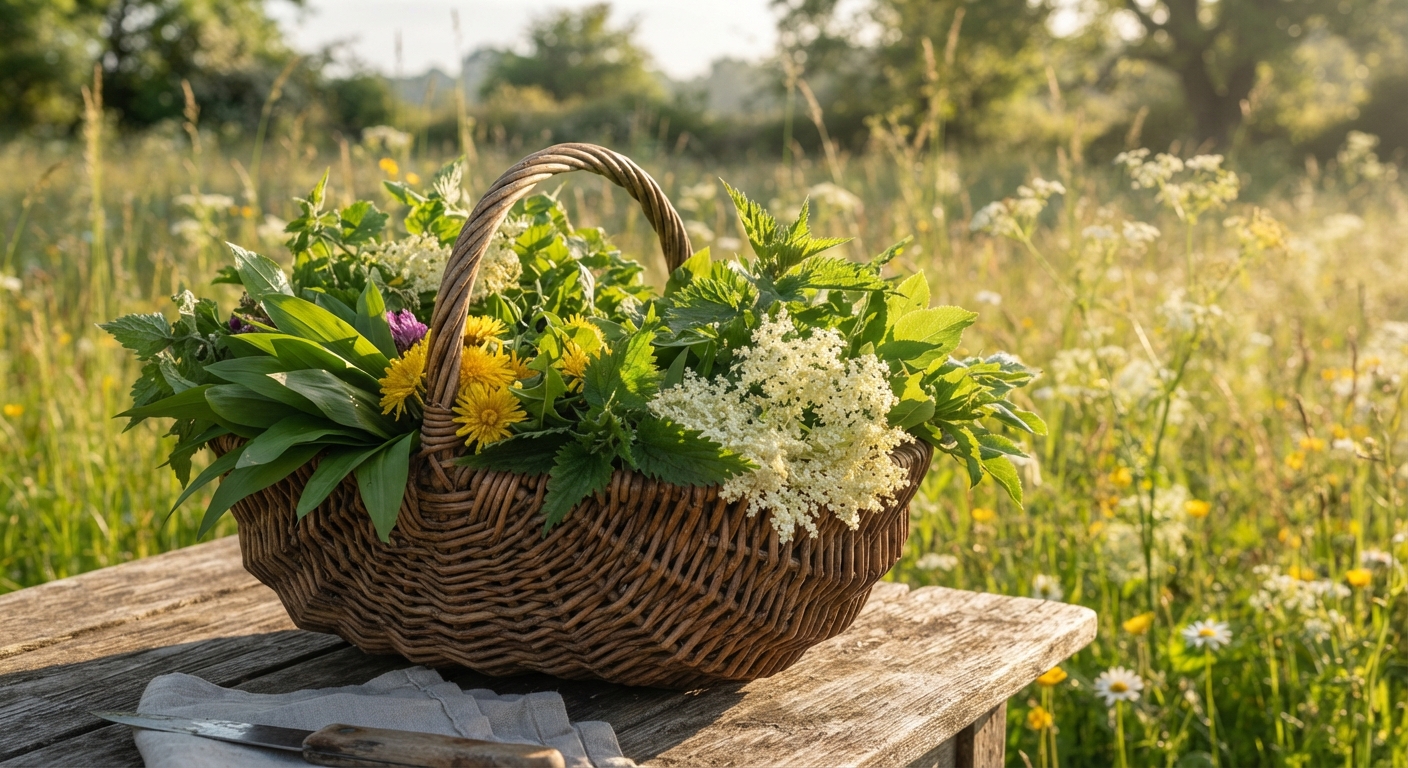
I once watched a beginner walk a trail holding a printed “top 50 edible wild plants” list they’d downloaded the night before. Forty minutes later they were convinced a buttercup was wood sorrel. They didn’t get sick — I caught it — but that afternoon taught me something I’ve never unlearned: a list of edible wild plants is only as safe as the process that built it.
The internet is stuffed with lists. Fifty plants here, thirty there, all arranged by a stranger who doesn’t know your climate, your soil, your local lookalikes, or your eyes. Some of those lists are excellent. Most are recycled. And none of them — not one — was written for the exact square mile where you’ll actually bend down and pick something.
So this guide does something different. Instead of handing you another list, I’m going to show you how to build your own — the way I build mine, and the way I’d teach a friend who insisted on coming along. By the end, you’ll have a method that produces a short, honest, location-true list you can actually trust with dinner.
Why Most “Edible Wild Plants Lists” Quietly Fail
Before we build anything, it helps to understand what goes wrong with the lists people usually find. There are four failure modes, and almost every bad foraging story traces back to one of them.
The geography problem. A list written for the Pacific Northwest tells you to look for salmonberry. A forager in Texas spends a month hunting a plant that doesn’t grow within 600 miles of them. Lists without a location are suggestions, not instructions.
The season problem. “Purslane — great in salads!” is useless in February. Plants arrive and vanish on schedules. A list that doesn’t tell you when is half a list.
The lookalike problem. This is the dangerous one. A list says “wild carrot, edible.” It doesn’t mention that wild carrot (Queen Anne’s lace) is nearly identical to poison hemlock, which kills people. A name without a warning is a trap.
The confidence problem. Lists rarely tell you how sure you need to be before eating. A plant you’re “70% sure” about is not 70% safe — it’s 100% unknown with a side of false confidence.
A good list fixes all four. That’s what we’re building.
What Your List Actually Needs (Before the First Plant)
Every field-trustworthy entry needs more than a name. Here’s the anatomy of a plant entry that won’t get you hurt:
- Common name (and the Latin name — common names collide; Latin names don’t)
- One unmistakable identifying feature (the thing you’d recognize from across a field)
- Two supporting features (so you’re never betting on a single trait)
- The dangerous lookalike and exactly how it differs
- Season and habitat (when and where in your area)
- Which part is edible and how it must be prepared
- Your confidence score (a number, not a feeling)
That might sound like a lot. It is — for your first ten plants. After that, entries get shorter because you’re no longer learning a plant; you’re just recording a neighbor.
Step 1 — Shrink the Map Before You Learn a Single Name
Forget “edible wild plants of North America.” You will never forage North America. You’ll forage a park, a creek bed, a vacant lot, or your own yard.
Pull up a map and draw a two-mile circle around your home. That’s your initial foraging radius. Almost everything you’ll actually harvest in your first season lives inside it. Now list the specific spots inside that circle: the trail, the pond edge, the overgrown fence line, the field behind the school, your garden beds.
Here’s why this matters more than you’d think: most beginner foragers fail from too much information, not too little. A two-mile radius narrows “hundreds of possible plants” down to a few dozen you can realistically find — and the ones you can find are the only ones worth listing.
Now, spend one walk just observing. Don’t pick anything. Note which green things are actually abundant in your circle. Those abundant plants — not the exotic ones from a YouTube short — are your real starter list.
Step 2 — Start With the “Easy Five,” Not the Exotic Fifty
New foragers love dramatic plants: mushrooms, wild garlic, elderberry. Those have the scariest lookalikes. Your first list should be built from plants that are genuinely hard to misidentify and abundant almost everywhere.
I call these the Easy Five, and they’ve earned their place by being forgiving:
| Plant (Latin name) | Key feature | Season (temperate) | Best part to start with |
|---|---|---|---|
| Dandelion (Taraxacum officinale) | Single flower per hollow stem, jagged “lion’s tooth” leaves | Spring–fall (leaves best in spring) | Young leaves, flower |
| Chickweed (Stellaria media) | Tiny star-shaped white flower, single line of hairs down one side of stem | Cool months (spring/fall) | Leaves and stems |
| Lamb’s quarters (Chenopodium album) | Powdery white coating on young leaves, diamond-shaped leaf | Late spring–summer | Young leaves (cooked) |
| Purslane (Portulaca oleracea) | Thick succulent reddish stems, paddle-shaped leaves | Summer | Leaves and stems (raw) |
| Wood sorrel (Oxalis spp.) | Three heart-shaped leaflets, sour lemon taste | Spring–fall | Leaves and flowers (small amounts) |
Master these five before you add anything else. They give you confidence, they’re forgiving, and three of them are probably already growing in your yard. For a deeper read on a couple of them, see our guide on common edible weeds.
Step 3 — Confirm Every Plant With Three Features, Never One
This is the rule that keeps people alive: a single matching feature is a coincidence. Three matching features is an identification.
Build your list as a mini-checklist. Before a plant earns a permanent spot, write down three independent traits and confirm all three in the field, on the same plant, at the same time.
Here’s the confirmation sheet I still use for every new plant:
| Feature to check | What to ask | Why it matters |
|---|---|---|
| Leaf shape & arrangement | Are the edges smooth or toothed? Do leaves sit opposite or alternate on the stem? | Most lookalikes differ here first |
| Flower structure | How many petals? What color, and are they clustered or single? | Flowers are the most reliable ID feature |
| Stem & texture | Hollow or solid? Hairy or smooth? Milky sap when broken? | Catches impostors that mimic leaves |
| Habitat | Is it growing where this plant is supposed to grow? | A “marsh plant” in dry gravel is a red flag |
| Smell & taste | Does it match the description? (Smell is fine; taste only after ID is confident) | Some families have signature scents |
The power of three is in independence. A plant that matches on leaves, flowers, and stem is almost certainly what you think it is. A plant that matches only on leaves could be anything.
Step 4 — Rule Out the Lookalike Every Single Time
Identification isn’t complete until you’ve eliminated the impostor. Every respectable plant has a dangerous double, and your list entry should name it outright.
This is where most downloaded lists go silent. “Wild carrot” gets three words; poison hemlock gets none. Your list flips that. Every entry gets a “don’t confuse with” line.
For the Easy Five, the lookalikes are mild but worth noting:
- Dandelion vs. false dandelion (Hypochaeris) — the false one has a solid, sometimes branched stem and a hairy, forked leaf. Dandelion’s stem is hollow and smooth.
- Chickweed vs. scarlet pimpernel (Anagallis arvensis) — pimpernel is toxic and has orange/red flowers, never the white star. Also vs. spurge, which has milky sap; chickweed doesn’t.
- Lamb’s quarters vs. black nightshade (Solanum nigrum) — nightshade berries are toxic; lamb’s quarters has no berries at all.
- Purslane vs. spurge (Euphorbia) — spurge oozes milky sap when you break a stem; purslane’s sap is clear and watery. This is the test that matters.
- Wood sorrel vs. clover — clover leaflets are rounded, sorrel’s are heart-shaped with a notch. Clover is edible anyway, but the distinction teaches the habit.
Write the lookalike down before you eat, not after. If you can’t name the impostor, you haven’t finished identifying. For the genuinely dangerous pairs, our guide to dangerous lookalikes goes deeper.
Step 5 — Tag Each Plant by Season, Habitat, and Edible Part
A plant in your list without a season is a plant you’ll look for at the wrong time and think you failed. Add three tags to every entry:
Season. When is it actually harvestable where you live? Write a range, not a month. “Spring through early summer” beats “May.”
Habitat. Where inside your two-mile circle does it actually grow? “Sunny disturbed soil behind the fence” is a GPS coordinate in disguise. “Moist, partly shaded” is not.
Part + preparation. Which part do you eat, and does it need cooking? This is where beginners trip — some greens are fine raw, others need blanching, some parts are fine while others aren’t. For the raw-versus-cooked split, we have a dedicated quick guide.
Here’s how the Easy Five tag out in a typical temperate yard:
| Plant | Season | Habitat | Eat / prepare |
|---|---|---|---|
| Dandelion | Early spring–fall | Lawns, open sunny ground | Young leaves raw or cooked; flowers raw; roots roasted |
| Chickweed | Spring & fall (cool) | Moist shaded beds, garden edges | Raw in salads or lightly cooked |
| Lamb’s quarters | Late spring–summer | Disturbed soil, gardens, roadsides | Leaves cooked (contains oxalates) |
| Purslane | Midsummer | Sunny cracks, dry garden soil | Raw stems and leaves |
| Wood sorrel | Spring–fall | Moist shade, lawns, forest edges | Leaves raw, small amounts only |
Step 6 — Score Your Confidence Before You Harvest
Here’s the rule I wish someone had drilled into me on day one: if you would not bet your dinner on it, don’t eat it. To make that concrete, give every plant on your list a number from one to five.
| Score | Meaning | What you do |
|---|---|---|
| 5 | You’ve confirmed 3+ features, ruled out the lookalike, and eaten it before with no issue | Harvest freely |
| 4 | 3 features confirmed, lookalike ruled out, first time eating | Harvest a small amount, eat a tiny portion first |
| 3 | 2 features confirmed, still unsure about one | Don’t eat. Re-check next walk |
| 2 | Vague resemblance, haven’t done the work | Remove from list or mark “unverified” |
| 1 | Guesswork | Delete it |
Notice where the safe line sits: only a 4 or a 5 ever goes in the basket. A 3 is homework, not dinner. Most downloaded lists never mention this, which is exactly why people eat plants they’re “pretty sure” about.
How to Format Your List So It Survives a Real Walk
Formatting sounds boring until you’re in a field with cold fingers trying to decode your own notes. Build your list to be read in bad conditions.
Keep it short. Your working list should fit on one phone screen or one index card. If you need to scroll, you’ve listed more than you can actually learn this season.
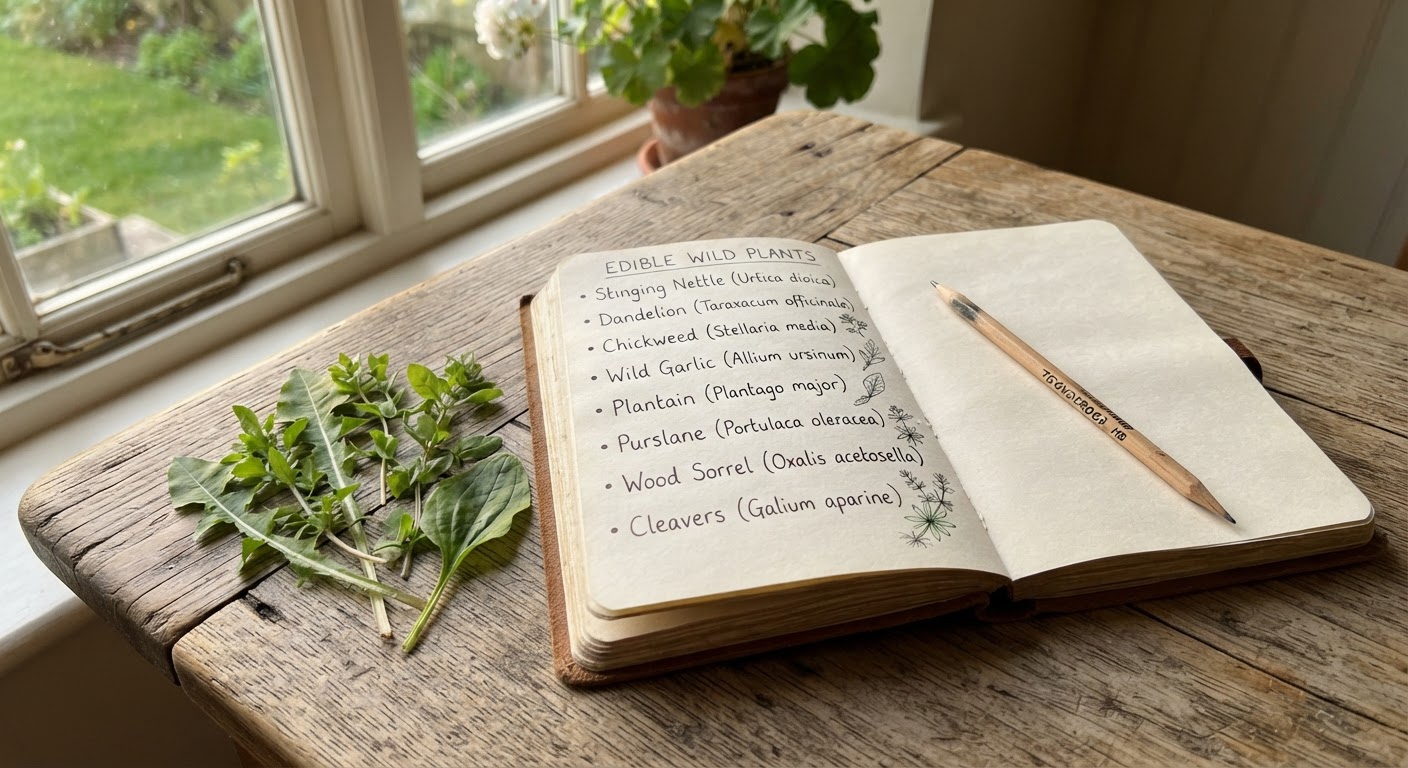
One plant per entry, in the same order every time: Name → key feature → two supports → lookalike → season → part → score.
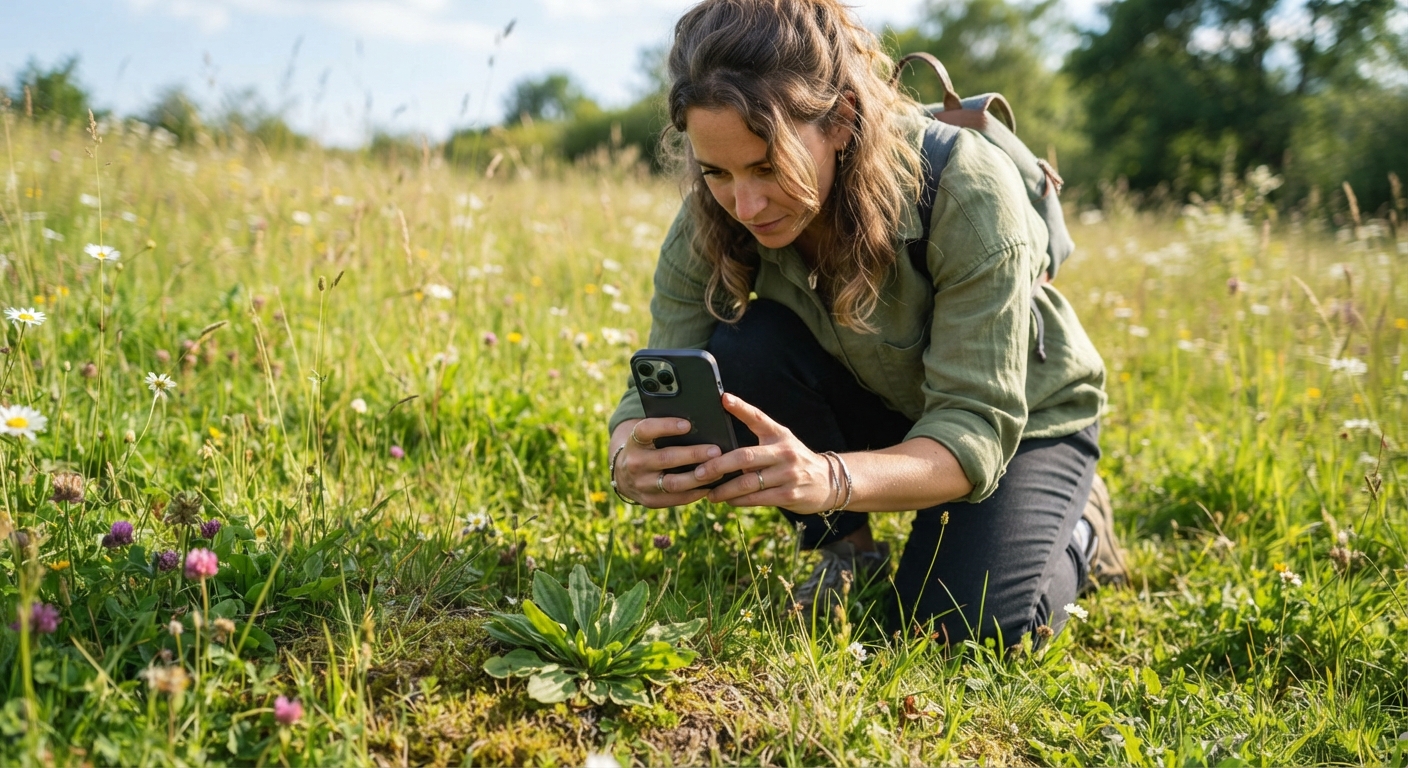
Use photos, not just words. Take your own photo of the plant in your area and attach it. A stock photo of a dandelion in a different climate is less useful than your slightly-scruffy phone shot. (This is exactly the habit in the image below — document the plant where it grows, not where a website says it grows.)
Color-code the score. Green for 4–5, yellow for 3, red for anything below. One glance tells you what’s harvestable.
Add a “seen on” date. When you actually spot the plant, note it. A list that records real sightings in your circle is worth ten generic lists.
Pro Tips From Someone Who’s Gotten This Wrong
A few hard-won lessons, because the fastest way to learn is from someone else’s near-misses.
Learn plants, not pictures. A plant changes across its life cycle — young leaves, mature leaves, flower, seed head. Learn all four stages, or you’ll meet a familiar plant in an unfamiliar costume and panic.
Taste is a late-stage tool, not an early one. The “wood sorrel tastes lemony” trick is great for confirming a plant you’ve already identified. It is not how you identify an unknown. Taste only after the three-feature check, and never put a plant in your mouth you haven’t visually identified.
One new plant per walk. Ambitious foragers add five at once and remember none. One plant, thoroughly, per outing — by autumn you’ll have a genuinely solid list.
The safest list is a local one. Ask someone who forages in your actual region — a local naturalist, a foraging group, a state extension office. Their “easy five” might differ from mine, and theirs is the one that matters where you live.
When the plant is a maybe, it’s a no. Re-read that sentence. It’s saved me more times than any field guide.
Never harvest from sprayed or polluted ground. A roadside or a treated lawn is not a foraging spot, no matter how perfect the dandelion looks. Learn what the land has been through before you eat from it.
Quick Answers to the Questions Everyone Asks
How many plants should be on a beginner’s list? Five to ten, fully mastered. That’s it. Ten plants you know cold beats a hundred you half-recognize.
Do I really need to learn the Latin names? Yes, for the plants you eat regularly. Common names overlap — “sorrel” means different plants in different places. The Latin name is the one thing that’s unambiguous, and it’s the key to double-checking anything online.
What’s the single most dangerous mistake on a list? Omitting the lookalike. A name without a warning is how experienced-looking beginners end up in the hospital.
Can I just use a plant ID app instead of a list? Apps are a second opinion, not a primary one. Use them to narrow down possibilities, then confirm with your three-feature check. Don’t eat anything on an app’s word alone — a fuller take is in our plant identification guide.
How do I know if my area has a poisonous plant I should know first? Learn the local “big three” toxic plants for your region before you eat anything. In most temperate areas that means knowing poison hemlock, water hemlock, and giant hogweed — at least by sight. Knowing the killers makes every other ID calmer.
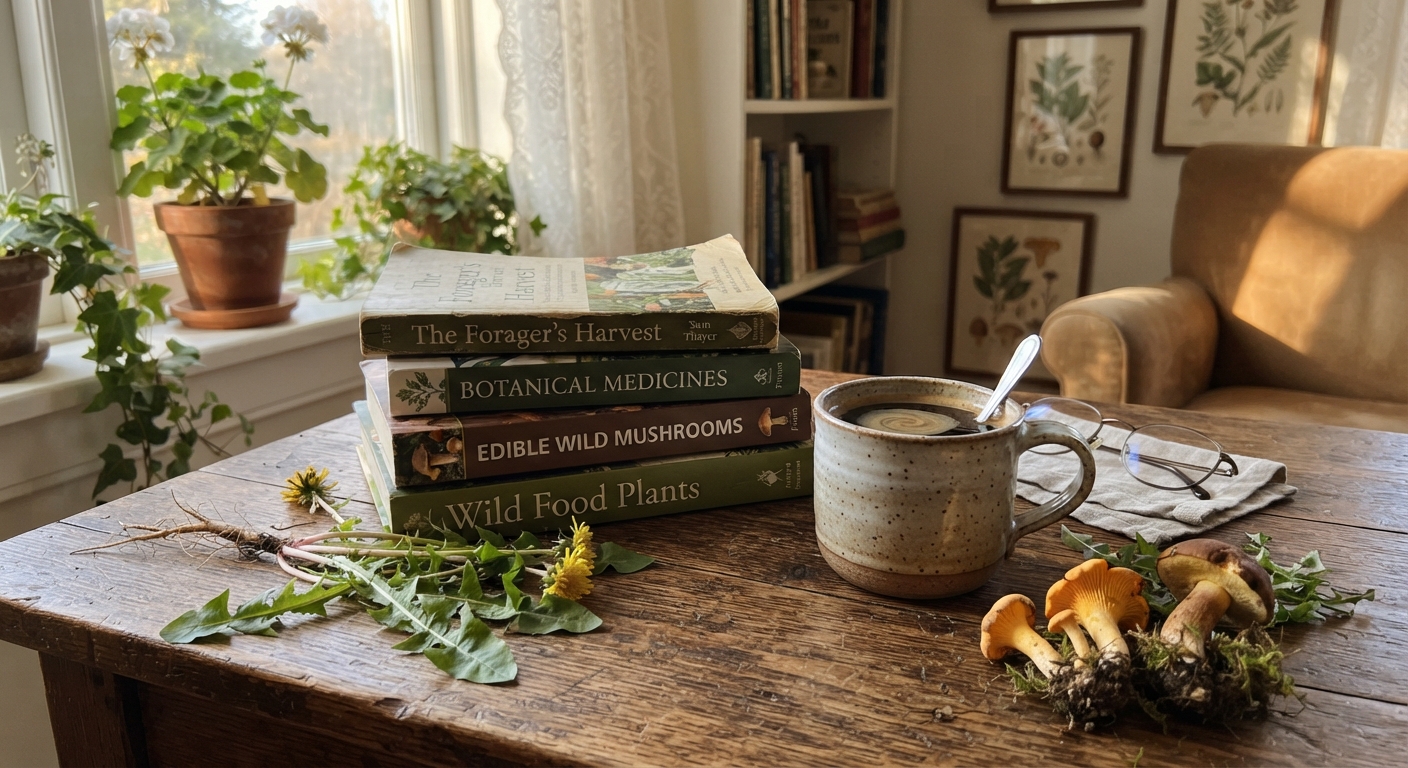
Is it worth adding mushrooms to my list early on? Not in your first season. Mushrooms deserve their own dedicated learning curve, separate from plants. Keep them off your starter list entirely.
How often should I update my list? Twice a year — once in spring as things emerge, once in early fall. Add sightings, adjust seasons, bump confidence scores. A living list beats a frozen one.
The Short Version
A trustworthy edible wild plants list isn’t something you copy — it’s something you build. Shrink your map to a two-mile radius. Start with five forgiving, abundant plants. Confirm each one with three independent features and rule out its lookalike before it earns a spot. Tag it by season, habitat, and edible part. Give it a confidence score, and never eat anything below a four.
That process produces a short list. Short is the point. Ten plants you’d recognize in the dark, in winter, at a glance — that’s a real list, and it’s worth more than every hundred-entry article on the internet combined.
The best part? Once you’ve built your first list the slow way, the next one comes faster. The method — shrink, confirm, eliminate, score — transfers to every new plant you’ll ever meet. Build the habit once, and you’ve got a forager’s skill for life. Go find your five. 🦎