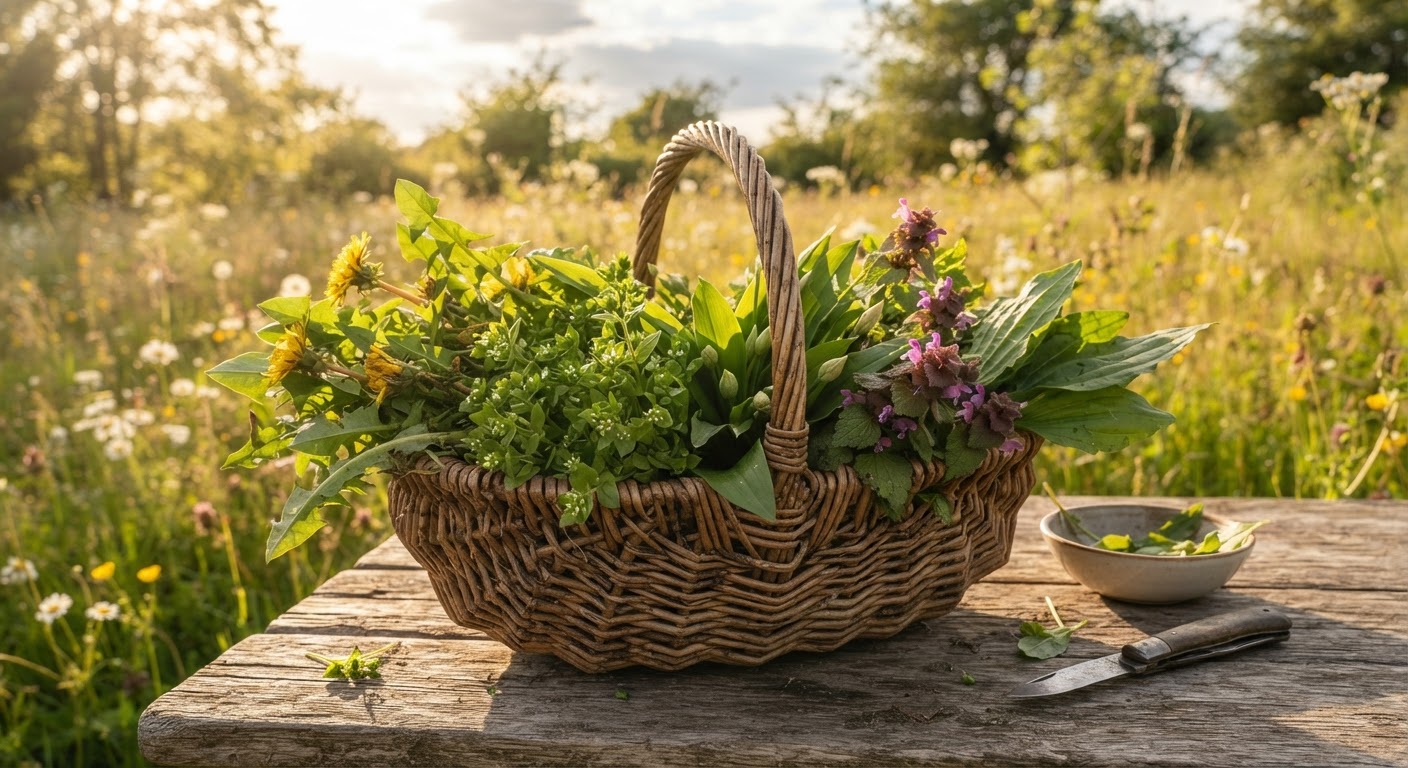
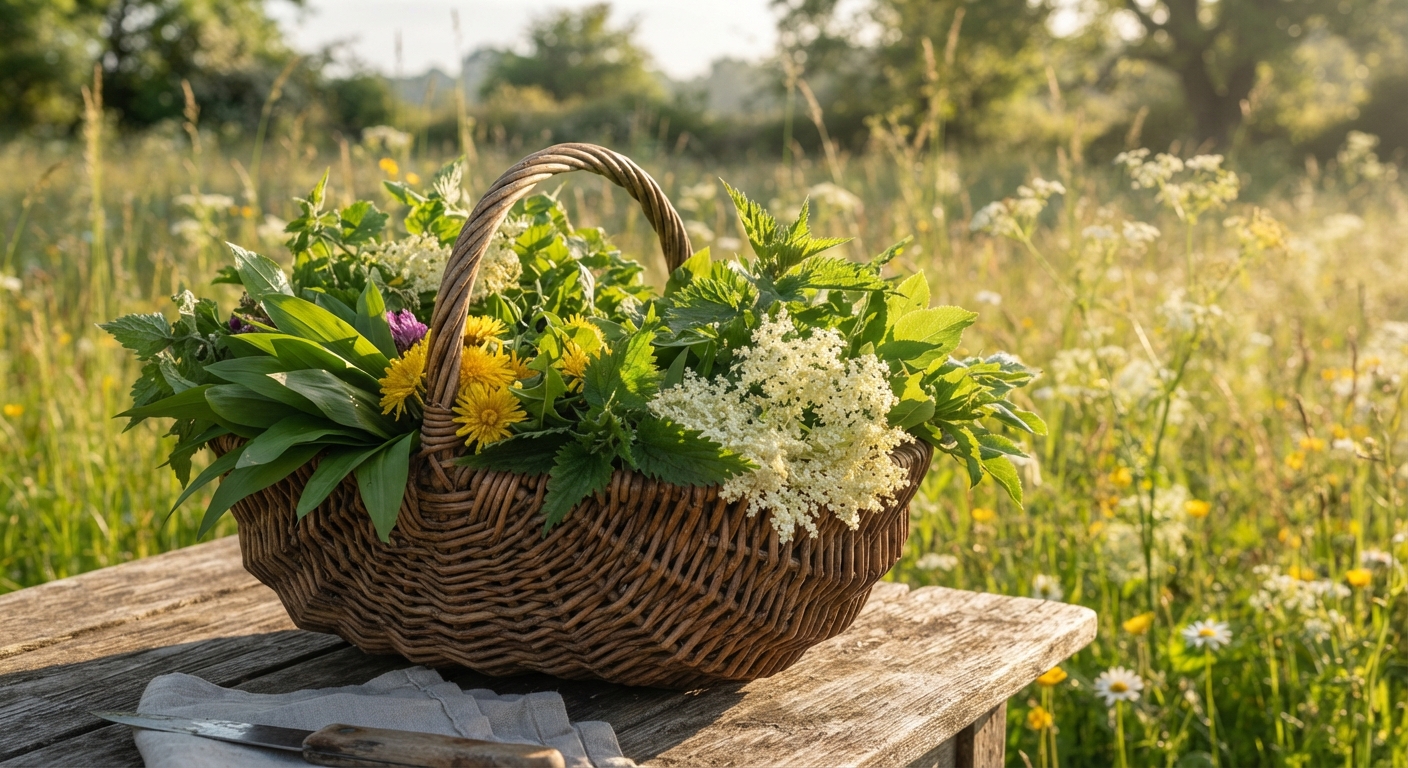
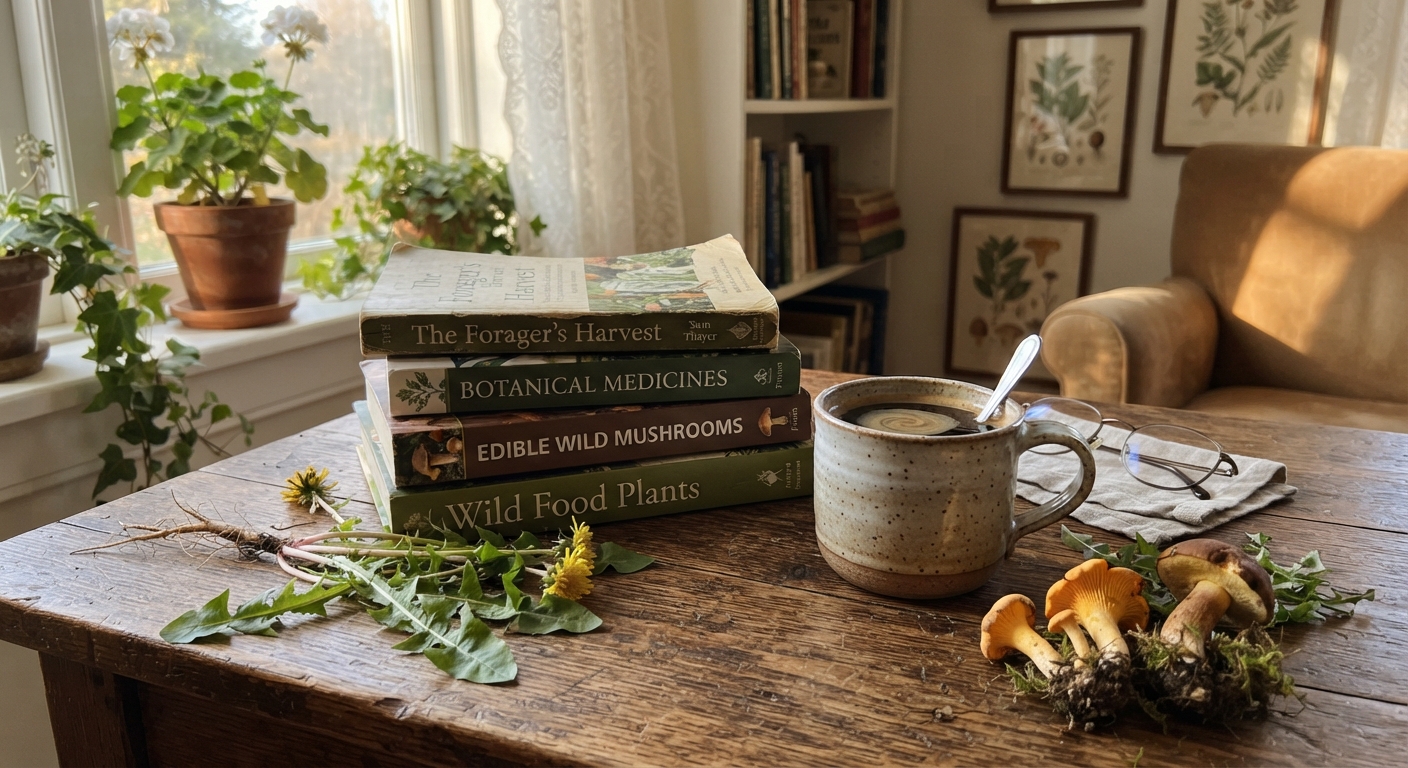
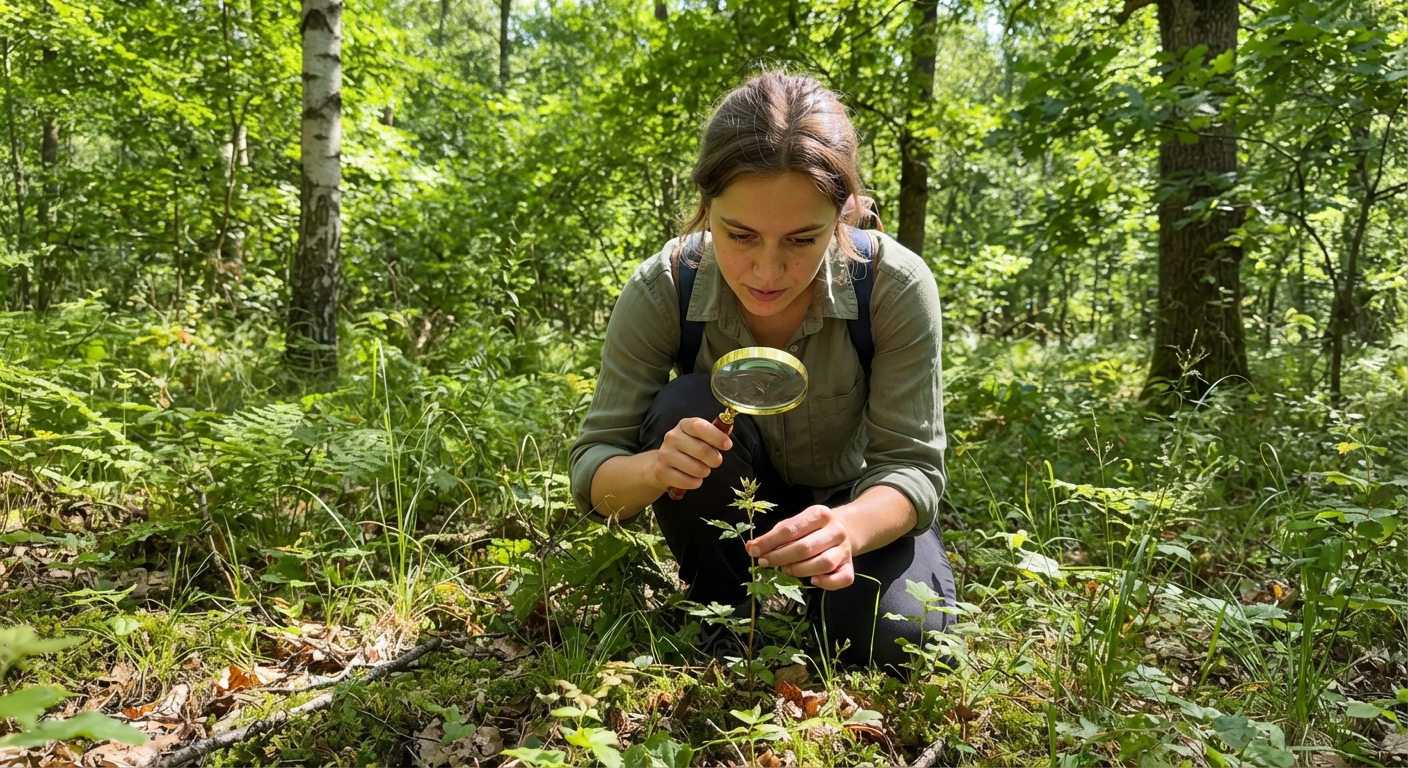
The first time I went foraging alone, I was confident. I had a field guide in my backpack, a foraging app on my phone, and a pocket full of misplaced enthusiasm. Twenty minutes into the woods, I was staring at a plant that might have been wild carrot — or might have been poison hemlock. The leaves looked the same. The habitat matched. I took a photo, checked it against five different sources, and still couldn’t say for certain.
I walked away. And walking away might be the single most important skill in foraging.
This guide isn’t going to give you a list of plants to memorize and send you out there hoping for the best. Instead, I’m going to teach you how to think like a forager — how to recognize plant families, spot the universal patterns that separate edible plants from toxic ones, and build a mental framework that keeps you confident and safe every time you’re out there.
If you take one thing from this entire article, let it be this: positive identification before any harvest. Not pretty sure. Not probably. One hundred percent certain, backed by multiple field characteristics, and ideally confirmed by someone who knows more than you do.
Why Most Beginners Get Plant Identification Wrong
There’s a common pattern among new foragers — I went through it myself — and understanding it will help you avoid the same traps.
Mistake number one: matching one feature. A forager sees a plant with serrated leaves, finds an image online with similar serrations, and calls it done. This is how people get hurt. Every plant has multiple identification markers: leaf shape, leaf arrangement, stem characteristics, flower structure, fruit type, root system, smell, habitat, season, and geographic range. If you’re only matching one or two, you’re gambling.
Mistake number two: ignoring the lookalikes. Beginners often research the edible plant thoroughly but skip the part where they study what could kill them. Before you learn a plant’s edibility, learn its doppelganger. Water hemlock looks like wild parsnip. False morel resembles true morel. Virginia creeper berries could be mistaken for wild grapes. The rule is simple: if you can’t positively identify the toxic lookalike, you can’t positively identify the edible.
Mistake number three: relying on a single source. Apps, field guides, YouTube, and online forums all have their limits. Lighting in photos can distort color. Regional variations don’t always match the “standard” description. Season affects appearance dramatically. Cross-reference everything with at least three independent, reputable sources.
Mistake number four: confusing correlation with identification. “It smells like onion” doesn’t confirm it’s a wild onion — death camas bulbs also grow in clusters and share similar habitats. Every single field marker must align before you can be certain.
| Common Beginner Mistake | Why It’s Dangerous | The Right Approach |
|---|---|---|
| Matching only one feature | Many toxic plants share one trait with edibles | Match 5+ distinct field markers |
| Skipping lookalike study | You can’t rule out danger if you don’t know what danger looks like | Study toxic species just as thoroughly |
| Single-source identification | No single resource covers all regional, seasonal, and morphological variations | Cross-reference 3+ independent sources |
| “Garlic smell = safe to eat” | Death camas, fly poison, and others can grow alongside wild onion | Smell is a secondary marker, never primary |
| Trusting apps exclusively | AI misidentifies plants regularly — especially in suboptimal lighting or unusual angles | Apps are a starting point, not a verdict |
The Universal Plant Family Framework
Here’s the shortcut that changes everything. Instead of memorizing individual plants (which is slow and fragile), learn plant families.
Once you understand the characteristics of a family, you can recognize dozens of species within it almost instantly. You’ll know what patterns to expect before you even look up the specific plant.
The Must-Know Edible Plant Families
Apiaceae (Carrot Family) — This is simultaneously the most rewarding and most dangerous plant family. It includes wild carrot, parsley, fennel, and celery — but also poison hemlock and water hemlock, two of the most lethal plants in North America. Key identifiers: umbrella-shaped flower clusters (umbels), hollow stems, often aromatic leaves. If you see an umbel flower and you can’t identify it definitively, don’t touch it.
Lamiaceae (Mint Family) — One of the safest families for beginners. Square stems, opposite leaves, and often aromatic. Includes wild mint, oregano, lemon balm, thyme, and dozens of other edibles. If the stem is square and it smells minty or herbal, you’re almost certainly in safe territory. There are no deadly toxic plants in the mint family.
Brassicaceae (Mustard Family) — Four petals arranged in a cross shape, often with a peppery or mustard-like taste. Includes wild mustard, watercress, shepherd’s purse, and garlic mustard. Generally safe, though some species can accumulate heavy metals if growing in contaminated soil.
Asteraceae (Daisy Family) — The largest plant family. Composite flower heads with both disc and ray florets. Includes dandelion, chicory, sunflower, and Jerusalem artichoke. Broadly edible, though a few members can cause allergic reactions in sensitive individuals. The sheer size of this family means you’ll need more species-level identification skill here.
Rosaceae (Rose Family) — Five petals, numerous stamens, and often edible fruits. Includes wild strawberry, blackberry, raspberry, rose hips, and hawthorn. Very few toxic species in this family make it beginner-friendly for fruit foraging.
Fabaceae (Pea Family) — Irregular, butterfly-shaped flowers with pods as fruit. Includes clover, vetch, and wild beans. Many are edible, though some contain compounds that need cooking to neutralize.
The Identification Card Trick
Here’s something I do that works better than any app: I carry a stack of index cards. Each card has a plant family on one side — the universal markers, the flower structure, the leaf arrangement — and on the other side, the edible species in that family alongside their toxic lookalikes.
When I find something I don’t recognize, I flip through the cards until the plant “clicks” into a family. Once I know the family, I know roughly how safe or dangerous it might be. Then I can drill down to species-level identification.
The 20 Essential Edible Wild Plants (and How to Identify Them)
These are the plants you should learn first — not because they’re the only ones worth eating, but because they’re widespread, relatively easy to identify positively, and have distinct features that set them apart from toxic lookalikes.
1. Dandelion (Taraxacum officinale)
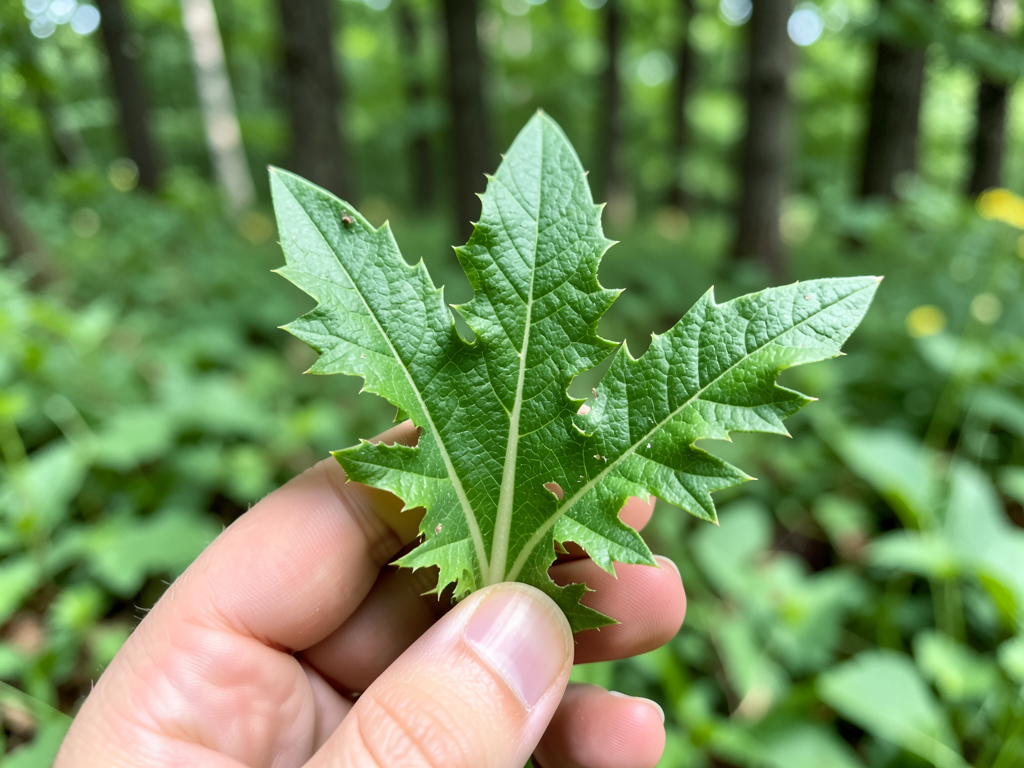
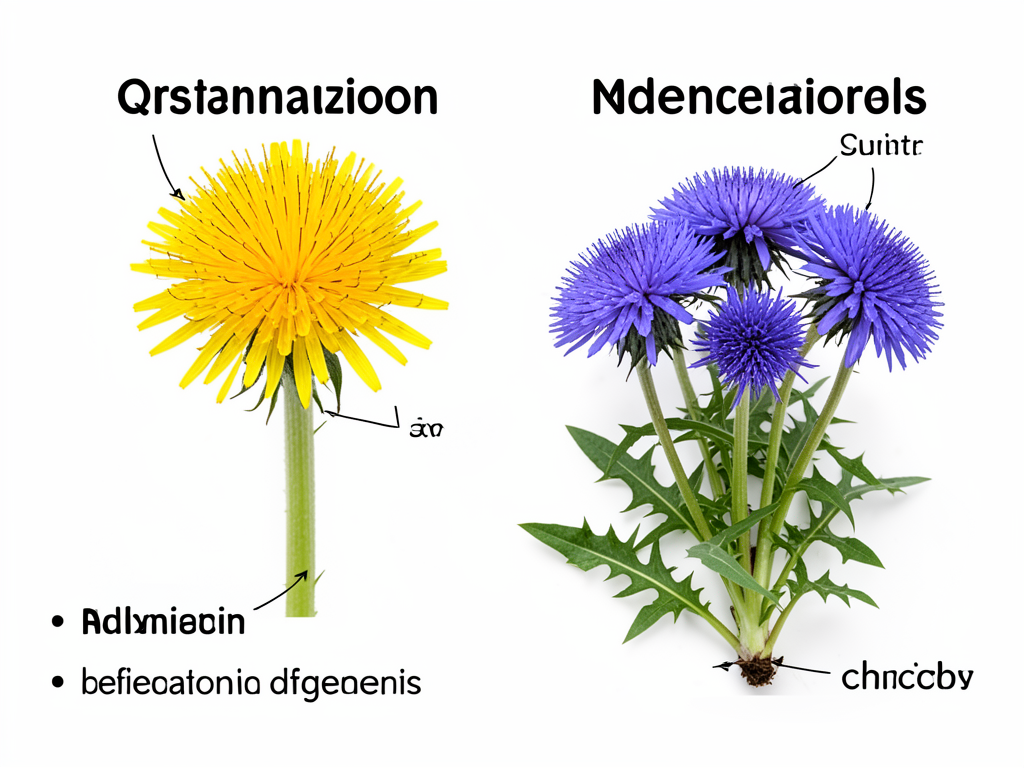
Every part is edible: leaves, flowers, and roots. The key identifier: jagged, tooth-like leaves (hence the name “dent de lion” — lion’s tooth) that grow in a basal rosette, leaking white latex when broken. Single yellow flower head on a hollow, leafless stalk.
Lookalikes: Chicory (also edible) and hawkweeds (generally edible). No deadly lookalikes — dandelion is one of the safest plants to start with.
2. Stinging Nettle (Urtica dioica)
The sting gives it away. Opposite leaves with serrated edges, covered in fine hairs that deliver formic acid when touched. Young shoots in spring are the best eating. Cooking neutralizes the sting completely.
Lookalikes: Dead nettle (Lamium) has similar leaves but square stems and no sting — it’s in the mint family and is also edible.
3. Chickweed (Stellaria media)
A small, low-growing plant with tiny white star-shaped flowers (five deeply cleft petals that look like ten). The stem has a single line of fine hairs running along one side — this is the definitive field marker. Mild, sweet flavor; excellent raw in salads.
Lookalikes: Scarlet pimpernel (toxic) — but its flowers are orange-red, not white. Spurge — but spurge has milky sap while chickweed’s sap is clear.
4. Wild Garlic / Field Garlic (Allium vineale)
Thin, hollow, round leaves that smell unmistakably of garlic or onion when crushed. This is the one case where smell is reliable — the Allium genus is unique. Small bulblets form at the top of the stem.
Lookalikes: Death camas and star-of-Bethlehem both lack the oniony smell. If it doesn’t smell like garlic or onion, it’s not Allium.
5. Broadleaf Plantain (Plantago major)
One of the most widespread “weeds” on Earth. Broad, oval leaves with distinctive parallel veins running lengthwise. The seed head is a slender spike that looks like a tiny green cattail. Leaves are best when young; older leaves get stringy.
Lookalikes: Virtually none — the parallel veins and basal rosette are distinctive.
6. Purslane (Portulaca oleracea)
Succulent, fleshy leaves and reddish stems that grow prostrate along the ground. Small yellow flowers open only in morning sun. One of the highest plant sources of omega-3 fatty acids.
Lookalikes: Prostrate spurge (toxic) — but spurge has thinner stems, smaller leaves, and releases white milky sap when broken. Purslane’s sap is clear.
7. Wood Sorrel (Oxalis spp.)
Distinctive clover-like leaves with three heart-shaped leaflets that fold down at night. The lemony, tangy flavor is unmistakable — it comes from oxalic acid. Yellow or pink five-petaled flowers.
Lookalikes: Clover has oval, not heart-shaped leaflets. No toxic lookalikes.
8. Lamb’s Quarters (Chenopodium album)
A relative of quinoa with diamond-shaped, toothed leaves covered in a fine white, powdery coating (especially on new growth). The leaf undersides have a mealy, silvery look that’s unique to this plant.
Lookalikes: Some nightshade species can look vaguely similar but lack the mealy coating.
9. Burdock (Arctium spp.)
Large, wavy-edged leaves that are fuzzy underneath. The burrs are unmistakable — round, hook-covered seed heads that inspired Velcro. The taproot (first-year plants) is the prize, used like a root vegetable.
10. Cattail (Typha spp.)
The supermarket of the swamp. The brown, cigar-shaped seed head is impossible to misidentify. Young shoots (spring), green flower spikes, and pollen are all edible. Rhizomes can be processed into flour.
11. Wild Strawberry (Fragaria vesca)
Tiny strawberries with seeds on the outside of the fruit. Three leaflets per leaf. White five-petaled flowers. Much smaller than cultivated strawberries but intensely flavorful.
Lookalikes: Mock strawberry (Potentilla indica) has yellow flowers and tasteless fruit — it’s not toxic, just disappointing.
12. Blackberry / Raspberry (Rubus spp.)
Thorny canes with compound leaves (3-5 leaflets). Berries are aggregate fruits made of multiple small drupelets. If it looks like a raspberry or blackberry and grows on a thorny cane, it’s in the Rubus genus — and all Rubus fruits are edible.
13. Violets (Viola spp.)
Distinctive five-petaled flowers with the bottom petal extending into a spur. Heart-shaped leaves. Both flowers and leaves are edible and high in vitamin C.
14. Yarrow (Achillea millefolium)
Feathery, fern-like leaves that are the most reliable identifier. Flat-topped clusters of small white (sometimes pink) flowers. The leaves are so finely divided they look like lace.
15. Chicory (Cichorium intybus)
Sky-blue flowers that bloom along a tough, wiry stem. Each flower lasts only one day. Basal leaves resemble dandelion. The root can be roasted as a coffee substitute.
16. Curly Dock (Rumex crispus)
Long, narrow leaves with distinctly wavy edges — the “curly” in curly dock. A tall seed stalk with rust-colored seeds persists through winter, making this one of the easiest winter plants to identify.
17. Sheep Sorrel (Rumex acetosella)
Arrow-shaped leaves with pointed basal lobes that grasp the stem. The lemony taste (oxalic acid) is the clincher. Small reddish flowers on wiry stems.
18. Amaranth (Amaranthus spp.)
Distinctive spike-like flower clusters in deep red or green. Leaves are oval with pointed tips, often with a red chevron marking. Both leaves and seeds are edible.
19. Clover (Trifolium spp.)
Three oval leaflets (occasionally four) forming the classic clover leaf. Pink or white spherical flower heads. The flowers make excellent tea; leaves are edible raw but easier to digest cooked.
20. Daylily (Hemerocallis fulva)
Not a true lily but in its own genus. Long, strap-like leaves. Orange, trumpet-shaped flowers — each bloom lasts a single day. The flower buds, open flowers, and tubers are all edible.
Warning: True lilies (Lilium) can be toxic to cats, and some humans experience gastrointestinal sensitivity. Start with a small amount. Make absolutely certain it’s Hemerocallis, not Lilium.
A Practical Identification Framework for Any Plant
When you find a plant you think might be edible, run through this mental checklist every single time. I keep a laminated version in my foraging bag.
The 7-Point Positive ID Protocol
1. Habitat Check — Is this plant growing where it’s supposed to grow? Dandelions in a manicured lawn that might have been sprayed? Watercress in a stream downstream from cattle pasture? Environment tells you not just what you’re looking at, but whether you want to eat it regardless of what it is.
2. Growth Habit — Is it a tree, shrub, vine, or herbaceous plant? How tall? How does it branch? Growth habit narrows the possibilities dramatically before you even look at leaves.
3. Leaf Architecture — What’s the arrangement (alternate, opposite, whorled)? Are leaves simple or compound? What’s the margin (smooth, serrated, lobed)? What’s the shape? Take a photo from directly above and from the side.
4. Stem and Bark — Is the stem round, square, ridged? Hollow or solid? Hairy or smooth? Any thorns, spines, or tendrils? For woody plants, what does the bark look like — smooth, furrowed, peeling?
5. Flower Structure — Count the petals. Look at the arrangement (solitary, cluster, umbel, spike, head). Note the color, size, and whether multiple flowers are at different stages of blooming. Flowers are often the most reliable identification feature.
6. Fruit and Seed — What kind of fruit (berry, drupe, pod, capsule, achene, nut)? What color when ripe? How are seeds arranged? Some plants — like Queen Anne’s lace — have a nearly unique seed structure that confirms identification.
7. Smell, Taste, and Texture — Only if you’ve already confirmed it’s safe. Crush a leaf and smell it. Rub the stem and feel the texture. The “scratch and sniff” approach adds an extra data point.
Once all seven points align with your field guide description, you’ve got a positive ID. If even one marker is off, walk away. There will always be another plant, another day.
The Toxic Lookalikes You Cannot Afford to Miss
This section is the one you should read twice. These are the plants that have sent foragers to the emergency room — and in some cases, the morgue.
Poison Hemlock (Conium maculatum) vs. Wild Carrot (Daucus carota)
Poison hemlock killed Socrates, and it hasn’t gotten any friendlier since. The stems are smooth with purple blotches — wild carrot stems are hairy and green. Poison hemlock lacks the carrot smell. Crushed wild carrot leaves and roots smell distinctly like carrots. If you see purple blotches on a smooth stem, back away.
Water Hemlock (Cicuta maculata) vs. Wild Parsnip (Pastinaca sativa)
Water hemlock is considered North America’s most toxic plant. It grows in wet areas — marshes, stream banks, drainage ditches. The leaves are compound with toothed leaflets that have prominent veins ending in the notches between teeth, not at the tips. Wild parsnip’s veins run to the tooth tips. If you’re near water and seeing carrot-family plants, be twice as careful.
Death Camas (Toxicoscordion venenosum) vs. Wild Onion (Allium spp.)
Death camas bulbs look similar to wild onion and often grow in the same habitat. The absolute test: smell. Wild onion smells like onion. Death camas does not. Never eat an Allium-like plant that lacks the onion-garlic smell.
False Morel (Gyromitra spp.) vs. True Morel (Morchella spp.)
True morels are hollow from stem to cap. False morels have a cotton-like or chambered interior. True morel caps are pitted like a honeycomb; false morel caps are wrinkled or lobed like a brain. The hollow-stem test is the most reliable field method.
Pokeweed (Phytolacca americana) vs. Wild Grape (Vitis spp.)
Young pokeweed shoots are consumed as “poke sallet” in the American South — but only after repeated boiling and water changes. The berries are unmistakable: pokeweed has flat-topped clusters of purple-black berries with bright pink juice staining the stems. Wild grapes hang in loose clusters on woody vines with tendrils. If you don’t see tendrils, it’s not a grape.
Tools Every Forager Should Carry
You don’t need much, but what you do carry should be reliable.
Must-Have Field Tools:
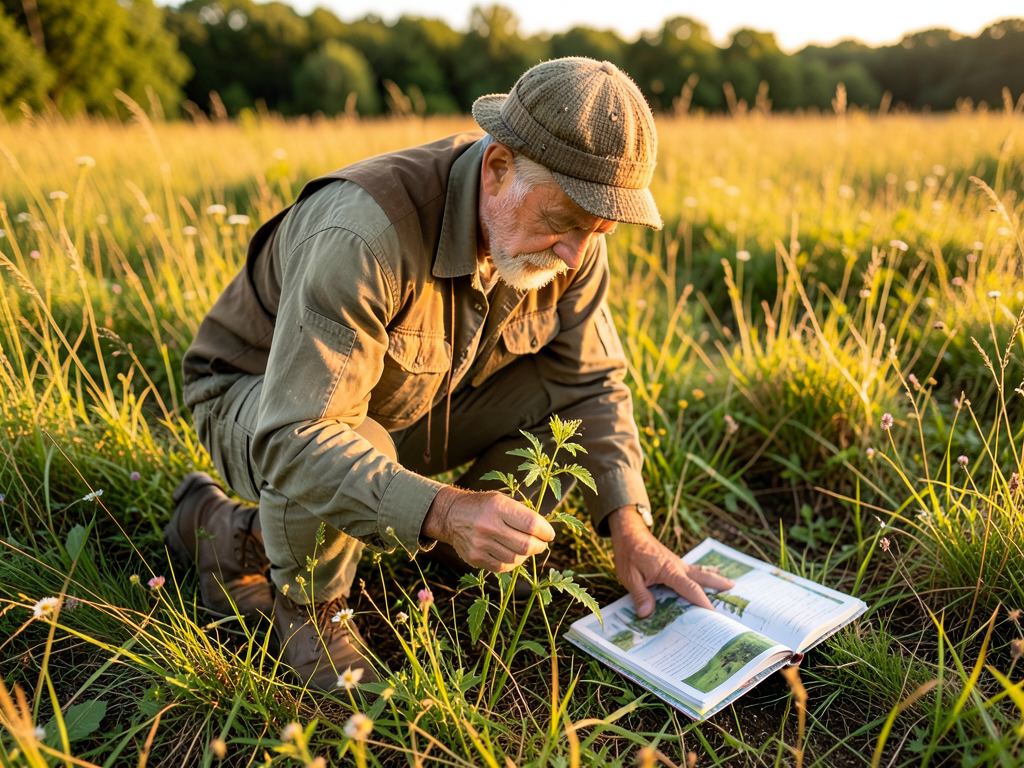
- Regional field guide with dichotomous keys — Apps are convenient, but a paper guide with detailed botanical keys doesn’t run out of battery and doesn’t hallucinate. I recommend David Allen Sibley’s guides for North America and Roger Phillips’ guides for the UK and Europe.
- A 10x hand lens (loupe) — You can get one for under $15, and it will reveal details your phone camera can’t capture. Flower structure, hair patterns, and leaf venation all become visible.
- Collection bags — Paper, not plastic. Plastic makes plants wilt and sweat. Brown paper bags or a woven basket allows air circulation.
- Gloves — For nettles, thistles, and any plant you’re not yet certain about.
- A small trowel or hori-hori knife — For digging roots without damaging them. A hori-hori is the gold standard: serrated on one edge for cutting, sharpened on the other for digging.
- A notebook and pen — Sketching a plant forces you to notice details you’d otherwise miss. Notes about location, date, and conditions become invaluable over time.
- GPS or phone with offline maps — Mark the location of productive patches. Foragers who don’t mark their spots forget half of them by next season.
Optional But Worth It:
- A plant identification app (PictureThis, PlantNet, or iNaturalist) as a secondary check. Never as your primary identification tool.
- Small scissors for clean cuts on delicate greens.
- A field microscope (20-60x) for examining tiny flower structures.
Seasonal Foraging Calendar
Knowing what to look for in each season makes the difference between a basket full of food and a long walk in the woods.
Spring (March – May)
This is the season of greens. Dandelion, chickweed, nettle, garlic mustard, fiddleheads, wild asparagus, and ramps are at their peak. Spring is when you’ll find the most tender, least bitter leaves. Get out early — many spring greens become tough and bitter once they start flowering.
Summer (June – August)
Berries dominate. Wild strawberry, blackberry, raspberry, blueberry, and mulberry are all ripening. Lamb’s quarters, purslane, and amaranth are at peak harvest for greens. Summer is also mushroom season if conditions are right — chanterelles and chicken of the woods start appearing.
Fall (September – November)
The harvest season. Acorns, walnuts, hickory nuts, and beechnuts drop in abundance. Rose hips ripen after first frost. Burdock roots are at their sweetest in first-year plants. Apples, pears, and persimmons from wild or feral trees. Fall is also prime mushroom season — hen of the woods, lion’s mane, and oyster mushrooms.
Winter (December – February)
Foraging slows but doesn’t stop. Cattail rhizomes, burdock roots, and Jerusalem artichoke tubers can be dug as long as the ground isn’t frozen. Pine needles make vitamin C-rich tea. Chaga and other shelf fungi are visible year-round on trees. Dried seed heads of curly dock and evening primrose are easy to spot against the snow.
The Safe Forager’s Daily Checklist
Print this. Tape it to your foraging bag. Run through it before you put anything in your mouth.
☐ I have positively identified this plant using at least 5 different field characteristics. ☐ I have checked and ruled out all toxic lookalikes for this species. ☐ I have confirmed the identification against at least 3 independent sources. ☐ I know which part of the plant is edible and at which stage of growth. ☐ I know the proper preparation method (raw vs. cooked; single boil vs. multiple). ☐ The plant is growing in a clean area — no pesticides, no road runoff, no animal waste. ☐ I have harvested sustainably — leaving at least two-thirds of the patch intact. ☐ I am trying only one new wild food at a time (in case of allergic reaction). ☐ Someone knows where I am and what I’m foraging. ☐ If I feel even a shred of uncertainty, I will not eat this plant.
Common Questions New Foragers Ask
Is there a universal test to tell if a plant is edible?
No. There is no sniff-test, skin-test, or “universal edibility test” that reliably separates safe plants from toxic ones. The “Universal Edibility Test” popular in survival manuals involves exposing skin, lips, and mouth to a plant in stages — but it doesn’t work for all toxins. Some plants (like water hemlock) can cause severe reactions from even small amounts. The only reliable test is positive botanical identification. Period.
Can I trust foraging apps to identify plants?
As a starting point, yes. As your sole source of truth, absolutely not. AI-based plant identification apps have gotten remarkably good, but their accuracy drops significantly with unusual angles, poor lighting, partial plants, and regional varieties. I’ve seen apps confidently identify poison hemlock as “wild carrot” because the user only photographed the flower head. Use apps as a suggestion, not a verdict.
How do I know if I’m allergic to a wild plant?
The same way you’d test any new food — start with a tiny amount. Eat a small piece, wait 24 hours, note any reactions. The “try one at a time” rule isn’t just for identification; it’s for allergy detection too. If you eat five new wild plants at once and have a reaction, you won’t know which one caused it.
What’s the one plant every beginner should learn first?
Dandelion. It’s widespread, nearly impossible to misidentify once you learn the key features, entirely edible from flower to root, and delicious when prepared correctly. Dandelion gives beginners a confident, positive first foraging experience — which builds the momentum to learn more.
Is urban foraging safe?
It depends entirely on the site. Plants growing along busy roads absorb heavy metals from exhaust. Plants in parks may be sprayed with herbicides or pesticides. Plants near old buildings may be growing in lead-contaminated soil. The rule of thumb: if you wouldn’t drink the water from a puddle at that location, don’t eat the plants growing there either. Urban foraging works in community gardens, your own backyard, and designated wild spaces — but think critically about what might be in the soil.
Your First Foraging Mission
Here’s your homework. This weekend, go outside and find five dandelions. Don’t eat them — just identify them. Run through the 7-point protocol. Notice the hollow stem, the basal rosette, the toothed leaves, the single flower head. Pick one, pull it apart, look at every piece.
Then find one plant you don’t recognize. Take photos. Sketch it. Bring it home and identify it using your field guide. Don’t worry about whether it’s edible — just practice the process of going from “unknown plant” to “named species.”
Every expert forager started exactly where you are now. The difference between a good forager and a dangerous one isn’t knowledge — it’s patience. The plants will be there next week, next month, next year. Take your time. Learn them right.
Happy foraging. Stay curious, stay careful, and never stop walking away when you’re not certain.
This guide is for educational purposes only. Always consult multiple authoritative sources before consuming any wild plant. If in doubt, do not eat.