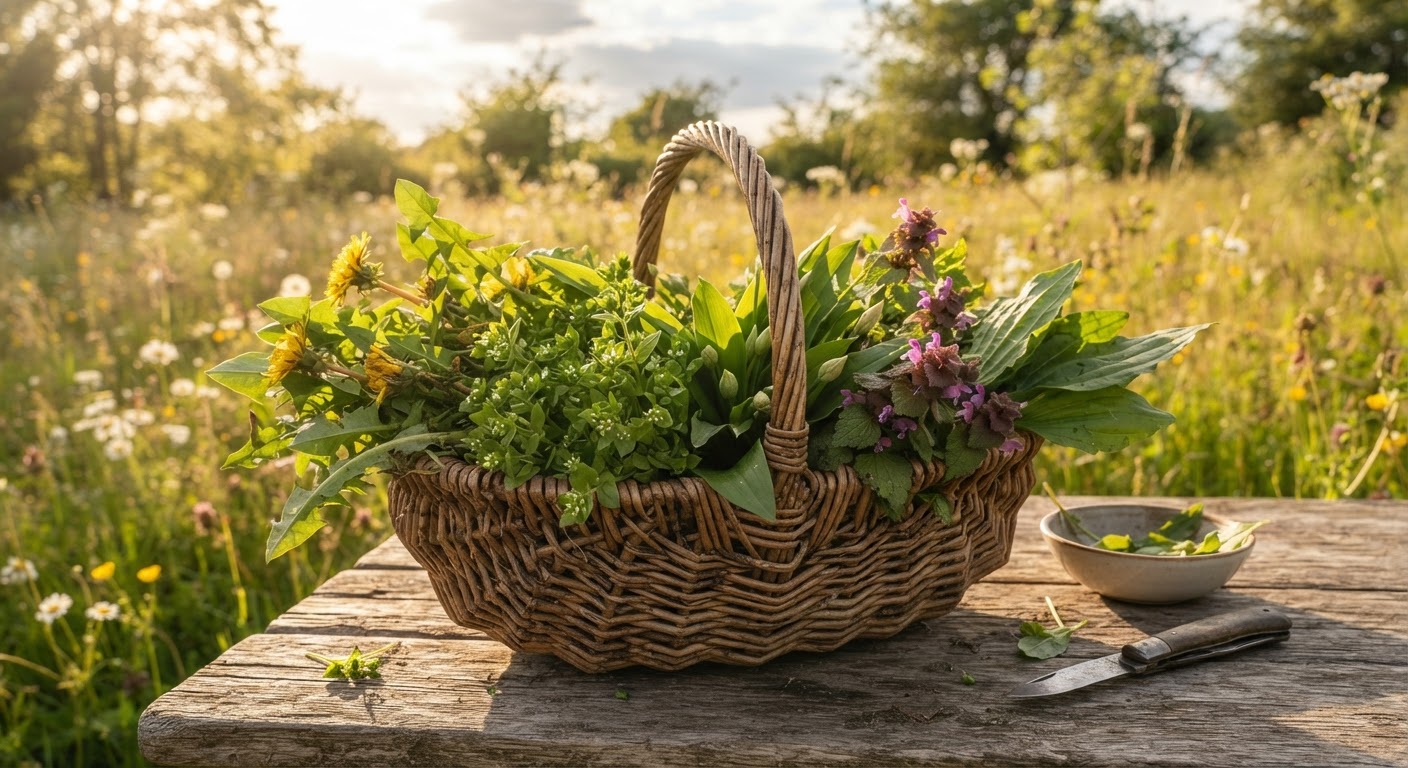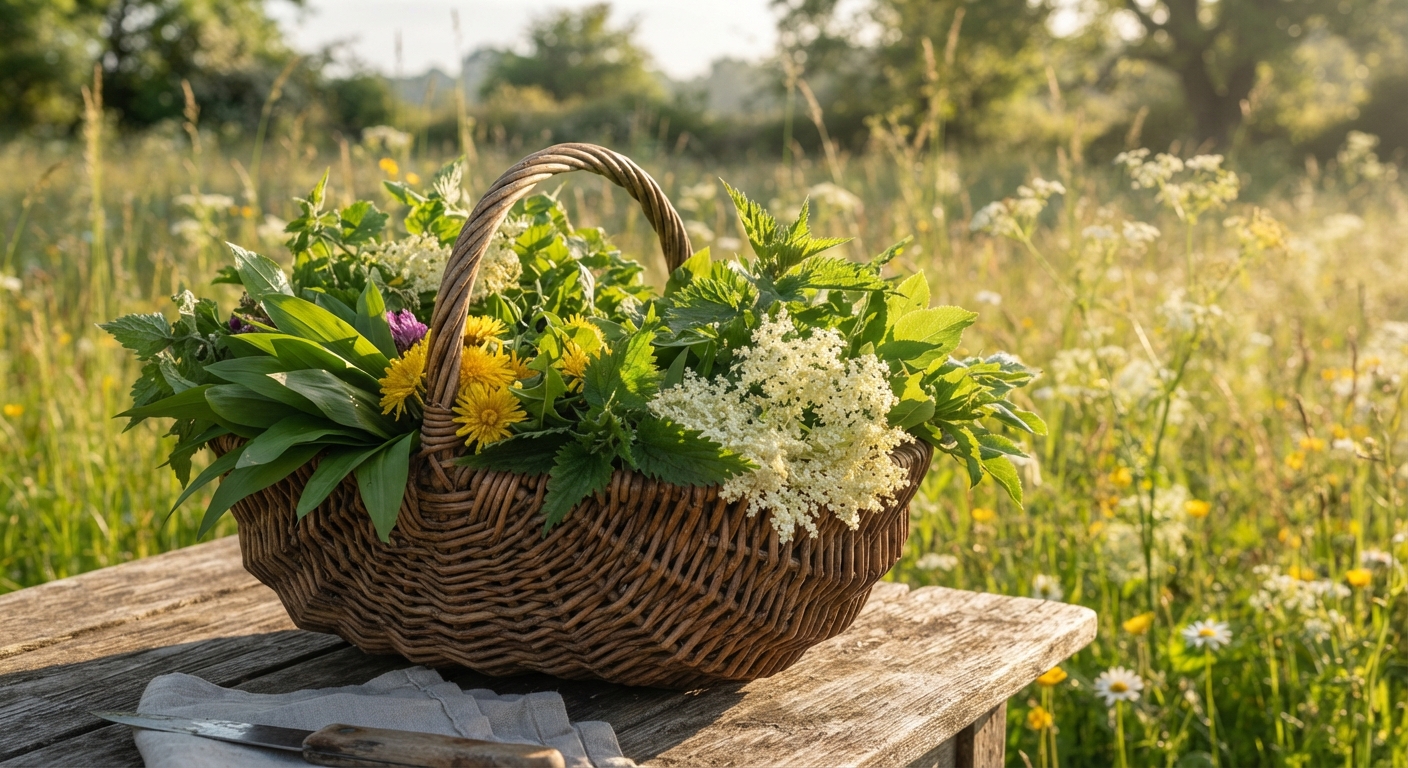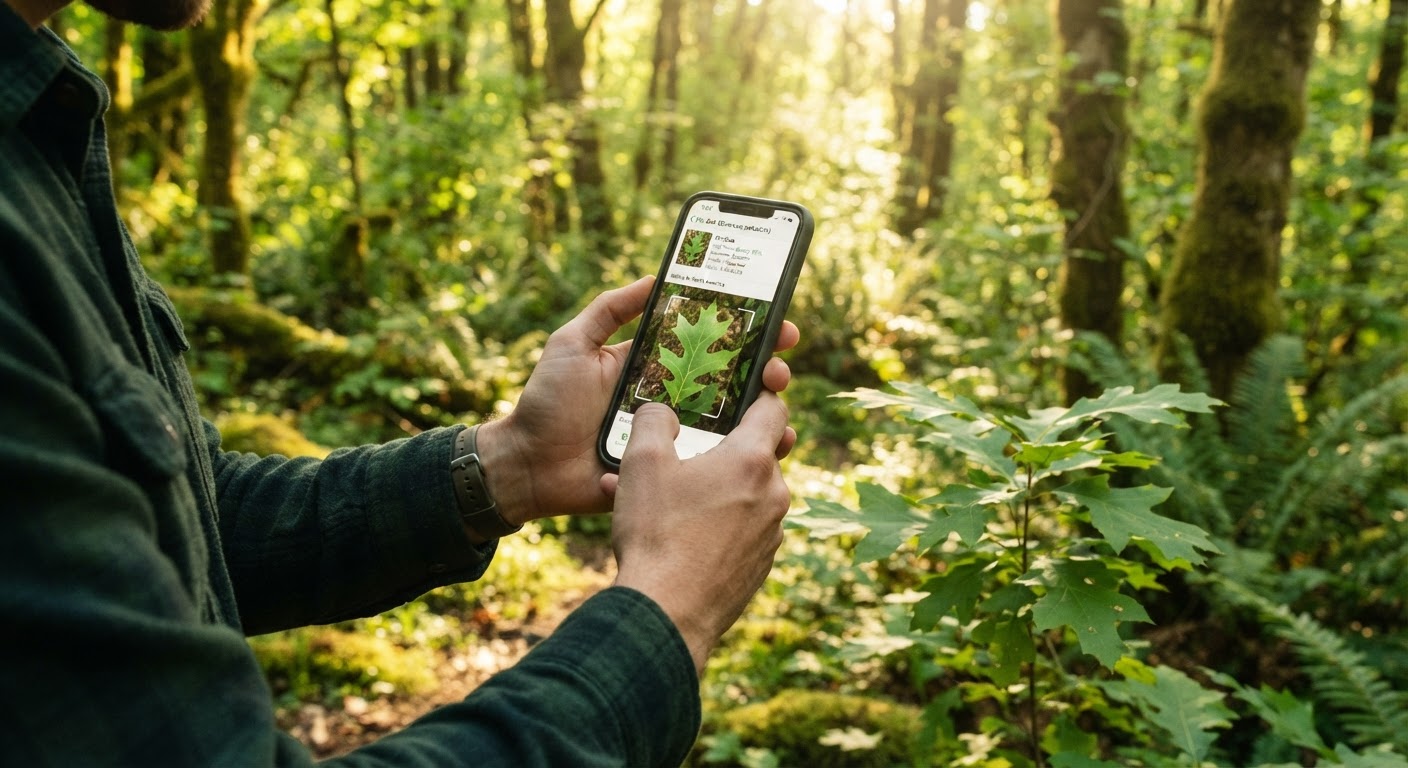
A guy in a Facebook foraging group last month posted a photo of what he was about to eat. “App says it’s wild carrot,” he wrote. The app was wrong. A dozen members jumped in within minutes — the plant in his photo was poison hemlock. He had already taken a bite. He survived, but spent six hours in the ER.
Here’s what nobody spells out clearly enough: foraging apps are fantastic tools for 90% of what you’ll encounter. But when you’re standing in front of a plant in the carrot family, or a mushroom that has a deadly lookalike, or a berry that almost matches the edible description — your phone’s battery dies, your signal drops, and suddenly you’re making a call based on memory. That’s when you understand why the foragers who’ve been doing this for 30 years always carry a book.
But which book? Walk into any bookstore and you’ll find two dozen foraging guides. Some are brilliant. Some are dangerously vague. Some were written for the forests of New England and will mislead you completely if you’re foraging in Texas. This guide sorts through the noise — not by ranking every book ever published, but by matching the right book to the right situation. Think of it as a bookshelf prescription rather than a popularity contest.
Why a Book Beats an App When It Really Matters
Before we get to specific titles, let’s address the obvious question: why bother with a physical book in 2026?
Apps identify by pattern matching — books teach you how to see. An app looks at your photo and finds the closest visual match in its database. A good field guide teaches you why the identification is correct: the shape of the leaf margin, the attachment pattern on the stem, the number of petals, the smell when crushed. Once you learn those patterns, you stop needing the app for common species. That’s the difference between borrowing knowledge and building it.
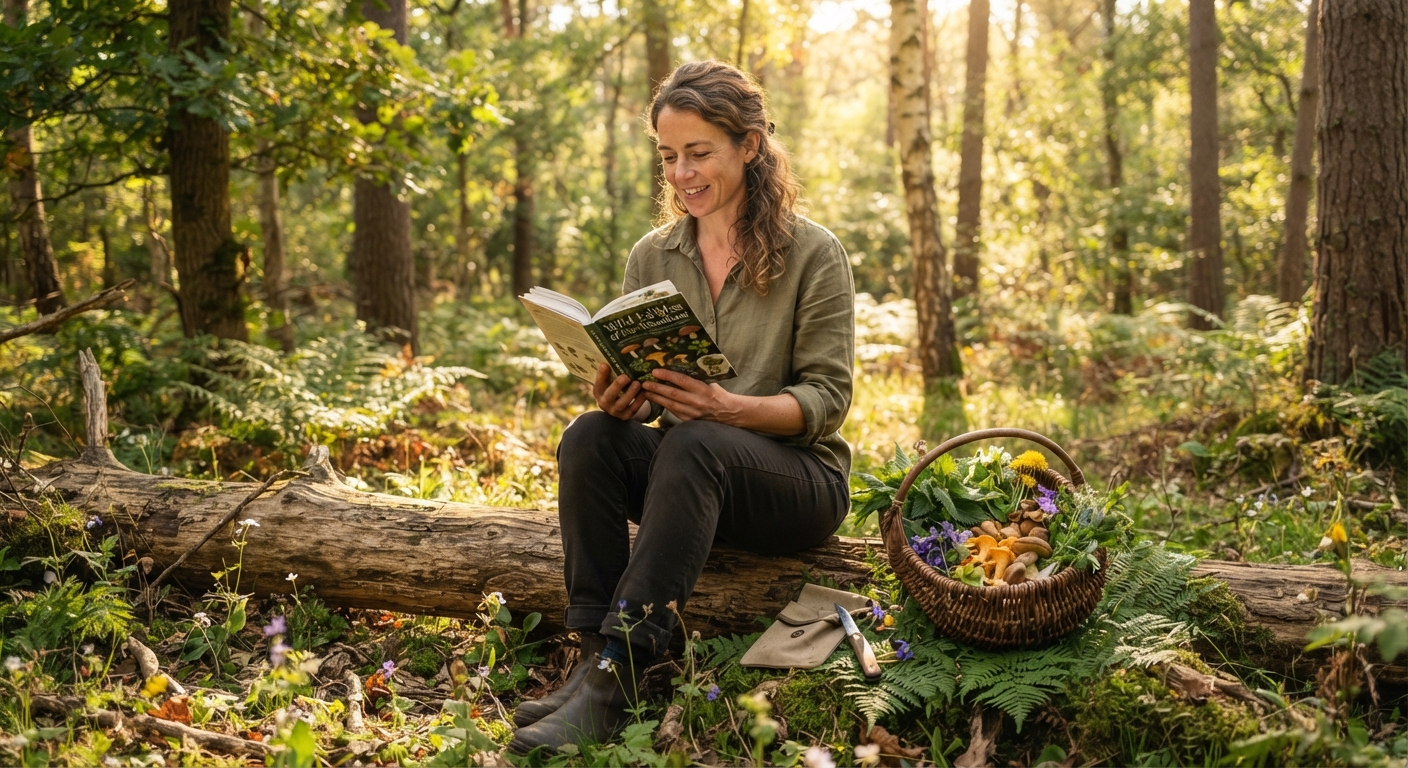
Books work when phones don’t. Rain kills touchscreens. Cold drains batteries. Forest canopies block GPS. The most remote foraging spots — the ones with the best mushrooms, the least-sprayed greens — are exactly where your phone is least reliable. A paperback field guide weighs eight ounces and has never run out of battery in the history of paper.
Regional specificity matters more than you think. A plant that’s safe and common in Oregon might not grow at all in Georgia. A mushroom that’s prized in Europe might have a toxic North American lookalike not covered in European guides. Books written for your specific region account for this. Generic apps often don’t.
The best books were written by people who ate the plants. Samuel Thayer has been foraging since he was a child. John Kallas has a PhD in nutrition and decades of field teaching. These aren’t content marketers who compiled information from Wikipedia. They’re practitioners who have made every mistake, eaten every plant, and written down what actually works. That experience translates to details — like Thayer’s observation that cattail shoots taste like cucumber when harvested at exactly the right three-day window in spring, and like cardboard at any other time — that no algorithm can generate.
The Forager’s Bookshelf: A Category-by-Category Breakdown
Instead of a ranked list, here are the books you actually need — organized by what you’re trying to do. Grab the category that matches your situation.
| Category | Top Pick | Runner-Up | Best For | Skip If |
|---|---|---|---|---|
| Absolute Beginner (North America) | The Forager’s Harvest — Samuel Thayer | Nature’s Garden — Samuel Thayer | Someone who’s never foraged and wants a trusted guide walking them through it | You’re outside North America |
| Comprehensive Field Reference | Edible Wild Plants: Wild Foods from Dirt to Plate — John Kallas | The Wild Food Adventure Series — Sergei Boutenko | Detailed plant profiles with harvest stages, processing, and recipes | You want a pocket-sized quick-reference |
| Mushroom Identification | Mushrooms Demystified — David Arora | All That the Rain Promises and More — David Arora | Serious mushroom hunters who need exhaustive keys and lookalike comparisons | You just want to know which three mushrooms are safe for beginners |
| Regional Field Guide | Pacific Northwest Foraging — Douglas Deur (PNW) / Southeast Foraging — Chris Bennett (SE) / Midwest Foraging — Lisa M. Rose (Midwest) | Northeast Foraging — Leda Meredith (NE) | Foragers who want a guide tailored to their exact region | You travel across regions frequently — get a broader guide first |
| Cooking & Recipes | The Wildcrafted Cocktail — Ellen Zachos (drinks) / Forage, Harvest, Feast — Marie Viljoen (meals) | The New Wildcrafted Cuisine — Pascal Baudar | Foragers who already know what they’re picking and want to do something creative with it | You’re still learning plant identification |
| Medicinal Plants | Medicinal Plants of North America — Jim Meuninck | Rosemary Gladstar’s Medicinal Herbs — Rosemary Gladstar | People interested in tinctures, teas, salves, and traditional plant medicine | You’re only interested in eating, not healing |
| Urban Foraging | The Urban Forager — Wross Lawrence / Backyard Foraging — Ellen Zachos | Foraging in the City — Lisa M. Rose | Foragers who don’t have access to wild forests and want to know what’s edible in parks, lots, and sidewalks | You have access to wilderness areas |
| Kid-Friendly Introduction | The Young Forager’s Guide — Douglas Kent | Foraging with Kids — Adele Nozedar | Parents who want to teach children plant identification safely | You’re foraging solo |
This table isn’t about which book is “best” in some abstract sense. It’s about which book fits your situation. A Pacific Northwest mushroom hunter needs David Arora, not Samuel Thayer. An apartment-dweller in Brooklyn needs Ellen Zachos, not a field guide to Rocky Mountain wildflowers. Match the book to the forager.
The Beginner Bookshelf: Where Every New Forager Should Start
If you’re holding your first field guide and have no idea where to begin, here’s the three-book starter kit that covers your bases without overwhelming you.
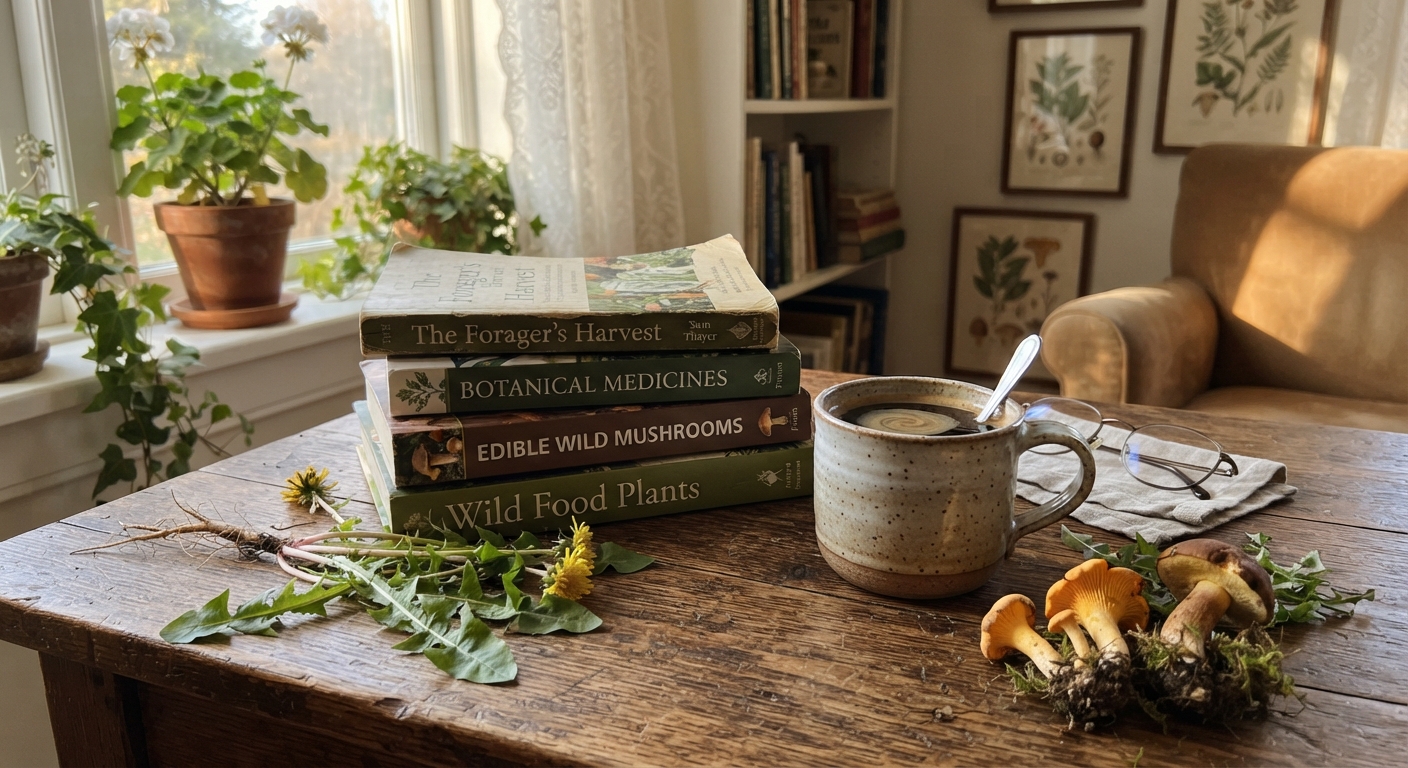
1. The Forager’s Harvest by Samuel Thayer (2006)
This is the book I’d hand someone if I could only hand them one. Thayer doesn’t try to cover 200 plants. He covers 32 — and he covers them exhaustively. Each plant gets 8–15 pages with harvesting timelines, lookalike comparisons, processing techniques, and personal stories from decades of foraging.
What makes it different: Thayer only writes about plants he’s personally harvested and eaten hundreds of times. His cattail chapter alone runs 20 pages and covers six different edible parts, each with its own harvest window. His milkweed chapter will change everything you thought you knew about a plant most people consider poisonous (the young shoots and flower buds, properly prepared, are not). The photography is utilitarian rather than artistic — these are identification photos taken by a forager, not a nature photographer — which means they show the diagnostic features you actually need to see.
The caveat: Thayer’s experience is rooted in the Upper Midwest and he acknowledges this clearly. If you’re foraging in the desert Southwest, his plant selection won’t fully apply to you. But his methodology — the way he teaches you to observe, test, and verify — transfers anywhere.
2. Edible Wild Plants: Wild Foods from Dirt to Plate by John Kallas (2010)
Kallas is a PhD nutritionist who runs Wild Food Adventures in Portland, and his book reflects that hybrid background: it’s part field guide, part nutrition textbook, part cookbook. He covers fewer plants than Thayer (about 15), but goes even deeper — his dandelion chapter is 44 pages long and covers germination, growth stages, harvesting, processing, and 12 different preparations.
What makes it different: The nutritional analysis. Kallas provides full nutritional breakdowns for every plant he covers, comparing them directly to supermarket vegetables. When you see that purslane has more omega-3s than any other leafy green, or that lamb’s quarters has more calcium than milk by calorie — with citations to actual studies — it shifts how you think about weeds. The photos are staged to show plants at every growth stage, which is crucial because most field guides only show the mature plant.
The caveat: Only 15 plants, mostly common weeds of disturbed areas. If you’re looking for woodland mushrooms or alpine berries, this isn’t your book. But for the plants it covers, the depth is unmatched.
3. Nature’s Garden by Samuel Thayer (2010)
The companion to The Forager’s Harvest, covering 41 additional plants that Thayer considers underappreciated. This is where he gets into the weeds — literally — on plants like stinging nettle (with detailed instructions for harvesting without gloves), black nightshade berries (yes, the ripe berries of Solanum nigrum are edible despite what most books claim), and hackberries.
What makes it different: Thayer uses this book to correct widespread foraging myths. He dedicates entire sections to debunking the “don’t eat pokeweed” absolutism (the young shoots, triple-boiled, are a Southern spring tradition) and explaining why acorns are the most underutilized wild food in North America. If The Forager’s Harvest is the practical introduction, Nature’s Garden is the advanced course.
Read these three in order. Start with Thayer’s The Forager’s Harvest for methodology and confidence. Move to Kallas for nutritional depth and cooking technique. Graduate to Nature’s Garden when you’re ready to expand beyond the obvious plants.
The Mushroom Section: Why Fungi Deserve Their Own Shelf
Mushroom foraging is categorically different from plant foraging. With plants, a mistaken identity usually means an upset stomach or a bitter mouthful. With mushrooms, a mistaken identity can shut down your liver in 48 hours with no warning symptoms until it’s too late.
David Arora’s Mushrooms Demystified (1986) is 959 pages and covers over 2,000 species. It’s the book mycological societies recommend, the book poison control centers keep on their shelves, and the book that’s been in print for nearly 40 years because nobody has written anything better.
What makes it different: The keys. Arora provides dichotomous keys — a series of yes/no questions that walk you through identification step by step — that actually work for beginners. Most mushroom keys assume you already know technical mycology terms. Arora defines every term as he introduces it, and his keys are designed to be used with mushrooms in hand, not in a lab.
The companion book you actually carry: All That the Rain Promises and More is Arora’s pocket-sized field guide — it fits in a jacket pocket and covers the 200 most common Western mushrooms. It’s the book you take into the woods. Mushrooms Demystified is the book you consult at home when the pocket guide leaves you uncertain. Buy both. They’re designed to work together.
A note on mushroom field guides: regional mushroom books are more important than regional plant books. A plant that grows in both Oregon and Georgia is edible in both places. A mushroom that looks identical in Oregon and Georgia might be two different species — one edible, one toxic. Always use a mushroom guide written for your specific region, or better yet, join your local mycological society and learn from humans before you eat anything.
What Nobody Tells You About Buying Foraging Books
Four things I wish someone had told me before I spent $200 on the wrong books:
1. The publication date matters more than the author’s reputation. A foraging classic from 1975 might be beautifully written and completely wrong about which plants are safe. Taxonomy changes — plants get reclassified, new toxic lookalikes get identified, and “edible” designations get revised. Euell Gibbons’s Stalking the Wild Asparagus (1962) is a charming read and historically important, but don’t use it as your primary safety reference. Get something published or revised in the last 15 years.
2. European field guides will mislead you in North America — and vice versa. This seems obvious but catches people constantly. Richard Mabey’s Food for Free is a British classic that’s been in print for 50 years. It’s also nearly useless in North America, where different species fill the same ecological niches. If you see a plant called “wild garlic” in a UK guide and find something similar in Vermont, you’re probably looking at a different species entirely. Buy guides written for your continent.
3. “100 Edible Plants” books are usually worse than “30 Edible Plants” books. A book covering 100 plants can devote maybe two pages to each — a photo, a brief description, a sentence or two on preparation. That’s not enough to safely identify anything in the carrot family, the lily family, or any genus with toxic lookalikes. A book covering 20–40 plants in depth will teach you to identify those plants with genuine confidence. Once you know 40 plants cold, you can add more one at a time.
4. Every foraging book has at least one error. Even the best. Thayer disagrees with Kallas on some points. Kallas disagrees with Gibbons. Regional experts disagree with national authors about local species. The solution is not to find the one “perfect” book — it doesn’t exist. The solution is to cross-reference. If you’re about to eat a new plant for the first time, check it against at least two sources. If they disagree, find a third. If you’re still uncertain, find a human expert. Nobody’s perfect, but three independent sources pointing in the same direction are reliable enough to cook with.
How to Test a Foraging Book Before You Trust It
Before you stake your safety on a new field guide, run it through this three-plant test:
Step 1: Find the book’s entry on dandelions. Does it distinguish between the tooth-direction of dandelion leaves (pointing down toward the base) and lookalikes like cat’s ear (pointing outward)? Does it mention that dandelion stems are hollow and unbranched? Does it show photos of the plant at multiple growth stages, not just the flower? If the dandelion entry is vague or generic, the rest of the book likely is too.
Step 2: Find the entry on a plant with known toxic lookalikes — wild carrot, for example. Does the book explicitly warn about poison hemlock and water hemlock? Does it give concrete distinguishing features (hemlock stems have purple spots, wild carrot stems are hairy and green) rather than vague language like “be careful not to confuse”? Does it show photos of the toxic lookalike alongside the edible plant? If not, the book’s safety information is insufficient.
Step 3: Find the entry on a plant you already know well. If you’ve harvested chickweed a dozen times, read the book’s chickweed entry. Does it mention the single line of hairs running down one side of the stem (the definitive chickweed identifier)? Does it mention the telltale “rubber band” core inside the stem that you can feel when you gently pull it apart? If the book misses these field details on a plant you know, assume it’s missing them on plants you don’t know.
FAQ: Foraging Books, Quick Answers
Q: Can I just use a Kindle or PDF version of a field guide in the woods?
You can, and plenty of people do. But a digital guide on the same device you’re using to take photos creates a practical problem: you want to compare the book’s photo to the plant in your hand while also looking at the plant. A physical book lets you hold the page open next to the specimen. A phone requires constant app-switching. For at-home research, digital is fine. For field use, paper wins every time.
Q: I’m in Australia / UK / South Africa — do these recommendations still apply?
The specific titles above are North America-focused. The principles apply everywhere: find a regional guide written by someone who lives in your area, check the publication date, and verify it against a second source. For the UK, look at Richard Mabey’s Food for Free and John Wright’s Hedgerow series. For Australia, Tim Low’s Wild Food Plants of Australia is the standard. For South Africa, Field Guide to Wild Flowers of South Africa by John Manning covers many edibles.
Q: Are there any foraging books I should actively avoid?
Euell Gibbons’s Stalking the Wild Asparagus is historically significant but dated on safety. “Wildman” Steve Brill’s Identifying and Harvesting Edible and Medicinal Plants has useful information but his writing style can be difficult to follow for beginners. Any book that doesn’t show photos of toxic lookalikes alongside edible plants should be treated as supplementary, not primary.
Q: How many books does a serious forager actually need?
Three. One comprehensive field guide for your region, one mushroom-specific guide if you forage fungi, and one cookbook for inspiration. Everything beyond that is depth, not breadth. You’ll get more safety value from knowing three books thoroughly than from owning 20 books you’ve skimmed.
Q: Do I need to update my foraging books every few years?
Not annually, but if your primary field guide is more than 15 years old, check whether a revised edition has been released. Taxonomic reclassifications happen regularly — the plant you learned as Lactuca might now be classified under a different genus, and newer editions will reflect this. Safety information changes less often than taxonomy, but it does change.
The Bottom Line
You don’t need a shelf full of foraging books. You need three you trust, one that lives in your backpack, and the sense to check a second source before you eat anything you’re not 100% sure about.
If you’re starting from zero, get The Forager’s Harvest by Samuel Thayer. Read the first four chapters before you go into the field. They cover harvesting ethics, identification methodology, and processing techniques in a way that’ll save you months of trial and error. Then pick a regional guide for your area, find your local foraging group on Facebook or Meetup, and go walk in the woods with people who know more than you do.
The goal isn’t to memorize every plant. It’s to learn how to see — and the right book, held in your hands with dirt on the pages and plant stains on the cover, is still the best tool for that job.