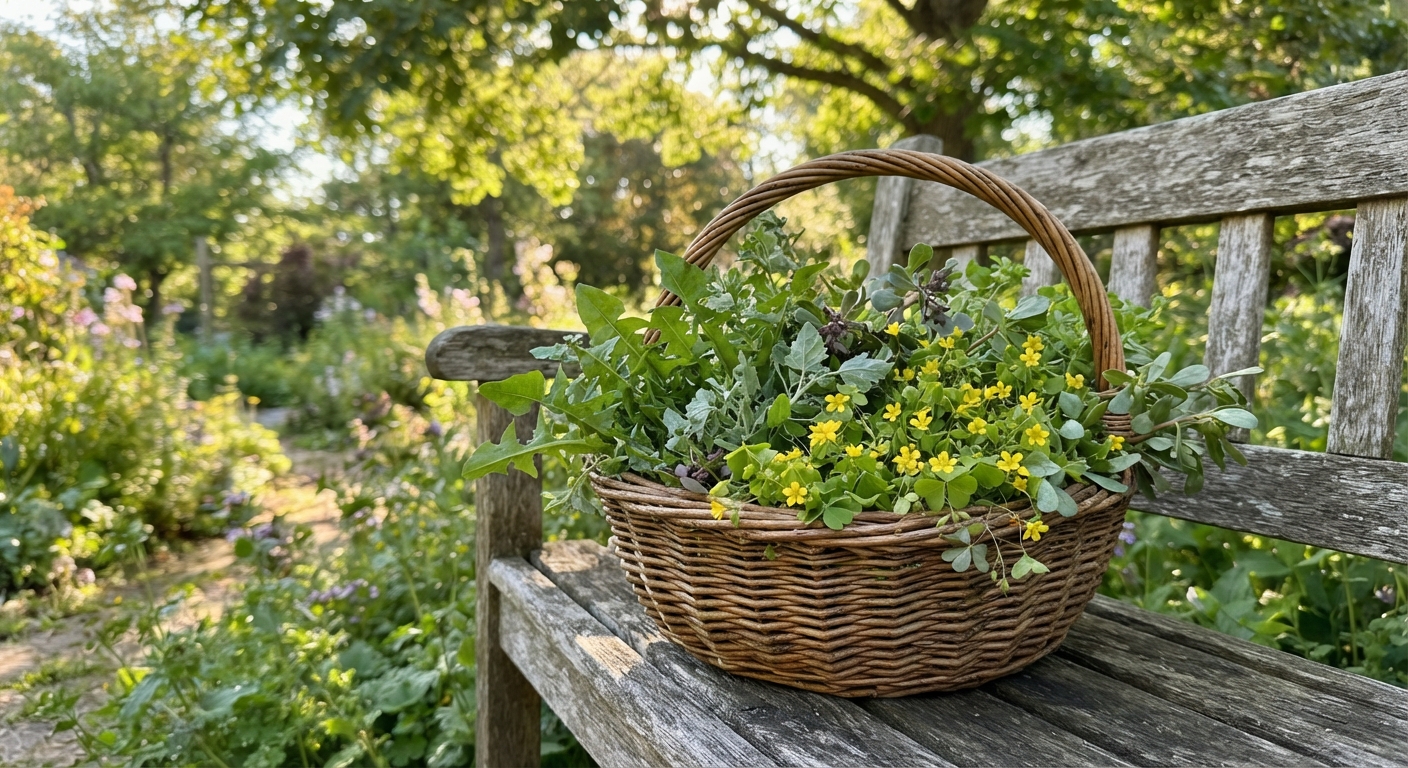
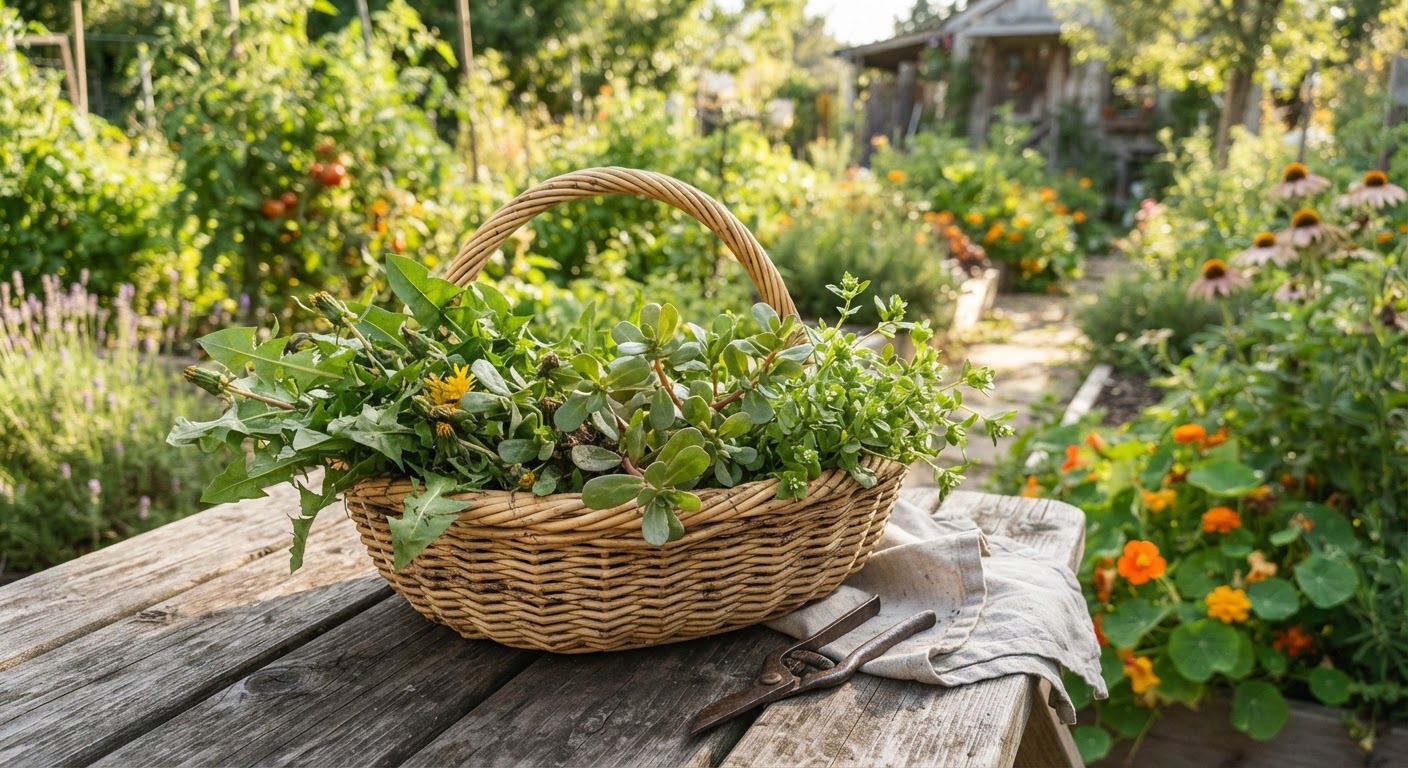
Last summer I watched my neighbor spend an entire Saturday on his hands and knees, yanking up purslane by the fistful and stuffing it into a yard waste bag. I walked over, picked a sprig from the pile, popped it in my mouth, and chewed.
He looked at me like I’d just eaten a slug.
“What?” I said. “You just threw away $5 worth of salad.”
That’s the thing about common edible weeds — they’re right there, free for the taking, often more nutritious than the vegetables we actually plant on purpose. Yet most people treat them like enemies.
I started foraging almost by accident. A friend pointed at the dandelions in my lawn and said, “You know those are food, right?” I didn’t believe her. Now, years later, I can’t walk past a vacant lot without scanning for lunch.
If you’re curious about what’s hiding in your yard — and you want to do this safely without accidentally poisoning yourself — here are seven of the most common edible weeds, how to identify them with confidence, and exactly what to do with them once you’ve picked them.
1. Dandelion (Taraxacum officinale)
If you only learn one wild edible, make it this one.
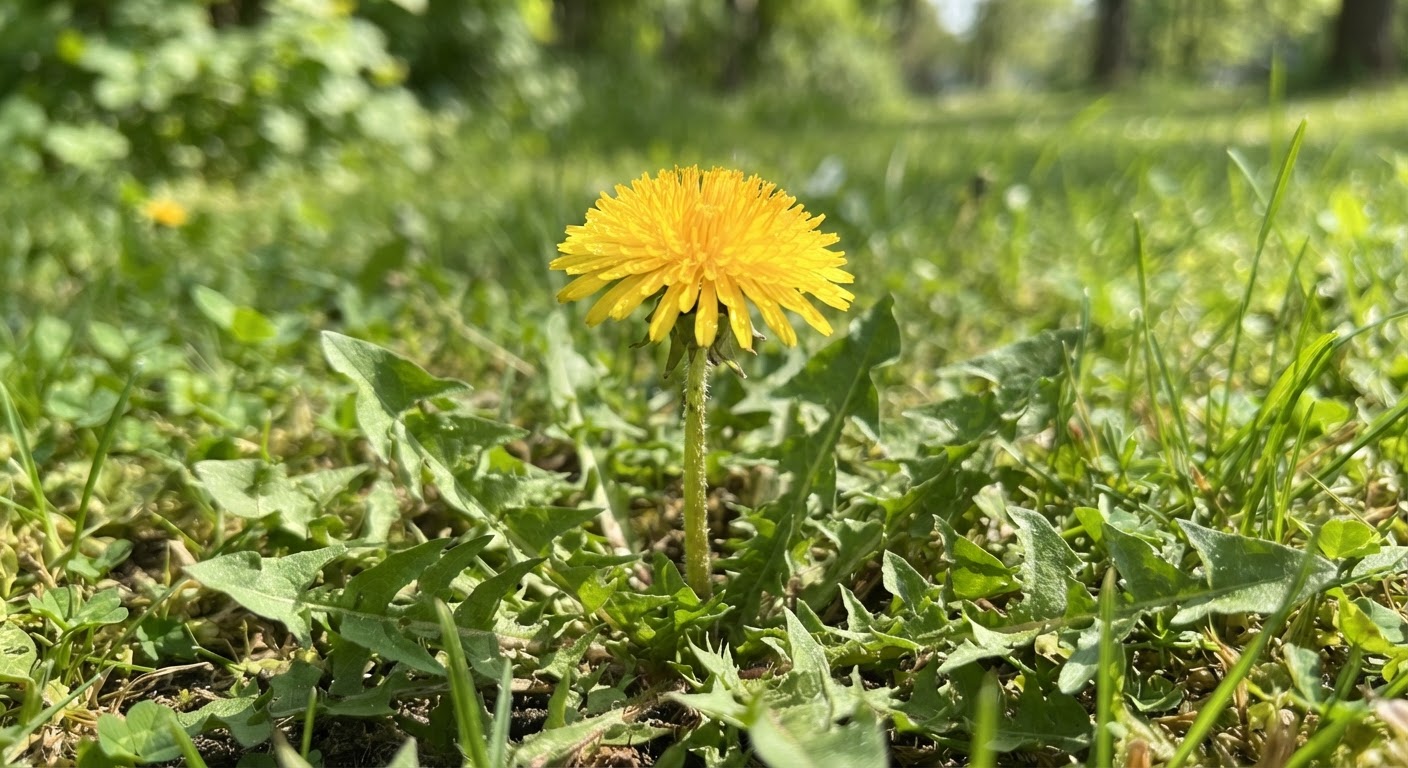
Dandelion is the gateway drug of foraging. Everyone knows what it looks like — those bright yellow flowers dotting every lawn in spring. What most people don’t know is that every single part of this plant is edible.
How to Identify It
Dandelion leaves are deeply toothed (the name comes from the French dent de lion, “lion’s tooth”), growing in a basal rosette directly from the ground. There is one flower per hollow, leafless stem. When you break the stem, a white milky sap oozes out.
Lookalike Warning: Several plants resemble dandelion. True dandelion has only one flower per stem and hairless, hollow stems. If you see multiple flowers branching off a single stalk or fuzzy stems, you’re looking at something else — probably cat’s ear or hawkweed, which are also edible but not what you want.
Edible Parts & How to Eat Them
- Young leaves (spring): Toss raw into salads. Older leaves get bitter — blanch them in boiling water for 30 seconds to tame the bite, then sauté with garlic and olive oil. They taste like arugula’s tougher cousin.
- Flowers: Pull the yellow petals off the green base (the base is bitter) and use them to make dandelion wine, fritters, or scatter them over a salad. They’re sweet and mild.
- Roots: Dig up in fall, roast at 350°F until dark and fragrant, then grind. Makes a decent coffee substitute. Not identical to coffee, but earthy and satisfying in its own way.
- Crown: That tight cluster between root and leaves? Slice it thin and sauté. Tastes like artichoke heart.
Nutritional Highlights
Dandelion greens pack more vitamin A than carrots, more potassium than bananas, and substantial calcium and iron. The roots contain inulin, a prebiotic fiber.
Harvesting Tips
Pick from areas you know haven’t been sprayed. Avoid roadsides and dog-walking routes. Spring leaves are mildest; fall roots are sweetest.
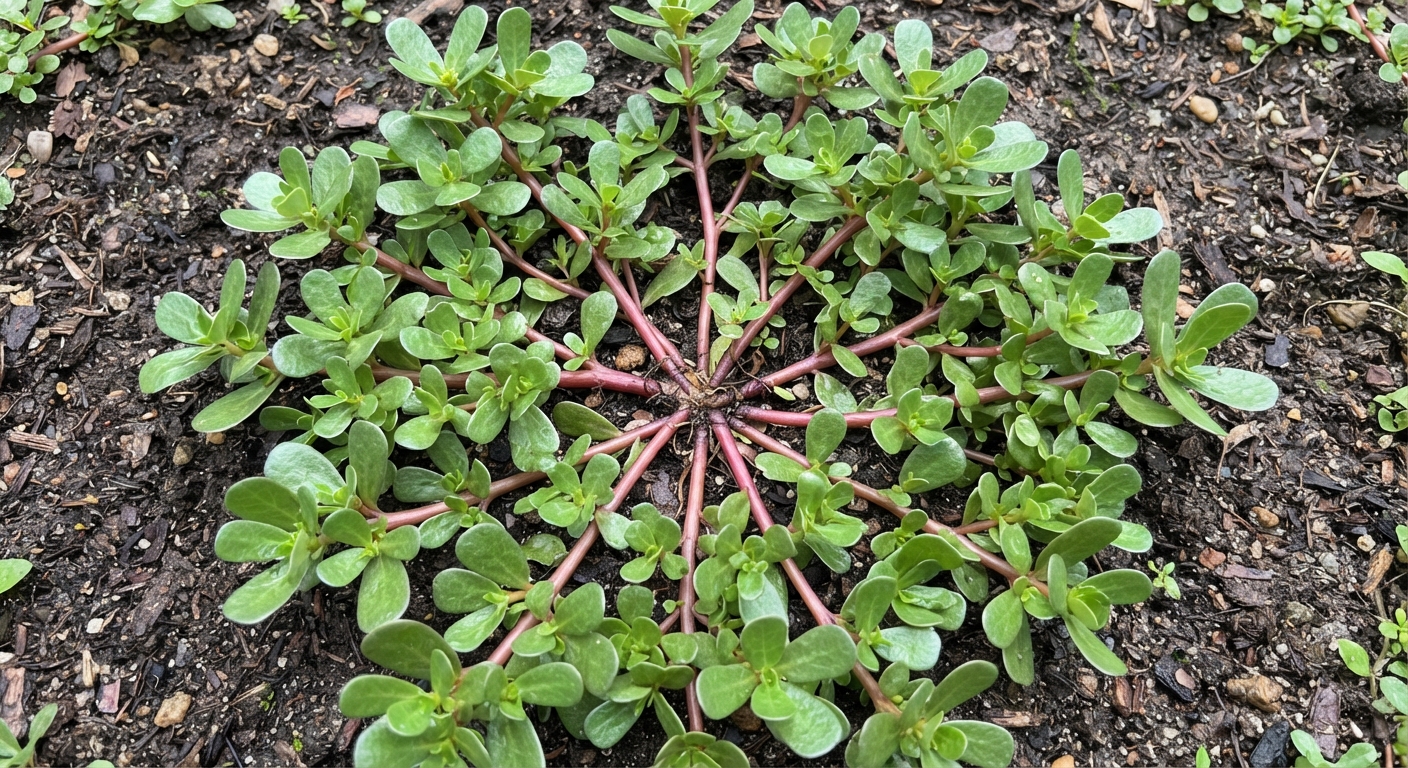
2. Purslane (Portulaca oleracea)
If dandelion is the gateway drug, purslane is the upgrade.
This succulent little plant grows flat along the ground with fleshy, paddle-shaped leaves and reddish stems. It thrives in cracks in the sidewalk, garden beds, and anywhere hot and dry. I’ve pulled it out of the gravel in my driveway more times than I can count.
How to Identify It
Purslane’s leaves are thick, smooth, and spatula-shaped — they look like tiny jade plant leaves. The stems are reddish-purple and succulent. Break one open and you’ll see water inside. In summer, tiny yellow flowers open in the morning and close by afternoon.
Lookalike Warning — This One Matters: Spotted spurge (Euphorbia maculata) looks vaguely similar but is toxic. The dead giveaway: break the stem. Purslane oozes clear water. Spurge oozes a milky white sap. Spurge also has thinner, flatter leaves and grows in a tighter rosette. If you see white sap, do not eat it.
Edible Parts & How to Eat Them
- Leaves and stems (raw): Crisp, lemony, and slightly salty. Toss into salads, pile onto tacos, or stuff into a sandwich. It adds a juicy crunch that regular lettuce can’t match.
- Leaves and stems (cooked): Sauté briefly with garlic — it develops a slight mucilaginous texture, like okra. Great in stir-fries and soups. In Mexican cuisine it’s called verdolagas and often cooked with pork and tomatillos.
- Seeds: The tiny black seeds can be ground into flour, though harvesting enough of them is tedious work.
Nutritional Highlights
Purslane is one of the richest plant sources of omega-3 fatty acids — the same kind found in fish oil. It’s also loaded with vitamin A, vitamin C, magnesium, and antioxidants.
Harvesting Tips
Snip stems rather than pulling the whole plant — it regrows. Purslane is at its best in midsummer heat when most other greens have bolted.
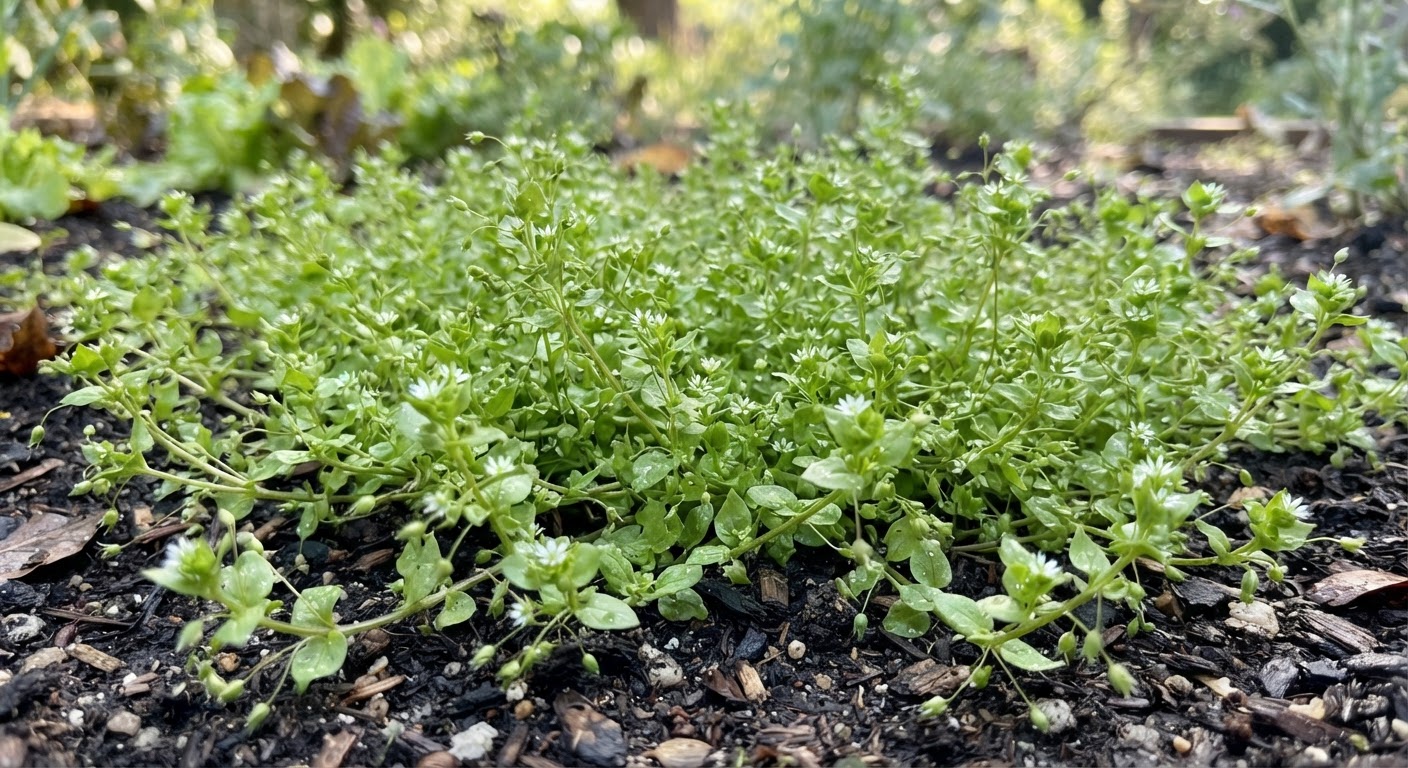
3. Chickweed (Stellaria media)
Chickweed is the quiet overachiever of the weed world. It doesn’t announce itself with bright flowers or thorns. It just forms a delicate green mat and waits for someone who knows what they’re looking at.
How to Identify It
Chickweed has tiny, pointed oval leaves growing in opposite pairs along thin, sprawling stems. The stems have a single line of fine hairs running down one side — this is your most reliable ID feature. The flowers are tiny, white, and star-shaped with five petals so deeply split they look like ten.
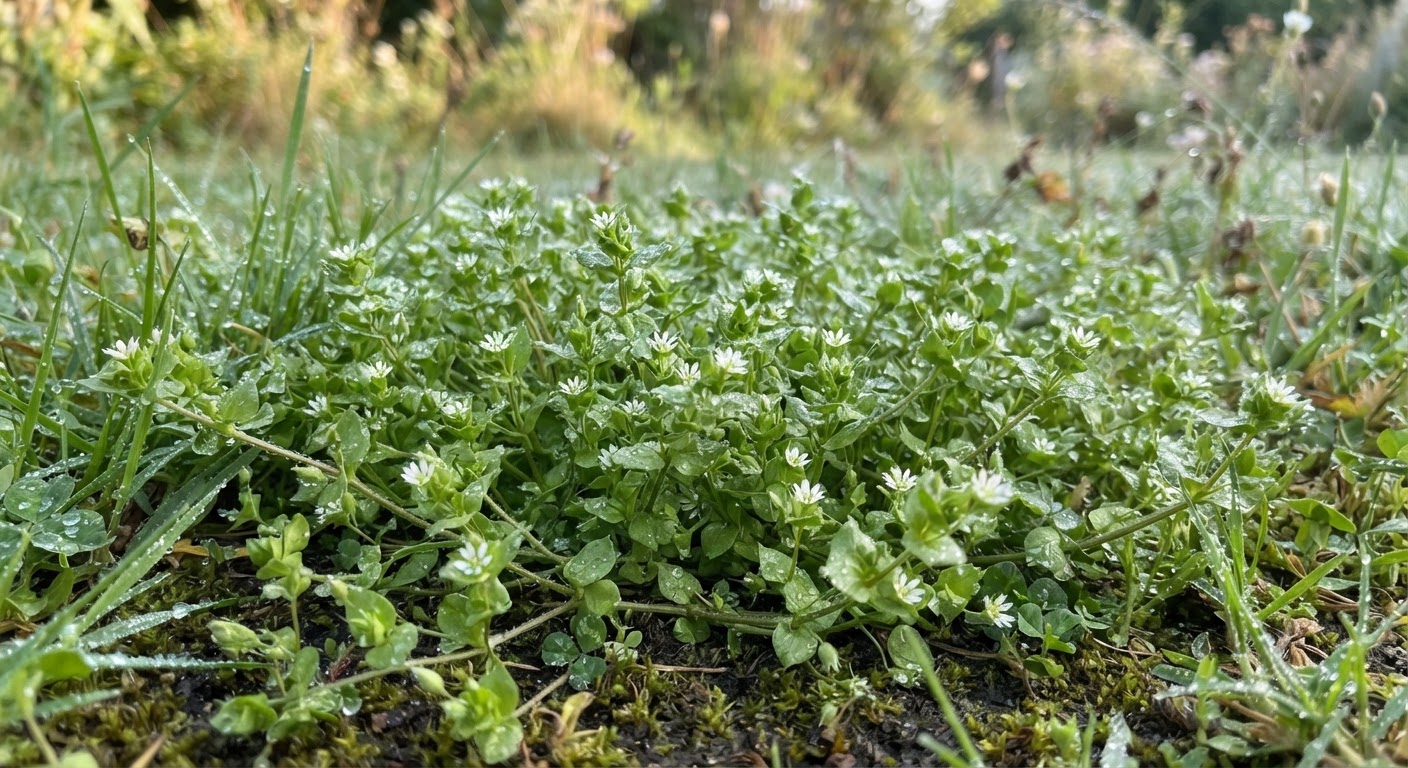
Lookalike Warning: Scarlet pimpernel (Anagallis arvensis) and common speedwell both resemble chickweed but lack the single hair-line on the stem. Scarlet pimpernel is toxic. Speedwell is safe but not particularly tasty. Always check for that hair line.
Edible Parts & How to Eat Them
- Leaves, stems, and flowers (raw): Mild, sweet, and tender — tastes like young corn silk or butter lettuce. Use as salad greens, in sandwiches, or as a garnish.
- Cooked: Add to soups at the last minute, wilt into pasta, or chop into omelets. It cooks down dramatically, like spinach.
- Pesto: Blend chickweed with garlic, olive oil, walnuts, and Parmesan. It makes a surprisingly delicate green pesto.
Nutritional Highlights
High in iron, vitamin C, and plant-based calcium. It’s also a mild diuretic, traditionally used in herbal medicine for water retention.
Harvesting Tips
Chickweed prefers cool weather — spring and fall are peak seasons. Cut the top few inches with scissors; it keeps growing back. Wash thoroughly as it tends to trap dirt.
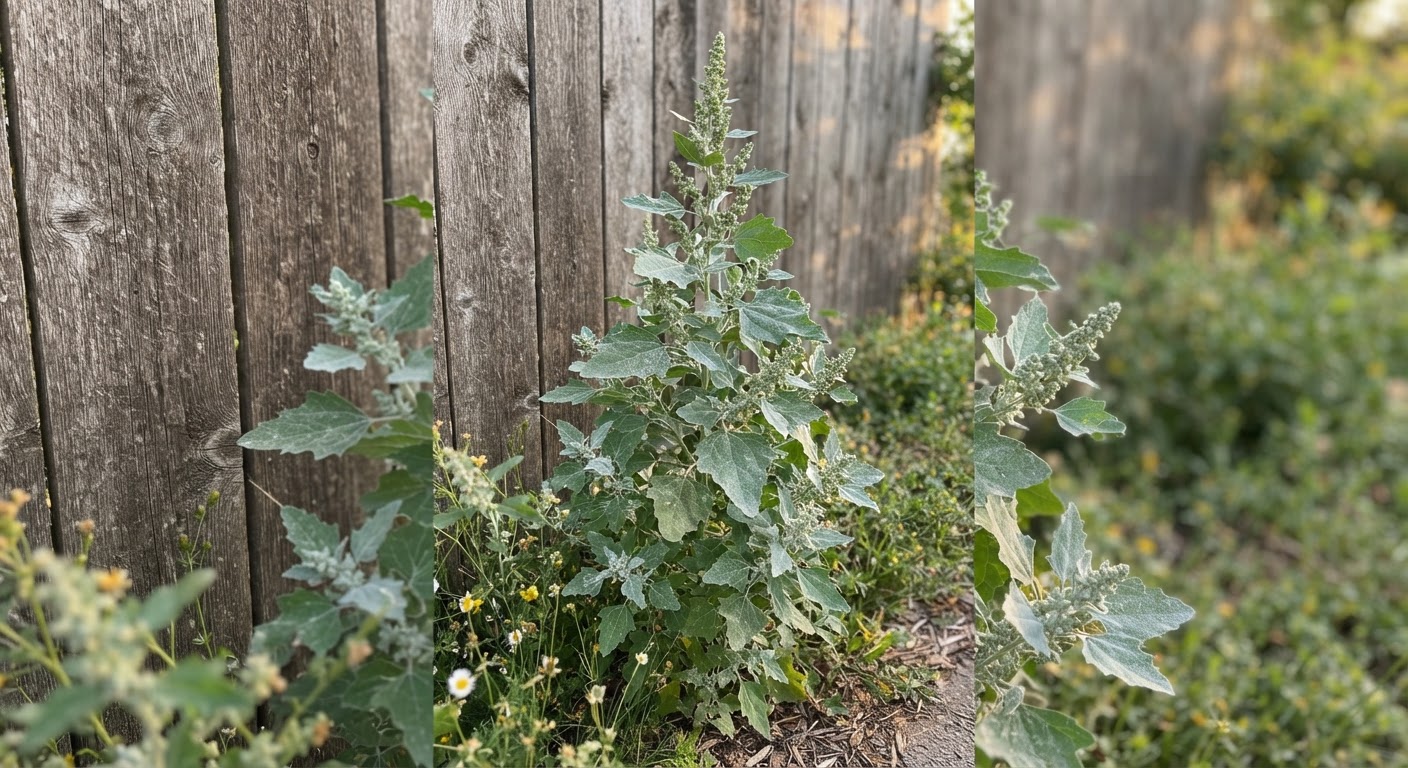
4. Lambsquarters (Chenopodium album)
Also called wild spinach, fat hen, or goosefoot. I call it “the plant that grows faster than I can pick it.”
Lambsquarters is one of those weeds that makes you wonder why anyone bothered domesticating spinach at all. This wild relative tastes remarkably similar — slightly earthier, a bit more mineral — and grows without any help from anyone.
How to Identify It
The leaves are diamond- or goosefoot-shaped with irregular, wavy teeth along the edges. The key ID feature: a powdery white coating on young leaves, especially on the underside and near the growing tip. It looks almost like someone dusted the plant with flour. The stalk is grooved and can reach 3-6 feet tall if left alone.
Lookalike Warning: Some Solanum species (nightshades) have vaguely similar leaves but smell rank when crushed. Lambsquarters has no unpleasant smell. Always confirm multiple features rather than relying on any single one.
Edible Parts & How to Eat Them
- Young leaves and tender stems: Use exactly like spinach. Raw in salads, steamed, sautéed, or added to curries, quiches, and soups. It has a pleasant, nutty flavor and keeps its texture better than spinach when cooked.
- Seeds: The plant produces thousands of tiny black seeds. Collect them in late summer/fall and cook as a grain — similar to quinoa, which is actually a close relative.
- Flower buds: The tender tips with immature flower clusters can be steamed and eaten like broccoli rabe.
Nutritional Highlights
Higher in iron, calcium, protein, and vitamin B1 than spinach. Contains significant vitamin A and C. One cup of lambsquarters has more calcium than a glass of milk.
Harvesting Tips
Pick leaves from the top few inches of the plant where they’re youngest. Wash well — that dusty coating collects dirt. Avoid harvesting from heavily fertilized soils; lambsquarters accumulates nitrates.
5. Broadleaf Plantain (Plantago major)
This is the weed growing in every crack of every sidewalk in America. You’ve walked on it a thousand times. You probably never once considered eating it.
Plantain (no relation to the banana) is less a gourmet ingredient and more a survival staple, but don’t let that stop you — the young leaves are genuinely good eating, and the plant has medicinal properties that make it worth knowing.
How to Identify It
Broadleaf plantain has wide, oval leaves with prominent parallel veins running lengthwise from base to tip. The leaves form a flat rosette pressed against the ground. The flower spikes look like little green bottle brushes on a leafless stem. Narrowleaf plantain (Plantago lanceolata) is a similar relative with long, narrow, lance-shaped leaves — also edible.
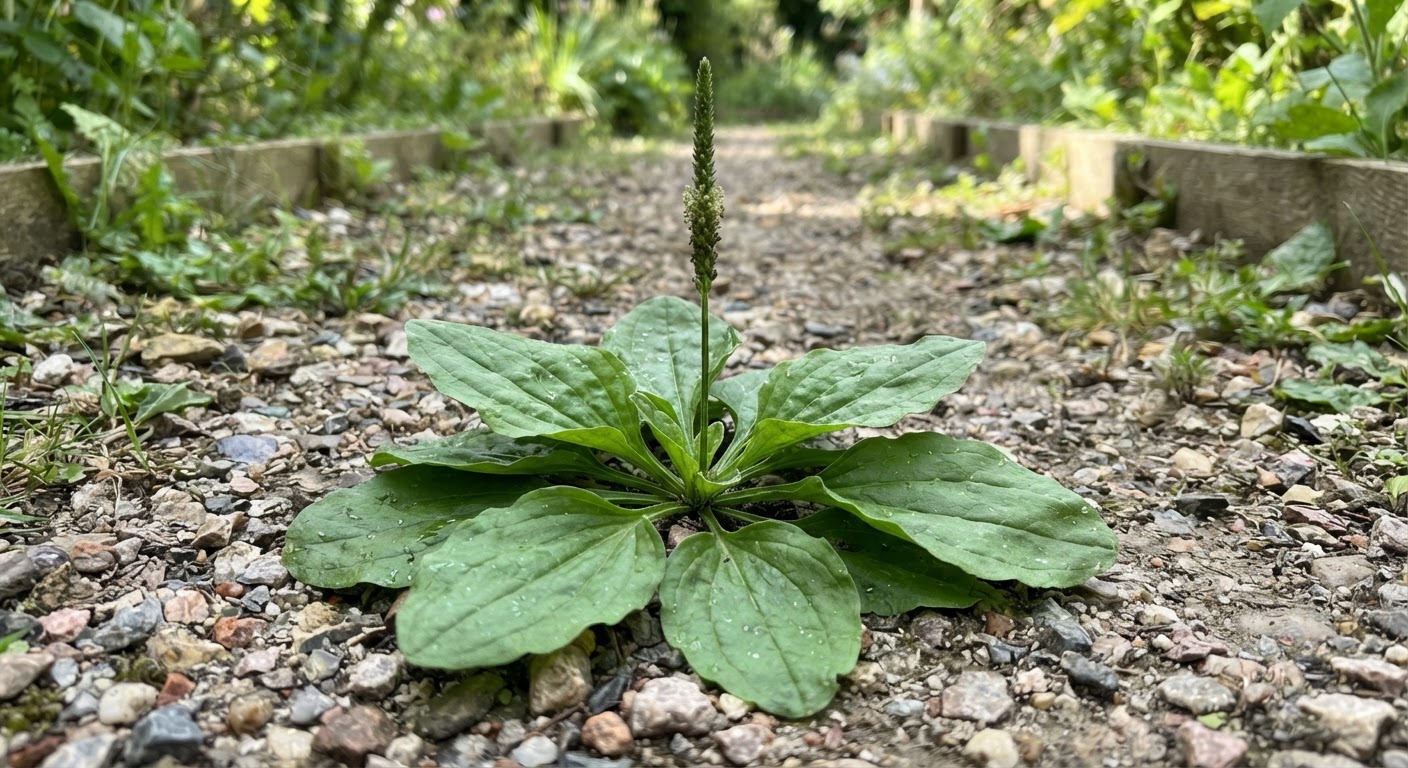
Lookalike Warning: Plantain is distinctive enough that confusion is unlikely. Just make sure you’re not picking young lily leaves, which lack the parallel ribbing.
Edible Parts & How to Eat Them
- Young leaves (raw): The smallest, most tender inner leaves work in salads. They’re fibrous and slightly bitter — think of them as a green with texture, not a lettuce replacement.
- Mature leaves (cooked): Blanch then sauté with butter and salt. The parallel veins stay stringy, so some people strip the leaves or blend them into soups and green sauces.
- Seeds: The seeds along the flower stalk have a nutty flavor. Strip them off when brown and sprinkle on oatmeal or yogurt. They contain psyllium-like fiber and absorb water like little gel capsules — interesting mouthfeel.
Nutritional and Medicinal Value
Plantain leaves contain allantoin, which promotes skin healing. Crush a fresh leaf and apply it to bug bites, stings, or minor cuts. It genuinely works — I’ve used it on bee stings and the relief is near-instant. The leaves are also rich in vitamin K, calcium, and iron.
Harvesting Tips
Pick inner leaves from the center of the rosette — they’re the newest and most tender. Spring and early summer are best, before leaves get tough and fibrous.
6. Wood Sorrel (Oxalis stricta)
This one’s my personal favorite. It looks like clover and tastes like green apple candy.
Wood sorrel is a delicate little plant with heart-shaped leaflets in groups of three, resembling clover. But the taste gives it away instantly — bite into a leaf and you get a bright, tangy hit of lemon.
How to Identify It
Each leaf is divided into three heart-shaped leaflets that fold down at night or in intense sun — like tiny umbrellas closing. The flowers are small, yellow, with five petals. The seed pods are upright, narrow, and explode when touched, scattering seeds everywhere.
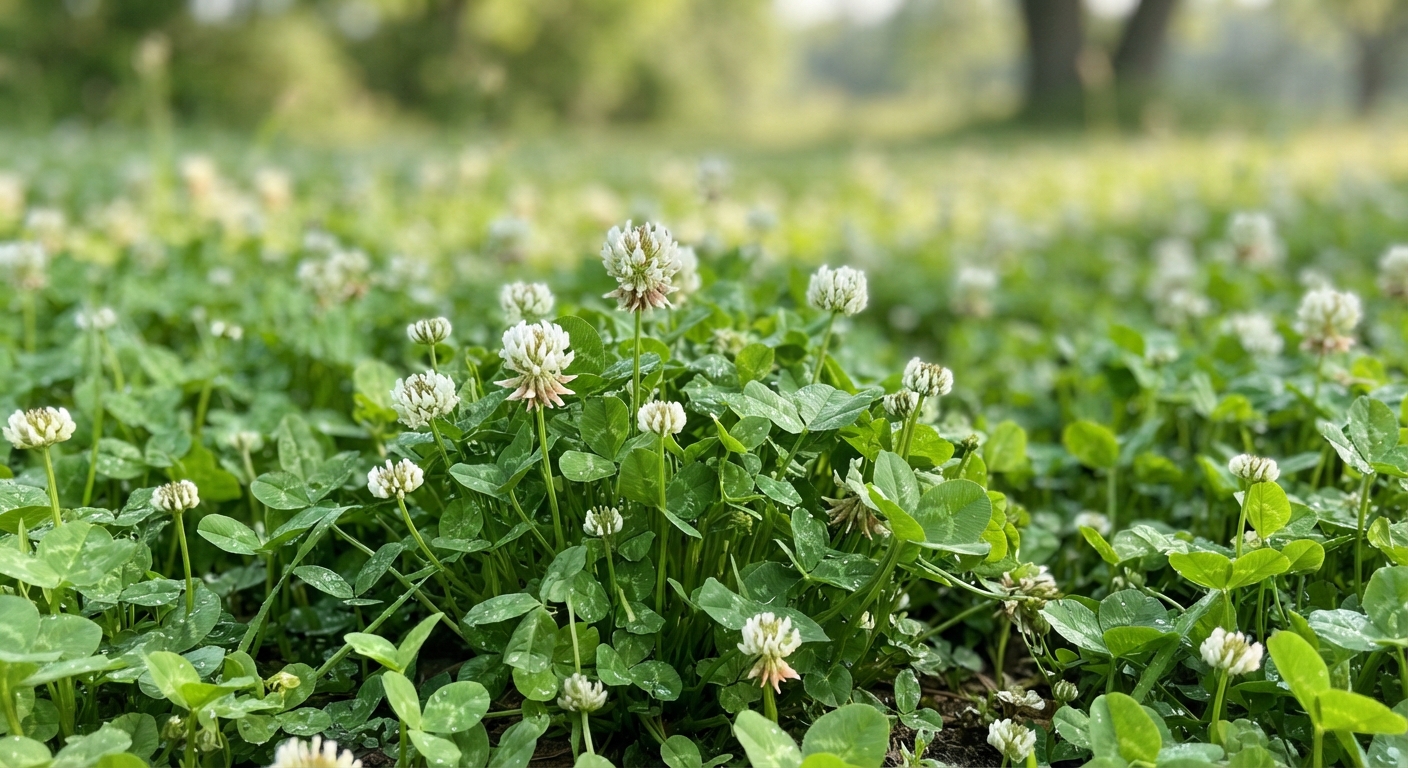
Lookalike Warning: Clover also has three leaflets but with a different shape — clover leaflets are oval or teardrop-shaped with a pale chevron marking, not heart-shaped. Clover doesn’t have that lemony tang. Both are edible, so confusion here isn’t dangerous.
Edible Parts & How to Eat Them
- Leaves and stems (raw): Nibble straight from the ground as a trail snack. Add to salads for a citrusy punch. Mince and mix into softened butter with fresh herbs.
- Infused: Steep a handful in hot water with honey for a lemonade-like tea. Add to cold water and refrigerate overnight for a refreshing infused water.
- Garnish: The delicate leaves and yellow flowers make beautiful plate garnishes. They brighten up fish dishes, summer soups, and fruit salads.
Important Moderation Note: Wood sorrel contains oxalic acid — the same compound in spinach and rhubarb. It’s perfectly safe in normal food quantities, but don’t eat entire bowls of it daily, especially if you have kidney stone issues.
Nutritional Highlights
Good source of vitamin C — that tangy flavor isn’t just flavor, it’s what prevented scurvy in early settlers.
Harvesting Tips
Wood sorrel grows in moist, partially shaded spots. Pinch off the tender top growth rather than pulling roots. It’s available from spring through fall.
7. Stinging Nettle (Urtica dioica)
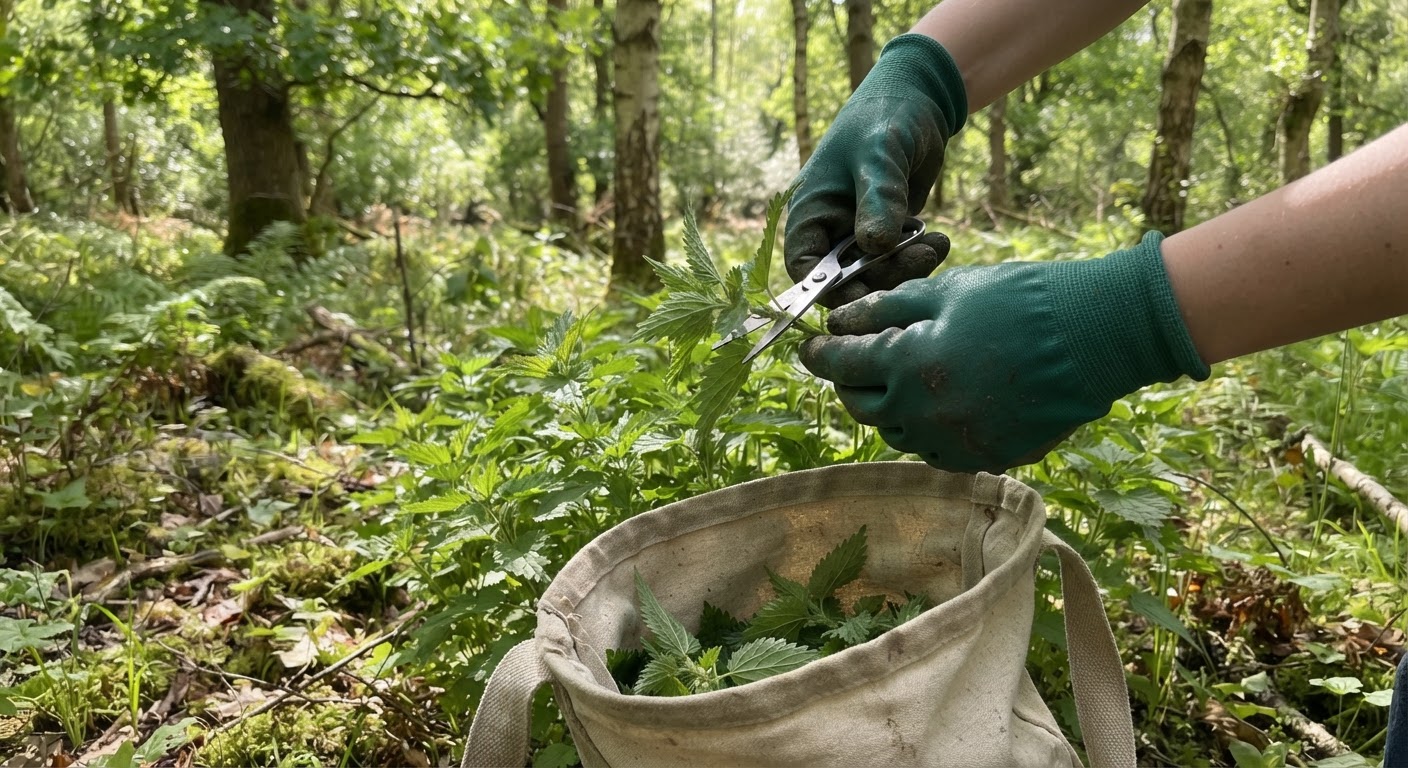
This one requires a disclaimer: wear gloves. Seriously. If you touch stinging nettle with bare skin, you’ll know about it for hours.
But push past the sting and you’ll find one of the most versatile, nutritious wild greens in existence. Nettle soup is a springtime tradition across Europe for good reason.
How to Identify It
Nettle grows in dense patches, 2-6 feet tall, with serrated, heart-shaped leaves arranged opposite each other on square stems. The entire plant is covered in tiny hollow hairs — those are the stingers. When you brush against them, they inject histamine, formic acid, and other irritants. The sensation feels like a mild bee sting that fades into tingling numbness.
Lookalike Warning: Dead nettle (Lamium species) has similar leaves but square stems with purple or white flowers and no sting. It’s in the mint family and also edible. Wood nettle (Laportea canadensis) is a relative with alternate leaves (not opposite) and a similar sting — also edible, just use the same precautions.
Edible Parts & How to Eat Them
- Young leaves and tips (cooked): This is your prime harvest. Cooking completely neutralizes the sting. Steam, blanch, or sauté for just a few minutes. Use in soups, pesto, pasta fillings, spanakopita, or anywhere you’d use spinach.
- Tea: Steep fresh or dried leaves in boiling water. It tastes green and minerally — an acquired taste, but deeply nourishing.
- Nettle soup: Sauté onion and garlic in butter, add chicken or vegetable stock, a diced potato for body, and a big pile of blanched nettle tops. Simmer, blend, season with salt and nutmeg. One of the best soups I’ve ever made.
- Seeds: The green seed clusters in late summer are mildly stimulating — sprinkle them sparingly over oatmeal or smoothies.
- Fiber: The stems contain strong bast fibers. Indigenous peoples and Europeans alike have used nettle fiber for cordage and textiles for thousands of years.
Nutritional Highlights
Nettle is an absolute powerhouse: high in iron, calcium, magnesium, vitamins A, C, and K, and a significant amount of protein for a leafy green. It’s also a traditional spring tonic — after a winter of preserved food, nettle provides the minerals your body craves.
Harvesting Tips
You need thick gardening gloves and a pair of scissors. Cut the top 4-6 inches (the newest growth) into a bag. Harvest in spring before the plant flowers — once nettle goes to seed, the leaves develop gritty particles called cystoliths that can irritate the kidneys. Snip strategically and you’ll get multiple harvests from one patch as it regrows.
The Golden Rules of Foraging
Before you grab a basket and head outside, five non-negotiable safety rules:
- 100% positive identification. If you are not completely certain what you’re looking at, don’t eat it. There’s no prize for guessing right. Post photos in foraging groups, use a reliable field guide (I recommend The Forager’s Harvest by Samuel Thayer), and cross-reference multiple ID features.
- Avoid contaminated areas. Not just pesticides — avoid roadsides, railroad tracks, industrial areas, floodwater zones, and anywhere dogs frequent.
- Start with small portions. Even safe wild foods can cause stomach upset if your body isn’t used to them. Try a small amount first.
- Learn one plant at a time. Mastering seven plants properly beats half-knowing thirty. Pick one from this list, find it, confirm it, eat it. Then move to the next.
- Leave enough behind. Never take more than a third of any patch. Wildlife depends on these plants too, and you want the patch to survive for next season.
Common Questions Beginners Ask
Q: Can I eat weeds from my lawn if I don’t spray? Yes — if you’re certain no herbicides or pesticides have been applied by you, previous owners, or drifting neighbors. When in doubt, ask or avoid.
Q: Should I wash wild greens? Absolutely. Wash in cold water with a splash of vinegar to remove dirt, bugs, and potential bacteria. Spin dry or pat with a towel.
Q: Does cooking make all wild plants safe? No. Cooking destroys some toxins but not all. Some plants — like poison hemlock — remain deadly cooked. This is exactly why positive ID is non-negotiable.
Q: When is the best time to forage? Morning, after dew has dried but before the sun gets intense. Plants are crisp and hydrated, and you’ll see colors more accurately in natural daylight.
Q: Can I freeze wild greens? Yes. Blanch in boiling water for 30-60 seconds, plunge into ice water, squeeze out excess water, and freeze in portions. Nettle and lambsquarters freeze particularly well.
Your First Foraging Walk
Here’s what I want you to do: grab a basket, put on some shoes, and walk through your yard slowly. Look at what’s actually growing — not the garden beds you planted, but the edges, the paths, the forgotten corners. I’d bet at least three of these seven plants are within fifty feet of your door.
Pick a dandelion. Break the stem. See the milky sap? Taste a leaf — bitter, right? That’s your introduction.
Now pull up a purslane. Notice that reddish stem, those plump leaves. Bite one and taste that lemony saltiness. That’s free lunch, growing in a sidewalk crack.
The more you look, the more you’ll see. And once you start seeing food everywhere, you’ll never look at a “weed” the same way again.
🌿 Want a second pair of eyes in the field?
Our free iOS app Edible Plant Identifier helps you snap a photo and instantly know what you’re looking at — with toxic lookalike warnings, edible parts info, and seasonal tips.
📱 Download Edible Plant Identifier — Free on iOS