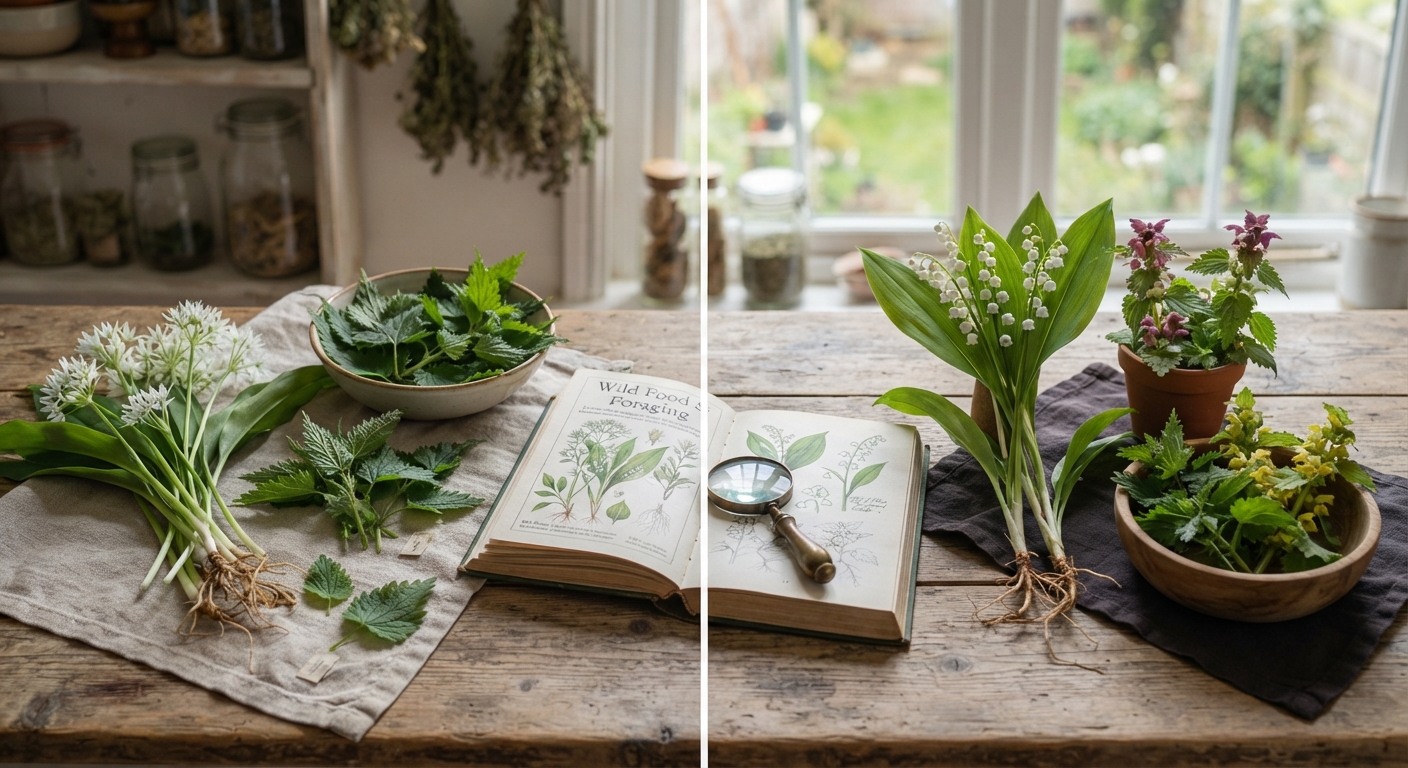
Nobody ever sets out to poison themselves. Every single foraging accident — and there are thousands each year — begins with confidence. Someone spots a plant that looks exactly like the one in their field guide. They’re sure about it. They’ve seen pictures. They’ve read the description. Then they eat it, and twenty minutes later they’re in an ambulance wondering where it all went wrong.
The problem isn’t a lack of information. The problem is that nature doesn’t care about making things easy for beginners. For every delicious wild plant, there’s often a dangerous look-alike growing right next to it — sometimes so similar that even experienced foragers have to pause and double-check.
This guide covers the most dangerous look-alike plants you’re likely to encounter in North America and Europe, what makes each pair confusing, and the key identification features that could literally save your life.
Why Look-Alike Plants Are So Dangerous
The human brain is wired for pattern recognition. Show someone a picture of a carrot and they’ll recognize carrots for the rest of their life. The problem with wild plants is that they don’t grow in neat supermarket rows with labels attached.
The numbers are sobering. According to the American Association of Poison Control Centers, plant exposures account for thousands of calls every year. The vast majority involve people who misidentified a toxic plant as an edible one. Children are especially vulnerable, but adults foraging with good intentions make up a significant percentage of serious poisonings.
What makes this especially tricky:
- Seasonal variation — A plant looks different in spring than in summer. Young leaves, mature leaves, flowers, and seed heads can all look like completely different plants.
- Regional differences — The same species can vary dramatically depending on soil conditions, elevation, and climate.
- Stages of growth — The most dangerous window is early spring, when many toxic and edible plants emerge as nearly identical shoots.
- Incomplete field guides — Many popular foraging books show only one photo per plant, usually at peak bloom, which is rarely what you see in the field.
The Golden Rule of Foraging
Never eat anything unless you are 100% certain of what it is. Not 90%. Not “pretty sure.” One hundred percent. If there’s any doubt, take a photo, note the location, and check with an expert. Your dinner isn’t worth an organ transplant.
1. Wild Carrot vs. Poison Hemlock
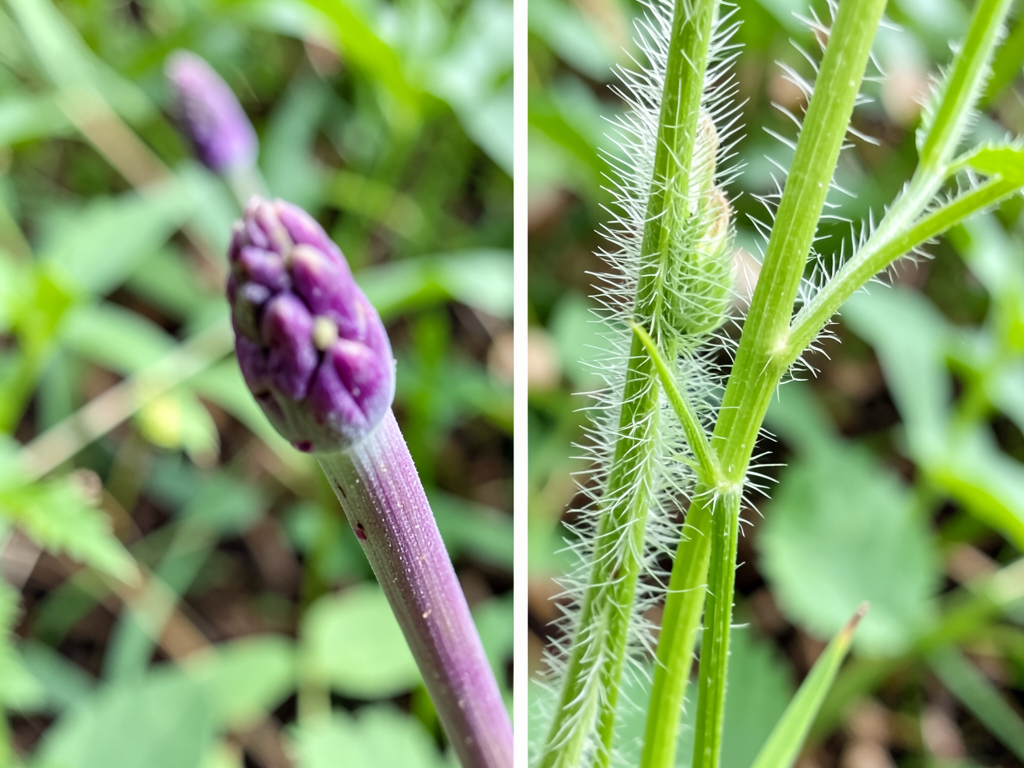
This is perhaps the most important pair to learn, because the consequences of getting it wrong are catastrophic.
Wild Carrot (Daucus carota) — also called Queen Anne’s Lace — is the ancestor of the garden carrot. The root is edible when young, and the leaves and flowers are used in teas and garnishes. It grows abundantly along roadsides, in fields, and in disturbed soil throughout North America.
Poison Hemlock (Conium maculatum) is the plant that killed Socrates. Every part of it contains coniine, a neurotoxin that causes ascending paralysis — meaning it shuts your body down from the feet upward until your respiratory muscles fail. Death comes from suffocation while you remain fully conscious.
Key Differences That Save Lives
| Feature | Wild Carrot | Poison Hemlock |
|---|---|---|
| Stem | Hairy, solid green | Smooth, hairless, purple blotches |
| Smell | Carrot-like when crushed | Musty, mouse-like odor |
| Flower cluster | Flat-topped, often with a single dark purple floret in the center | Rounded, umbrella-shaped, pure white |
| Height | Usually 1-3 feet | Can reach 6-8 feet |
| Root | White, smells like carrot | Fleshy white taproot |
The purple blotches on the stem is the single most reliable field marker. If you see purple splotches on a smooth stem, walk away — that’s hemlock. Wild carrot stems are green and fuzzy all the way through.
2. Wild Garlic vs. Death Camas
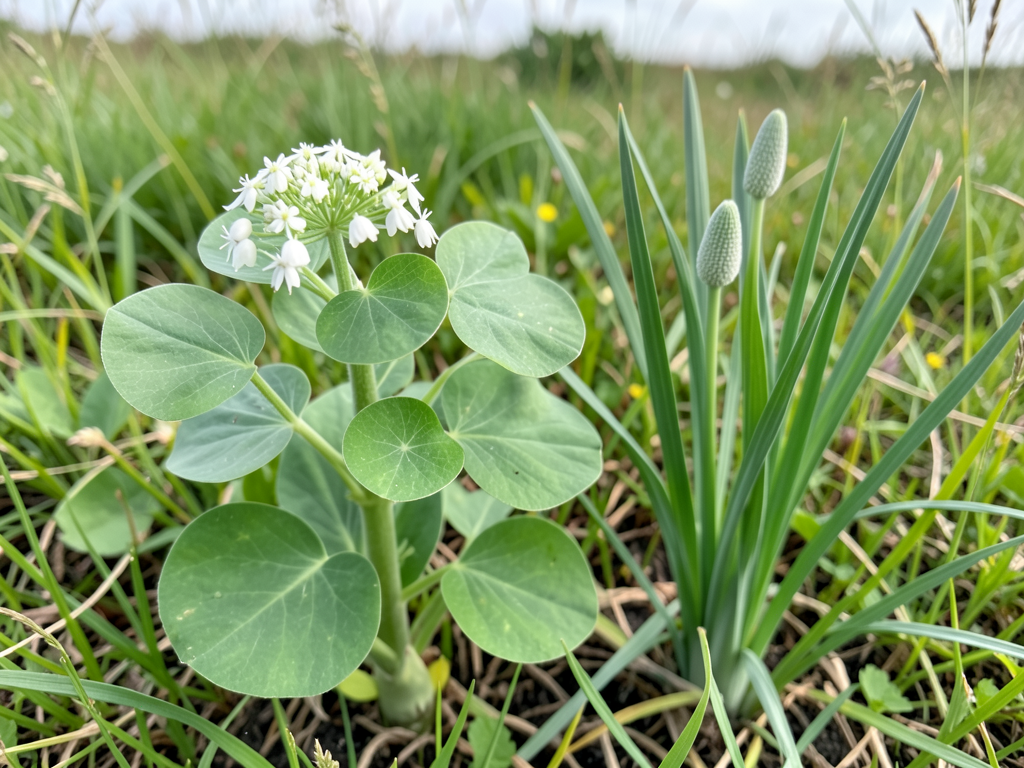
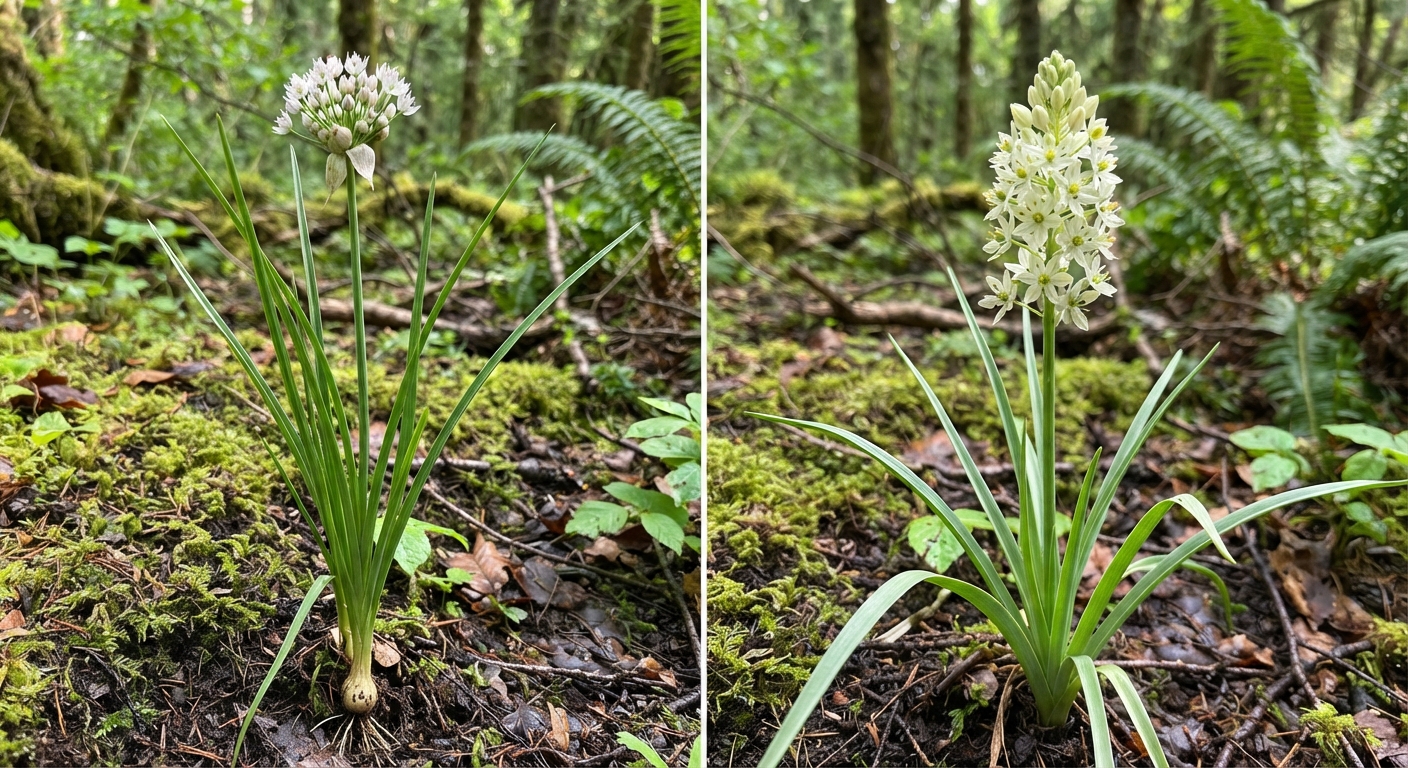
Wild Garlic (Allium vineale) and Wild Onion (Allium canadense) are among the most eagerly foraged wild foods. The bulbs, leaves, and flowers are all edible and delicious. The smell of onion or garlic is unmistakable.
Death Camas (Zigadenus venenosus) is a small flowering plant that produces bulbs that look remarkably similar to wild onion bulbs — and it contains zygacine, an alkaloid that causes severe vomiting, low blood pressure, seizures, and potentially death.
The One Rule That Never Fails
Smell it. If it doesn’t smell like onion or garlic, it isn’t one. Death camas has no allium odor at all. This rule is so reliable that experienced foragers call it the “smell test,” and it has zero known exceptions.
| Feature | Wild Garlic/Onion | Death Camas |
|---|---|---|
| Smell | Strong onion/garlic odor | None |
| Leaves | Round, hollow (garlic) or flat, solid (onion) | Grass-like, V-shaped crease |
| Flowers | Clusters of small white/pink bells | Cream-colored, star-shaped in a loose cluster |
| Bulb | Layered with papery coating | Solid, no layers, dark outer coating |
Don’t get lazy with this one. Every single year, someone skips the smell test and ends up in the ER. The bulbs often grow mixed together in the same habitat.
3. Morel Mushrooms vs. False Morels
Morels are the holy grail of wild mushrooms — and the false morel is the trap that catches overconfident hunters every spring.
True Morels (Morchella species) are delicious, sought-after delicacies that sell for up to $50 per pound. They have a honeycomb-like cap with deep pits and ridges.
False Morels (Gyromitra species) contain gyromitrin, which the body metabolizes into monomethylhydrazine — the same compound used in rocket fuel. Symptoms include vomiting, diarrhea, liver damage, seizures, and death. Cooking does not reliably destroy the toxin.
How to Tell Them Apart
| Feature | True Morel | False Morel |
|---|---|---|
| Cap attachment | Attached to stem at bottom edge | Hangs free, attached only at top |
| Interior | Completely hollow from cap through stem | Cottony or chambered interior |
| Cap shape | Elongated, honeycomb-like | Brain-like, wrinkled, irregular |
| Stem | Hollow, whitish | Solid or chambered, often pinkish |
Slice it lengthwise. A true morel is completely hollow from the tip of the cap to the bottom of the stem. A false morel has cottony fibers or chambers inside. This is the definitive test that never fails.
4. Elderberry vs. Water Hemlock
Elderberries (Sambucus nigra/canadensis) produce clusters of small dark berries that make excellent syrup, jam, and wine. They grow on shrubs with compound leaves and distinctive bark.
Water Hemlock (Cicuta maculata) is considered North America’s most violently toxic plant. Its roots contain cicutoxin, which attacks the central nervous system and causes violent seizures that can kill within hours. The leaves are the part most likely to be confused with elderberry.
Critical Identification
| Feature | Elderberry | Water Hemlock |
|---|---|---|
| Growth form | Woody shrub (bark) | Herbaceous plant (green, soft stems) |
| Leaf veins | Veins end at leaf margin teeth | Veins end in notches between teeth |
| Berries | Dark purple/black clusters | Not applicable (no berries, but seed heads) |
| Stems | Woody, bark, lenticels | Hollow, segmented, often with purple tint |
| Habitat | Field edges, woodlands | Wet areas, marshes, stream banks |
The key is the woody stem. Elderberry is a shrub with bark. Water hemlock is a soft-stemmed herbaceous plant. If you can snap the stem easily and it’s green and hollow, you’re not looking at elderberry.
5. Blueberries vs. Tutsan Berries
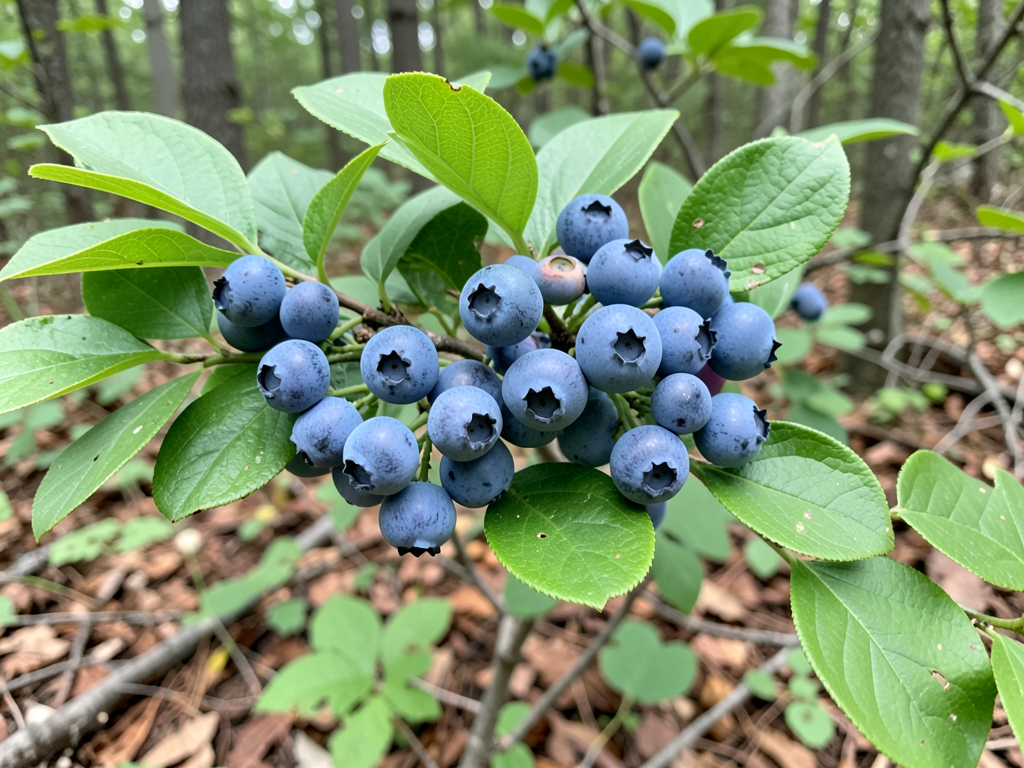
Wild blueberries are a forager’s treasure — but their look-alike cousins can make you very sick.
Wild Blueberries (Vaccinium species) grow on low shrubs, producing blue-purple berries with a characteristic five-pointed crown on the bottom. The flesh is whitish-green when cut.
Tutsan (Hypericum androsaemum) — also called Sweet Amber — produces berries that turn from red to black and can look like blueberries from a distance. All parts of the plant can cause gastrointestinal distress and photosensitivity.
Quick Field Check
- Crown check: Blueberries have a distinct crown (calyx) at the blossom end. Tutsan berries don’t.
- Cut it open: Blueberry flesh is pale green-white with many small seeds. Tutsan berries have reddish flesh.
- Crush and smell: Crushed blueberry leaves have a mild, pleasant scent with reddish autumn color.
- Taste a tiny bit, then spit (only if you’re highly confident): Blueberries are sweet. Tutsan is bitter and unpleasant.
6. Sweet Almond vs. Bitter Almond
This one isn’t about looks — it’s about chemistry. Sweet almonds (Prunus dulcis) and bitter almonds come from closely related trees and look almost identical. The difference is invisible but deadly.
Bitter almonds contain amygdalin, which breaks down into hydrogen cyanide when chewed or digested. Eating just a handful of raw bitter almonds can kill an adult. In many countries, bitter almonds are illegal to sell raw.
The rule: If you find “wild almonds,” do not eat them raw. Sweet almond varieties have been selectively bred over thousands of years and are almost exclusively cultivated. Wild almonds are almost certainly bitter and toxic.
7. Yarrow vs. Poison Hemlock (Leaves)
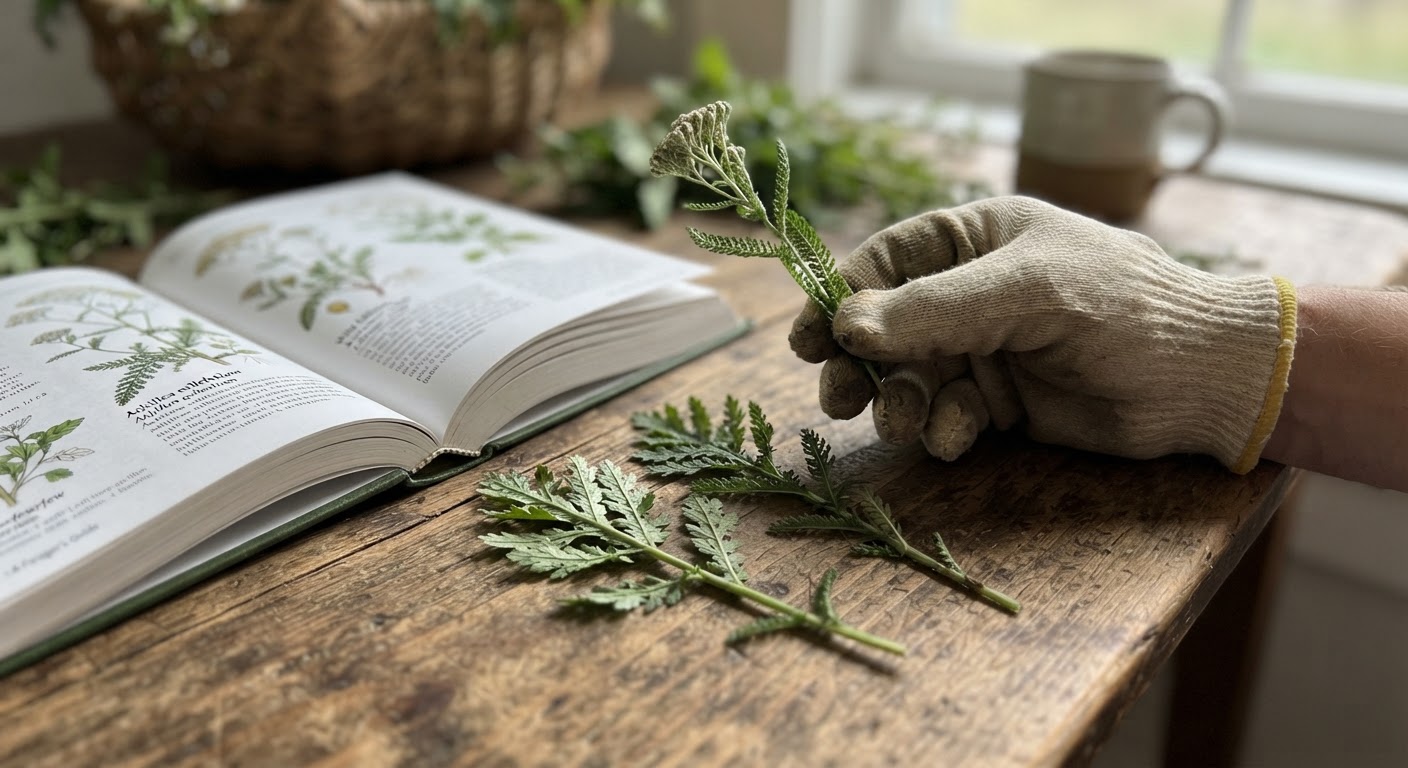
Yarrow (Achillea millefolium) is a prized medicinal herb used for wound healing, fever reduction, and digestive health. Its young leaves, however, can be confused with poison hemlock rosettes in early spring.
Spotting the Difference
- Yarrow leaves: Deeply dissected, feathery, almost fern-like. They look like delicate lace. When crushed, they have a distinctive medicinal, slightly camphor-like scent.
- Hemlock leaves: More broadly divided, with a parsley-like appearance up close. They lack the fine, feathery quality of yarrow. Crushed leaves smell musty, not medicinal.
- Stem at ground level: Yarrow stems are ridged and woolly at the base. Hemlock stems are smooth.
8. Purslane vs. Spurge
Purslane (Portulaca oleracea) is one of the most nutritious wild greens in the world — loaded with omega-3 fatty acids, vitamins A, C, and E, and more melatonin than almost any other plant. It grows as a creeping succulent in gardens, sidewalks, and disturbed areas everywhere.
Spotted Spurge (Euphorbia maculata) is a toxic, irritating look-alike that grows in the exact same habitats, often intertwined with purslane. Its milky white sap can cause severe skin irritation, blindness if rubbed into eyes, and gastrointestinal damage if ingested.
The Definitive Test
Break the stem. If white, milky sap comes out, it’s spurge — do not eat. Purslane stems ooze clear, watery juice. This test is instant, unambiguous, and works 100% of the time.
| Feature | Purslane | Spurge |
|---|---|---|
| Stem sap | Clear, watery | White, milky (TOXIC) |
| Leaves | Thick, succulent, paddle-shaped | Thin, flat, often with maroon blotch |
| Growth | Thick, reddish stems | Thin, wiry stems |
| Flowers | Tiny yellow, 5 petals | Tiny pinkish-white |
9. Wild Strawberry vs. Mock Strawberry
Neither is toxic, but only one tastes like anything. Wild Strawberry (Fragaria vesca) produces tiny, intensely flavorful berries. Mock Strawberry (Potentilla indica) produces nearly identical berries that taste like watery disappointment.
| Feature | Wild Strawberry | Mock Strawberry |
|---|---|---|
| Flower color | White petals | Yellow petals |
| Berry surface | Seeds embedded in surface | Seeds raised on tiny bumps |
| Berry taste | Sweet, fragrant | Bland, watery |
| Berry orientation | Hangs down | Points upward |
10. Fiddleheads vs. Bracken Fern
Ostrich fern fiddleheads (Matteuccia struthiopteris) are a spring delicacy in the Northeast. But other fern species — particularly bracken fern (Pteridium aquilinum) — produce similar-looking emerging fronds that contain carcinogenic compounds and thiaminase, which depletes vitamin B1.
Safe fiddleheads have:
- A deep U-shaped groove on the inside of the smooth stem (like celery)
- Brown papery scales covering the coiled head
- No fuzz or hair on the stem
- Bright green color
If it’s fuzzy, hairy, or doesn’t have that celery groove, don’t eat it.
11. Dandelion vs. Cat’s Ear vs. Hawksbeard
Dandelions are the gateway foraging plant — everyone starts here. But several look-alikes grow alongside them, and while not deadly, misidentifying them can ruin your salad.
| Feature | Dandelion | Cat’s Ear | Hawksbeard |
|---|---|---|---|
| Leaves | Deeply toothed, pointing backward | Lobed, hairy, less toothed | Variable, toothed |
| Stems | Single, hollow, milky sap | Solid, forked, hairy | Hollow, branching |
| Flowers | Single per stem | Multiple per stem | Multiple per stem |
| Edible | Entirely | Bitter, less palatable | Bitter |
12. Wild Parsnip vs. Cow Parsnip vs. Giant Hogweed
This trio is especially dangerous because giant hogweed isn’t just toxic when eaten — it’s dangerous to touch. Its sap contains furanocoumarins that cause phytophotodermatitis: severe burns and blisters when exposed to sunlight. The scars can last for years.
Cow Parsnip (Heracleum maximum) is native and relatively safe. Wild Parsnip (Pastinaca sativa) is the wild ancestor of garden parsnip — the root is edible but the sap can also cause photodermatitis. Giant Hogweed (Heracleum mantegazzianum) is the nightmare — it can reach 15 feet tall with flower umbels the size of umbrellas.
| Feature | Cow Parsnip | Wild Parsnip | Giant Hogweed |
|---|---|---|---|
| Height | 4-8 feet | 2-5 feet | 8-15 feet |
| Stem | Grooved, fuzzy | Grooved, hairless | Thick, purple blotches, bristles |
| Flower umbel | White, 4-8 inches | Yellow-green, 2-6 inches | White, up to 2.5 feet wide |
| Leaves | Large, maple-like | Compound, toothed leaflets | Enormous, deeply incised |
If you see a parsnip-like plant taller than you with purple-splotched stems and umbrellas wider than your arms, do not touch it. Report giant hogweed to your local extension office.
13. Chickweed vs. Scarlet Pimpernel
Chickweed (Stellaria media) is a delicate, nutritious green. Scarlet Pimpernel (Anagallis arvensis) is toxic and can cause gastroenteritis, tremors, and kidney damage.
The giveaway: chickweed has a single line of fine hairs running down one side of the stem. Scarlet pimpernel stems are square and hairless. Also, chickweed flowers have five deeply cleft white petals (looking like ten), while scarlet pimpernel has orange-red flowers.
14. Grape vs. Moonseed
Wild grapes are a fantastic autumn find. Canada Moonseed (Menispermum canadense) produces clusters of dark berries that look like grapes — and contain dauricine, a toxin that can cause convulsions and death.
The definitive test: cut open the seed. Grape seeds are round or teardrop-shaped. Moonseed seeds are flat and crescent-shaped (like a crescent moon — hence the name). That single difference is all you need. One glance at the seed tells you everything.
15. Sumac vs. Poison Sumac
Staghorn Sumac (Rhus typhina) produces fuzzy red berry clusters that make a delicious, lemony drink (think pink lemonade). Poison Sumac (Toxicodendron vernix) produces loose clusters of smooth white berries and causes the same severe rash as poison ivy.
Safe sumac has: red, fuzzy, upright berry clusters. Poison sumac has: white or gray-green, smooth, drooping berry clusters. If the berries aren’t red and fuzzy, leave them alone.
What to Do If You Suspect Poisoning
Despite your best efforts, mistakes happen. Know what to do:
- Stop eating immediately. Don’t finish the meal hoping it’s fine.
- Call Poison Control. In the US: 1-800-222-1222. Save this number in your phone. They are available 24/7.
- Do not induce vomiting unless instructed by a medical professional. Some plant toxins cause more damage coming back up.
- Take the plant with you. A sample of what was eaten helps emergency staff identify the toxin and administer the right treatment.
- Note the time of consumption and any symptoms as they develop. Write them down — you may not remember clearly as symptoms progress.
Essential Tools Every Forager Should Carry
- Multiple field guides — Never rely on just one. Cross-reference with at least two books specific to your region.
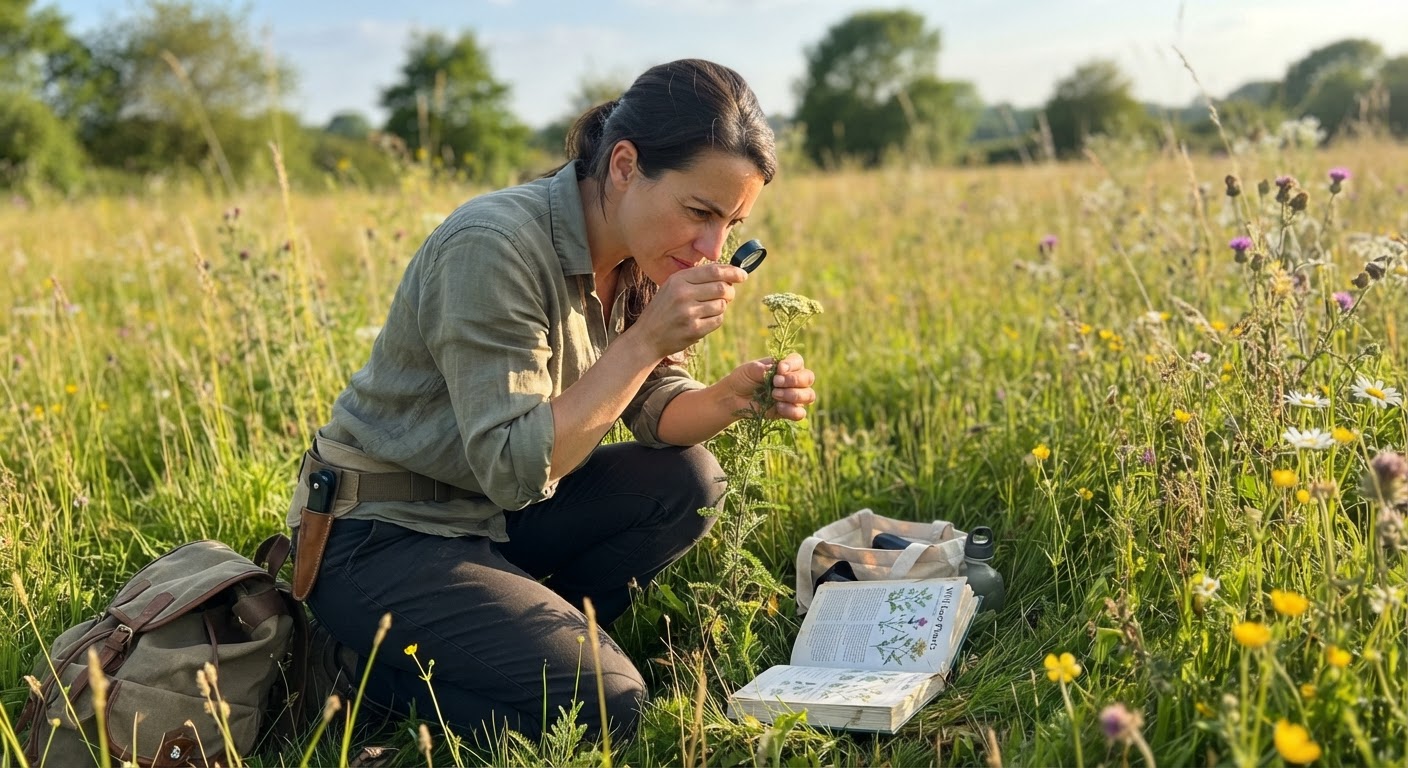
- A hand lens (loupe) — 10x magnification reveals stem hairs, leaf vein patterns, and other diagnostic details invisible to the naked eye.
- Paper bags — Never use plastic. Plants sweat in plastic, changing their appearance and smell.
- A notebook and phone camera — Document the plant in its habitat. Photos alone without written notes rarely capture enough detail.
- The phone number for Poison Control — Programmed and ready.
The Mindset That Keeps You Safe
The most dangerous thing in the woods isn’t a plant — it’s overconfidence. Every experienced forager has a story about a time they almost made a serious mistake. The best ones talk about it openly because they know that admitting vulnerability is what keeps you sharp.
Some habits that experienced foragers develop:
Always identify, never assume. When you find a plant, identify it fresh each time. Don’t say “that’s just more wild carrot.” Go through your checklist. Check the stems. Crush and smell the leaves. Confirm every single identification point.
Forage with a buddy. Two sets of eyes catch what one set misses. If you both agree, your confidence goes up. If you disagree, you both learn something — and nobody eats it until the disagreement is resolved.
Know when to walk away. Sometimes the light is bad, the plant is at an odd growth stage, and you’re just not sure. Walk away. The plant will be there tomorrow. Your liver won’t grow back if you mess up.
Start with the unmistakables. If you’re a beginner, limit yourself to plants that have no dangerous look-alikes in your region. Dandelions, stinging nettle (once cooked), cattails, and blackberries are great starting points. Build your confidence with the easy ones before tackling the tricky ones.
Foraging is one of the most rewarding skills you can learn. It connects you to the landscape, puts truly wild food on your table, and gives you a reason to pay attention to the seasons. But it’s not a casual hobby. It’s a discipline that demands respect.
Take your time. Learn slowly. And never, ever guess.