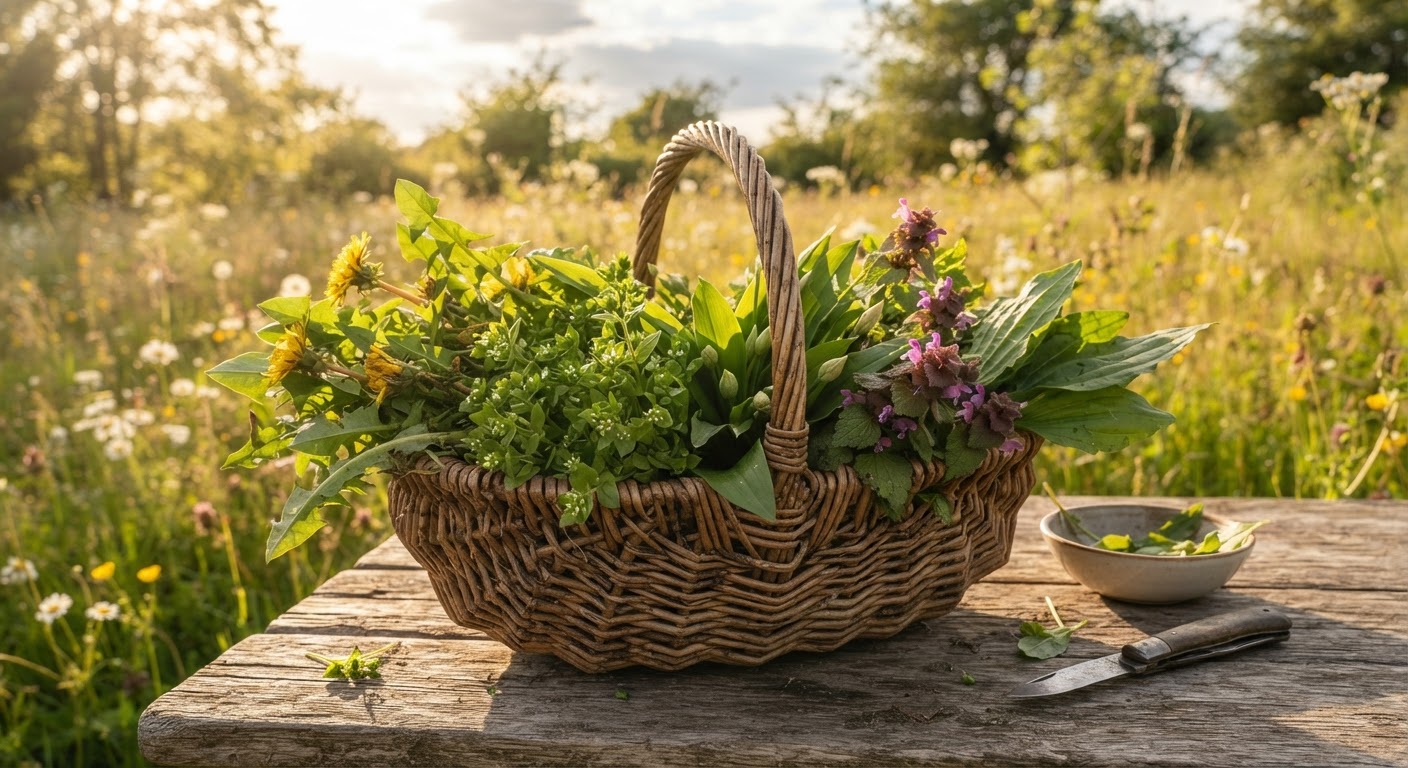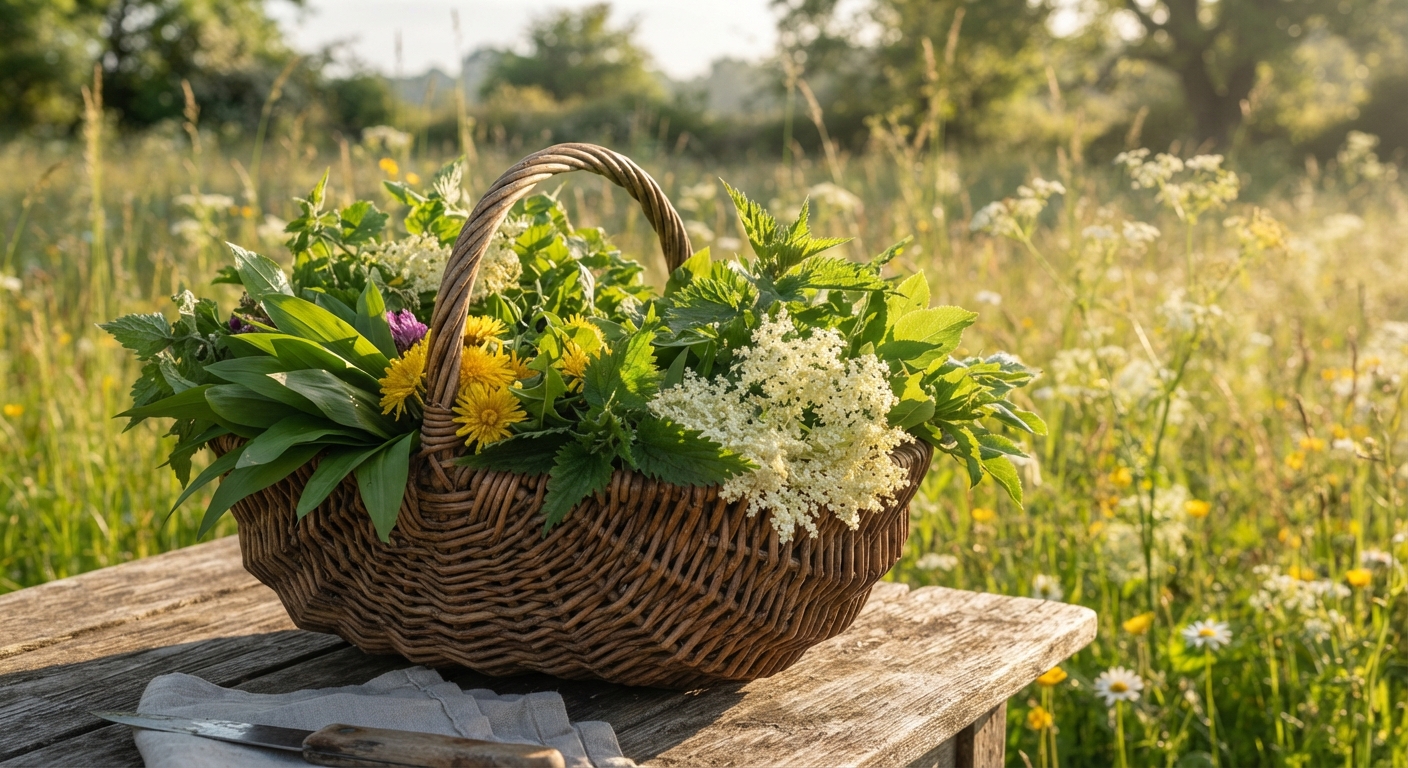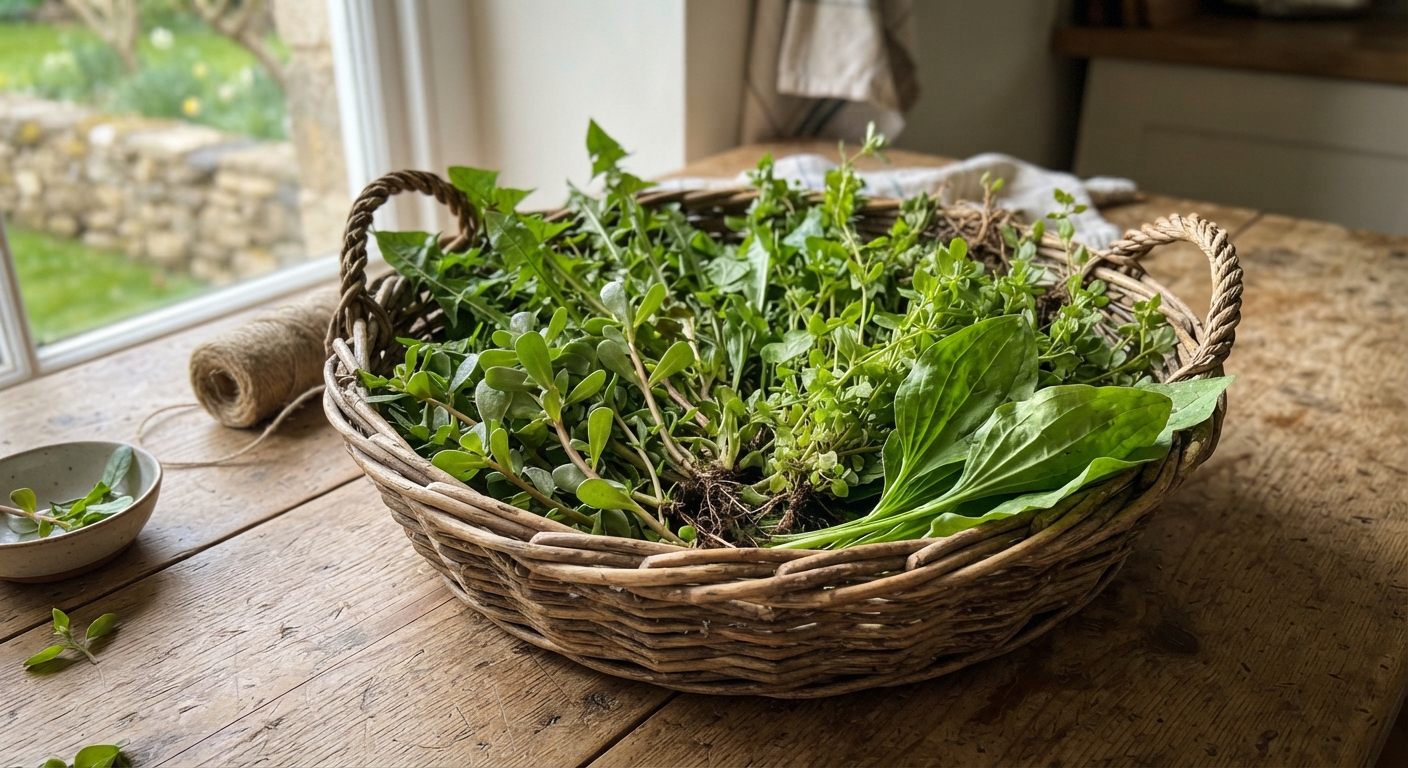
Here’s the single most useful thing I’ve learned in years of eating wild plants, and it’s not in most beginner guides: the raw-versus-cooked line is where most foraging mistakes happen.
People assume wild food works like grocery-store food — that if a plant is “edible,” you can toss it straight into a salad. That assumption has sent more people to the emergency room than misidentification has. Stinging nettle is delicious and completely safe. Eat it raw and you’ll understand the name. Elderberry is a beloved superfood. Eat a handful of raw berries and you’ll be sick within hours.
This guide is the quick version of the rule I wish I’d had on day one. It splits the most common edible wild plants into three buckets — eat raw, cook first, and the gray zone in between — and gives you a one-glance table plus five rules that keep you safe. No fluff, just the working knowledge.
One thing doesn’t bend, and it sits above everything below: never eat a wild plant you can’t identify with 100% confidence. Everything here assumes you’ve already positively ID’d your plant with a regional field guide and, ideally, someone who knows the local flora.
The Raw/Cooked Split Is the First Thing to Learn
Why does this matter more than most people think? Because “edible” is not one thing. It covers at least three very different situations.
Some plants are fine raw. They’re mild, low in irritants, and essentially wild salad greens. Wood sorrel, chickweed, and purslane fall here.
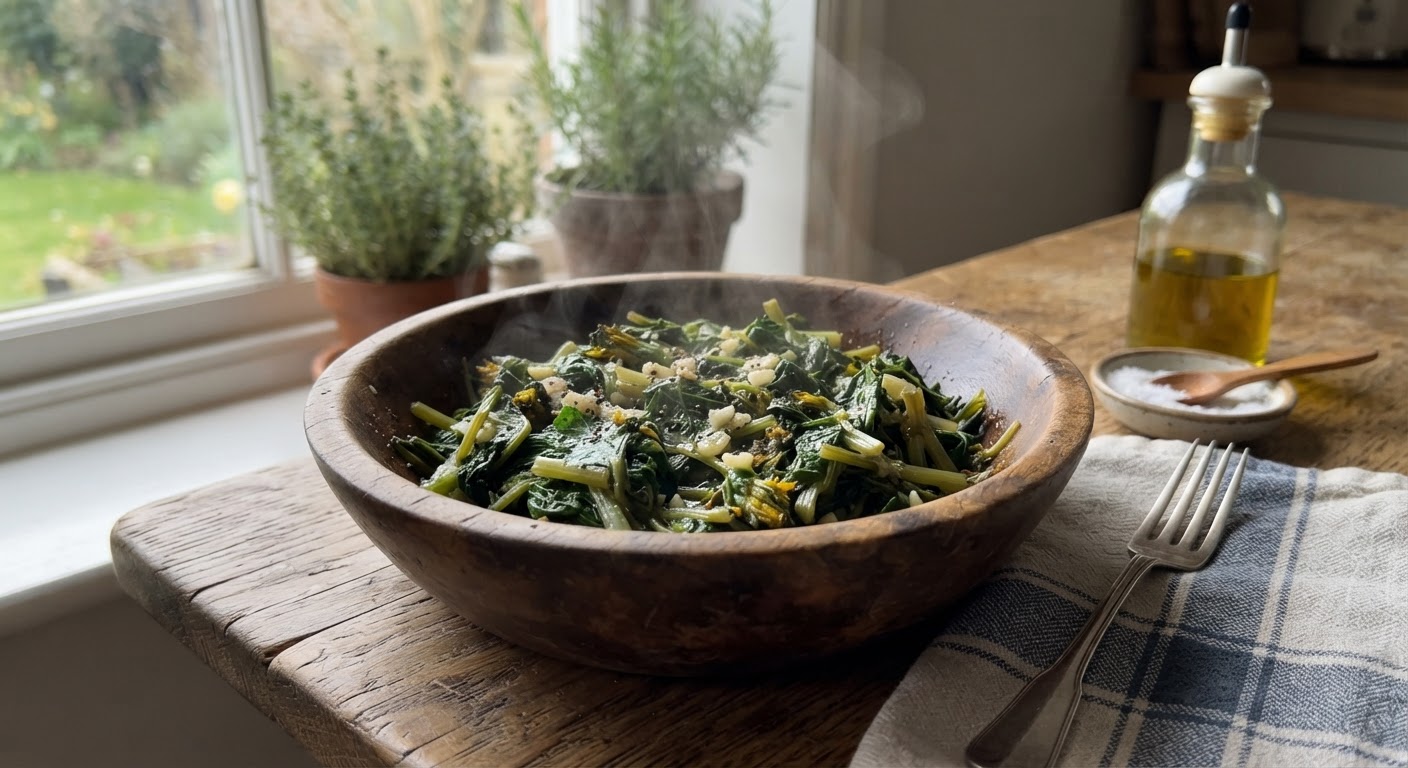
Some plants are only safe after heat or processing. Heat breaks down stinging hairs, bitter compounds, oxalates, and in a few cases outright toxins. Nettle, elderberry, and lamb’s quarters fall here.
Some plants flip depending on age or season. A young dandelion leaf is a raw salad green. The same leaf three weeks later, after the plant flowers, is bitter enough to need cooking. This is the gray zone, and it’s where beginners get confused.
Learn the buckets and you’ve solved most of the safety puzzle before you ever touch a stove.
Eat Raw (Once You’re Sure What It Is)
These are the beginner-friendly greens you can put straight into a salad, a sandwich, or a wrap. All of them still need a proper ID first — none of this replaces a field guide.
1. Wood Sorrel
You’ll recognize it by the three heart-shaped leaflets that look like a clover with a lemon inside. Chew one leaf and the tart, citrusy hit is unmistakable. It’s loaded with vitamin C and oxalic acid, so eat it raw but don’t eat a bowl of it — a handful scattered through a salad is the right dose. The sour pop is why kids love it and why chefs use it as a garnish.
2. Chickweed
One of the mildest wild greens there is. The leaves are small, soft, and taste faintly like spinach or corn silk. Chickweed grows low and tangled, with a single line of tiny hairs running down one side of the stem — that’s your key ID feature. Raw in salads, it disappears into whatever else you’re eating, which makes it the perfect “gateway” wild green.
3. Purslane
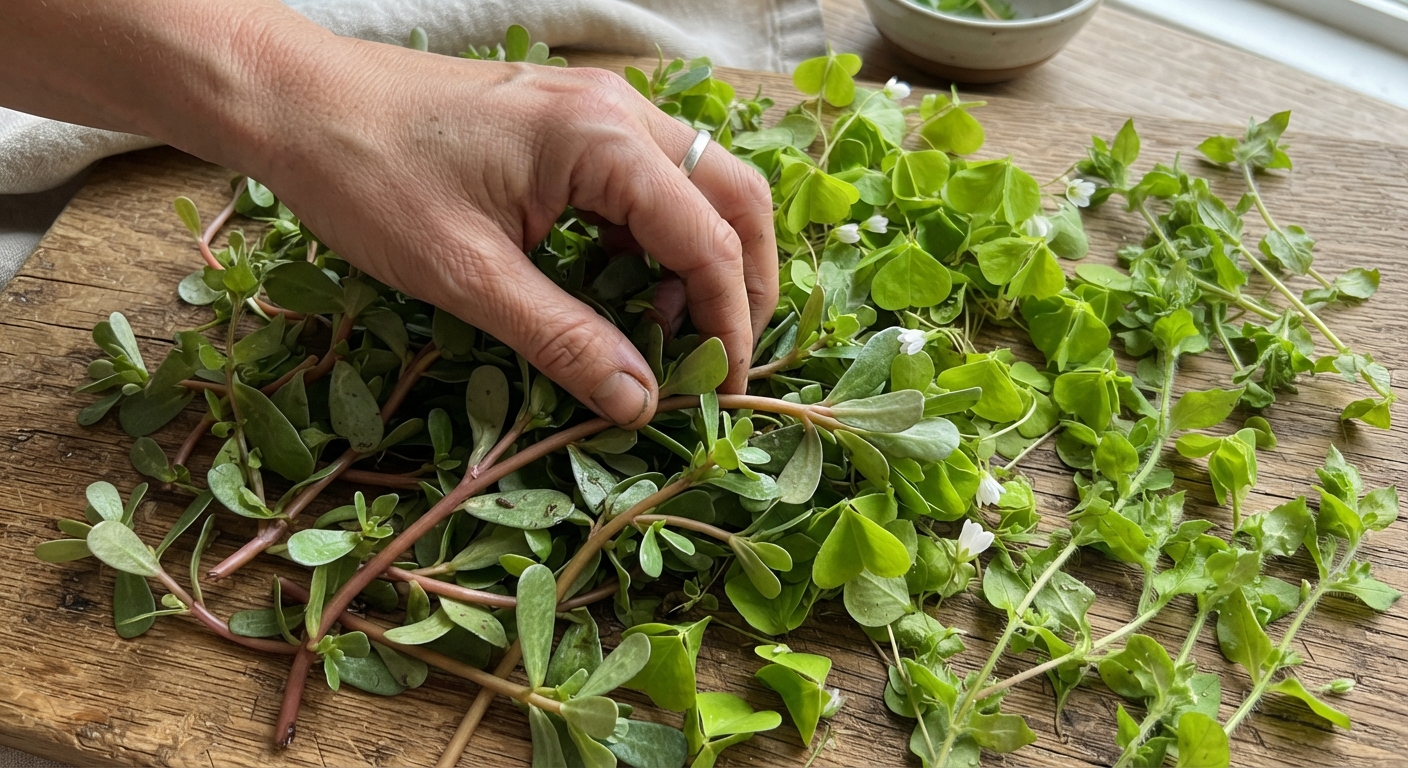
A succulent that grows in cracks and garden beds, with fleshy, paddle-shaped leaves and reddish stems. Raw purslane has a crisp, slightly lemony, slightly mucilaginous bite and — unusually for a green — is genuinely rich in omega-3 fatty acids. Eat it raw, or chop it into salsa. Just don’t confuse it with spotted spurge, a poisonous lookalike that bleeds milky sap when you snap the stem. Purslane’s sap is clear.
4. Young Dandelion Leaves
Before the plant flowers, dandelion leaves are a legitimately good raw green — bitter, but in a pleasant, arugula-like way. Pick the smallest, youngest leaves from the center of the rosette, before the flower stalk appears. Once the yellow flowers open, the bitterness spikes and the leaves want cooking instead.
5. Miner’s Lettuce
If you’re on the West Coast, this one’s a gift. The round, cup-shaped leaves with a tiny white flower in the center are mild, tender, and completely raw-friendly. It earned its name from Gold Rush miners who ate it to ward off scurvy. Toss the whole thing — leaf, stem, and flower — into a salad.
6. Wild Violet
Both the leaves and the purple flowers are edible raw. The leaves are mild and slightly mucilaginous; the flowers are mostly there to make a salad look beautiful. Violets are high in vitamins A and C and are one of the easiest raw plants to ID once you see the distinctive heart-shaped leaves and the five-petaled flower.
Cook or Process First
These are the plants where skipping the stove is the difference between a good meal and a bad night. The reasons vary — stinging hairs, bitterness, oxalates, or mild toxins — but the fix is usually the same: heat, water, or time.
1. Stinging Nettle
The classic. Raw nettle is covered in tiny silica-tipped hairs that inject histamine and formic acid — a painful, stinging rash. A quick blanch or a proper cooking collapses those hairs and turns nettle into one of the best-tasting greens around: earthy, mineral, a little like spinach with more backbone. Never put raw nettle in your mouth.
2. Elderberry
The berries are famous, but raw elderberries contain compounds that can cause nausea and worse. Cooking destroys them. That’s why every elderberry syrup, jam, or pie recipe starts with simmering. The flowers, by contrast, are used raw-adjacent — usually steeped into syrup or cordial rather than eaten straight. When in doubt: cook the berries, and only the berries.
3. Lamb’s Quarters
Also called wild spinach, and the name is earned — it’s genuinely good. But it’s high in oxalic acid, which binds calcium and, in large raw quantities, isn’t great for your kidneys. Blanching or steaming drops the oxalate level and softens the leaves. Treat it exactly like spinach: cook it, then eat it.
4. Cattail
The young shoots and the immature flower spikes are edible cooked, tasting vaguely like corn or cucumber. The real value is the rhizome, which you can process into a starchy flour — but that’s a multi-step job involving peeling, crushing, and rinsing to separate the starch. Nothing about cattail is “grab and eat raw.” It’s a cook’s plant.
5. Acorns
The poster child for “processing required.” Raw acorns are packed with bitter, astringent tannins that will upset your stomach. You have to shell them, then leach the tannins out with repeated changes of cold or hot water until the bitterness is gone, then dry and grind them into flour. It’s the most work on this list, and the most rewarding if you’re patient.
6. Pokeweed — Know It, Then Probably Skip It
I’m including this because beginners ask about it constantly, and the honest answer is: don’t. Pokeweed shoots are eaten in parts of the rural South, but only the very youngest growth, and only after being boiled twice with the water discarded each time. Every other part of the plant — berries, root, older leaves — is toxic. The margin for error is thin and the payoff is mediocre. For a beginner, this is a “learn to recognize it so you can avoid it” plant, not a food.
The Gray Zone: Plants That Depend on Age and Season
Some plants don’t fit neatly into either bucket. Their raw-versus-cooked status shifts with how old they are, where they’re growing, or which part you’re eating.
Dandelion — young leaves raw, older leaves cooked. The same plant moves from salad to sauté pan over the course of a few weeks.
Plantain (the weedy broadleaf, not the banana) — young, tender leaves can go into a salad in a pinch; mature leaves get tough and stringy and are better cooked or used in a broth.
Wild Onion and Wild Garlic — edible raw in small amounts and great raw in a salsa or garnish, but they carry real lookalike risk (death camas, among others). The smell test is non-negotiable: if it doesn’t smell unmistakably like onion or garlic, it isn’t, and you don’t eat it. Some foragers cook them just to add a second safety margin.
Fiddleheads — the curled young fronds of certain ferns. These are a “cook, full stop” gray-zone case: several species must be boiled or steamed thoroughly, and raw fiddleheads have been linked to food poisoning. If you don’t know exactly which fern you have, skip them.
The rule of thumb for the gray zone: when a plant’s status depends on conditions you’re not certain about, default to cooking. Heat is the great safety net.
Quick Reference: Raw, Cook, or Skip
Here’s the whole guide in one table. Print this, screenshot it, keep it in your phone. It’s the fastest way to check yourself in the field.
| Plant | Eat Raw? | Cook First? | Why It Matters |
|---|---|---|---|
| Wood sorrel | Yes (small amounts) | Optional | Tasty raw; oxalic acid means moderation |
| Chickweed | Yes | Optional | Mild, safe raw green |
| Purslane | Yes | Optional | Rich in omega-3; watch for spotted spurge lookalike |
| Young dandelion | Yes | Older leaves only | Turns bitter after flowering |
| Miner’s lettuce | Yes | Optional | Tender, mild, classic raw salad green |
| Wild violet | Yes (leaves + flowers) | Optional | Mild leaves, pretty edible flowers |
| Stinging nettle | Never | Always | Stinging hairs break down with heat |
| Elderberry | Never (berries) | Always | Raw berries can cause nausea |
| Lamb’s quarters | Never raw | Blanch or steam | High oxalates |
| Cattail | No | Always | Shoots and rhizome need cooking/processing |
| Acorns | Never | Leach, then cook | Tannins must be removed |
| Pokeweed | Never | Double-boil (advanced) | Toxic unless processed perfectly — skip if unsure |
The pattern is simple: the plants in the top half are your raw salad greens. The bottom half is your “get the pot out” list. When you can’t place a plant, it goes in the bottom half until proven otherwise.
Five Rules That Keep You Out of Trouble
A checklist is worth more than paragraphs here. These five cover almost every realistic risk.
- 100% ID first. No article, app, or photo replaces a regional field guide and someone who knows the local plants.
- When in doubt, cook it. Heat neutralizes stinging hairs, bitterness, and a lot of mild toxins. It’s the safest default.
- Start with one plant at a time. Eat a small amount first and wait, so if something disagrees with you, you know exactly what it was.
- Watch the lookalikes. Purslane has spotted spurge. Wild onion has death camas. Learn the toxic twin before you eat the safe plant.
- Skip the gray zone as a beginner. Dandelion timing, fern species, pokeweed — these are intermediate-and-up. Build the raw basics first.
Your 30-Second Cheat Sheet
If you remember nothing else, remember this:
- Raw-safe starters: wood sorrel, chickweed, purslane, young dandelion, miner’s lettuce, wild violet.
- Always cook: stinging nettle, elderberry, lamb’s quarters, cattail, acorns, fiddleheads.
- Skip entirely as a beginner: pokeweed and any fern you can’t name.
- The default is cook. When a plant’s status is unclear, heat it.
- The rule above the rules: don’t eat what you can’t identify with certainty.
Foraging isn’t about being brave. It’s about being certain, and cooking the things that need cooking. Get those two habits down and wild food stops being a gamble and starts being dinner.
Quick Fire: Raw or Cooked?
Wood sorrel raw? Yes — tart, lemony, in small amounts.
Nettle raw? Absolutely not. Blanch it first.
Elderberry raw? No. Cook the berries, always.
Chickweed raw? Yes, one of the mildest raw greens.
Purslane raw? Yes, crisp and lemony — but rule out spotted spurge first.
Lamb’s quarters raw? No. Blanch or steam to cut the oxalates.
Acorns raw? Never. Shell and leach the tannins, then cook.
Young dandelion raw? Yes. Older, flowering dandelion? Cook it.
Cattail raw? No. Cook the shoots, process the rhizome.
Pokeweed? Just skip it.