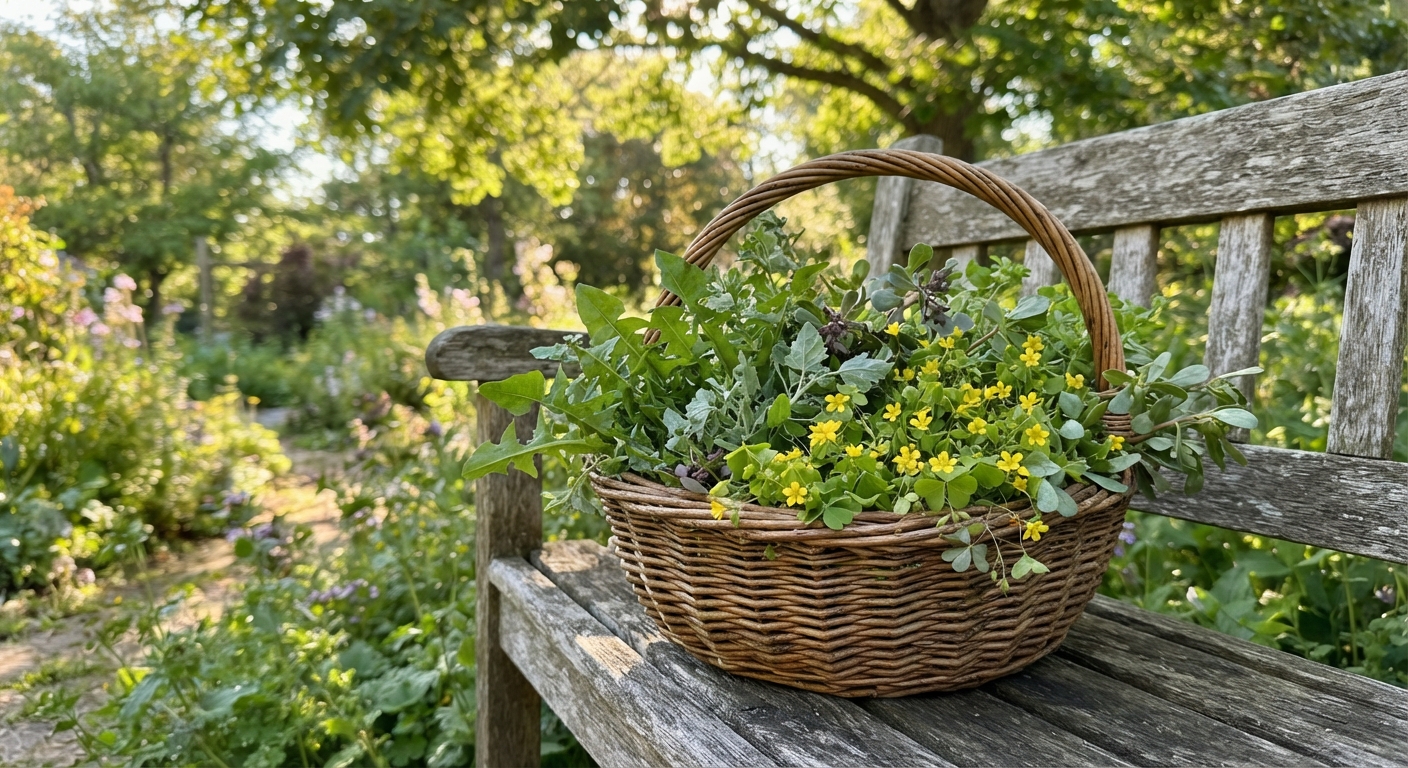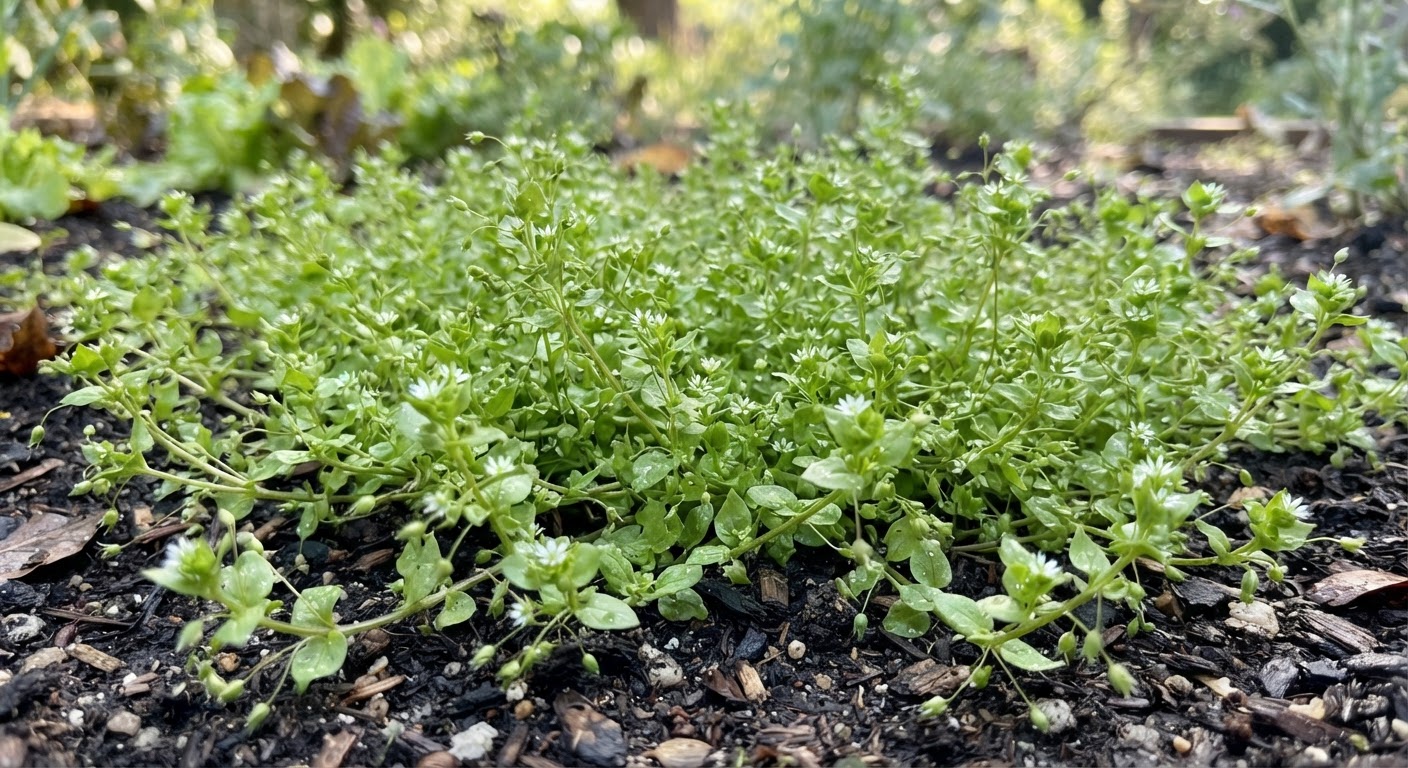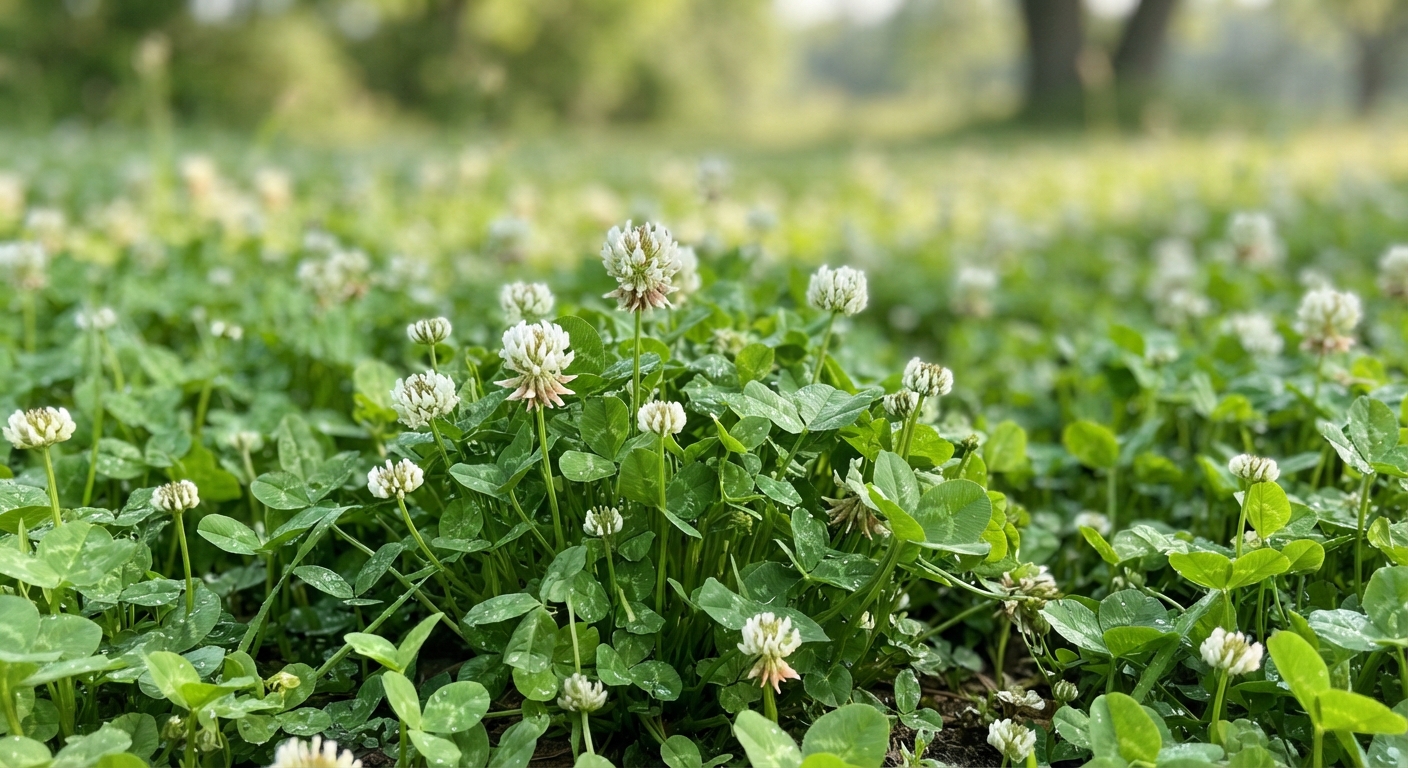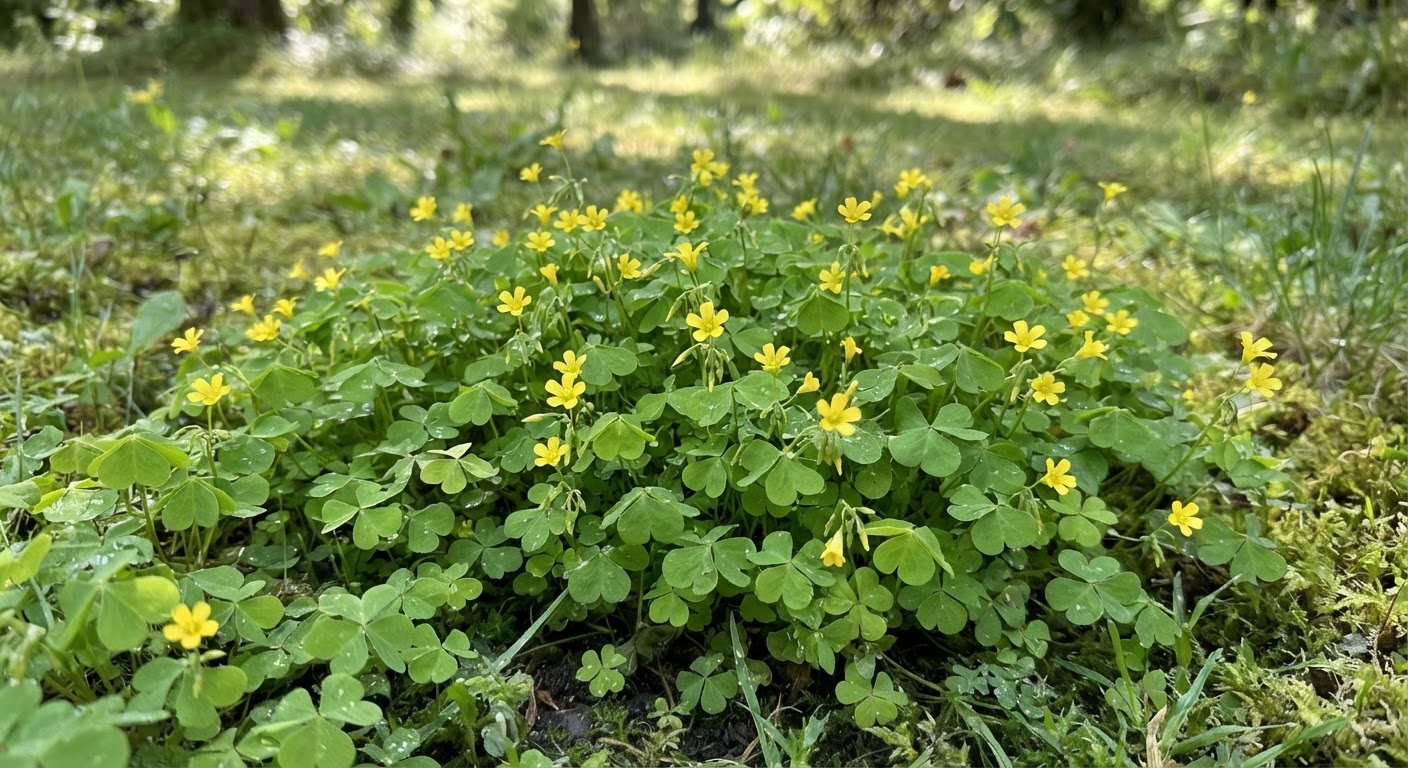
If you have a lawn, a garden bed, or a crack in a driveway anywhere in North America, there’s a very good chance you’ve been pulling wood sorrel out of the ground for years without ever learning its name. It looks like clover. It spreads like clover. And because it looks like clover, most people assume it’s clover — just a little weedier, a little more stubborn.
Then one day somebody hands you a single leaf and says, “Chew it.” And your whole relationship with this plant changes in about three seconds.
That sour, bright, lemony pop on your tongue isn’t a trick. It’s oxalic acid, the same compound that gives rhubarb its bite and spinach its slight tang. Wood sorrel (Oxalis) has been a free, wild source of that sharp citrus flavor for centuries — eaten in salads, brewed into a lemonade substitute, and even used to season fish. Kids in the American South have chewed the stems of “sour grass” for generations without knowing they were snacking on a genuinely useful wild edible.
This guide is a deep dive into that one plant, because wood sorrel deserves more than a passing mention. You’ll learn exactly what it is, how to identify it so you never confuse it with clover again, how to harvest it responsibly, and how to actually cook with it — including the one thing you need to know about oxalic acid before you start eating it by the handful.
The rule that sits above everything below never changes: never eat a wild plant you can’t identify with 100% confidence. Wood sorrel is one of the friendlier beginner plants, but “friendly” isn’t the same as “skip the field guide.” Cross-check every leaf against a regional guide and a trusted photo database before it touches your mouth.
What You’re Actually Looking At
Let’s get the confusing part out of the way first, because it trips up almost every beginner.
Wood sorrel is not clover, and it’s not the sorrel you buy at the farmers market. Three different plants, three different families, and they share almost nothing except a vague visual resemblance and a spot in the same lawn.
Here’s the breakdown:
- Wood sorrel is in the genus Oxalis, family Oxalidaceae. The species you’ll most likely meet in North America is common yellow wood sorrel (Oxalis stricta), with a near-identical cousin, creeping wood sorrel (Oxalis corniculata), running along the ground with a purplish tint. In Europe and cool northern forests, common wood sorrel (Oxalis acetosella) has white flowers veined with pink.
- Clover is in the genus Trifolium, family Fabaceae (the legume/pea family). White clover and red clover are the ones growing in your yard.
- Garden sorrel (Rumex acetosa) and sheep sorrel (Rumex acetosella) are in the Rumex genus, family Polygonaceae (buckwheat). This is the “real” sorrel of French cooking — the one in soupe à l’oseille and sorrel sauce.
Why does any of this matter? Two reasons. First, the common names are a mess — “sorrel” gets slapped on plants in three unrelated families, so you can’t trust the name alone. Second, and more importantly for eating: only wood sorrel has that concentrated, candy-like sourness. Clover tastes bland and grassy. Garden sorrel is sour too, but in a broader, leafier, more astringent way.
When a foraging guide or recipe says “wood sorrel,” it means Oxalis. When a French cookbook says “sorrel,” it means Rumex. Different plant, different kitchen job.
The Quick Identification Table
This is the table I’d print and put in my pocket for a first season. It covers the three plants beginners mix up most.
| Feature | Wood Sorrel (Oxalis) | White Clover (Trifolium repens) | Garden Sorrel (Rumex acetosa) |
|---|---|---|---|
| Leaflets per leaf | Always 3, heart-shaped, with a crease/fold down the middle | 3, round or oval, often with a pale chevron marking | Long, arrow/oblong leaves, not in threes |
| Leaf texture | Thin, soft, slightly waxy; folds down in bright sun or at night | Soft, matte; stays open | Thick, waxy, arrowhead at the base |
| Flower | Single 5-petal flower on a stalk; yellow (or white with pink veins) | Round pom-pom cluster of many tiny pea-flowers | Tall spikes of small greenish-red flowers |
| Taste | Bright, sharp, lemon-sour | Bland, grassy, slightly sweet | Sour but more astringent and “green” |
| Seed pods | Small upright pods that pop open when touched | Tiny pods hidden inside the flower head | None like this — seeds on tall spikes |
| Height/growth | Low, loose mound or creeping mat | Low creeping mat | Upright clump, 1–2 ft tall |
| Family | Oxalidaceae | Fabaceae (legume) | Polygonaceae (buckwheat) |
If you remember only one thing from this table, make it the fold. Wood sorrel leaves have a visible crease down the center of each heart-shaped leaflet, and the whole leaf folds closed like an umbrella at night or in harsh sun. Clover leaves lie flat and never fold. That single detail sorts out 90% of lawn confusion in two seconds.
Where and When to Find It
Wood sorrel is not a plant you need to hike for. It’s a plant that shows up in the places you already are.
You’ll find it in lawns, garden beds, flower pots, sidewalk cracks, the edge of gravel paths, and shaded woodland edges. It loves disturbed, moist, partly shaded soil — which is why it’s so common around the base of shrubs, under trees, and in vegetable beds that get watered regularly. In forests, Oxalis acetosella carpets the ground in dense green mats where the canopy is open enough to let light through.
A few practical notes on habitat:
- Sun vs. shade. Yellow wood sorrel tolerates full sun but grows lushest in part shade. If it’s growing in blazing sun, the leaves will be smaller, tougher, and more intensely sour.
- Moisture. It thins out and goes dormant in the hottest, driest part of summer in warm climates, then bounces back when rain returns. Spring and fall are its prime seasons.
- Soil. It often signals slightly acidic, moist soil — useful to know if you’re also gardening.
Season Chart
The exact window shifts with your climate, but this is the general pattern for most of North America and temperate Europe.
| Season | What Wood Sorrel Is Doing | What to Harvest |
|---|---|---|
| Spring | First flush of tender leaves and early flowers | Young leaves, flowers — the mildest, most tender crop of the year |
| Early summer | Full growth, heavy flowering, seed pods forming | Leaves, flowers, and the crunchy immature seed pods |
| Late summer (hot/dry) | Often goes dormant or turns tough and bitter-ish in heat | Skip it; wait for the cool-season rebound |
| Fall | Second flush with cooler rains | Tender new leaves and flowers again — arguably the best crop |
| Winter (mild climates) | Stays green in frost-free zones; dormant where it freezes | Leaves only in mild climates; leave it alone in hard-freeze areas |
The honest takeaway: don’t harvest when the plant looks stressed — wilted, yellowing, or leathery. A stressed wood sorrel leaf concentrates more oxalic acid and tastes more astringent than fresh. Pick when the leaves are plump and springy.
How to Harvest Wood Sorrel (Step-by-Step)
Harvesting wood sorrel is about as close to instant gratification as foraging gets. It needs no tool and no processing. But there’s still a right way to do it, mostly around where you pick and how much you take.
Step 1: Pick Your Spot Carefully
This matters more than the technique. Wood sorrel loves lawns and garden edges — which are exactly the places people spray herbicide and walk dogs.
- Never harvest from a sprayed lawn or garden. Glyphosate and broadleaf weedkillers are invisible and not something you want in your salad.
- Avoid dog-walking strips, curbside verges, and anywhere with obvious pet traffic.
- Skip parking-lot edges and busy roadsides — exhaust and runoff collect there.
- Prefer your own unsprayed yard, a friend’s organic garden, or a clean woodland area you know isn’t treated.
If you’re not sure whether a spot is sprayed, look for the telltale signs: uniformly dead or twisted “weeds” nearby, a suspiciously perfect lawn, or a smell of chemicals. When in doubt, move on. There’s always another patch.
Step 2: Confirm the Identification
Even when you’re 90% sure, run the full checklist before the first bite:
- Three heart-shaped leaflets per leaf, each with a center crease. ✓
- Leaf folds down at night or in bright sun (test by checking one in shade vs. sun). ✓
- Single five-petal yellow flower (or white with pink veins, depending on species). ✓
- A sharp, lemony-sour taste — but taste only after the visual checks all pass, and only a tiny nibble. ✓
- Cross-check against a field guide or photo database for your region. ✓
That taste test is a nice final confirmation because wood sorrel’s sourness is so distinctive — but never lead with it. Identify first, taste last.
Step 3: Pinch the Tender Parts
Use your fingers or small scissors. Snip or pinch:
- Leaves — the whole trifoliate leaf, including its thin stalk.
- Flowers — pick them open and fresh, in the morning when they’re fully expanded.
- Seed pods — the little upright, ridged pods (“okra-looking” to some). When immature and green, they’re crunchy and lemony; they also snap open explosively when you touch ripe ones, scattering seeds.
Take a bit from many plants rather than stripping a single patch bare. Wood sorrel is tough and forgiving, but leaving plenty of leaf means it keeps photosynthesizing and coming back.
Step 4: Store It Like a Delicate Herb
Wood sorrel wilts fast — usually within a day if left out, a few days in the fridge. It doesn’t have the staying power of kale or even dandelion.
- Rinse gently and spin or pat dry — wet leaves rot quickly.
- Wrap in a barely-damp paper towel, seal in a container or zip bag, and refrigerate. Use within 2–3 days.
- For the crispest texture, harvest right before you use it and don’t bother storing at all.
Unlike most wild greens, wood sorrel is almost always eaten raw. Cooking destroys both its delicate structure and its bright flavor, so think of it as a garnish and salad ingredient, not a sauté green.
How to Eat It: From Snack to Seasoning
This is the fun part, and where wood sorrel genuinely shines. That sour pop is a flavor tool, not just a novelty.
The Classic: Eat It Raw
The simplest use is the one kids figured out a century ago. Pluck a leaf, chew it, enjoy the lemon-lime zing. A small handful of leaves and flowers scattered over a salad adds brightness that no bottled dressing can match. Because the flavor is so punchy, a little goes a long way — treat it like a squeeze of lemon, not a base green.
Wood Sorrel “Lemonade”
The most famous recipe, and the one worth knowing by heart. A handful of leaves and flowers steeped in cool water for a few minutes gives you a tart, refreshing drink with zero citrus involved.
Basic method:
- Fill a pitcher with cold water.
- Add 2–3 cups of loosely packed wood sorrel leaves and flowers.
- Crush them slightly against the side of the pitcher with a wooden spoon to release the flavor.
- Steep 15–30 minutes (taste as you go — longer = more sour).
- Strain, sweeten with honey or sugar to taste, and serve over ice.
It won’t taste exactly like lemonade — it’s cleaner and more herbaceous — but on a hot day it’s genuinely good, and it costs you nothing but a walk across the lawn.

As a “Sour Seasoning”
This is the trick most guides skip, and it’s the most useful one in a real kitchen. Finely chopped wood sorrel works like a fresh, herbal lemon zest:
- Sprinkle it over grilled or baked fish right before serving — the classic pairing, and for good reason.
- Stir it into scrambled eggs or an omelette at the last second.
- Fold it into mashed potatoes, cream sauces, or compound butter for a bright lift.
- Toss it through fruit salad — the sour note makes sweet fruit taste sweeter by contrast.
- Blend it into a pesto-style sauce with parsley, garlic, olive oil, and nuts, replacing the lemon juice.
The one rule: add it at the very end. Heat kills the flavor, so stir it in off the stove, never cook it down.
A Word on Volume
Wood sorrel is a garnish, a seasoning, and a drink ingredient — not a meal. More on exactly why in the safety section below, but the short version: the oxalic acid that makes it delicious is also the reason you shouldn’t eat bowls of it every day.
Pro Tips From a Few Seasons of Picking
These are the things field guides don’t always tell you, learned the slow way.
Taste changes with conditions. The same species can range from candy-sweet-sour to sharp and astringent depending on sun, moisture, and age. Young spring leaves in shade are the mildest; old, sun-stressed leaves are the harshest. If a leaf is unpleasantly sharp, it’s usually just a bad leaf, not a bad species — move to a shadier, younger patch.
The flowers are the mildest part. If the leaves are too sour for you, the yellow flowers are noticeably gentler and make a beautiful, safe garnish on salads, soups, and desserts.
Seed pods are the hidden gem. The immature green pods have a satisfying crunch and a lemony pop, and kids love that they “explode” when you touch ripe ones. Harvest them while still small and green for the best texture.
Fold your harvest into mixed greens. Because wood sorrel is so intense, it’s best as a supporting player. A 1:5 ratio of wood sorrel to mild greens (lettuce, chickweed, lamb’s quarters) gives you brightness without puckering.
It grows in pots — deliberately, if you want. Plenty of people “forage” their own patio by letting wood sorrel volunteer in a container, then trimming from it all season. It’s self-seeding and essentially free, which makes it one of the easiest wild edibles to “cultivate” by simply not weeding it out.
Leaves fold as a sun signal. If you’re harvesting on a hot day and all the leaves are folded closed, that’s the plant protecting itself — and a hint that it’ll be tougher and more sour. Come back in the cooler morning or evening.
It’s a superb teaching plant. If you want to introduce someone (a kid, a friend) to foraging without risk, wood sorrel is the plant. It’s easy to identify, impossible to miss the taste, and the fold-and-heartleaf characteristics give you a built-in mini-lesson every time.
The One Real Caution: Oxalic Acid
Let’s talk about the thing that keeps wood sorrel in the “garnish” category rather than the “staple” category.
The sourness comes from oxalic acid (and oxalates), the same compounds found in spinach, rhubarb, beet greens, and Swiss chard. In small amounts, it’s completely fine for most people — you already eat oxalates every time you have a spinach salad. The concern is volume and frequency.
Why it matters:
- Oxalates bind to calcium and can contribute to kidney stone formation in people who are prone to them.
- Very high oxalate intake can interfere with mineral absorption.
- People with kidney disease, gout, or a history of calcium-oxalate kidney stones should treat wood sorrel with extra caution or skip it entirely.
What “moderation” actually means in practice:
- A sprinkle on salads, a garnish on fish, an occasional glass of lemonade — fine for most healthy people.
- Eating large handfuls every single day — not recommended, and not something anyone would do for taste reasons anyway.
- Cooking reduces some oxalate content, but since wood sorrel is best raw, the simpler approach is just to keep portions small and varied.
If you have any kidney-related health history, check with a doctor before making wood sorrel a regular habit. The same advice applies to spinach and rhubarb — wood sorrel isn’t uniquely dangerous, it’s just honest about its chemistry.
Wood Sorrel Questions, Answered Honestly
Instead of a stiff FAQ, here are the questions I actually get asked when someone tastes their first leaf — answered the way I’d answer a friend over coffee.
“Is wood sorrel the same thing as clover?” No. They look alike in a lawn but are completely unrelated. Wood sorrel is Oxalis (wood-sorrel family), clover is Trifolium (pea family). The giveaway: wood sorrel has heart-shaped leaflets that fold down, and its flowers are single five-petal blooms. Clover leaves stay flat and its flowers are round pom-poms.
“Can I eat all the species of wood sorrel?” The common species — yellow wood sorrel, creeping wood sorrel, common wood sorrel, and the Bermuda buttercup (Oxalis pes-caprae) — are all edible in moderation. That said, “edible in moderation” is the operative phrase for every one of them, because they all contain oxalic acid. Stick to well-known species and confirm identification every time.
“Why does it taste sour?” Oxalic acid, the same compound in rhubarb and spinach. It gives wood sorrel its signature lemon-lime zing. That’s also why it’s used as a lemon substitute in drinks and on fish.
“Is wood sorrel safe for kids?” In small amounts, yes — and it’s a classic first foraging plant for children. The sour “sour grass” snack has been a childhood tradition for generations. The usual rules apply: positive identification first, small portions, and skip it if the child has any kidney-related health condition.
“Can I eat too much of it?” Yes, in the sense that daily, large quantities aren’t wise because of the oxalate content. For a healthy person, the occasional salad garnish or lemonade is a non-issue. If you’re prone to kidney stones or have kidney disease, talk to a doctor first.
“When is the best time to harvest wood sorrel?” Spring and fall, in the morning or evening when the leaves are plump and open. Skip the hot, dry middle of summer when the plant goes dormant and turns tough.
“Does it grow everywhere?” Not everywhere, but close. It’s native across much of North America, Europe, and Asia and has naturalized in lawns, gardens, and disturbed ground worldwide. If you have moist, partly shaded, untended corners, you probably have it.
“Can I confuse it with something dangerous?” The most common mix-up is with clover, which is also edible — so that mistake is harmless. There isn’t a notorious toxic twin that looks like wood sorrel, which is part of why it’s such a good beginner plant. But “no famous toxic lookalike” is not the same as “no need to check.” Confirm the heart-shaped folding leaflets and single five-petal flowers every time.
The Bottom Line
Wood sorrel is one of those rare plants that’s genuinely easy, genuinely safe for beginners, and genuinely delicious — a combination that almost never happens in the wild-food world. Most beginner plants ask you to tolerate their bitterness or cook away their toughness. Wood sorrel just hands you a lemony leaf and asks nothing in return.
Learn the fold, learn the heart-shaped leaflet, learn the single yellow flower, and you’ll never confuse it with clover again. From there it’s a short walk to your best summer salad garnish, a free glass of lemonade, and one more reason to stop spraying your lawn quite so enthusiastically.
And if you’re new to all of this, start exactly where wood sorrel starts: with a single leaf, a certain identification, and a small taste. That’s how every forager I know began.
Ready for the next easy one? Chickweed and clover are two more lawn weeds worth learning, and if you ever doubt a plant, the universal edibility test is the framework to fall back on — though for wood sorrel, you’ll rarely need it.