
You are lost in the woods. Your food ran out two days ago. Around you, dozens of unfamiliar plants offer their leaves, berries, and roots — but you have no field guide and no way to look anything up.
Do you eat them?
The Universal Edibility Test is the answer to that question. Developed by the U.S. military for survival situations, it is a systematic, step-by-step protocol that lets you test whether an unknown plant is safe to eat. It is not fast. It is not convenient. And it is absolutely not something you should use on a casual foraging walk. But when your life depends on finding food in the wild, knowing this test might save you.
This guide walks you through every stage of the test, explains the science behind why it works, and — just as importantly — tells you when you should never use it.
What Is the Universal Edibility Test?
The Universal Edibility Test (UET) is a survival protocol originally included in U.S. Army field manuals and later popularized by survival instructors worldwide. It breaks plant testing into 13 distinct stages spread over at least 8 to 16 hours, gradually exposing your body to a plant in increasingly sensitive ways.
The logic is simple and brutal: do not eat anything you cannot identify. But if you have no other choice, expose yourself to it in stages — skin first, then lips, then tongue, then a tiny swallow — so that if the plant is toxic, you get a warning signal before a fatal dose enters your system.
The UET does not tell you whether a plant is nutritious. It does not tell you the species. It only answers one question: if I am starving, can I eat this without dying or becoming seriously ill?
The U.S. Army Survival Manual FM 21-76, first published in 1970, included an early version of this test. Modern survival schools like those run by the UK’s Woodland Ways and U.S.-based Boulder Outdoor Survival School still teach variations of it. The principle remains the same across every version: go slow, watch for reactions, and stop at the first sign of trouble.
WARNING: When You Should Never Use This Test
Before we go further, here is the part that matters most.
The Universal Edibility Test is a survival protocol of last resort. It is not a foraging shortcut.
Here is when you must NOT use it:
- When you can identify the plant with certainty. If you have a field guide, an app, or an experienced forager with you, use those instead. Identifying a plant through proper botany is always safer than testing it on your body.
- When help is on the way. If you have signaled for rescue and expect to be found within days, you can survive without food. Most healthy adults can go three weeks without eating. You will not starve in a weekend.
- When water is the real problem. Dehydration kills in 3 days. Food is not your priority if you have no water. Find water first.
- When the plant shows obvious danger signs. Milky sap, umbrella-shaped flower clusters, beans or bulbs without onion smell, fine hairs with sting effects, or a bitter almond smell — these are warning signs. Skip the test entirely.
- When you have skin allergies or sensitive skin. The skin-contact stages of the test could trigger severe reactions in sensitive individuals.
The universal edibility test exists for one scenario and one scenario only: you are lost without food, you cannot identify local plants, rescue is not coming soon, and the alternative is starvation.
The 13 Stages of the Universal Edibility Test
The test takes at minimum 8 hours. Properly conducted, it can take up to 16 hours. Do not rush any step. Patience here can literally be the difference between life and death.
Stage 1: Fasting
Do not eat anything for 8 hours before beginning the test. This clears your digestive system and gives you a clean baseline. If you have been eating other wild foods, stop and wait. You need to know that any reaction you experience comes from the test plant, not from something you ate earlier.
Drink water during this time. Staying hydrated is critical.
Stage 2: Separate the Plant Parts
Most plants contain different compounds in their roots, stems, leaves, flowers, and fruits. A plant might have edible leaves and toxic roots, or edible fruit and poisonous leaves. You must test each part separately.
Physically separate the plant into:
- Roots or tubers
- Stems
- Leaves
- Flowers
- Fruits or seeds
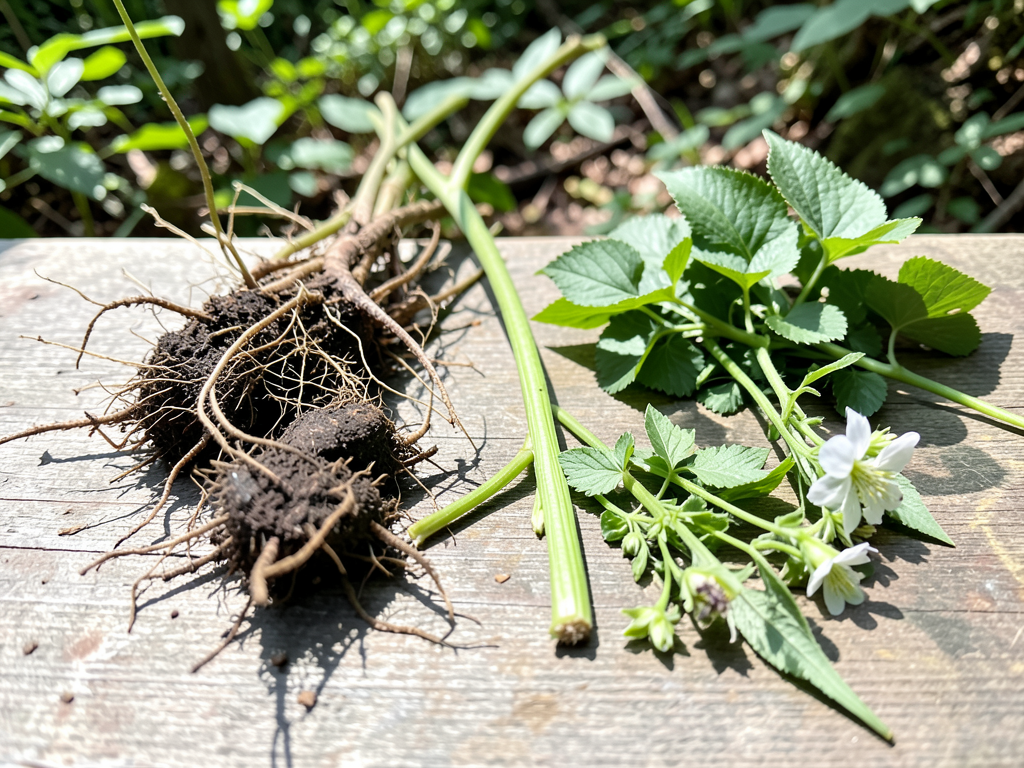
Test only one plant and one plant part at a time. If you test a plant’s leaves and they cause no reaction, that tells you nothing about its berries. Start from scratch for each part you want to eat.
Stage 3: The Smell Test
Crush a small piece of the plant part between your fingers and smell it.
Reject the plant immediately if you notice:
- A strong, unpleasant, or acrid odor
- A peach or bitter almond smell (this indicates cyanogenic compounds — cyanide precursors)
- A chemical or petroleum-like scent
A mild, grassy, or neutral smell does not guarantee safety, but it is a pass for this stage.
Stage 4: Skin Contact Test (Inner Wrist)
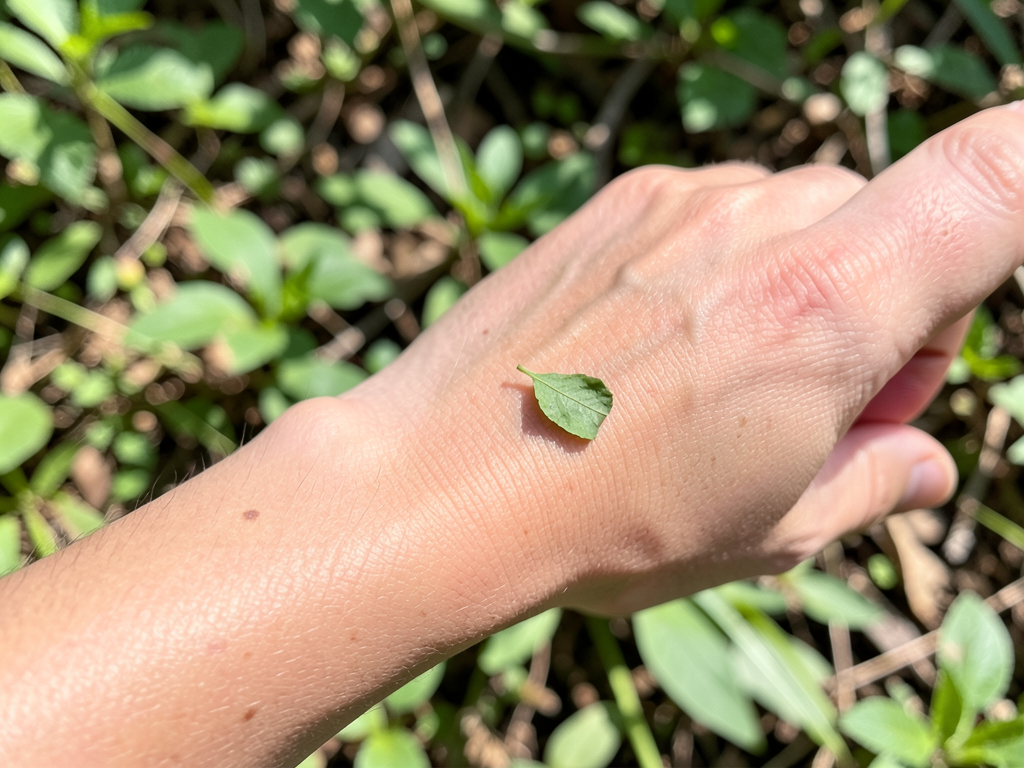
Place a small crushed piece of the plant against the tender skin of your inner wrist or inner elbow. Hold it there, secured in place if possible, for 15 minutes.
Wait the full 15 minutes. Do not skip ahead.
If you feel any burning, itching, tingling, numbness, or see any redness or rash developing, this plant part fails. Wash the area thoroughly with clean water and do not proceed.
Stage 5: Skin Contact Test (Outer Lip)
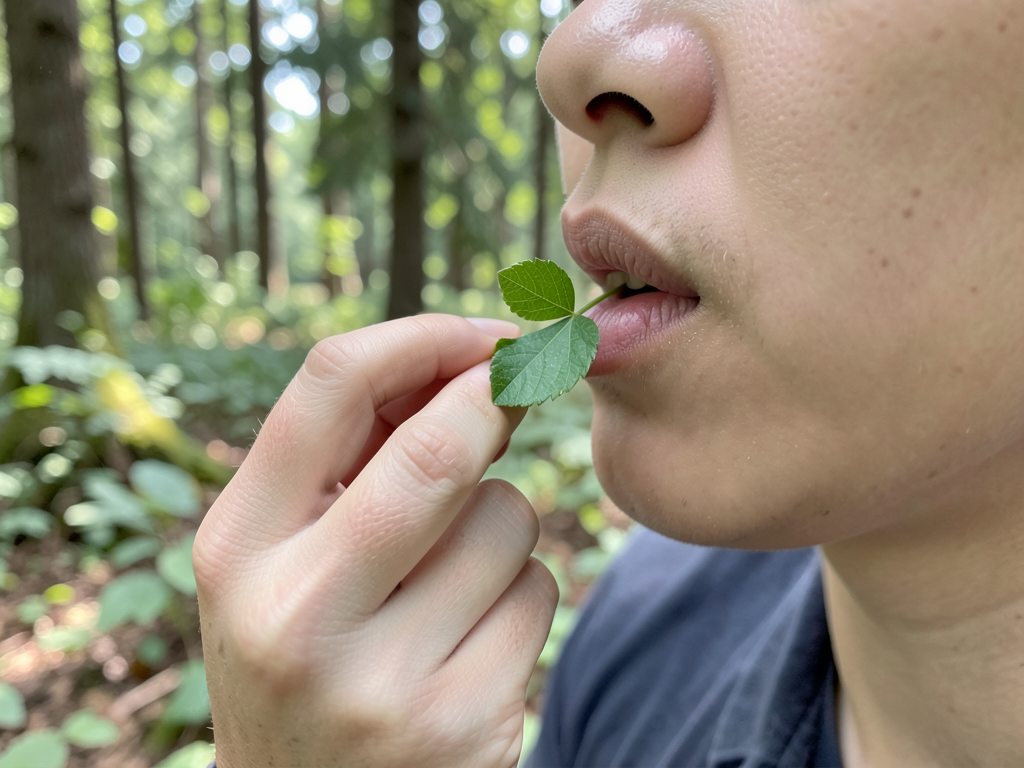
If your skin showed no reaction, prepare a fresh small piece of the plant. Touch it lightly to the outside of your lip — not inside your mouth, just the external skin of your lip.
Wait 3 minutes.
Do not lick your lips. Do not touch your mouth. Just hold it there.
If you feel any burning, stinging, tingling, or numbness in your lip, this plant is not safe. Spit it out if any got in your mouth. Wash with water.
Stage 6: Mouth Contact Test
If your lip showed no reaction, place a tiny piece of the plant — no larger than a pea — on your tongue. Hold it in your mouth without chewing or swallowing for 15 minutes.
This is the most psychologically difficult stage. You have a potentially toxic plant in your mouth. But the 15-minute wait is non-negotiable. Your mouth’s mucous membranes are highly absorbent and highly sensitive. If the plant contains irritant compounds, you will likely feel them here long before they reach your stomach.
If you feel any unusual sensation — burning, tingling, numbness, odd taste, excessive salivation — spit everything out immediately. Rinse your mouth thoroughly with water. Do not swallow.
Stage 7: The Chew Test
If 15 minutes passed with no reaction, chew the piece thoroughly without swallowing. Move the chewed material around your mouth so it contacts your gums, tongue, and inner cheeks. Hold the chewed material in your mouth for another 15 minutes.
Again: do not swallow.
Spit out the chewed material completely after 15 minutes. Rinse your mouth.
If any burning, itching, numbness, or unusual sensation developed, this plant fails.
Stage 8: The First Swallow
If all previous stages showed no reaction, swallow a very small amount — about the size of a pea or a small bean.
Now wait 8 hours.
This is the most critical waiting period. During these 8 hours, do not eat anything else. Drink water as normal. Stay alert for any of these symptoms:
- Nausea or stomach cramping
- Diarrhea
- Dizziness or lightheadedness
- Blurred vision
- Difficulty breathing
- Racing or irregular heartbeat
- Excessive sweating
- Headache
- Numbness in extremities
If any symptom appears — however mild — induce vomiting if you are trained to do so, drink plenty of water, and seek medical help if available.
Stage 9: Second Swallow (Confirmation)
If no symptoms appeared during the 8-hour wait, prepare a slightly larger portion — roughly a tablespoon’s worth of the plant part.
Eat it.
Now wait another 8 hours.
Again, eat nothing else. Watch for the same list of symptoms. The larger dose tests whether the plant’s toxicity is dose-dependent — some plants are safe in tiny amounts but harmful at normal eating quantities.
Stage 10: The Full Test
If both waiting periods passed with no symptoms, the plant part is very likely safe for you to eat in normal quantities.
Summary Table
| Stage | What You Do | Wait Time |
|---|---|---|
| 1 | Fast | 8 hours |
| 2 | Separate plant parts | — |
| 3 | Smell crushed plant | A few seconds |
| 4 | Hold on inner wrist | 15 minutes |
| 5 | Touch to outer lip | 3 minutes |
| 6 | Hold on tongue (no chewing) | 15 minutes |
| 7 | Chew but do not swallow | 15 minutes |
| 8 | Swallow pea-sized amount | 8 hours |
| 9 | Swallow tablespoon-sized amount | 8 hours |
| 10 | Eat normally | — |
Total minimum duration: at least 16 hours of fasting plus 16 hours of testing — roughly 32 hours from start to finish for a single plant part.
The Science Behind Why It Works
Every stage of the UET targets a different biological defense mechanism.
The skin contact test screens for contact irritants and allergens. Compounds like urushiol — the same chemical in poison ivy — cause reactions within minutes on sensitive skin. If your inner wrist reacts, your digestive tract would react much worse.
The lip and mouth tests leverage the thin, highly vascular tissue of your oral cavity. The inside of your mouth absorbs compounds directly into your bloodstream, bypassing the liver’s first-pass metabolism. This is why some drugs are administered sublingually. It is also why you feel reactions here quickly — irritants trigger immediate nerve responses long before they reach your stomach.
The 8-hour wait after swallowing allows time for gastrointestinal absorption, liver processing, and the onset of systemic symptoms. Most plant toxins — alkaloids, glycosides, oxalates — produce symptoms within hours of ingestion. By taking only a pea-sized dose, you give your body a chance to react to a sub-toxic quantity. If the plant is deadly, a pea-sized dose might make you sick rather than kill you.
The entire protocol is designed around dose-response curves. Every toxin has a threshold below which it causes no harm. The UET slowly escalates exposure so that any toxicity reveals itself before you reach a dangerous threshold.
What the Test CANNOT Tell You
The UET is a crude tool. It has serious limitations you need to understand.
It does not detect long-term organ damage. Some plant toxins accumulate slowly. Pyrrolizidine alkaloids, found in comfrey and several other plants, cause liver damage that may not show symptoms for weeks or months. The UET only detects acute toxicity — reactions that happen within hours.
It does not detect carcinogens. If a plant contains cancer-causing compounds, you will not feel that within 8 hours.
It cannot test for nutritional adequacy. A plant might pass the UET but provide no usable calories. Many wild plants are essentially indigestible fiber. In a survival situation, you need caloric intake, not just a full stomach.
It is individual. What passes the test for you might make another person sick. Allergies vary. Your liver enzyme profile is unique. Someone with G6PD deficiency, for example, will react badly to fava beans and certain other plants that are safe for most people.
It does not work for fungi. Mushrooms contain complex toxins that can take days to show symptoms. The death cap mushroom (Amanita phalloides) causes no symptoms for 6 to 12 hours after ingestion — easily outlasting the UET waiting window — then destroys your liver over the following days. Never use the UET on any mushroom.
Common Mistakes People Make
Even trained survivalists make errors with this test. Here are the most frequent ones:
Testing multiple plants at once. You have one digestive system and one set of symptoms to monitor. If you test two plants simultaneously and get sick, you will not know which one caused it.
Rushing the waiting periods. 15 minutes feels like an eternity when you are hungry and scared. But skipping even 5 minutes of wait time invalidates the protection the test offers.
Testing the whole plant instead of separate parts. Different plant parts have vastly different chemistry. Rhubarb stems are edible; rhubarb leaves contain oxalic acid at levels that can kill. Potato tubers are food; potato leaves, stems, and green skins contain solanine. Separate everything.
Not fasting beforehand. If you ate something hours ago and then react to a test plant, you cannot distinguish between delayed food poisoning from the earlier meal and an acute reaction to the new plant.
Using the test when water is unavailable. Several plant toxins cause vomiting and diarrhea. Both of these accelerate dehydration. If you have no water source, do not risk eating unknown plants that could dehydrate you further.
Applying the test to mushrooms. As mentioned, never do this. Mushroom poisoning has a latency period that can exceed the UET waiting window, and even tiny doses of some Amanita species are fatal. No survival manual recommends testing unknown mushrooms with this protocol.
Alternatives to the Universal Edibility Test
If you plan to spend time in wilderness areas, invest in preparation rather than gambling on the UET.
Learn five common edible plants for your region. Most temperate and tropical regions have at least a handful of widely distributed edible plants — dandelions, cattails, chickweed, purslane, clover. Learn to identify these five with 100% certainty and you have a reliable food source in most temperate environments.
Carry a regional plant identification guide. A compact field guide weighs a few ounces and could save your life. The Peterson Field Guide series and the Falcon Guide series both produce region-specific edible plant guides that fit in a cargo pocket.
Take a foraging course. Nothing replaces hands-on instruction. Local foraging groups, bushcraft schools, and even some park services offer guided plant identification walks. The knowledge sticks better when you touch the plants yourself.
Use the I.O.U. rule before considering the UET. In any survival situation, your priorities are:
- Insulation and shelter
- Orientation and signaling
- Upkeep (water, then food)
Food is third for a reason. You can survive without it far longer than you can without shelter or water. The UET is only for when you have solved your shelter, orientation, and water needs and still face starvation.
FAQ
Is the universal edibility test taught by military forces today?
Yes, with variations. The U.S. Army, Navy SEALs, and Air Force survival schools all include some version of plant testing in their SERE (Survival, Evasion, Resistance, Escape) training. Most modern versions emphasize that the test is a last resort after exhausting identification methods.
Can I use this test for berries specifically?
Yes — with extreme caution. Many toxic berries resemble edible ones. Test a single berry following all stages from skin contact through the full waiting periods. Never assume that because one berry on a bush passed, all berries on that bush are safe — test from multiple fruits on the same plant.
What about cooking? Does heating change plant safety?
Sometimes. Heat destroys some toxins, including the cyanogenic compounds in cassava and the lectins in raw beans. But heat can also concentrate other toxins or have no effect at all. If you plan to cook a tested plant, cook some and test it separately — do not assume cooking makes it safer.
How reliable is the smell test?
Partially. Some toxic compounds — cyanide, certain alkaloids — have distinctive smells. But many toxins are completely odorless. The smell test is a screening tool, not a guarantee.
What if I have a known food allergy?
If you have any known allergy — especially to nuts, latex, or specific fruits — assume the UET is riskier for you. People with existing allergies have more reactive immune systems and may react to novel plant proteins that would be harmless to others. In this case, prior plant identification knowledge is even more critical.
Can children use this test?
No. Children have lower body mass, more sensitive digestive systems, and their livers process toxins less efficiently than adult livers. A dose that causes mild illness in an adult could be fatal to a child. If you are in a survival situation with children, test plants yourself first at full adult dose before giving any to them.
Key Takeaways
The Universal Edibility Test is a calculated risk — a tool for when the alternative is guaranteed death by starvation.
- It takes 16 to 32 hours per plant part. It is not quick.
- It detects acute toxicity only. It cannot detect long-term organ damage or carcinogens.
- It does not work on mushrooms. Ever.
- Preparation beats improvisation. Learn five local edible plants before you ever need this test.
- Shelter and water come first. Do not risk unknown plants when dehydration and exposure are your primary threats.
If you remember one thing from this guide, make it this: The Universal Edibility Test is your emergency brake, not your accelerator. It exists so that in the worst possible circumstances, you have a method — not a guarantee, but a method — to find food without killing yourself in the process.

Stay safe out there. Learn your plants. And hope you never need this test.