Most “edible wild plants” guides throw 40 species at you and expect you to memorize all of them before your first walk. That’s backwards. The first question isn’t “what’s out there?” — it’s “what’s actually worth picking?”
Imagine walking into a grocery store where everything is free but unlabeled. You’d want to know: which aisle has the best stuff, which items taste terrible, and which ones require special preparation. That’s what this guide does for your backyard, park, and neighborhood weeds.
I’ve been foraging these plants for years and I can tell you — about half of the “edible” plants in most field guides are technically edible but taste like damp cardboard. You won’t pick them twice. The 10 plants below are the ones worth bending down for. Each gets a real score, and by the end you’ll know exactly which greens should go in your basket first.
How the Rankings Work
Each plant gets a score from 1 to 10 in three categories, then an overall rank:
| Category | What It Measures |
|---|---|
| Taste | Raw flavor, cooked flavor, versatility in recipes. 10 = genuinely delicious even to non-foragers. |
| Nutrition | Vitamin/mineral density, unique nutrients, traditional medicinal value. Based on USDA and peer-reviewed data. |
| Foraging Ease | How easy to find, how easy to identify, abundance through the seasons, zero or minimal toxic lookalikes. |
The overall rank isn’t a pure average. Taste gets extra weight because nobody keeps eating something that tastes bad, no matter how nutritious it is. A plant that scores 10/10 on nutrition but 2/10 on taste isn’t going to make it into your regular rotation.
Master Comparison Table
Here’s the full lineup at a glance. Keep scrolling for detailed profiles on each one.
| Rank | Plant | Taste (1-10) | Nutrition (1-10) | Foraging Ease (1-10) | Best Season | Best Use | Beginner-Friendly? | |:—:|—|—|:—:|:—:|:—:|—|—|:—:| | #1 | Dandelion | 7 | 10 | 10 | Spring–Fall | Sautéed greens, fritters, pesto | ✅ Zero confusion risk | | #2 | Lamb’s Quarters | 9 | 9 | 9 | Late spring–Summer | Steamed like spinach, quiche, soups | ✅ Almost no lookalikes | | #3 | Purslane | 8 | 8 | 10 | Summer | Raw in salads, pickled, stir-fried | ✅ Distinct texture, unmistakable | | #4 | Stinging Nettle | 8 | 9 | 7 | Early–mid spring | Soup, tea, pesto, pasta filling | ⚠️ Wear gloves to harvest | | #5 | Chickweed | 7 | 7 | 8 | Early spring, late fall | Raw salads, sandwiches, pesto | ✅ Milky sap check confirms ID | | #6 | Wood Sorrel | 6 | 6 | 10 | Spring–Summer | Trail snack, garnish, lemonade | ✅ Heart-shaped leaves, unmistakable | | #7 | Violet | 6 | 6 | 9 | Early–mid spring | Salads, candied flowers, syrup | ✅ Distinct flowers, no toxic match | | #8 | Curly Dock | 5 | 7 | 8 | Spring (leaves), Fall (seeds) | Cooked greens, seed flour | ⚠️ Young leaves only, older ones bitter | | #9 | Plantain | 4 | 6 | 10 | Spring–Fall | Cooked greens, wound poultice | ✅ Parallel veins = instant ID | | #10 | Garlic Mustard | 5 | 5 | 8 | Spring | Pesto, sautéed, soups | ✅ Crush a leaf — smells like garlic |
#10 — Garlic Mustard (Alliaria petiolata)
Verdict: An invasive species you can feel good about eating. The garlicky-mustardy kick is unique, but it’s a one-note flavor that gets old fast.
Garlic mustard is a plant foragers love to talk about because it’s aggressively invasive across North America — pulling it up and eating it counts as environmental service. The young leaves have a distinct garlic scent when crushed and a mild mustard burn on the finish. It makes a legitimate pesto, and you can sauté older leaves to soften the bite.
The problem: it’s not a versatile green. After your third garlic mustard pesto in a week, you start craving something milder. It also gets tough and excessively bitter once the flower stalks appear. Harvest window is narrow — about three weeks in early spring before quality drops off a cliff.
Quick ID tips: First-year plants form a low rosette of kidney-shaped leaves with scalloped edges. Second-year plants send up a flower stalk with triangular, sharply toothed leaves and clusters of small white flowers with four petals. The smell test is definitive — crush any leaf and you’ll get an unmistakable garlic scent. Nothing else in North America smells quite like it.
Score reasoning: The taste is polarizing — some foragers love it, others tolerate it. Nutrition is solid but unremarkable. Foraging ease is high because the garlic smell makes identification foolproof and it grows in dense patches almost everywhere there’s partial shade.
#9 — Plantain (Plantago major, Plantago lanceolata)
Verdict: The most useful weed you’ll almost never eat raw. Cooked, it’s fine. As a field bandage, it’s legendary.
Broadleaf plantain is the flat, oval-leaved weed growing in sidewalk cracks and compacted soil across North America. Narrow-leaf plantain is its leggier sibling with long, lance-shaped leaves. Both are edible — but “edible” is doing a lot of work here.
Raw plantain leaves are fibrous, leathery, and taste vaguely of nothing. Cooked, they soften into something comparable to collard greens — mild, slightly nutty, completely inoffensive. The young spring leaves are tender enough to chop into salads. By mid-summer, you’re better off cooking them.
The real party trick: plantain is one of the best field remedies for bug bites, stings, and minor scrapes. Chew a leaf into a paste and slap it on — the anti-inflammatory and antimicrobial compounds (aucubin and allantoin) actually work. I’ve used this on mosquito bites more times than I can count, and the relief is faster than any drugstore cream I’ve tried.
Score reasoning: Taste is the weak point — it’s fine but forgettable. Nutrition is decent (vitamin A, C, K, calcium). Foraging ease couldn’t be higher; the parallel leaf veins radiating from the base are a dead giveaway visible from standing height. If you can identify it once, you’ll spot it everywhere forever.
#8 — Curly Dock (Rumex crispus)
Verdict: A respectable cooked green in spring, a free flour source in fall. Just don’t eat the mature leaves raw.
Curly dock is the tall weed with wavy-edged leaves you see along roadsides and in neglected fields. It’s a survivor — the deep taproot keeps it going through conditions that kill most other greens.
The young leaves in early spring are lemony and tender when cooked. Blanch them for 30 seconds to remove oxalic acid, then sauté with garlic and olive oil. By mid-spring, the leaves toughen up and the oxalic acid concentration rises, which is why most experienced foragers stop harvesting after the flower stalk appears.
The overlooked use case: the seeds. Come late summer and fall, each plant produces thousands of small brown seeds encased in papery husks. Rub the husks off, and the seeds can be ground into a dark, nutrient-dense flour that adds a nutty, earthy flavor to bread, pancakes, and crackers. It’s a patience project — processing the chaff takes time — but the result is genuinely good.
Score reasoning: Taste is fine but limited by the short harvest window. Nutrition punches above its weight (iron, vitamin A, protein in seeds). Foraging ease is good because the wavy leaf edges and upright growth habit are distinctive. The dock family has no dangerous members, though other Rumex species can be more bitter.
#7 — Violet (Viola sororia, Viola odorata)
Verdict: The prettiest edible on this list. Fantastic for garnishes and specialty recipes. Limited as a substantial food source.
Common blue violets carpet lawns and woodland edges in spring with heart-shaped leaves and distinctive five-petaled purple flowers. The flowers are mildly sweet and make stunning salad garnishes — scatter a handful over mixed greens and people will think you paid $12 for a bag at the farmer’s market.
Violet flowers can be candied (dip in egg white, coat with fine sugar, let dry), steeped into a color-changing syrup (add lemon juice and watch it go from blue to pink), or frozen into ice cubes for drinks. The young leaves are edible too — mild with a slight mucilaginous texture, good in mixed salads where other greens dominate.
The limitation: you need a lot of flowers for any recipe beyond garnish, and the window is short — violets bloom for two to three weeks in most regions and then they’re gone. For pure food volume, you’re better off with lamb’s quarters or dandelion.
Quick ID: The flower is unmistakable with its five petals (two up, two to the sides, one down with purple veins) and a white or pale center. Leaves are heart-shaped with scalloped edges, growing from the base. African violets (common houseplants) are unrelated and not edible — don’t confuse them.
Score reasoning: Taste is pleasant but subtle. Nutrition is average. Foraging ease is near the top — blooming violets are impossible to misidentify, and the flowers stand out against green grass. The short season keeps the foraging ease score from being a perfect 10.
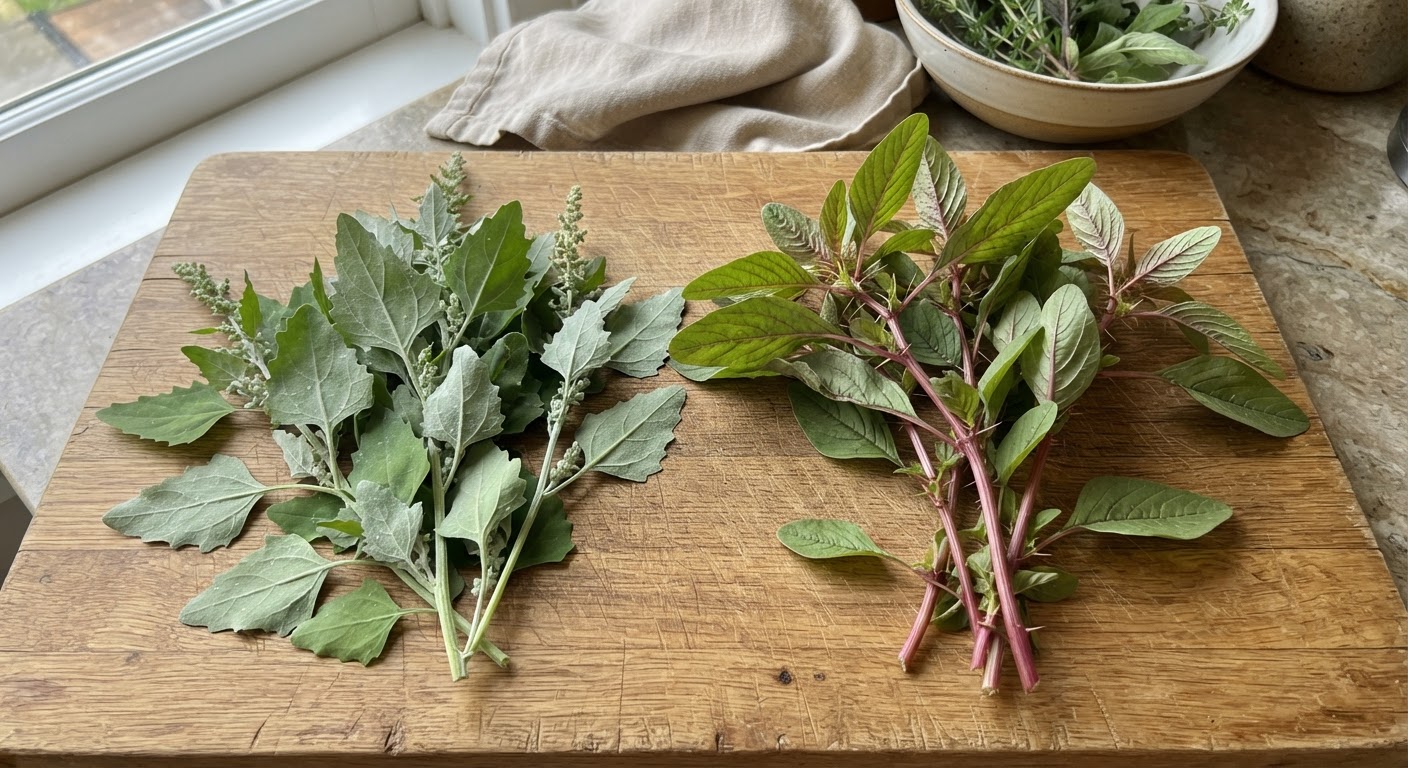
#6 — Wood Sorrel (Oxalis stricta, Oxalis acetosella)
Verdict: Nature’s Sour Patch Kids. Incredible for trail-side snacking and brightening up dishes. Not a standalone vegetable.
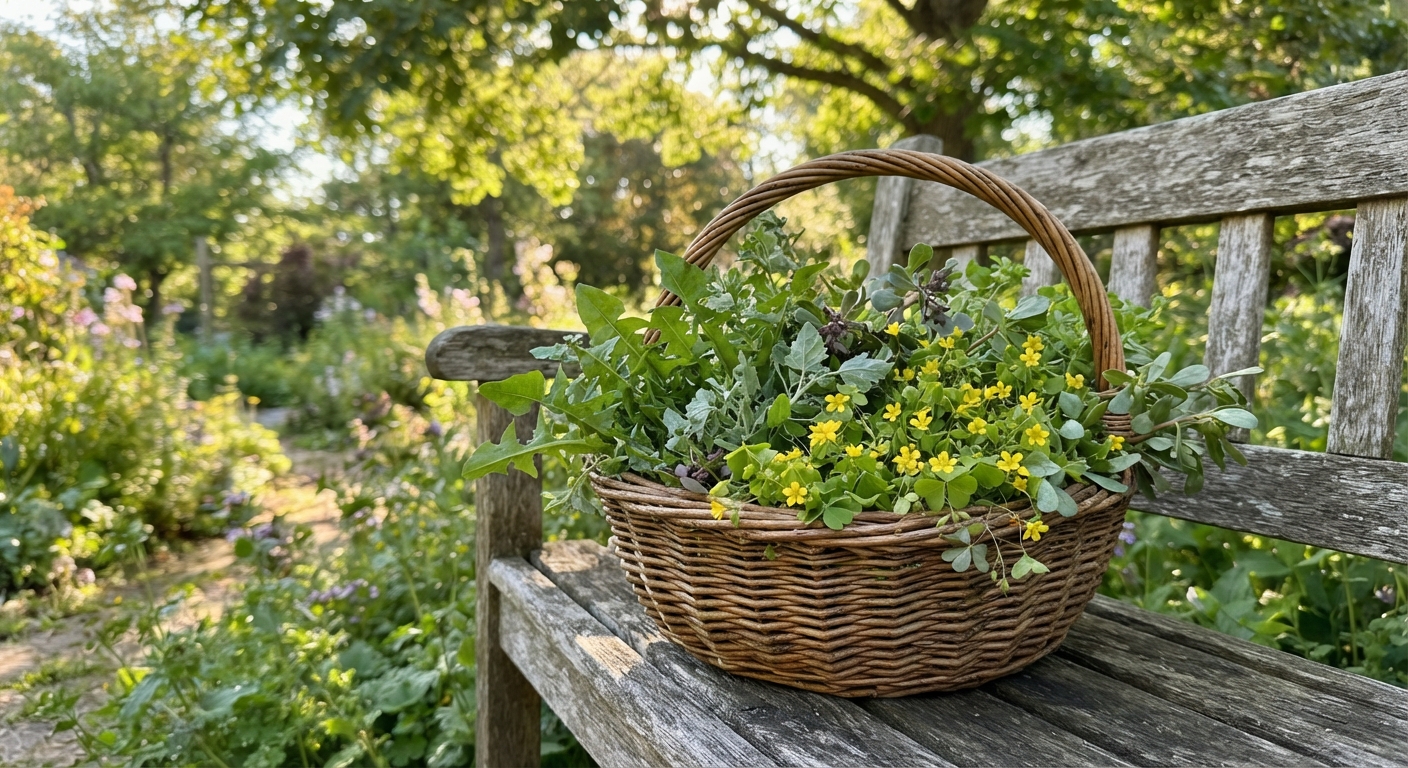
Wood sorrel looks like a three-leaf clover but tastes like lemon candy. The entire above-ground plant — leaves, stems, flowers, seed pods — is edible and packed with oxalic acid, which gives it that sharp, refreshing sourness. It’s the plant you hand to friends on a hike who’ve never foraged before, because the reaction is always the same: surprise, then a smile.
The leaves, flowers, and tiny green seed pods can be tossed into salads for a citrus-like brightness that means you can skip the vinaigrette entirely. Chefs use wood sorrel as a garnish on fish and soups. A handful steeped in hot water makes a lemonade-like drink. The seed pods — which look like tiny okra — are crunchy, sour little bursts that kids go nuts for.
The catch: because of the oxalic acid content, wood sorrel shouldn’t be eaten in massive quantities, especially by anyone with kidney issues or gout. Normal salad-portion amounts are fine. It’s a condiment more than a main ingredient.
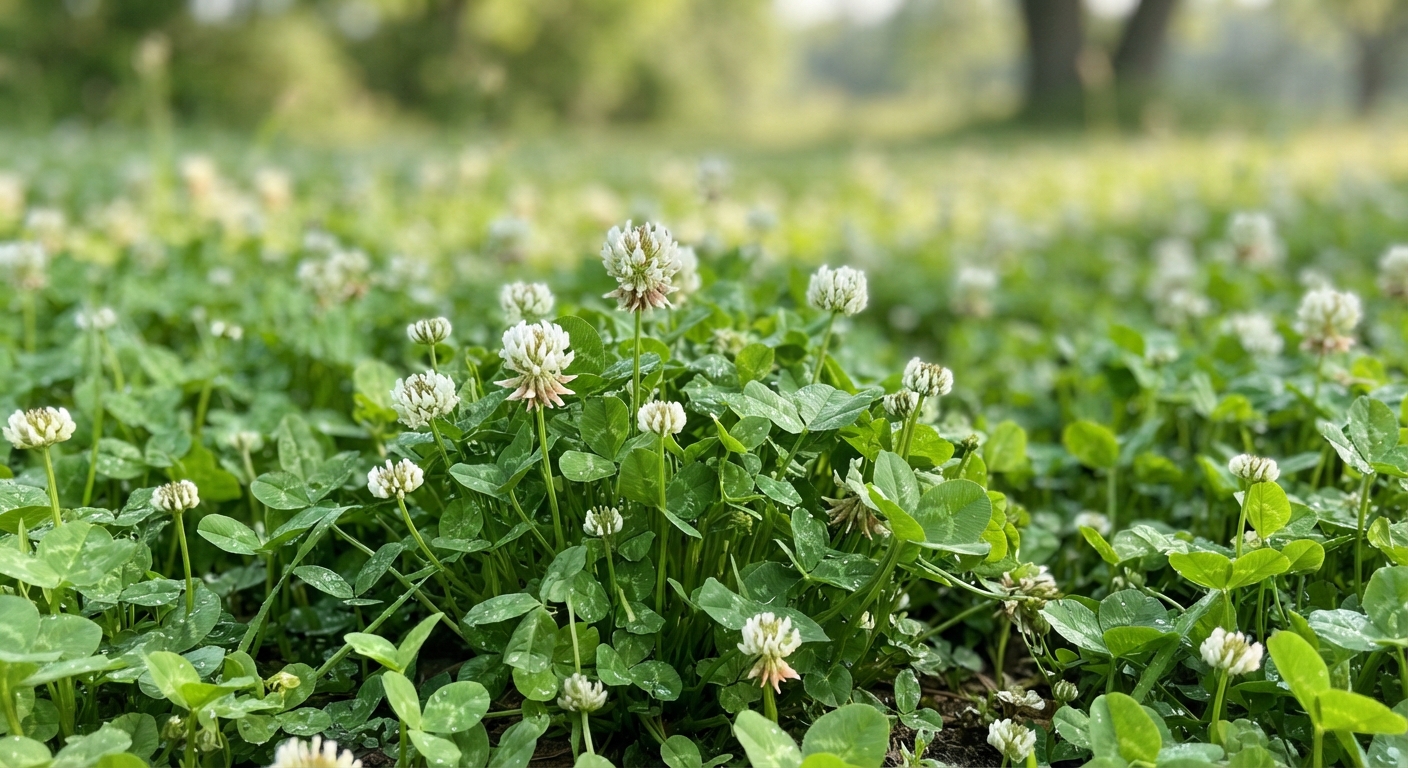
Quick ID: Three heart-shaped leaflets per stem, folding down at night or in direct sun. Yellow flowers with five petals (in Oxalis stricta). The leaves look similar to clover, but clover has oval leaflets, while sorrel’s are distinctly heart-shaped. No toxic lookalikes in North America.
Score reasoning: The taste is unique and legitimately good, but it works better as an accent than a main dish — hence the 6. Nutrition is moderate. Foraging ease is excellent; the heart-shaped leaflets and yellow flowers make it stand out, and it grows in lawns, garden beds, and forest edges nearly everywhere.
#5 — Chickweed (Stellaria media)
Verdict: The most underrated salad green on the planet. Mild, tender, abundant, and available when most other greens are dormant.
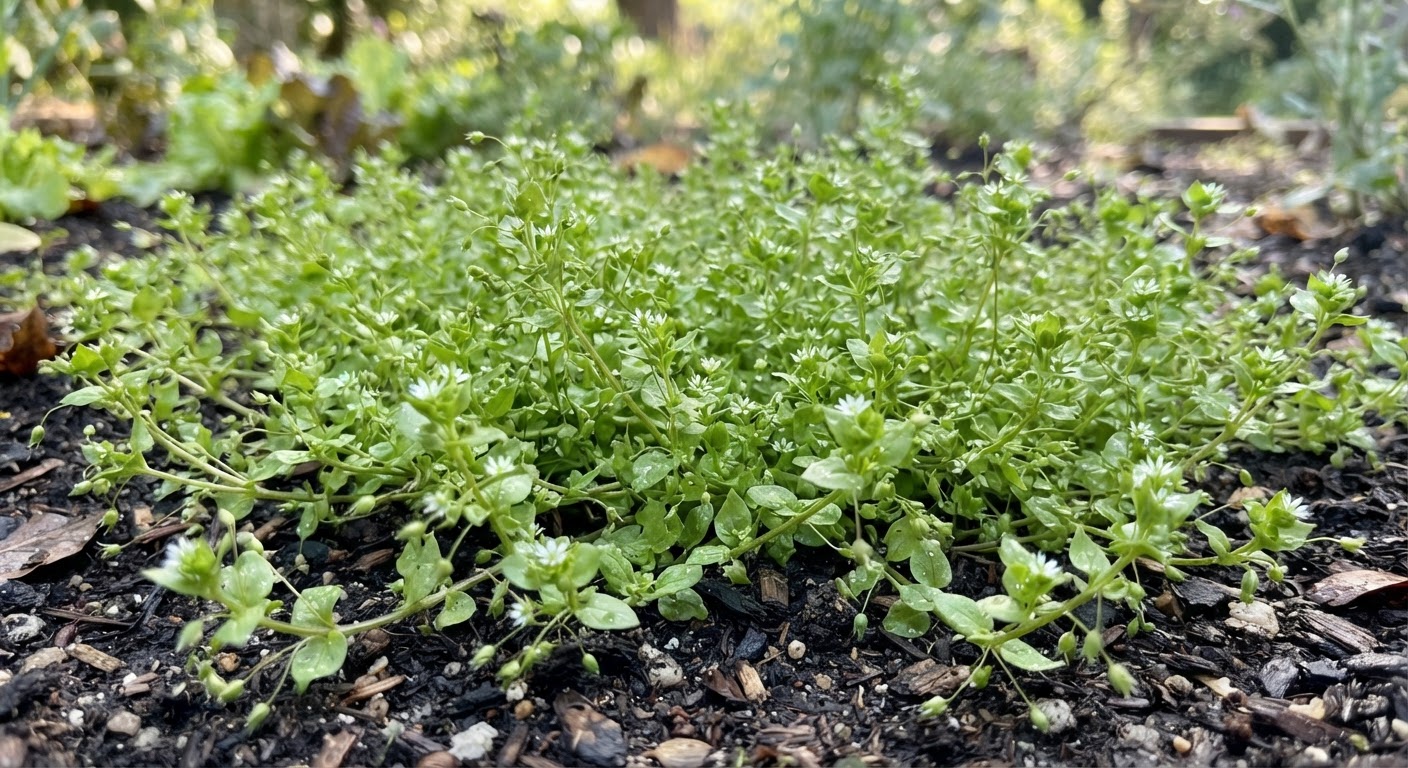
Chickweed is a low-growing, sprawling plant with tiny white star-shaped flowers and rows of fine hairs running along one side of the stem. It’s a cool-weather plant that shows up in early spring and again in late fall — precisely when your garden isn’t producing much.
The taste is where chickweed surprises everyone. It’s mild, slightly sweet, with a texture closer to microgreens than mature lettuce. The stems are crunchy, the leaves are tender, and the whole thing tastes like something you’d pay $6 for at a farmer’s market. It works raw in salads and sandwiches, or wilted briefly in a hot pan like spinach.
Nutritionally, chickweed punches above its weight class with respectable amounts of vitamin C, calcium, magnesium, and potassium. Traditional herbalists used it as a cooling herb for skin conditions. The fresh plant makes a passable poultice for minor skin irritation.
The stem-hair trick: Pick a chickweed stem and look closely. The hairs grow in a single line along one side, and the line switches sides at each leaf node. No other common lawn weed has this feature. Run your fingernail along the stem — if the hairs are only on one side, you’ve got chickweed.
Score reasoning: Taste gets a solid 7 for being genuinely pleasant and versatile. Nutrition is good. Foraging ease loses a couple points because chickweed can be confused with a mildly toxic lookalike — scarlet pimpernel (Anagallis arvensis), which has similar leaves but red-orange flowers instead of white star-shaped ones. Check the flowers and you’re safe.
#4 — Stinging Nettle (Urtica dioica)
Verdict: Worth the upfront hassle. Nettle soup alone justifies learning to handle this plant safely.
Yes, nettles sting. The leaves and stems are covered with tiny silica-tipped hairs that inject a cocktail of histamine, acetylcholine, and formic acid on contact — the same compounds that make ant bites and bee stings hurt. The sting lasts 20 minutes to a couple hours, and it genuinely sucks. So why is this plant at #4?
Because once you blanch or cook nettles for even 30 seconds, the stinging hairs are permanently neutralized. And what’s left is one of the most nutritious leafy greens on the planet. Nettles contain more protein by dry weight than most vegetables, along with substantial amounts of iron, calcium, magnesium, and vitamins A, C, and K. The flavor is deep, green, and slightly earthy — reminiscent of spinach but richer. Nettle soup with potato and cream is a classic for a reason, and nettle pesto holds its own against basil.
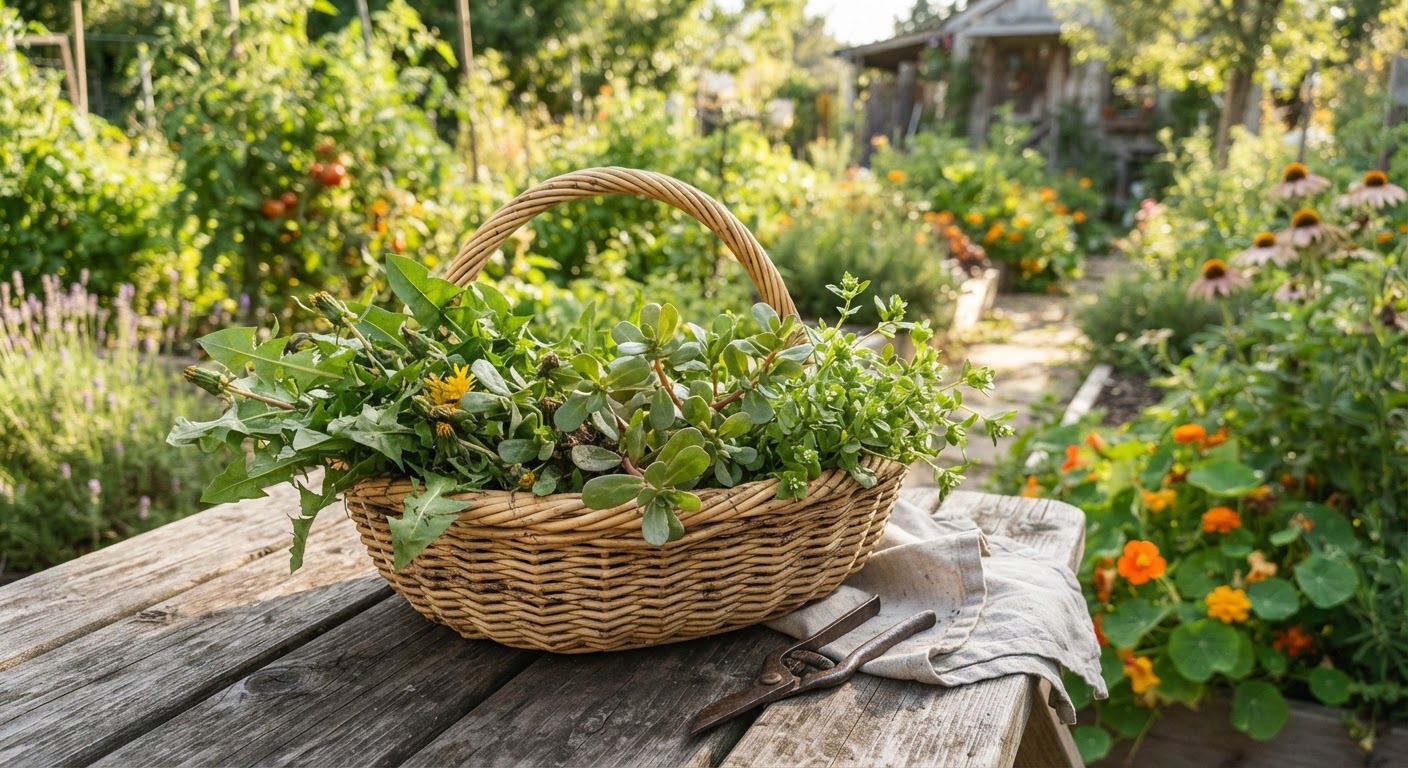
The harvest is straightforward once you’re equipped: thick garden gloves, long sleeves, scissors. Pick only the top 4–6 inches of young plants in early spring before they flower. After flowering, nettles develop gritty particles called cystoliths that can irritate the urinary tract. My rule: harvest until knee-high, then leave them alone.
Quick ID: Opposite, deeply toothed, heart-shaped leaves with a rough, sandpapery texture. Square stems. Grows in dense patches in moist, rich soil — often near streams, in old barnyards, and along forest edges where the soil has been disturbed. The sting confirms your ID instantly, though it’s a rough way to be sure.
Score reasoning: Taste gets an 8 because cooked nettle is genuinely delicious. Nutrition is outstanding. Foraging ease drops to 7 because the sting adds a practical barrier and you need to know the pre-flowering harvest rule. The patches are abundant and easy to spot, which helps.
#3 — Purslane (Portulaca oleracea)
Verdict: The succulent wild green with more omega-3s than any other land plant. Juicy, slightly tangy, and ridiculously easy to find.
Purslane grows flat against the ground with thick, reddish stems and fleshy, paddle-shaped leaves. It thrives in the hottest, driest parts of summer when every other wild green has bolted or wilted — sidewalk cracks, garden paths, the edges of parking lots. If you’ve done any gardening, you’ve pulled this weed and thrown it away.
The leaves and stems have a crisp, juicy texture and a mild lemony flavor with a hint of pepper. In the Middle East, purslane is a traditional salad ingredient; in Mexico, it’s cooked with pork and tomatillos as verdolagas. The mucilaginous quality (similar to okra) means it thickens soups and stews naturally. Eat it raw in salads, quick-pickled with vinegar, or stir-fried with garlic.
The nutrition profile is what elevates purslane: it’s the richest known land-plant source of omega-3 fatty acids (alpha-linolenic acid), plus significant amounts of vitamin E, vitamin C, magnesium, and potassium. It also contains melatonin — yes, the sleep hormone — at concentrations higher than most common foods. This is genuinely a superfood growing through your driveway.
One warning: Purslane has a toxic lookalike — spurge (Euphorbia species), which also grows flat to the ground with small leaves. The difference is immediate: break a stem. Purslane has clear, watery sap. Spurge has white, milky sap that irritates skin. Never eat any low-growing plant with white sap unless you’ve confirmed it’s dandelion.
Score reasoning: Taste gets an 8 for the unique texture and versatility. Nutrition is outstanding, only missing a 10 because the oxalate content means moderation for some people. Foraging ease is a perfect 10 — purslane is everywhere in summer, unmistakable once you know the stem check, and has a long harvest window.
#2 — Lamb’s Quarters (Chenopodium album)
Verdict: Spinach’s wild cousin — and honestly, the better green. Milder, more nutritious, and free.
Lamb’s quarters is the tall, dusty-looking weed with diamond-shaped leaves that have a white, powdery coating on the underside. The name comes from the leaf shape, which supposedly resembles a lamb’s hindquarter. It’s also called goosefoot, fat hen, and wild spinach — though calling it “wild spinach” undersells it. Lamb’s quarters is what spinach wishes it tasted like.
The flavor is mild, nutty, and slightly mineral — reminiscent of chard or expensive Tuscan kale, but more tender. Unlike spinach, it doesn’t leave that chalky, teeth-coating sensation from oxalates. The young leaves and tender stem tips can be eaten raw in salads, steamed like spinach, wilted into pasta, folded into omelets, or blended into soups. I’ve served lamb’s quarters sautéed with olive oil and lemon to guests who didn’t know they were eating weeds, and the response is always “what kind of spinach is this and where do I buy it?”
Nutritionally, lamb’s quarters is a heavyweight. Per 100 grams, it provides more calcium, iron, vitamin A, vitamin C, and B-complex vitamins than cultivated spinach. It’s also a complete protein source, containing all essential amino acids — rare for a leafy green.
Quick ID: Look for the white, powdery coating on young leaves (especially the underside), the diamond- to lance-shaped leaves with irregular, wavy teeth, and the ridged, often reddish-streaked stem. The tiny green flowers form in dense clusters at the top of the plant in late summer. The white powder isn’t mold or pesticide residue — it’s a natural waxy coating that water beads right off of.
Score reasoning: Taste gets a near-perfect 9 because lamb’s quarters is legitimately delicious by any standard — forager, gardener, or grocery shopper. Nutrition is outstanding. Foraging ease is high; the powdery leaf coating and growth habit are distinctive, and while there are other Chenopodium species, none are dangerous.
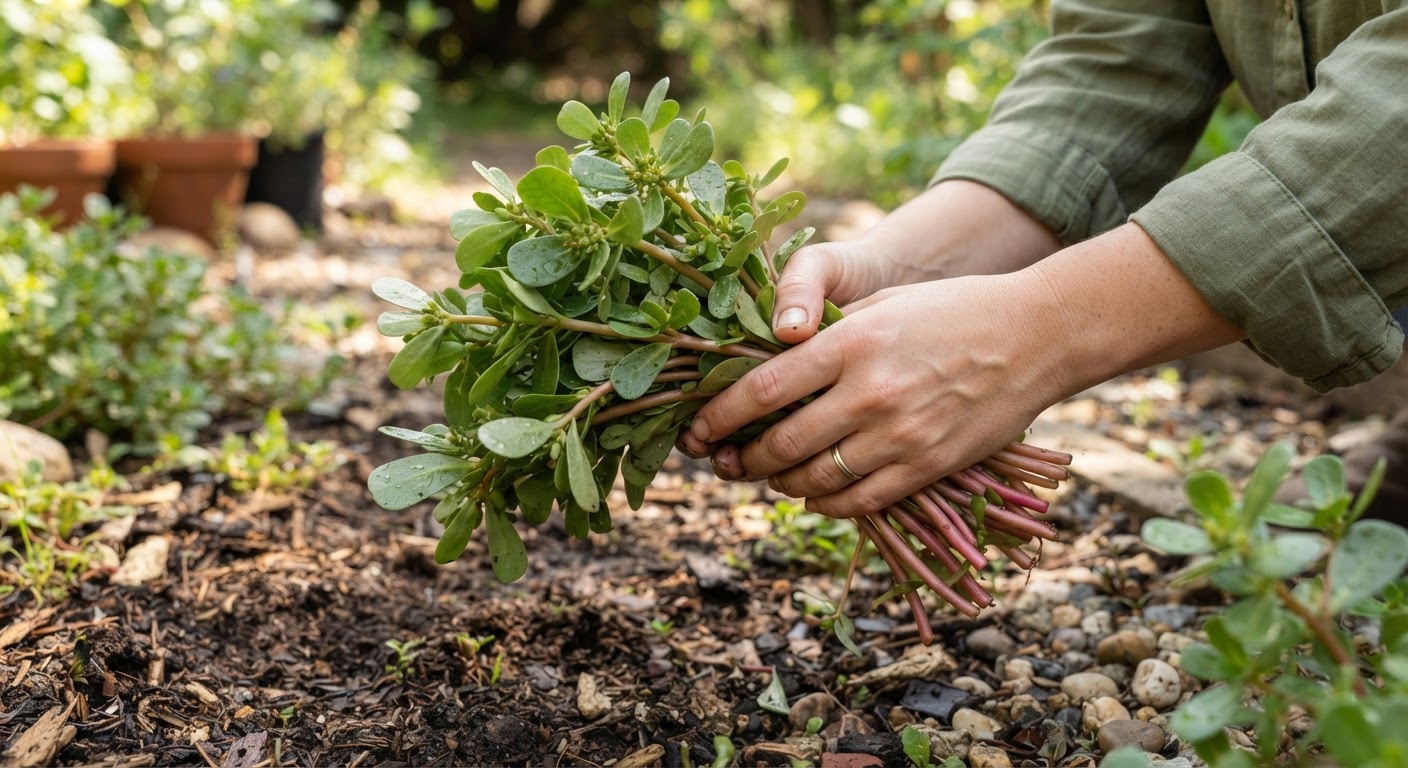
#1 — Dandelion (Taraxacum officinale)
Verdict: The undisputed champion. Unmistakable identity, year-round availability, every part usable, more nutrients than anything in the produce aisle.
It’s almost unfair. Dandelion is the easiest wild plant to identify, the most abundant, the most nutritionally dense, and every single part — root, leaf, flower, bud — is edible in some form. I resisted putting it at #1 because it feels too obvious, but the numbers don’t lie.
Leaves: Best in early spring before flowering, when bitterness is lowest. Raw in salads, sautéed with garlic and bacon, blanched and frozen for later. One cup of raw dandelion greens provides 112% of your daily vitamin A, 32% of vitamin C, and more calcium than a glass of milk.
Flowers: Sweet, pollen-rich, usable raw. Dip in batter and fry for fritters, steep into wine or syrup, pull the petals for salad color. The yellow petals separated from the bitter green base are genuinely sweet — kids who won’t eat the greens will happily snack on dandelion petals.
Roots: Harvest in fall when inulin content peaks. Roast at 200°F for 2 hours, grind, brew — dandelion root “coffee.” It won’t fool a coffee drinker, but it’s a satisfying roasted, nutty, caffeine-free hot drink with documented liver-supporting properties. The fresh root can also be sliced and stir-fried like any root vegetable.
Buds: The tight, unopened flower buds at the center of the rosette — before they rise on stalks — can be pickled like capers. One of my favorite dandelion tricks and criminally underused.
The one ID rule that matters: Dandelion has no stem. Every leaf, every flower stalk, emerges directly from the crown at ground level. If a “dandelion” has leaves growing off a central stalk, you’re looking at a lookalike. Combined with the toothed leaves pointing downward and the hollow flower stem with white sap, you have a plant that is functionally impossible to misidentify.
Score reasoning: Taste is a solid 7 — the pleasant bitterness adds complexity, but it’s not universally loved. Nutrition is a perfect 10; the USDA nutrient database reads like a multivitamin label. Foraging ease is a perfect 10 — if you can identify one plant correctly on your first try, it’s this one.
Quick Start: Your First Three Plants
Don’t try to learn all 10 at once. Here’s the three-plant sequence that’ll get you eating wild food this week:
| Step | Plant | What to Do | Time Commitment |
|---|---|---|---|
| 1 | Dandelion | Find a dandelion, verify the “no stem” + “hollow flower stalk” + “white sap” triad. Pick 5-6 young leaves. Sauté with olive oil, garlic, salt. | 15 minutes |
| 2 | Lamb’s Quarters | Look for the white powder on the leaf underside. Pick the top 4 inches of tender growth. Steam for 3 minutes, add butter and lemon. | 20 minutes |
| 3 | Wood Sorrel | Find the three-heart-leaves plant in a lawn or garden. Taste a leaf on the spot. Toss a handful into any salad. | 5 minutes |
That’s your foraging starter kit. Dandelion teaches you the ID discipline. Lamb’s quarters shows you how good wild greens can taste. Wood sorrel is the fun one that makes you want to keep exploring.
Summary Tips: What Actually Matters
Pick young, pick early. Almost every plant on this list tastes best before it flowers. After flowering, leaves toughen, bitterness increases, and your window closes. Spring is prime time.
The “one plant at a time” rule. Learn one plant thoroughly — three or four identification features — before adding another. Foragers who try to memorize 20 plants in a weekend end up making dangerous mistakes. Depth before breadth.
Avoid sprayed areas. The dandelion growing in a pristine lawn was probably treated with herbicide. The one growing in the crack of an abandoned parking lot might have absorbed runoff. Parks, organic gardens, hiking trails, and your own untreated yard are your best bets. When in doubt, skip it.
Wash everything thoroughly. Wild greens are rained on, walked past, and visited by every insect in the neighborhood. Three rinses in cold water with a splash of vinegar handles most concerns. Spin or pat dry before cooking or storing.
Cook unfamiliar greens first. Heat neutralizes many plant defense compounds and reduces the chance of stomach upset. Once you know how a plant sits with your system, experiment with raw preparations.
Bring a reference. A photo on your phone is good. A physical field guide with lookalike warnings is better. An experienced foraging partner is best. Don’t rely on a single plant identification app — even good ones make dangerous mistakes in the wrong conditions.
FAQ
Q: Can I eat these plants from my lawn if I don’t use pesticides? Yes — untreated lawns are foraging goldmines. Dandelion, plantain, violet, chickweed, and wood sorrel all thrive in lawns. Just mow high (3-4 inches) or designate a foraging patch you don’t mow at all.
Q: Which plant should I absolutely avoid confusing with something else? Purslane vs. spurge is the most dangerous confusion on this list. Spurge has white sap; purslane has clear sap. Snap every stem before it goes in your mouth.
Q: Do I need to cook wild greens or can I eat them raw? All 10 plants on this list can be eaten raw in reasonable quantities. Nettles are the exception — they must be cooked, blanched, or dried first to neutralize the sting. For most others, young leaves are fine raw; older leaves are better cooked.
Q: What if I find a plant that looks similar but not exactly the same? Don’t eat it. If you can’t confidently name at least two identification features that match, put it down and look it up properly at home. This is the single most important rule in foraging. “Probably safe” isn’t safe enough.
Q: How do I store foraged greens? Treat them like fresh herbs — wrap loosely in a damp paper towel, place in a partially open plastic bag, refrigerate. Most wild greens last 3–5 days this way. Purslane is more delicate and should be used within 1–2 days. Dandelion leaves wilt fast; give them an ice water bath for 10 minutes to revive them.
Q: Is foraging legal where I live? It depends entirely on the location. Public parks, national forests, and BLM land all have different rules. Private property requires permission. Check local regulations before harvesting — some areas allow “personal use” quantities while others prohibit removal of any plant material. Urban foraging on public land is usually tolerated for common weeds but technically exists in a gray zone in many cities.