I spent the first two years of my foraging journey stepping right over chickweed without a second glance. It looked like just another random ground cover — the kind of thing you’d pull out of a garden bed without thinking twice. Then a friend who’d been foraging for decades knelt down, plucked a sprig, popped it in her mouth, and said, “You’re walking past free salad every day.”
She was right. Once you learn to spot chickweed, you’ll see it everywhere — garden beds, sidewalk cracks, woodland edges, disturbed soil. And unlike many wild edibles that require elaborate preparation or come with a laundry list of caveats, chickweed is genuinely delicious right out of the ground. It tastes like a cross between baby spinach and corn silk — mild, slightly sweet, with none of the bitterness that turns people off from wild greens.
But here’s the thing about chickweed: its very ordinariness is also its greatest risk. Because it looks like “just a weed,” beginners often assume anything small and green must be chickweed. It’s not. There are toxic look-alikes that grow in the exact same habitats, and mistaking them can land you in serious trouble.
This guide covers everything I’ve learned about chickweed — from foolproof identification to harvesting strategies, nutrition science, cooking methods, and the mistakes I’ve watched countless beginners make.
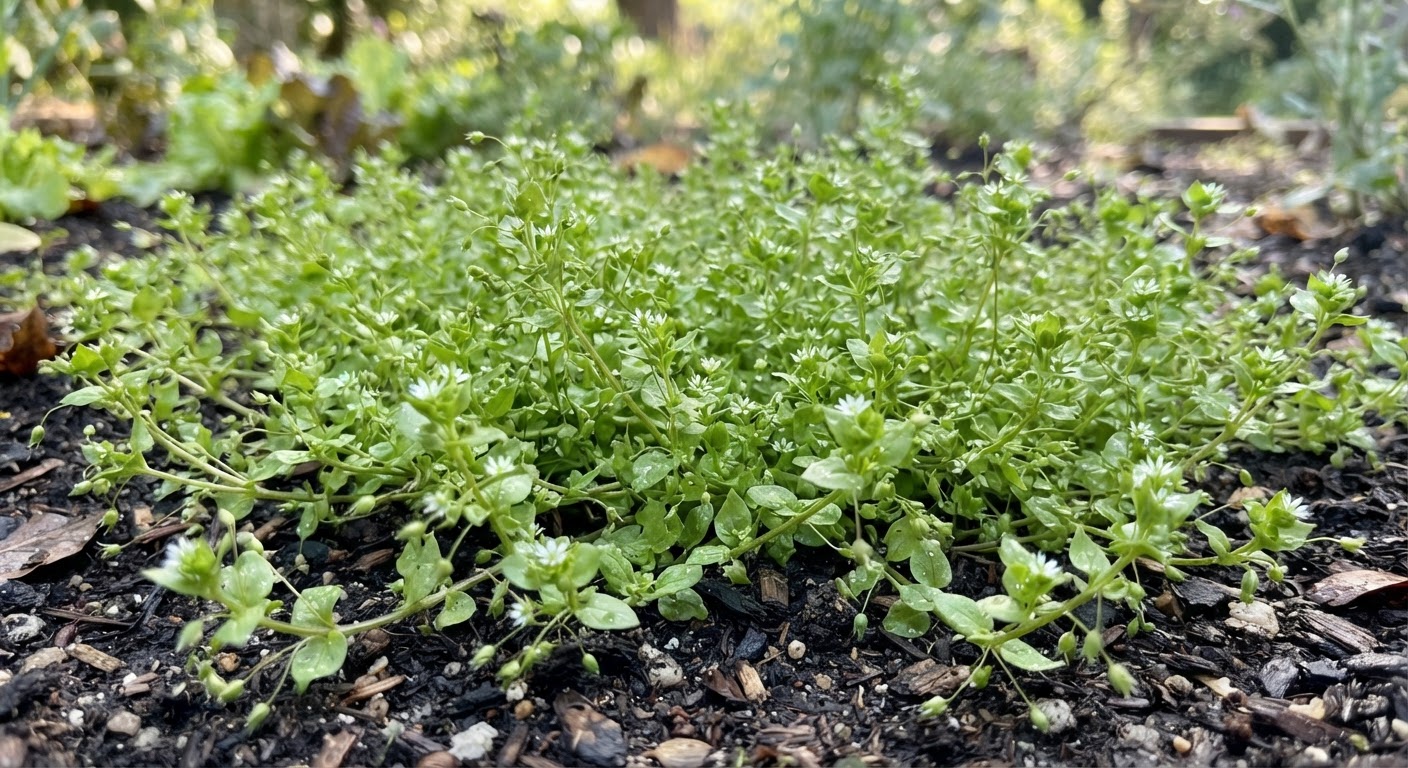
What Is Chickweed? (And Why You Should Care)
Common chickweed (Stellaria media) is a low-growing annual plant in the carnation family (Caryophyllaceae). It’s native to Europe but has naturalized across virtually every temperate region on Earth — North America, Asia, Australia, New Zealand. If you live somewhere with a cool season, you almost certainly have chickweed growing within a mile of where you’re sitting.
The plant earned its common name because chickens absolutely love it. If you keep backyard chickens, toss them a handful of fresh chickweed and watch the feeding frenzy. But chickens aren’t the only ones who benefit — chickweed has been used as both food and medicine for centuries, appearing in traditional European herbalism, Traditional Chinese Medicine, and Ayurvedic practice.
Nutritional Profile
Chickweed punches well above its weight class nutritionally. Fresh chickweed leaves contain:
- Vitamin C — comparable to raw spinach, supporting immune function and collagen synthesis
- Vitamin A — from beta-carotene precursors, important for vision and skin health
- B-complex vitamins — including riboflavin, niacin, and thiamine
- Minerals — notably calcium, magnesium, potassium, iron, zinc, and manganese
- Saponins — natural compounds that may support respiratory health and nutrient absorption
- Gamma-linolenic acid (GLA) — an omega-6 fatty acid with anti-inflammatory properties
- Fiber — both soluble and insoluble, supporting digestive health
For a plant most people treat as a garden nuisance, that’s an impressive resume. A 100-gram serving of fresh chickweed provides roughly 15–20 calories, making it a nutrient-dense addition to meals rather than a caloric staple.
How to Identify Chickweed With 100% Confidence
Identification is the single most important skill in foraging, and chickweed has specific features that make it reliably identifiable once you know what to look for. None of these features are subtle — you can check all of them in the field with just your eyes and fingers.
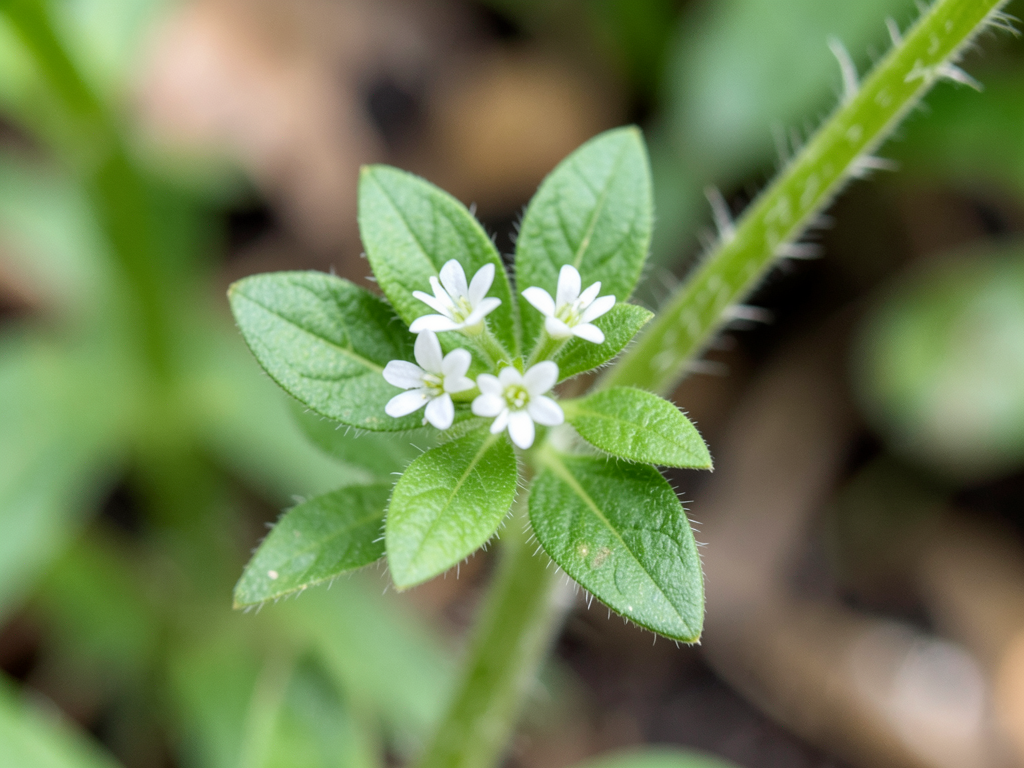
The Five-Point Chickweed Checklist
Every forager should memorize these five features. If all five check out, you have chickweed. If any single one doesn’t match, you don’t.
1. The Flower — Tiny White Stars
Chickweed flowers are small (5–10mm across), white, and unmistakably star-shaped with five petals. Here’s the key detail: each petal is so deeply cleft — split down the middle — that it looks like ten petals. If you glance quickly, you’ll count ten. Bend down and look closer, and you’ll see there are actually five, each split nearly to its base. The flowers open in sunlight and close in overcast conditions or at night.
2. The Stem — A Single Line of Hairs
This is the identification feature that separates chickweed from every dangerous look-alike. Run your finger along a chickweed stem and you’ll feel a single, distinct line of fine hairs running vertically along one side. Between the nodes (the joints where leaves attach), the line of hairs switches sides — it zigzags. If the stem is hairy all the way around, you don’t have chickweed. If the stem is completely smooth, you don’t have chickweed. One line of hairs, nothing else.
3. The Leaves — Opposite, Oval, Pointed
Chickweed leaves grow in opposite pairs — two leaves emerge at the same point on the stem, directly across from each other. They’re oval to egg-shaped with a pointed tip, about 0.5–2.5cm long. The lower leaves have distinct stalks (petioles), while the upper leaves may attach directly to the stem. The leaf edges are smooth — no serrations, no teeth.
4. The Growth Habit — Low, Sprawling Mats
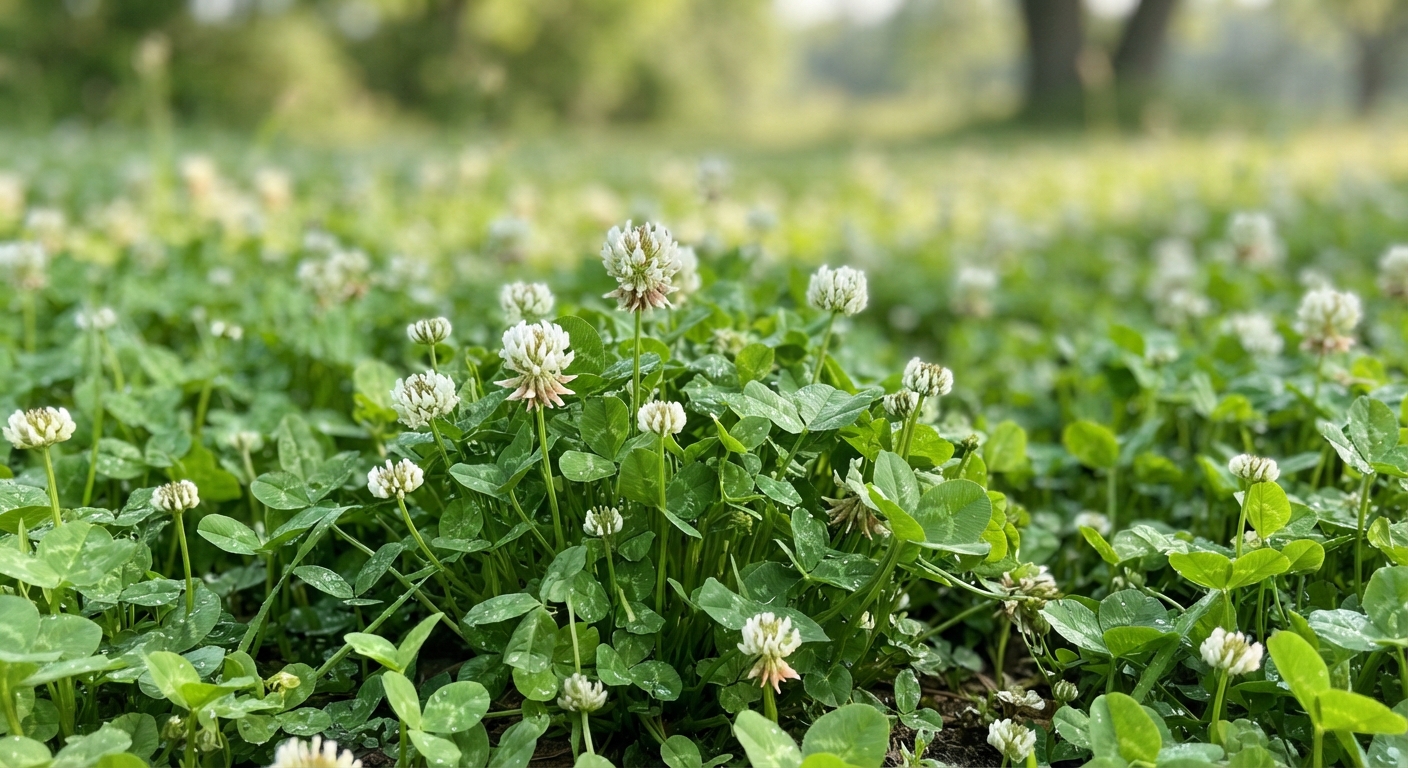
Chickweed doesn’t stand upright like many weeds. It grows in sprawling, tangled mats that hug the ground. Individual stems can trail 15–40cm, but the plant rarely rises more than 5–10cm above the soil. When you pull up a stem, you’ll find it breaks easily and the roots are shallow and fibrous.
5. The Inner Core — A Rubber-Band-Like Thread
This is an old forager’s trick that never fails. Break a chickweed stem by gently pulling it apart. Inside, you’ll see a thin, elastic, rubber-band-like thread — the plant’s inner core. If you pull slowly, the outer stem will break but this thread will stretch before snapping. No toxic look-alike has this feature.
When All Five Match, You’re Golden
If you’ve confirmed all five features — deeply cleft petals (looks like 10), single line of stem hairs, opposite oval leaves, low sprawling habit, and an elastic inner core — harvest with confidence. If even one is missing, walk away.
The Dangerous Look-Alikes You Must Know
Rushing identification is how people get hurt. Chickweed has two look-alikes that every forager should memorize before they harvest a single leaf.
Scarlet Pimpernel (Anagallis arvensis)
Also called “poor man’s weatherglass,” scarlet pimpernel is toxic and can cause skin irritation, gastrointestinal distress, and in large quantities, more serious effects. The flowers are the giveaway — they’re orange-red (brick-colored), not white. But here’s where beginners mess up: the leaves look similar to chickweed. The definitive test? Scarlet pimpernel stems are square in cross-section and have no line of hairs. Chickweed stems are round with a single line of hairs.
Spurge Species (Euphorbia spp.)
Multiple spurge species grow in the same habitats as chickweed, and they’re all toxic. Spurge produces a milky white sap when you break the stem. Chickweed produces clear, watery sap. This is the easiest way to separate them: squeeze the stem. White milk = spurge = dangerous. Clear liquid = potential chickweed (check the other features). Spurge also lacks the line of hairs and has more oblong, often spotted leaves.
The Bottom Line on Safety
If you apply the five-point checklist rigorously, you will never confuse chickweed with its toxic look-alikes. The single line of hairs on the stem — unique to chickweed in the plants that look like it — is your safety net. Learn it. Use it every single time.
Where and When to Find Chickweed
Chickweed is a cool-season annual, which means its growing season depends on your climate. In temperate regions (USDA zones 5–8), chickweed germinates in fall, grows through winter during mild spells, peaks in early spring, and dies back when temperatures consistently exceed 75°F (24°C). In cooler coastal climates, chickweed can grow year-round. In warmer regions, it appears only during the coolest months.
Preferred Habitats
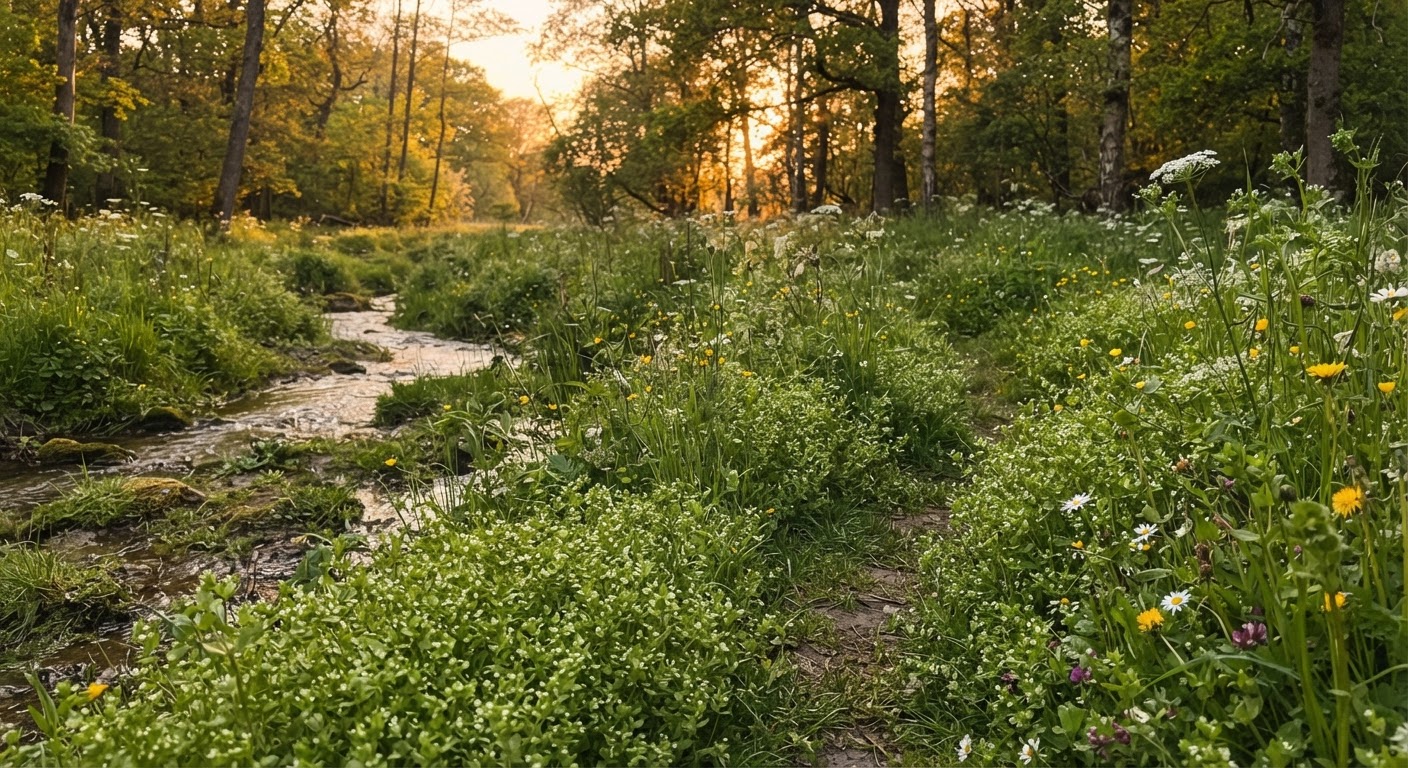
Chickweed thrives in disturbed, moist, rich soils with partial shade. Look for it in:
- Garden beds — especially vegetable gardens with regular watering
- Agricultural fields — fallow fields and field margins
- Lawns — particularly in shaded, damp spots
- Woodland edges — where tree cover breaks and moisture collects
- Stream banks — along creeks and drainage ditches
- Urban settings — sidewalk cracks, neglected planters, abandoned lots
- Nursery pots — a common hitchhiker in purchased plants
Chickweed is an indicator species for fertile, nitrogen-rich soil. If you find a healthy patch, the soil is almost certainly good for gardening.
Seasonal Timing by Region
| Region | Peak Season | Best Harvest Window |
|---|---|---|
| Northeast US | March–May | April |
| Southeast US | January–March | February |
| Midwest US | March–May | April |
| Pacific Northwest | November–May | February–April |
| Southern UK | November–May | March–April |
| Northern Europe | April–June | May |
| Australia (temperate) | June–September | July–August |
Chickweed is remarkably cold-hardy. It can survive temperatures well below freezing and resume growth as soon as the soil thaws. I’ve harvested chickweed from under a light snow in February — the leaves were limp but perfectly edible.
How to Harvest Chickweed Responsibly
Harvesting chickweed is straightforward, but a few practices make a big difference in quality, sustainability, and safety.
Harvesting Technique
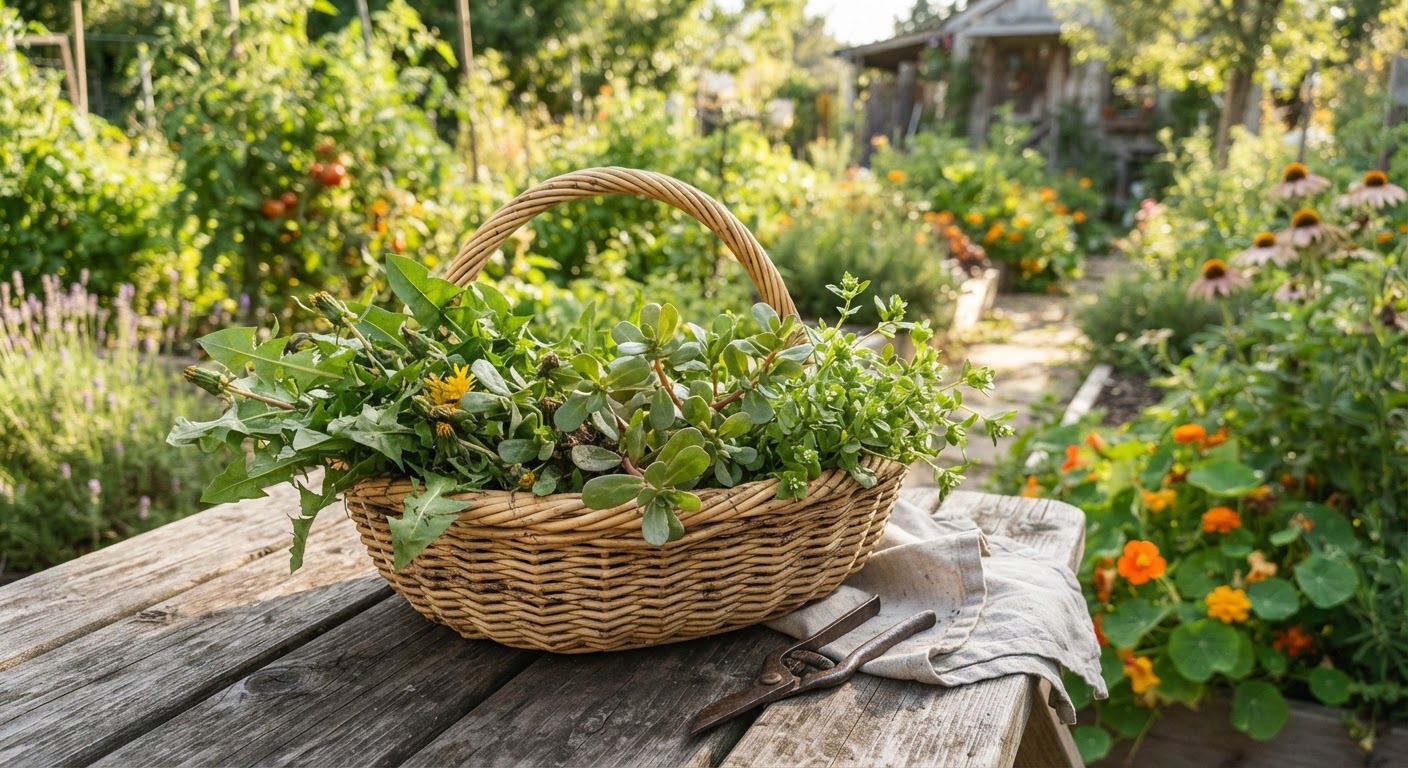
Cut, don’t pull. Use scissors or pinch stems with your fingernails. Cut stems about 2–3 inches above the ground, leaving the lower portion and roots intact. Chickweed regrows vigorously from the base, and clean cuts heal faster than torn stems. If you pull the entire plant up by the roots, that patch won’t regenerate for that season.
Take the tops. The upper 4–6 inches of each stem are the most tender and flavorful. The lower portions tend to be stringy and older. For salads and raw dishes, stick to the top growth. For cooked dishes, you can include more of the stem but still avoid the lowest, woodiest portions.
Harvest clean patches first. Chickweed growing in pristine garden soil or woodland edges is ideal. Avoid patches near roadsides (vehicle exhaust residue), in dog-walking areas (animal waste contamination), or in conventionally managed lawns (pesticide and herbicide exposure). If you’re unsure about a location’s treatment history, assume it’s been sprayed and find another patch.
Harvest before flowering — ideally. The leaves are at their peak tenderness and flavor before the plant puts energy into flowers and seeds. Once chickweed is in full bloom, stems become more fibrous and leaves develop a slightly bitter edge. That said, flowering chickweed is still perfectly edible — just not at its absolute best.
Post-Harvest Handling
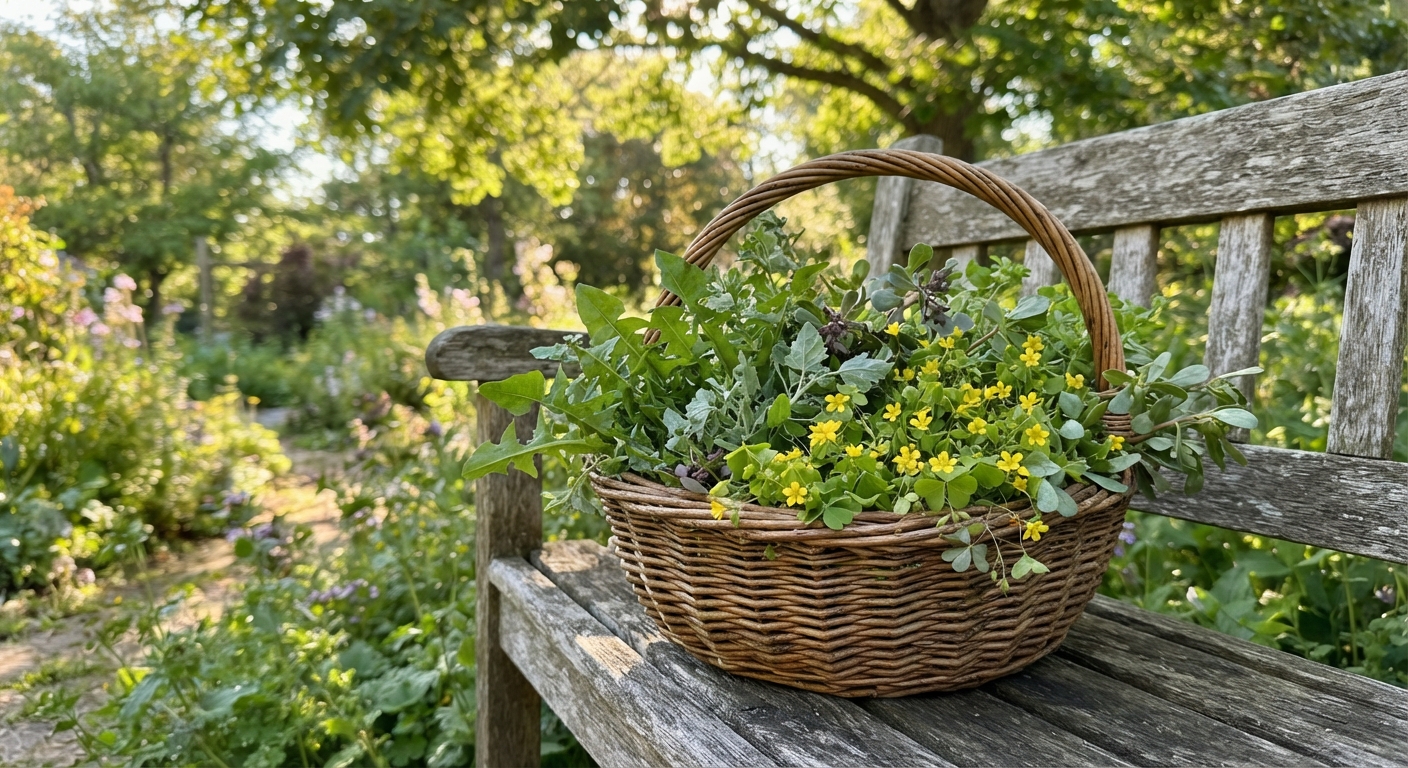
Chickweed wilts quickly after picking. Put harvested stems in a plastic bag or container and refrigerate as soon as possible. Properly stored, fresh chickweed stays crisp for 3–5 days. Wash thoroughly in cold water before use — chickweed’s low growth habit means it catches soil, tiny insects, and debris. A salad spinner works wonders here.
How to Eat Chickweed: Raw, Cooked, and Preserved
This is where chickweed really shines. Unlike many wild greens that require blanching, multiple water changes, or elaborate preparation to become palatable, chickweed is delicious straight from the ground. But it’s also versatile enough to work in dozens of different preparations.
Raw Chickweed
Fresh chickweed has a mild, slightly sweet flavor with notes of corn silk, lettuce, and young spinach. It works beautifully in:
- Salads — as the main green or mixed with lettuce, arugula, and other greens
- Sandwiches and wraps — as a living lettuce substitute
- Garnish — scattered over soups, omelets, or grain bowls
- Smoothies — blended with fruit for a nutrient boost
- Pesto — raw or lightly processed with olive oil, nuts, and garlic
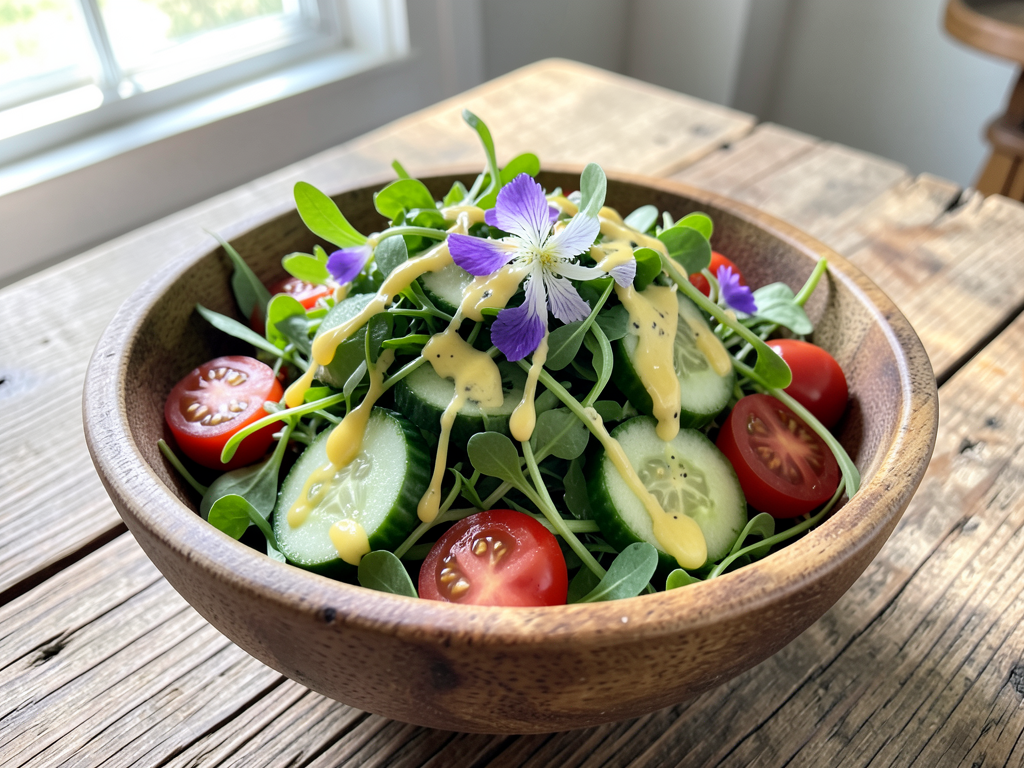
Simple Chickweed Salad Recipe
This is the recipe I make most often — it takes five minutes and makes chickweed the star.
Ingredients:
- 3 cups fresh chickweed tops, washed and spun dry
- 1 cup cherry tomatoes, halved
- ½ cucumber, thinly sliced
- 2 tablespoons extra virgin olive oil
- 1 tablespoon fresh lemon juice
- Pinch of flaky sea salt
- Fresh black pepper
- Optional: shaved parmesan, toasted pine nuts, edible flowers
Toss the chickweed, tomatoes, and cucumber together. Drizzle with olive oil and lemon juice, season with salt and pepper, and serve immediately. The chickweed’s mild flavor absorbs the dressing beautifully without going soggy.
Cooked Chickweed
Cooking concentrates chickweed’s flavor and softens its texture. It behaves almost exactly like spinach — it wilts dramatically and cooks in under two minutes. Try it in:
- Sautéed greens — wilted with garlic and olive oil
- Soups and stews — stirred in during the last two minutes of cooking
- Omelets and frittatas — folded into eggs with cheese
- Stir-fries — added at the very end for a bright green finish
- Quiches and savory tarts — as a spinach substitute
Quick Sautéed Chickweed with Garlic
Ingredients:
- 4 cups fresh chickweed, roughly chopped
- 2 tablespoons olive oil or butter
- 2 cloves garlic, thinly sliced
- Pinch of red pepper flakes (optional)
- Salt to taste
- Squeeze of lemon
Heat the oil in a wide pan over medium heat. Add garlic and cook until fragrant, about 30 seconds. Add chickweed all at once — it will look like a mountain. Toss with tongs as it wilts, which takes about 90 seconds. Season with salt, pepper flakes, and a squeeze of lemon. Serve immediately.
Chickweed Pesto
Chickweed makes an exceptionally good pesto — it’s milder than basil pesto, with a greener, fresher flavor that even kids tend to enjoy.
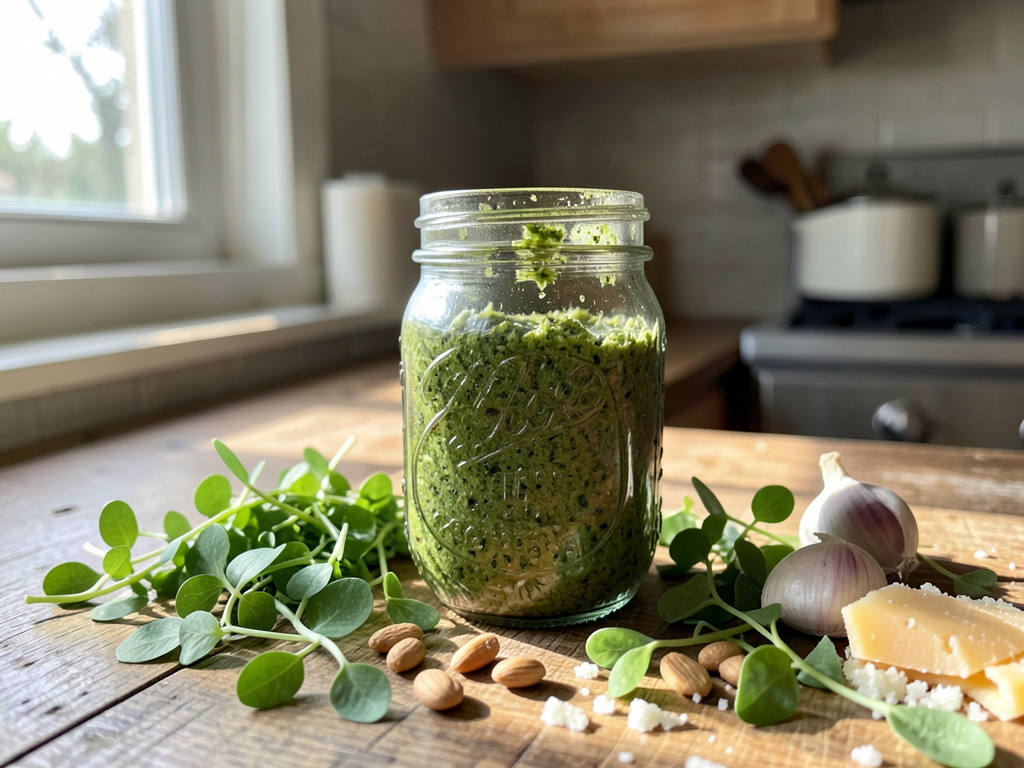
Ingredients:
- 2 packed cups fresh chickweed tops
- ½ cup pine nuts or walnuts, lightly toasted
- 2 cloves garlic
- ½ cup grated parmesan or pecorino
- ½ cup extra virgin olive oil
- Juice of ½ lemon
- Salt and pepper to taste
Pulse the chickweed, nuts, and garlic in a food processor until coarsely chopped. Add the cheese and pulse to combine. With the motor running, drizzle in the olive oil until smooth. Add lemon juice, salt, and pepper. Adjust consistency with more oil or a splash of water. Stored in the fridge with a thin layer of olive oil on top, this pesto keeps for up to a week.
Chickweed Tea and Infusions
Chickweed makes a mild, pleasant herbal tea. Use 1–2 teaspoons of dried chickweed (or 2 tablespoons fresh) per cup of boiling water, steep for 5–10 minutes, and strain. The flavor is light and grassy with a slightly sweet finish. Traditionally, chickweed tea has been used as a mild diuretic and for soothing minor respiratory irritation.
Preservation Methods
Chickweed doesn’t preserve as well as tougher greens like kale, but you have options:
- Refrigeration — fresh, up to 5 days in a sealed container
- Freezing — blanch for 30 seconds, plunge in ice water, squeeze dry, and freeze in portions (good for soups and smoothies)
- Drying — air-dry or use a dehydrator at low temperature for tea (loses most of its culinary value)
- Infused vinegar — steep fresh chickweed in apple cider vinegar for 2–4 weeks; strain and use as a salad dressing base
- Infused oil — for topical use (not culinary); chickweed-infused oil is popular in herbal salves
Medicinal Uses and Traditional Knowledge
Chickweed has an extensive history in traditional herbal medicine that stretches back centuries. While I’m not a medical professional and this isn’t medical advice, it’s worth understanding why chickweed has persisted in herbal traditions across multiple cultures.
Traditional Applications
In European folk medicine, chickweed was primarily used as a cooling, soothing herb for skin conditions — rashes, minor burns, insect bites, eczema, and wounds. Fresh chickweed poultices (crushed leaves applied directly to the skin) were a common household remedy well into the 19th century.
In Traditional Chinese Medicine, chickweed (fan lü) is classified as a cooling herb used to clear heat, reduce swelling, and promote lactation. It appears in formulations for skin eruptions and breast abscesses.
From a modern scientific perspective, chickweed contains saponins (natural soap-like compounds that may reduce inflammation when applied topically), flavonoids (antioxidant compounds), and mucilage (a gel-like substance that soothes irritated tissues) — all of which align with the traditional cooling and soothing applications.
Important Safety Note
Chickweed is generally recognized as safe when consumed in normal food quantities. However, the saponins in chickweed can cause mild digestive upset in some people when consumed in very large amounts. Start with small portions to gauge your individual tolerance. Pregnant and nursing women should consult a qualified healthcare provider before consuming medicinal quantities of any wild plant.
Common Beginner Mistakes (And How to Avoid Them)
I’ve taught foraging workshops for years, and I see the same mistakes over and over. Learn from other people’s errors instead of making them yourself.
Mistake 1: Skipping the Stem Hair Check
This is the most dangerous mistake. Enthusiastic beginners spot tiny white flowers and green leaves, get excited, and start harvesting without checking the stem. The single line of hairs is your non-negotiable safety checkpoint. Check it every time, even if you’re “sure.”
Mistake 2: Harvesting from Contaminated Sites
A lush chickweed patch next to a busy road or in a conventionally sprayed lawn is not safe to eat. Soil contamination, vehicle exhaust residue, herbicide drift, and animal waste all concentrate in low-growing plants like chickweed. The rule is simple: if you wouldn’t eat soil from that spot, don’t eat the plants growing in it.
Mistake 3: Confusing Quantity with Quality
A giant patch of flowering, leggy, fibrous chickweed in June is not as good as a smaller patch of young, pre-flowering chickweed in April. Quality matters more than quantity. Seek out the youngest, most tender growth — the tips of stems from plants that haven’t flowered yet.
Mistake 4: Not Washing Thoroughly
Chickweed’s low, sprawling growth habit means it catches everything — soil particles, tiny insects, bits of mulch, spider webs. A quick rinse won’t cut it. Submerge your harvest in a bowl of cold water, agitate gently, let the debris settle, and lift the greens out. Repeat until the water runs clear.
Mistake 5: Assuming All Similar Plants Are Safe
“All small green weeds are edible” is a dangerously false belief. Some of the most toxic plants in North America — including young poison hemlock and water hemlock — have green leaves and grow in similar habitats. Positive identification is mandatory, not optional.
Frequently Asked Questions
Is chickweed safe to eat raw?
Yes, chickweed is safe and delicious raw. It’s one of the best wild salad greens available. Just make sure you’ve positively identified it using the five-point checklist — especially the single line of stem hairs — and wash it thoroughly.
Can you eat chickweed flowers?
Absolutely. The flowers are edible and make a delicate garnish. They have a milder flavor than the leaves and look beautiful scattered over salads or soups. Don’t harvest only the flowers, though — take the whole stem tip and you’ll get leaves, flowers, and tender stem in one cut.
What does chickweed taste like?
Chickweed has a mild, pleasant flavor that most people describe as a cross between baby spinach and fresh corn silk. It’s slightly sweet with a clean, green finish and virtually no bitterness. This makes it extremely versatile in the kitchen — it works in everything from salads to stir-fries without overpowering other ingredients.
When is chickweed in season?
Chickweed is a cool-season annual. In most temperate regions, it germinates in fall, grows through winter during mild spells, peaks in early spring (March–May), and dies back as temperatures rise. In coastal or cool-summer regions, it can persist much longer. In hot climates, look for it only during the coolest months.
Can you eat too much chickweed?
Chickweed contains saponins, which can cause mild digestive upset when consumed in very large quantities. For most people, normal food-portion consumption (a handful in a salad, a side dish of sautéed greens) is perfectly fine. As with any wild food, start with small amounts and see how your body responds.
Is chickweed nutritious?
Yes, very. Chickweed is rich in vitamins A and C, several B vitamins, and minerals including calcium, magnesium, potassium, and iron. It also contains gamma-linolenic acid (GLA), a beneficial omega-6 fatty acid, and antioxidant flavonoids. It’s genuinely one of the more nutritious greens you can eat.
How do you know it’s chickweed and not a toxic look-alike?
Use the five-point checklist: (1) small white star-shaped flowers with five deeply cleft petals that look like ten, (2) a single distinct line of hairs running vertically along the stem, (3) opposite, oval, pointed leaves with smooth edges, (4) low sprawling growth habit, (5) an elastic, rubber-band-like inner core that stretches when you gently pull a stem apart. If all five check out, you have chickweed.
Final Thoughts
Chickweed deserves way more respect than it gets. It’s one of the most accessible, delicious, and nutritious wild foods available — and chances are it’s growing within walking distance of your front door right now. The fact that most people treat it as a weed says more about our disconnection from food sources than it does about the plant itself.
Learning to identify chickweed is a perfect entry point into foraging. The identification features are clear and unmistakable. The toxic look-alikes are easy to rule out once you know the stem hair test. And the culinary payoff — crisp, mild greens that work raw or cooked — is immediate and satisfying.
Start with the stem hair check. Commit it to memory. It’s the single detail that separates safe chickweed from everything else. Once you’ve confirmed that single line of hairs, work through the rest of the checklist, harvest a small amount, wash it carefully, and toss it into your next salad.
Fair warning: once you start noticing chickweed, you won’t be able to stop. You’ll spot it in gardens, in parks, in sidewalk cracks, in nursery pots. And every time you do, you’ll see free food where you used to see just another weed. That shift in perspective is, for many people, the moment foraging becomes a lifelong pursuit rather than a casual curiosity.