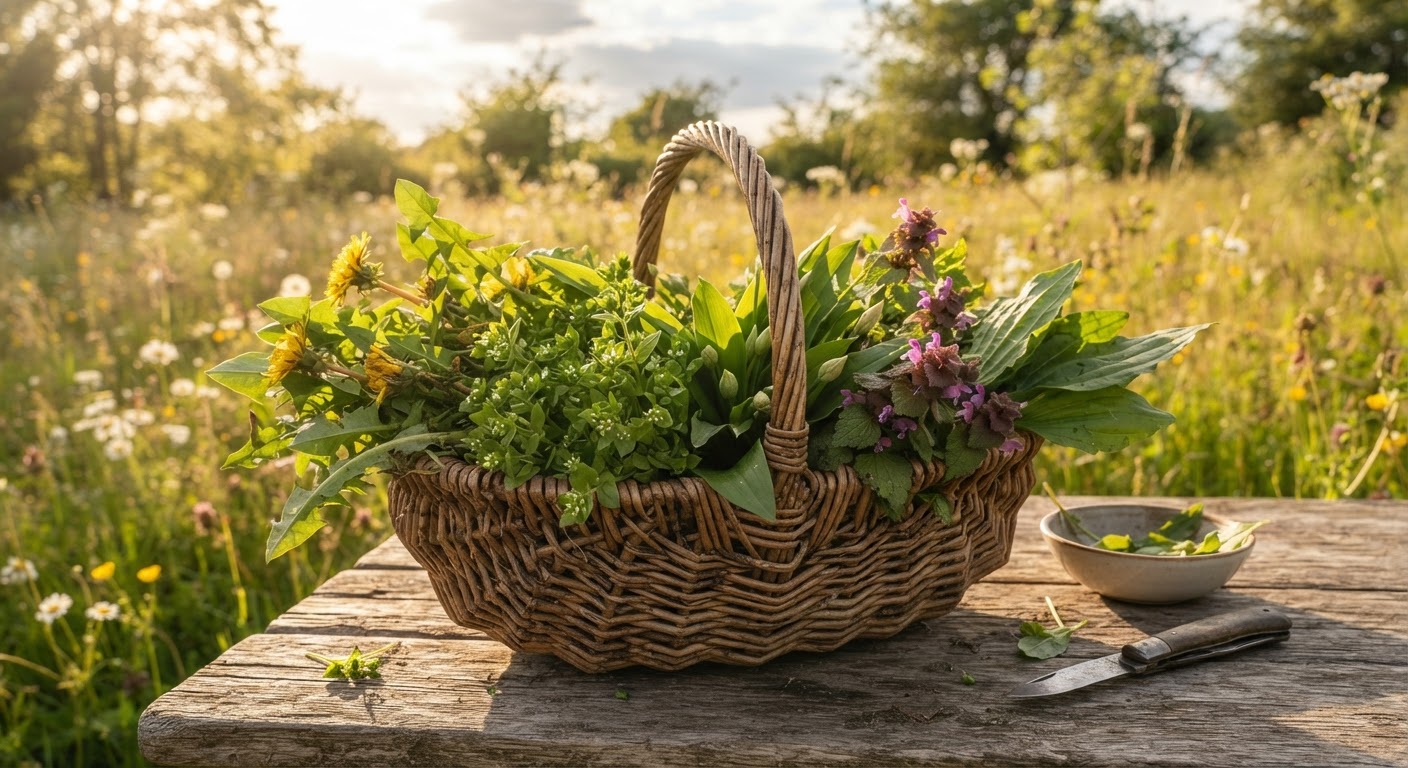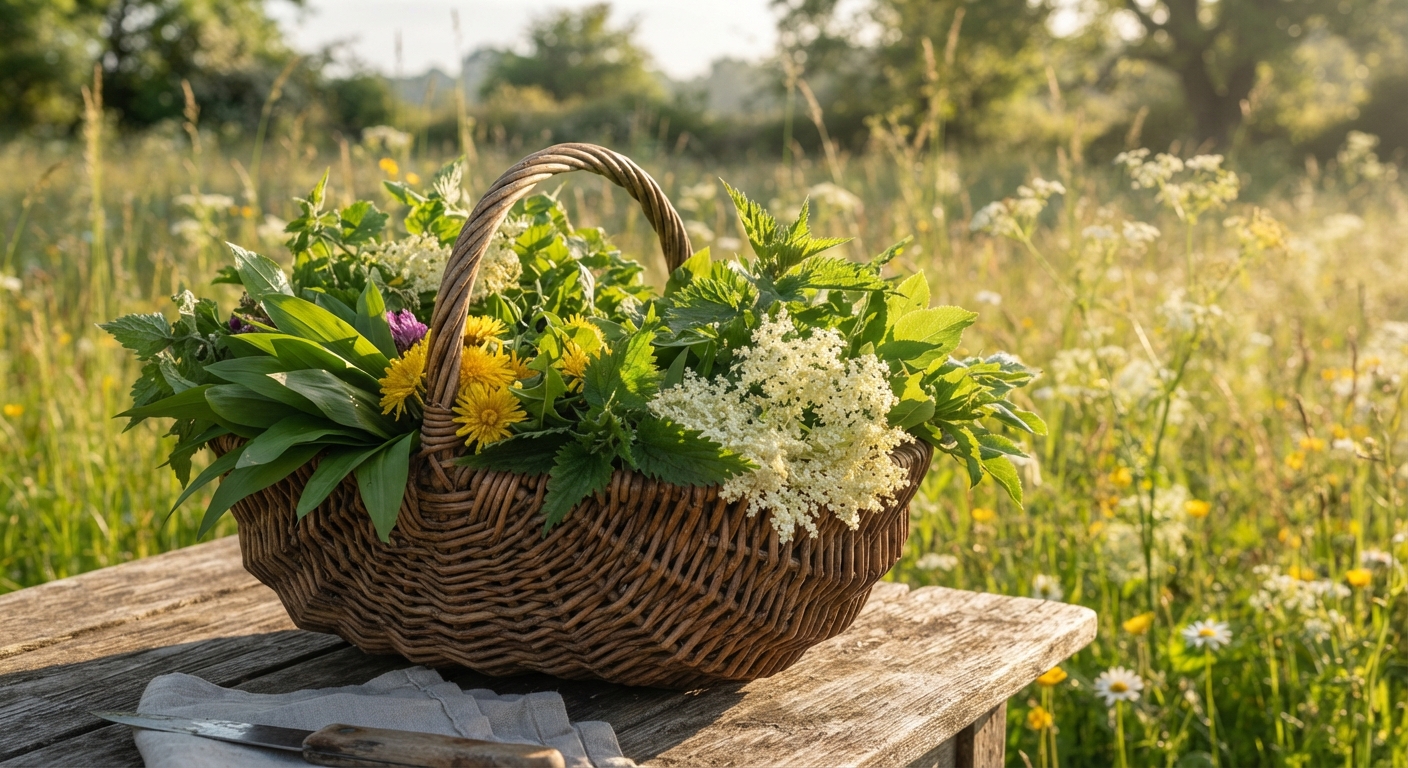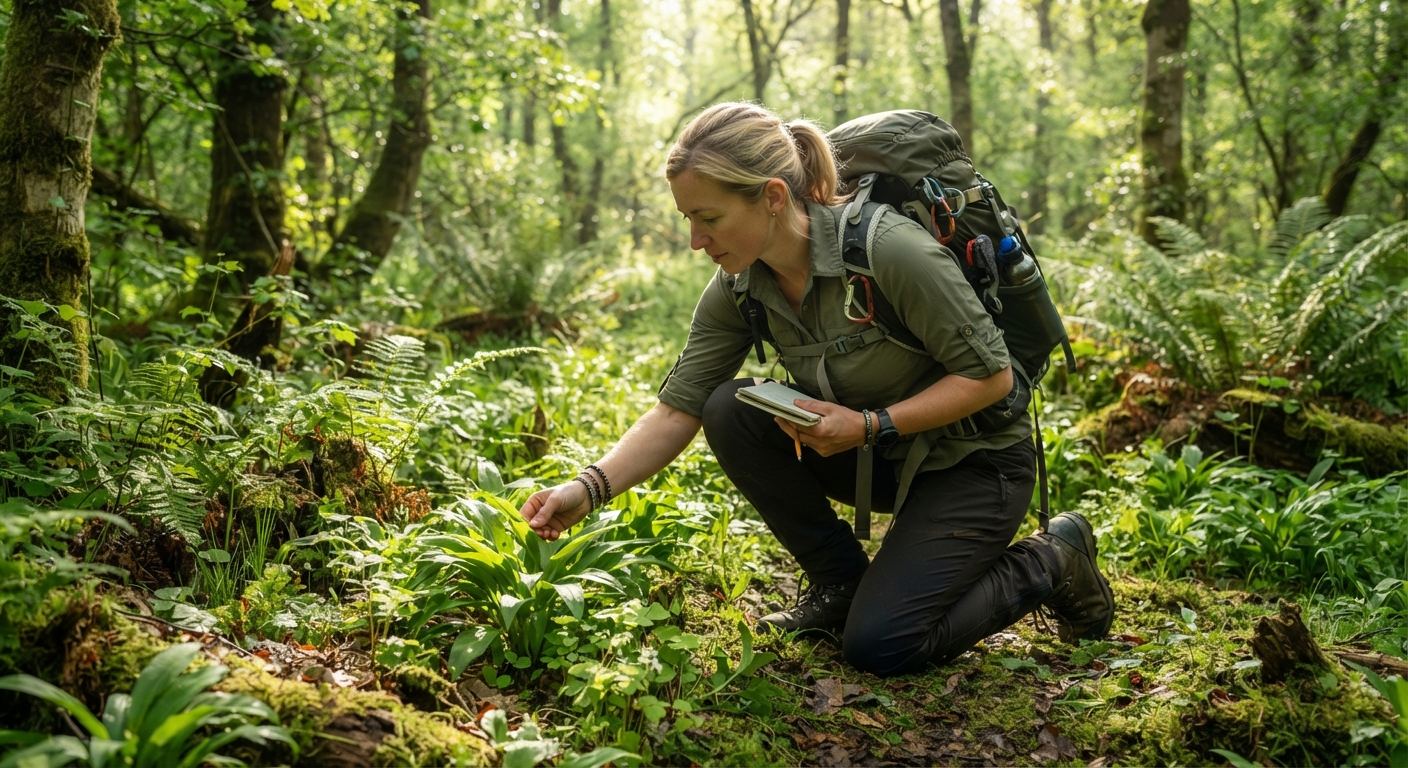
The trail thins, then disappears. Your phone has one bar and no data. The granola bar you ate at noon is a six-hour-old memory, and you’ve just accepted that you’re not getting back to the car tonight. In that moment, the question isn’t academic. It’s not “what wild plants are edible?” It’s “what can I actually find, identify with certainty, and eat without making a bad situation worse?”
Here’s the hard truth most survival content skips: you cannot learn survival plants in a survival situation. When you’re cold, tired, dehydrated, and scared, your brain does not calmly flip through a field guide. You reach for whatever your hands already know. That’s why the plants that save people are never exotic. They’re the common ones learned slowly, on ordinary hikes, months before anything went wrong.
This guide is that pre-loading process. It walks you through the wild plants that genuinely matter in a survival context — the ones that show up in real rescue stories and real survival courses, not just in comment sections — and teaches you the system for learning them before you need them.
One rule sits above everything that follows, and in a survival context it matters more, not less: if you cannot identify a plant with 100% confidence, you do not eat it. A plant you can’t name can kill you faster than the hunger it’s tempting you to solve. In a real emergency, the correct answer to “should I eat this unidentified plant?” is no. Every single time.
Step 1: Set Your Priorities (Food Is Not First)
Before we talk about a single plant, we have to fix a common misunderstanding that gets people hurt. The survival “rule of threes” tells you roughly how long a person can survive without each basic need:
| Threat | Rough Survival Window | Your Actual Priority |
|---|---|---|
| No air | About 3 minutes | Immediate |
| No shelter in harsh conditions | About 3 hours (exposure) | Very high |
| No water | About 3 days | High |
| No food | About 3 weeks | Lowest |
Look at that last row. Food is the last thing that kills you in the wilderness. A healthy adult with water and shelter can survive weeks without eating. That doesn’t mean plants don’t matter — it means you should spend your first hours solving shelter and water, not wandering around sampling leaves.
Why this matters for plant knowledge specifically: foraging burns calories. If you’re already depleted, tramping through dense brush hunting for a plant you half-remember can cost you more energy than the plant gives back. Smart survival foraging is opportunistic. You gather what’s right in front of you, along your existing route to water or shelter, not what requires a two-hour detour.
So the first survival plant lesson isn’t “learn these ten plants.” It’s “learn to notice them as you walk.” The plants below are common precisely so that gathering them never has to become a detour.
Step 2: Bank the Always-Safe Plants Now, Not Later
The single highest-leverage thing you can do for your survival plant knowledge is memorize a short list of plants that are (a) common across a wide range of environments, (b) genuinely calorie- or nutrition-useful, and (c) hard to misidentify once you’ve seen them once. These are the plants that show up in real survival stories again and again.
Here is that short list, broken down by what you actually eat and why it earns its spot:
| Plant | Edible Part | Best Season | Primary Survival Value | Key ID / Caution |
|---|---|---|---|---|
| Cattail (Typha spp.) | Shoots, flower spikes, pollen, rhizomes | Year-round (varies by part) | Starch and calories from rhizomes | Grows in wet ground; the brown “cigar” seed head is unmistakable |
| Dandelion (Taraxacum officinale) | Leaves, flowers, roots | Spring–fall | Ubiquitous greens + edible root | Toothed, hairless leaves; single hollow stem; no toxic lookalike |
| Stinging nettle (Urtica dioica) | Cooked leaves | Early spring | Protein- and iron-rich green | Stinging hairs confirm ID; must be cooked to remove sting |
| Pine (Pinus spp.) | Needles (tea), inner bark, nuts | Year-round | Vitamin C from needle tea; cambium calories | Avoid yew (flat needles); avoid ponderosa if pregnant |
| Acorn (Quercus spp.) | Shelled, leached nuts | Fall | Real calories and fat | Must be leached of tannins; white oak milder than red |
| Burdock (Arctium spp.) | Root, young leaves | Fall–spring | Starchy root, parsnip-like | Large wavy leaves; root must be peeled and cooked |
| Broadleaf plantain (Plantago major) | Young leaves, seeds | Spring–fall | Mild cooked green; abundant | Parallel-veined oval leaves; grows in compacted soil |
| Wild berries (aggregate types) | Berries | Summer–fall | Fast sugar and calories | Blackberry/raspberry/mulberry — the safest berry category |
| Clover (Trifolium spp.) | Leaves, flowers | Spring–fall | Easy-to-spot edible greens | Three leaflets; eat in moderation, cooked is gentler |
| Chickweed (Stellaria media) | Leaves, stems | Cool seasons | Mild raw or cooked green | Tiny white star flowers; single hair-line on stem |
Notice what’s not on the list: mushrooms, unfamiliar berries, and anything in the carrot family. That’s deliberate, and we’ll get to why in a moment.
Let’s zoom in on the two plants that do the heaviest lifting in a real emergency, because they’re worth learning cold.
Cattail: The “Supermarket of the Swamp”
Cattail is the closest thing the wild has to a one-stop grocery store. In spring, the young shoots can be eaten raw or cooked. In early summer, the green immature flower spikes — the part before it turns brown — can be boiled and eaten like corn on the cob. In late summer, the golden pollen can be shaken into a bag and used as a flour substitute. And all year round, the starchy rhizomes in the mud hold real carbohydrate energy.
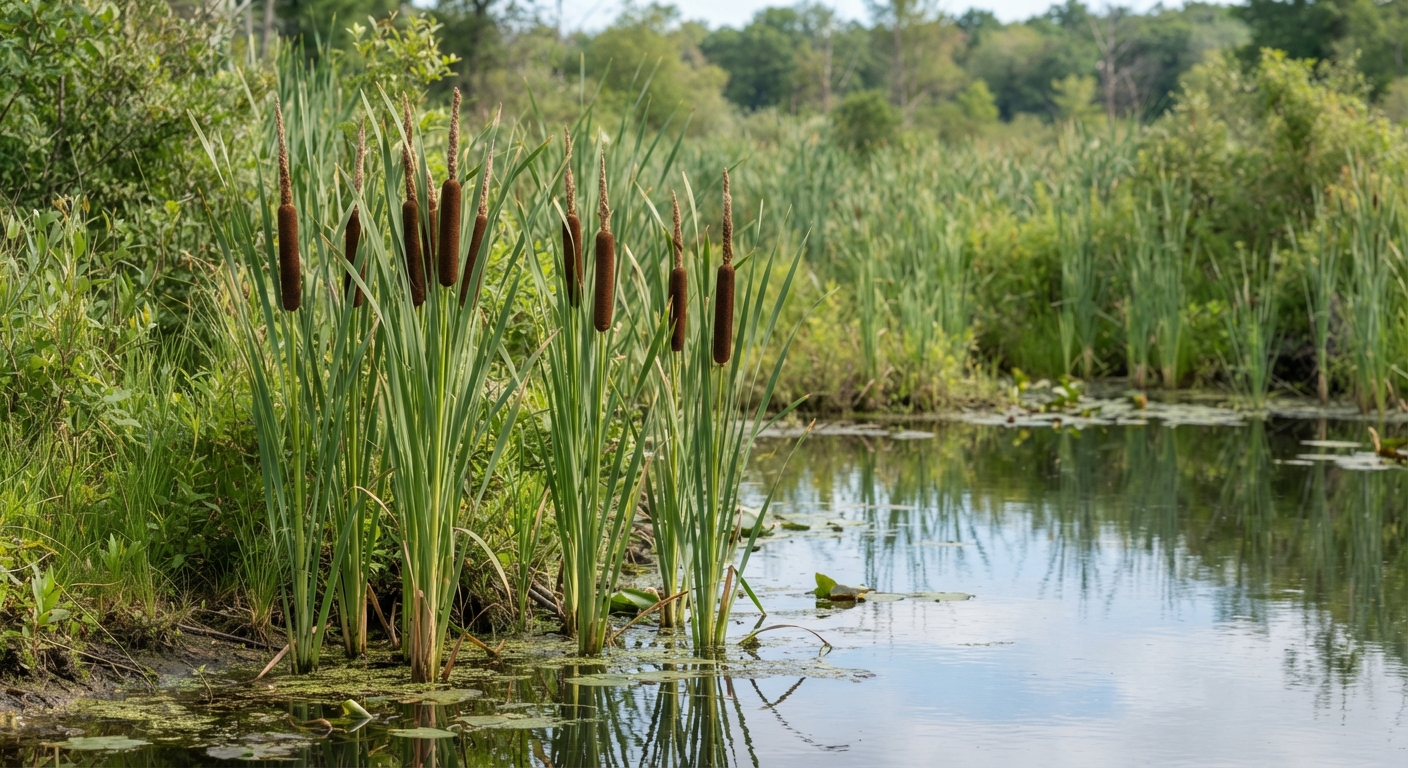
The rhizome is the survival jackpot, because it’s the part that provides actual calories, and calories are what your body needs when food has been scarce. But extracting it is work: you dig the thick, white horizontal roots from the mud, peel the outer layer, and then — critically — either cook them or work the starch out of the fibrous core by chewing and spitting out the fiber, or by crushing them in water and letting the starch settle.
One caution: only harvest cattails from water you’d be willing to drink. Cattails are nature’s filter, and they concentrate whatever is in the water around them — including runoff chemicals.
Pine: Vitamin C and the Bark That Feeds You
Pine is the survival plant people are most surprised to learn is food. The needles, steeped in hot water, make a tea that’s genuinely rich in vitamin C — the historic remedy against scurvy, and a real morale-and-health boost when fresh food is scarce. The inner bark, the soft white cambium layer just beneath the rough outer bark, is edible raw in a pinch, and can be dried and ground into a coarse flour that stretches other food.
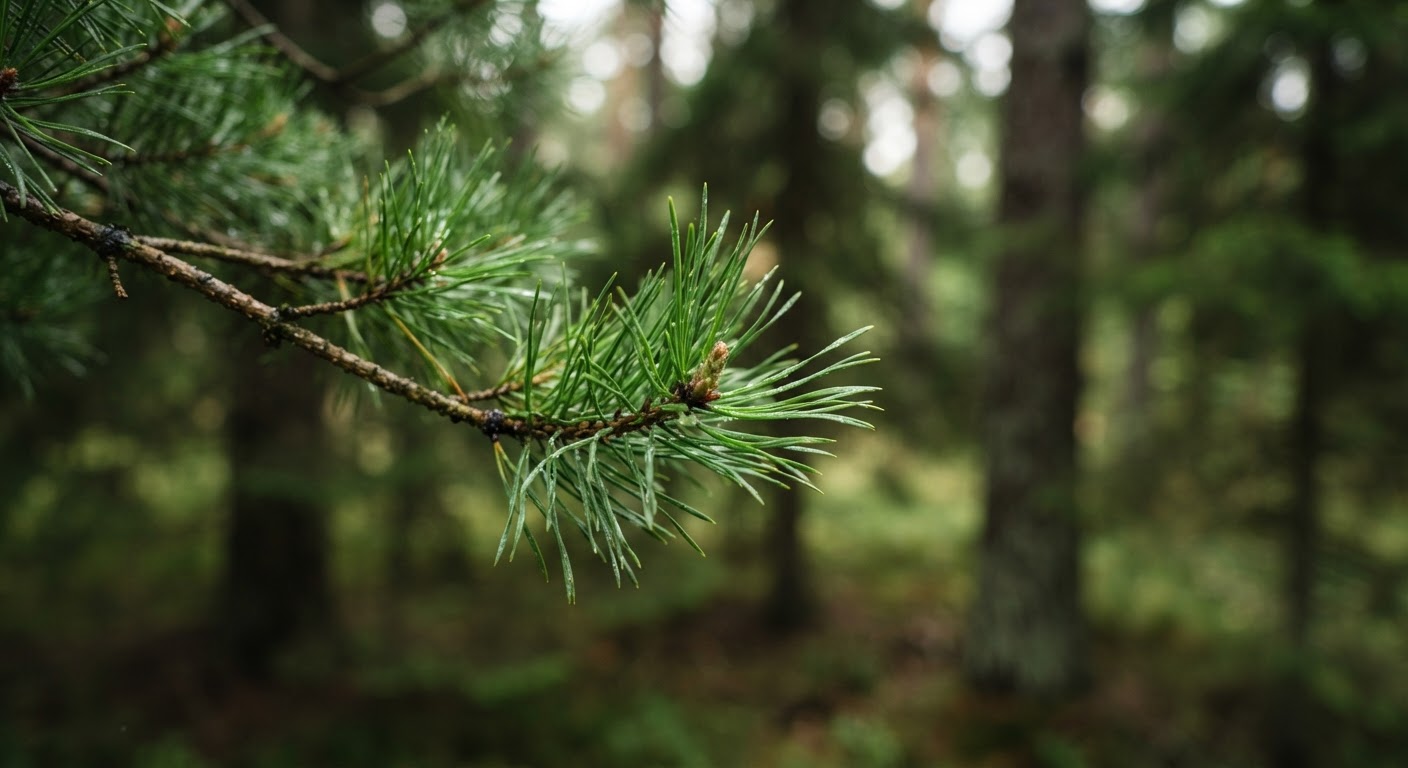
Two warnings go with pine, and both matter. First, know your evergreens: yew, which is deadly toxic, has flat needles and red berry-like arils instead of cones. Real pines have needles bundled in groups (fascicles) and woody cones. If you’re not sure, skip it. Second, avoid ponderosa pine — its needles can be problematic, especially during pregnancy. Stick to the common white, red, and sugar pines.
Step 3: Learn the One Family You Must Avoid
Here’s a fact that saves more lives than any list of edible plants: the most dangerous plants in North America are not exotic. They’re members of the carrot family (Apiaceae), and they grow in the same fields, ditches, and woodland edges as the safe plants you’re learning.
The problem is that this family contains both wonderful food — wild carrot, parsley, fennel, celery — and some of the deadliest plants on the continent: water hemlock, poison hemlock, and giant hogweed. They share the same general look: umbrella-shaped clusters of small white flowers, hollow stems, and finely divided or feathery leaves. To an untrained eye, they blur together.
And this is exactly why the identification rule in survival is stricter than in normal foraging. On a pleasant weekend, you can photograph a plant, go home, and look it up over tea. In a survival situation, you don’t have that luxury — which is why the rule becomes: if it’s in the carrot family and you are not absolutely certain, it is off the menu. No exceptions, no “it probably is,” no “I saw something like this in a video.”
The same skip-on-doubt rule applies to mushrooms (which aren’t plants, but people group them together) and to any unfamiliar berry. A single misidentified mushroom can destroy your liver before you feel the first symptom. The upside of a berry is simply not worth that downside.
Memorize the general silhouette of the carrot family — the umbrella flower head, the hollow stem — the way you’d memorize a warning sign. Recognizing “probably not safe, needs an expert” is a survival skill just as real as recognizing “definitely safe.”
Step 4: Know Your Calories From Your Vitamins
Here’s the distinction that separates a survivalist from someone who just reads about wild food: greens keep you from getting sick; calories keep you alive.
Most wild edible greens — dandelion, nettle, plantain, clover, chickweed — are packed with vitamins, minerals, and antioxidants, but they contain almost no usable calories. A big bowl of wild salad delivers nutrition, but it won’t replace the energy your body is burning to keep you warm. In a short emergency, that’s fine. In a prolonged one, you need calories, and calories in the wild come from specific places: nuts, seeds, starchy roots, and inner bark.
| Wild Food Type | Calorie Density | What It’s Good For | Examples |
|---|---|---|---|
| Wild greens | Very low | Vitamins, minerals, hydration | Dandelion, nettle, plantain, clover |
| Berries | Low–moderate | Quick sugar, morale | Blackberry, raspberry, mulberry |
| Roots & tubers | Moderate–high | Sustained energy, starch | Cattail rhizome, burdock root |
| Nuts & seeds | High | Fat and dense calories | Acorns (leached), pine nuts |
| Inner bark | Moderate | Emergency carbohydrate | Pine cambium, some birch |
This table reframes your whole gathering strategy. If you’re going to spend an hour foraging, spend it on the calorie-dense end of that chart when you’re weak — acorns in fall, cattail rhizomes if you’re near water — and treat greens as a bonus you grab in passing, not the main event.
There’s a second, subtler point here. Some calorie sources demand processing, and processing demands energy and water. Acorns are a perfect example.
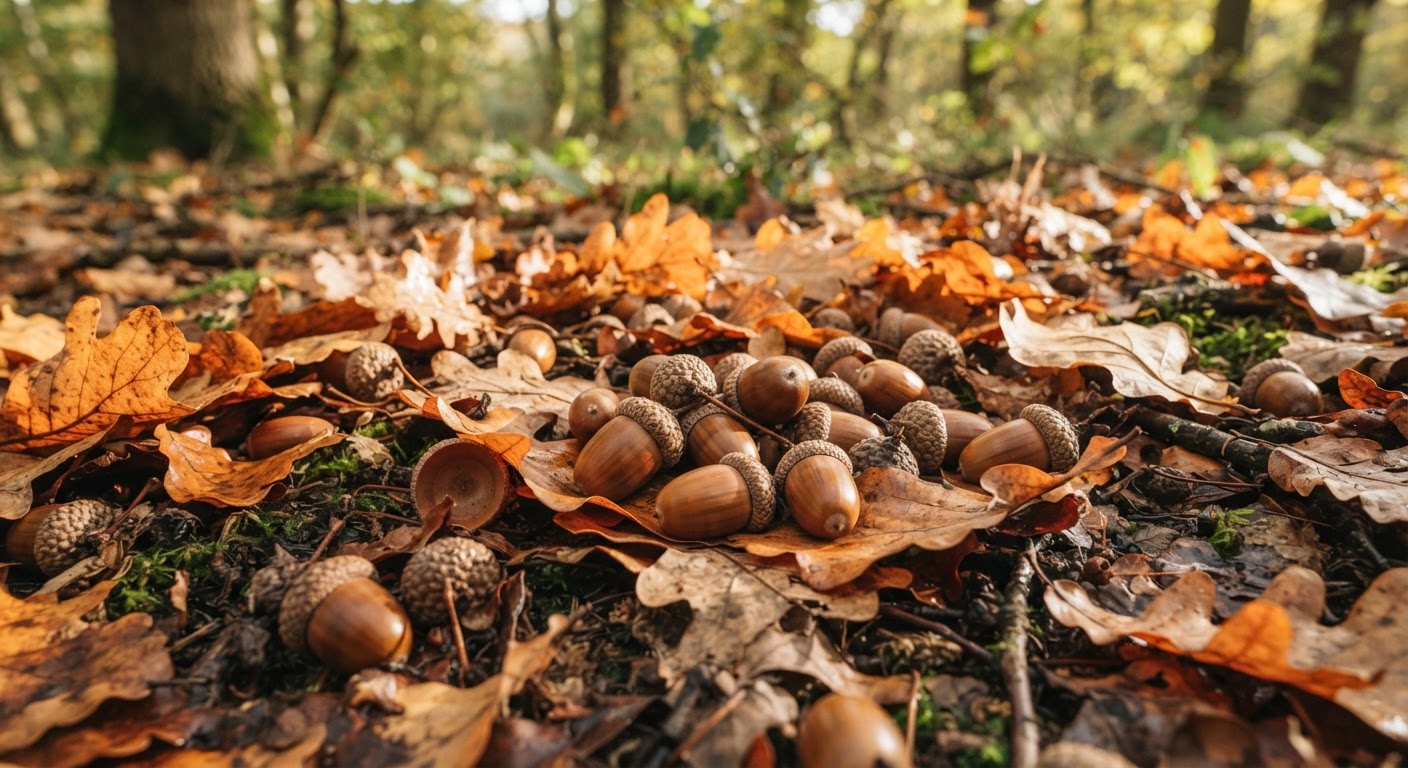
Acorns are an outstanding wild calorie source — rich in fat and complex carbohydrates — but raw they’re loaded with bitter tannins that will upset your stomach. To make them edible you have to leach the tannins out: shell them, crush or chop them, and soak them in repeated changes of cold water or boil them in several changes of water until the bitterness is gone. White oak acorns are milder and leach faster; red oak acorns are more bitter and need more rounds.
The takeaway: a calorie source you can’t process is a calorie source you don’t have. Learn the prep, not just the identification, because in a survival situation “edible after four hours of boiling and three water changes” is a very different proposition than “edible now.”
Step 5: Prepare Wild Food So It Actually Feeds You
The last step in the survival plant system isn’t identification at all — it’s preparation. A plant is only survival food if your body can actually absorb it, and a surprising number of wild plants need a specific treatment first. Here’s the short version of what “prepare it safely” means in the field:
- Cook when you can. Heat neutralizes many plant irritants, breaks down tough fiber, and kills surface pathogens. Nettle’s sting vanishes with a minute of boiling. Most greens are gentler cooked.
- Leach when it’s bitter. Tannin-heavy foods like acorns need repeated soaking or boiling. If a wild food is aggressively bitter, that bitterness is often a warning, not a flavor note.
- Peel starchy roots. Burdock and cattail roots should be peeled and cooked, not eaten skin-on and raw.
- Boil questionable water first. If you’re gathering watercress or cattails, the water they grew in matters. In a survival setting, treat wild water with suspicion.
- Small test, then wait. If you must sample an unfamiliar plant — and only as a last resort, when the alternative is starvation — use the full universal edibility test, not a casual nibble.
That last point deserves its own moment, because it’s the most misunderstood tool in survival.
The Universal Edibility Test (Last Resort Only)
The universal edibility test is a slow, deliberate, eight-step process for checking whether an unknown plant is safe to eat. It is not a quick way to try random plants on a hike. It’s designed for genuine survival emergencies, when the choice is between a careful test and slow starvation — and it takes the better part of a day to complete safely.
Here is the full sequence, because knowing it precisely is part of the skill:
| Step | What You Do | Wait Time | What You’re Checking For |
|---|---|---|---|
| 1. Separate | Use only one plant part at a time (root, stem, leaf, flower). | — | Different parts can have different toxicity |
| 2. Fast | Stop eating and drinking for 8 hours beforehand, water only. | 8 hours | A clean baseline for symptoms |
| 3. Touch | Crush the plant and rub it on the inner wrist or elbow. | 8 hours | Burning, itching, rash |
| 4. Prepare | Cook a small portion the way you’d normally eat it. | — | Some plants are toxic raw but safe cooked |
| 5. Lip test | Touch a tiny bit to the outer lip. | 3 minutes | Numbness, tingling, burning |
| 6. Taste test | Place a small piece on the tongue; do not swallow. | 15 minutes | Any irritation or unusual taste |
| 7. Chew test | Chew a small amount; do not swallow. | 15 minutes | Burning, numbness, stomach reaction |
| 8. Swallow | Swallow a small amount. | 8 hours | Any symptoms at all |
If any step produces a negative reaction — burning, numbness, nausea, anything — you stop and do not eat the plant. The test is deliberately slow because some plant toxins take hours to show themselves, and a fast “it tastes fine” is exactly how people poison themselves.
Again, and this can’t be overstated: this test is a survival last resort, not a foraging shortcut. On a normal day, with a phone and a way home, the correct move is to take a photo and look it up. The universal edibility test exists for the day there’s no way home.
Field Notes: What Real Survival Situations Teach You
The clean system above is the framework. Here’s the messier, harder-won layer — the things survival instructors emphasize and YouTube videos rarely mention.
- Learn plants on good days. The person who survives on wild food is the person who learned it on a sunny Tuesday, not the person frantically googling from a ridgeline. Practice now.
- Water is the real bottleneck. You can go weeks without food; you can’t go three days without water. If you find a water source, plants become a secondary concern. Solve water first.
- Gathering should never become a detour. If a plant requires leaving your route to shelter or water, its calorie cost may exceed its calorie value. Gather what’s on the path.
- The berry rule that filters most risk. In North America, the majority of safe wild berries are aggregate berries — the ones made of many small bumps, like blackberries and raspberries — plus a few well-known ones like blueberries. Avoid white or yellow berries, and avoid any berry you can’t positively name.
- Cooked beats raw, almost always. Heat is your friend in the wild. It neutralizes irritants, softens fiber, and reduces pathogen risk. When in doubt, boil it.
- A “no” can save your life. The willingness to walk away from a plant you can’t identify is not weakness. It’s the single most important survival trait there is.
- Process calories when you’re strong. If you find acorns or cattail rhizomes, process them while you still have energy, not after you’ve collapsed. Future-you needs the food, and future-you is tired.
Survival Questions, Answered in One Line
Different people ask the same few questions about survival plants, so here they are with the shortest honest answers.
| Question | The Short Answer |
|---|---|
| What’s the single most useful survival plant? | Cattail — edible parts in every season and real starch from the rhizome. |
| Can I really survive on wild plants alone? | Short-term yes; long-term most wild greens lack the calories you’d need, so nuts, roots, and bark matter too. |
| Is the universal edibility test safe? | It’s safer than eating an unknown plant untested, but it’s a last resort, not a shortcut. |
| What’s the most dangerous mistake? | Eating a plant you can’t identify with certainty — especially in the carrot family. |
| Are wild berries safe if birds eat them? | No — birds tolerate berries that are toxic to humans. Never use animals as proof. |
| How do I start learning survival plants? | Pick three common plants near you (cattail, dandelion, pine), learn them cold, then add more. |
| Should I eat mushrooms in a survival situation? | No, unless you are an expert. The risk isn’t worth the calories. |
The Bottom Line
Wilderness survival plants aren’t a list you memorize on the trail; they’re a skill you build on ordinary days so it’s there on the bad one. The system is simple: fix your priorities so food doesn’t distract you from water and shelter, bank a handful of always-safe common plants, learn to recognize the one family you must avoid, understand the difference between vitamins and calories, and prepare what you gather so it actually feeds you.
Start with three plants. Cattail, because it feeds you in every season. Dandelion, because it’s everywhere and impossible to mistake. Pine, because its needles and inner bark cover two different survival needs at once. Learn them on your next ordinary walk, photograph them, cross-check them in a field guide, and write down where you found them.
The goal isn’t to become a wilderness expert by Tuesday. It’s to walk into the woods already knowing that if the trail ever disappears, the ground under your feet is a pantry you’ve already learned to read. That quiet confidence — earned slowly, long before you need it — is what “survival knowledge” actually means.