8 Wild Plants That Can Replace a Meal in an Emergency
The food ran out on day two of a four-day trip. Or the storm closed the roads and the pantry is down to half a bag of rice. Or the power’s been out for three days and everything in the freezer is now a bad idea. Whatever the reason, at some point the situation stops being an inconvenience and becomes a simple math problem: something has to go on the plate tonight, and tomorrow, and probably the day after that.
Most wild edible lists don’t actually help here. They name thirty plants you could nibble, which is not the same as plants you can eat — three times a day, for days in a row, without your body or your mood rejecting the idea. Flavor matters more than survival guides admit. Nobody keeps choking down a bitter, stringy plant when they’re already stressed and hungry. They just stop eating, and then things get worse.
So this list is filtered for meal-worthiness, not for exotic appeal. Every plant below is mild, filling enough to matter, simple to prepare when you’re tired, and common in exactly the places people end up stuck: campsites, field edges, ditches, backyards, disturbed ground.
How This List Was Picked
Four filters did the work:
- Mild beats interesting. A plant you can eat three days straight beats a delicacy you can’t stomach twice. Bitter and spicy plants got cut first.
- Bulk matters. Each pick either gives real volume (greens, shoots) or real calories (roots, tubers, seeds). Thin garnishes don’t replace meals.
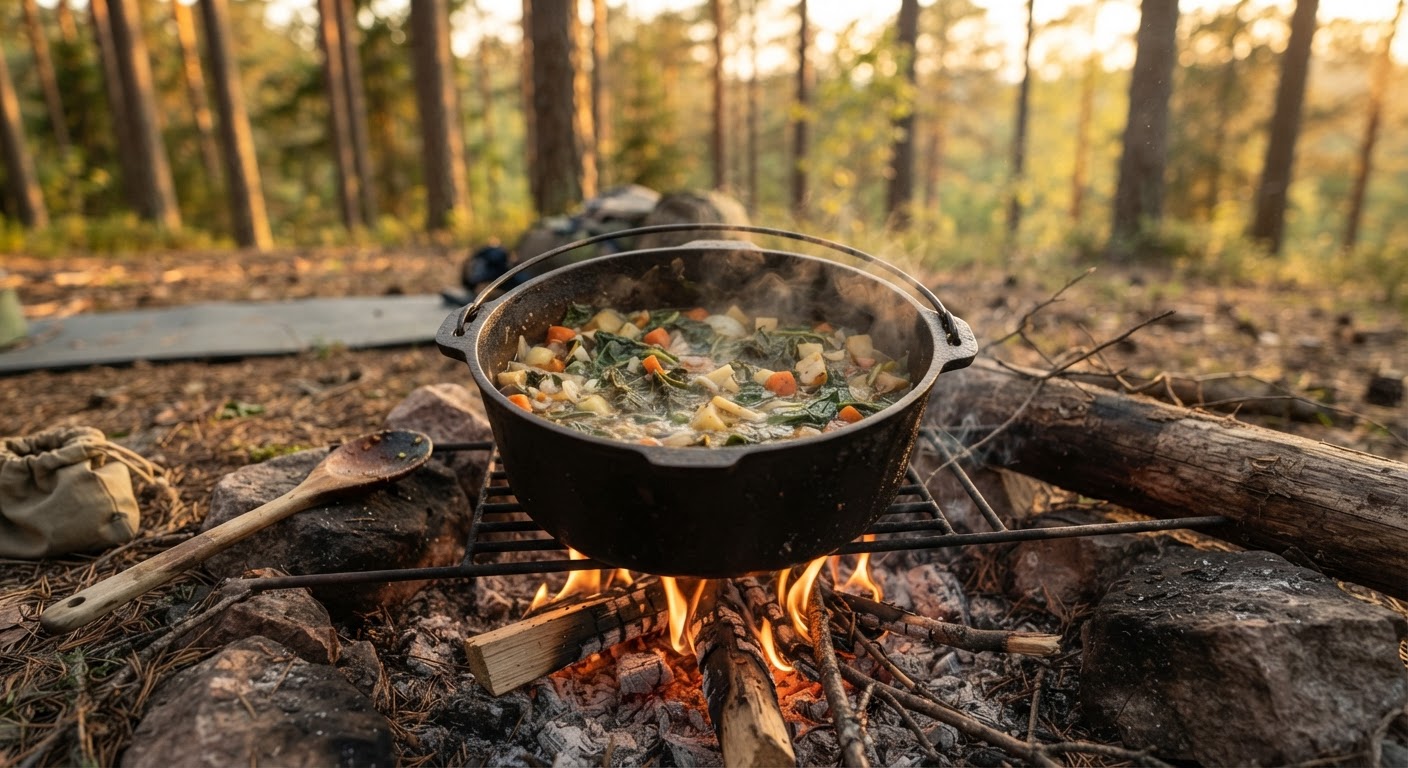
- Simple prep. If it needs more than boiling water and a stick to stir with, it didn’t make the list.
- Common near people. Disturbed soil, pond edges, lawns, roadsides — the plants below follow humans around, which is exactly what you want in an emergency.
The 8 Plants
1. Cattail — the starch your plate is missing
Stands in for: rice, potatoes, any starchy staple.
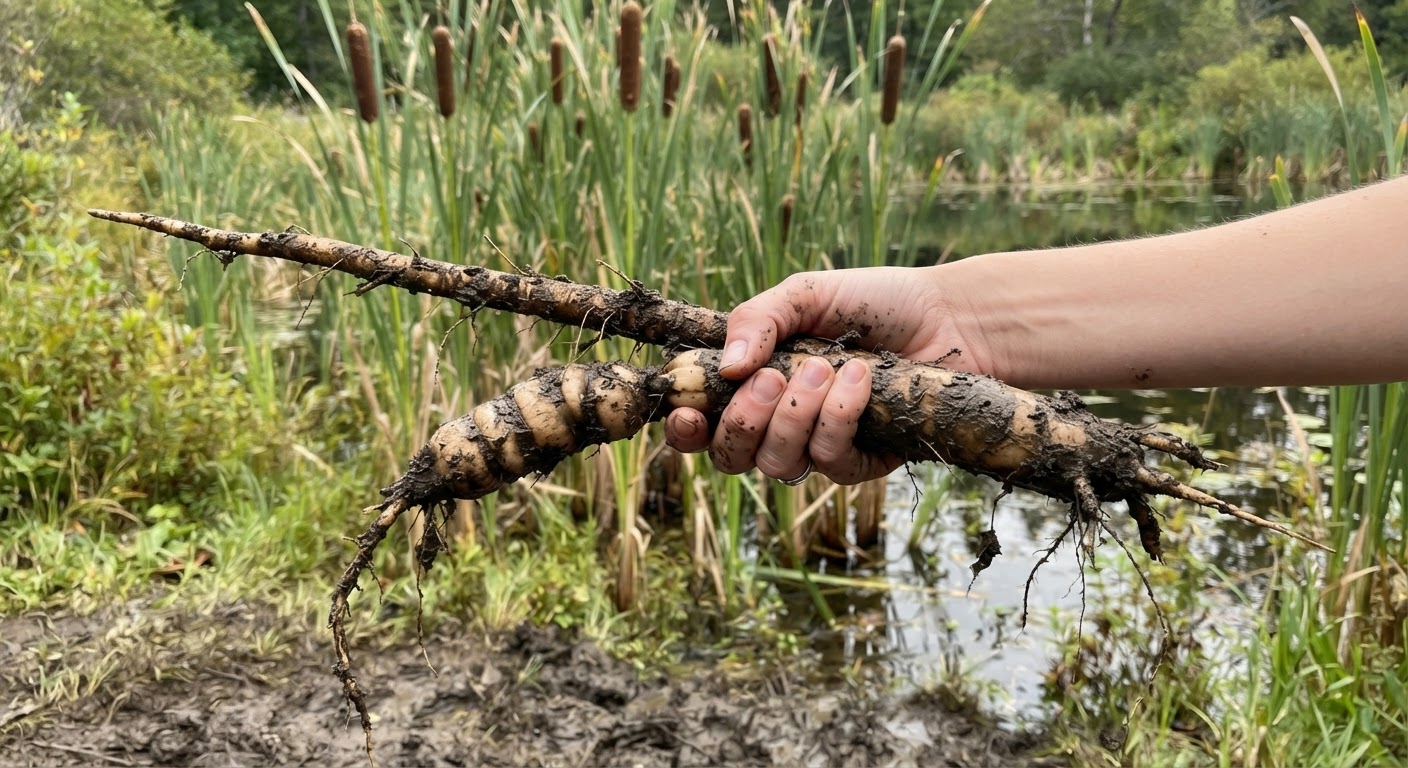
Why it earns a place: It’s the only plant on this list that reliably provides calories year-round. The rhizomes (horizontal roots) under the mud are packed with starch, the white shoot bases are edible spring through fall, and the flower heads produce a pollen in early summer that works like flour. Cattails grow in ditches, pond margins, and marshy ground on nearly every continent.
How to prep it: Pull or dig the rhizomes, scrub off the mud, and boil them 10–15 minutes. Chew the soft inner part and spit out the stringy fiber — the starch is what you’re after. Young shoots can be eaten raw or tossed in the pot whole.
2. Burdock root — the root vegetable stand-in
Stands in for: carrots, parsnips, any roasted root side dish.
Why it earns a place: First-year burdock grows a deep taproot that’s a legitimate vegetable — Japan has farmed it as gobo for centuries, which is the best proof possible that this is food, not just survival fare. The huge rhubarb-like leaves with pale, woolly undersides make it one of the easier plants to identify with confidence. It thrives in disturbed soil and field edges.
How to prep it: Dig the root (a stick or tent peg helps — they run deep), scrub, slice, and boil until tender or roast in coals. The flavor is earthy and faintly sweet. One caution: learn the difference between first-year rosettes and the hollow, branching second-year stalks — you want year one.
3. Lambsquarters — the spinach you didn’t plant
Stands in for: cooked spinach and any leafy green side.
Why it earns a place: It’s related to quinoa, unusually high in iron and protein for a wild green, and it grows in gardens, barnyards, and field edges almost everywhere. It’s mild enough that nobody complains about eating it two days in a row. It also regrows after cutting, so one patch can feed you for a week if you treat it right.
How to prep it: Steam or boil the leaves and tender tops like spinach — they shrink dramatically, so gather more than feels reasonable. Boiling also reduces the oxalates, so discard the cooking water rather than drinking it. The tiny seeds can be stripped and toasted into a weak but real porridge filler.
4. Wild amaranth (pigweed) — the stir-fry green
Stands in for: any cooked green side dish, especially anything you’d season and fry.
Why it earns a place: Same genus as the grain amaranth sold in health stores, and in much of the world it’s a standard market vegetable, not a weed. The leaves are tender, the flavor is mild with a slightly nutty edge, and it loves the same disturbed ground as lambsquarters — you’ll usually find them growing together.
How to prep it: Boil or fry the young leaves and soft stem tips. If you have any fat, oil, or salt, this is the plant that carries seasoning best. Later in the season, the seed heads can be rubbed out, winnowed, and toasted — small reward for small effort.
5. Common mallow — the soup thickener
Stands in for: okra.
Why it earns a place: Mallow is mucilaginous — the same slippery quality okra has — which means it thickens whatever liquid it cooks in and goes down easy when your stomach is empty and unhappy. The leaves and the round green seed pods (kids call them “cheeses”) are both edible and extremely mild. It grows in lawns, waste ground, and path edges across most of the temperate world.
How to prep it: Simmer a handful of leaves into any soup or stew and it turns the broth silky. The little seed pods can be eaten raw. Almost no flavor, which is exactly the point — it adds body and bulk without adding reasons to quit.
6. Broadleaf plantain — the filler green
Stands in for: plain, neutral filler greens — think iceberg lettuce’s cooked cousin.
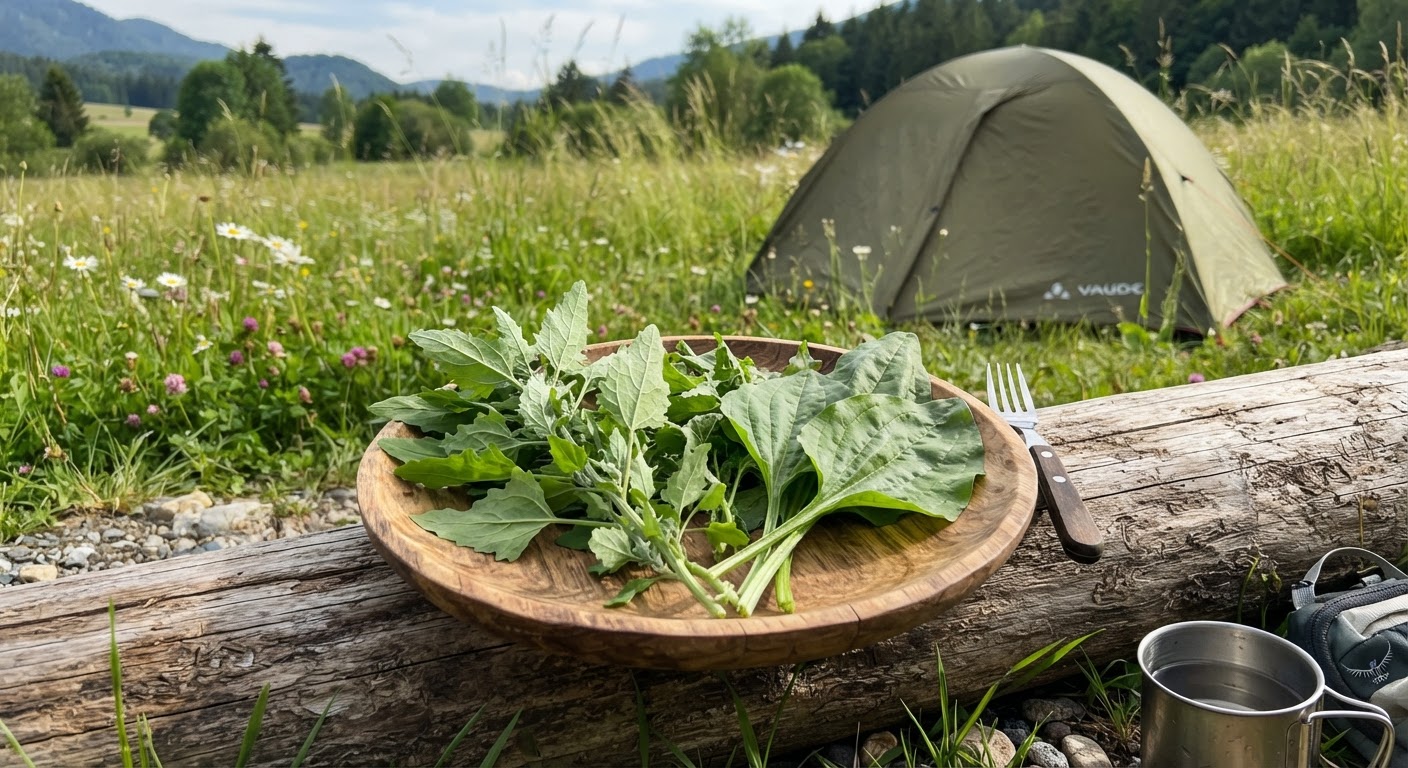
Why it earns a place: It’s bland. That’s a feature. When everything else on your plate has an edge, plantain adds volume and roughage without adding opinions. It grows in the most human places imaginable: lawns, footpaths, driveways, trampled campsites. The long ribs in the leaves are stringy, so preparation is just a matter of patience.
How to prep it: Chop young leaves fine or remove the ribs from bigger ones, then boil 5–10 minutes. Bonus: a crushed leaf pressed on insect bites and stings is one of the oldest field remedies around, which makes it doubly worth knowing by sight.
7. Chicory — two foods in one plant
Stands in for: cooked bitter greens, plus a hot drink that passes for coffee.
Why it earns a place: The leaves are edible and the roasted root makes a respectable coffee substitute — one plant, two jobs. Roadsides and meadows with those blue summer flowers are chicory’s home turf. It’s the bitterest plant on this list, but bitterness is fixable and the payoff is a hot, familiar-tasting drink, which does more for morale in a bad week than most people expect.
How to prep it: Boil the leaves in one or two changes of water to tame the bitterness. For the drink: dig roots, scrub, chop, roast in a pan until dark brown and brittle, then crush and steep like coffee. It’s not coffee. On day three of nothing, it’s close enough.
8. Daylily — tubers and buds, with one condition
Stands in for: green beans and tiny new potatoes.
Why it earns a place: The small finger-like tubers taste like mild sweet potatoes, and the unopened flower buds cook up like green beans. Old homestead sites and roadside ditches often have whole colonies from gardens planted decades ago. The condition: identification must be certain, because true irises are toxic lookalikes that share its habitat. Daylilies have long, flat, arching, blade-like leaves with no midrib and (in bloom) orange trumpet flowers — irises have fan-shaped, sword-like leaves. When in doubt, skip it; seven other plants on this list don’t require the gamble. Some people also get mild digestive upset from daylilies, so a small first portion is smart.
How to prep it: Boil tubers 10 minutes. Buds get a quick blanch or a fry in whatever fat you have.
The Quick-Reference Table
| Plant | Stands in for | Where it grows | Prep time | Flavor |
|---|---|---|---|---|
| Cattail | Rice, potatoes | Pond edges, ditches, wet ground | 15–20 min | Mild, starchy |
| Burdock root | Carrots, parsnips | Disturbed soil, field edges | 20–30 min | Earthy, faintly sweet |
| Lambsquarters | Spinach | Gardens, fields, barnyards | 5–10 min | Mild, green |
| Wild amaranth | Stir-fry greens | Fields, gardens, roadsides | 5–10 min | Mild, slightly nutty |
| Common mallow | Okra | Lawns, waste ground | 10 min | Very mild, thickens broth |
| Broadleaf plantain | Neutral filler greens | Lawns, paths, trampled ground | 5–10 min | Bland (in a good way) |
| Chicory | Greens + coffee | Roadsides, meadows | 15–30 min | Bitter but fixable |
| Daylily | Green beans, new potatoes | Old gardens, ditches | 10–15 min | Mild, slightly sweet |
Read that table by the “where it grows” column and a pattern jumps out: every single one of these plants lives where people go. Ponds, edges, fields, lawns. In an emergency, you don’t have to go deep into the wild to eat — you usually just have to look down.
Five Rules That Turn Weeds Into Dinner
- Cook everything you can. Boiling fixes stringy texture, kills most microbes on the leaf, tames bitterness, and makes more nutrients available. Raw is a last resort, not the default.
- Mix two or three plants. A pot of lambsquarters, mallow, and plantain together beats any of them alone — better nutrition, better flavor, and less fatigue from eating the same thing.
- Small first bite of anything new. Even a correctly identified plant can disagree with an individual stomach. Eat a small portion and give it a few hours before a full meal. If you have any real doubt about identification, stop and run a proper edibility test instead of gambling.
- Salt is the difference between food and punishment. If there’s room in your pack for one luxury, make it salt. Wild food tastes like nothing until you season it, and “nothing” gets old fast.
- Location counts. Skip plants from sprayed lawns, busy road edges, and anywhere dogs are walked regularly. A hedge line, field edge, or pond margin ten steps off the path is a better pantry than the manicured lawn in front of you.
Rapid-Fire Answers
Can I eat any of these raw if I can’t make a fire? Yes — young lambsquarters, mallow leaves, young plantain, and amaranth are all edible raw in a pinch. Cattail shoot bases and daylily tubers too. But digestion costs energy, and cooking costs some too; if you can build a fire, build it.
How much do I actually need to gather to replace a meal? More than you think. Greens shrink to roughly a quarter of their volume when cooked, so a dinner-sized portion for one person starts as a loosely packed grocery bag of leaves. For roots and starches like cattail and burdock, a solid double armload of raw material is a fair starting target.
What if I can’t identify a plant with certainty? Then it isn’t food today. The whole logic of this list is redundancy — while you’re staring at one uncertain plant, two certain ones are usually growing within sight. Learning the dangerous lookalikes for your region before an emergency is the cheapest insurance you’ll ever buy.
Are backyard weeds really safe to eat? Usually, with the location rule above in mind. What matters most is treatment history: herbicide use, pet traffic, road spray. Plants from a neglected fence line or an untended field corner are generally a better bet than anything from a lawn that looks too perfect.
The Takeaway
An empty food bag isn’t the end of a trip — it’s the start of a different one. Eight plant names, four preparation rules, and the willingness to look at the “weeds” around camp as groceries is the difference between a bad night and a manageable week. Practice the identification now, while the stakes are nothing, so the knowledge is boring and automatic by the time you need it.
That’s exactly why we built the Edible Plant Identifier — point your camera at any plant and get an instant ID with edible-part notes and lookalike warnings, fully offline, right where you’re standing. It doesn’t replace expert advice, and no app should be your only safety net. But when your food plan falls apart, a phone that knows eight plants by name — and thousands more — is the kind of backup you’ll be glad you packed.