You just got back from a solid two-hour forage. Your basket has chicken of the woods, half a pound of lamb’s quarters, and a handful of wood sorrel you’re unreasonably proud of. You crack open your foraging cookbook — and the first recipe asks for three ingredients you’ve never heard of, all sourced from a biome 2,000 miles away.
That book isn’t going to help you cook dinner. It’s going to collect dust while your mushrooms turn slimy in the fridge.
The problem isn’t that foraging cookbooks are bad. It’s that most foragers don’t match the book to their actual situation — where they live, what they find, and how they cook. A chef-level wildcrafting book is useless if you’re a beginner with a backyard full of dandelions. A regional guide focusing on coastal plants doesn’t help someone foraging in the Midwest.
Here’s a side-by-side comparison of seven widely-used foraging cookbooks, organized by who they actually work for — not who the publisher hoped would buy them.
Quick-Reference Comparison Table
| Cookbook | Best For | Skill Level | Ingredient Range | Recipe Count | Regional or Universal | Standout Feature |
|---|---|---|---|---|---|---|
| Forage, Harvest, Feast — Marie Viljoen | Home cooks who want meals, not projects | Intermediate | Broad (200+ species) | 475+ | Universal (urban + wild) | Largest recipe collection; organized by plant |
| The New Wildcrafted Cuisine — Pascal Baudar | Experimental cooks, fermentation nerds | Advanced | Western US focus | ~150 | Regional (California / West) | Wild ferments, vinegars, and preservation deep-dives |
| The Forager’s Feast — Leda Meredith | Entry-level foragers who want to cook | Beginner to Intermediate | Broad (50+ core plants) | ~200 | Universal (North America) | Most approachable for absolute beginners |
| Acorns & Cattails — Rob Connoley | Serious cooks wanting restaurant techniques | Advanced | Broad but curated | ~100 | Universal | Fine-dining approach to wild ingredients |
| Backyard Foraging — Ellen Zachos | Suburban foragers with zero travel time | Beginner | Narrow (backyard plants) | ~65 | Universal (temperate zones) | Focus on plants you already have, no hiking required |
| Northeast Foraging — Leda Meredith | Northeast US foragers wanting precision | All levels | Regional (100+ species) | ~150 | Regional (Northeast US) | Location-specific ID + recipe combo |
| Wild Drinks & Cocktails — Emily Han | Drink-focused foragers | All levels | Moderate (40+ plants) | ~75 | Universal | The only foraging book focused entirely on beverages |
1. Forage, Harvest, Feast — Marie Viljoen (The Workhorse)
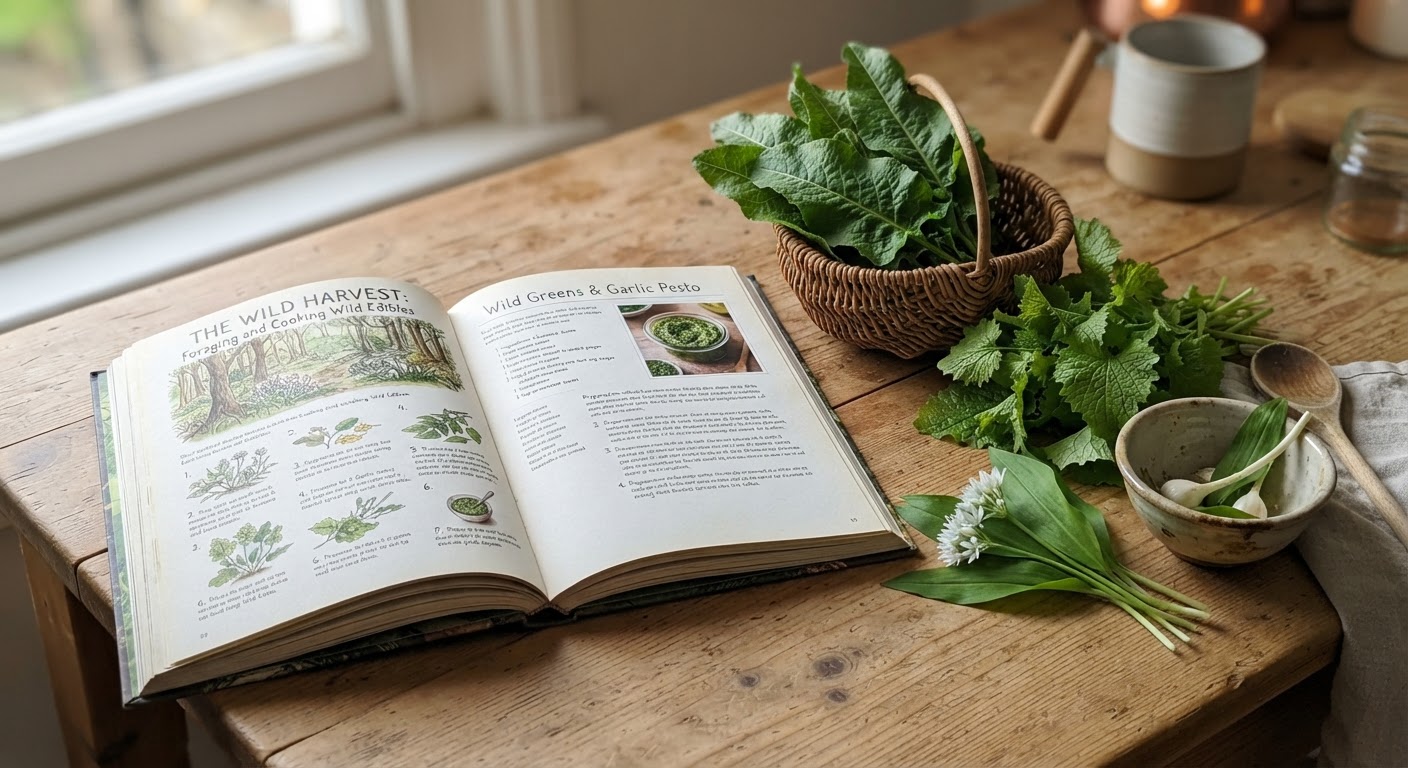
If you want one book that covers the most ground, this is it. Marie Viljoen is a Brooklyn-based forager who writes about wild food the way other people write about wine — precise, opinionated, and never boring.
What it does well: The book is organized by plant rather than by meal type, which means you look up “Japanese knotweed” and find five different ways to use it — from compote to pickles to savory tarts. The recipe count (475+) means you won’t run out of ideas even if you forage the same plants repeatedly. Viljoen covers urban foraging extensively, so city-dwellers won’t feel ignored.
What it doesn’t do: This isn’t a plant identification book. Photos exist but are food-focused, not field-guide quality. If you need help telling garlic mustard from ground ivy, pair this with a dedicated field guide. The recipes assume basic cooking competence — you should know how to blanch, sauté, and season without hand-holding.
Best for: Foragers who already know their plants and want to stop making the same three things with dandelion greens.
Skip if: You need plant identification alongside your recipes, or you’re still nervous about cooking anything wild.
2. The New Wildcrafted Cuisine — Pascal Baudar (The Experimentalist)
Baudar lives in Los Angeles and forages in Southern California’s chaparral — a landscape most people wouldn’t associate with food. His approach is part chef, part survivalist, part mad scientist.
What it does well: Nobody else covers wild fermentation, vinegar-making, and preservation at this depth. If you’ve ever wondered how to make pine needle vinegar, lacto-fermented wild mustard pods, or acorn miso, Baudar has you covered. The photography is stunning and the techniques are genuinely novel — this isn’t a rehash of “put dandelion leaves in a salad.”
What it doesn’t do: The ingredient list skews heavily toward plants found in the Western United States — yucca blossoms, manzanita berries, prickly pear fruit. Someone in New England or the Midwest will struggle to apply 40% of the recipes. The techniques are also advanced; this isn’t where you start if you just learned what purslane looks like.
Best for: Experienced foragers who love fermentation and want techniques they won’t find anywhere else.
Skip if: You forage outside the Western US and don’t want to adapt recipes, or you don’t own fermentation weights.
3. The Forager’s Feast — Leda Meredith (The Starter Pack)
Meredith has the rare skill of making wild food feel normal — not precious, not performative, just practical. If the phrase “wildcrafted cuisine” makes you roll your eyes, start here.
What it does well: Each plant gets a short, clear profile with enough identification detail to build confidence without overwhelming. The recipes are genuinely approachable — think creamed nettle soup, dandelion fritters, lamb’s quarters spanakopita. Nothing requires a sous vide circulator or three-day prep. Meredith also covers backyard and urban foraging extensively, so you can forage without owning hiking boots.
What it doesn’t do: The scope is intentionally narrower than Viljoen or Baudar. About 50 core plants are covered, which is plenty for a beginner but limiting once you’ve been foraging for two or three seasons. Experienced foragers will hit the ceiling on new material faster than with other books on this list.
Best for: Someone who found their first dandelion last week and wants to cook it tonight.
Skip if: You’re beyond the “what can I do with chickweed” stage and want advanced techniques.
4. Acorns & Cattails — Rob Connoley (The Fine-Dining Route)
Connoley ran a James Beard-nominated restaurant specializing in foraged ingredients. His book reads like a chef’s notebook — precise, technique-driven, and occasionally intimidating.
What it does well: The techniques here are restaurant-grade. Sous vide acorn flour crackers. Cattail pollen crème brûlée. Wild mushroom garum. If you’ve ever been frustrated that foraging cookbooks treat wild ingredients like rustic peasant food, this is the antidote. About 30% of the book explains foundational techniques — rendering wild fats, making stocks from foraged aromatics, building a wild pantry — which can be applied far beyond the printed recipes.
What it doesn’t do: This is not for the casual forager. Many recipes require specialized equipment and multi-day prep. The plant coverage assumes you’re comfortable identifying everything from ramps to reishi. Beginners will feel overwhelmed; intermediate foragers will feel stretched.
Best for: Ambitious home cooks who want to serve wild food that belongs in a tasting menu.
Skip if: You want dinner in 45 minutes, not three days.
5. Backyard Foraging — Ellen Zachos (The No-Commute Option)
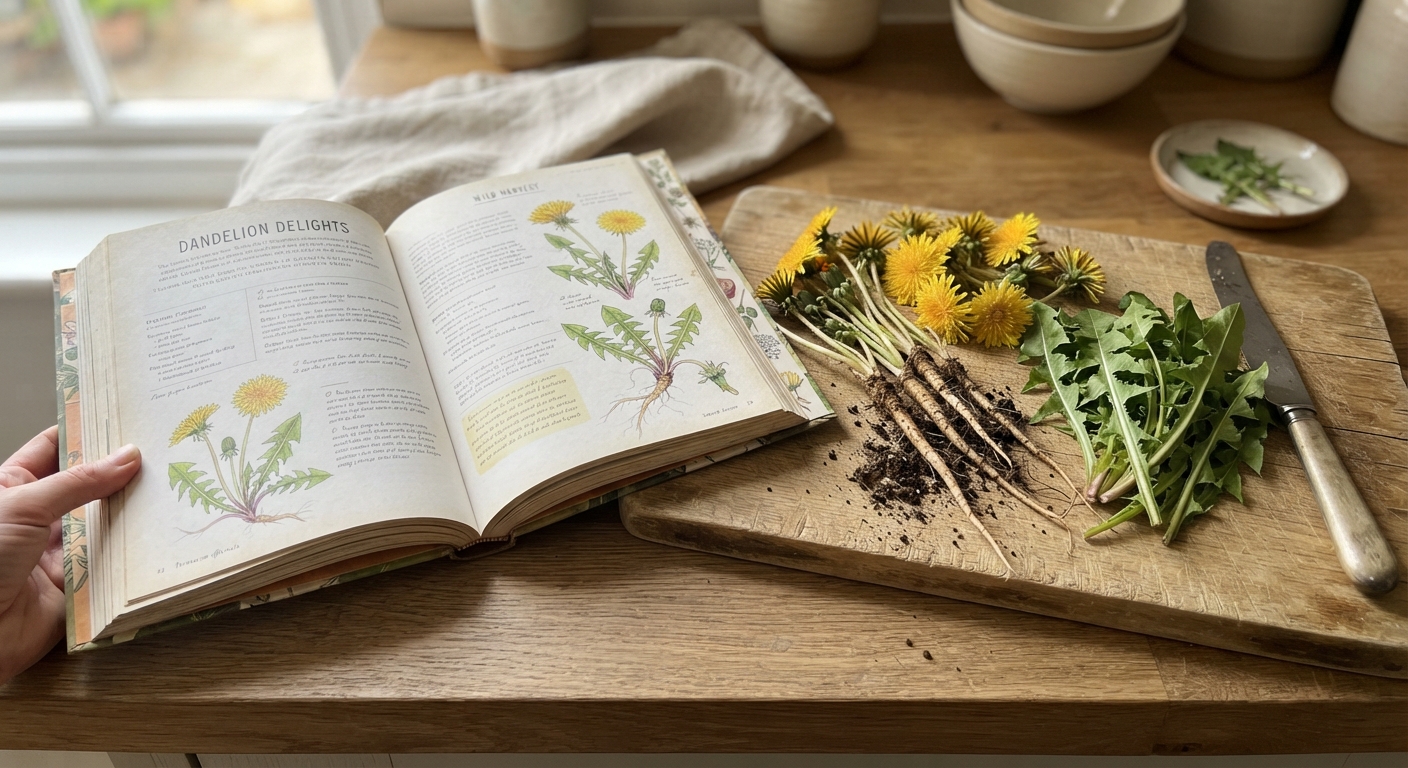
Zachos makes a simple but radical point: you don’t need to drive to a national forest to forage. Everything you need is probably growing within 50 feet of your back door.
What it does well: The plant selection is ruthlessly practical. Dandelions, purslane, lamb’s quarters, violets, daylilies, hostas — plants that genuinely appear in suburban yards across North America. The recipes are straightforward enough for a weeknight. There’s something refreshing about a foraging book that doesn’t make you feel inadequate for not living next to old-growth woodland.
What it doesn’t do: The recipe count (~65) is the smallest on this list. Plant coverage is deliberately narrow — you won’t find mushrooms or seaweeds here. Someone who already knows their backyard plants and wants to expand into woodland or coastal foraging will need to supplement with other resources.
Best for: Suburban foragers who want to use what’s already growing in the lawn and garden without driving anywhere.
Skip if: You’re looking for mushroom recipes or coverage of less common wild edibles.
6. Northeast Foraging — Leda Meredith (The Regional Specialist)
Regional foraging books solve the biggest frustration with universal guides: spending twenty minutes on a plant that doesn’t grow anywhere near you. Meredith’s Northeast-specific guide covers exactly what grows in New England, New York, and surrounding areas.
What it does well: Every plant in this book actually grows in the Northeast. No flipping past manzanita recipes wondering what that even tastes like. The identification photos are field-guide quality, which means you can take this book outside and actually use it. Recipes are included alongside each plant profile, so you move from ID to dinner in one resource.
What it doesn’t do: Obviously, this only works for one region. Someone in Texas, the Pacific Northwest, or the Southeast will want their own regional guide. The recipe selection per plant is smaller than dedicated cookbooks — typically 1-3 recipes per species.
Best for: Northeast foragers who want a single book for both identification and cooking.
Skip if: You don’t live in the Northeast, or you already own a regional ID guide and just want more recipes.
7. Wild Drinks & Cocktails — Emily Han (The Beverage Specialist)
Not every foraged ingredient needs to end up on a plate. Han’s book focuses entirely on drinks — teas, sodas, syrups, shrubs, meads, and cocktails made from wild ingredients.
What it does well: This is genuinely unique. Nobody else has published a book that covers pine needle soda, elderflower champagne, dandelion wine, sumac-ade, and spruce tip syrup all in one place. The fermentation techniques for wild sodas and meads are particularly well-explained. If you already have solid dinner recipes from other sources but your foraged drink game is limited to “mint tea,” this fills a real gap.
What it doesn’t do: If you want food recipes, you will find zero of them here. The plant coverage is narrower than food-focused books — about 40 species that work well in beverages.
Best for: Foragers who want to expand into wild drinks, homemade sodas, and foraged cocktails.
Skip if: You don’t drink alcohol and aren’t interested in homemade sodas or herbal teas.
How to Match a Cookbook to Your Actual Situation
Rather than listing every book again, here’s a decision framework based on what you actually need:
Pick a universal workhorse if: You forage a wide variety of plants across multiple habitats and want the largest possible recipe collection. → Forage, Harvest, Feast
Pick a beginner-friendly book if: You just started foraging and want recipes you can cook tonight without special equipment or hard-to-find ingredients. → The Forager’s Feast or Backyard Foraging
Pick a regional guide if: You’re tired of universal books including plants you’ll never encounter. → Northeast Foraging (or find the regional guide for your area)
Pick a technique-forward book if: You already know your plants and want to push your cooking into fermentation, preservation, or fine-dining territory. → The New Wildcrafted Cuisine or Acorns & Cattails
Pick a specialty book if: You want to focus on a specific category — drinks, mushrooms, seaweed, etc. → Wild Drinks & Cocktails
What Separates a Useful Foraging Cookbook From Shelf Filler
After spending time with all of these, a few patterns emerge about what makes a foraging cookbook actually useful:
Plant-forward organization beats meal-type organization. The best books in this category organize recipes by ingredient — look up “stinging nettle” and see every possible thing you can do with it. Books organized by “appetizers, mains, desserts” are less useful when you have a specific ingredient and need ideas fast.
Substitution notes matter more than exact recipes. Wild ingredients are inconsistent. Your chicory might be more bitter than the author’s, or your mushrooms might be younger and more delicate. The best books tell you when you can swap ingredients, how to adjust for intensity, and what NOT to substitute.
Photos should do real work. Pretty food photography is nice. Photos that help you identify a plant in the field are better. The ideal cookbook has both — but if you have to choose, prioritize identification over aesthetic.
Region-specific beats universal for intermediate foragers. Once you’ve foraged for a year or two, the value of a universal guide drops sharply. You know which plants grow in your area. A book with 200 plants where only 30 are relevant to you wastes space and attention.
FAQ
Q: Do I need a foraging cookbook, or can I just adapt regular recipes?
You can absolutely substitute wild greens into standard recipes — dandelion for arugula, lamb’s quarters for spinach, purslane as a salad green. But a dedicated foraging cookbook earns its keep when you’re working with ingredients that don’t have a grocery store equivalent. Burdock root, cattail pollen, acorn flour, and spruce tips all behave differently than anything in a standard cookbook. You’ll waste less food and produce better results with recipes designed for those specific ingredients.
Q: Should I buy a cookbook or just use free recipes online?
Free online recipes are useful for quick reference, but they rarely cover the full range of a single plant’s uses. A well-organized cookbook gives you 5-10 applications per plant, which prevents the “I picked a pound of dock and now I just keep making the same soup” problem. Books also tend to include safety notes and preparation techniques that blog posts skip.
Q: One book or multiple?
Start with one universal book — Forage, Harvest, Feast or The Forager’s Feast are both solid starting points. Add a second book when you notice a specific gap: you keep finding mushrooms but your book ignores them, or you want to get into fermentation, or everything you forage is regional and half your book is irrelevant.
Q: Do any of these work as plant identification guides?
Northeast Foraging and Backyard Foraging include solid ID information with quality photos. The others are primarily cookbooks — pair them with a dedicated field guide or plant ID app if you’re still building identification confidence.
The Bottom Line
If you buy exactly one foraging cookbook and you want something that covers the most ground for the widest range of foragers: Forage, Harvest, Feast by Marie Viljoen. It won’t hold your hand through identification, and a few ingredients skew urban-coastal, but the recipe count and ingredient coverage are unmatched.
If you’d rather start smaller with something that won’t overwhelm you: The Forager’s Feast by Leda Meredith. Less ambitious, more practical — and sometimes that’s exactly what you need when there’s a basket of wild greens on the counter and dinner needs to happen in the next hour.