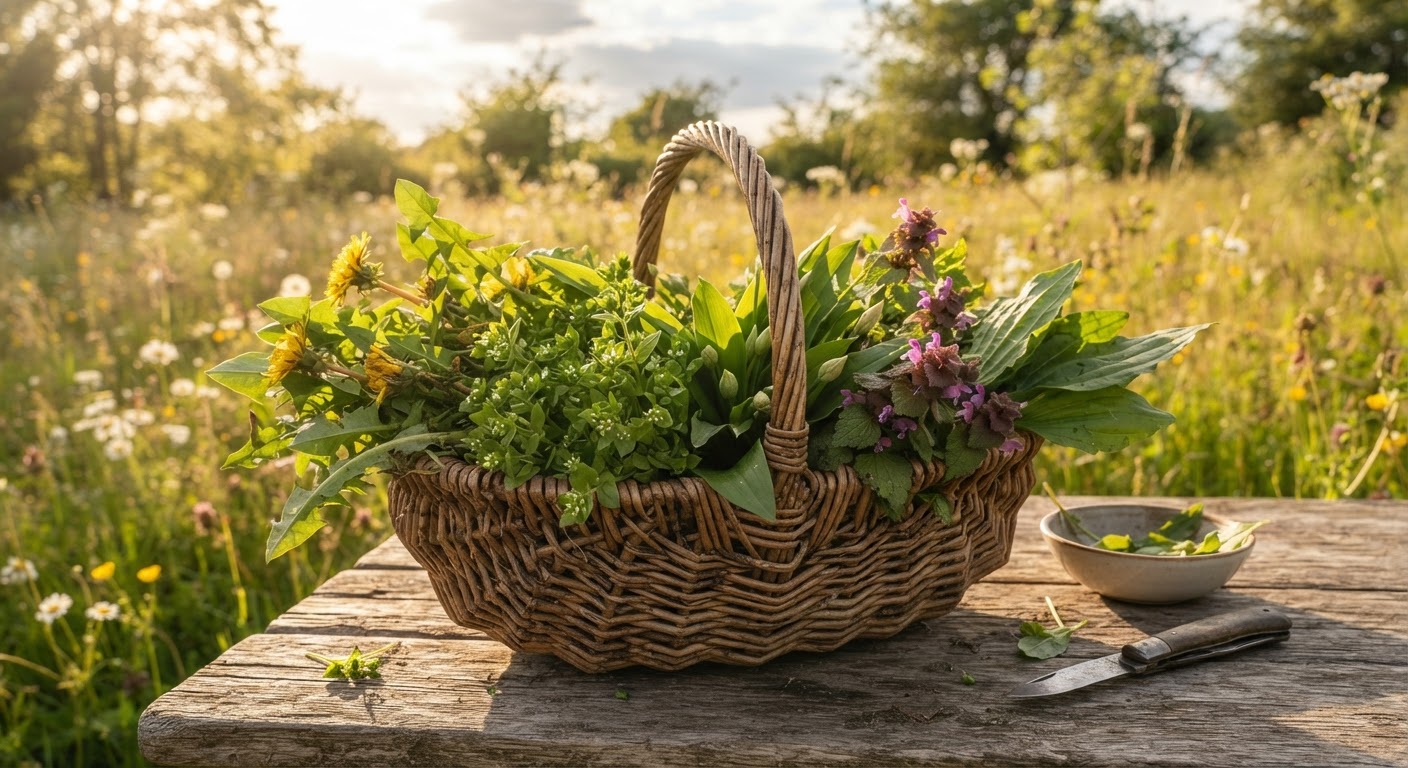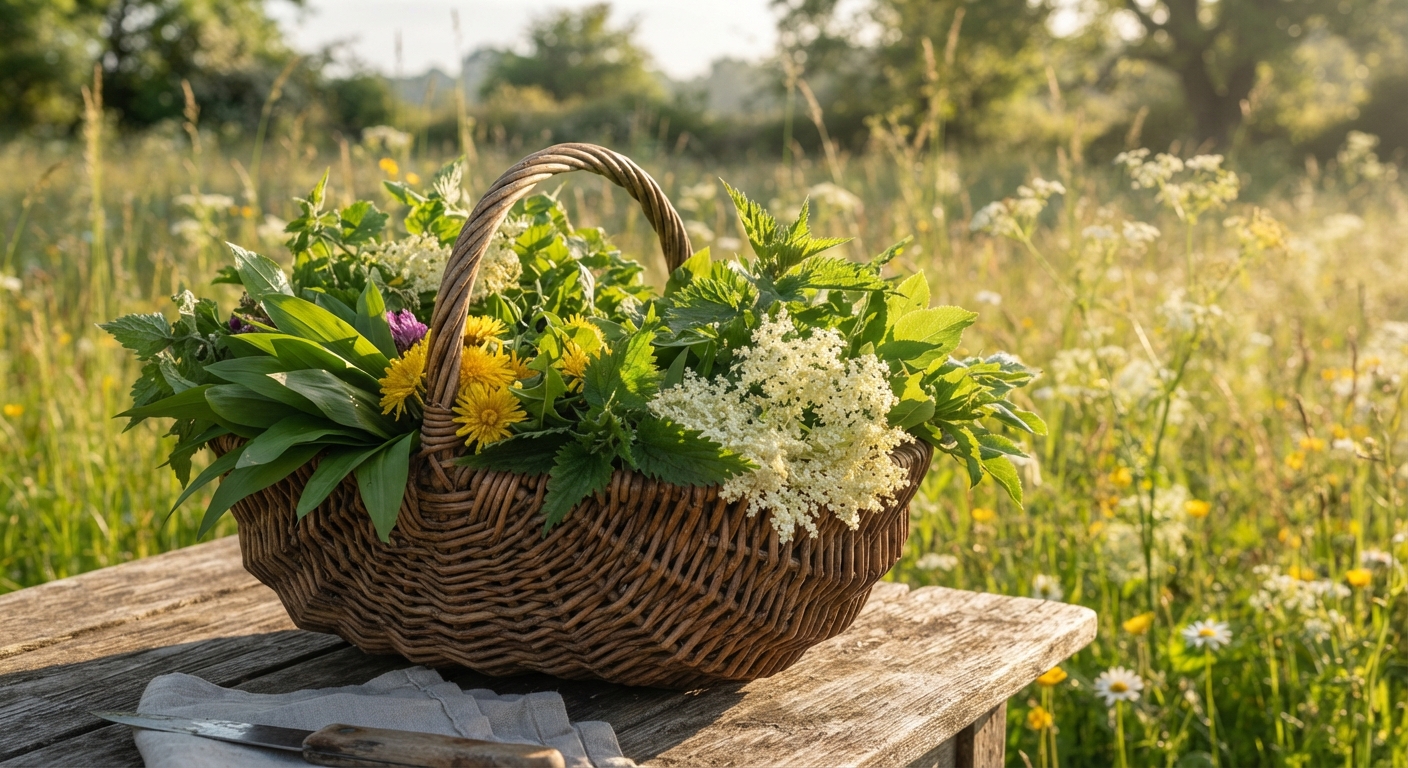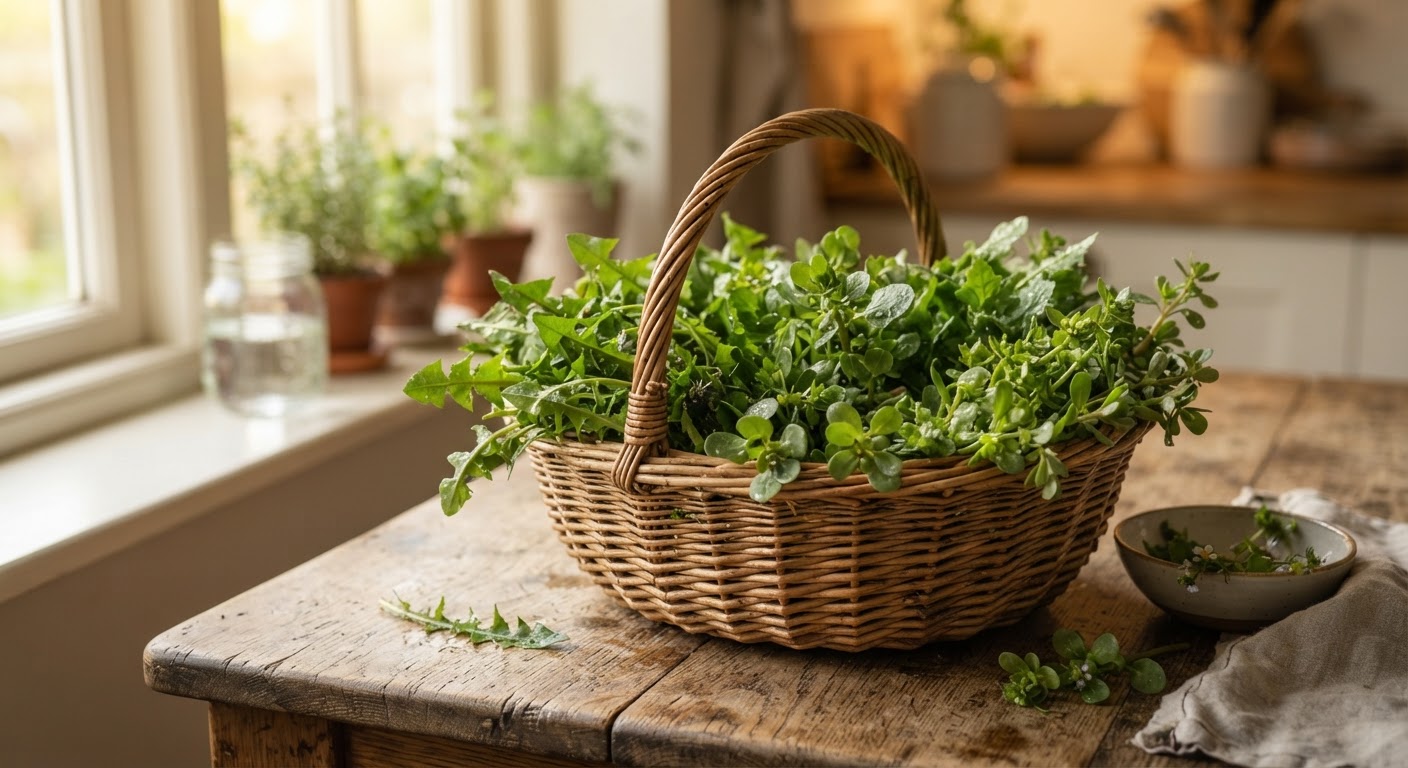
Most people walk past free food every single day. The dandelion in the sidewalk crack, the purslane spreading between tomato rows, the nettles at the edge of the park — these aren’t weeds to pull. They’re vegetables, and a lot of them out-nutrient the spinach sitting in your fridge.
That isn’t hyperbole. Dandelion greens carry more iron, calcium, and vitamin A than most supermarket greens. Lamb’s quarters — a “weed” most gardeners yank out by the handful — rivals kale on nearly every nutrient chart. Purslane is one of the richest plant sources of omega-3 fatty acids that exists.
This guide gives you the short version of what’s worth picking, how to recognize it, when to harvest, and how to actually cook it. No fluff, no 4,000-word origin story about how humans have foraged since the dawn of time. Just the plants and the practical details.
One rule before the list, because it matters more than any plant on it: never eat anything you can’t identify with 100% confidence. If you’re new to this, cross-check every plant against at least two reliable sources — a field guide and a trusted photo database — before it goes anywhere near your mouth.
The Quick List at a Glance
Here’s the whole rundown in one table. Bookmark this page and use it as a field cheat sheet. “Ease of ID” is rated from 1 (hardest) to 5 (easiest) for a beginner.
| Wild Vegetable | Best Season | Ease of ID | Flavor Profile | Best Use |
|---|---|---|---|---|
| Dandelion (Taraxacum officinale) | Spring–fall | 5/5 | Bitter, earthy | Sautéed greens, pesto |
| Lamb’s quarters (Chenopodium album) | Spring–summer | 4/5 | Mild, spinach-like | Cooked like spinach |
| Purslane (Portulaca oleracea) | Summer | 5/5 | Mild, lemony, succulent | Salads, stir-fries |
| Chickweed (Stellaria media) | Spring–fall | 4/5 | Mild, corn-like | Raw salads |
| Stinging nettle (Urtica dioica) | Early spring | 5/5 | Rich, green, spinach-like | Soup, tea, pesto |
| Wild garlic (Allium spp.) | Spring | 3/5 | Garlicky, oniony | Pesto, butter, soups |
| Wood sorrel (Oxalis spp.) | Spring–fall | 4/5 | Sharp, lemony | Garnish, salads |
| Broadleaf plantain (Plantago major) | Spring–fall | 5/5 | Mild, slightly bitter | Cooked, young leaves |
| Curly dock (Rumex crispus) | Spring–early summer | 3/5 | Tart, lemony | Cooked greens |
| Amaranth (Amaranthus spp.) | Summer–fall | 4/5 | Mild, nutty | Cooked like spinach |
| Watercress (Nasturtium officinale) | Spring–fall | 3/5 | Peppery, sharp | Raw salads, soup |
| Garlic mustard (Alliaria petiolata) | Spring | 3/5 | Garlicky, bitter | Pesto, sautéed |
The “Start Here” Five
If you’re brand new to foraging, don’t try to memorize twelve plants. Learn these five first. They’re common, widespread across North America and Europe, and — most importantly — easy to identify without the risk of a toxic lookalike.
1. Dandelion (Taraxacum officinale)
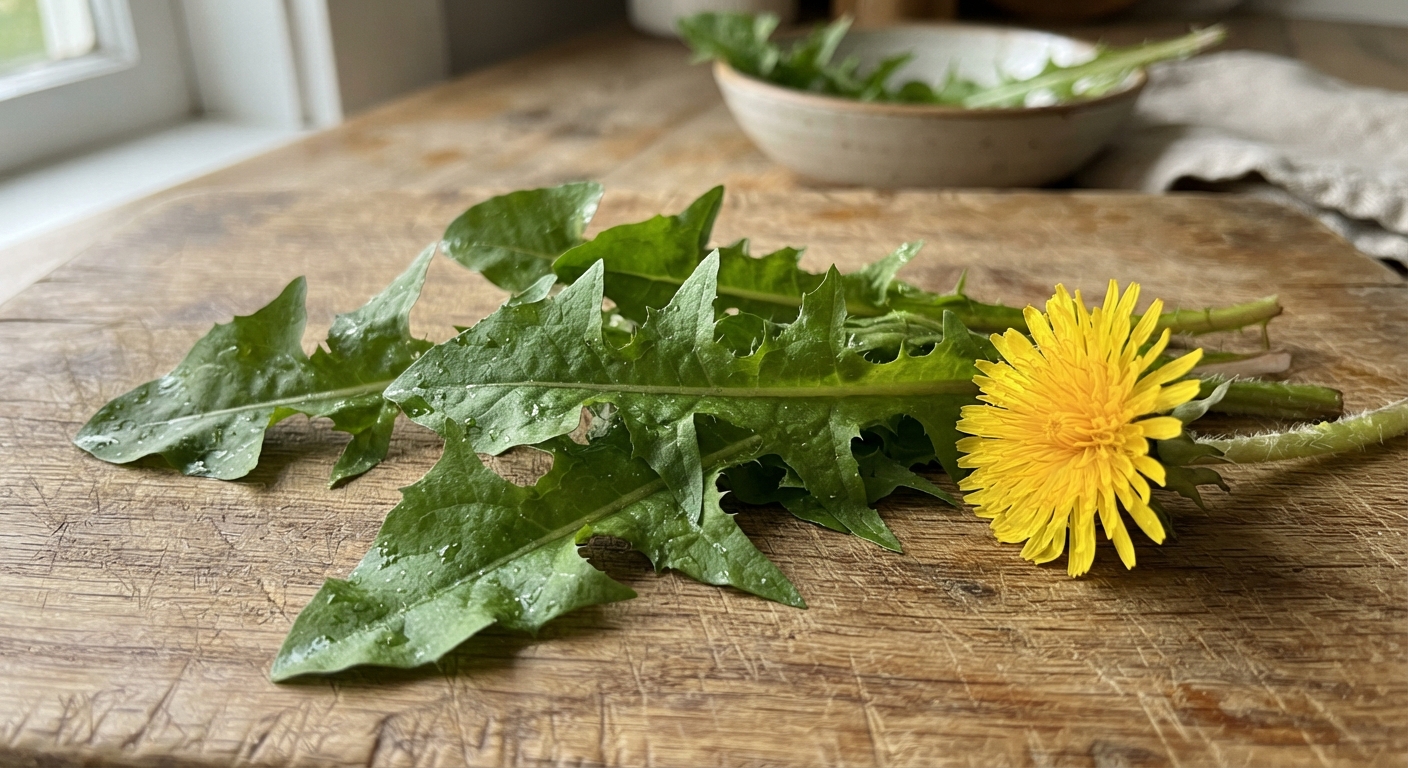
The easiest starting point in all of foraging. Everyone recognizes the jagged leaves and the bright yellow flower. The entire plant is edible: leaves, flowers, and roots.
How to identify it: Look for a basal rosette of deeply toothed leaves (the “lion’s tooth” shape), a hollow flower stem that oozes milky sap, and a single yellow flower per stem. If a plant has multiple flowers on one branched, hairy stem, it’s not dandelion — it’s likely a lookalike like cat’s ear or hawksbeard.
Harvest tip: Pick leaves in early spring before the plant flowers; they’re far less bitter then. Summer leaves are edible but aggressively bitter — blanch them twice to tame it.
How to eat it: Sauté young leaves with garlic and olive oil, toss them into a frittata, or blend raw young leaves into pesto with walnuts and lemon.
2. Lamb’s Quarters (Chenopodium album)
Often called “wild spinach,” and for good reason. It grows in disturbed soil, gardens, and farm edges, and it tastes so close to spinach that most people can’t tell the difference once it’s cooked.
How to identify it: Look for a mealy, silvery-white coating on the youngest leaves (it rubs off like fine dust), diamond- or goosefoot-shaped leaves with toothed edges, and a ridged stem. The telltale sign is that powdery coating on new growth — no toxic lookalike has it.
Harvest tip: Take the top few inches of young growth in spring and early summer. Once the plant flowers, the leaves turn tougher and slightly bitter.
How to eat it: Use it exactly like spinach. It wilts down fast, so grab more than you think you need. Cooked, it shrinks to about a quarter of its volume.
3. Purslane (Portulaca oleracea)
The succulent that grows out of sidewalk cracks in the middle of July. Purslane thrives where everything else wilts, and it’s quietly one of the most nutritious greens on the planet — high in omega-3s, vitamin A, and magnesium.
How to identify it: Look for thick, rubbery, reddish stems and smooth, paddle-shaped leaves that grow in small clusters. Break a stem and it’ll be juicy and crisp. The only real lookalike is spurge, which has a milky white sap when you break the stem — purslane’s sap is clear. Milky sap = do not eat.
Harvest tip: Summer is peak season. Pick the whole plant, stems and all; the crunchy stems are half the appeal.
How to eat it: Raw in salads where its lemony, slightly salty crunch shines, or quickly stir-fried. It also pickles beautifully.
4. Chickweed (Stellaria media)
A cool-season groundcover that shows up in lawns and garden beds in early spring and again in fall. It’s delicate, mild, and honestly better raw than cooked.
How to identify it: The giveaway is a single line of tiny hairs running down one side of the stem — it switches sides at each leaf node. Flowers are tiny, white, and star-shaped with five deeply notched petals (so they look like ten). That hair line is the key feature that separates it from the mildly toxic scarlet pimpernel, which has no such hair line and orange flowers.
Harvest tip: Snip the top few inches. Chickweed matures fast, so go early in the season for the tenderest leaves.
How to eat it: Raw, tossed into salads or onto sandwiches. It has a subtle, almost corn-like freshness. Cooking it is fine but loses most of the charm.
5. Stinging Nettle (Urtica dioica)
Yes, the plant that stings you. Once cooked or dried, the sting disappears completely, and what’s left is a deeply green, mineral-rich leaf that rivals spinach. Nettle soup is a staple across northern Europe for a reason.
How to identify it: Look for opposite, heart-shaped leaves with deeply serrated edges, a square-ish stem, and fine stinging hairs all over. It grows in moist, rich soil, often in patches. Wear gloves — the sting is real but harmless.
Harvest tip: Only harvest the top few inches of young spring growth, before the plant flowers. Older nettles get fibrous and can contain compounds you’d rather avoid in large amounts.
How to eat it: Blanch for 30–60 seconds to kill the sting, then use like spinach. Nettle pesto, nettle soup, and nettle tea are the classics.
Seven More Worth Knowing
Once you’re comfortable with the first five, add these to your rotation. They’re all genuinely good eating, just slightly less beginner-proof.
6. Wild Garlic (Allium spp.)
Covers field garlic, wild onion, and ramps depending on your region. The whole point is the smell.
How to identify it: If it smells strongly of garlic or onion, it’s an Allium. That smell is the single most reliable ID feature — and the one that rules out the toxic lookalikes (death camas and false hellebore have no onion smell). No smell, don’t eat it.
How to eat it: The leaves make a killer pesto, compound butter, or soup base. With ramps, harvest conservatively — never take more than a small fraction of a patch.
7. Wood Sorrel (Oxalis spp.)
The “lemon clover.” It looks like a three-leaf clover and tastes like green apple candy crossed with lemon.
How to identify it: Heart-shaped leaflets in groups of three, with a distinctive fold down the middle of each leaf. It has small five-petaled flowers (yellow, white, or pink depending on species). The sour taste is instant and unmistakable — that’s oxalic acid, which is why you eat it in moderation.
How to eat it: Sprinkle raw over salads, fish, or eggs as a bright garnish. Don’t make a meal of it — the oxalic acid adds up.
8. Broadleaf Plantain (Plantago major)
Not the banana. This is the low-growing lawn weed with broad, oval leaves and prominent parallel veins. The young leaves are a solid, mild green.
How to identify it: Broad oval leaves with thick, stringy veins running the length of the leaf, all growing from a central base. The seed stalks look like little green rat-tails. It’s distinctive enough that beginners rarely confuse it.
How to eat it: Young leaves are mildest. Older leaves get stringy from those veins — cook them longer or strip the tough midrib. Best sautéed or added to soups.
9. Curly Dock (Rumex crispus)
A relative of sorrel with a sharp, lemony kick. The young leaves are tender; the mature ones turn tough and bitter.
How to identify it: Look for long, narrow leaves with distinctly wavy (crisped) edges and a papery sheath where the leaf meets the stem. The leaves have a tart, almost sour bite when you taste a tiny piece.
How to eat it: Only take young spring leaves, and cook them. The tartness mellows with heat. Older leaves are edible but need several changes of boiling water to be worth it.
10. Amaranth (Amaranthus spp.)
Pigweed to gardeners, food to everyone else. Both the leaves and the seeds are edible, and the young leaves are genuinely good.
How to identify it: Look for a tall plant with alternate, oval-to-lance-shaped leaves, often with a reddish tint at the leaf base and stem, and dense green or red flower spikes at the top.
How to eat it: Cook young leaves like spinach. They have a mild, slightly nutty flavor. The grain-like seeds can be collected and cooked like quinoa, though that’s a bigger project.
11. Watercress (Nasturtium officinale)
A peppery aquatic green that grows in slow-moving, clean water. It’s a supermarket green you can find for free.
How to identify it: Look for floating mats of small, rounded, dark-green leaflets growing in cold, clean streams and springs. It has small white flowers. The peppery, mustard-like bite is the signature.
How to eat it: Raw in salads or on sandwiches, or blended into a peppery soup. One caution: only harvest from water you know is clean, since watercress can pick up waterborne pathogens.
12. Garlic Mustard (Alliaria petiolata)
An invasive that spreads aggressively — which means, ethically speaking, you can harvest it with a clear conscience. It tastes like garlic crossed with mild mustard.
How to identify it: Crush a leaf. If it smells like garlic, you’ve got it. The leaves are kidney- to heart-shaped with scalloped edges, and second-year plants send up a stalk with clusters of small white four-petaled flowers. The crushed-leaf smell is the deciding feature.
How to eat it: Young first-year leaves are best for pesto — this is one of the most popular garlic mustard uses. Older leaves get bitter, so cook them or skip them.
Wild Greens vs. Store-Bought: The Side-by-Side
One of the most common questions from people new to foraging is whether wild greens actually beat what’s already in the produce aisle. The honest answer: it depends on the green and the season, but the comparison leans heavily in favor of the wild stuff on nutrition, with a real trade-off on convenience.
| Factor | Wild Edible Vegetables | Store-Bought Greens |
|---|---|---|
| Nutrition density | Often higher — wild greens grow in mineral-rich soil and aren’t bred for shelf life | Good, but bred for yield and appearance, sometimes at the cost of nutrients |
| Cost | Free (plus your time) | $2–$6 per bunch |
| Freshness | Picked minutes before eating | Days to weeks old by the time you buy it |
| Flavor | Stronger, more varied, more bitter | Mild and predictable |
| Convenience | Requires ID knowledge and travel | Grab and go |
| Risk | Misidentification risk (real but manageable) | Essentially zero |
| Seasonality | Tied to the season | Available year-round |
The nutrition angle is where wild greens genuinely win. Multiple studies have found that wild greens like dandelion and lamb’s quarters contain significantly more calcium, iron, magnesium, and vitamin A than cultivated spinach or kale, gram for gram. The trade-off is flavor: wild greens run bitter, which some people love and others never warm up to.
If you want the best of both worlds, use wild greens where they shine — as a strongly flavored accent, a pesto base, or a wilted side dish — and keep store-bought greens for the daily salad routine.
How to Prep and Cook Wild Greens in Under 20 Minutes
Here’s the practical workflow, condensed. It applies to dandelion, lamb’s quarters, nettles (after blanching), amaranth, and most other leafy wild greens.
- Sort and wash. Drop everything into a big bowl of cold water, swish it around, and lift it out. Repeat two or three times. This removes grit, bugs, and anything else from the field.
- Strip tough stems. For dandelion and dock, pull the leaves off the thicker stems. For tender greens like chickweed and purslane, keep the stems.
- Blanch if bitter or stinging. Nettles get 30–60 seconds in boiling water. Very bitter dandelion gets a quick blanch too. This is also the step that tames oxalic acid in dock and wood sorrel.
- Sauté. Heat olive oil, add sliced garlic (or wild garlic), and cook the greens over medium-high heat until wilted — 2 to 4 minutes for most. Finish with salt, lemon, and a pinch of chili flake.
- Or go raw. Chickweed, purslane, wood sorrel, and watercress are best raw. Toss with a sharp vinaigrette and some toasted nuts.
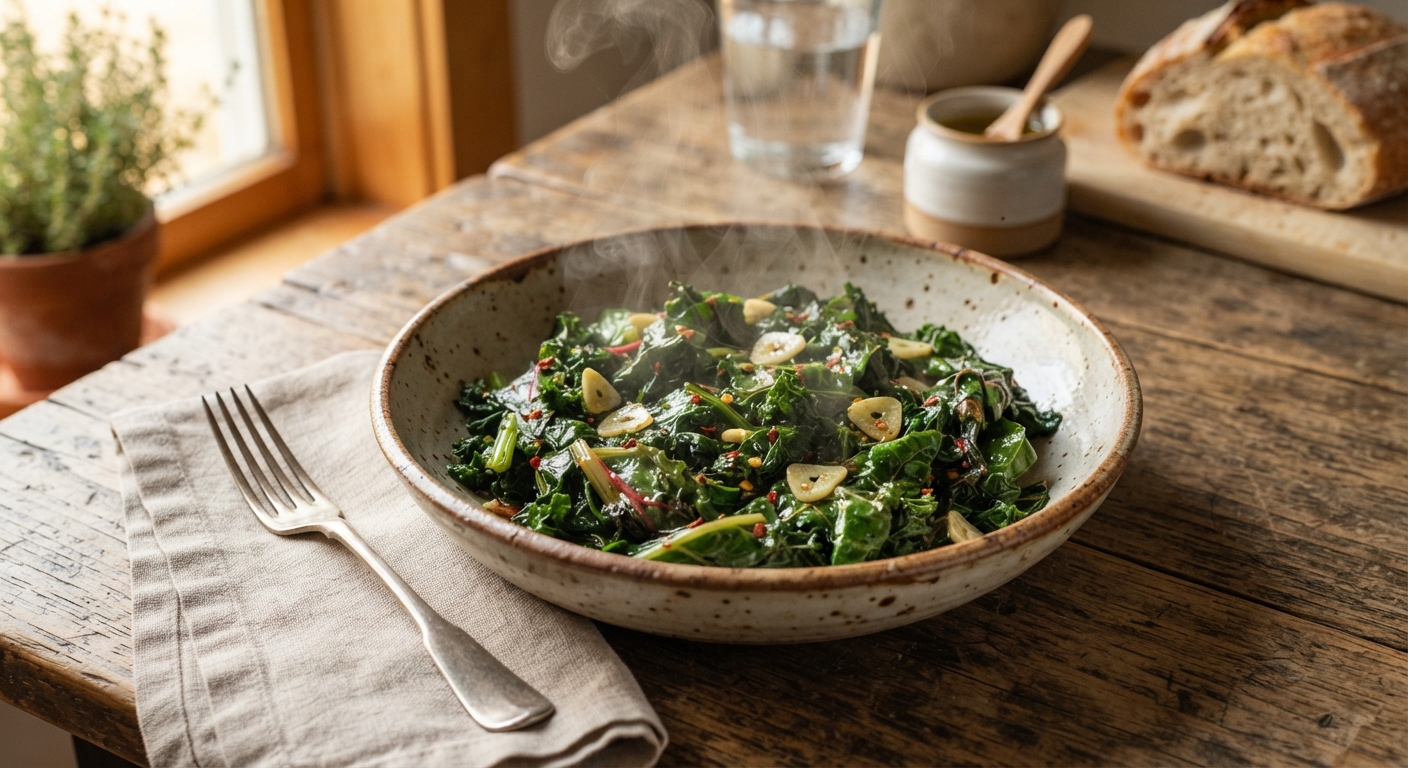
The one mistake beginners make constantly: undercooking the tough greens and overcooking the tender ones. Dandelion and dock need a bit of time; chickweed and purslane need almost none. Learn which category your green falls into and cook accordingly.
Three Non-Negotiable Rules Before You Eat
These aren’t suggestions. They’re the difference between a great dinner and a trip to urgent care.
- Positive ID or it stays in the ground. “I’m pretty sure” is not identification. Confirm with two independent sources, and know the toxic lookalikes for your plant before you harvest it.
- Forage clean ground only. Avoid roadsides, sprayed lawns, industrial areas, and anywhere dogs frequent. Plants absorb what’s in the soil, including heavy metals and pesticides.
- Harvest sustainably. Take no more than about 10% of a patch, never dig up the whole plant unless it’s invasive (garlic mustard, you get a pass), and leave enough for wildlife and regrowth.
Quick Answers
Which wild vegetable is easiest for a beginner? Dandelion. It’s everywhere, nearly everyone recognizes it, and every part is edible. Start there.
Can I eat wild greens raw? Some, yes — chickweed, purslane, wood sorrel, and watercress are all good raw. Tougher or more bitter greens like dandelion, dock, and nettle are better cooked, and nettle must be cooked or dried first to neutralize the sting.
Are wild vegetables actually more nutritious than store-bought greens? In many cases, yes. Wild greens like dandelion, lamb’s quarters, and purslane routinely test higher in key nutrients like iron, calcium, vitamin A, and omega-3s than cultivated spinach or kale.
How do I know a plant isn’t poisonous? You don’t guess — you identify. Use a field guide plus a trusted photo source, learn the toxic lookalikes, and when in doubt, take a photo and come back another day. No wild green is worth an avoidable mistake.
Where should I never forage? Roadsides, sprayed lawns, golf courses, industrial sites, and areas downstream from agriculture. Stick to clean, unpolluted, legally accessible land — and check local regulations on public land.
The Bottom Line
Wild edible vegetables aren’t a novelty or a survivalist gimmick. They’re free, nutrient-dense food growing in plain sight, and the barrier to entry is lower than most people assume. Learn five plants well — dandelion, lamb’s quarters, purslane, chickweed, and nettle — and you’ll have a reliable, seasonal supply of greens that rivals anything in the produce aisle.
The whole skill comes down to one habit: slow down and actually look. The plants are already there. Once you can name them, you’ll never see an “empty” patch of grass the same way again.
Harvest responsibly, identify with certainty, and when in doubt, leave it in the ground.