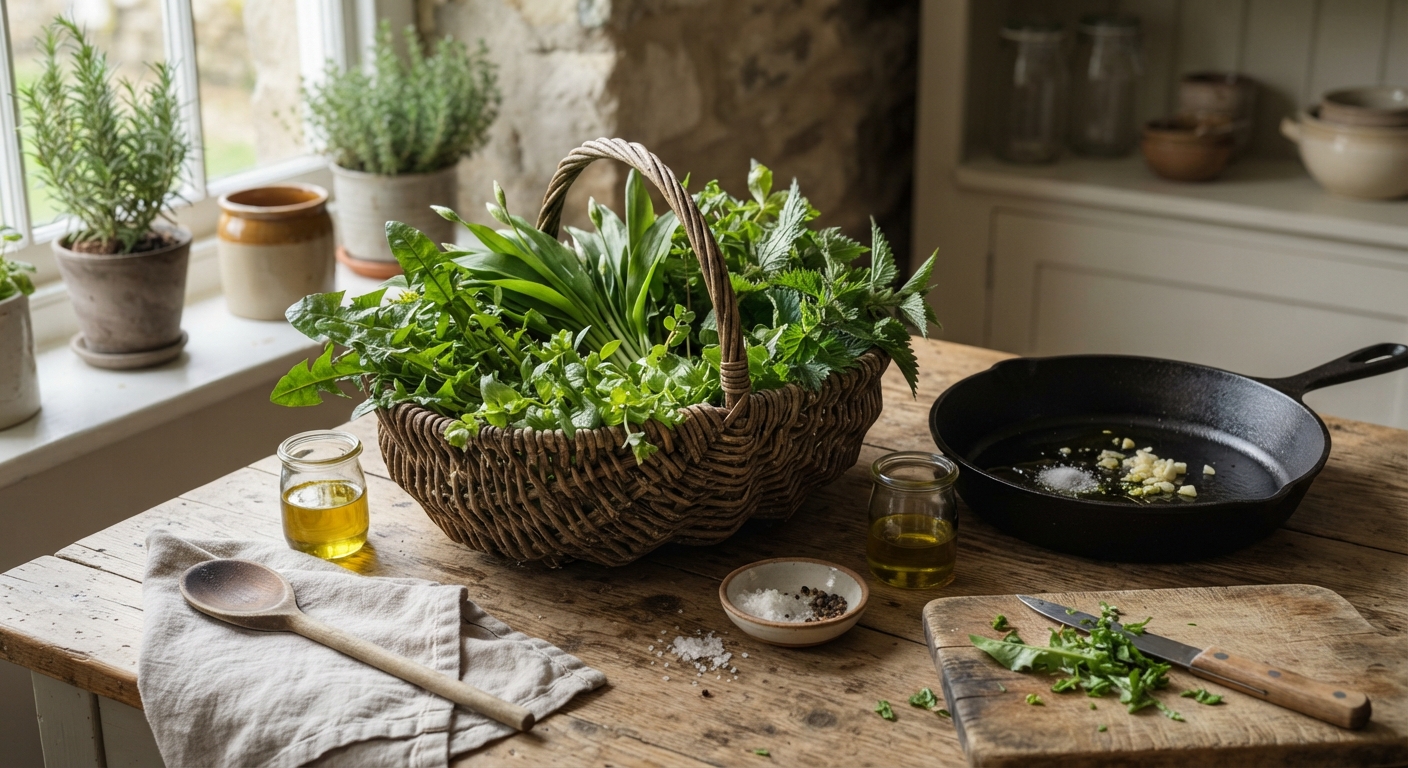
You picked the greens. You got them home. Then they sat in the fridge for three days while you tried to figure out what to actually do with them. Sound familiar? It’s the most common way a foraging hobby dies — not from misidentification, but from a kitchen full of limp leaves and no plan.
This guide is the plan. Ten recipes, all built around the wild edible plants beginners actually find, every one ready in 30 minutes or less. Most use five ingredients or fewer. None of them require a technique you can’t learn the first time.
The recipes are ranked from fastest and easiest to the ones that need a little more attention, so you can match a dish to your energy level. Skip around as you like — there’s no required order.
The one rule that sits above all ten: never cook or eat a wild plant you can’t identify with 100% confidence. Cross-check every plant against a regional field guide and a trusted photo database before it touches a cutting board. Nothing below replaces that.
The 10 Recipes at a Glance
Here’s the whole list in one table. Bookmark it and use it as your “what can I make tonight” cheat sheet. Skill is rated 1 (easiest) to 3 (needs a bit of attention).
| # | Recipe | Main Plant | Total Time | Skill | Best Season |
|---|---|---|---|---|---|
| 1 | Wild Garlic Compound Butter | Wild garlic (Allium ursinum) | 10 min | 1 | Spring |
| 2 | Wood Sorrel Lemonade | Wood sorrel (Oxalis spp.) | 5 min | 1 | Spring–fall |
| 3 | Purslane & Cucumber Salad | Purslane (Portulaca oleracea) | 10 min | 1 | Summer |
| 4 | Chickweed & Avocado Toast | Chickweed (Stellaria media) | 10 min | 1 | Spring–fall |
| 5 | Sautéed Lamb’s Quarters | Lamb’s quarters (Chenopodium album) | 15 min | 1 | Spring–summer |
| 6 | Dandelion Flower Fritters | Dandelion (Taraxacum officinale) | 20 min | 2 | Spring |
| 7 | Wild Green Omelette | Amaranth or chickweed | 15 min | 2 | Summer–fall |
| 8 | Crispy Plantain Leaf Chips | Broadleaf plantain (Plantago major) | 15 min | 2 | Spring–fall |
| 9 | Stinging Nettle & Potato Soup | Stinging nettle (Urtica dioica) | 25 min | 2 | Early spring |
| 10 | Dandelion Root Tea | Dandelion root | 25 min | 2 | Fall–early spring |
The pattern here is deliberate: half the list is no-cook or one-pan, so you can build confidence without ever turning on a stove. Start with those, then work down.
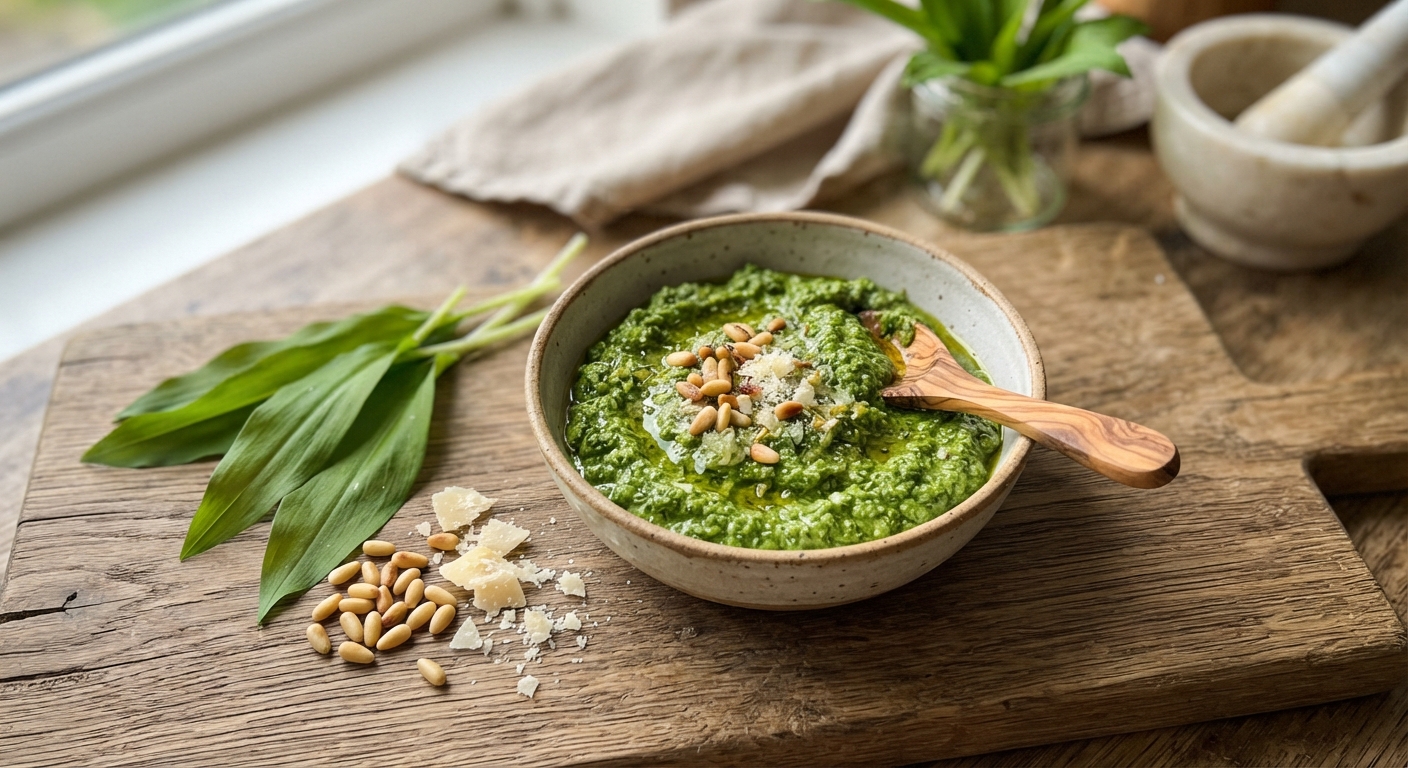
1. Wild Garlic Compound Butter — 10 minutes
The single most useful wild food recipe in existence, because it turns one spring harvest into weeks of flavor. You fold finely chopped wild garlic leaves into softened butter, roll it into a log, and freeze it. Then a coin of it melts over steak, pasta, roasted potatoes, or a bowl of soup whenever you want it.
You need: 1 cup (2 sticks) softened butter, a large handful of wild garlic leaves, a pinch of salt, optional lemon zest.
Make it: Rinse the leaves, pat them fully dry (water makes the butter split), and chop them fine. Mash them into the softened butter with the salt. Roll into a log in parchment paper, twist the ends, and chill until firm. Slice off rounds as needed.
Tip: Wild garlic’s biggest lookalike concern is lily of the valley, whose leaves are similar but odorless. Real wild garlic smells unmistakably of garlic the second you crush a leaf. If it doesn’t smell like garlic, it isn’t.
2. Wood Sorrel Lemonade — 5 minutes
Wood sorrel has heart-shaped leaves that taste like lemon candy — sharp, clean, and surprisingly bright. It makes a foraged lemonade that needs no lemon at all. This is the best “first recipe” on the list because there’s nothing to cook and almost nothing to mess up.
You need: Two generous handfuls of wood sorrel leaves, cold water, a little honey or sugar to taste.
Make it: Rinse the leaves, drop them in a jug, and muddle gently with a wooden spoon to release the sour flavor. Fill with cold water, sweeten to taste, and stir. Serve over ice. If you want it fizzy, top it with plain sparkling water instead.
Tip: The sourness comes from oxalic acid, the same compound in rhubarb. A glass or two is fine for most people; don’t drink it by the gallon, and skip it if you have kidney issues.
3. Purslane & Cucumber Salad — 10 minutes
Purslane is a succulent that grows flat along garden beds and sidewalk cracks, and it’s one of the richest plant sources of omega-3 fatty acids (ALA) on land. It’s also genuinely delicious raw — crisp, lemony, faintly salty. This salad is the fastest way to make it shine.
You need: A few handfuls of purslane (leaves and tender stems), half a cucumber, a splash of olive oil, a squeeze of lemon or a spoon of yogurt, salt.
Make it: Chop the cucumber, toss with the purslane, and dress with olive oil, acid, and salt. That’s the whole recipe. A spoon of plain yogurt instead of lemon turns it creamy.
Tip: Eat purslane raw. Cooking it makes it slimy, a texture a lot of people dislike. Raw, you get the crunch and all the omega-3s.
4. Chickweed & Avocado Toast — 10 minutes
Chickweed is the mild, tender green that grows in tangled mats through cool weather. It tastes faintly like corn silk and is soft enough to eat raw in quantity. Piling it on avocado toast gives you a foraged version of a cafe staple that takes about as long to make as the toast itself.
You need: A big handful of chickweed, one ripe avocado, good bread, salt, a squeeze of lemon or a few chili flakes.
Make it: Toast the bread. Mash the avocado with salt and lemon, spread it, and pile the washed chickweed on top. Finish with chili flakes or flaky salt. The chickweed adds freshness and crunch without fighting the avocado.
Tip: Chickweed has a single line of fine hairs running along one side of each stem — the classic identification tell. A common lookalike, scarlet pimpernel, has no such line and is not edible. Check the stem.
5. Sautéed Lamb’s Quarters with Garlic & Chili — 15 minutes
Lamb’s quarters is the “weed” that rivals kale on nearly every nutrient chart, with a mild, spinach-like flavor and none of spinach’s chalkiness. This is the workhorse recipe for any mild wild green: wash, wilt in hot fat with garlic, finish with heat.
You need: A large colander of lamb’s quarters (it cooks down a lot), olive oil, two cloves of garlic, a pinch of red chili flakes, salt, a squeeze of lemon.
Make it: Heat the oil in a wide pan, add the garlic and chili until fragrant, then add the washed greens and a splash of water. Cover for a minute to steam, uncover, and cook until wilted and tender. Season and finish with lemon.
Tip: Young leaves and tender top shoots taste best; older plants get tough and slightly soapy. Harvest before the plant flowers if you can.
6. Dandelion Flower Fritters — 20 minutes
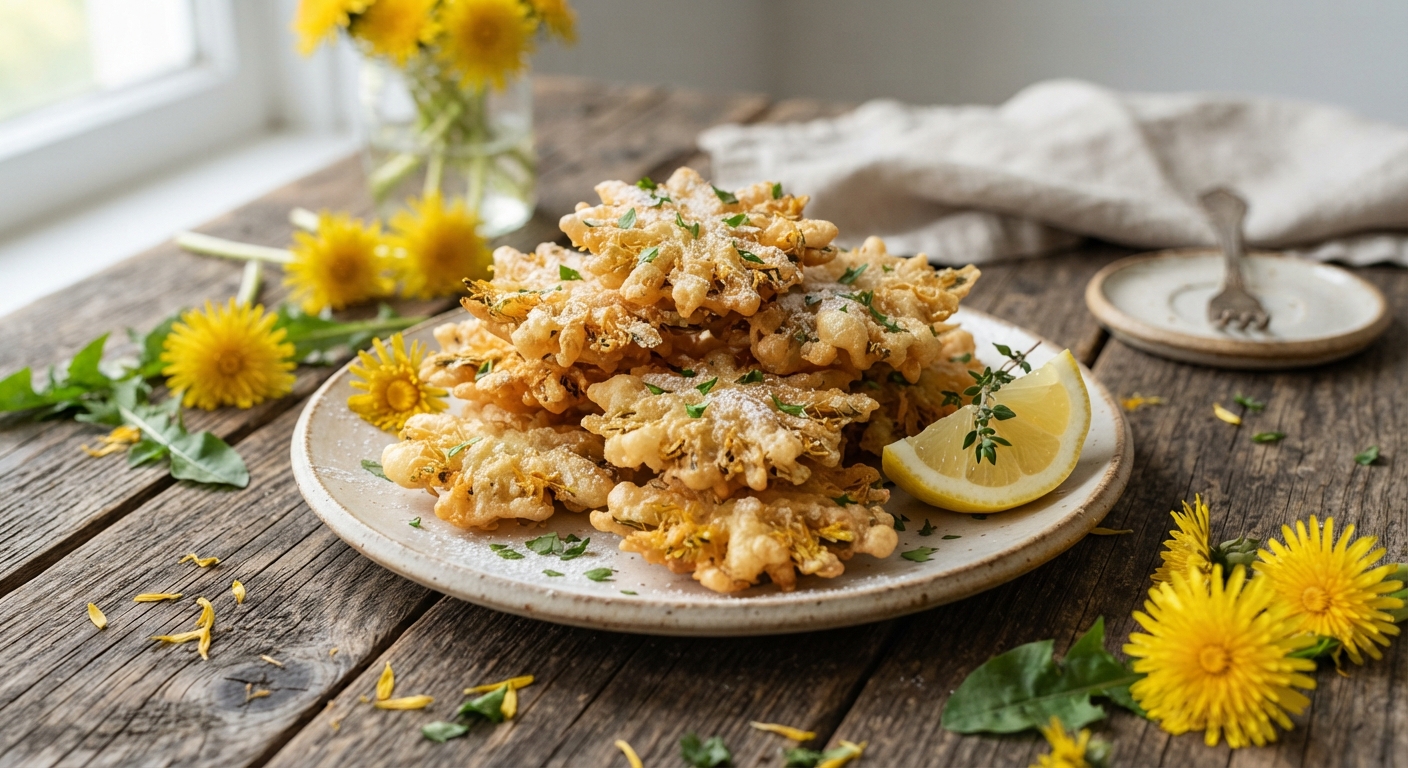
If you’ve only eaten dandelion greens and decided the plant is too bitter, the flowers will change your mind. Dipped in a simple batter and fried until golden, they turn into crisp little fritters with a sweet, almost honeyed center. Kids who won’t touch a salad will eat these by the handful.
You need: Two dozen fresh dandelion flower heads, one cup of flour, a pinch of salt, enough cold water or milk to make a batter, oil for shallow frying.
Make it: Rinse the flowers and pat dry, leaving a short stem to hold. Whisk flour, salt, and liquid into a batter the consistency of heavy cream. Heat a shallow layer of oil, dip each flower, and fry until golden on both sides. Drain on paper and salt while hot.
Tip: Pick flowers from a clean, unsprayed area, mid-morning when they’re fully open. Remove the green base if you find it too bitter — the petals are the sweet part.
7. Wild Green Omelette — 15 minutes
This is the recipe for “I found some greens and don’t want to think about it.” Almost any tender wild green works — amaranth, chickweed, young dandelion, lamb’s quarters, or a mix. The eggs carry the flavor and tame any lingering bitterness.
You need: Three eggs, a generous handful of washed tender wild greens, a knob of butter, salt, a little grated cheese if you have it.
Make it: Wilt the greens in butter in a nonstick pan for a minute, pour in beaten seasoned eggs, and cook gently until just set. Fold, slide onto a plate, and top with cheese. Five minutes of cooking, ten minutes of cleanup.
Tip: Wilt the greens first rather than adding them raw — they release water as they cook, and raw greens will make the omelette watery.
8. Crispy Plantain Leaf Chips — 15 minutes
This one surprises people. Broadleaf plantain — the “weed” in every sidewalk crack — fries up into crisp, savory chips when you pick young leaves and get the oil properly hot. They’re the wild answer to kale chips, with more structure.
You need: Young broadleaf plantain leaves, oil for frying, salt.
Make it: Wash and thoroughly dry the leaves (water and hot oil do not mix). Heat a shallow layer of oil until a test leaf sizzles immediately. Fry leaves in small batches for 20–30 seconds per side until crisp and lightly browned, then drain and salt.
Tip: Pick young, tender leaves — older ones turn leathery instead of crisp. The prominent parallel veins mean you can grab the stem and know exactly what you’re holding.
9. Stinging Nettle & Potato Soup — 25 minutes
Nettles are the wild green most people are afraid of and most cooks love, because the sting vanishes the instant the leaves hit boiling water. What’s left is a deep, spinach-like green that makes a genuinely excellent soup. This version leans on potato for body and comes together in under half an hour.
You need: A colander of young nettle tops (use gloves), one onion, two potatoes, butter or oil, a liter of stock or water, salt and pepper.
Make it: Sauté the onion in fat until soft, add diced potato and stock, and simmer until the potato is tender. Add the nettle tops, simmer two minutes more, then blend until smooth. Season and serve with a swirl of cream or a coin of that wild garlic butter from recipe #1.
Tip: Harvest only the top few leaves of young spring plants before they flower. Once nettles flower, the leaves get gritty and are best left alone.
10. Dandelion Root Tea — 25 minutes
Dandelion root, roasted and steeped, makes a dark, earthy, coffee-like brew with none of the caffeine. It’s the one recipe on this list that’s about roots instead of leaves, and it turns a plant most people fight in their lawns into a warm mug.
You need: A few mature dandelion roots, water, a splash of milk or honey if you like.
Make it: Scrub the roots, chop them fine, and roast in a dry pan or low oven until dark and fragrant (about 10–15 minutes). Simmer a spoonful per cup of water for 10 minutes, strain, and serve. Store extra roasted root in a jar for later.
Tip: Dig roots in fall or early spring, when the plant has stored the most energy. Avoid lawns treated with herbicide — the roots concentrate whatever the soil holds.
What to Cook First: A Quick Decision Guide
If the list feels like too much choice, use this instead. Match what you actually found to the recipe that needs the least from you.
| You found… | Make… | Why it’s the right first pick |
|---|---|---|
| Wild garlic | Compound butter (recipe 1) | No cooking, freezes for months |
| Wood sorrel | Lemonade (recipe 2) | Impossible to mess up, five minutes |
| Purslane | Cucumber salad (recipe 3) | No-cook, uses the plant at its best |
| Chickweed | Avocado toast (recipe 4) | Mild flavor, zero technique |
| Lamb’s quarters | Sautéed greens (recipe 5) | The template for every mild green |
| Dandelion flowers | Fritters (recipe 6) | Turns a weed into a treat |
| Stinging nettle | Potato soup (recipe 9) | The sting disappears, flavor stays |
The strategy behind that table: start with a no-cook recipe, taste the plant the way it wants to be eaten, then graduate to the pan. Confidence comes from small wins, not ambitious first attempts.
Five Harvest & Kitchen Rules That Save Recipes
These are the details that separate a good foraged meal from a disappointing one.
- Pick clean. Avoid roadsides, dog-walk routes, sprayed lawns, and anything downhill from a farm. Wash everything twice, even if it looks clean.
- Young beats old. Almost every wild green is better before the plant flowers. Tender young leaves = mild and soft; old leaves = bitter and tough.
- Dry before you fry. Water and hot oil don’t mix. Any leaf headed for the frying pan or the butter log needs to be bone dry first.
- Fat and acid fix bitterness. If a green tastes too bitter, don’t fight it — add butter, olive oil, or a squeeze of lemon. Bitterness is a feature that fat rounds off.
- Cook greens down. Most wild greens collapse to a fraction of their volume. Pick or buy twice what looks like enough.
Short Answers to Common Questions
Are wild edible plants actually safe to cook? Yes — for species that are well documented as edible, correctly identified, and harvested from clean areas. The risk isn’t the cooking; it’s misidentification. Verify every plant against at least two sources before using it.
Do I need to cook wild greens, or can I eat them raw? Depends on the plant. Purslane, chickweed, wood sorrel, and wild garlic are fine raw. Nettles must be cooked or blanched to remove the sting. Older dandelion leaves are better cooked to soften their bitterness.
What’s the easiest wild plant recipe for a total beginner? Wood sorrel lemonade or purslane salad. Both are no-cook, both use plants that are forgiving to identify, and neither requires any technique. Start there.
Can I freeze wild greens for later? Yes. Blanch them for 30–60 seconds, shock in ice water, squeeze out the excess water, and freeze in portions. Nettles, lamb’s quarters, and amaranth all freeze beautifully this way.
How much should I harvest at once? Take only what you’ll use, and never strip a whole patch. A good rule is to take no more than about a third of any single plant or stand, leaving enough for it to regrow and for wildlife.
Safety note: The recipes above use plants widely recognized as edible, but misidentification can cause serious illness. Always confirm identity with a regional field guide and a trusted photo database, harvest only from clean, unsprayed areas, and when in doubt, don’t eat it. If you’re new to foraging, start with the guide on what foraging actually is and work through the beginner wild greens list before you cook.