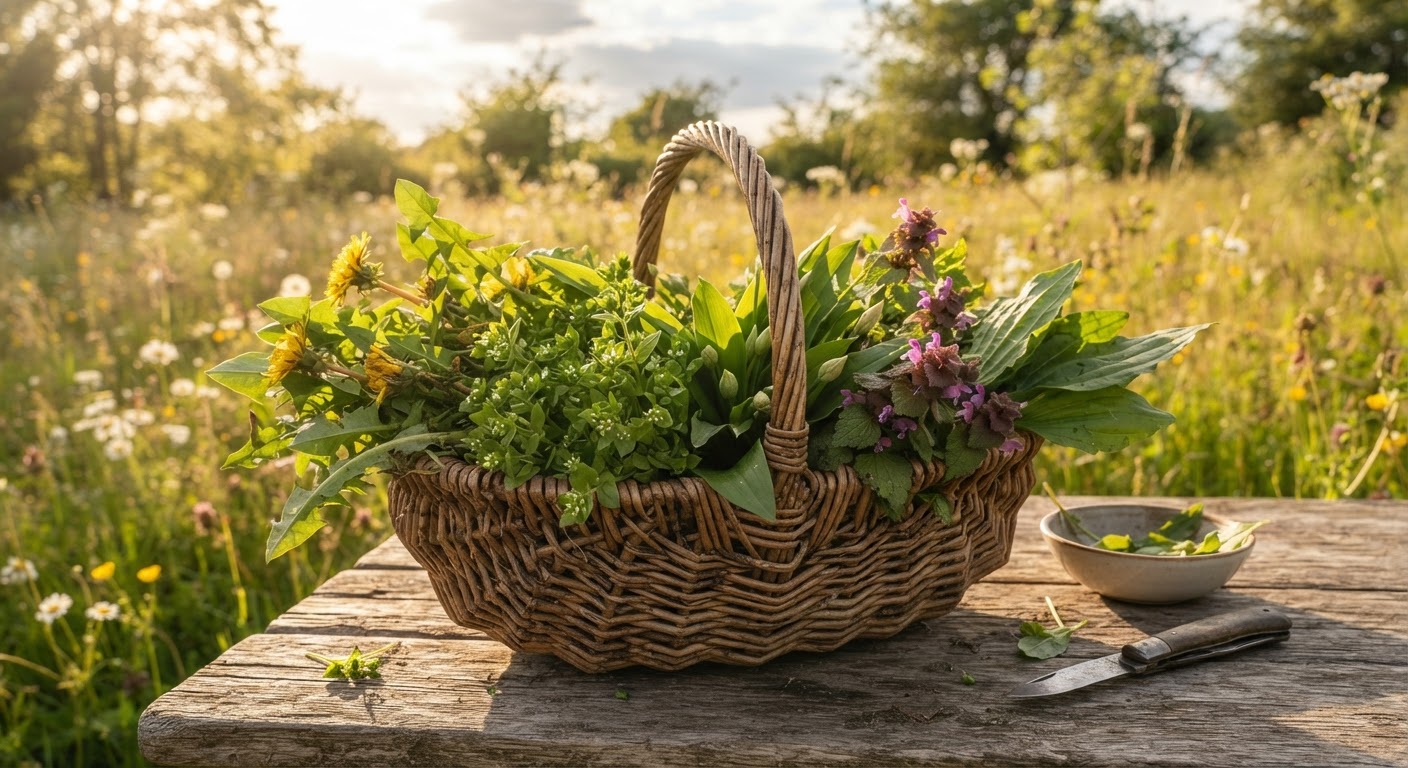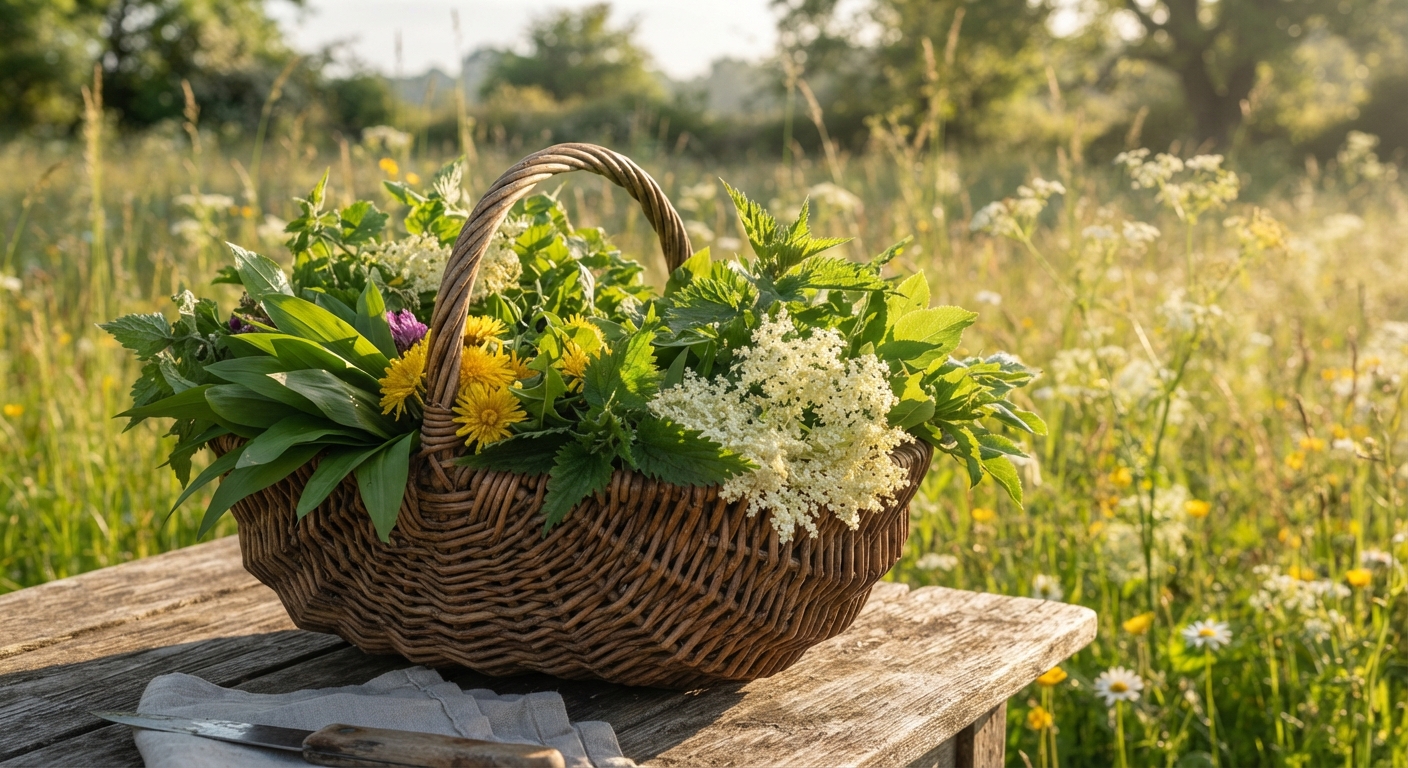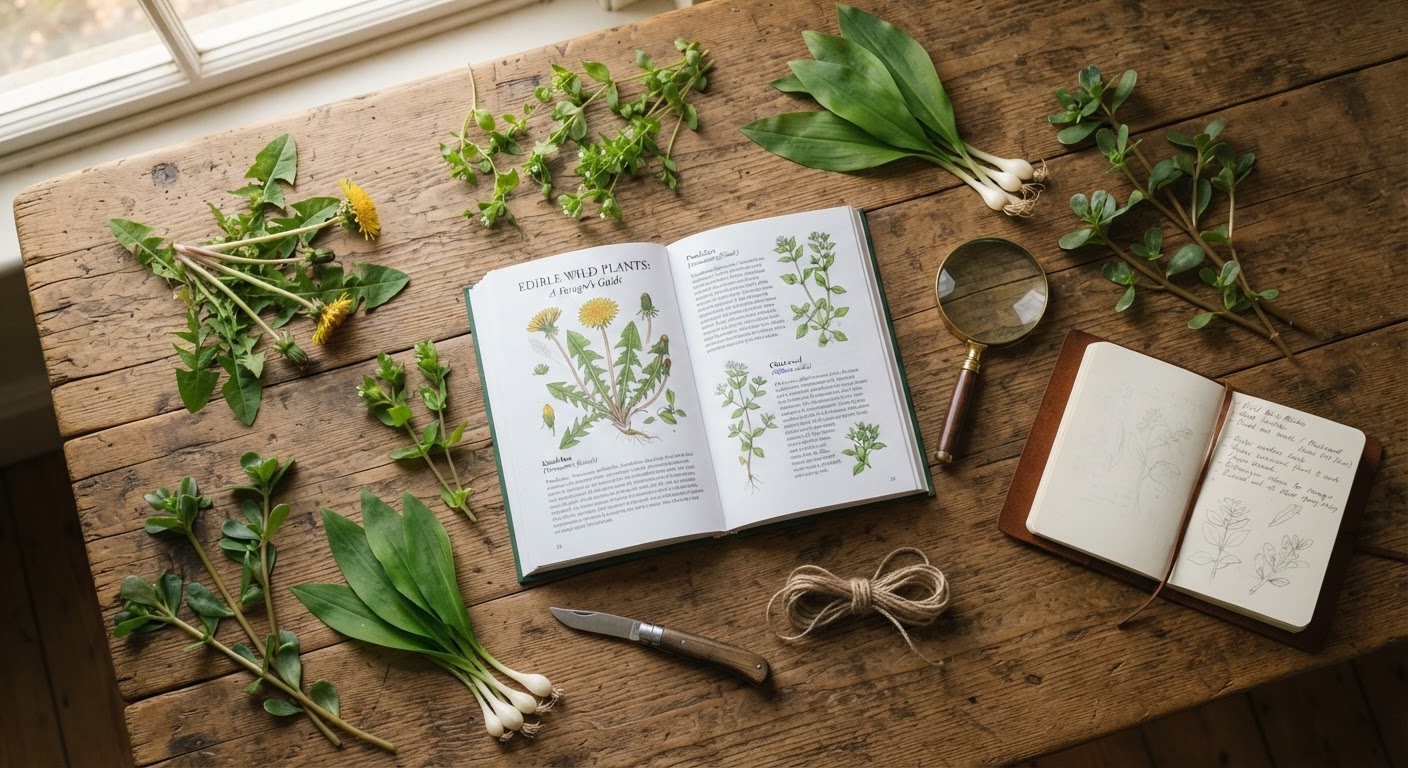
Let me be honest about something that took me way too long to figure out: most foraging books are written by botanists who assume you already know what “lanceolate” and “pinnately compound” mean. They hand you a black-and-white line drawing from 1972 and a paragraph of botanical Latin, then send you into a field full of plants that look nothing like the sketch.
You’re not stupid. You’re working with the wrong tools.
The problem is fundamental: plants in real life don’t look like textbook illustrations. Light changes everything. A dandelion photographed at noon looks different from a dandelion photographed at golden hour. The same chickweed that sprawls across a garden bed in April will be a different color in October. And no amount of memorizing written descriptions will bridge the gap between “leaves opposite, ovate to elliptic” and the actual green thing you’re staring at.
This guide bridges that gap. Instead of botanical line drawings and abstract terminology, I’m going to walk you through exactly what to look for with your own eyes — the visual markers that work regardless of lighting, season, or which corner of the country you’re standing in. By the end, you’ll have a repeatable framework for identifying edible wild plants that doesn’t depend on memorizing an encyclopedia.
Why Written Descriptions Keep Failing You
There’s a cognitive gap between reading about a plant and recognizing it. Your brain processes images 60,000 times faster than text. When you’re in the field, you’re not recalling words — you’re matching patterns.
Here’s what actually happens: you read that chickweed has “a single line of fine hairs on one side of the stem.” You walk outside, find a plant with small white flowers, and squint at the stem. Is that a line of hairs? Or just dirt? Or maybe it’s the light catching the stem at an angle?
Now imagine instead that you’ve seen a real photograph of that hair line — close up, clearly visible, with the hairs catching the light. The difference between those two experiences is the difference between confidence and guesswork. One gives you a word. The other gives you a search image your brain can match.
This isn’t just anecdotal. Research on visual identification consistently shows that people using photo-based references correctly identify species on their first attempt at roughly double the rate of those relying on text descriptions alone. The gap narrows with experience, but for beginners, pictures aren’t a nice-to-have — they’re the difference between a meal and a mistake.
The practical fix isn’t complicated: supplement every written description you encounter with real photographs, taken in natural conditions, from multiple angles. Your phone’s camera roll should be your most-used foraging tool.
The Visual Identification Framework: 4 Markers That Never Lie
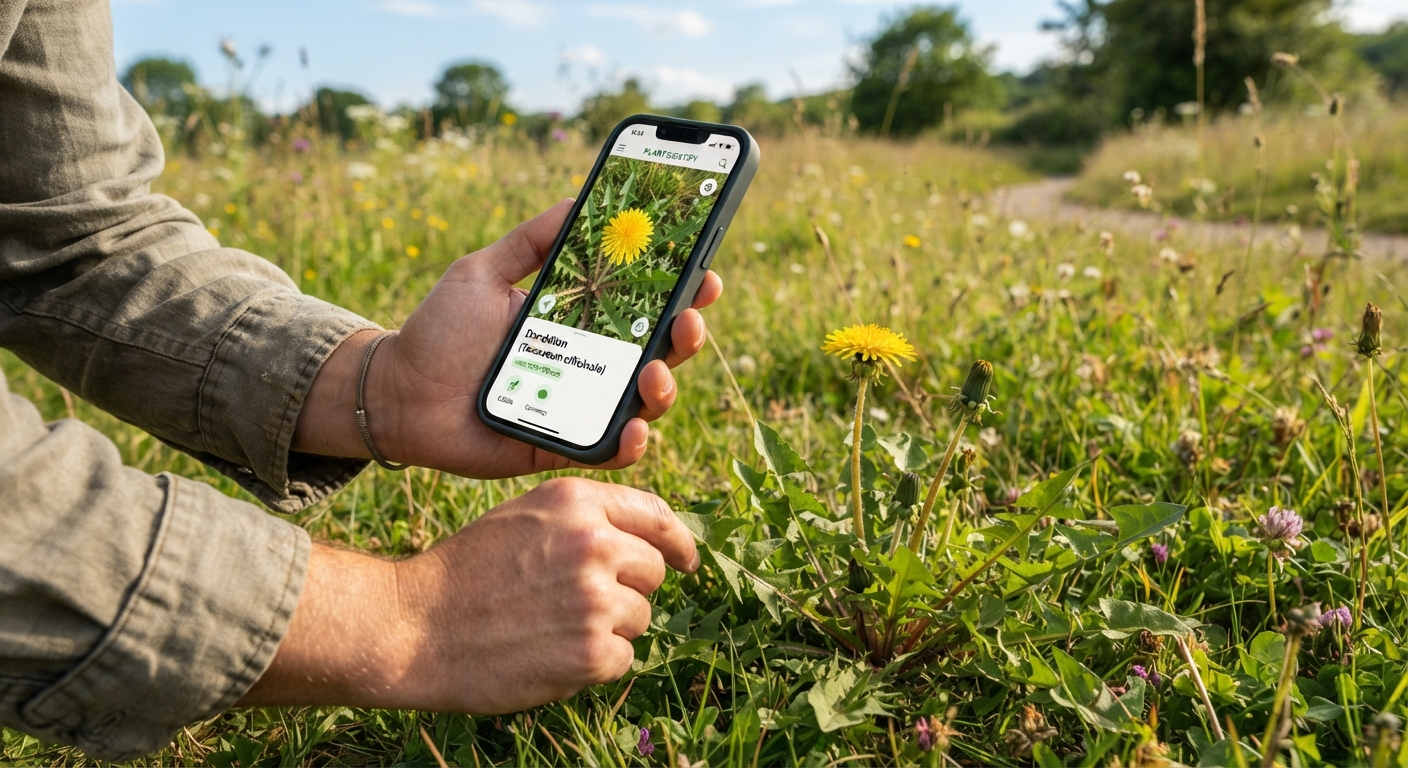
When I teach foraging workshops, I don’t start with plant names. I start with a framework — four visual markers that, checked in sequence, will identify any plant more reliably than any single field mark. This framework is portable, consistent, and doesn’t require you to remember what “glabrous” or “cordate” means.
| Visual Marker | What You’re Looking For | Why It’s Reliable | Field Example |
|---|---|---|---|
| 1. Growth Pattern | Is it a rosette (flat circle of leaves at ground level), upright stalk, vine, or spreading mat? | Growth pattern is the hardest trait for a plant to hide — it’s visible at any distance, in any season | Dandelion = rosette. Chickweed = spreading mat. Wild grape = climbing vine |
| 2. Leaf Architecture | Simple (single blade) or compound (multiple leaflets)? Opposite (leaves paired across stem) or alternate (staggered)? Toothed, lobed, or smooth margins? | Leaf arrangement is genetically fixed per species — it doesn’t change with light, water, or season | Mint family = opposite leaves on square stems. Rose family = alternate leaves with serrated edges |
| 3. Stem Signatures | Cross-section shape (round, square, triangular)? Hollow or solid? Smooth, hairy, or prickly? Any sap — and what color? | Stem traits are often the smoking gun that separates edible from toxic lookalikes | Wild carrot = hairy, solid green stem. Poison hemlock = smooth, hollow stem with purple blotches |
| 4. Reproductive Context | Flowers, fruits, or seed heads — color, arrangement, number of petals, fruit type (berry, capsule, pod) | Flowers are the most species-specific feature, but seasonal — always pair with at least one other marker | Dandelion = single yellow composite flower on hollow stalk. Wild garlic = white star-shaped flowers in loose cluster |
Run through these four markers in order every time you’re unsure about a plant. The beauty of this sequence is that markers 1-3 are always available — they don’t depend on the plant being in flower. By the time you get to marker 4, you’ve already narrowed your options down to a small handful.
Here’s a real scenario: you find a low-growing plant with small white flowers. Growth pattern check: it’s a spreading mat, not a rosette or upright stalk. Leaf check: opposite, oval, smooth margins. Stem check: single line of fine hairs on one side only. You’re now at 95% confidence for chickweed without even looking at the flowers — the hair line alone rules out every toxic lookalike. The flower check (five deeply split petals that look like ten) is just confirmation.
This four-step check takes about 30 seconds once you’ve practiced it, and it’s the most reliable identification shortcut I know.
How Seasons Transform the Plants You’re Looking At
Here’s something most guides gloss over: the same plant looks dramatically different across seasons. A spring dandelion isn’t the same visual experience as a late-summer dandelion. If your mental image only works for peak-season specimens, you’ll walk past perfectly good plants during the other nine months of the year.
This table shows what to expect from eight common edible plants through the four seasons:
| Plant | Spring (Mar-May) | Summer (Jun-Aug) | Fall (Sep-Nov) | Winter (Dec-Feb) |
|---|---|---|---|---|
| Dandelion | Bright yellow flowers, tender green rosette leaves close to ground, hollow leafless stalks | Fewer flowers, leaves larger and darker, abundant seed heads | Leaves darker, often reddish-tinged at edges, occasional late flowers | Basal rosette visible in snow-free areas, leaves smaller but structurally identical |
| Chickweed | Dense bright green mats, abundant tiny white flowers, stems thick and tender | Still present in shaded moist areas, thinner growth, fewer flowers, may yellow in heat | Fresh lush growth returns after summer dieback, flowers reappear in cool weather | Green and actively growing under snow cover or in mild-winter regions |
| Stinging Nettle | Young shoots 6-12 inches, bright green, tender, most desirable for eating | Tall and rangy (3-6 ft), darker green, flowering and going to seed, stems fibrous | Yellowing leaves, dying back from ground up, seed clusters visible | Dead stalks standing, still identifiable by opposite leaf scars and stinging hair remnants on stems |
| Purslane | Not yet emerged in most temperate regions | Thick reddish succulent stems spreading flat along ground, yellow flowers open only in full sun | Still growing vigorously until first hard frost kills it | Dead after frost; completely unavailable |
| Lamb’s Quarters | Seedlings with white-mealy undersides emerging, leaves tender and diamond-shaped | Full height (3-6 ft), flowering at top, powdery coating very visible on new growth | Going to seed, lower leaves yellowing and dropping, stems turning woody | Dead stalks standing through winter, seed heads visible and recognizable |
| Wild Garlic | Broad green leaves emerging directly from bulbs, white star-like flowers by late spring | Leaves yellowing and dying back, replaced by seed heads on tall stalks | Completely dormant underground — no visible above-ground parts | Dormant underground; bulbs harvestable if you marked the location in spring |
| Broadleaf Plantain | Young oval leaves with prominent parallel veins, low to ground, tender | Larger tougher leaves, tall slender green seed spikes developing from center | Green leaves persist, brown mature seed stalks visible | Basal rosette persists in mild climates, leaves smaller but vein pattern unchanged |
| Garlic Mustard | First-year plants: low rosettes of kidney-shaped leaves. Second-year: bolting stalks with triangular leaves | Second-year plants flowering (small white 4-petaled) and setting long thin seed pods | First-year rosettes still green and harvestable, second-year plants dying back | First-year rosettes stay green under snow, one of winter’s most reliable wild greens |
This table is worth printing and keeping in your foraging bag. The same plant you confidently harvested in May might look unrecognizable to you in September — but the identification markers haven’t changed. The leaf arrangement is the same. The stem signature is the same. You just need to know which version of the plant to expect. Experience foragers don’t memorize one “perfect” image per plant — they collect mental snapshots of every seasonal form.
8 Plants, 8 Visual Deep Dives
Now let’s apply the four-marker framework to eight of the most common edible wild plants — the ones you’re most likely to encounter within a mile of your home. Each entry focuses on what your eyes actually see, not what a botany textbook describes.
1. Dandelion (Taraxacum officinale)
Growth pattern: Flat basal rosette — all leaves emerge from a central point at ground level, typically 2-12 inches across. No stem with leaves ever.
Leaf architecture: Deeply toothed lobes that point backward toward the base of the plant, not the tip. This backward-pointing tooth direction is the quick-check nobody teaches you — it’s the feature that separates dandelion from every lookalike in seconds.
Stem signatures: Hollow flower stalk with absolutely no leaves on it, exudes white milky sap when broken. If a stalk has even one leaf branching off it, you’re not holding a dandelion. Period.
Reproductive context: Single bright yellow composite flower (made of dozens of tiny florets) per stalk, transforming into the familiar white puffball seed head.
The one-look ID: Hollow leafless stalk + single yellow flower. Nothing else in your lawn has both.
2. Stinging Nettle (Urtica dioica)
Growth pattern: Upright stalk, 2-6 feet tall, often growing in dense monoclonal patches because rhizomes spread underground.
Leaf architecture: Opposite leaves (paired across the stem at every node), heart-shaped at base, sharply serrated edges, surfaces covered in visible glass-like stinging hairs that catch the light.
Stem signatures: Distinctly angled (not perfectly square like mint but clearly not round), covered in stinging hairs, fibrous interior. The sting announces the ID before your eyes get a chance.
Reproductive context: Drooping strings of tiny green-beige flowers hanging from leaf axils in summer.
The one-look ID: Opposite serrated leaves + stinging sensation on contact. A nettle is the most honest plant in the woods — you’ll know it before you see it.
3. Purslane (Portulaca oleracea)
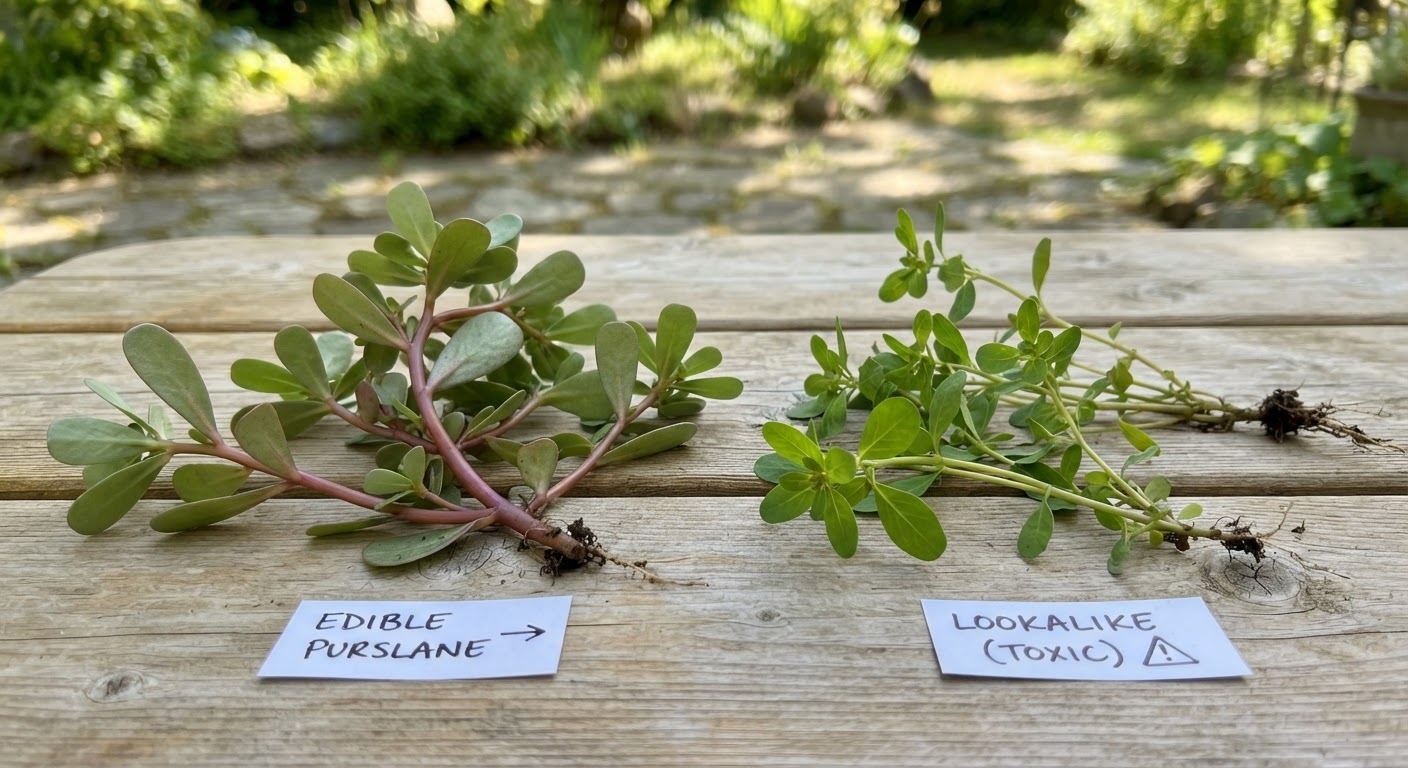
Growth pattern: Spreading prostrate mat — grows completely flat along the ground, never upright. Stems radiate outward from a central taproot like wheel spokes. This growth pattern alone eliminates most lookalikes.
Leaf architecture: Thick, fleshy, paddle-shaped leaves with completely smooth margins. Succulent texture — if you squeeze a leaf between your fingers, it feels plump and juicy, like a tiny aloe leaf. This succulent quality is unique among common sidewalk weeds.
Stem signatures: Thick, reddish-pink, smooth, and succulent. Breaks cleanly with a satisfying snap. Clear watery sap — never milky, never colored.
Reproductive context: Tiny yellow flowers (about 1/4 inch) that open only in direct sun and close when shaded. Small seed capsules that split neatly around the middle like a tiny lid.
The one-look ID: Red succulent stems + paddle-shaped fleshy leaves + flat ground-hugging growth. The sap test is definitive: clear sap = purslane. Milky white sap = spotted spurge (TOXIC — do not eat).
4. Lamb’s Quarters (Chenopodium album)
Growth pattern: Upright, branching, 1-6 feet tall with a somewhat pyramidal silhouette — wider at the base, tapering toward the top.
Leaf architecture: Alternate leaves, variable in shape depending on position. Lower leaves are diamond-shaped with wavy-toothed margins. Upper leaves are narrower and more lance-like. The one unmissable feature: a white, powdery, meal-like coating on the leaf undersides and young growing tips. Run your finger across the underside — it should feel waxy and slightly gritty, like very fine flour.
Stem signatures: Prominently ridged or grooved, often with pink or magenta vertical striping, especially at the leaf joints. Not hairy.
Reproductive context: Tiny green-white flowers in dense granular clusters at the top of the plant and in upper leaf axils. Produces staggering quantities of tiny black seeds — one plant can generate 75,000.
The one-look ID: Diamond-shaped leaves with white-mealy undersides on ridged pink-streaked stems. The powder coating is the diagnostic feature — nothing toxic shares it.
5. Chickweed (Stellaria media)
Growth pattern: Low, spreading tangled mat, rarely more than 4 inches tall in mowed areas but can form thick cushions in undisturbed spots.
Leaf architecture: Small (1/2 to 1 inch), oval with pointed tips, opposite arrangement, smooth margins, bright tender green with a slight gloss.
Stem signatures: Here’s the microscopically specific feature you need: a single line of fine white hairs runs along exactly one side of the stem. If you rotate the stem between your thumb and forefinger, the hairs appear, then disappear, then appear again as the line rotates into and out of view. This one feature is worth memorizing because no other common ground-level plant has it.
Reproductive context: Tiny white flowers (1/4 inch) with five petals so deeply split down the middle that they convincingly look like ten. Blooms whenever temperatures are above freezing.
The one-look ID: Single-line hair on stem + tiny white ten-petal-looking flowers + dense low mat. The hair test takes three seconds and is definitive.
6. Wild Garlic (Allium ursinum) / Field Garlic (Allium vineale)
Growth pattern: Individual plants or small loose clumps, 4-18 inches tall. Leaves emerge directly from underground bulbs — no above-ground stem in the traditional sense.
Leaf architecture: Long, strap-shaped leaves with parallel veins running the entire length, 1-2 inches wide, bright to dark green. Hold a leaf up to backlight and you’ll see the parallel veins clearly.
Stem signatures: The smell test is the most reliable single identification method in all of foraging: crush a leaf between your fingers and smell it. Garlic or onion scent = edible Allium species. No garlic/onion scent = DO NOT EAT. This could be lily of the valley, death camas, autumn crocus, or another toxic bulb plant. This rule has a 100% safety record when followed consistently.
Reproductive context: White star-shaped flowers in a loose rounded cluster on a single leafless stalk. Field garlic often produces clusters of tiny bulbs (bulbils) instead of or alongside flowers.
The one-look ID: The smell test overrides everything else. Garlic smell = safe. No garlic smell = walk away. No exceptions, no “but it looks exactly like,” no second-guessing.
7. Garlic Mustard (Alliaria petiolata)
Growth pattern: Two distinct forms depending on life stage. First-year plants form low rosettes of kidney-shaped leaves. Second-year plants send up upright stalks 1-4 feet tall with entirely different-looking triangular leaves.
Leaf architecture: First-year: round to kidney-shaped leaves with scalloped (crenate) margins, long leaf stalks. Second-year: sharply triangular leaves with coarsely toothed margins, shorter leaf stalks, decreasing in size as you go up the stem. Both stages emit a distinct garlic-onion smell when crushed — this is your primary ID anchor.
Stem signatures: Second-year stems are smooth and slightly ridged, often purplish at the base fading to green above.
Reproductive context: Second-year plants produce clusters of small white four-petaled flowers at the top, followed by long thin upright seed pods (siliques) that are so characteristic of mustards.
The one-look ID: Any plant that smells like garlic when crushed AND has four-petaled white flowers or mustard-family seed pods. The garlic smell plus mustard-family features is a unique combination.
8. Broadleaf Plantain (Plantago major)
Growth pattern: Flat basal rosette, leaves spreading outward from a central point at ground level, 4-12 inches across.
Leaf architecture: Broad, oval to spoon-shaped leaves with five to seven prominent parallel veins running the entire length from base to tip. These veins are so pronounced they look like celery strings embedded in the leaf surface. When you carefully tear a leaf in half crosswise, the stringy veins remain intact and hold the two halves together.
Stem signatures: Long, tough, fibrous leaf stalks (petioles) that are distinctly grooved on the upper surface — you can feel the groove by running your fingernail along the top.
Reproductive context: Tall, slender green flower spikes rising straight up from the center of the rosette, resembling miniature cattails on thin stems 4-12 inches tall. These persist through winter and are the plant’s most visible feature from a distance.
The one-look ID: Broad leaves with prominent parallel veins + rat-tail flower spikes. This combination is unique among lawn plants and has zero toxic lookalikes.
Digital Tools vs. Your Own Eyes: When to Trust Each
Smartphone plant identification apps — PictureThis, iNaturalist, Seek by iNaturalist, PlantNet — have gotten genuinely good. In controlled testing, the leading apps correctly identify common temperate plants over 90% of the time. That’s impressive enough to make them a legitimate tool in your foraging toolkit.
But apps have specific failure modes you need to understand:
Where apps consistently struggle:
- Very young seedlings that haven’t developed their species-distinctive leaves yet
- Plants that have been partially eaten by insects, damaged by weather, or are diseased
- Species with significant regional morphological variation
- Photographs taken in poor light, at odd angles, or with busy backgrounds
- Regionally uncommon species underrepresented in the app’s training data set
The right approach isn’t “trust the app” or “ignore the app.” It’s a cross-reference system:
A field sequence that catches mistakes:
- Take a clear, well-lit photo with your phone (multiple angles if possible)
- Run it through one plant ID app for a candidate species
- Before looking at the app’s answer, check two visual markers from the framework above with your own eyes
- If the app’s ID and your marker check agree, cross-reference with a second source — a field guide, a trusted website, or a second app
- Only harvest and eat if all sources align on the same species
This five-step sequence takes about 90 seconds once you’re practiced at it. Every step adds a layer of safety that catches different types of errors. The app might be wrong. Your eyes might be wrong. But the probability that the app AND your marker check AND a second source are all simultaneously wrong in the same direction is vanishingly small.
Pro Tips from Hundreds of Field Hours
These aren’t in most books because they’re the kind of thing you only learn by doing — the practical shortcuts that make real-world identification faster and more reliable:
The grocery store calibration trick. Before foraging season starts in earnest, buy dandelion greens, watercress, or purslane from a specialty market that carries them. Study the real, verified specimen in your own kitchen under good light. Take reference photographs from multiple angles with your phone. You now have a personal reference library of confirmed-edible specimens on a device you always carry. When you find a candidate in the field, compare it directly against your confirmed reference.
Photograph one plant through a full year. Pick a single common edible plant near your home — one you can visit regularly. Photograph it once a month for twelve months. Document the same plant, from the same angle, in the same location, through every season. By the end of the year, you’ll have built a personal seasonal reference that’s worth more than any published field guide because it shows what that species actually looks like in your specific climate, your specific soil, your specific light.
Carry a 10x jeweler’s loupe. A small handheld magnifier costs under ten dollars and weighs almost nothing. It reveals stem hairs, leaf textures, vein patterns, and tiny flower structures that are completely invisible to the naked eye. It makes the chickweed hair-line test effortless. It lets you examine leaf margin details that distinguish closely related species. This tool alone will improve your identification accuracy more than any book.
Learn plant communities, not just individual plants. Edible species don’t grow in isolation — they’re members of plant communities with predictable companion species. Lamb’s quarters reliably grows alongside pigweed, ragweed, and amaranth in disturbed soil. Wild garlic appears in the same damp woodland understory as bluebells and dog’s mercury. Once you recognize the community, you can often predict what you’ll find before you even look at individual plants.
Apply the 24-hour cold rule. Uncertain about an identification at all? Take clear photos, collect a small sample, and go home. Cross-reference against multiple sources — guidebooks, reputable websites, experienced forager forums. Sleep on it. Return tomorrow if and only if you’re confident. The plants will still be there. Rushing an identification you’re not sure about is the most common cause of foraging-related illness.
Rapid-Fire Q&A
Can I eat dandelions from my lawn if I haven’t sprayed anything?
Yes — but wash them thoroughly and pick from areas at least 15 feet from any road, driveway, or neighbor’s property line where chemical drift is possible.
What’s the single most valuable visual marker to learn first?
Leaf arrangement — opposite vs. alternate. One glance eliminates roughly half of all possible plant species and this trait is visible year-round regardless of flowering stage or season.
Are plant ID apps safe to use for foraging?
Safe as a starting point, never as a final answer. Always verify at least two physical markers yourself before eating anything. An app suggesting “dandelion” doesn’t matter if the plant in your hand has a leafy stem — the plant’s physical traits always override the app.
Which edible plant has the most dangerous lookalike?
Wild carrot (Queen Anne’s lace) vs. poison hemlock — both have white umbrella-shaped flower clusters and fern-like leaves. The stem tells them apart: hairy and solid green = wild carrot; smooth with purple splotches = poison hemlock. This is the one pair where getting it wrong can be fatal.
How can I tell if a plant is too old to harvest?
If leaves are yellowing, tough, or you can’t easily tear one by hand, pass. If flowers have gone to seed, the plant’s energy has shifted and the leaves will be bitter. Young, tender, bright green — those three words should guide every harvest decision.
I’m colorblind — can I still use visual markers?
Absolutely. Focus on markers that don’t involve color: leaf arrangement (opposite/alternate), stem texture (hairy/smooth/grooved), leaf margin type (toothed/smooth/lobed), and growth pattern (rosette/upright/mat/vine). The vast majority of plant identification markers are structural and textural, not color-dependent.
Is winter foraging actually productive?
Yes — several species (chickweed, hairy bittercress, garlic mustard rosettes, dandelion rosettes, chickweed) remain green and harvestable through winter in mild to moderate climates. Cold temperatures convert plant starches to sugars, so winter-harvested greens are often noticeably sweeter than their summer counterparts.
Should wild plants be washed differently than grocery produce?
Yes. A vinegar-water soak (1 part white vinegar to 3 parts water) for 5-10 minutes followed by a thorough fresh water rinse removes soil, insects, and surface contaminants more effectively than water alone. A salad spinner finishes the job. Skip the vinegar for delicate greens like chickweed — plain cold water and gentle handling works better.
How many plants should I learn at once?
One. Seriously — pick one plant from this guide that you’ve seen in your neighborhood, and spend a full month with just that plant. Learn its growth pattern, its seasonal forms, its lookalikes, and its taste at different stages. When you can spot it from a moving car, add a second plant.
Your Move: One Plant, One Month, Total Confidence
Foraging guides are structurally overwhelming. Ten plants, twenty plants, forty plants — all in one sitting, as if anyone retains that much information. Nobody does, and nobody needs to.
The foragers I know who are genuinely good at this didn’t get there by memorizing lists. They got there by developing deep, visual, almost physical relationships with individual species — one at a time, over months and years, until each plant became as recognizable as a friend’s face in a crowd.
Pick one plant from this guide. The one growing in your yard. The one you pass on your walk to work. Learn it cold. Every visual marker. Every seasonal form. Every possible confusion. Taste it young and old, raw and cooked. Photograph it. Watch it change.
When you can identify it from a moving car at 30 miles per hour, pick a second plant.
After a year, you’ll have a dozen plants you know by heart — and that’s substantially more than enough to fill your plate, reduce your grocery bill, and impress anyone who thought foraging meant eating random weeds and hoping for the best.
The plants aren’t going anywhere. Take your time with them. That’s the whole secret.