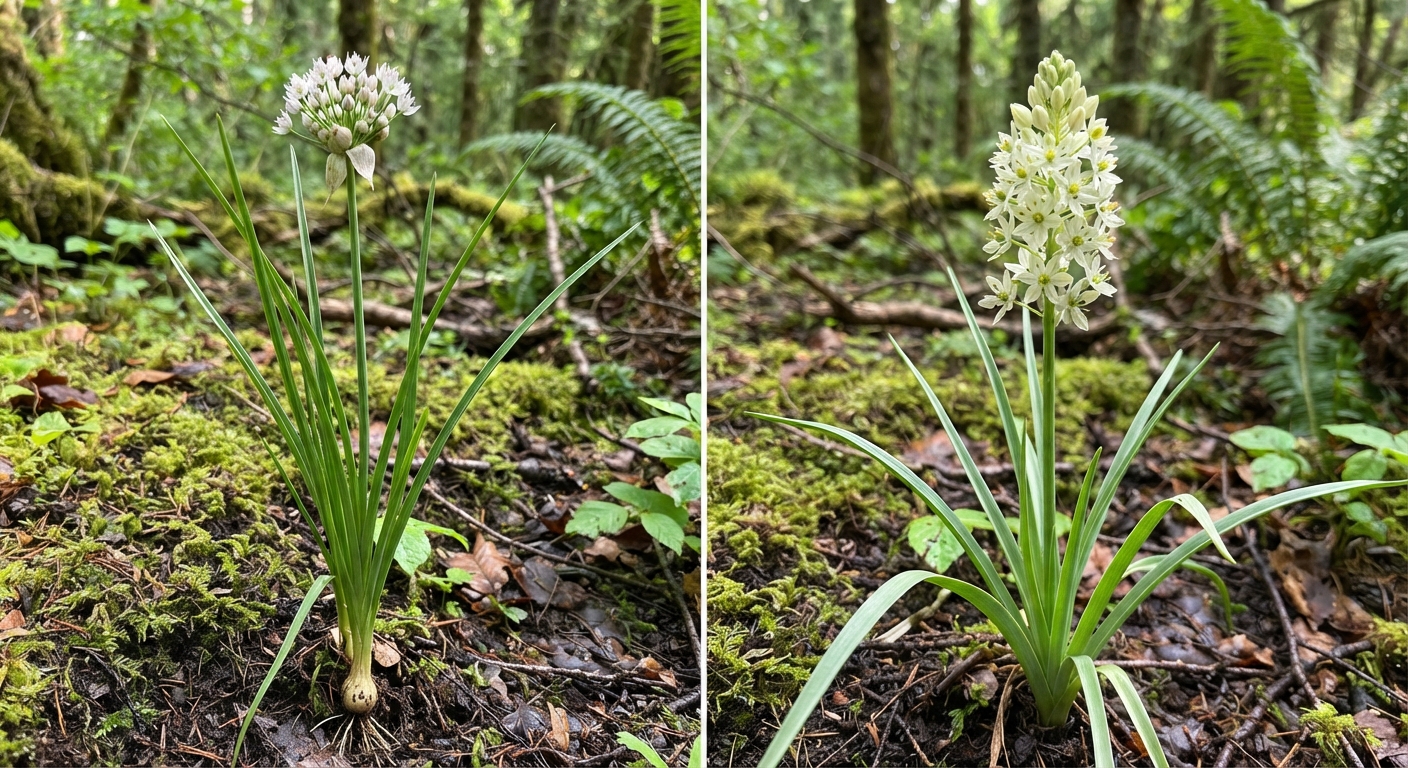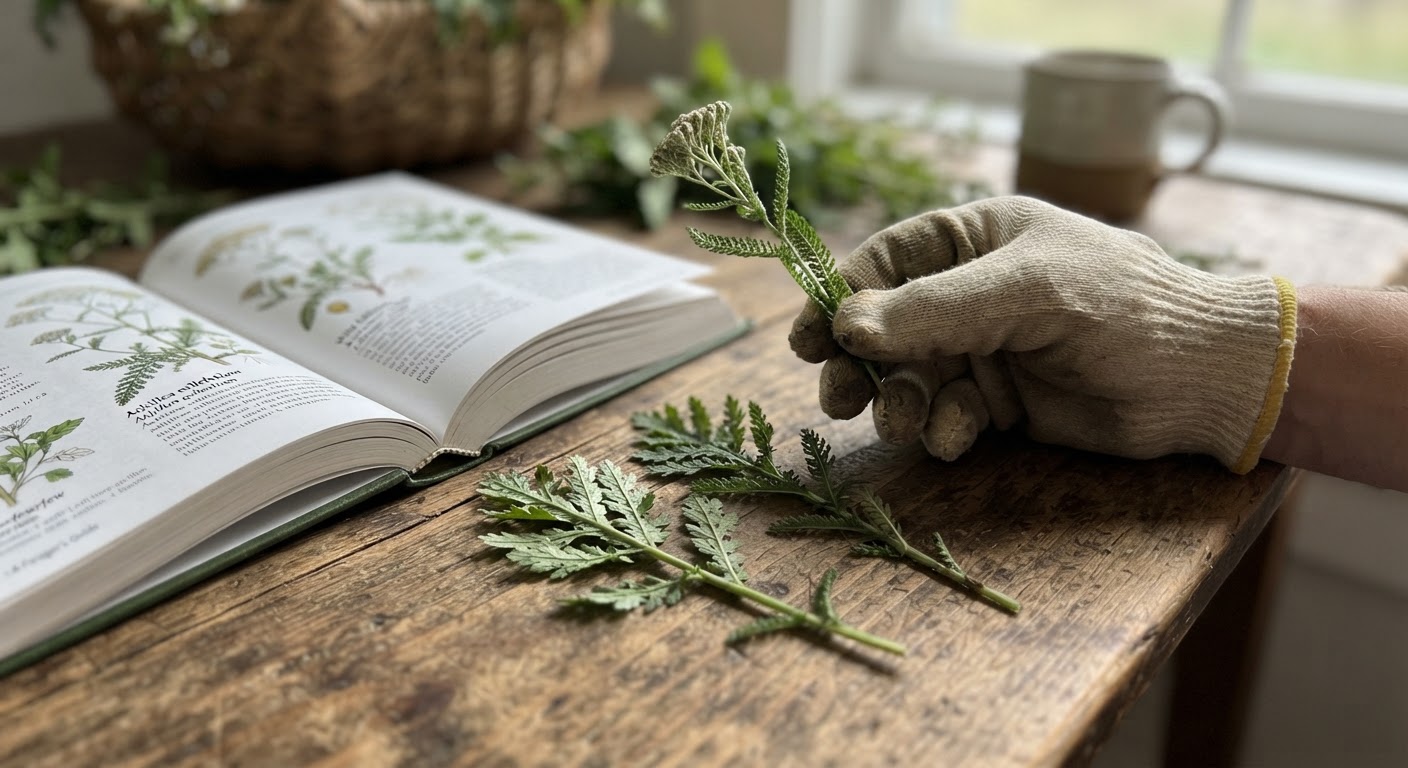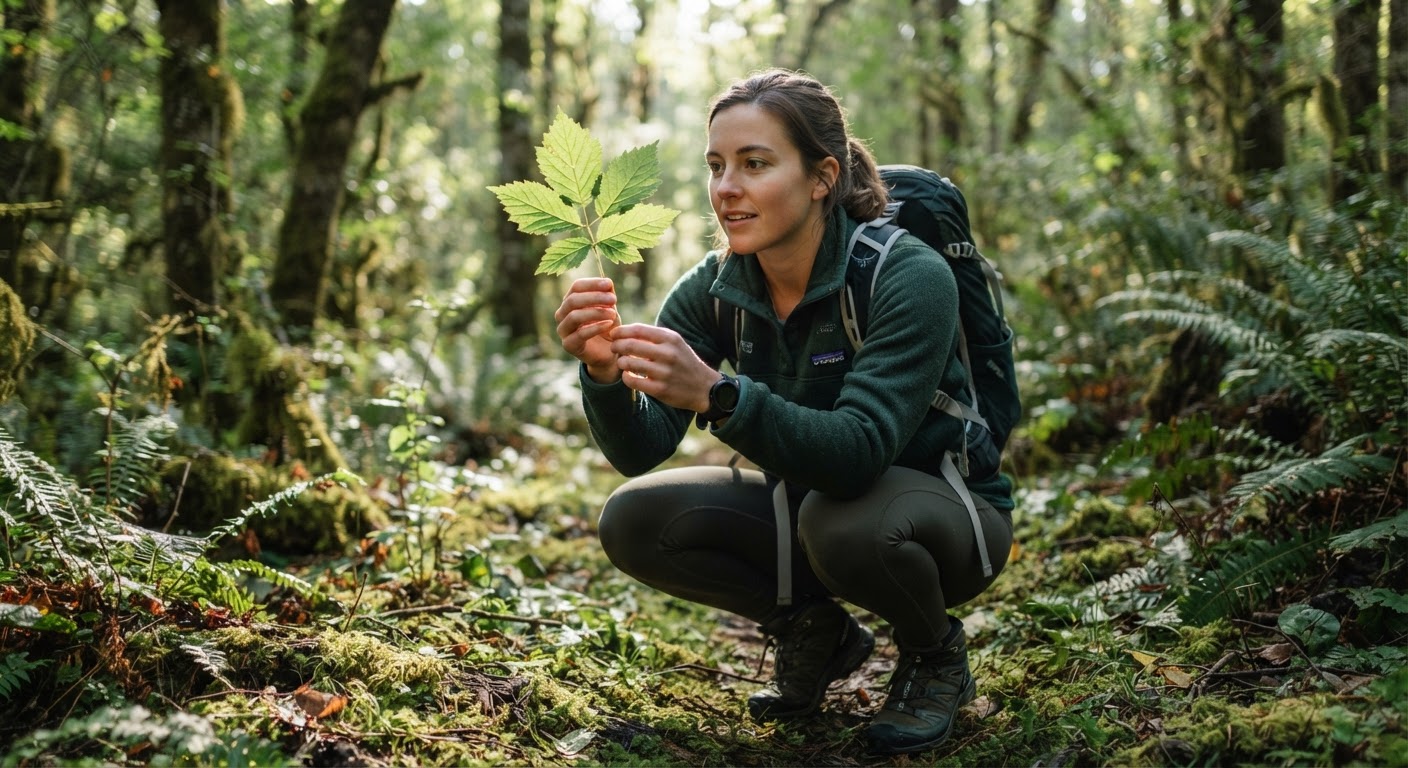
Somebody, somewhere, is going to read one article about the universal edibility test and walk into the woods convinced they now have a superpower. Eight tidy stages, a couple of waiting periods, and — abracadabra — every plant in the forest becomes food. I’ve seen that exact optimism in comment sections under survival videos, and it worries me every time.
Here’s what the test actually is: a last-resort screening tool designed for people who have already run out of every other option. It is not a permission slip. It is not a field guide. It will not tell you the name of the plant in your hand, and it will not save you from the species that kill slowly or the ones that kill on contact.
So let’s do this properly. Not the copy-paste list of steps you’ve seen a hundred times, but the why underneath each one — the plant chemistry it’s exploiting, the failure modes it hides, and the honest line between what it can and can’t do for you. If you understand the mechanics, you’ll use it more skillfully and, more importantly, you’ll know when to walk away from it entirely.
What the Universal Edibility Test Actually Is
The method most people call “the universal edibility test” traces back to military survival doctrine — the U.S. Army Survival Manual (FM 21-76) and its Air Force cousins. That provenance matters, because it tells you the context it was designed for: a downed pilot or an isolated soldier with no food, no guide, no signal, and no rescue timeline. In that world, the math is grim but simple. Starvation is a certainty; an unknown plant is a gamble. The test is how you take the smallest possible bite of that gamble.
Read the original manuals closely and you’ll notice the framing everyone skips. It’s introduced as a method for extreme emergency situations, and the very first advice is to avoid using it if you have any other food source. The test was never meant to be a hobbyist’s tool for expanding your foraging menu. It was designed to answer one narrow question in one narrow situation: If I eat this, will it stop me from surviving today?
That distinction is the whole ballgame. A forager with a full pantry and a field guide should almost never rely on it. A stranded hiker at hour 60 with no other option might. Know which one you are before you start.
The Chemistry Underneath: Why the Test Works At All
To trust the protocol, you need to understand what it’s actually testing for. Plant toxins aren’t a single thing — they’re a grab-bag of chemical families with wildly different behaviors. Some announce themselves immediately. Some wait hours. Some build up damage you’ll never feel in a single meal. The universal edibility test was reverse-engineered around the fast, obvious ones, which is exactly why it has blind spots.
| Toxin family | Common examples | Typical onset | Does the test catch it? |
|---|---|---|---|
| Irritant sap / calcium oxalate | Wild arum, dumb cane, skunk cabbage | Seconds to minutes (burning mouth, throat swelling) | Yes — contact stage reveals it fast |
| Alkaloids (bitter) | Many nightshades, some lupines | Minutes to a few hours (bitterness, nausea, dizziness) | Often — bitterness and small-dose nausea show up |
| Cyanogenic glycosides | Wild cherry bark, some clovers | Minutes (dizziness, headache, confusion) | Sometimes — depends on dose and chewing |
| Cardiac glycosides | Foxglove, lily of the valley | 30 min to several hours (nausea, irregular pulse) | Poorly — small doses may feel fine, then hit hard |
| Protein toxins (e.g. ricin-type) | Castor bean, some seeds | Hours to a day | No — delays far exceed the test window |
| Slow / cumulative toxins | Bracken fern, some cycads | Days, weeks, years | No — single-dose testing can’t detect them |
| Contact / photo-toxins | Giant hogweed, poison ivy | Minutes to hours on skin | No — the test is about eating, not touching |
Look at the last three rows. That’s the part the tidy eight-step graphics never show you. The test is essentially a fast-reaction filter. It catches plants that hurt you quickly and loudly. It is not a toxicity screen in the medical sense, and it never promised to be.
The Complete Protocol, Stage by Stage
Now the protocol itself. What follows assumes you’ve already done the non-negotiable prep work and you’re genuinely out of alternatives. The golden rule of the whole exercise: test one plant, one part at a time. Never mix parts, never mix species. If you react, you need to know exactly which thing caused it.
Before You Touch Anything
- Pick a plant that’s abundant — you don’t want to risk a reaction for a single bite’s worth of food.
- Confirm it isn’t in an obviously dangerous category: no milky sap, no umbrella-shaped flower heads (the carrot/hemlock family), no bulbs with strong onion-garlic smell confusion, no shiny berries you can’t rule out.
- Make sure you have eight uninterrupted hours ahead of you. The waiting periods are the test. Skipping them skips the whole point.
- Have water on hand and, if you can possibly manage it, a way to get help. This is the one “just in case” that’s worth any discomfort.
Stage 1 — Contact Test
| Stage | What you do | Wait time |
|---|---|---|
| 1. Skin contact | Crush a small piece and rub the sap on a sensitive patch of skin (inner wrist, inner elbow) | 8 hours, then re-check |
| 2. Lip test | Touch a tiny piece to the outer lip, do not chew | 15 minutes |
| 3. Tongue test | Place a small piece on the tongue, do not swallow | 15 minutes |
| 4. Chew test | Chew one small piece, hold it, then spit it out (no swallowing) | 15 minutes |
| 5. Swallow test | Swallow a single small piece | 8 hours |
| 6. Bite test | Eat a small handful of the same part | 8 hours |
| 7. Preparation | Cook/prepare as you intend to eat it, then repeat a small test | 8 hours |
| 8. Increase | Only now, slowly increase quantity | ongoing |
Begin by crushing a tiny piece and rubbing the juice on a sensitive area of skin — the inside of your wrist, the crook of your elbow. This single stage eliminates the sap-burners and the contact poisons before they ever reach your mouth. Anything that reddens, itches, burns, or blisters in those eight hours is a hard no. Don’t “wait it out.”
Stage 2–4 — Lip, Tongue, Chew
Touch a fragment to the outside of your lip first. Nothing? Place it on your tongue. Nothing? Chew a small piece and hold it in your mouth, then spit it out. The entire point of these three stages is to let your most sensitive tissue detect irritants before any of the plant reaches your stomach. Tongue and inner-lip tissue are absurdly good at catching burning compounds.
The signal to stop is any sensation beyond the taste you’d expect: burning, tingling, numbness, soapiness, a scratchy throat, an odd tightening. Spit and rinse.
Stage 5–7 — Swallow, Bite, Prepare
Here’s where the test gets real, and where impatience gets people hurt. Swallow a single small piece and wait a full eight hours. Watch for nausea, stomach cramping, headache, dizziness, sweating, or a change in your heartbeat. If you feel normal, eat a small handful of the same part and wait another eight hours. Finally, prepare the plant the exact way you plan to cook it — because some plants are toxic raw but safe cooked, and you want to test the real thing, not a version you’ll never eat.
Only after all of that do you slowly increase quantity. And even then, “increase” means modest. Some toxins are cumulative, and a plant that’s fine at one bite isn’t automatically fine at a bowlful.
Reading the Results: What Each Reaction Means
A reaction isn’t just “bad” or “fine.” Different symptoms point at different toxin families and imply different levels of danger.
| What you feel | What it likely means | what to do |
|---|---|---|
| Burning, swelling, blistering on skin | Irritant sap / oxalate crystals | Reject the plant. Wash the area. Do not taste. |
| Bitter, soapy, or numbing taste | Alkaloids or saponins | Spit immediately, rinse thoroughly, reject. |
| Lip/tongue tingling or numbness | Neuroactive or irritant compounds | Spit and reject — tingling is never a green light. |
| Nausea or stomach cramps within hours | Alkaloids, glycosides, or GI irritants | Stop testing, hydrate, monitor. Do not continue. |
| Dizziness, confusion, blurred vision | Cyanogenic or neurotoxic compounds | Treat as an emergency. Seek help. |
| Slow pulse, palpitations, weakness | Cardiac glycosides | Treat as an emergency. Seek help. |
A useful mental model: the faster and more local the reaction, the more likely the test caught it in time. The slower and more systemic the reaction, the more dangerous you probably already are. Tingling on your lip is your body doing you a favor in real time. A heart-rhythm change eight hours later is the test failing to warn you until it’s too late.
The Five Things the Test Can’t Save You From
This is the section I most wish every survival graphic included.
- Slow-acting and cumulative toxins. Bracken fern, some cycads, and various seeds cause harm over repeated exposure, not a single bite. One test meal feels perfectly fine. That tells you nothing about what happens after a week.
- Delayed protein toxins. Some of the nastiest plant poisons don’t produce symptoms for many hours — sometimes a full day. By the time you feel them, the dose is long since absorbed, and no waiting period in the protocol would have caught it in a useful window.
- Allergic and idiosyncratic reactions. The test tells you how a generic human body responds. If you have a specific allergy, the plant that passed every stage for someone else can put you in the hospital.
- Lookalikes you never questioned. The test doesn’t identify anything. If you picked hemlock thinking it was wild carrot, you’ll be “testing” a lethal plant — and hemlock’s toxins don’t respect the timetable.
- Contamination, not toxicity. A perfectly edible plant growing in herbicide runoff or by a busy road isn’t made safe by any edibility test. This is an environmental problem the protocol has no answer for.
Pro Tips From the Field
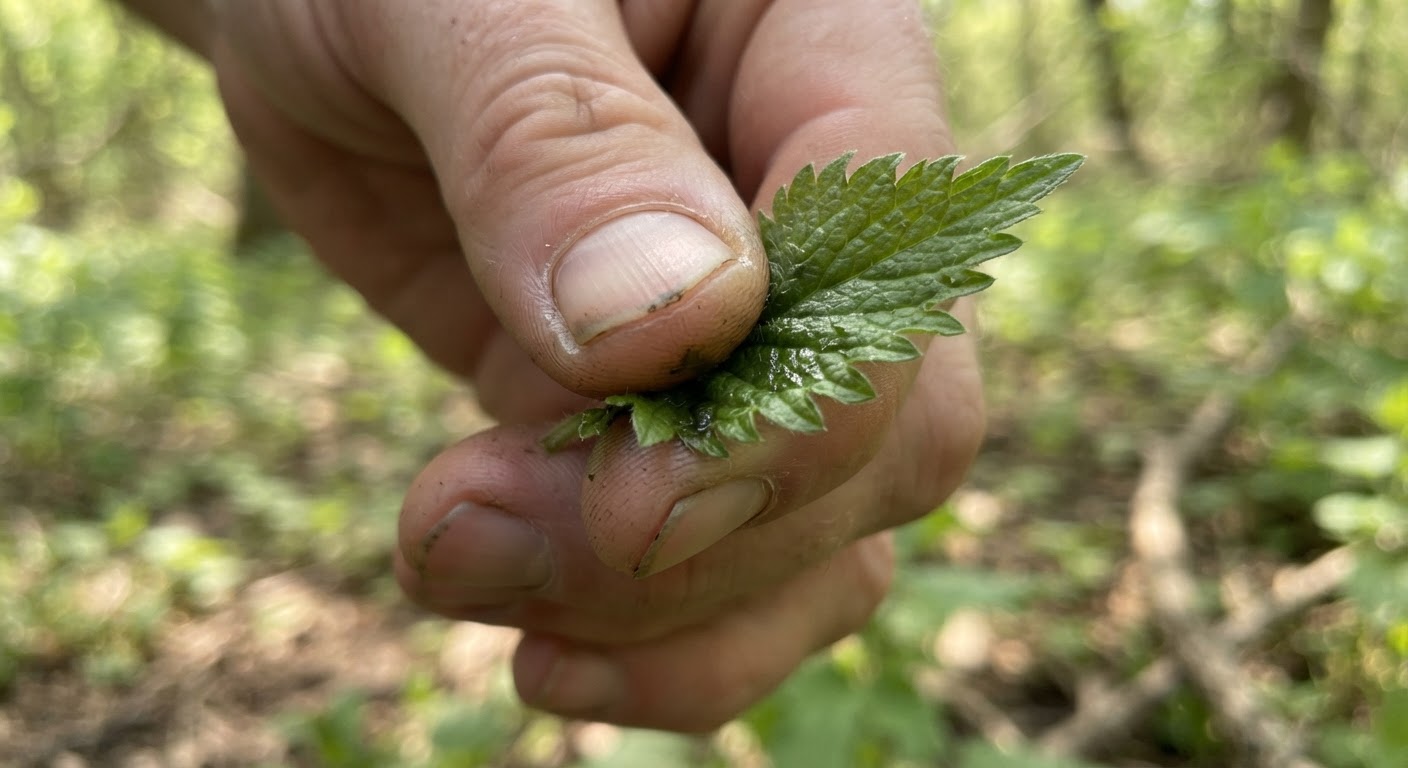
- Use your nose early. Aroma is free information. Crush a leaf and smell it before it ever touches skin. Almond-like or bitter-almond scents can hint at cyanogenic compounds; a strong medicinal or acrid smell is your gut telling you “no.”
- Test the part you’ll eat, not the whole plant. Leaves, stems, roots, and fruit can have completely different chemistry on the same species. A safe berry on a toxic plant is not a contradiction — it’s common.
- Repeat the test across seasons only if you must. Chemistry shifts with age and season. A plant that passed in spring is not automatically cleared in fall.
- Log what you learn. Date, location, plant appearance, and outcome. Your notes become a personal field guide worth more than any app store download.
- Never test when you’re already unwell. If your baseline is a headache or a bad stomach, you’ve destroyed your ability to interpret results. Rest first.
- Two plants, one day — no. Test one species per eight-to-twenty-four-hour window. Overlapping tests make every reaction unattributable.
When to Skip the Test Entirely
Honestly? Most of the time. Skip it when:
- You have any other food. The test is a last resort, not a first experiment.
- The plant falls into a family you know is dangerous — carrot/parsley (hemlock), nightshade, spurge, or the milkweeds you can’t identify to species.
- You only have a partial identification. “Probably safe” is not a category. The test isn’t a substitute for knowing the plant; it’s a backstop for when you truly can’t.
- You’re with children, or anyone whose reaction you couldn’t manage in the field.
- You’d be testing alone, far from help, with no way to call for it.
FAQ
Is the universal edibility test guaranteed to keep me safe? No — and any source that says otherwise is wrong. It’s a fast-reaction filter, not a toxicity screen. It reliably catches acute, immediate poisons. It does not catch cumulative toxins, delayed protein poisons, or allergies.
How long does the full test take? Realistically, 24 hours or more. The protocol stacks multiple eight-hour waiting periods. If you can’t commit eight uninterrupted hours to a single stage, you can’t run the test honestly.
Can I test a plant that has milky sap? Treat milky sap as a red flag and skip it. Milky sap appears across several genuinely dangerous families, and the risk isn’t worth the tiny chance you’ve stumbled on a safe exception.
What if I feel fine but the plant tasted awful? Bitterness and soapiness are signals, not preferences. A plant that tastes sharply bitter or soapy is telling you something about its chemistry. Spit it out and move on — edibility isn’t about enduring bad taste.
Does cooking make an unknown plant safe? Sometimes (many oxalate-heavy plants), but not reliably. Some toxins survive cooking entirely, and you won’t know which kind you have. Use the prepared-form stage of the test for the food you intend to actually eat.
Is it okay to test fruit versus leaves separately? Not just okay — necessary. Different plant parts carry different compounds. A single test on one part tells you nothing about the others.
The Honest Bottom Line
The universal edibility test earns its place in survival doctrine because, in a genuine no-other-option scenario, a controlled gamble beats an uncontrolled one. But it’s a backstop, not a strategy. Understanding the chemistry, respecting the waiting periods, and accepting the blind spots transforms it from a folk trick into a tool you’d actually trust your life to — sparingly.
And here’s the thing I keep coming back to: the test exists because people are desperate to know what’s edible, and knowing is the hard part. When your stomach is growling deep in the woods and your signal has dropped to zero, the calmest move isn’t a nine-stage experiment on your own lips — it’s confirming what you’re looking at before anything goes near your mouth. That’s exactly why I built Edible Plant Identifier. Point your camera at a leaf and it flags whether it matches known edibles, with clear identification notes and lookalike warnings you can weigh against your own eyes. It works fully offline, so it’s there when the trail isn’t — and it turns a gamble into an informed decision. It’s not a substitute for real expertise or for knowing your plants, but it’s a far better first move than trusting a single bite.