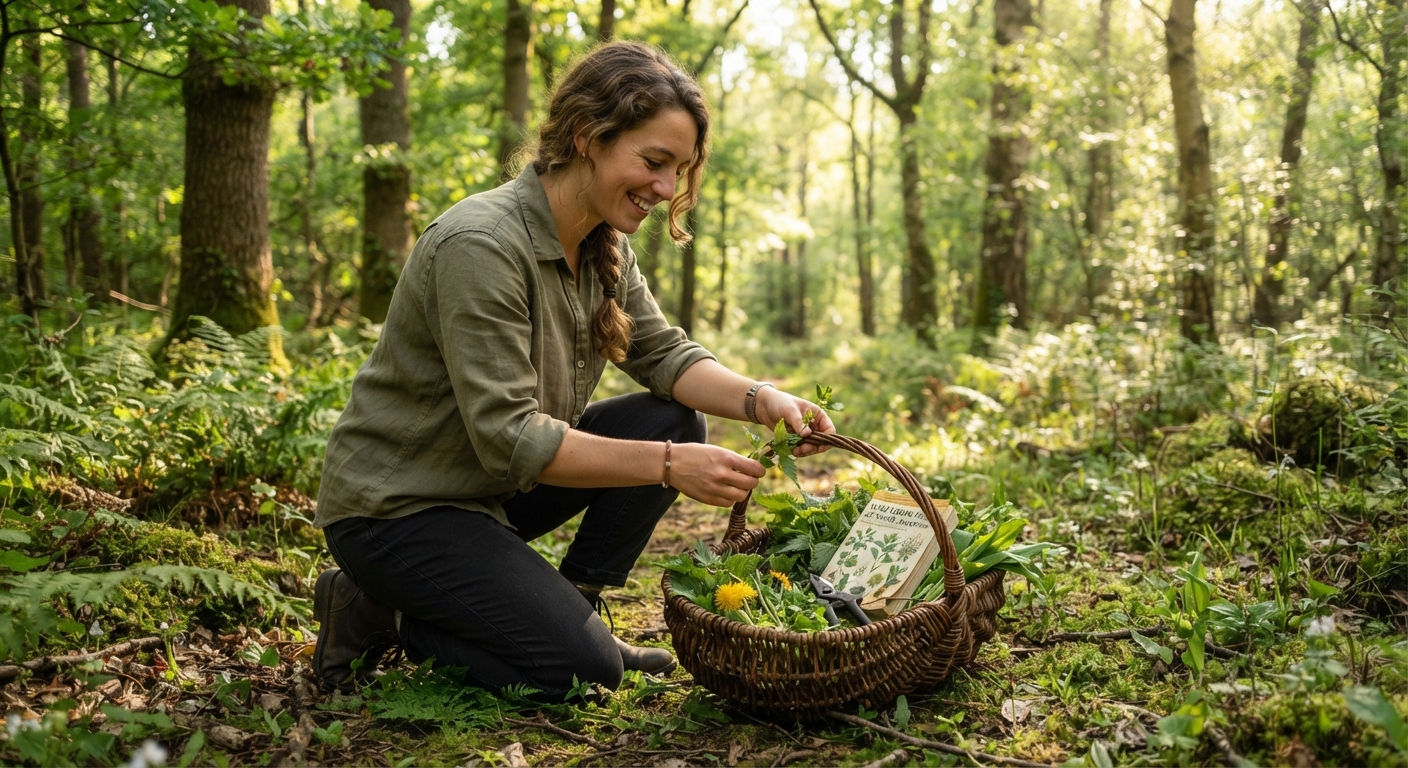
My first foraging teacher had one rule, and she repeated it every single time we stepped into the woods: “If you can’t tell me three ways this plant differs from its toxic twin, don’t even touch it.”
I was 24, impatient, and convinced I could spot an edible from a poisonous one just by looking at pictures in a book. Three weeks later, I nearly put water hemlock in my salad — mistaking it for wild celery. The stems looked similar from above. The leaves had the same general shape. The only difference? Water hemlock stems have purple streaks and a chambered root, while wild celery smells distinctly like, well, celery.
That was 12 years ago. That mistake — the one I didn’t actually make, because my teacher caught it — taught me something no book ever could: the margin between a delicious wild meal and a fatal mistake is sometimes thinner than a millimeter.
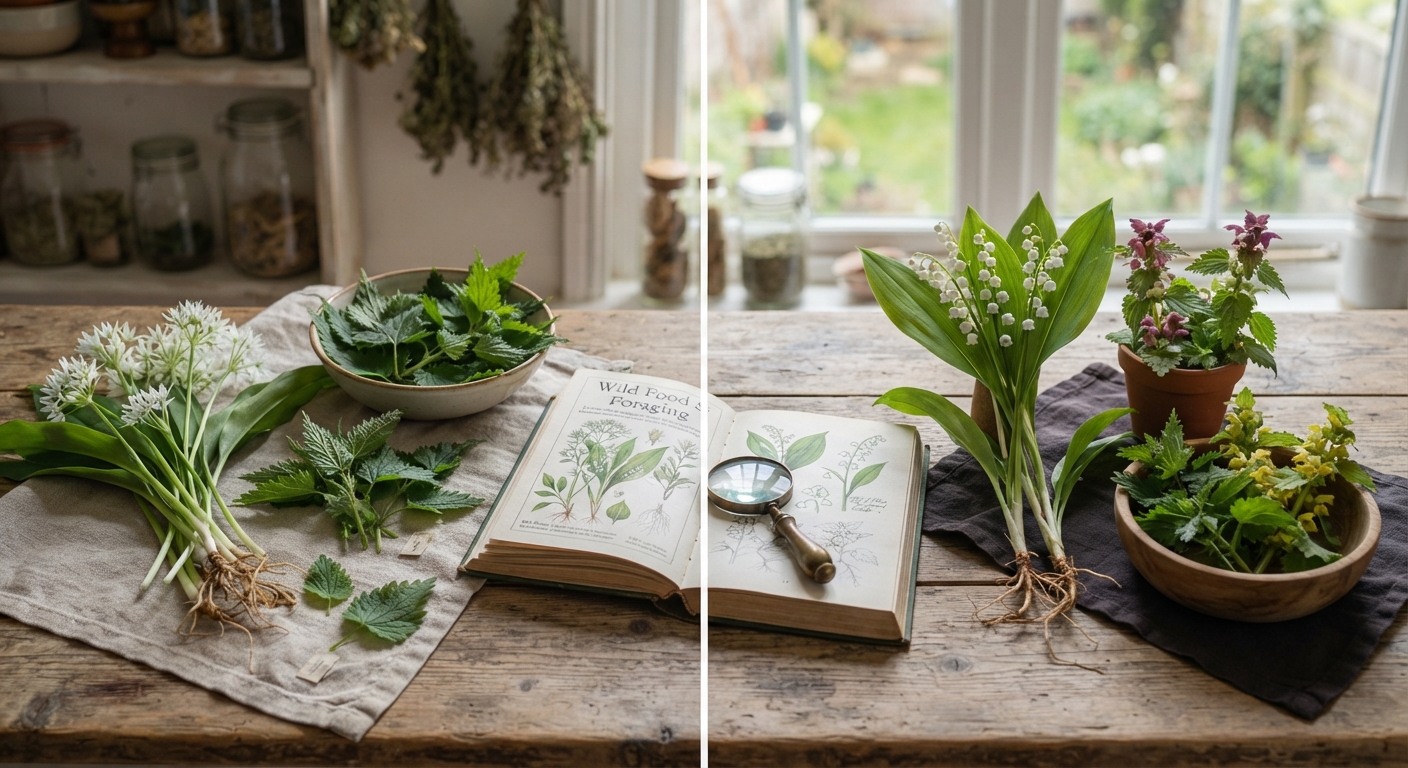
This guide is everything I wish someone had handed me before my first solo forage. It’s not just a list of look-alike pairs. It’s a framework for thinking about plant identification that makes you safer at every skill level.
The Numbers That Should Get Your Attention
Let’s get the scary part out of the way first, because it matters.
Each year in the United States, poison control centers receive roughly 50,000 calls related to plant exposures. The vast majority involve children and result in mild symptoms. But between 2010 and 2020, the American Association of Poison Control Centers recorded over 200,000 plant-related poisoning cases requiring medical treatment across all age groups. While fatalities are rare — averaging fewer than 5 per year in North America — the cases that do turn fatal follow a tragically predictable pattern: an adult forager confidently misidentifying a toxic plant as an edible one.
The problem isn’t that poisonous plants are mysterious or rare. The problem is that they often look exactly like something safe. Evolution didn’t design toxicity to be obvious. It designed plants to survive, and looking like a harmless cousin is a surprisingly effective strategy.
This is why you can’t rely on a single identification feature. You need a system.
The Universal Identification Rule: Why One Feature Is Never Enough
Every experienced forager I know follows some version of what botanists call polythetic identification: using multiple, independent characteristics that must all match before you harvest.
The single biggest mistake beginners make is what I call “one-feature confidence.” They see a plant with white umbrella-shaped flower clusters and think “wild carrot.” The problem? At least six common plants in North America share that flower structure — and two of them will kill you.
The Four-Point Safety Check
Before you harvest any wild plant:
1. Confirm the flower structure. Count petals, note arrangement (single flowers, clusters, umbels), observe color variations within the species. Many toxic plants hide behind near-identical blossoms.
2. Check the stem. Is it hairy or smooth? Hollow or solid? Are there purple or red spots? Does it have ridges or grooves? Stem characteristics are among the most reliable identifiers because they persist even when flowers and fruits are absent.
3. Examine the leaves. Look at arrangement (opposite, alternate, whorled), shape (entire, lobed, compound), margin (smooth, serrated, wavy), and texture. Take photos of both the upper and lower surfaces.
4. Note the habitat and season. Where is it growing? Sunny meadow or deep shade? Wet soil or dry? What time of year is it fruiting? Context matters enormously — poison hemlock favors disturbed roadsides, while wild carrot prefers open fields.
If all four points match your field guide description perfectly, you move to the smell and sap tests. If anything feels off — even slightly — walk away. The woods will still be there tomorrow.
The Most Dangerous Look-Alike Pairs in North America
These are the pairs that send people to hospitals. I’ve organized them from “you’ll get very sick” to “you might not survive.”
Wild Carrot (Queen Anne’s Lace) vs. Poison Hemlock
| Feature | Wild Carrot (Edible) | Poison Hemlock (Deadly) |
|---|---|---|
| Stem | Hairy, solid green | Smooth, hollow, purple-red blotches |
| Height | 1-3 feet | 3-8 feet |
| Root smell | Carrot-like | Musty, unpleasant |
| Bracts | 3-forked bracts under flower | No bracts |
| Leaf texture | Finely divided, slightly hairy | Lacy, smooth, fern-like |
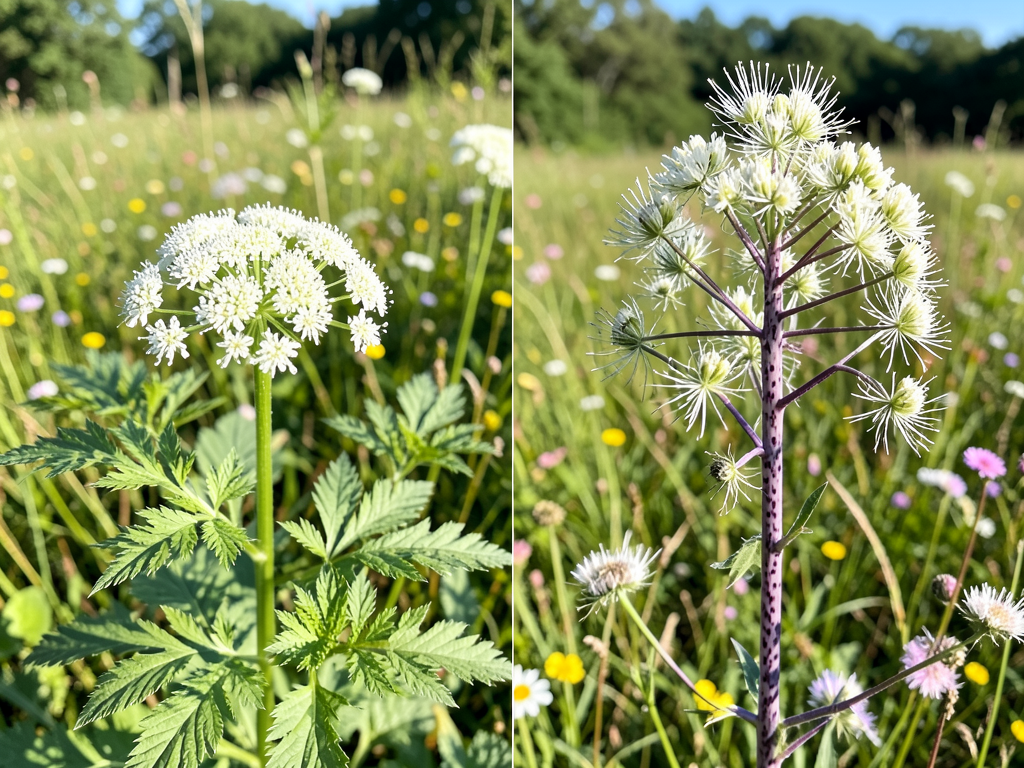
The definitive test: Wild carrot stems are hairy. Poison hemlock stems are smooth with purple blotches. Run your finger up the stem — if it’s hairy, you’re holding Queen Anne’s lace. If it’s smooth with reddish-purple spots, you’re holding the plant that killed Socrates. Put it down carefully, wash your hands, and don’t touch your face.
Why this matters: Hemlock contains coniine, a neurotoxin that causes ascending paralysis. Death typically occurs from respiratory failure within 2-3 hours of a severe dose. There is no antidote — treatment is supportive care and ventilation.
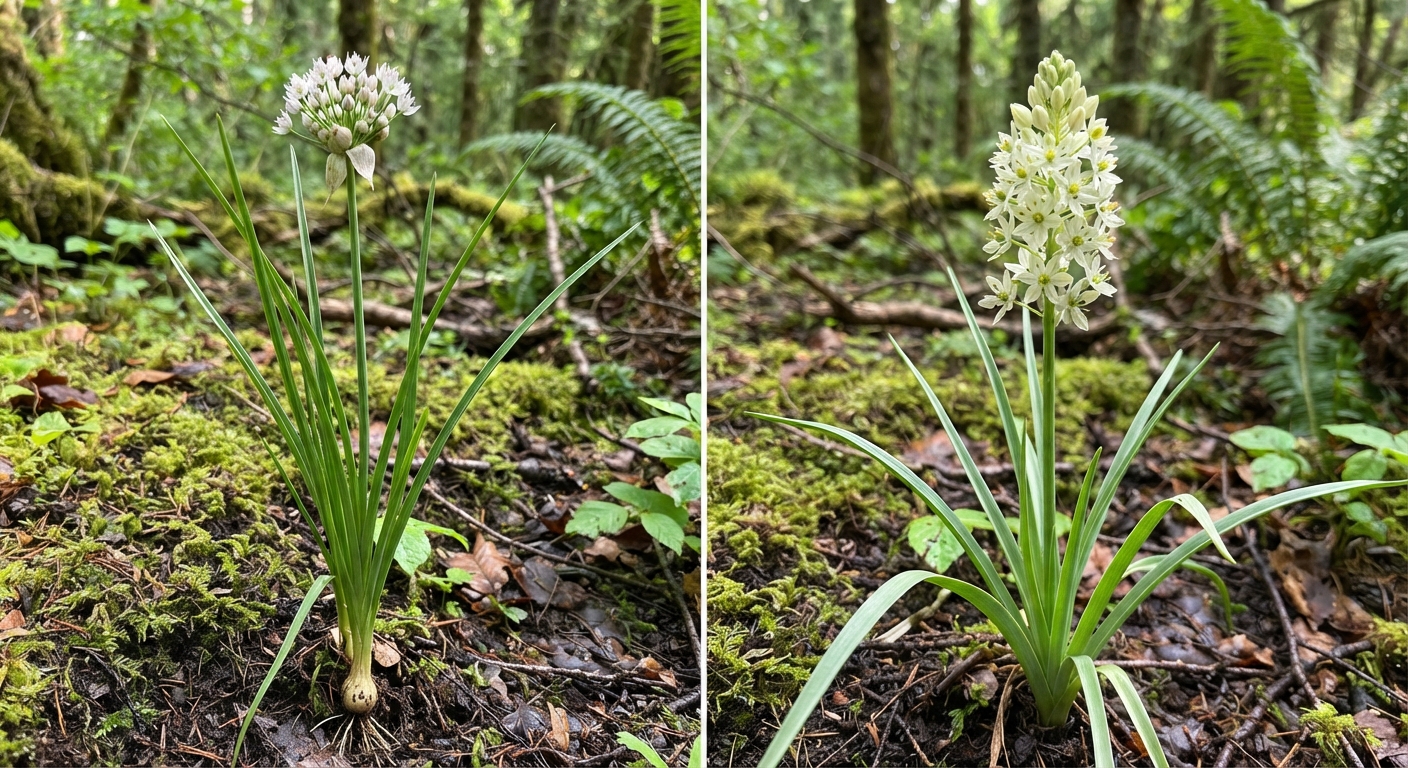
Wild Garlic vs. Death Camas
| Feature | Wild Garlic (Edible) | Death Camas (Deadly) |
|---|---|---|
| Smell | Strong garlic/onion | None — zero odor |
| Bulb | Layered, papery skin | Single solid bulb, no layers |
| Flowers | 6 petals, pink to white | 6 petals, cream to yellowish |
| Leaves | Hollow, U-shaped cross section | Flat, V-shaped, grass-like |
The definitive test: Crush a leaf and smell it. Wild garlic smells unmistakably like garlic or onion. Death camas smells like nothing — just green plant matter. This is the one case where the smell test alone is reliable, but only because the difference is so binary. If you detect any garlic scent at all, you’re safe. If you detect nothing, treat the plant as death camas.
Why this matters: Death camas contains zygacine, a steroidal alkaloid that causes severe nausea, vomiting, bradycardia, hypotension, and potentially fatal cardiac arrhythmias. The entire plant is toxic — bulbs, leaves, flowers, all of it.
Blueberries vs. Tutsan Berries
| Feature | Wild Blueberry (Edible) | Tutsan Berries (Toxic) |
|---|---|---|
| Berry arrangement | Scattered individually | Clustered at stem tips |
| Crown | 5-pointed star crown | No distinct crown |
| Fruit interior | Purple flesh, small seeds | Red staining juice |
| Leaves | Small, elliptical, smooth edges | Larger, oval, translucent dots |
| Stem | Woody shrub, thin branches | Woody, reddish, angled stems |
The definitive test: Slice a berry open. Blueberries have pale greenish-white flesh with tiny seeds. Tutsan berries stain your fingers red and have a different internal structure. Also, blueberries have that distinctive 5-point crown on the bottom — tutsan berries don’t.
Why this matters: While Hypericum species (tutsan) are generally less lethal than hemlock, they cause severe gastrointestinal distress, photosensitivity reactions, and can trigger dangerous interactions with common medications including antidepressants and blood thinners.
True Morels vs. False Morels
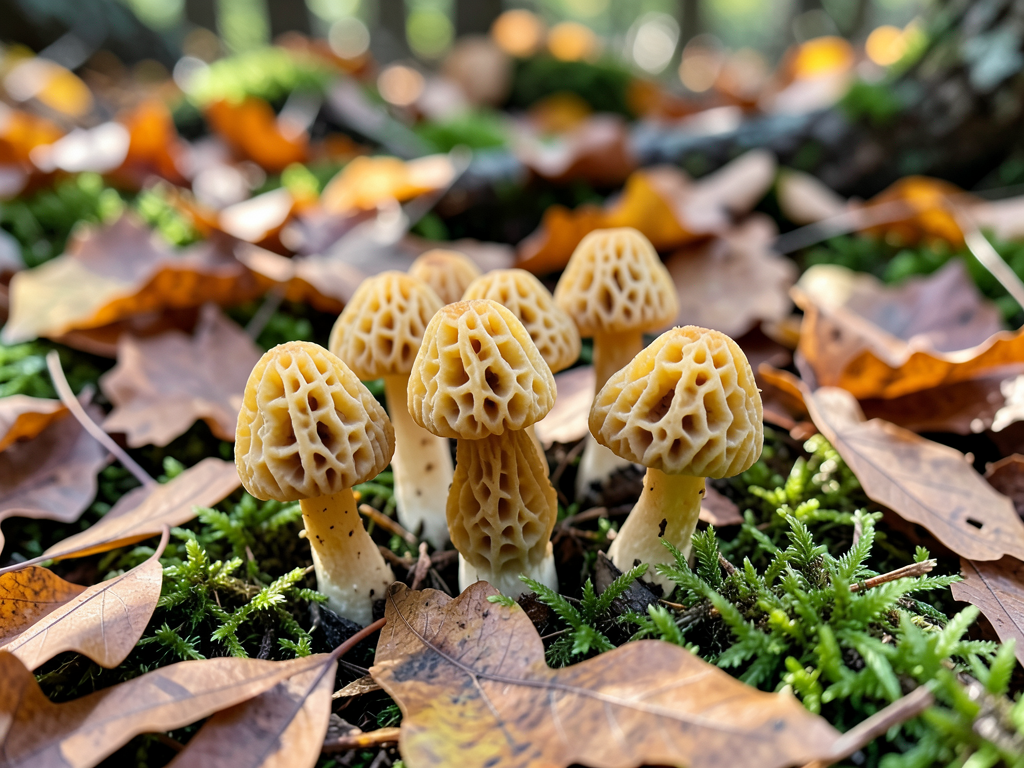
| Feature | True Morel (Edible) | False Morel (Toxic) |
|---|---|---|
| Cap attachment | Attached to stem at base | Hangs freely, attached only at top |
| Interior | Completely hollow | Chambered or cottony filling |
| Cap pattern | Honeycomb — pits and ridges | Wrinkled, brain-like folds |
| Stem | Hollow, attached at cap base | Often solid or stuffed |
| Season | Early spring | Mid to late spring |
The definitive test: Slice the mushroom in half lengthwise. True morels are completely hollow from the tip of the cap to the base of the stem — like a single empty room. False morels are chambered, filled with cottony tissue, or only partially hollow. This is the most reliable test and it works 100% of the time.
Why this matters: False morels (Gyromitra species) contain gyromitrin, which the body metabolizes into monomethylhydrazine — the same compound used in rocket fuel. It causes severe liver damage, seizures, and in sufficient doses, death. Cooking doesn’t reliably destroy the toxin, and sensitivity varies dramatically between individuals.
Elderberry vs. Water Hemlock
| Feature | Elderberry (Edible when cooked) | Water Hemlock (Deadly) |
|---|---|---|
| Growth form | Woody shrub, 6-12 feet | Herbaceous, 3-6 feet |
| Stems | Woody, bark-covered | Smooth, hollow, chambered |
| Leaf veins | Veins end at leaf margin | Veins extend to leaf notches |
| Flowers | Flat-topped cluster, white | Loose umbrella-shaped, white |
| Root | Fibrous, woody | Bundles of fleshy tubers |
The definitive test: Look at the stems. Elderberry is a shrub with woody, bark-covered branches. Water hemlock is a soft-stemmed herbaceous plant. Squeeze the stem between your thumb and forefinger — if it gives like a drinking straw, you’re not holding elderberry. Also, dig carefully around the base: water hemlock has distinctive bundles of chambered, fleshy roots that smell vaguely of parsnip.
Why this matters: Water hemlock contains cicutoxin, one of the most potent plant toxins in North America. A piece of root the size of a walnut can kill an adult. Seizures begin within 15-60 minutes of ingestion, followed by respiratory failure. The root bundles are often exposed by erosion along stream banks, making them accessible to curious foragers and children.
Universal Warning Signs: Red Flags That Apply Across Species
Some danger signals cut across plant families. These are features that, while not universally indicative of toxicity, should make you pause and verify with extreme care:
Milky sap — White latex sap is present in many toxic plants including poison hemlock relatives and spurges. Notable exceptions exist (dandelions, wild lettuce), but treat milky sap as a “verify three times” signal.
Almond scent — Plants that smell like bitter almonds often contain cyanogenic glycosides, which release cyanide when the plant tissue is damaged. Cherry laurel and certain Prunus species fall in this category.
Umbrella-shaped flower clusters — The Apiaceae family contains both edible species (carrot, parsley, celery) and the most deadly plants in North America. Never identify Apiaceae plants by flower cluster alone.
Three-leaf pattern — “Leaves of three, let it be” is famous for a reason. While not all three-leaf plants are toxic, poison ivy and poison oak share this pattern. The rule works for beginners but needs refinement as you advance.
Bright warning coloration — In nature, red and yellow often signal toxicity. Red berries with glossy skin deserve extra scrutiny, as do plants with unusual coloration like purple stems.
The Forager’s Safety Toolkit: What to Carry Every Time
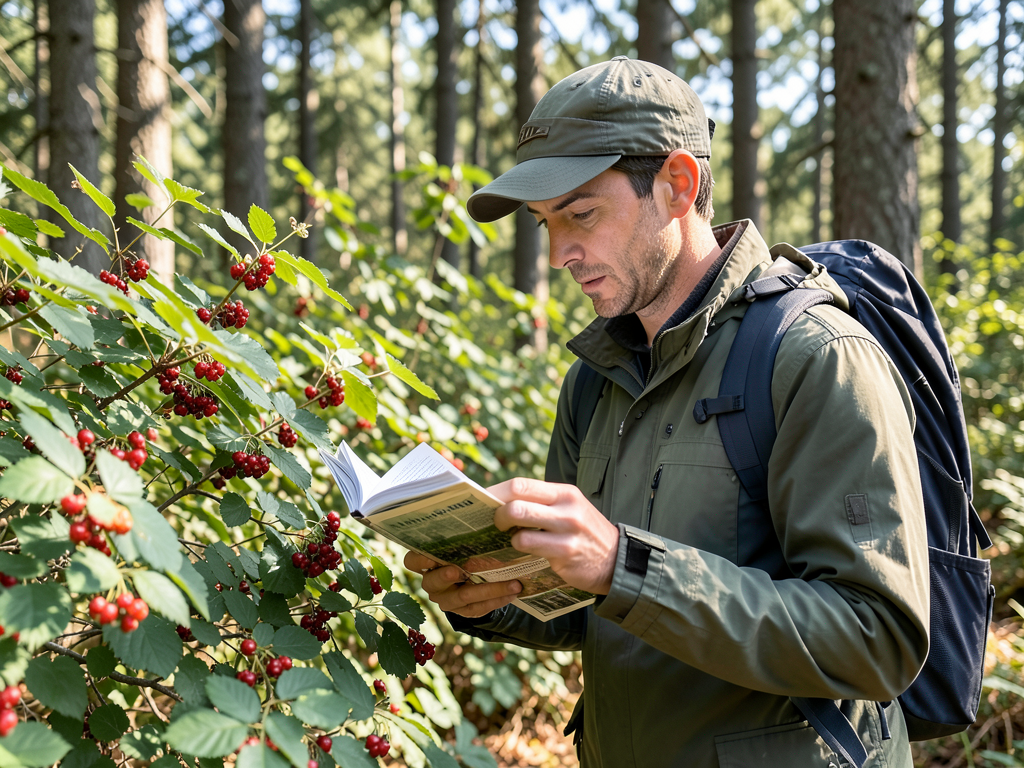
Knowledge lives in your head, but these tools make that knowledge actionable:
-
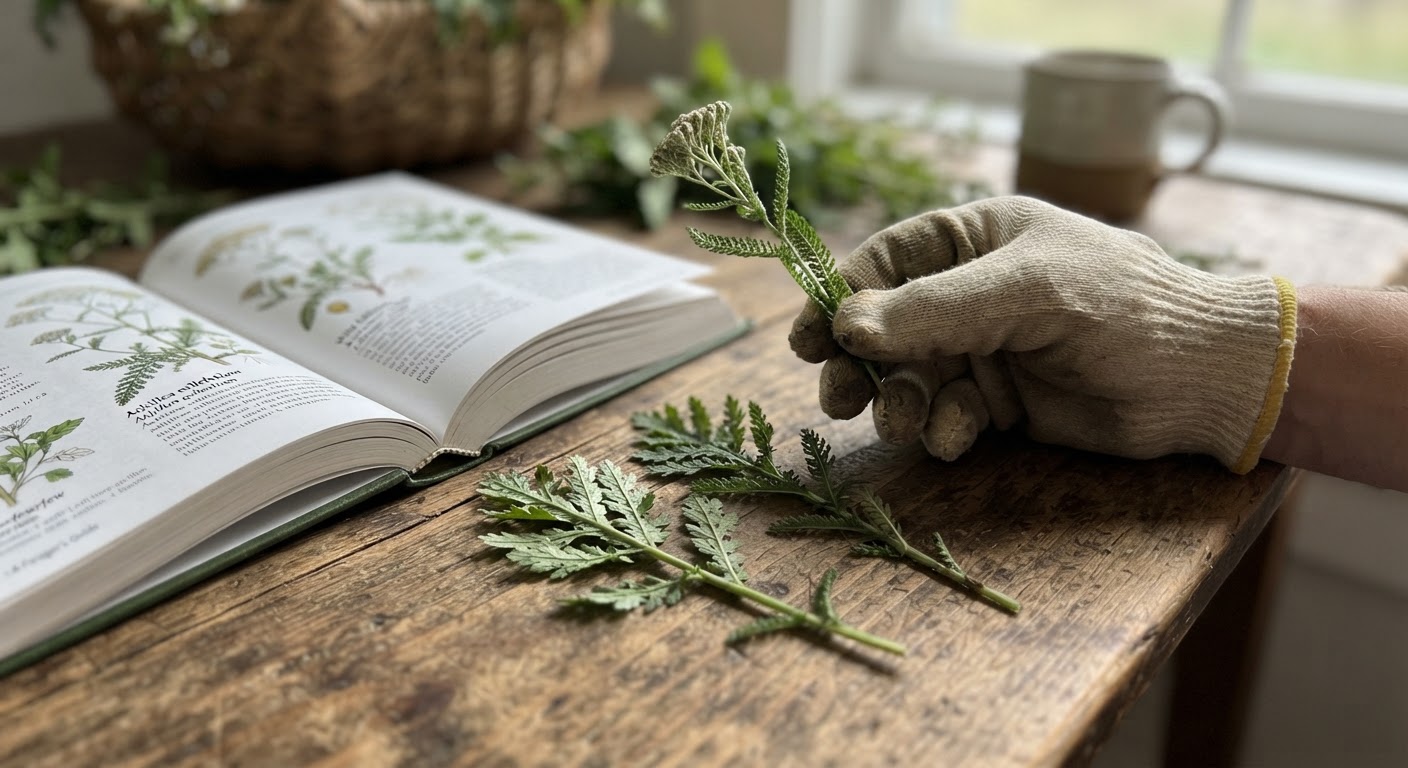
A regional field guide with color photos — Not an app, not a PDF. A physical book with identification keys, published within the last 5 years. Apps are supplements, not substitutes.
-
A hand lens (10x loupe) — Costs about $10. Reveals stem hairs, leaf margins, and flower structures you simply cannot see with the naked eye. The single most underrated foraging tool.
-
A sharp knife — For clean cuts that don’t damage the rest of the plant, and for slicing stems and mushrooms in half for the hollow/chambered test.
-
Disposable gloves — For handling unknown specimens. Some toxins absorb through skin.
-
Paper bags or a basket — Never use plastic bags for mushrooms. They accelerate decomposition and can mix species in dangerous ways.
-
A notebook and pen — Document what you find, where you found it, and what features you used to identify it. This becomes your personal reference library over time.
-
Your phone (for photos and emergency calls) — Take photos from multiple angles before harvesting. Know the number for poison control: 1-800-222-1222 (US).
The Universal Edibility Test: Military Protocol Adapted for Civilians
The U.S. military’s survival manual includes a “Universal Edibility Test” designed for extreme scenarios. I’m including a modified, safer version here — but understand that this is a last-resort protocol, not something you use on a casual Sunday forage.
In a real foraging situation, you should never need this test because you should only harvest plants you can positively identify. This is for survival scenarios where you have no other options.
The full protocol takes 24+ hours and involves testing the plant on your skin, lips, tongue, and eventually swallowing a tiny amount after extended observation periods. I’m deliberately not publishing the full test here because it’s dangerous and people get reckless. If you genuinely need this information for a survival kit, get a military survival manual or wilderness first responder training.
Common Foraging Myths That Get People Hurt
Myth #1: “If animals eat it, it’s safe for humans”
Deer eat poison ivy. Birds eat berries that would hospitalize a human. Squirrels eat mushrooms toxic to us. Animal digestive systems are fundamentally different from ours. This rule has no scientific basis whatsoever.
Myth #2: “Cooking removes all toxins”
Some toxins break down with heat. Many don’t. Gyromitrin in false morels is only partially destroyed by cooking. Cicutoxin in water hemlock is heat-stable. Ricin in castor beans can survive boiling. Never assume cooking makes an unknown plant safe.
Myth #3: “If it tastes bitter, it’s poisonous”
Many edible plants are bitter — dandelion greens, chicory, wild lettuce. Meanwhile, some deadly mushrooms reportedly taste pleasant. Taste should never be the sole criterion for safety.
Myth #4: “Purple stems mean the plant is toxic”
Some plants with purple stems are perfectly edible (certain amaranth species, purple dead nettle). Others with green stems will kill you. Stem color alone means nothing without context.
Myth #5: “A silver spoon will tarnish in poisonous food”
Pure folklore. This idea dates back to medieval times and has no basis in chemistry or toxicology. Silver tarnishes from sulfur compounds, which are present in many perfectly edible foods, including eggs.
How to Build Real Identification Confidence
Confidence doesn’t come from reading one article or watching a YouTube video. It comes from methodical, progressive exposure:
Month 1-3: Choose 3-5 easily identifiable edible plants in your region with no toxic look-alikes. Nettles, dandelions, chicken of the woods mushrooms, and cattails are excellent starting points. Harvest these repeatedly until identification becomes automatic.
Month 3-6: Add 3-5 more plants that have look-alikes but are distinguishable with the four-point check. Practice identifying both the edible and the toxic species. Take photos, make notes, quiz yourself.
Month 6-12: Expand to 15-20 plants across multiple seasons. Start foraging in unfamiliar locations. Join a local foraging group and learn from more experienced members. Cross-check your identifications with at least two sources every time.
Beyond year 1: By now, you should be able to identify 30+ species confidently. This is when most foragers develop what feels like “intuition” — but it’s not intuition at all. It’s pattern recognition built on hundreds of hours of deliberate observation.
What to Do If You Suspect Poisoning
Time is the critical variable. Don’t wait for symptoms — by the time you feel sick with certain toxins, serious damage may already be underway.
- Stop eating immediately. Spit out anything still in your mouth.
- Call poison control at 1-800-222-1222. This number works anywhere in the United States. Do not induce vomiting unless poison control tells you to.
- Preserve a sample. Put the remaining plant, mushroom, or meal in a bag. This is critical for identification and treatment decisions.
- Call 911 if symptoms are severe. Difficulty breathing, seizures, loss of consciousness, or rapid heart rate changes require emergency medical response.
- Take a photo of the plant if possible. Send it to poison control or the emergency room. The exact species determines treatment.
Frequently Asked Questions
Can plant identification apps reliably tell edible from poisonous plants?
No. Apps are pattern-matching tools, not diagnostic instruments. They can suggest an identification based on leaf shape and flower structure, but they cannot smell, touch, or assess context. Use apps as a second opinion — never as your primary identification method. I’ve seen multiple apps confidently misidentify poison hemlock as wild carrot because the flowers look similar in photographs.
What’s the single most dangerous plant in North America for foragers?
Water hemlock (Cicuta maculata). It’s common across every U.S. state and Canadian province, grows near water sources where foragers often explore, and its roots smell invitingly like parsnip. A single root fragment can be fatal. Unlike many toxic plants, it doesn’t taste bitter or unpleasant — victims have described it as sweet.
Is there any shortcut to identifying edible vs poisonous plants?
There are rules of thumb (hairy Apiaceae stems = generally safe; smooth Apiaceae stems = suspect), but no shortcuts. Every rule has exceptions, and the exceptions can be lethal. The only genuine shortcut is to learn a small number of unmistakable plants very, very well, and stick to those until your skills develop.
How do I identify plants in different seasons when flowers aren’t available?
Flowers make identification easier but aren’t essential. Focus on stem characteristics (persistent year-round), bark texture for woody plants, leaf arrangement patterns, dried seed heads, and growth habit. Winter foraging requires more skill but is absolutely possible — many roots and tubers are at their best after the first frost.
Can I trust plants growing near organic farms or gardens?
No. First, “organic” farms still use approved pesticides, some of which are toxic to humans. Second, water hemlock loves the moist, disturbed soil found near agricultural ditches and pond edges. The location says nothing about the plant’s identity. Always identify the plant itself.
What if I’m 90% sure but not 100%?
Don’t eat it. The gap between 90% and 100% certainty is where every foraging fatality lives. Experienced foragers are not people who take calculated risks — they’re people who have eliminated risk through absolute certainty. If there’s a shadow of doubt, take photos, take notes, and identify it later at home with multiple references.
The One Mindset That Keeps Foragers Alive
If you take nothing else from this guide, take this:
Foraging is not a game of probability. It’s a game of certainty.
There are no partial points for being mostly right. You can’t be “mostly not poisoned.” Every single plant you eat must be identified to the species level with zero doubt, using multiple independent features, cross-referenced against at least two authoritative sources.
The woods are not trying to trick you. They’re just being themselves — complex, beautiful, and indifferent to your confidence level. The plants that can hurt you aren’t malicious. They evolved chemical defenses against insects and herbivores over millions of years, long before humans showed up to make salads.
Respect that. Move slowly. Build your knowledge plant by plant, season by season. A year from now, you’ll walk through the woods and see not a green blur but individual species, each with a name, a story, and a place in your mental catalog.
That’s when foraging stops being stressful and starts being joyful. But you earn that joy through diligence — not shortcuts.
Happy foraging, and stay safe out there.
Disclaimer: This article is for educational purposes only. The author and publisher assume no liability for the accuracy of plant identification information or any consequences of consuming wild plants. Always consult multiple authoritative sources and, when possible, learn from an experienced local forager before consuming any wild plant.