Here’s something that still surprises me after years of foraging: the same plant people actively avoid on hiking trails — the one that leaves your ankles burning for half an hour — makes a better spanakopita than spinach. Not “better considering it’s free.” Better, period. Sweeter. More depth. A subtle nuttiness that supermarket spinach has been bred out of.
Stinging nettle (Urtica dioica) is the plant equivalent of that person who seems standoffish until you get to know them and then turns out to be the most interesting one at the party. The chemistry behind the sting — a cocktail of histamine, acetylcholine, and formic acid injected through hollow silica-tipped hairs — disintegrates the moment it hits boiling water. Thirty seconds of blanching transforms something defensive into something that tastes like spinach and asparagus had a more sophisticated cousin.
If you’ve already figured out how to find and identify nettles (and avoided the sting while picking them), you’re holding one of the most versatile wild ingredients in the northern hemisphere. This guide picks up where most foraging articles stop — at the kitchen door. No plant identification. No habitat descriptions. Just cooking: processing, techniques, recipes that have been tested and refined, and the practical wisdom that comes from cooking with nettles week after week throughout the spring season.
The Kitchen Processing Pipeline
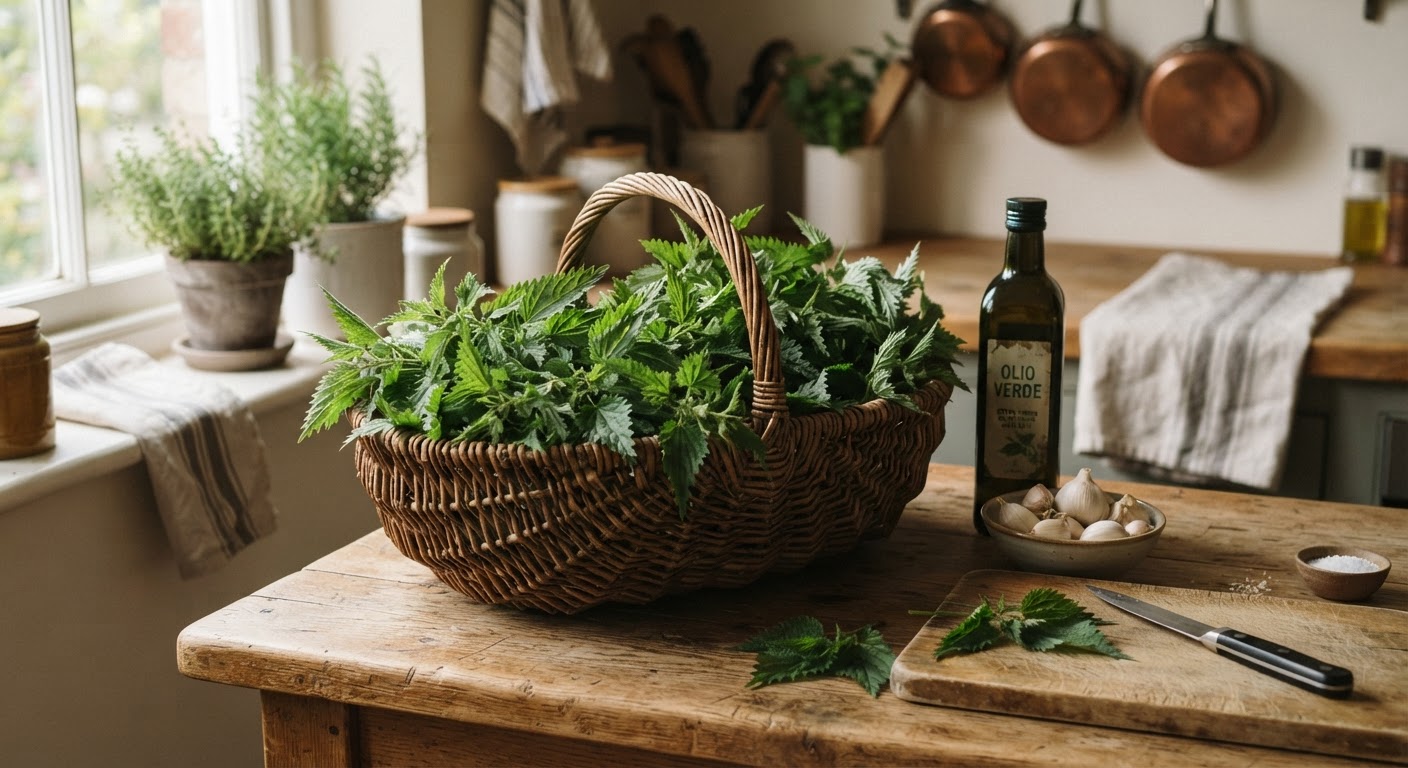
Before you can cook with nettles, you need to get them from the paper bag to a state where they won’t hurt you. This sounds obvious, but skipping or rushing any step in this pipeline will affect everything downstream.
Step 1: The Initial Sort
Dump your nettles onto a clean kitchen towel or sheet pan. Pick through and remove:
- Any grass or other plants that hitched a ride
- Leaves with insect damage (a few holes are fine; skeletonized leaves aren’t)
- Brown or yellowing leaves
- Thick, woody stems (pencil-thickness or wider — these are fibrous even after cooking)
- Any flowering tops (post-bloom nettles develop gritty particles called cystoliths)
You want the top 4 to 6 inches of each stalk — leaves and tender stems. If you harvested responsibly (cutting above the second or third node rather than pulling the whole plant), most of what’s in your bag should already qualify.
Kitchen tip: Keep your gloves on for this step. The sting is still fully operational at room temperature. I use a pair of dedicated “nettle gloves” — cheap rubber dishwashing gloves that live in a drawer and only touch nettles.
Step 2: The Wash
Fill your largest bowl or a clean sink with cold water. Submerge the nettles and agitate them gently with your (gloved) hands. You’re looking to dislodge dirt, tiny insects, and anything else that shouldn’t be in your food.
Lift the nettles out of the water — don’t pour them through a colander, or you’ll just pour the dirt back over the leaves. Change the water and repeat once or twice until the water stays clear.
What about the sting in water? Cold water doesn’t deactivate the sting, so keep the gloves on. Room-temperature soaking does nothing to the formic acid. Only heat neutralizes it.
Step 3: The Blanch
This is the gateway step — everything after this is safe to handle bare-handed.
Bring a large pot of water to a rolling boil. You want about 4 quarts of water per pound of nettles. More water means faster recovery to boiling after you add the greens, which means better color retention.
Add 2 tablespoons of salt per gallon of water. This isn’t for flavor — it helps the nettles hold their vibrant green color by slowing the breakdown of chlorophyll. The water should taste like the ocean.
Drop the nettles in (tongs are your friend here), stir once, and set a timer:
- 30 seconds: For applications where the nettles will be cooked again (soups, casseroles, fillings). They’ll be wilted but still have structure.
- 60 seconds: For freezing or recipes where they’re the main ingredient (pesto, pasta dough, purées). Fully tender, maximum color.
- 90 seconds: For older, tougher leaves harvested later in the season. They need the extra time to break down fibrous tissue.
Immediately transfer to an ice bath — a large bowl of water with enough ice to stay cold. This stops the cooking, locks in the color, and cools the nettles fast enough to keep them food-safe.
Leave them in the ice bath for 2 to 3 minutes, until they’re completely cold to the touch. Any residual warmth means the cooking is still happening, and you’ll end up with olive-drab mush.
Step 4: The Squeeze
This step separates decent nettle dishes from great ones.
Lift the cooled nettles from the ice bath and squeeze them firmly between your hands. You want to remove as much water as possible — blanched nettles can hold 3 to 4 times their weight in water, and that water will dilute whatever you’re cooking.
Squeeze until the ball of nettles is about the size of a tennis ball and no more water drips out. If you’re making pesto, squeeze even harder. If you’re making soup (where water is welcome), a moderate squeeze is fine.
What to do with the blanching water: Don’t throw it out. That pale green liquid is nettle stock — mild, earthy, and packed with water-soluble nutrients. Use it as the base for soup, cook rice or pasta in it, or water your houseplants with it once it cools. Your ficus will never know what hit it.
Step 5: Chop and Store
Give the squeezed nettle ball a rough chop. At this point you have what I think of as “nettle paste” — finely chopped cooked nettles that can go into almost anything.
Refrigerator storage: Packed into an airtight container, blanched and squeezed nettles keep for 4 to 5 days in the fridge. Press a piece of parchment paper directly onto the surface to prevent oxidation.
Freezer storage: Portion into half-cup or one-cup balls, wrap tightly in plastic wrap, then place in a freezer bag. They’ll keep for 8 to 10 months without noticeable quality loss. Label them — frozen nettle balls look identical to frozen spinach balls, and you will absolutely mix them up in January.
Drying: Blanched, squeezed nettles can be dehydrated at 115°F (46°C) for 6 to 8 hours. Crumbled dried nettles work well as a soup thickener, smoothie addition, or pasta dough ingredient. They rehydrate in about 10 minutes in warm water.
Cooking Method Comparison: Pick the Right Technique
This table covers every major cooking approach for nettles, ranked by what you’re trying to achieve. Reference it when you’re standing in your kitchen with a bag of fresh nettles and a vague idea of what to make.
| Cooking Method | Time (Active) | Difficulty | Best For | Flavor Result | Texture Result | Worth Noting |
|---|---|---|---|---|---|---|
| Blanch + Ice Bath | 5 minutes | ★☆☆☆☆ | Prep step for all other methods; freezing | Neutral, clean, spinach-like | Tender but intact; slight bite | The universal first step. Skip this and everything else suffers. |
| Sauté (garlic + oil) | 8 minutes | ★☆☆☆☆ | Quick weeknight side dish | Savory, garlic-forward, earthy | Soft with slightly crisp edges | Start with pre-blanched nettles. Raw nettles in a hot pan = uneven cooking and potential sting survivors. |
| Soup / Purée | 25 minutes | ★★☆☆☆ | Comfort food; serving guests; freezing meals ahead | Deep, savory, full-bodied — richer than spinach soup | Silky smooth when blended; rustic and brothy when chunky | Nettle soup is the gateway recipe. People who “don’t like wild greens” will ask for seconds. |
| Pesto | 10 minutes | ★★☆☆☆ | Pasta, sandwiches, pizza, grilled vegetables | Bright, herbaceous, slightly earthy — distinct from basil pesto | Smooth paste; can be adjusted from thick to drizzle-able | Freezes beautifully in ice cube trays. One cube = one portion of pasta. |
| Pasta Dough Incorporation | 40 minutes | ★★★☆☆ | Impressive homemade pasta; feeding a crowd | Mild nettle flavor woven through the pasta itself | Silky with a slight bite from the nettle specks | Use dried nettle powder or finely chopped blanched nettles. Fresh nettles release too much water into the dough. |
| Quiche / Frittata / Tart Filling | 35 minutes | ★★☆☆☆ | Brunch, meal prep, picnics | Rich, custardy, the nettles amplify egg and cheese flavors | Creamy filling with distinct green layers | Blanch, squeeze, and chop finely. Excess water in the filling turns quiche into nettle soup in a crust. |
| Baked Goods (bread, scones, muffins) | 45 minutes | ★★★☆☆ | Savory baking; stashing greens in kid-friendly foods | Barely detectable — slight earthy undertone behind the primary flavors | Adds moisture and a subtle green speckle | Nettle cheddar scones are the gateway baked good. Start there before attempting nettle sourdough. |
| Tempura / Fried | 15 minutes | ★★☆☆☆ | Appetizers, bar snacks, impressing dinner guests | Crispy exterior, tender interior, the nettle flavor stays surprisingly prominent | Crunchy shell around a soft, almost creamy center | Use individual large leaves. No blanching — the fry oil cooks them. The sting deactivates above 160°F. |
| Tea / Infusion | 10 minutes | ★☆☆☆☆ | Daily herbal tea; soothing evening drink | Grassy, mildly sweet, similar to a green tea with less astringency | N/A (liquid) | Use dried nettle leaves. Fresh leaves make a weaker, more vegetal brew. Steep no longer than 5 minutes or bitterness creeps in. |
| Nettle Salt / Seasoning | 5 minutes + drying time | ★☆☆☆☆ | Finishing salt; seasoning blends; edible gifts | Salty with an herby, green undertone | Coarse powder that dissolves easily | Blend equal parts dried nettle powder and flaky sea salt. Add to popcorn, roasted vegetables, or steak. |
| Fermented (kimchi / kraut style) | 30 minutes + 3–7 days ferment | ★★★☆☆ | Probiotic-rich condiment; adventurous cooking | Funky, sour, the nettle provides a vegetal backbone | Crunchy to soft depending on fermentation length | Use blanched nettles. Raw nettles in a ferment = potential sting survival (acid alone doesn’t neutralize the sting fast enough). |
| Smoothie (raw) | 2 minutes | ★☆☆☆☆ | Quick nutrition boost; hiding greens from picky eaters | Barely detectable behind fruit — banana and mango mask it completely | Smooth; the blender obliterates the stinging hairs mechanically | Only use very young, tender tips harvested before flowering. The blender pulverizes the hairs; the sting doesn’t survive the blades, but do a small patch test first. |
Recipe Deep Dives: The Ones Worth Making
These are the recipes that I return to year after year — the ones where nettles genuinely outperform their domesticated alternatives. Each includes the non-obvious details that make the difference between “interesting experiment” and “please make this again.”
Classic Nettle Soup
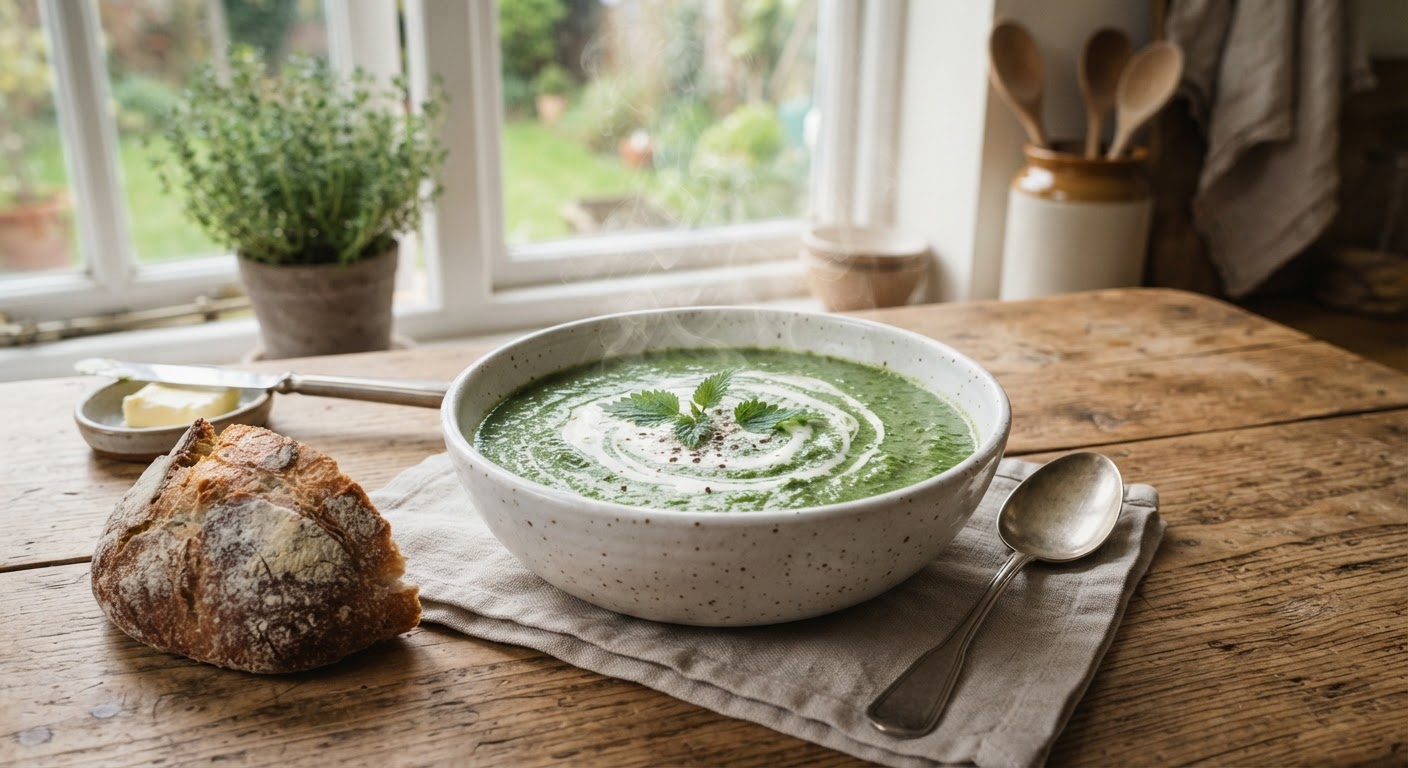
This is the recipe that converts skeptics. There are a hundred variations across European cuisines — the Polish zupa pokrzywowa, the Swedish nässelsoppa, the German Brennnesselsuppe — but they all converge on the same essential structure: potatoes for body, stock for depth, nettles for the green, and cream to bring everything together.
Serves 4
- 6 cups (roughly 8 oz / 225g) fresh nettle tops, blanched and squeezed
- 2 tablespoons butter or olive oil
- 1 medium onion, diced
- 2 cloves garlic, minced
- 1 large potato (about 8 oz / 225g), peeled and diced small
- 4 cups vegetable or chicken stock
- ½ cup heavy cream (or coconut milk for dairy-free)
- Salt and white pepper to taste
- Freshly grated nutmeg (a pinch, no more)
- Optional garnish: a swirl of cream, a drizzle of good olive oil, or toasted pumpkin seeds
Instructions
-
Sauté the onion in butter over medium heat until translucent — about 5 minutes. Add the garlic and cook for 30 seconds more. You’re not looking for color here; that comes later from the nettles.
-
Add the diced potato and stock. Bring to a boil, reduce to a simmer, and cook until the potato is fork-tender, about 12 to 15 minutes.
-
Add the blanched, squeezed, chopped nettles. Simmer for 5 minutes — just long enough to meld the flavors. Longer cooking dulls the green color.
-
Remove from heat. Blend with an immersion blender until completely smooth. A countertop blender works too, but let the soup cool slightly first and blend in batches. Hot soup in a sealed blender = ceiling art.
-
Return to low heat. Stir in the cream, season with salt, white pepper, and a tiny pinch of nutmeg. Taste and adjust. The soup should taste green and savory, with a subtle sweetness from the potato and cream.
-
Serve hot, preferably with crusty bread. The soup holds well in the fridge for 4 days and freezes for up to 3 months.
Variation — Nettle & Watercress Soup: Replace half the nettles with watercress for a peppery kick. Add the watercress at the same time as the cream (step 5) rather than cooking it — watercress loses its heat quickly with heat.
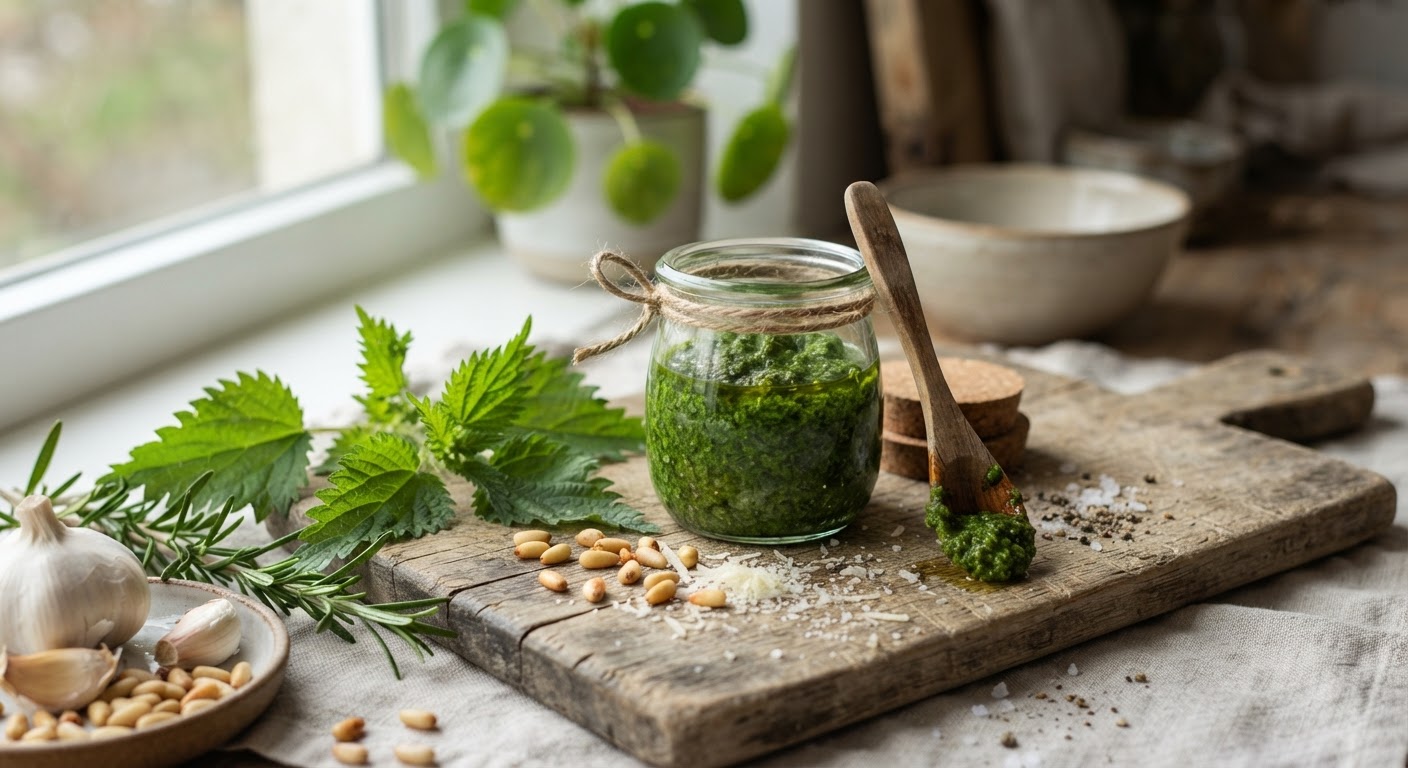
Nettle Pesto That Actually Tastes Like Nettle
Most wild green pestos taste generically “herby.” The basil dominates, or the garlic, or the cheese, and the wild ingredient is just a chlorophyll delivery system. This formulation deliberately pulls back the basil and lets the nettle’s earthy-sweet character come through.
Makes about 1 cup
- 1 cup blanched, squeezed, finely chopped nettles (packed tightly)
- ¼ cup fresh basil leaves (just enough for brightness, not dominance)
- ⅓ cup pine nuts or walnuts, toasted
- ½ cup freshly grated Parmigiano-Reggiano or Pecorino
- 1 clove garlic, smashed
- ½ teaspoon lemon zest
- 1 tablespoon lemon juice
- ½ cup extra-virgin olive oil, plus more as needed
- Salt to taste
Key technique: Toast the nuts. It takes 3 minutes in a dry pan over medium heat and it transforms the pesto from flat to complex. Pine nuts burn fast — shake the pan constantly and pull them off the heat the moment you smell them.
Combine everything except the olive oil in a food processor. Pulse until uniformly chopped but not pasty. With the motor running, stream in the olive oil until the pesto reaches your preferred consistency. Stop and scrape down the sides at least once.
Taste and add salt gradually — the cheese brings salt of its own, so it’s easy to overshoot.
This pesto freezes remarkably well. Spoon it into ice cube trays, freeze solid, then transfer the cubes to a freezer bag. One cube, thawed and tossed with hot pasta, is a legitimate weeknight dinner.
Nettle & Ricotta Pasta Filling
Homemade ravioli filled with nettle and ricotta is one of those dishes that sounds like a project but actually comes together quickly if you use wonton wrappers instead of making pasta from scratch. The filling takes 10 minutes; the assembly takes 15.
Fills about 30 ravioli (using wonton wrappers)
- 1 cup blanched, squeezed, finely chopped nettles
- 1 cup whole-milk ricotta (drain it for 30 minutes if it’s watery)
- ¼ cup grated Parmigiano-Reggiano
- 1 egg yolk
- ¼ teaspoon freshly grated nutmeg
- Salt and black pepper
- 1 package square wonton wrappers (usually 40–50 per package)
Mix the first six ingredients in a bowl. The filling should be thick enough to hold its shape — if it’s loose, add more Parmesan; if it’s stiff, add a splash of cream.
Place a heaping teaspoon of filling in the center of each wonton wrapper. Brush the edges with water (your finger works fine), fold into a triangle, and press the edges to seal. For extra security, press a fork along the sealed edge.
Cook in gently boiling salted water for 2 to 3 minutes — they float when they’re done. Serve with brown butter and sage, a simple tomato sauce, or just good olive oil and more Parmesan.
Nettle & Cheddar Savory Scones
These are the baked good that convinced me nettles belong in pastry. The cheese and the earthy green work together in a way that spinach never quite manages — something about the nettle’s mineral notes complements aged cheddar better than the watery sweetness of spinach.
Makes 8 scones
- 2 cups all-purpose flour
- 1 tablespoon baking powder
- ½ teaspoon salt
- ½ teaspoon mustard powder (dry)
- 6 tablespoons cold unsalted butter, cubed
- ¾ cup finely chopped blanched nettles (squeeze them extra-dry for this)
- 1 cup sharp cheddar, grated
- ⅔ cup buttermilk (or regular milk + 1 teaspoon lemon juice)
- 1 egg, beaten (for egg wash)
The cold butter is non-negotiable here. Cut it into the flour mixture with your fingertips or a pastry cutter until it looks like coarse meal with some pea-sized butter pieces still visible. Those butter chunks create the flaky layers.
Fold in the nettles and cheese. Add the buttermilk and mix just until the dough comes together — overworking makes scones tough. Pat into a 1-inch-thick round, cut into 8 wedges, brush with egg wash, and bake at 400°F (200°C) for 18 to 20 minutes.
These are best eaten warm, within an hour of baking. They also freeze well — reheat from frozen at 350°F for 10 minutes.
Nettle Tempura
If you serve one nettle dish to people who say they don’t like wild food, make it this one. Tempura nettle leaves look beautiful, taste like a high-end restaurant appetizer, and take about 10 minutes from start to finish.
Select large, unblemished leaves. Do not blanch them — the fry oil will cook them through and neutralize the sting. Rinse and pat them completely dry. Any water on the leaves will make the oil spatter.
Tempura batter:
- ½ cup all-purpose flour
- ½ cup ice-cold sparkling water (the carbonation makes a lighter crust)
- 1 egg yolk
- Pinch of salt
Mix the batter minimally — lumps are fine, even desirable. An over-mixed batter develops gluten and turns chewy.
Heat 2 inches of neutral oil (canola, vegetable, or peanut) to 350°F (175°C) in a heavy pot. Dip each leaf in the batter, let the excess drip off, and fry for 45 to 60 seconds per side — just until golden and crisp. Drain on paper towels, sprinkle with flaky salt, and serve immediately.
A dipping sauce of soy sauce, rice vinegar, and a pinch of sugar rounds out the dish. These don’t keep — you have about 5 minutes before they lose their crunch, so serve them the moment they’re cool enough to eat.
What to Do When It’s Not Nettle Season
Nettle season is short. In most temperate regions, you get about 6 to 8 weeks of prime harvesting — from the first tender shoots in early spring until the plants start flowering. After that, the leaves develop a gritty texture (those cystoliths again) and the flavor turns bitter.
But you don’t have to stop cooking with nettles when the season ends. Here’s what to use instead:
| Nettle Is Called For In… | Best Substitute | How It Compares | Adjustments Needed |
|---|---|---|---|
| Soup | Spinach + a small handful of arugula | Spinach lacks the earthy depth; arugula adds back some complexity | Use ¾ spinach + ¼ arugula by volume. Add 2 extra minutes of cooking time. |
| Pesto | Basil + parsley blend | Brighter, less earthy — still excellent, just different | 50/50 basil and flat-leaf parsley. Add 1 teaspoon nutritional yeast for the umami depth you lose. |
| Pasta filling | Swiss chard | Closest match in texture; slightly sweeter, less mineral | Drain chard thoroughly after cooking. Mix 50/50 with spinach if you have both. |
| Sautéed side dish | Dandelion greens (young) or kale | Dandelion is more bitter; kale is chewier | Blanch dandelion greens twice (change water between) if bitterness is a concern. Massage kale with olive oil before cooking. |
| Baked goods | Spinach, squeezed ultra-dry | Spinach releases more water and has a milder flavor | Squeeze spinach in a kitchen towel until bone-dry. You may need to reduce other liquids slightly. |
| Tea | Dried nettle (store-bought) | Nearly identical — nettle dries beautifully | Store-bought dried nettle is often Urtica dioica from commercial farms. It tastes the same and is available year-round. |
| Tempura | Sage leaves, shiso, or young dandelion leaves | Different flavor profiles but similar structure | Sage is stronger; use fewer leaves or a thinner batter. Shiso is more delicate; fry for less time. |
| Smoothie | Frozen spinach cubes | Milder, less mineral — still a green nutrient boost | Use extra spinach to match the nutritional density. Add a few drops of chlorophyll if you want the intense green color. |
There’s also the obvious solution: freeze as many blanched nettles as your freezer will hold during the spring harvest window. A chest freezer with a gallon bag of nettle balls in March means nettle soup in December. It’s the single highest-return foraging preservation habit I’ve adopted.
Pro Tips From Years of Nettle Cooking
These are the things you learn after making all the mistakes:
Don’t skip the ice bath. It’s tempting to pull the blanched nettles from the boiling water, give them a quick rinse under cold tap water, and call it done. The rinse won’t cool them fast enough. They’ll keep cooking from residual heat, turning from vibrant green to olive drab to brown. Ice water is mandatory, not optional.
The cooking water is not the same as the blanching water. When a recipe calls for nettle cooking water (like pasta water infused with nettle flavor), cook the already-blanched nettles in fresh water. The blanching water is where you dumped the raw, unwashed nettles — it’s the rinse water for a plant that was growing outdoors. Use it for stock if you washed aggressively, but don’t confuse it with clean cooking water.
Nettles and dairy are best friends. There’s a reason so many classic nettle recipes involve cream, butter, cheese, or ricotta: the fat in dairy smooths out nettle’s slightly astringent edge and carries the green flavor across the palate. Vegan alternatives work (coconut milk, cashew cream, olive oil), but the richness is what makes the pairing sing. For the best dairy-free option, full-fat coconut milk gets closest to the mouthfeel.
Salt your blanching water like pasta water. Under-salted blanching water produces bland, muted nettles that never quite recover no matter how much salt you add later. Over-salted water seasons the nettles through and through and brings out their natural sweetness.
The color changes tell you everything. Fresh raw nettles are a dark, matte green. Blanched for 30 seconds = bright, almost neon green. Blanched for 2 minutes = muted olive green. Cooked in soup for 20 minutes = deeper, almost forest green, but still vibrant because the soup liquid protects the color. If your nettles ever turn army-brown, you’ve overcooked them. They’re still edible, they’re still nutritious, but they won’t win any beauty contests.
Nettle pasta dough works, but it’s a learn-once skill. The ratio matters: 1 tablespoon of dried nettle powder per cup of flour (for a standard 2-egg pasta dough). Too much nettle and the dough won’t hold together; too little and you won’t taste it. Hydration rate also shifts — nettle powder absorbs more liquid than flour, so you may need an extra teaspoon of water or an extra half egg yolk to bring the dough together.
The sting will find a way. Even after years of handling nettles, I still get stung once or twice a season. It happens when I get careless — reaching into a bag without gloves, brushing against a leaf that slipped out of the colander. Dock leaves (Rumex) don’t actually work as a cure (that’s placebo), but a paste of baking soda and water does neutralize the formic acid. Antihistamine cream helps with the lingering itch. The stinging sensation peaks at about 20 minutes and fades over an hour.
Seasonal Availability: When to Cook What
Nettles change character dramatically across their growing season. The recipes you choose should match what the plant is offering at that moment.
| Growth Stage | Calendar (Temperate NH) | Plant Characteristics | Best Cooking Applications | What to Avoid |
|---|---|---|---|---|
| Early Shoots | March – Early April | 3–6 inches tall, bright green, stems snap cleanly like asparagus | Blanch & sauté, tempura, smoothies (raw), salads (very young leaves) | Long cooking — these are too delicate for soups; they’ll dissolve |
| Peak Harvest | April – Mid-May | 8–24 inches tall, lush dark green leaves, stems still tender | Everything — soup, pesto, pasta, quiche, scones, freezing | Nothing. This is the golden window. |
| Pre-Flower | Late May – Early June | 24–48 inches tall, stems getting fibrous, visible flower buds forming | Soup, purées, pesto, anything blended | Whole-leaf applications; the leaves are getting thicker and the texture is coarser |
| Flowering | June – July | Stringy green flowers hanging from leaf axils, lower leaves yellowing | Tea (dried), nettle salt (dried), stock | Cooking fresh — cystoliths make the texture gritty |
| Post-Flower / Dormant | August – February | Plant dies back to roots; no above-ground parts | Dried nettle from your pantry; frozen nettle balls from spring | Foraging — there’s nothing above ground to harvest |
This table is your seasonal menu planner. In March, you’re making delicate tempura and raw nettle pesto. In May, you’re stockpiling — blanching and freezing as much as you can process. In June, you’re drying the last of the season for tea. In December, you’re pulling frozen nettle bricks from the freezer and making soup while snow falls outside the window.
FAQ: The Questions That Come Up Every Spring
“Can I eat nettles raw?”
Technically yes — if you’re brave enough to chew something covered in hypodermic needles. The sting comes from hollow hairs that break off in your skin and inject irritants. Running raw nettles through a high-powered blender pulverizes the hairs mechanically and makes the resulting purée safe to consume (as in a smoothie). But eating a raw nettle leaf straight off the plant? That’s a party trick, not a recipe. The sting will hit your tongue, your lips, and possibly your throat. Not dangerous for most people, but profoundly unpleasant.
“Why does my nettle soup taste bitter?”
Three likely culprits: (1) you used post-flowering nettles, which develop bitter compounds as they mature; (2) you simmered the nettles too long — 5 minutes is the sweet spot, anything past 10 minutes and chlorophyll breaks down into bitter-tasting pheophytin; (3) your blanching water wasn’t salty enough, and the bitterness that salt normally suppresses came through. Fixes for next time: harvest earlier in the season, watch the clock, and salt the blanching water until it tastes like the sea.
“How do I know when nettles are past their prime for cooking?”
The flower test: if you see drooping strings of green flowers hanging from the leaf joints, the plant has entered its reproductive phase. Leaves harvested after flowering contain calcium carbonate crystals (cystoliths) that feel gritty between your teeth, like eating spinach with sand in it. The color is also a giveaway — post-flowering leaves shift from vibrant green to a duller, slightly yellowed green. If you’re uncertain, rub a leaf between your fingers. Pre-flowering leaves feel soft and pliable; post-flowering leaves feel rougher and slightly papery.
“Can I use dried nettles in recipes that call for fresh?”
Yes, with conversion math. As a rule of thumb: 1 tablespoon of dried nettle powder ≈ ½ cup of blanched, squeezed fresh nettles. For soups and sauces, rehydrate the dried nettles in warm water for 10 minutes before using. For baked goods and pasta dough, use the powder directly — no rehydration needed. Dried nettles have a more concentrated, slightly grassier flavor than fresh, so start with ¾ of the volume and adjust up.
“Is there any difference between European and North American nettles for cooking?”
Urtica dioica is the same species on both continents. Urtica dioica subsp. gracilis (the North American subspecies) is marginally smaller and has slightly narrower leaves, but the flavor, cooking behavior, and sting chemistry are identical. The European subspecies tends to grow in larger, denser patches, which makes harvesting more efficient, but there’s no meaningful culinary difference.
“Will cooking nettles in soup sting my mouth if I don’t blanch them first?”
No — the sting breaks down at cooking temperatures (above roughly 160°F / 71°C). If you’re adding raw nettles directly to a simmering soup, the heat will neutralize them within about 30 seconds. The reason to blanch first isn’t safety; it’s control. Pre-blanching lets you precisely manage the cooking time, lock in the color, and handle the nettles safely throughout the cooking process. Adding raw nettles to soup means you need to wear gloves while handling every ingredient that touches them. Pre-blanching means you can cook like a normal person.
“What drinks can I make with nettles besides tea?”
Nettle cordial is a British classic — steep dried nettles in boiling water with sugar and citric acid, strain, and dilute with sparkling water for a refreshing spring drink. Nettle beer (a traditional English country wine, really) uses nettles instead of hops for bittering. Nettle-infused vodka or gin works well — steep a handful of dried nettle leaves in the spirit for 3 to 5 days, then strain. The result is herbal, vegetal, and surprisingly complex in a martini with dry vermouth. For non-alcoholic options, a nettle lemonade (nettle tea + lemon juice + simple syrup + ice) is better than it sounds.
“My nettle pesto turned brown within an hour. What happened?”
Oxidation. Nettle pesto browns faster than basil pesto because nettles have less natural antioxidant protection in their leaf structure. Three fixes: (1) add the lemon juice immediately after blending — the acid retards browning; (2) float a thin layer of olive oil on top of the pesto in the storage container, which blocks oxygen contact; (3) press plastic wrap directly onto the surface of the pesto before sealing the container. For serving pesto at a dinner party, make it no more than 30 minutes ahead and toss it with the hot pasta at the last possible moment.
Putting It All Together: A Spring Week With Nettles
If you harvest a pound of nettles on a Saturday in late April, here’s one way to use every bit of them over the following week. This isn’t a meal plan — it’s a demonstration of how one harvest can flow through different recipes with zero waste.
Saturday (harvest day): Process the entire batch. Blanch 30 seconds, ice bath, squeeze. Reserve the blanching water as stock. Chop half the nettles finely for pesto and freeze half in portioned balls.
Saturday dinner: Nettle soup, using the blanching water as the soup base. Serve with crusty bread.
Sunday breakfast: Nettle and cheddar scones, using two of the chopped-nettle portions.
Monday dinner: Pasta with nettle pesto (made fresh Saturday and stored under olive oil). 10-minute dinner.
Tuesday lunch: Leftover nettle soup from Saturday, reheated gently.
Wednesday dinner: Ravioli with nettle-ricotta filling (using one of the frozen nettle balls, thawed). Brown butter and sage sauce.
Thursday: No nettle cooking. The remaining frozen balls stay in the freezer.
Friday: Use the last of the fresh pesto as a sandwich spread or pizza topping before it starts to fade.
One harvest. One processing session. Seven days of meals. This is what makes nettles different from most foraged foods — they’re not a novelty ingredient you use once and forget about. They’re a workhorse green that you build meals around.
If you’ve never cooked with nettles before, the barrier is lower than it looks. Get gloves. Find a clean patch away from roads and pesticide drift. Harvest young tops. Blanch them. From there, follow the method comparison table toward whatever you’re in the mood for — soup if you want comfort, pesto if you want something fast, tempura if you want to show off a little.
The plant that stings is also the plant that feeds. That’s not a metaphor. That’s just nettles.