⚠️ WARNING: Misidentifying wild plants can be fatal. Never eat any wild plant unless you are 100% certain of its identity. When in doubt, do NOT harvest. If you or someone else ingests a suspicious plant, call Poison Control immediately: 1-800-222-1222 (United States). Save this number in your phone right now. It could save a life.
I still remember the day I almost made a mistake I wouldn’t have lived to regret.
Three years ago, in late spring, I was walking a trail in the Pacific Northwest when I spotted what I was sure was wild carrot — Daucus carota — poking up along the path. White umbel flowers, ferny leaves, that distinctive carroty smell. I reached down, pulled one up, and was about to nibble the root when something stopped me.
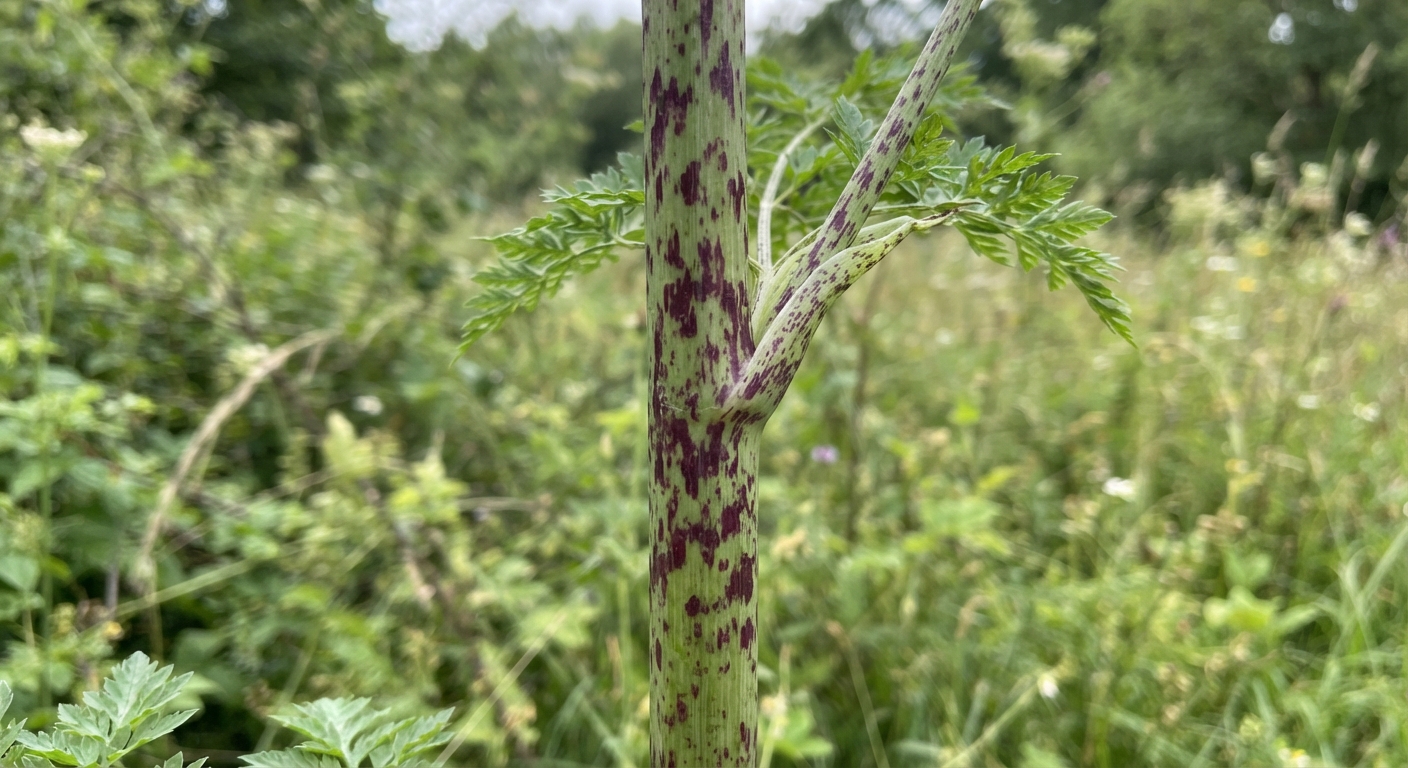
The stem was smooth. No hairs. And there were purple blotches.
My stomach dropped. I was holding poison hemlock.
That moment rewired my brain. I had been foraging for five years at that point, and I still nearly made a fatal error. The difference between dinner and the emergency room — or worse — came down to tiny botanical details I had glossed over in my excitement.
This article isn’t here to scare you away from foraging. Far from it. Foraging is one of the most rewarding skills a person can learn. But it’s also one where ignorance has a body count. Below, I’m going to walk you through six of the most dangerous plant lookalikes in North America, how to tell them apart from their edible twins, and what to do if the worst happens.
Poison Hemlock vs Wild Carrot (Queen Anne’s Lace)
These two are the poster children for deadly plant mix-ups — and with good reason. Every part of poison hemlock (Conium maculatum) contains coniine, a neurotoxin that causes ascending paralysis. It shuts your muscles down from your feet up until your diaphragm stops moving and you suffocate. Socrates was executed with a hemlock drink. This plant has been killing people for millennia, and it still does.
Wild carrot, on the other hand, is the ancestor of the carrot in your fridge. The root is edible when young, the flowers make a lovely fritter, and the seeds have been used as a natural contraceptive for centuries.
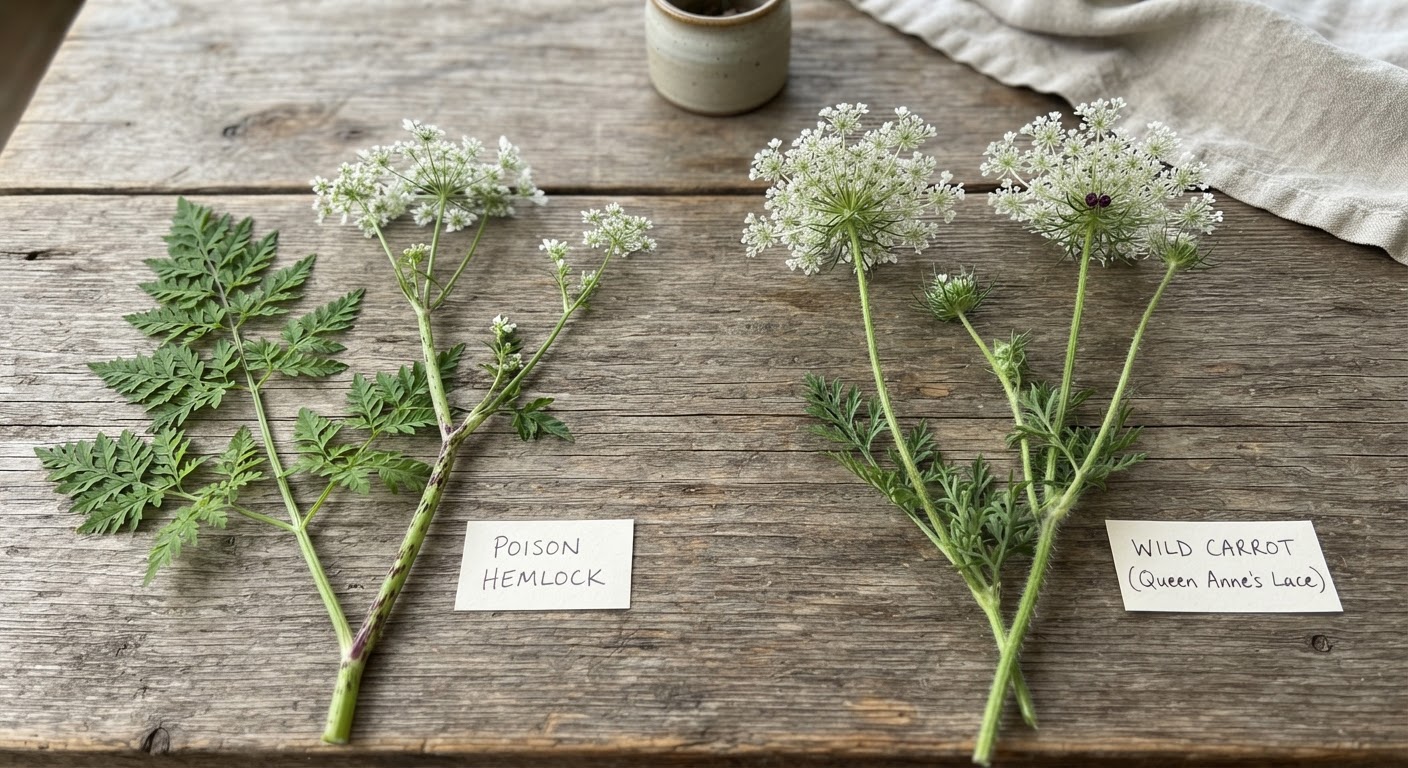
Here’s how you tell them apart:
| Feature | Poison Hemlock | Wild Carrot |
|---|---|---|
| Stem | Smooth, hairless, with purple-red blotches | Hairy, solid green, no blotches |
| Smell | Musty, unpleasant — like mouse urine | Carroty, sweet, unmistakable |
| Height | 3–8 feet tall at maturity | 1–3 feet tall |
| Flowers | Open, loose umbels | Dense, flat umbels, often with single dark purple flower in center |
| Leaves | Shiny, smooth, finely divided | Hairy, duller, more coarsely divided |
| Root | White, parsnip-like but smells BAD | Pale, tapered, smells like carrot |
The biggest tell? Hairs. If the stem is smooth, walk away. If you crush the leaves and it smells anything like a musty basement, walk away faster. Wild carrot stems are bristly-hairy all the way up. Poison hemlock stems feel almost waxy-smooth — too perfect, almost artificial.
Habitat: Poison hemlock loves disturbed soil — roadsides, fencelines, ditch banks, and field edges across most of North America. Wild carrot grows in similar spots, which is exactly why this confusion keeps happening.
If you eat poison hemlock: Symptoms appear within 30 minutes to a few hours — trembling, burning sensation in the mouth, dilated pupils, muscle weakness, slow heartbeat, and eventually respiratory paralysis. Call 911 immediately. There is no antidote; treatment is supportive, including mechanical ventilation. The faster you get to a hospital, the better your odds.
Death Camas vs Wild Onion / Wild Garlic
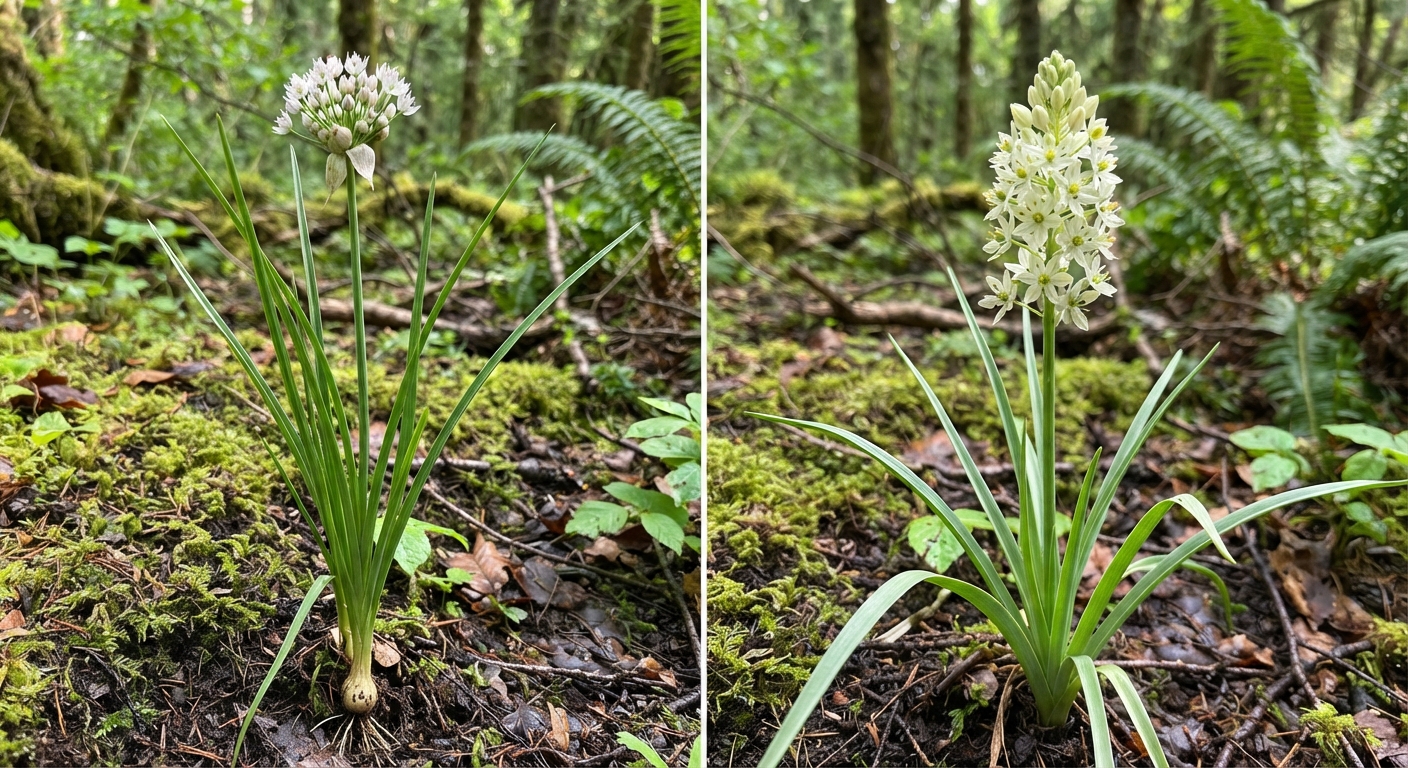
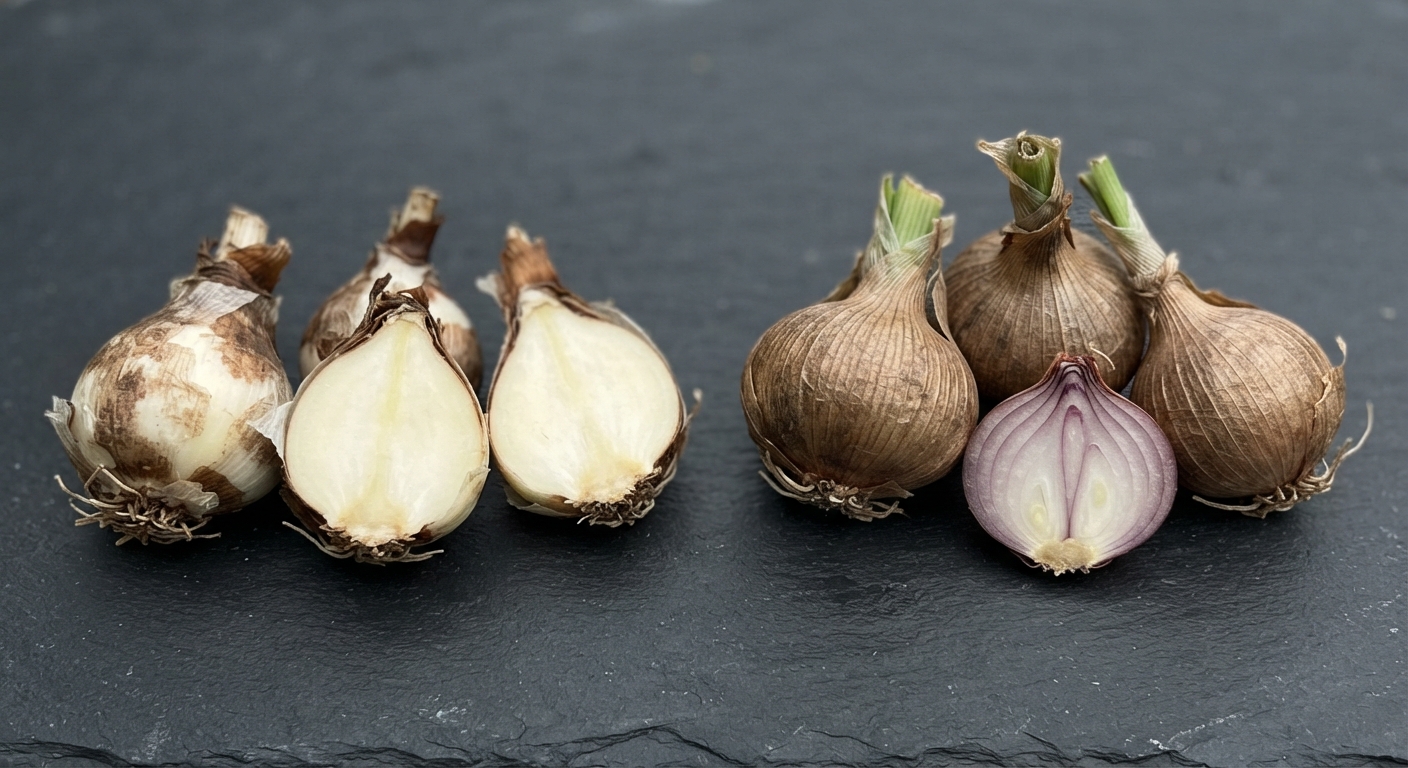
Death camas (Toxicoscordion venenosum, formerly Zigadenus) is one of the most deceptive lookalikes out there because it grows from a bulb — just like wild onions and wild garlic. And when it’s not flowering, those grassy leaves look awfully similar.
I have a friend in Montana who dug up what he thought was a patch of wild onion while camping. He’s an experienced backcountry guide. He tossed a few bulbs into his camp stew. What stopped him? Another guide walked up and said, “Smell those.” He did. No onion smell. Unseasoned dirt. They threw the stew out.
| Feature | Death Camas | Wild Onion / Garlic |
|---|---|---|
| Smell | No onion/garlic smell at all | Strong onion or garlic odor |
| Bulb | Layered but lacks papery outer skin, often oval | Layered with papery skin, rounder |
| Leaves | Grass-like, V-shaped in cross-section, no smell | Hollow or flat, distinctive onion smell when crushed |
| Flowers | Cream to yellowish-green, star-shaped clusters | Pink, purple, or white ball-shaped clusters |
The rule here is dead simple and unforgiving: If it looks like an onion but doesn’t smell like one, it’s not an onion. Don’t overthink this. Crush a leaf. Smell it. No onion smell? Put it down and walk away.
Death camas contains zygacine, a steroidal alkaloid that attacks the nervous system.
If you eat death camas: Symptoms hit within an hour — severe nausea, vomiting, diarrhea, drooling, slowed heart rate, muscle spasms, confusion, and dangerously low blood pressure. Get to an ER. Activated charcoal may help if given early. Severe cases can be fatal, particularly in children and smaller adults.
Pokeweed vs Wild Blueberries / Wild Grapes
This is a seasonal danger that peaks in late summer and early fall. Pokeweed (Phytolacca americana) produces clusters of glossy, deep purple berries that look strikingly like wild blueberries or small wild grapes — especially when you’re scanning at a distance.
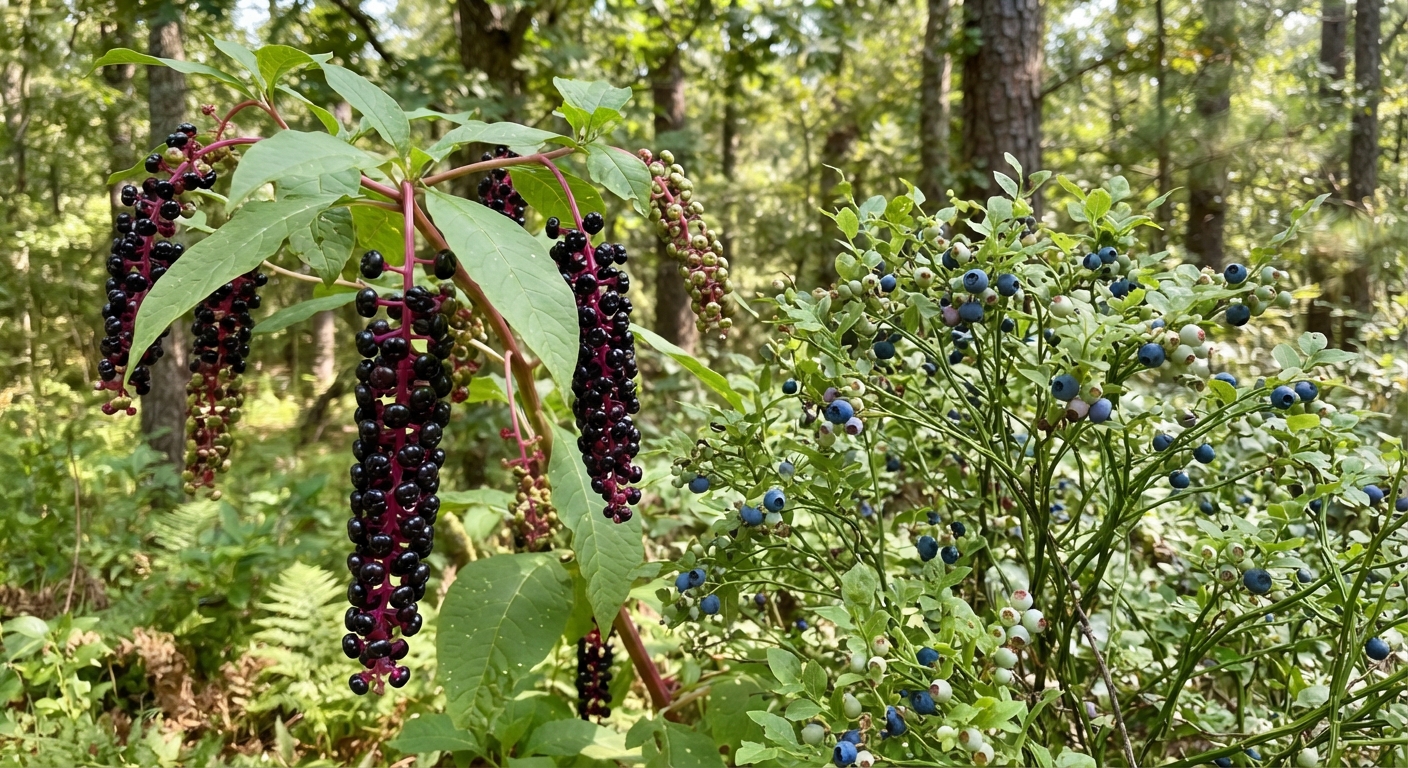
I once watched a family foraging blueberries in a public park in Virginia. The mother was picking actual blueberries, but her 4-year-old was about 20 feet away, fascinated by a pokeweed bush loaded with dark fruit, reaching right for them. I didn’t want to be that weird stranger yelling at people, but I yelled. Better a weird stranger than a pediatric emergency.
Here’s the breakdown:
| Feature | Pokeweed | Wild Blueberry | Wild Grape |
|---|---|---|---|
| Berry arrangement | Hanging raceme — berries dangle from a central pink-red stalk | Individual or small clusters, each berry with a small crown | True clusters on flexible stems, but with tendrils |
| Stems | Thick, smooth, bright magenta-pink | Woody, gray-brown twiggy shrubs | Woody vine with curly tendrils |
| Leaves | Large, smooth-edged, oval, 4–12 inches | Small, oval, finely toothed edges | Heart-shaped to lobed, jagged edges |
| Plant type | Herbaceous, 4–10 feet tall | Low woody shrub, 1–4 feet | Climbing woody vine |
| Berry interior | Deep magenta juice that stains everything | Pale green to purple flesh, small seeds | Thin skin, pulpy, contains seeds |
The magenta stalk of pokeweed is your giveaway. Those hot-pink stems practically glow against green foliage. Wild blueberries grow on woody, twiggy shrubs — not tall, fleshy-stemmed plants. Wild grapes climb with tendrils and grow on vines that wrap around trees.
If you eat pokeweed berries: Severe stomach cramping, vomiting, bloody diarrhea, difficulty breathing, and in large quantities, convulsions. Children are especially vulnerable. Call Poison Control or 911 immediately. Every part of mature pokeweed is toxic — roots, leaves, berries, stems. (Yes, some people eat young pokeweed shoots after boiling them three times in changes of water — that is NOT a beginner technique and I do not recommend attempting it.)
Bittersweet Nightshade vs Wild Tomatoes / Wild Cherries
Bittersweet nightshade (Solanum dulcamara) belongs to the same family as tomatoes, peppers, and potatoes — and that family resemblance is exactly what gets people in trouble. Its small red berries hang in clusters and look eerily similar to tiny wild cherry tomatoes or wild red cherries.
I’ve seen nightshade growing through fences in suburban neighborhoods, its bright berries practically glowing at children’s eye level. It’s beautiful. That’s part of the danger — it looks like something nature meant you to eat.
| Feature | Bittersweet Nightshade | Wild Cherry Tomato | Wild Cherry |
|---|---|---|---|
| Berry shape | Oval to egg-shaped, often pointed at tip | Round, smooth | Round with a tiny dimple |
| Berry cluster | Loose, airy clusters on slender stems | Heavier clusters | Hangs singly or in pairs from a single stem |
| Flowers | Purple petals with bright yellow cone center — distinctive shooting star shape | Yellow, five-petaled, star-shaped | White, five-petaled |
| Leaves | Arrow-shaped, often with two small lobes at base | Compound, toothed leaflets | Oval with serrated edges |
| Vine | Woody, climbing, twining | Herbaceous, sprawling | Tree or shrub — not a vine at all |
The purple-and-yellow flower of bittersweet nightshade is your dead giveaway. If you see it blooming, you know immediately what you’re dealing with. But in fall when only berries remain, you have to rely on the leaves and growth habit. If it’s climbing like a vine and has arrow-shaped leaves with tiny basal lobes — back away.
If you eat bittersweet nightshade berries: The main toxin is solanine. Symptoms include headache, nausea, vomiting, drowsiness, slowed pulse, and in severe cases, hallucinations and paralysis. Call Poison Control. Most cases resolve with supportive care, but children and pets are at higher risk of serious complications.
Foxglove vs Comfrey
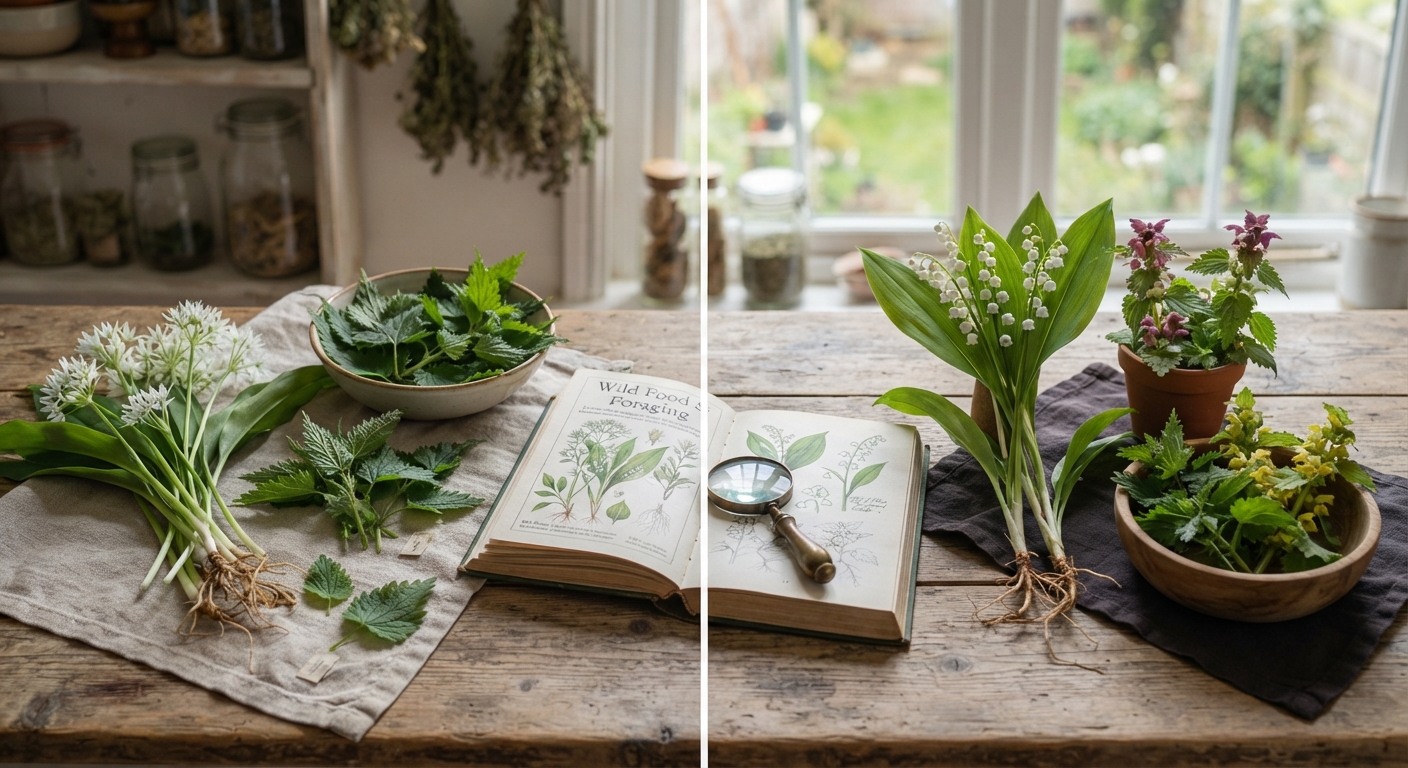
This one terrifies me more than most, because foragers sometimes harvest comfrey (Symphytum officinale) leaves for herbal salves and poultices — and foxglove (Digitalis purpurea) can grow right alongside it.
Foxglove is the plant that gave us digoxin, the heart medication. Every part contains cardiac glycosides that can stop your heart. A single leaf eaten by mistake can be fatal.
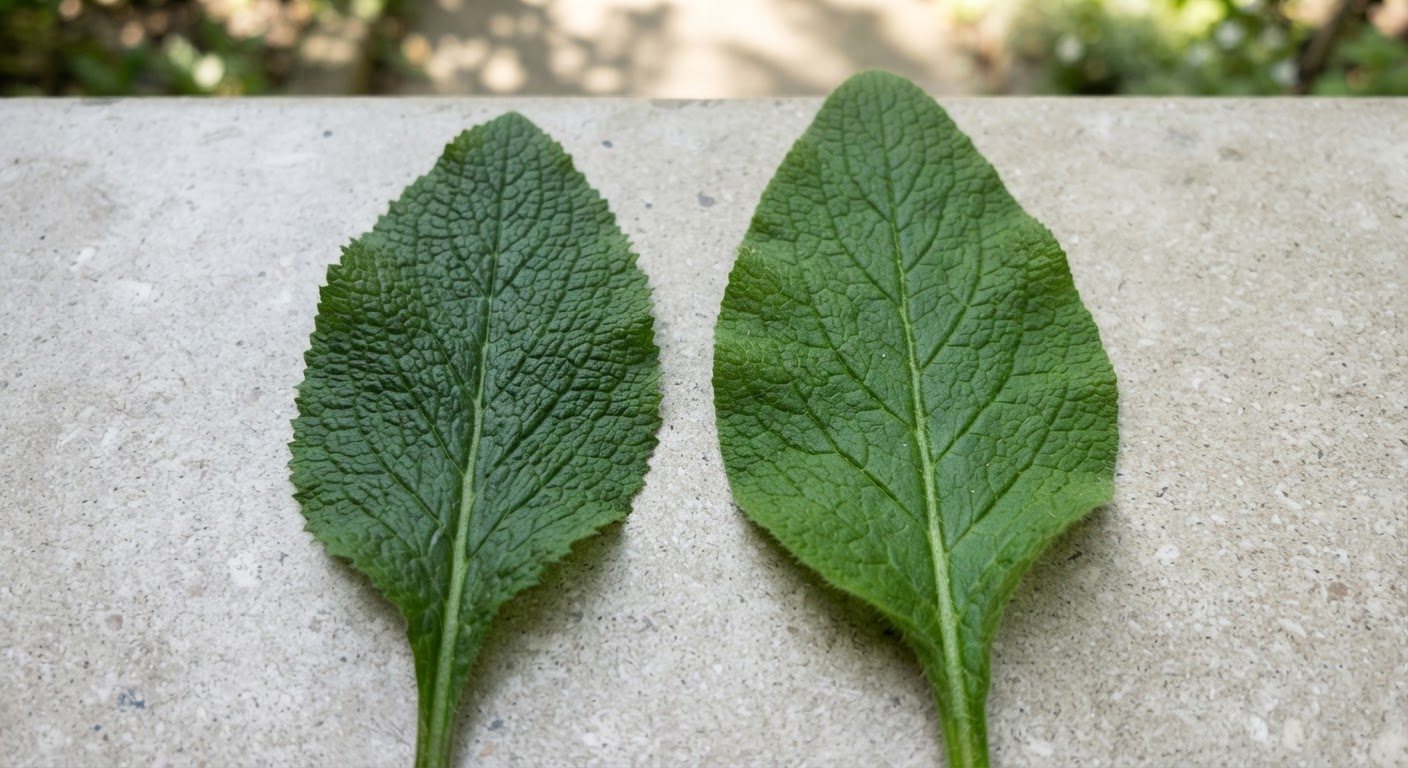
| Feature | Foxglove | Comfrey |
|---|---|---|
| Leaves | Soft, velvety-fuzzy, lance-shaped, finely toothed | Bristly-hairy, rough like sandpaper, broad and pointed |
| Leaf veins | Deeply impressed, netted | Prominent but less deeply indented |
| Flowers | Tall spike of tubular bell-shaped flowers, pink-purple with spotted throats | Clustered bell-shaped flowers, purple, pink, or cream, curling at tips |
| Height | 3–5 feet with dramatic flower spire | 2–3 feet, bushier habit |
| Stem | Upright, unbranched | Branched, hairy |
Before flowering, both plants are just big rosettes of green leaves at ground level. This is the most dangerous time for confusion. The texture is your best friend here: comfrey leaves feel like coarse sandpaper — rough, bristly, almost prickly. Foxglove leaves feel like a kitten’s ear — soft, velvety, almost pleasant to touch.
If you eat foxglove: Nausea, vomiting, severe headache, visual disturbances (yellow halos around objects), dangerously irregular heartbeat, and cardiac arrest. This is a 911 emergency. Do not wait. Hospital treatment includes activated charcoal, antiarrhythmic drugs, and in severe cases, digoxin-specific antibody fragments (Digibind).
Bonus: Giant Hogweed vs Cow Parsnip
Giant hogweed (Heracleum mantegazzianum) isn’t something you eat — but it’s often confused with cow parsnip (Heracleum maximum), which some foragers harvest for its young shoots and roots. The danger here isn’t ingestion. It’s the sap.
Giant hogweed sap contains furanocoumarins — phototoxic compounds that, when they get on your skin and are exposed to sunlight, cause horrific blistering burns. Third-degree chemical burns from a plant. The scars can last for years and the skin can remain light-sensitive for months.
| Feature | Giant Hogweed | Cow Parsnip |
|---|---|---|
| Height | 8–15 feet, truly massive | 4–8 feet |
| Stem | 2–4 inches thick, purple blotches, coarse white bristles | 1–2 inches thick, green, fine hairs |
| Leaves | 3–5 feet wide, deeply incised, jagged | 1–2 feet wide, broad lobes |
| Flower umbel | Up to 2.5 feet across — dinner plate sized | 4–8 inches across |
| Seeds | Elliptical, with brown resin canals | Heart-shaped, flattened |
If you see a plant that looks like Queen Anne’s Lace on steroids — towering over you, stems as thick as a broom handle, flower heads like serving platters — do not touch it. Report it. Giant hogweed is a federally listed noxious weed, and many states have eradication programs. In the US, call your state’s Department of Agriculture or invasive species hotline.
If giant hogweed sap contacts your skin: Immediately wash with soap and cold water. Cover the area to block all sunlight. Stay out of the sun for at least 48 hours. If blistering begins, seek medical attention. Topical steroids may help early on.
What to Do If You Eat a Suspicious Plant
This section could save a life. Read it. Remember it. Share it.
- Don’t panic, but act immediately. Seconds matter with some toxins.
- Call 911 if the person is having trouble breathing, having seizures, or losing consciousness.
- Call Poison Control: 1-800-222-1222. This number works anywhere in the United States. Save it in your contacts right now — seriously, stop reading and save it.
- Gather evidence. Take photos of the plant — leaves, stems, flowers, berries, the whole thing. Dig it up or collect a sample in a sealed bag if safe to do so.
- Do NOT induce vomiting unless Poison Control or a doctor specifically tells you to. Some plant toxins cause more damage coming back up.
- Note the time of ingestion and any symptoms. This helps medical professionals enormously.
- Go to the ER if advised. Bring the plant sample with you.
The One Foraging Rule That Keeps You Alive
I learned this from an old forager in Appalachia, and it’s been my north star ever since:
“Never eat anything you can’t identify with 100% certainty. Not 90%. Not ‘pretty sure.’ One hundred percent. Every single time.”
Foraging isn’t like cooking — you can’t just taste-test your way through it and hope for the best. One bite of the wrong plant can end your life, damage your liver beyond repair, or leave you on dialysis for the rest of your days.
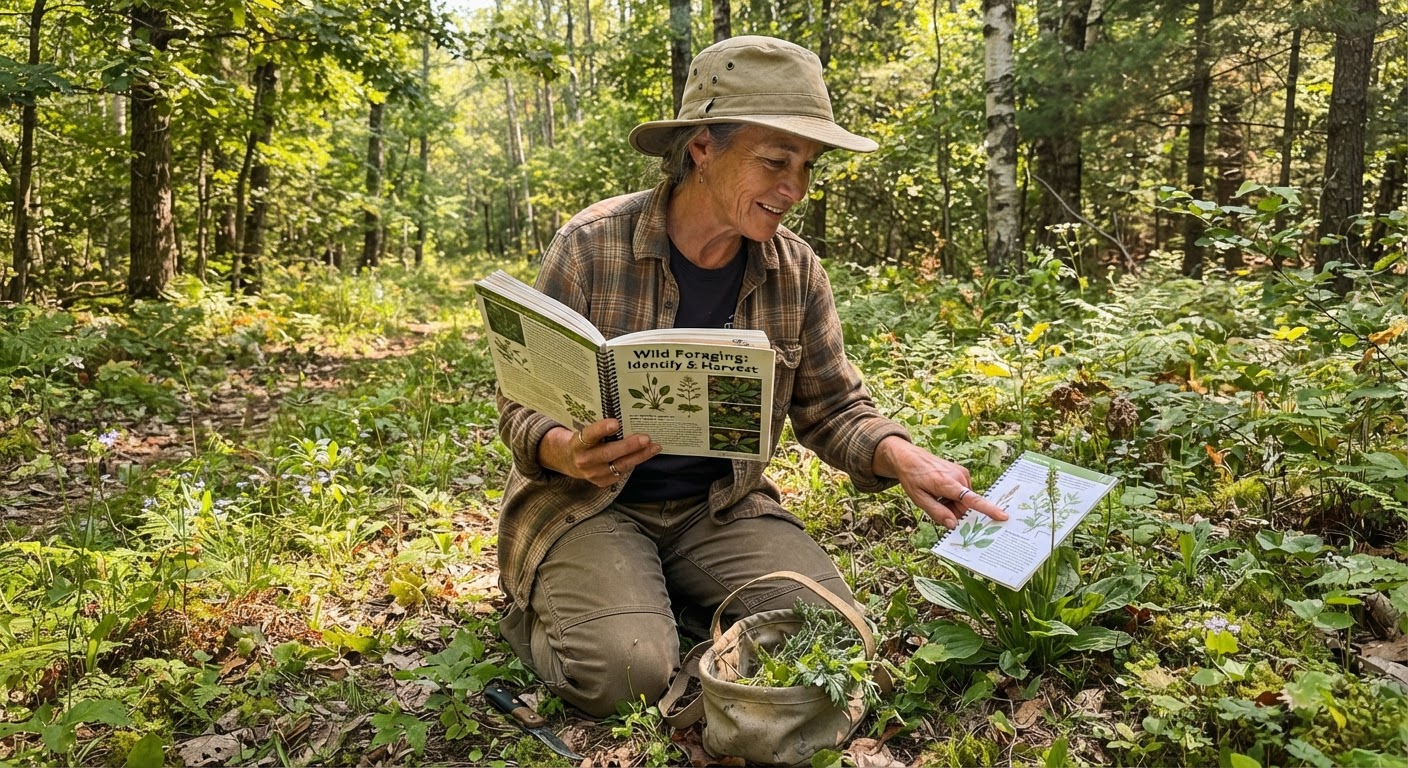
Here’s a safety checklist I follow on every single forage — print this out and keep it in your field bag:
- I have positively identified this plant using at least three separate field marks — not just one.
- I’ve cross-referenced with a reliable field guide (not just an app).
- I understand what the poisonous lookalikes are for this species.
- I’ve checked for the specific key differences between the edible and toxic versions.
- I’m harvesting in the right season for this plant’s edible stage.
- I’m in a safe harvesting location — not sprayed with pesticides, not near roads.
- I’ve smelled it. (For alliums and carrots, smell is a critical ID tool.)
- Someone else knows where I am and what I’m foraging.
That last one isn’t about ID — it’s about what happens if something goes wrong. If you’re foraging alone in the backcountry and eat something toxic, having someone who knows your location and planned return time could be the difference between life and death.
Knowledge Is the Antidote
I started this article with my near-miss with poison hemlock, and I want to end with this thought: the goal of learning about poisonous plants isn’t to make you afraid of nature. It’s to give you the confidence to move through it safely.
The woods, the meadows, the roadsides — they’re full of food. But they’re also full of plants that evolved potent chemical defenses over millions of years. Respect that. Learn to read the details. The hairs on a stem. The smell of a crushed leaf. The arrangement of berries on a stalk. These tiny botanical clues are the difference between a meal and a medical emergency.
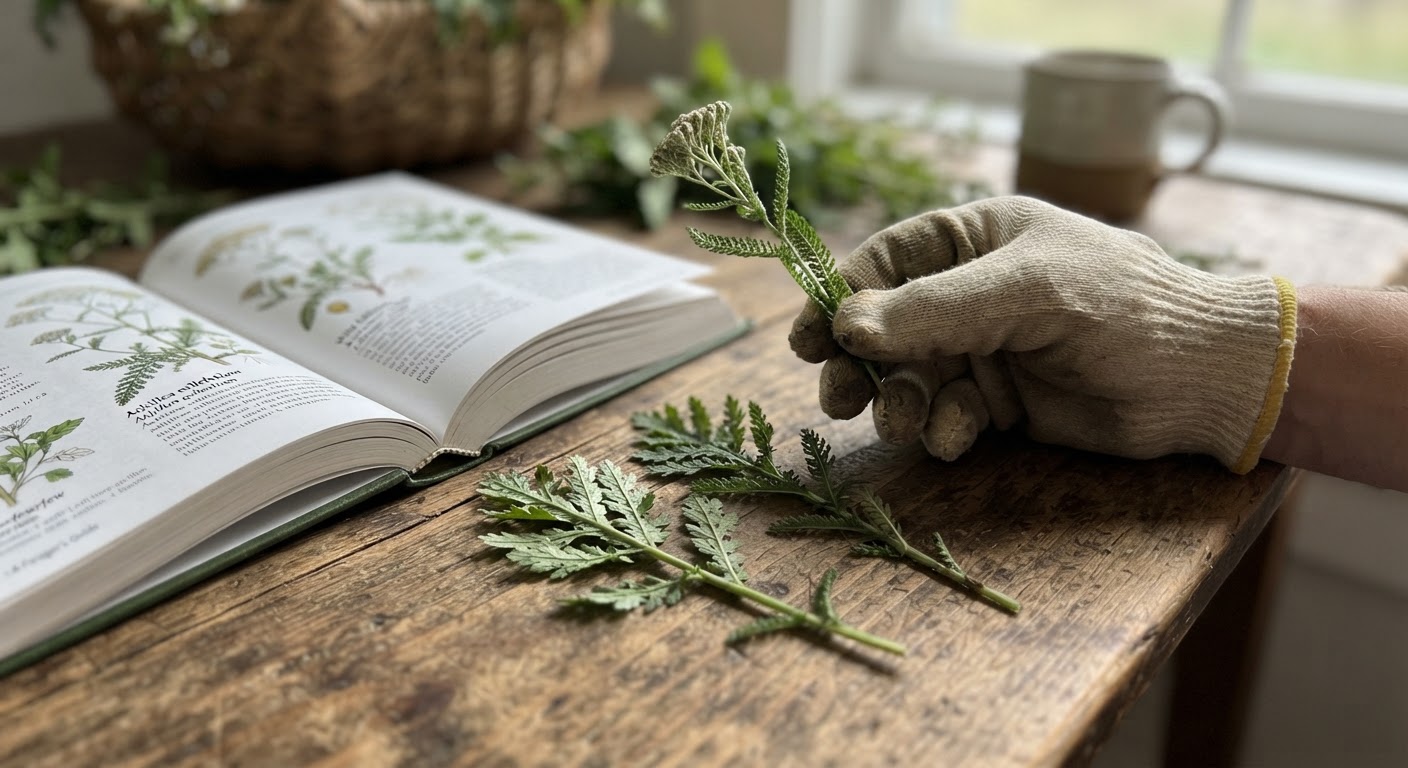
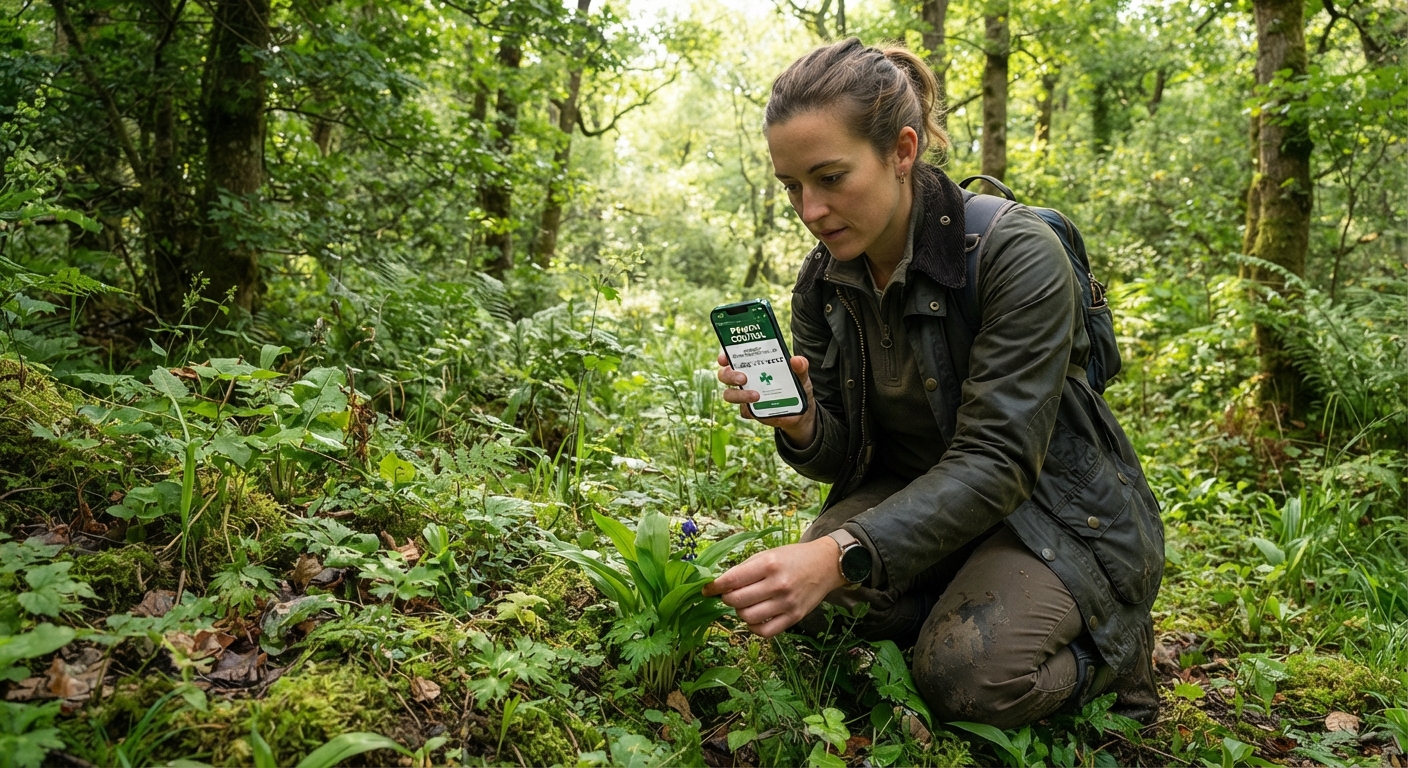
Get a good field guide — not just an app on your phone. Apps are convenient, but they can be wrong, and your phone dies. A physical guidebook with detailed botanical illustrations and range maps never runs out of battery. Join a local foraging group. Learn from someone who’s been doing this longer than you’ve been alive. There is no substitute for mentorship when it comes to plant identification.
And please — share this article with anyone you know who’s getting into foraging. It might save their life.
Poison Control: 1-800-222-1222 | Save this number. You hope you’ll never need it. But if you do, you’ll be glad you have it.
🌿 Want a second pair of eyes in the field?
Our free iOS app Edible Plant Identifier helps you snap a photo and instantly know what you’re looking at — with toxic lookalike warnings, edible parts info, and seasonal tips.
📱 Download Edible Plant Identifier — Free on iOS