Three years ago I sat on a log in a West Virginia state park, chewing a leaf I was about 60% sure was wood sorrel. My friend watched with the expression of someone watching a YouTube video titled “Guy Does Something Stupid.”
It was wood sorrel. Tasted like green apple candy.
But that “60% sure” feeling? That’s the feeling that gets people killed. Or at minimum, gets them a very unpleasant evening hugging a toilet.
Foraging isn’t dangerous — overconfident foraging is dangerous. The plants don’t sneak up on you. They sit there, photosynthesizing peacefully. The risk comes entirely from the person picking them.
If you spend an hour learning the safety rules before you ever put a leaf in your mouth, your odds of a bad experience drop to near zero. Skip that hour, and you’re gambling.
Here’s everything I wish someone had told me before I started.
The One Rule That Beats Everything Else
If you take nothing else from this article, take this:
Never eat anything you cannot identify with 100% confidence.
Not 90%. Not “it looks like the picture.” One hundred percent. Multiple identification markers confirmed. Cross-referenced with at least two sources. Ideally confirmed by someone experienced.
The most dangerous sentence in foraging is “I think it’s…”
Every serious foraging accident I’ve read about started with those three words.
The second most dangerous sentence? “My app said it was safe.”
We’ll get to apps shortly.
Why Foraging Safety Is Different From Other Outdoor Safety
Here’s what makes foraging uniquely dangerous compared to other outdoor activities:
The hazard is invisible. You can see a cliff edge. You can feel a storm coming. But you cannot look at a leaf and feel whether it contains compounds that will shut down your liver three days from now.
Some toxic plants don’t taste bitter. Some look almost identical to edible ones. Some will only make you slightly sick — others will kill you with a single mouthful.
And unlike a twisted ankle or a bee sting, plant poisoning often has a delay. You eat at 2 PM. You feel fine at dinner. You wake up at 3 AM in serious trouble. By the time you connect the dots, hours have passed.
This is why “I ate a tiny piece and waited” — while better than nothing — isn’t a foolproof strategy on its own. Delayed toxicity is real, especially with mushrooms and certain plants that damage the liver or kidneys.
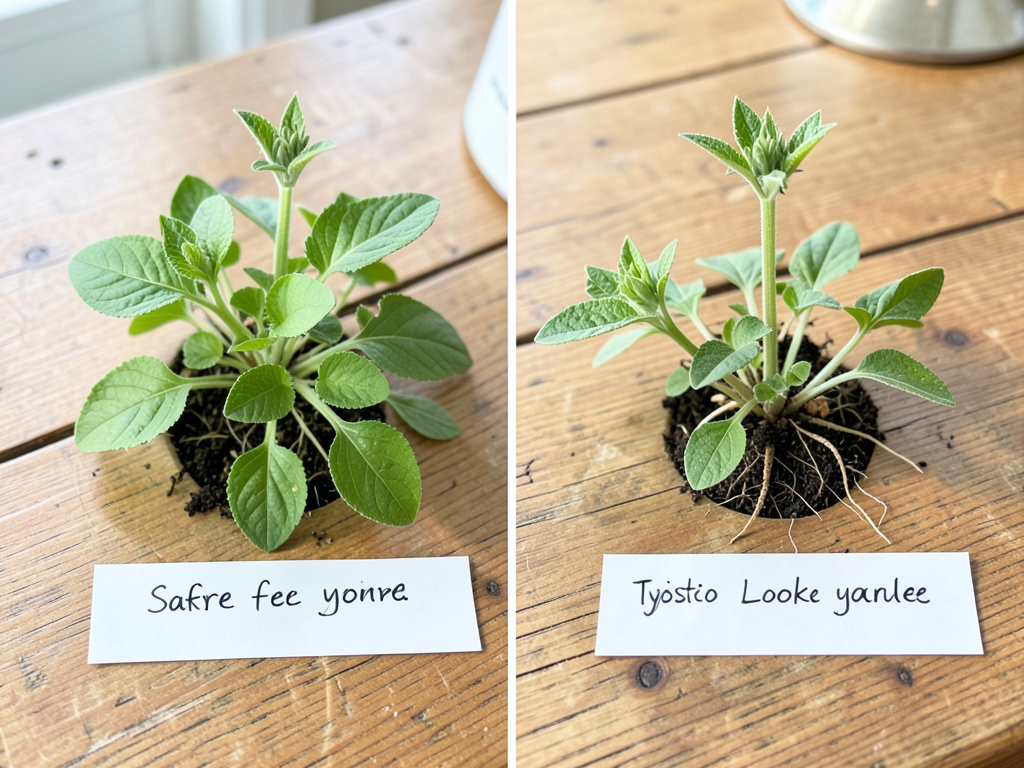
The Universal Edibility Test: When You Have No Choice
The Universal Edibility Test exists for one scenario: survival. Not for weekend foraging. Not for “I forgot my guidebook.” This is for situations where you’re genuinely lost, genuinely without food, and genuinely facing starvation.
If you’re in your local park with a field guide in your pocket, skip this entire section. Just identify the plant properly. That’s always the safer path.
But if you’re ever in a true survival situation, here’s the protocol — and I’m going to be more honest about its limitations than most guides bother to be:
Step 1: Separate the plant into parts. Different parts of the same plant can have wildly different toxicity. Rhubarb stems are food. Rhubarb leaves contain oxalic acid and can make you sick. Don’t test the whole plant at once.
Step 2: Smell it. Crush a small piece and smell. If it smells like almonds or peaches, be extremely cautious — this can indicate cyanogenic compounds. If it smells foul or chemically, skip it.
Step 3: Skin test. Crush a small amount and rub it on the inside of your wrist or elbow. Wait 15 minutes. Any burning, itching, redness, or blistering? That plant is not your friend.
Step 4: Lip test. Touch a small piece to the outside of your lip. Wait 3 minutes. Any tingling, numbness, or burning? Stop.
Step 5: Tongue test. Place a tiny piece on your tongue. Hold it there for 3 minutes without swallowing. Any reaction? Stop.
Step 6: Chew test. Chew a small amount but DO NOT swallow. Hold it in your mouth for 3 minutes. Any unpleasant sensation? Spit it out, rinse your mouth.
Step 7: Swallow test. Swallow a small amount (about a teaspoon). Now wait 8 hours. Don’t eat anything else from the plant during this period. Drink water but nothing else.
Step 8: Larger portion. If no symptoms after 8 hours, eat about a quarter cup and wait another 8 hours.
The brutal truth: this test has false negatives. Some toxic plants won’t cause immediate mouth irritation. Some mushrooms will damage your organs with zero warning signs for 24-48 hours. The Universal Edibility Test reduces risk — it does not eliminate it.
Also: this test only works on YOU. It tells you nothing about whether the plant is safe for someone else with different allergies or sensitivities.
If that sounds scary, good. That’s the point. Go back to Rule One: identify with 100% confidence.
The Deadly Dozen: Plants Beginners Confuse Most Often
Some pairs of plants are so commonly confused that they have their own names in foraging circles. Here are the ones that keep emergency room doctors employed:
1. Wild Carrot (Queen Anne’s Lace) vs. Poison Hemlock
This one kills people. Hemlock — the stuff that ended Socrates — looks eerily similar to wild carrot in its first year. Both have lacy white flower umbels. Both have ferny leaves. Both grow in similar habitats.
The difference? Wild carrot stems are hairy (hence the “Queen Anne’s lace” name — imagine delicate lace). Hemlock stems are smooth with distinctive purple blotches. Wild carrot often has a tiny dark purple flower in the center of the umbel. Hemlock never does.
Also: wild carrot root smells like carrot when crushed. Hemlock smells… unpleasant. Like mouse urine, some say.
If you learn nothing else from this section, learn this pair. Hemlock contains coniine, a neurotoxin that causes ascending paralysis — your legs stop working, then your arms, then your diaphragm. You die awake and aware because your lungs can’t move.
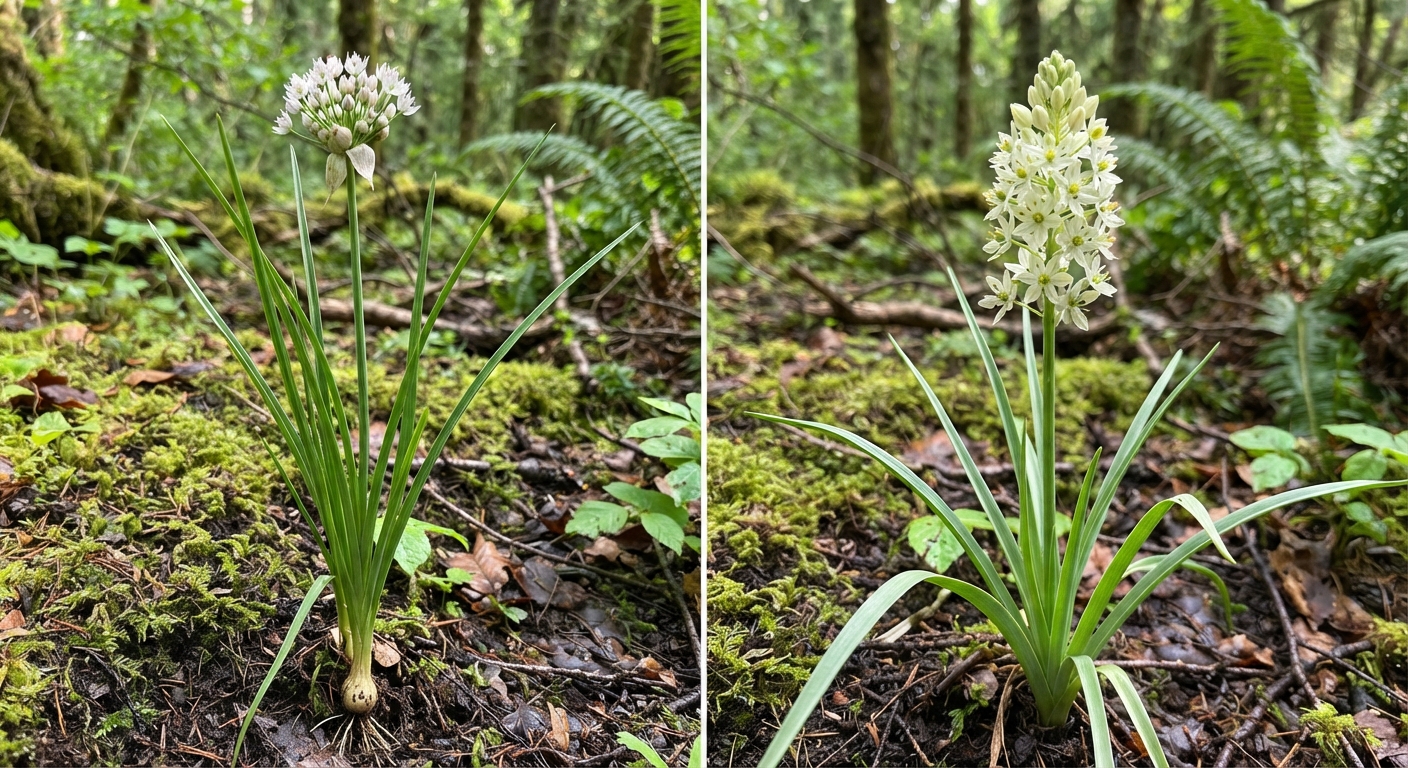
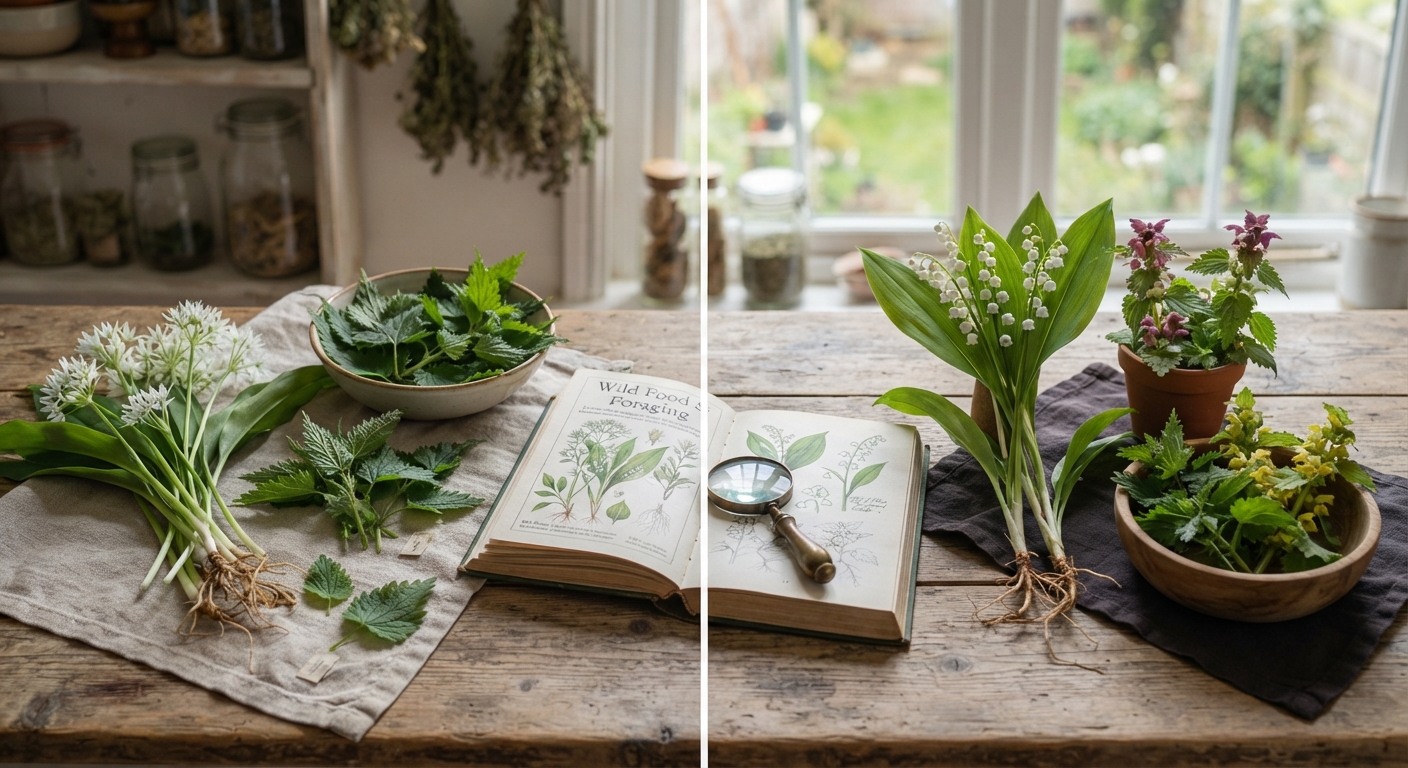
2. Wild Garlic vs. Death Camas
Wild garlic and wild onion are some of the easiest, safest beginner plants — if you use the smell test. Both smell distinctly of onion or garlic when crushed.
Death camas doesn’t. It looks similar — similar leaves emerging from a bulb — but it has no onion odor. None.
This is the plant that killed members of the Lewis and Clark expedition when they mistook it for edible camas bulbs. Zygacine, the toxin, causes vomiting, low heart rate, and can be fatal.
The safety rule here is so simple a child can follow it: if it looks like wild onion but doesn’t smell like onion, don’t eat it.
3. Wild Grapes vs. Canada Moonseed
Wild grapes are delicious. Canada moonseed will wreck your nervous system.
The difference? Grape seeds are round or teardrop-shaped. Moonseed seeds are crescent-shaped — like a tiny moon, hence the name. Also, wild grape tendrils are forked at the tips. Moonseed vines don’t have tendrils.
4. Morel Mushrooms vs. False Morels
True morels are hollow from stem to cap. Cut one lengthwise and it’s an empty tube.
False morels — Gyromitra species — are chambered or stuffed with cottony tissue when cut open. They contain gyromitrin, which your body metabolizes into monomethylhydrazine. Yes, that’s rocket fuel. It causes vomiting, seizures, liver damage, and sometimes death.
This identification is so easy (cut it in half!) that there’s no excuse for getting it wrong. Yet every spring, someone does.
5. Blueberries vs. Tutsan Berries
Wild blueberries grow on low shrubs with small, finely toothed leaves. The berries have a distinctive crown — a five-pointed star pattern on the bottom.
Tutsan (Hypericum androsaemum) berries look similar but lack the crown, grow on different shrubs, and the berries turn from red to black rather than green to blue.
The safety lesson: learn the entire plant, not just the fruit. The berry alone is rarely enough for positive identification.
The Tools That Actually Help (And The Ones That Don’t)
Plant Identification Apps: Useful But Dangerous
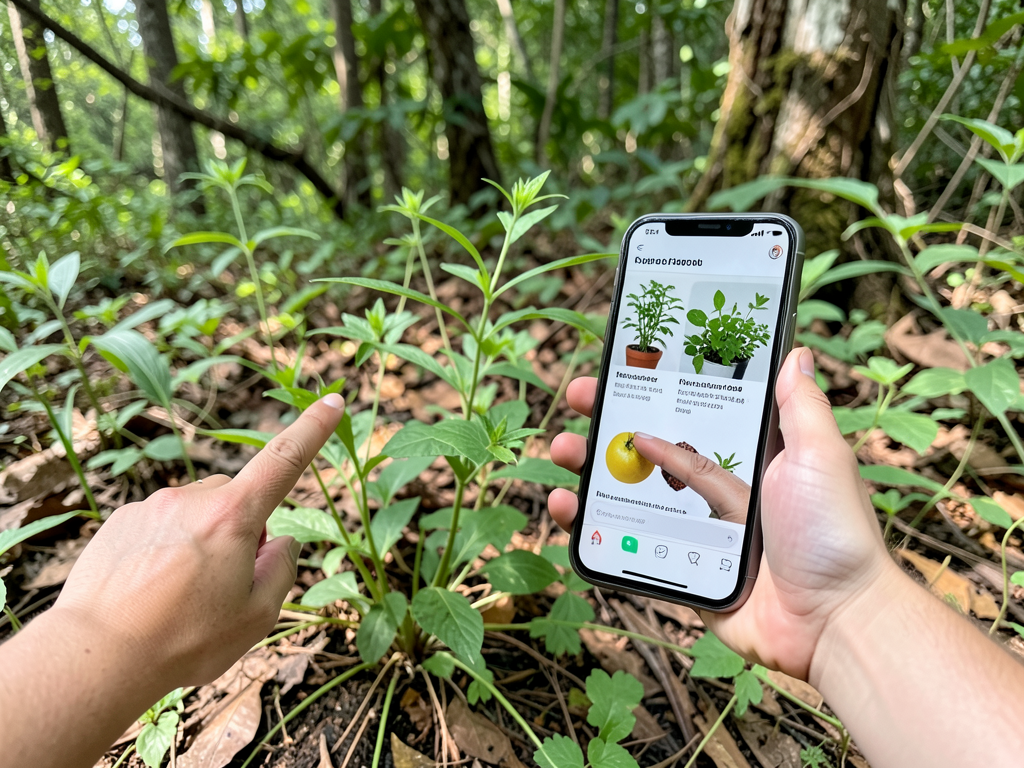
Apps like iNaturalist, PictureThis, and PlantNet have gotten remarkably good. I use them. You should use them. They’re especially helpful for narrowing down possibilities when you’re staring at an unfamiliar plant.
But here’s what nobody tells you: these apps are guessing. They’re sophisticated guesses based on machine learning, but they’re guesses. Their accuracy varies by plant family, by region, by photo quality, and by how common the species is in their training data.
A 2023 study published in Clinical Toxicology found that plant identification apps correctly identified toxic plants only about 50-70% of the time, depending on the app and the plant. That means 3-5 times out of 10, the app gets it wrong when it matters most.
Use apps as a starting point, never as a final confirmation. Think of them as the friend who says “I think that might be…” — useful for direction, not for the final verdict.
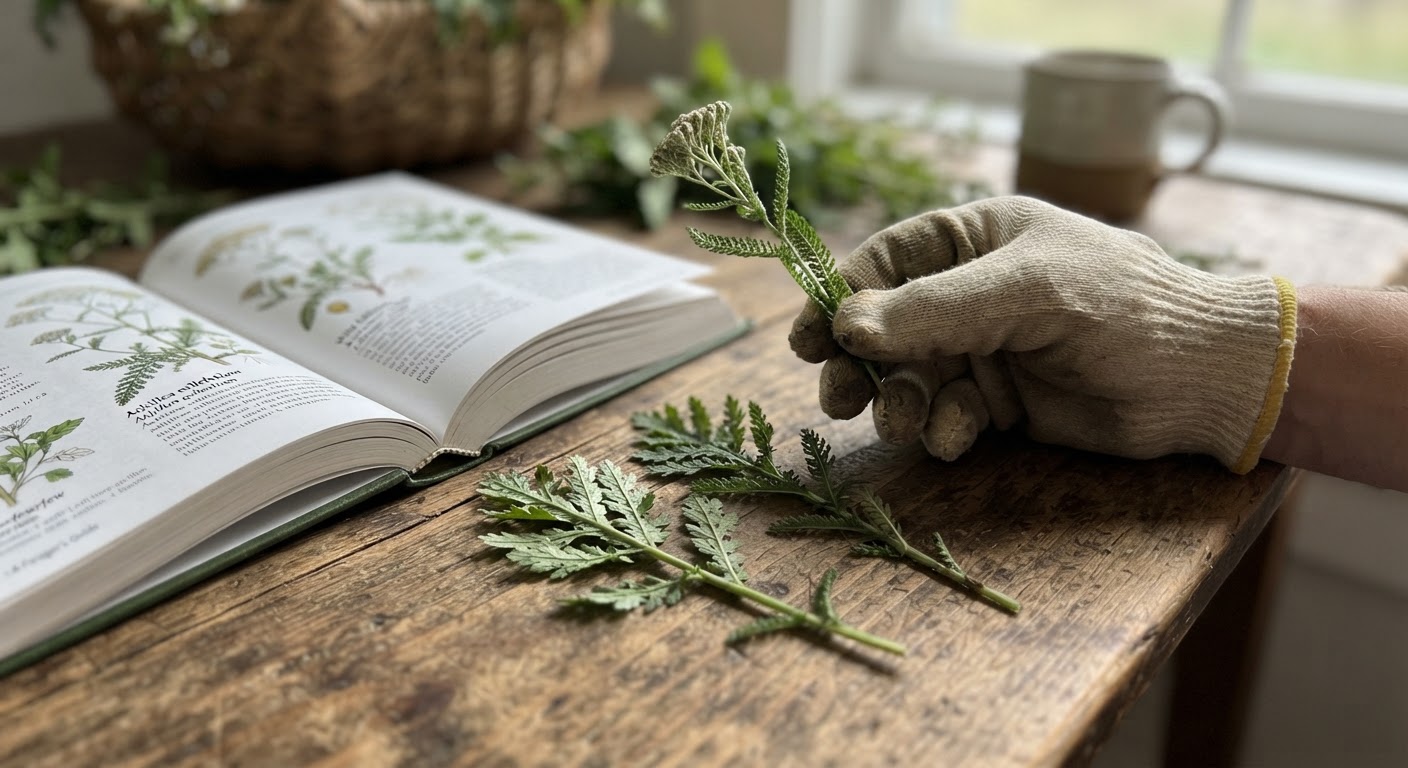
Always confirm with at least two other sources: a physical field guide, an experienced forager, or a regional plant key with detailed botanical descriptions.
Field Guides Are Still King
A good regional field guide doesn’t run out of battery. It doesn’t need cell service. It’s been reviewed and fact-checked by botanists, not trained on scraped internet images.
For North America, Samuel Thayer’s books (The Forager’s Harvest, Nature’s Garden, Incredible Wild Edibles) are the gold standard. Thayer has been foraging since childhood and his identification chapters are thorough enough to build real confidence.
For a pocket-sized reference, Peterson Field Guide to Edible Wild Plants covers eastern and central North America and includes clear line drawings that highlight identification markers better than photographs sometimes can.
What Else Goes in Your Kit
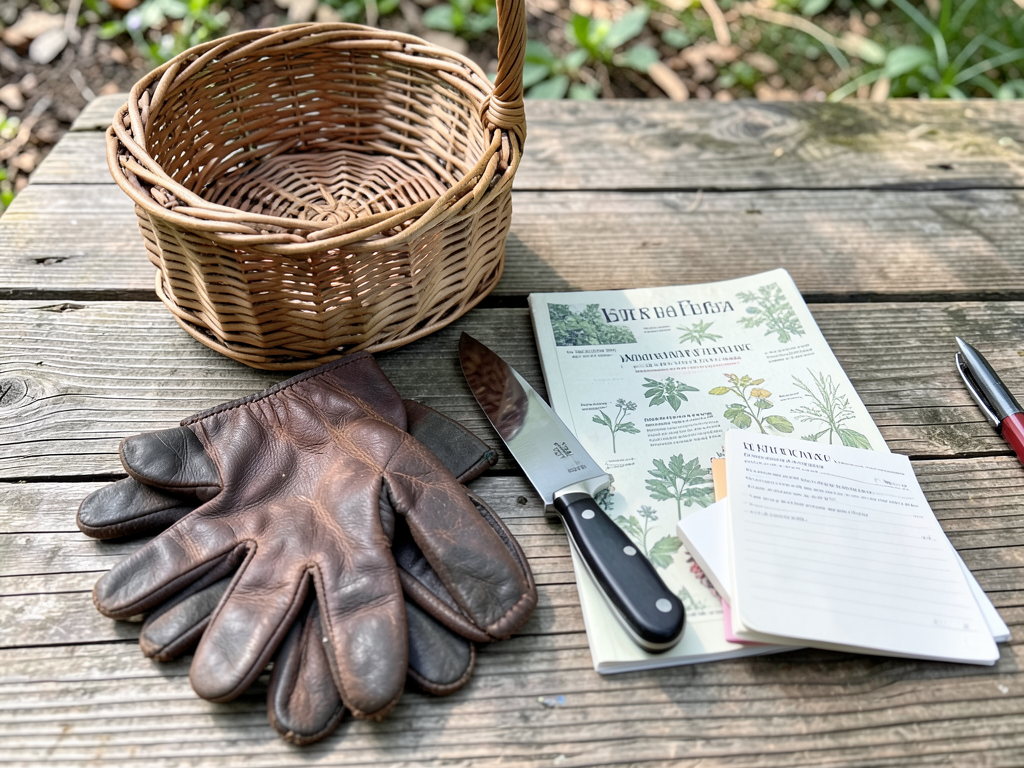
Here’s what I actually carry when I go out:
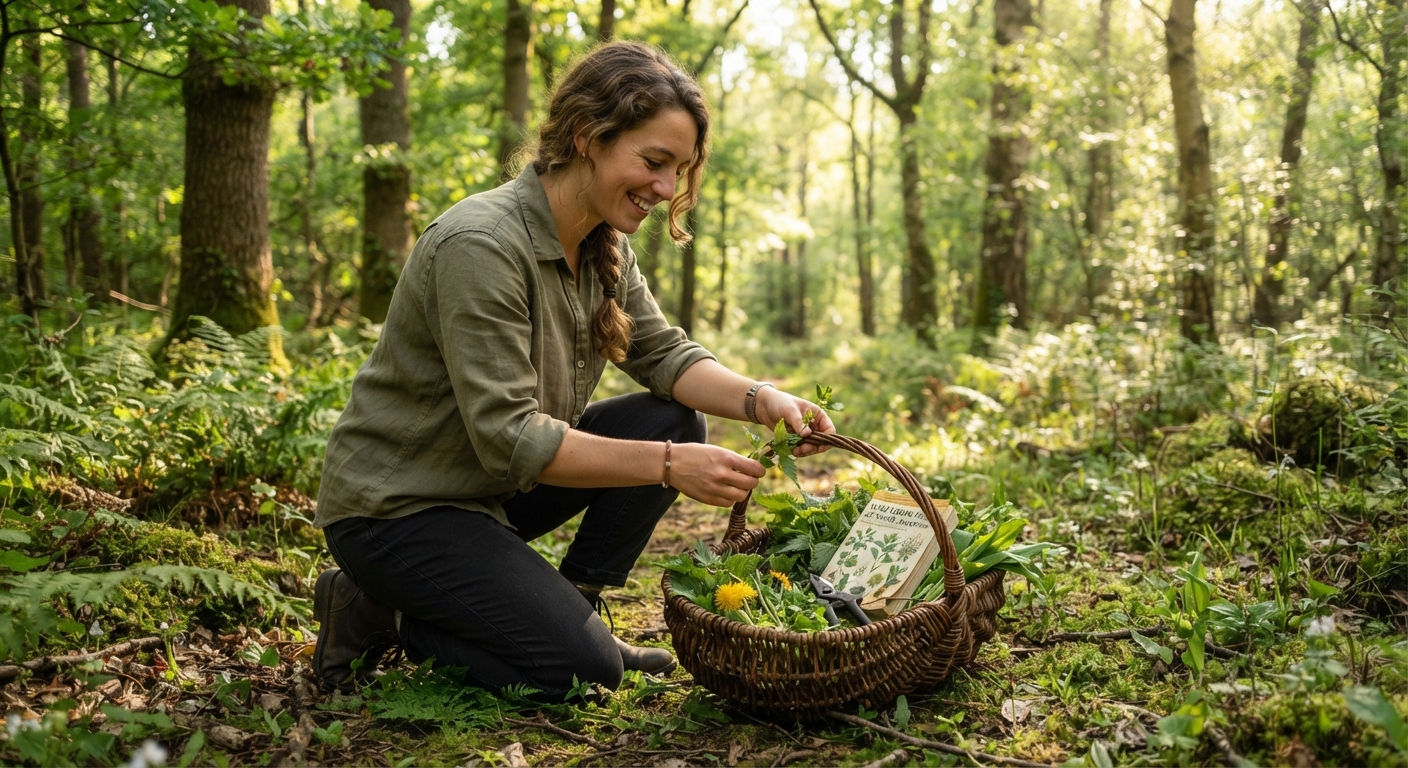
- A basket, not a plastic bag. Baskets let spores, seeds, and moisture escape. Plastic bags turn your greens into wilted mush within an hour. Also, baskets look cooler in photos.
- Leather or cut-resistant gloves. Some edible plants have thorns (wild raspberries, anyone?). Some toxic plants can cause skin reactions. Gloves solve both problems.
- A sharp folding knife. For clean cuts that don’t damage the plant’s root system. Tearing stems by hand introduces bacteria and kills perennials that might otherwise regrow.
- A small notepad and pen. Write down where you found something, what it looked like, what else was growing nearby. If you get sick, this information could save your life.
- A magnifying loupe (10x). For checking tiny details like leaf hairs, flower structures, or spore prints. A $10 jeweler’s loupe has saved me from more identification mistakes than any app.
- Paper bags or wax paper. For keeping different species separate. Never mix unknown plants in the same container.
- Water and a first aid kit. Standard outdoor safety gear, but worth mentioning because foragers tend to wander farther than they planned.
Location Matters More Than You Think
Where you forage affects safety just as much as what you forage.
Never Forage Near Roads
Plants within 50 feet of any road absorb heavy metals from car exhaust — lead, cadmium, and other unpleasant things. The “roadside salad” might technically be edible, but it’s also full of compounds you don’t want in your body.
Railroad tracks are worse. Rail companies have historically sprayed herbicides along tracks to keep vegetation down. Those chemicals persist in soil for years.
Avoid Agricultural Edges
The edge of a conventionally farmed field looks like prime foraging territory — lots of sun, disturbed soil, opportunistic plants. But those plants have been absorbing whatever the farmer sprayed on the crops. Pesticides, herbicides, fungicides. Unless you know the farm is organic and can confirm no spraying near the edges, walk past.
Know Your Urban Soil
City parks, abandoned lots, and suburban yards can be fine — or they can be sitting on decades of lead paint chips from demolished buildings. Urban soil varies wildly from one block to the next.
If you’re foraging in an urban area, consider getting a soil test. Many agricultural extension offices offer them for under $20. It’s worth knowing whether your favorite dandelion patch is sitting on contaminated ground.
The 100-Foot Rule
As a general guideline: forage at least 100 feet from roads, at least 50 feet from trails where dogs are walked, and never from areas treated with pesticides or herbicides. Private land? Get explicit permission. Public land? Check regulations — some parks and nature preserves prohibit foraging entirely.
Foraging Safety by Season
Spring: The Most Dangerous Season
Spring is when foraging accidents spike. Here’s why: many plants look similar in early growth stages before flowers develop. Poison hemlock rosettes look almost identical to wild carrot rosettes before either puts up a flower stalk. Without flowers — the most reliable identification marker — beginners have far less to go on.
Spring rule: if you can’t identify it by vegetative characteristics alone (leaf arrangement, stem texture, smell, habitat), wait for it to flower before harvesting.
Summer: Peak Abundance, Peak Complacency
By summer, most plants have flowered or fruited, making identification much easier. The danger shifts from misidentification to overconfidence. “I’ve picked this successfully five times” becomes “I don’t need to double-check anymore.”
Summer rule: check every single plant, every single time. Mushrooms especially. A single destroying angel mushroom — which looks like the edible field mushroom to the untrained eye — accidentally mixed into your basket can kill you.
Fall: Nuts, Berries, and Roots
Fall foraging often means going underground — digging roots, tubers, and bulbs. The challenge here is that once you dig up the root, the above-ground identification markers may be withered or gone. You’re relying on memory of what the plant looked like when it was alive.
Fall rule: mark plants you want to harvest before they die back. Flag them, photograph them, GPS-pin them. Don’t dig up an unfamiliar root and try to identify it from the underground part alone.
Winter: Scarcity and Stored Toxins
Winter foraging is limited but not impossible. Rose hips, pine needles, certain bark, and some hardy greens persist through snow.
The seasonal concern here is that some plants — particularly those with edible roots or tubers — concentrate certain compounds during winter dormancy in ways that can make them more toxic or bitter than their summer versions. The same burdock root that’s perfectly edible in fall might be unpalatably woody and bitter by late winter.
Accidental Poisoning: What to Do
You ate something. Now you’re not sure about it. What actually happens next?
Mild Symptoms: When to Watch and Wait
If you experience mild symptoms — slight nausea, a tingly tongue, stomach discomfort — and you’re confident you ate only a tiny amount of the questionable plant:
- Stop eating immediately. Don’t finish the meal.
- Call Poison Control. In the US: 1-800-222-1222. It’s free, it’s 24/7, and the people who answer are toxicology specialists. They’ve heard every foraging mistake you can imagine.
- Save a sample of everything you ate. All of it — the plant itself, the meal, anything left in your basket. The sample is how doctors identify what’s poisoning you.
- Document what you can. What the plant looked like, where you found it, how much you ate, when you ate it.
- Don’t induce vomiting unless Poison Control tells you to. Some toxins do more damage coming back up through the esophagus. Let the professionals decide.
Severe Symptoms: Act Immediately
If you experience severe symptoms — difficulty breathing, rapid heart rate, seizures, loss of consciousness, severe abdominal pain — this is a 911 situation. Do not drive yourself. Do not wait to see if it gets better.
Say the words “suspected plant poisoning” clearly to the dispatcher. Tell them what you ate if you know. This saves them time in the emergency room.
Bring the plant sample with you to the hospital. I cannot stress this enough. Without a sample, doctors are treating symptoms blindly.
The Bitter Truth About Antidotes
Here’s something most foraging guides skip: many plant toxins have no specific antidote. Treatment is often supportive — managing symptoms, keeping you alive, and letting your body clear the toxin on its own. For some toxins (amatoxins from certain mushrooms), the only definitive treatment for severe cases is a liver transplant.
This is why prevention matters so much more than cure.
Sustainable Harvesting: Safety for the Ecosystem
Foraging safety isn’t just about protecting yourself. It’s about protecting what you’re harvesting.
The 1-in-20 rule: never take more than 1 out of every 20 plants you find. If you spot 20 ramps, you can harvest one — and only one. If you see only 3 plants, take none. This ensures the population can sustain itself.
For leafy greens, take only a few outer leaves from each plant. Don’t uproot the entire plant unless it’s an abundant annual species.
For mushrooms, cut the stem at ground level with a knife rather than pulling the entire organism out of the soil. The underground mycelium network is the actual fungus — the mushroom is just its fruit. Leave the network intact.
For roots and tubers, you’re killing the plant. Be especially conservative. Some wild root vegetables (ramps, ginseng, goldenseal) are threatened or endangered in parts of their range due to overharvesting.
Don’t forage rare plants at all. If you don’t know whether a plant is rare in your area, check your state’s Department of Natural Resources or equivalent agency. Many states maintain lists of protected, threatened, and endangered plant species.
Teaching Foraging Safety to Kids
Kids are natural foragers — they want to pick things up, touch things, and famously, put things in their mouths. Channel that impulse safely:
The “No Pick, No Eat” rule works well for young children: never pick and eat anything without showing a grown-up first. Not one berry. Not one leaf. Show first, then eat only if the grown-up says yes.
Teach them the safe plants first. Start with easily identifiable, unmistakable, widespread plants: dandelions, clover, wild strawberries. Plants with no dangerous lookalikes. Let them build confidence and pattern recognition on the easy stuff.
Make it a game of “don’t touch.” Point out toxic plants and explain that some plants “aren’t nice to our bodies” — like how they know not to touch a hot stove. Young kids don’t need the taxonomy of hemlock poisoning. They need to know that some plants are “not for people.”
Model the behavior. If you double-check a plant in your field guide, let them watch. If you’re 95% sure but decide not to eat it because 95% isn’t 100%, say that out loud. “I’m pretty sure this is chickweed, but the leaves look a little different from my guide, so I’m going to leave it.” That’s the most powerful foraging lesson you can teach.
Final Thoughts: Confidence Without Cockiness
There’s a sweet spot in foraging safety between paralyzing fear and reckless abandon. You want enough knowledge to be confident in your identifications, and enough humility to walk away when you’re not sure.
The best foragers I know are also the most cautious. They double-check plants they’ve harvested a hundred times. They carry field guides even on trails they know well. They say “I don’t know” without embarrassment.
Because here’s the thing about foraging safety: you can be right a thousand times, and it only takes being wrong once.
But here’s the better news: following these safety rules isn’t restrictive. It’s freeing. When you know — genuinely know — that the plant in your hand is safe, you can enjoy it without that nagging anxiety in the back of your mind. The salad tastes better when you’re not wondering if you’ll regret it in six hours.
So carry your field guide. Check your plants twice. Forage with people who know more than you do. And when in doubt, take a photo and walk away. The plant will still be there tomorrow.
The photos might even help you identify it by then.
Frequently Asked Questions
Can I trust plant identification apps for foraging?
Plant ID apps are useful starting tools but should never be your only confirmation. Studies show they misidentify toxic plants 30-50% of the time. Always cross-reference with a physical field guide or an experienced forager before consuming anything.
What is the number one rule of foraging safety?
Never eat anything you cannot identify with 100% confidence. Not 90%. Not “I think it looks right.” You need to confirm multiple identification markers against at least two reliable sources.
How do you tell the difference between wild carrot and poison hemlock?
Wild carrot has hairy stems with no purple spots and often a small dark flower in the umbel center. Poison hemlock has smooth, hairless stems with distinctive purple blotches and an unpleasant odor when crushed. If you see purple spots, walk away.
Is the Universal Edibility Test reliable?
Only partially. It’s a survival technique, not a foraging method. Some toxic plants and mushrooms cause delayed organ damage with no immediate mouth irritation. The test reduces risk but does not eliminate it. Proper plant identification is always safer.
How far from roads should I forage?
At least 100 feet from any road to avoid heavy metal contamination from vehicle exhaust. Avoid railroad tracks (herbicide spraying) and agricultural field edges (pesticide drift) unless you can confirm they’re chemical-free.
What should I do if I think I ate a poisonous plant?
Call Poison Control immediately (US: 1-800-222-1222). Save a sample of the plant and any uneaten portion of your meal. Do not induce vomiting unless instructed by a medical professional. If symptoms are severe (breathing difficulty, seizures), call 911.
Happy (and safe) foraging. 🌿