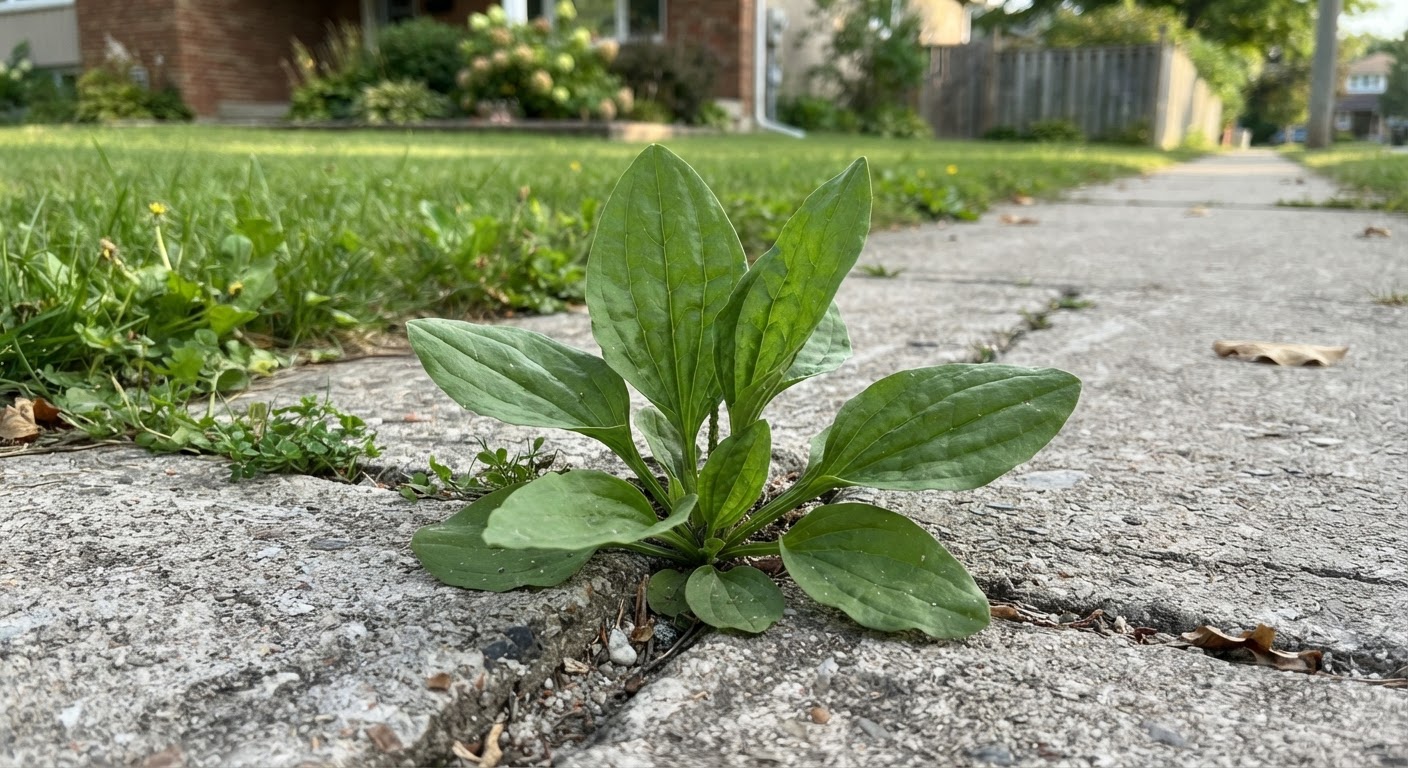
That plant cracking through your sidewalk isn’t a problem. It’s lunch.
Plantain — not the banana, the weed — grows in every hemisphere humans have touched. Driveways, playgrounds, parking lots, hiking trails, the gap between your fence and your neighbor’s. If you’ve stepped outside today, you’ve probably stepped on it.
Most people dismiss it as just another lawn invader, right up there with dandelions and crabgrass. But unlike dandelions, which at least get some recognition as “edible,” plantain flies completely under the radar. This is a mistake. Broadleaf plantain (Plantago major) and narrowleaf plantain (Plantago lanceolata) are edible from root to seed, and they carry a medicinal track record that stretches back to antiquity — the Anglo-Saxons listed it as one of their nine sacred herbs, and indigenous peoples across North America used it independently of any European contact.
The trick is knowing which species you’re looking at, what to do with each part, and where the one dangerous lookalike lurks. Let’s walk through all of it.
Quick ID: Broadleaf vs Narrowleaf Plantain at a Glance
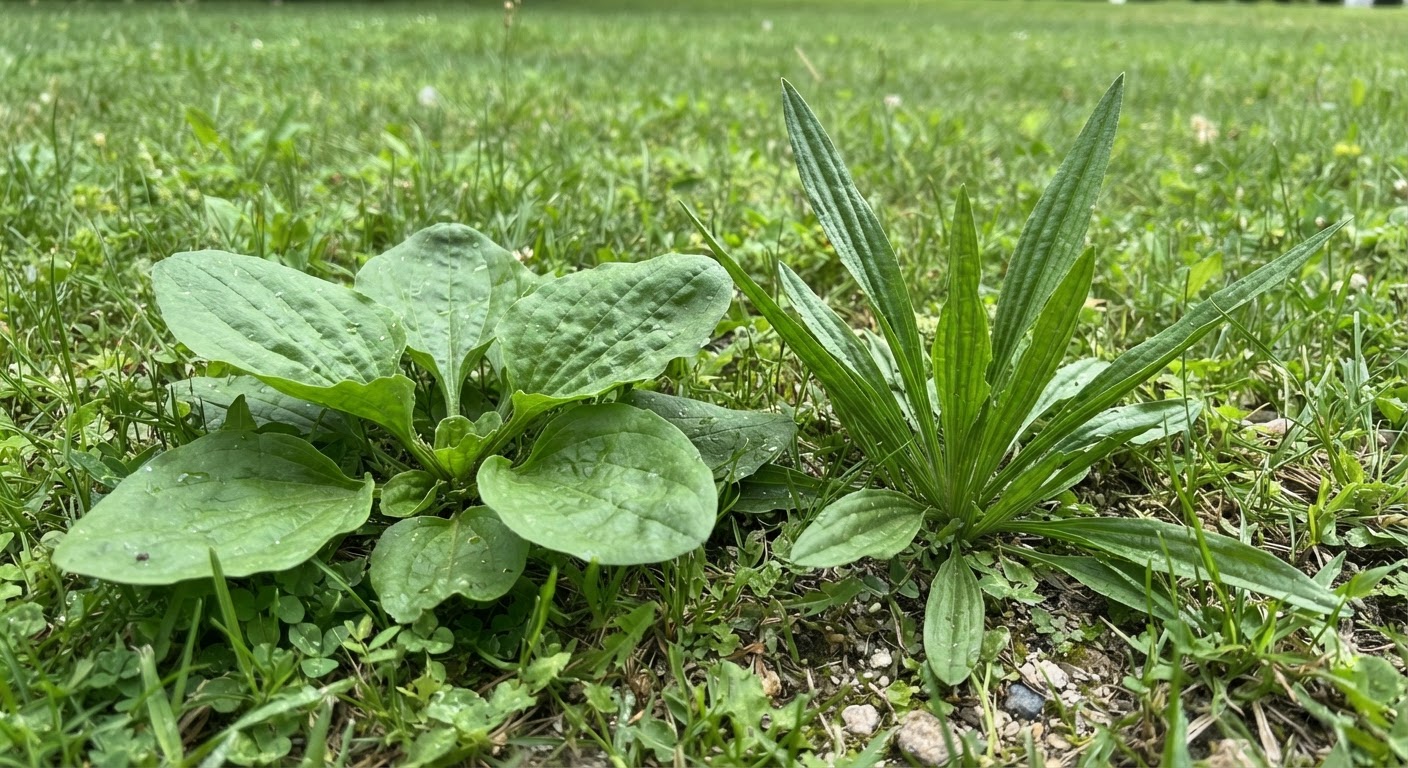
Both species are edible. Both are medicinal. But they look different, grow differently, and their textures lend themselves to different kitchen uses. Here’s a rapid-fire comparison you can check against your phone while standing in a field:
| Feature | Broadleaf Plantain | Narrowleaf Plantain |
|---|---|---|
| Scientific Name | Plantago major | Plantago lanceolata |
| Leaf Shape | Broad, oval, almost spoon-shaped | Long, narrow, lance-shaped |
| Leaf Width | 2–6 inches wide | 0.5–1.5 inches wide |
| Leaf Texture | Thick, rubbery, waxy | Thinner, more pliable, slightly fuzzy |
| Vein Pattern | 5–9 parallel veins running lengthwise, prominent on underside | 3–5 deep parallel ribs |
| Flower/Seed Spike | Short, stubby green spike (2–8 inches) | Tall, slender spike with a tight head of tiny white flowers |
| Where It Grows | Compacted soil, sidewalk cracks, paths, lawns | Fields, meadows, roadsides, drier areas |
| Best Kitchen Use | Chips, wraps, stuffed leaves, sautéed | Raw in salads, pesto, soups, smoothies |
| Best Medicinal Use | Poultices, salves (large leaf = more surface area) | Tea, tinctures (milder flavor) |
The easiest field test: look at the veins. Both species have parallel veins that run from stem to tip — a trait that almost no other common weed shares. If you pluck a leaf, snap the stem, and see string-like fibers pulling away, you’re holding plantain. No other common lookalike has this feature.
8 Practical Ways to Use Plantain — Kitchen, Medicine Cabinet, and Beyond
Here’s where most plantain articles stop. They tell you it’s edible and medicinal, then move on. That skips the part people actually need: what to do with it once you’ve identified it.
1. Plantain Leaf Chips (Broadleaf Works Best)
Broadleaf plantain’s thick, sturdy leaves make surprisingly good chips. Wash and dry whole leaves, toss with olive oil, salt, and whatever spice blend you like (smoked paprika and garlic powder is the move), then bake at 350°F for 8–12 minutes until crisp. They come out with a texture somewhere between kale chips and nori — earthy, savory, and sturdy enough to scoop hummus.
The catch: older leaves get fibrous. Pick leaves no larger than your palm. Anything bigger goes to the sauté pan instead (see #2).
2. Quick Sautéed Plantain Greens
Both species work here. Strip leaves from the stem, give them a rough chop, and throw them into a hot pan with butter or oil, minced garlic, and a splash of soy sauce or lemon juice. Five minutes, tops. The flavor is mild — somewhere between spinach and Swiss chard, with a faint mineral note that pairs well with eggs, rice, or beans.
Young narrowleaf leaves are tender enough for a 2-minute wilt. Older broadleaf leaves need 5–7 minutes to soften properly. If the texture is still too tough, add a tablespoon of water and cover for the last 2 minutes to steam.
3. Plantain Salve for Bites, Stings, and Scrapes
This is plantain’s party trick and the reason every foraging grandma keeps a tin of green salve in the cupboard. Plantain leaves contain allantoin (a cell-proliferation compound), aucubin (anti-inflammatory), and tannins (astringent) — the combination pulls, soothes, and seals minor skin irritation faster than most drugstore creams.
Rough recipe: infuse dried plantain leaves in olive oil for 2–4 weeks (or warm-infuse for 4 hours in a double boiler), strain, then mix with beeswax at roughly a 5:1 oil-to-wax ratio. Pour into tins. Keeps for a year.
For a faster field version: chew a clean leaf into a paste and press it directly onto the sting or scrape. Spit poultices have been used for literally thousands of years. It’s not pretty, but it works when you’re 3 miles from the car and just stepped in a fire ant mound.
4. Fresh Plantain Pesto (Narrowleaf Preferred)
Narrowleaf plantain’s thinner, more tender leaves blend into a smooth pesto without the slight bitterness broadleaf can carry. Swap it 50/50 with basil or go full wild:
- 2 cups packed narrowleaf plantain leaves
- 1/3 cup walnuts or pine nuts
- 2 garlic cloves
- 1/2 cup olive oil
- 1/4 cup grated parmesan
- Salt and lemon juice to taste
Pulse everything in a food processor. The result is brighter than straight basil pesto — more herbaceous, less sweet — and it freezes beautifully in ice cube trays.
5. Plantain Seed Harvesting (Both Species, Late Summer)
Here’s the part most people skip: the seeds. Each plantain spike produces hundreds of tiny seeds with a nutty, slightly peppery flavor. Broadleaf plantain seeds are small and labor-intensive to harvest. Narrowleaf seeds are slightly larger and easier to strip off the stalk.
To harvest: wait until late summer when the seed stalks turn brown and dry. Run your thumb and forefinger up the stalk to strip the seeds into a bowl. Use them whole as a garnish on bread or salads, or grind them into flour. The flavor is reminiscent of flax seeds, and the nutrient profile is similar — fiber, omega-3s, and minerals.
6. Plantain Tea for Colds and Congestion
Both species work. Steep 1–2 teaspoons of dried, crushed leaves in boiling water for 10 minutes, strain, and drink. The mucilage in plantain coats the throat, and the aucubin provides mild anti-inflammatory action that takes the edge off a scratchy throat. Add honey and lemon and you’ve got a functional cold-season drink that costs nothing if you dried leaves earlier in the season.
To dry leaves: wash, pat dry, and either hang bundles in a well-ventilated space or use a dehydrator at 95–105°F. Store in glass jars away from light.
7. Blanch and Freeze for Winter Greens
Both species freeze well if you blanch them first. Drop leaves in boiling water for 60 seconds, plunge into ice water, squeeze out excess moisture, and pack into freezer bags. Frozen plantain holds its structure better than frozen spinach — the leaves don’t turn to mush when thawed — making it a solid addition to winter soups, stews, and stir-fries.
One forage session in June can stock your freezer with enough plantain to add wild greens to meals through January.
8. Plantain-Infused Oil for Skin Irritation
If salve-making (see #3) feels like too much work, start with the infused oil alone. Fill a clean jar 2/3 full with dried plantain leaves (must be dry — fresh leaves introduce water that causes spoilage), cover completely with olive oil, and let it sit on a sunny windowsill for 2–3 weeks. Strain and bottle.
The resulting green oil works as a standalone treatment for eczema patches, dry skin, razor burn, and diaper rash. No beeswax needed. Shelf life: 6–12 months in a cool, dark cabinet.
Which Part of the Plant Does What: Leaves vs Seeds vs Roots
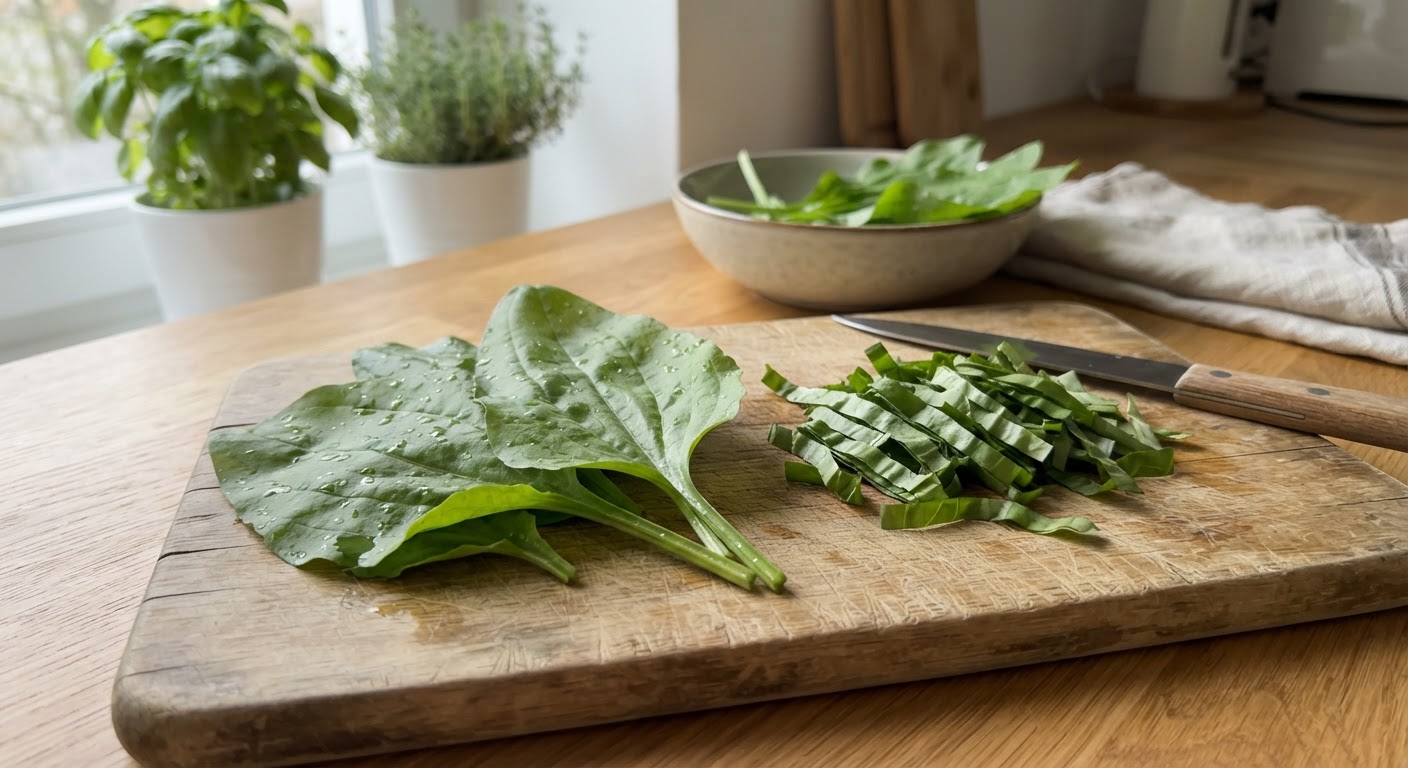
Plantain is one of those rare plants where every part is usable — but they’re not interchangeable. The root, leaves, and seeds each serve distinct purposes, and knowing which part to reach for saves time.
| Plant Part | When to Harvest | Edible Uses | Medicinal Uses | Best Species |
|---|---|---|---|---|
| Young Leaves | Spring to early summer | Raw salads, pesto, smoothies, garnish | Poultices (fresh), infused oil | Narrowleaf |
| Mature Leaves | Summer to early fall | Chips, sautéed greens, soups, wraps | Salves, dried tea, steam inhalation | Broadleaf |
| Seeds | Late summer to fall | Whole garnish, ground into flour, sprouted | Mild digestive aid (mucilage) | Both |
| Roots | Late fall (after seed drop) | Cooked (boiled, roasted) — chewy, earthy | Mild antimicrobial — less studied | Broadleaf |
A note on roots: they’re small, fibrous, and require serious scrubbing. They’re edible but not exciting. Think of them as survival food — good to know about, but you probably won’t seek them out when the leaves are doing all the heavy lifting.
The One Lookalike That Matters
Most plantain identification guides mention lilies and hostas as potential lookalikes. That’s true in the botanical sense — untrained eyes can confuse them — but here’s the practical reality: lilies and hostas don’t have parallel veins that pull into strings when you snap the stem. They don’t grow in compacted, trampled soil. And they don’t send up the distinctive seed spike that every plantain species produces.
The lookalike that actually matters in the field is foxglove (Digitalis purpurea) — and only when plantain is in its pre-flowering rosette stage. Young foxglove leaves are broad, somewhat textured, and can resemble young broadleaf plantain if you’re moving fast. The difference: foxglove leaves have a network of branching veins (not parallel), feel velvety (not waxy), and lack the string-like fibers in the stem.
Foxglove contains cardiac glycosides that can stop your heart. It’s the one plant in this conversation where a misidentification has life-or-death stakes.
The foolproof field test: break the stem. If long string-like fibers pull out (like celery strings), it’s plantain. If the stem snaps cleanly or crushes without strings, it’s not — and you don’t eat it.
Quick Tips for Foraging, Storing, and Cooking Plantain
- Harvest away from paths and roads. Plantain absorbs heavy metals from soil — this is actually one of its documented medicinal properties (drawing toxins), but it also means the plant growing next to a busy road has been soaking up exhaust residue all season. Walk 50 feet off-trail or forage from your own yard.
- Wash thoroughly. Those parallel veins create perfect little channels for dirt and grit. Soak leaves in a bowl of water for 10 minutes, swish them around, then rinse under running water.
- Pick leaves in the morning. Like most leafy greens, plantain leaves are most tender and hydrated before the midday sun hits them. Afternoon-picked leaves work fine for cooking but aren’t ideal for raw use.
- Dry more than you think you’ll need. A quart jar of dried plantain looks like a lot in October and runs out by January if you use it regularly for tea and salves.
- Narrowleaf for raw, broadleaf for cooked. This isn’t a hard rule, but it’ll serve you well 90% of the time. Narrowleaf’s thinner leaves shine in applications where texture matters. Broadleaf’s sturdier leaves hold up to heat without turning to slime.
FAQ
Is plantain weed the same thing as the banana?
Completely unrelated. The banana-like fruit is Musa genus. The weed is Plantago genus. The shared name is a coincidence — an etymological collision from two different language roots that happened to land on the same spelling.
Can you eat plantain weed raw?
Yes, but with caveats. Young narrowleaf leaves are pleasant raw — mild and slightly nutty. Mature broadleaf leaves are tough and fibrous raw; they’re much better cooked. The seeds can be eaten raw as a garnish but are more digestible lightly toasted or ground.
When’s the best time of year to harvest plantain?
Spring and early summer for leaves (tender, before flowering drains energy into seed production). Late summer and early fall for seeds (when stalks turn brown and dry). Roots in late fall, after the plant has finished its reproductive cycle.
Does cooking destroy the medicinal compounds?
Partially. Heat degrades some of the allantoin and aucubin, which means a cooked plantain leaf won’t work as well as a poultice compared to a fresh one. But for internal use (tea, soups, sautéed greens), enough beneficial compounds survive cooking to be worthwhile — especially the mucilage, which is heat-stable and provides the throat-coating effect in tea.
How do you store plantain long-term?
Three methods: dry the leaves for tea and salve-making (hang bundles or use a dehydrator), blanch and freeze for cooking greens, or infuse into oil for topical use. Dried leaves last 12–18 months in airtight glass jars. Frozen blanched leaves last 8–12 months. Infused oil lasts 6–12 months in a cool dark place.
Is plantain safe for dogs and cats?
Yes, in small amounts. Dogs sometimes instinctively chew on plantain leaves when they have an upset stomach — the mucilage is soothing. For topical use on pets (minor scrapes, hot spots), plantain salve is generally safe for areas they can’t lick off. Always test a small patch first and consult your vet if the issue is serious.
Can I buy plantain instead of foraging it?
Dried plantain leaf is available from most herb suppliers and some health food stores. It’s often labeled as “plantain leaf” or “Plantago major.” Fresh leaves are harder to find commercially, but farmers’ markets sometimes have them from foragers. Honestly? Given how common this plant is, buying it feels silly — but it’s an option if you live somewhere with heavy pesticide use or contaminated soil.
Plantain isn’t the flashiest wild edible. It doesn’t have the Instagram appeal of morel mushrooms or the hipster credibility of ramps. But there’s something satisfying about a plant that’s everywhere, costs nothing, and delivers both nutrition and functional medicine without asking anything in return except that you notice it.
Next time you see it pushing through a sidewalk crack, don’t step over it. Bend down and pick it.