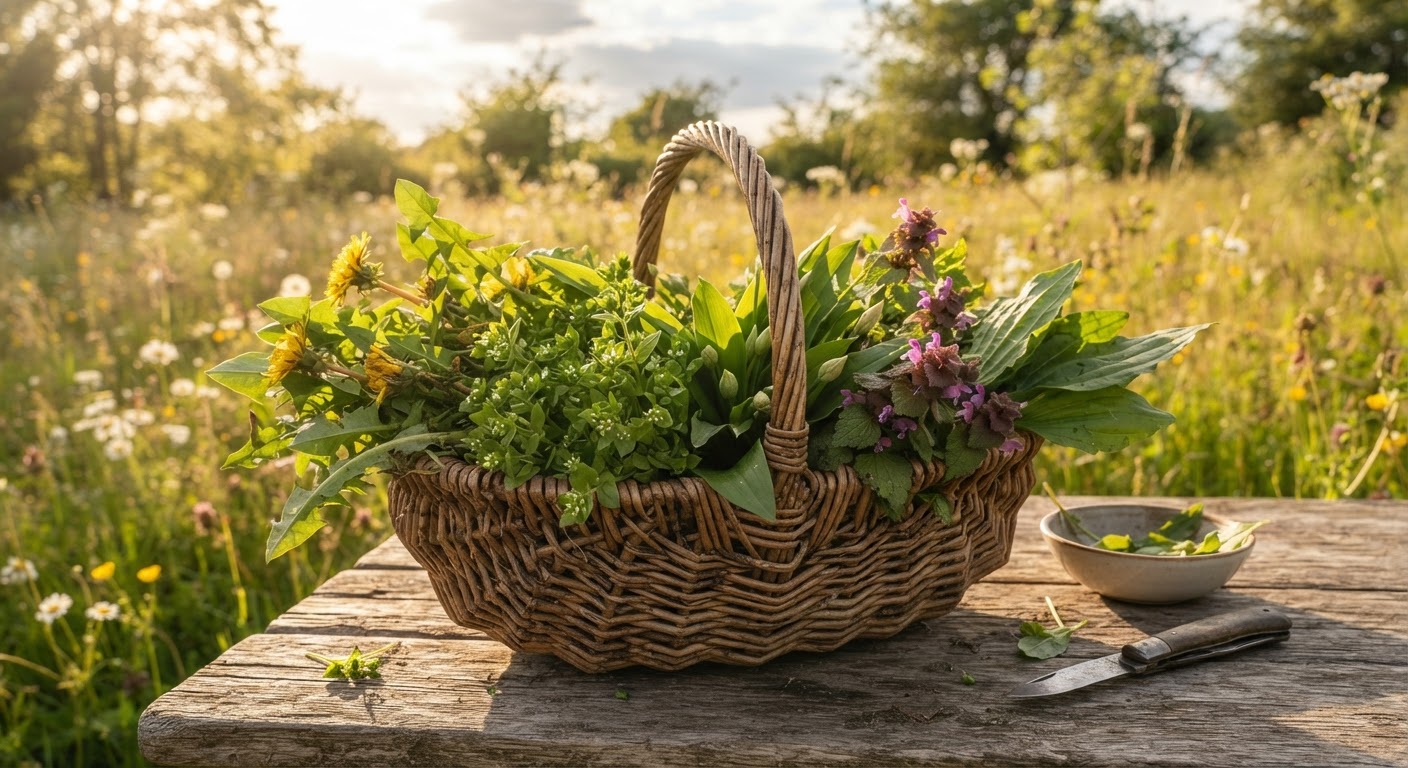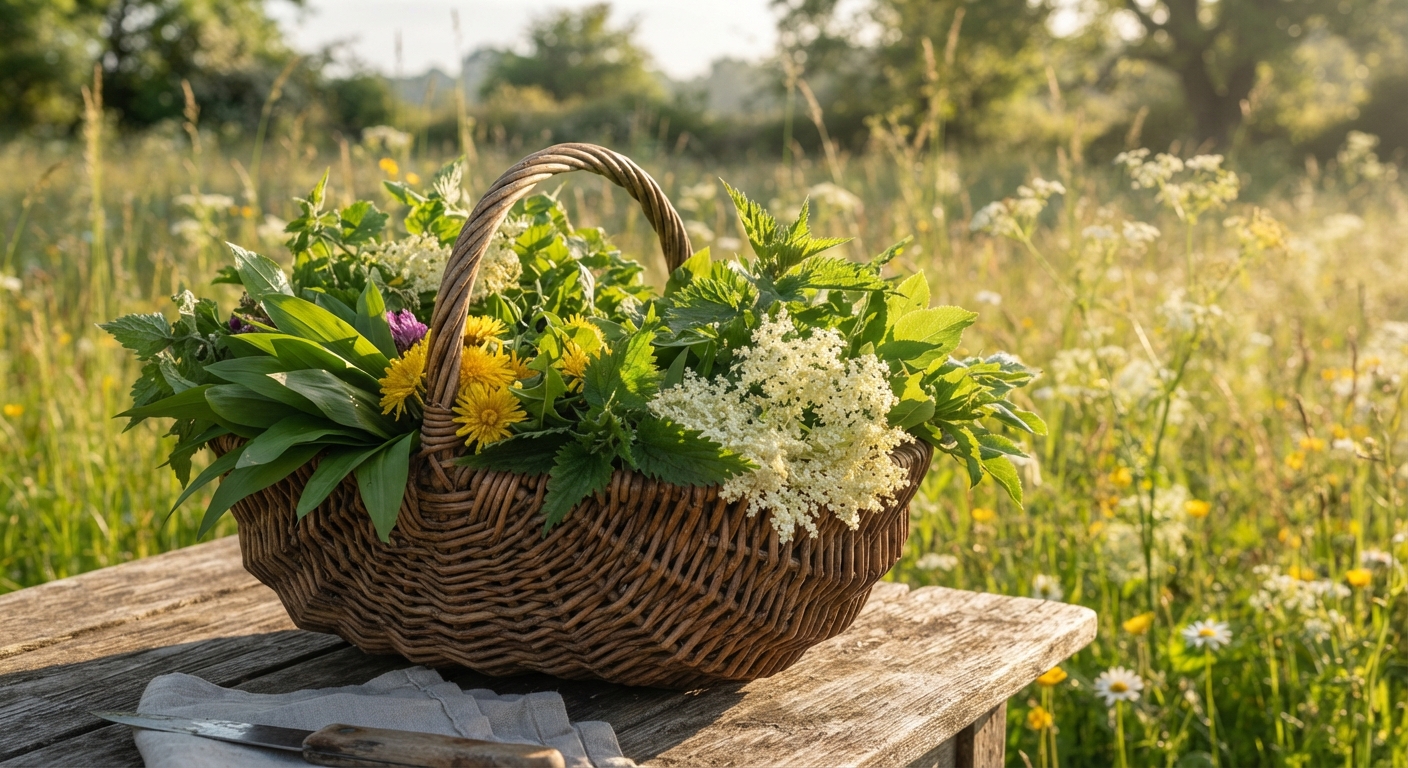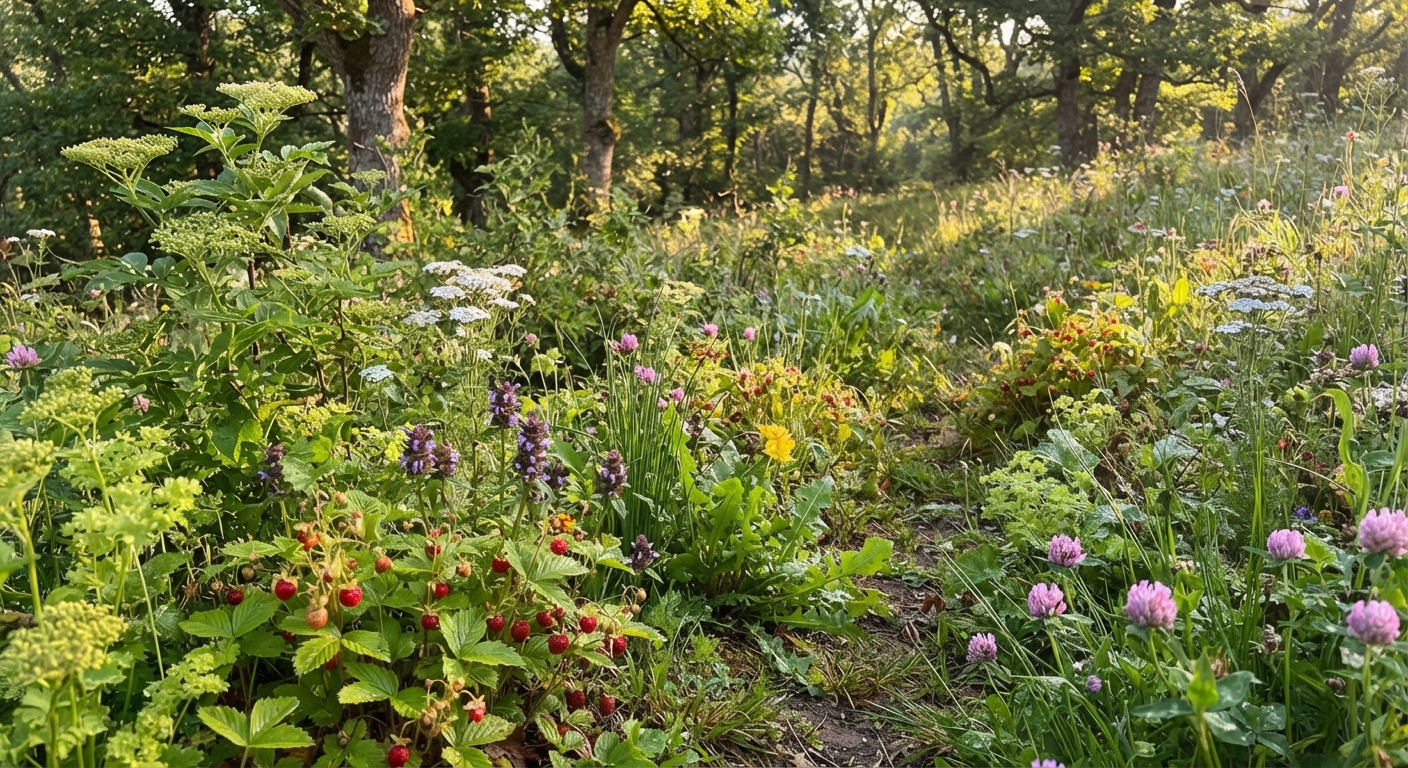
Walk into any foraging Facebook group and you’ll see the same pattern: someone posts a photo of dandelions, lambsquarters, or purslane, and the comments fill up with “eat it!” and sautéing instructions. All three of those plants are European imports — species that crossed the Atlantic in ship ballast and colonized disturbed soil from Boston to San Diego.
Nothing wrong with that. Dandelions are delicious. But if your foraging strategy stops at the same five invasive weeds everyone else is harvesting, you’re leaving an entire category of wild food on the table: the plants that actually belong here.
Native edible plants offer three things their immigrant counterparts usually can’t match. First, they’re tuned to your local soil, rainfall, and seasonal rhythms — which means they’re more predictable year to year. Second, they often have deeper nutritional profiles because they co-evolved with the minerals and microbiology of local ecosystems. Third — and this matters more than most foragers realize — harvesting native species that are abundant puts zero pressure on struggling wild populations, and in some cases actually helps them spread.
This guide breaks natal edibles down by region, compares native vs. non-native species side by side, and gives you a working list of what to target first — no matter which corner of the country you call home.
Native vs. Non-Native: Why the Distinction Actually Matters for Foragers
Before we get to the plant lists, let’s address the elephant in the meadow. Foragers tend to roll their eyes at the “native plants only” purists, and honestly, the eye-rolling has a point. Nobody’s going to stop eating garlic mustard just because it’s invasive — the plant is everywhere and pulling it out of the ground is borderline civic duty.
But the distinction between native and non-native becomes genuinely useful when you’re deciding what to prioritize learning. Here’s a side-by-side of how both categories behave in the field:
| Factor | Native Edible Plants | Non-Native / Invasive Edibles |
|---|---|---|
| Seasonal predictability | High — tuned to local climate rhythms; appears same time each year | Moderate — can shift with weather extremes since they’re not locally adapted |
| Habitat specificity | Predictable — you’ll find pawpaws only in specific forest understories | Opportunistic — lambsquarters will grow literally anywhere the soil got turned |
| Nutritional density | Often higher in trace minerals (co-evolved with local soil biomes) | Variable — depends entirely on soil quality at the specific site |
| Harvest guilt factor | Low for abundant species; harvest mindfully | Zero — you’re removing an invasive; take as much as you want |
| Learning curve | Moderate — need to learn specific habitats and seasonal windows | Low — most invasive edibles are the “weeds” you already recognize |
| Availability | Highly regional — a southeastern native won’t grow in the Pacific Northwest | Often continent-wide — dandelions, plantain, and purslane grow everywhere |
| Taste uniqueness | High — flavors you literally can’t get from cultivated food (spicebush, pawpaw, ramps) | Low to moderate — most invasive greens taste like “spinach but slightly different” |
| Conservation impact | Can be positive — ethical harvesting supports native plant awareness | Positive — removing invasives helps native ecosystems recover |
Neither category is “better” in the abstract. The smart forager targets both: invasives for everyday greens and easy volume, natives for unique flavors, seasonal specialties, and the deeper satisfaction of eating from the landscape as it existed before anyone planted a garden.
The rest of this guide focuses on the native side — the plants that evolved here and shaped the diets of Indigenous communities for thousands of years before European contact.
Quick-Reference: Native Edible Plants by Region
Below is a working field list organized by region. Each table covers plants that are genuinely native to that area — not naturalized, not introduced, but species that evolved in that specific landscape.
One caveat: plant ranges overlap. A plant listed under the Southeast may also grow in the southern Midwest. Use these as starting points, not rigid boundaries. Cross-reference with a regional field guide before heading out.
Northeast (New England, Mid-Atlantic, Great Lakes)
Plenty of moisture, four distinct seasons, and forests dominated by oak, maple, and hickory. The Northeast has short but intense growing windows — spring ephemerals are the stars here.
| Plant | What You’re Harvesting | Season | Difficulty | Quick Marker |
|---|---|---|---|---|
| Ramps (Allium tricoccum) | Leaves, bulbs | April–May | Easy to ID, easy to overharvest | Broad, smooth leaves; strong onion-garlic smell when crushed |
| Ostrich Fern Fiddleheads (Matteuccia struthiopteris) | Young coiled fronds | Late April–May | Moderate — lookalike risk | Deep U-shaped groove in stem (like celery); papery brown scales |
| Wild Blueberry (Vaccinium angustifolium) | Berries | July–August | Easy | Low shrub (6–18 inches); small, intensely blue berries with crown |
| Serviceberry / Juneberry (Amelanchier spp.) | Berries | June–July | Easy | Small tree; white 5-petal flowers in early spring; red-to-purple berries |
| Jerusalem Artichoke (Helianthus tuberosus) | Tubers | October–March | Easy | Tall sunflower-like stalks (6–10 feet); dig tubers after first frost |
| Spicebush (Lindera benzoin) | Berries, twigs for tea | August–October | Easy | Crushed leaf smells like citrus-spice; red oval berries on female plants |
| Groundnut (Apios americana) | Tubers, seeds | September–November | Moderate | Vine with pinnate leaves; maroon-brown pea-like flowers; tubers on rhizome strings |
Northeast harvesting note: Ramps are the cautionary tale here. They take 7 years to mature from seed, and commercial harvesting has wiped out entire patches. Take no more than 5% of a patch — and if you see less than 100 plants, move on. Several states now have ramp harvesting regulations, so check local rules before you go.
Southeast (Carolinas, Georgia, Florida, Gulf Coast)
Long growing seasons, high humidity, and a mix of coastal plains, swamps, and Appalachian foothills. The Southeast has the highest diversity of native edible plants in the country — you could forage something different every month of the year.
| Plant | What You’re Harvesting | Season | Difficulty | Quick Marker |
|---|---|---|---|---|
| Pawpaw (Asimina triloba) | Fruit | September–October | Easy — unmistakable fruit | Mango-shaped fruit with custard-like flesh; tastes like banana-mango-vanilla |
| Muscadine Grape (Vitis rotundifolia) | Fruit | August–October | Easy | Thick-skinned purple-black grapes; single berries (not clusters); round leaves |
| Beautyberry (Callicarpa americana) | Berries | September–November | Easy | Clusters of vivid magenta-purple berries along stem; opposite toothed leaves |
| Sassafras (Sassafras albidum) | Leaves (for filé), roots (for tea) | Spring–Fall | Easy | Three leaf shapes on same tree: oval, mitten-shaped, three-lobed |
| Southern Dewberry (Rubus trivialis) | Fruit | April–June | Easy | Trailing blackberry-like vine; red bristly stems; earlier than blackberries |
| Saw Palmetto (Serenoa repens) | Heart, berries | Year-round | Moderate | Fan-shaped palmate leaves on sprawling trunk; found in sandy coastal soil |
| Yaupon Holly (Ilex vomitoria) | Leaves (caffeinated tea) | Year-round | Easy | Evergreen shrub with small, scalloped leaves; the only native North American caffeinated plant |
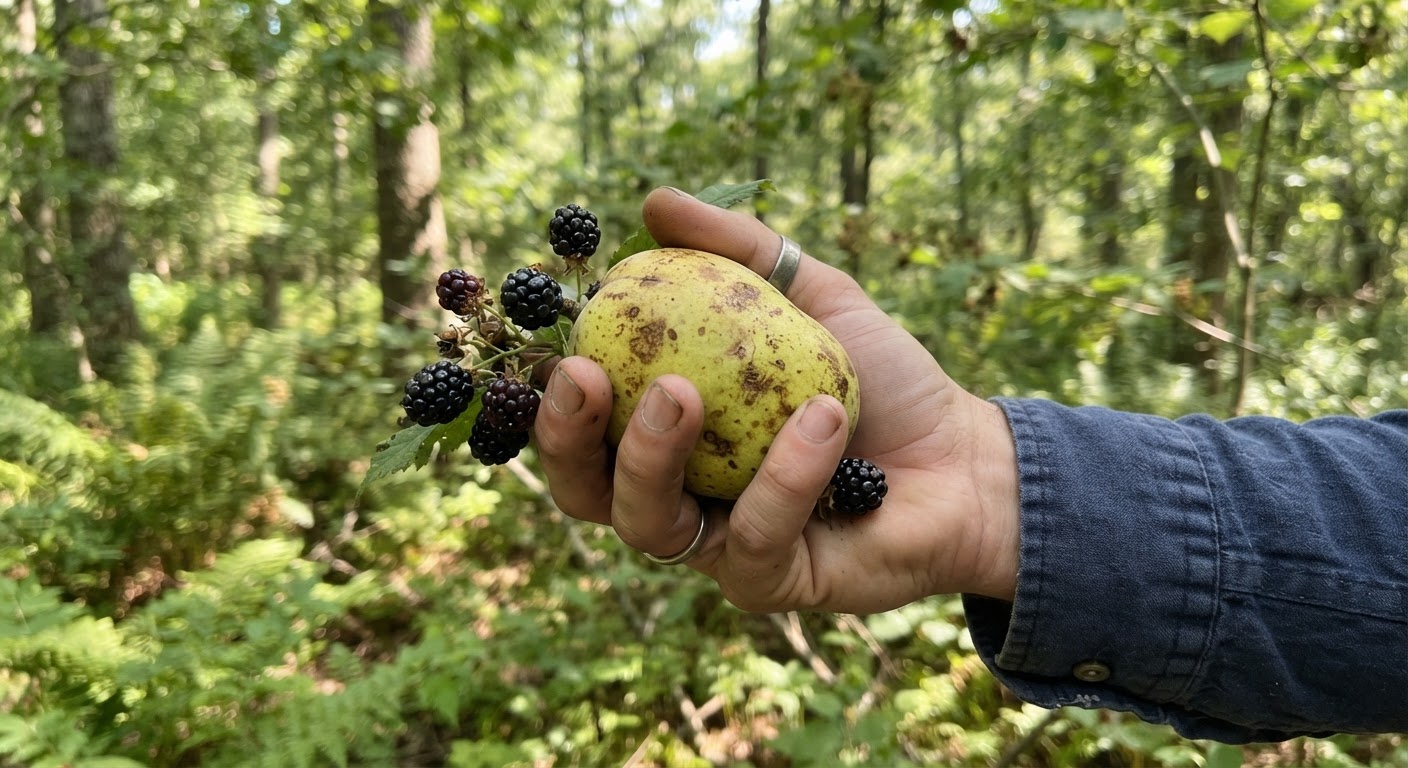
Southeast insider tip: Pawpaws are the native edibles world’s best-kept secret. The fruit tastes like a tropical custard — banana, mango, and vanilla — but it grows wild in the woods of 26 states. The catch: pawpaws ripen fast and bruise easily, so you’ll never find them in grocery stores. September is pawpaw month. Find a mature patch of pawpaw trees in August, mark the spot, and check weekly until the fruit gives slightly to gentle pressure.
Midwest (Ohio Valley, Great Plains, Upper Mississippi)
The Midwest runs the full spectrum: tallgrass prairie remnants, oak savannas, river bottoms, and glacial lakes. The region was historically managed with fire by Indigenous communities — that’s why so many prairie plants are edible, and why they disappear when land gets converted to row crops.
| Plant | What You’re Harvesting | Season | Difficulty | Quick Marker |
|---|---|---|---|---|
| Prairie Turnip (Pediomelum esculentum) | Root | June–August | Moderate — habitat-specific | Low-growing legume with blue-purple pea flowers; dense, starchy taproot |
| Wild Plum (Prunus americana) | Fruit | August–September | Easy | Small tree with thorny branches; white spring flowers; yellow-to-red plums |
| Chokecherry (Prunus virginiana) | Fruit (cooked only) | July–September | Easy — but must be cooked | Small tree/shrub; clusters of dark purple-black cherries; astringent raw |
| Hazelnut (Corylus americana) | Nuts | September–October | Easy | Multi-stemmed shrub; round, toothed leaves; nuts in frilly green husks |
| Wild Bergamot / Bee Balm (Monarda fistulosa) | Leaves (oregano-like), flowers | June–August | Easy | Lavender-pink pom-pom flower heads; square stem; strong oregano-mint smell |
| Elderberry (Sambucus canadensis) | Flowers, berries (cooked only) | June–September | Easy — but MUST be cooked | Shrub with compound leaves; flat clusters of tiny white flowers → dark purple berries |
| Sunflower (Helianthus annuus) | Seeds | August–October | Easy | It’s a sunflower. You know this one. Wild versions have smaller heads, multiple branches. |
Midwest safety flag: Chokecherries and elderberries contain cyanogenic glycosides when raw. Both are perfectly safe — and delicious — when cooked. Never eat either one straight off the plant. For chokecherries, boil or dry them first (traditional Native American pemmican used dried, crushed chokecherries). For elderberries, cook the berries thoroughly; the flowers are fine raw but the stems, leaves, and unripe berries contain compounds that will make you nauseous.
Pacific Northwest (Cascadia, Coastal Forests, Columbia Plateau)
Mild winters, dry summers, and some of the richest temperate ecosystems on earth. The PNW has an absurd abundance of berries — the Coast Salish peoples historically managed entire landscapes around berry production.
| Plant | What You’re Harvesting | Season | Difficulty | Quick Marker |
|---|---|---|---|---|
| Salmonberry (Rubus spectabilis) | Fruit | May–July | Easy | Raspberry-like but orange-to-red; grows in wet coastal thickets; crumpled-looking petals |
| Thimbleberry (Rubus parviflorus) | Fruit | June–August | Easy | Large, soft, velvety maple-like leaves; raspberry-like red fruit that pulls off as a cap |
| Salal (Gaultheria shallon) | Berries | August–October | Easy | Evergreen shrub with leathery oval leaves; dark blue-black berries in lines along stem |
| Oregon Grape (Mahonia aquifolium) | Berries | July–September | Easy | Holly-like spiny evergreen leaves; clusters of sour blue-purple berries |
| Camas (Camassia quamash) | Bulbs | May–July (when flowering) | Advanced — DEADLY lookalike | Blue-purple star-shaped flowers on tall spike; DO NOT confuse with Death Camas |
| Wapato / Arrowhead (Sagittaria latifolia) | Tubers | September–November | Moderate | Arrowhead-shaped leaves in standing water; tubers on ends of underwater runners |
| Evergreen Huckleberry (Vaccinium ovatum) | Berries | August–October | Easy | Evergreen shrub with small, glossy, serrated leaves; dark, intensely flavorful berries |
Critical PNW warning: Camas bulbs were a staple food for Indigenous peoples across the Northwest — Lewis and Clark’s expedition survived on them. But death camas (Toxicoscordion venenosum) grows in the exact same habitats and the bulbs look similar. The only reliable way to distinguish them: harvest ONLY when the plant is in flower. Camas has blue-purple flowers; death camas has cream-white flowers. If you can’t see flowers, don’t dig. This plant has killed people who got sloppy.
Southwest (Arizona, New Mexico, West Texas, Southern California)
Arid climate, extreme temperature swings, and plants that have evolved remarkable survival strategies. Desert foraging is less about volume and more about unique flavors — cactus fruit, mesquite pods, and agave have no grocery-store equivalent.
| Plant | What You’re Harvesting | Season | Difficulty | Quick Marker |
|---|---|---|---|---|
| Prickly Pear Cactus (Opuntia spp.) | Pads (nopales), fruit (tunas) | Pads: Spring; Fruit: August–October | Easy — but wear gloves | Flat, oval, spine-covered pads; bright magenta-red fruit on pad edges |
| Mesquite (Prosopis glandulosa) | Pods (ground into flour) | June–September | Easy | Thorny tree/shrub; long tan seed pods that rattle when dry |
| Agave (Agave spp.) | Heart (roasted), sap | Year-round | Moderate | Rosette of thick, spiny, succulent leaves; sends up massive flower stalk once in lifetime |
| Saguaro Fruit (Carnegiea gigantea) | Fruit | June–July | Easy — iconic cactus | The classic tall cactus with arms; red fruit splits open at top when ripe |
| Barrel Cactus (Ferocactus wislizeni) | Fruit, pulp | September–November | Easy | Round, ribbed cactus with yellow/red flowers at crown; yellow fruit |
| Wolfberry (Lycium spp.) | Berries | August–October | Easy | Thorny shrub with small, oval leaves; red-orange berries (desert goji relative) |
| Piñon Pine (Pinus edulis) | Nuts | September–October | Moderate | Small pine with 2-needle bundles; short, squat cones with large, edible seeds |
Desert harvesting reality check: Volume is low in the Southwest compared to wetter regions. You won’t fill a basket with greens, but you’ll get flavors you can’t buy — roasted agave heart tastes like molasses-sweet potato, mesquite flour adds a caramel-nutty depth to baked goods, and fresh prickly pear fruit makes a magenta syrup that’s better than any artificially-colored alternative.
6 Native Edible Plants Worth Learning Before Anything Else
If you’re new to targeting native species specifically, the sheer number of options can be paralyzing. Here’s a shorter list: six plants with wide ranges, zero dangerous lookalikes for anyone paying minimal attention, and genuinely excellent flavor. Master these six and you’ll have something to harvest in every season.
| Plant | Native Range | Best Season | Why It Makes the Cut |
|---|---|---|---|
| Pawpaw | Eastern US (26 states, from NY to TX) | September | Custard-textured tropical fruit growing wild in temperate forests. Impossible to confuse with anything toxic. |
| Wild Blueberry | Northeast, Great Lakes, Appalachians | July–August | Lowbush blueberries are sweeter and more intensely flavored than cultivated highbush varieties. Zero lookalike risk. |
| Serviceberry | Most of US and Canada | June–July | First major fruit of summer. Tastes like blueberry-almond. The tree announces itself with white flowers in April. |
| Spicebush | Eastern US (ME to FL, west to TX) | August–October | Red berries substitute for allspice. Leaves make citrusy tea. Entire plant is aromatic — crush a leaf to confirm ID instantly. |
| Wild Bergamot | Most of US (prairie species) | June–September | Leaves work as oregano substitute. Flowers make Earl Grey-style tea. Also called bee balm — if bees mob it, you’ve got the right plant. |
| Groundnut | Eastern US (wide range) | September–November | Protein-rich tubers that taste like nutty potatoes. A staple for Indigenous communities. The vine’s maroon flowers are distinctive. |
Start with pawpaws in September, serviceberries in June, and spicebush anytime after late summer. That’s three plants, three different seasons, all unmistakable. Build from there.
The Native Edibles Harvest Calendar
This calendar covers the six priority plants from above, plus a handful of high-value additions worth tracking. Use it to plan your foraging year.
| Month | Northeast | Southeast | Midwest | Pacific NW | Southwest |
|---|---|---|---|---|---|
| March | — | Dewberry (FL/GA) | — | — | Prickly pear pads |
| April | Ramps, fiddleheads | Dewberry, yaupon tea | — | — | Prickly pear pads, agave |
| May | Ramps, fiddleheads | — | Wild bergamot (late May) | Salmonberry | — |
| June | Serviceberry | — | Wild bergamot, serviceberry | Thimbleberry, salmonberry | Saguaro fruit |
| July | Wild blueberry, serviceberry | — | Chokecherry (cook), wild plum | Oregon grape, thimbleberry | Saguaro fruit, mesquite |
| August | Wild blueberry, spicebush (late) | Muscadine, beautyberry | Wild plum, chokecherry | Salal, evergreen huckleberry | Prickly pear fruit, wolfberry |
| September | Pawpaw, hazelnut, groundnut | Pawpaw, beautyberry, sassafras | Hazelnut, elderberry (cook) | Salal, evergreen huckleberry | Prickly pear fruit, barrel cactus |
| October | Hazelnut, groundnut, Jerusalem artichoke | Pawpaw (early), muscadine (early) | Hazelnut, Jerusalem artichoke | — | Piñon nuts, mesquite (dry pods) |
| November | Jerusalem artichoke | Sassafras | Jerusalem artichoke | Wapato | Piñon nuts |
A few things become obvious when you look at it this way. The Southeast has the steadiest year-round options. The Northeast has the most intense spring flush followed by a September peak. The Southwest has a surprising amount of action if you’re willing to process things (mesquite flour, roasted agave) rather than eat them fresh off the plant.
4 Rules That Change When You’re Targeting Native Species
The standard foraging rules apply — 100% ID, no roadside harvesting, one-bite allergy test. But native plants come with a few additional considerations that don’t matter much for dandelions or purslane.
Rule 1: Learn What “Abundant” Actually Looks Like
Some native plants are genuinely common. Wild bergamot covers midwestern prairies in purple by July. Pawpaws form thick understory groves that stretch for acres.
Other natives are rare, and the forager who doesn’t know the difference can cause real damage. Ramps are the obvious example — slow-growing, slow-reproducing, and absolutely hammered by commercial harvesters who dig entire patches. Ginseng is worse: wild American ginseng populations have collapsed across most of its range due to poaching.
Before you harvest any native species, ask: is this plant abundant here? Can I see at least 100 individuals? Is there evidence of reproduction (seedlings, multiple age classes)? If the answer to any of those is “no,” find something else.
Rule 2: Harvest in Ways That Help the Plant Spread
With invasive plants, the ethic is “take as much as you want — you’re doing the ecosystem a favor.” With natives, the calculus reverses. Your harvest should leave the patch healthier, or at minimum unchanged.
Specific practices that work:
- Berry plants: Eat berries in the field and scatter the seeds (this is literally how these plants evolved to spread — through animal digestion)
- Tubers (groundnuts, Jerusalem artichokes): Replant a few small tubers when you dig. They’ll regrow next year
- Leafy greens (wild bergamot, yaupon): Cut individual stems or leaves rather than pulling plants. The root system survives and resprouts
- Tree fruit (pawpaw, serviceberry): Take fruit that’s already ripe enough to fall. Leave the underripe ones. Plant a few seeds on your way out
Rule 3: Know the Legal Status Before You Go
This matters more for native plants because many of them grow primarily on public land — national forests, state parks, BLM land. Rules vary dramatically:
- National Forests: Generally allow personal-use foraging (check ranger district for species-specific restrictions)
- National Parks: Almost universally prohibit removing any plant material. Don’t forage in National Parks
- State Parks: Varies by state. Some allow berry/mushroom foraging; most prohibit digging or plant removal
- BLM Land: Most permissive. Typically allows personal-use harvesting of common species
- Private Land: Requires landowner permission. Always
Ramps have specific regulations in parts of the Southeast and Great Smoky Mountains region. Ginseng has federal harvest restrictions under CITES. Never assume — the consequences for harvesting regulated plants on the wrong land can include serious fines.
Rule 4: Indigenous Harvesting Traditions Are Not Decoration
This one is uncomfortable to write, but it needs to be said. When you forage native plants, you’re interacting with species that Indigenous communities have cultivated, managed, and relied on for thousands of years. The knowledge isn’t just botanical facts — it’s cultural heritage.
What this means practically:
- Acknowledge the source of knowledge. If you learned about camas from reading about Kalapuya land management, say so
- Don’t treat Indigenous foodways as “discovery” for the foraging community to claim credit for
- Check whether your harvesting could compete with Indigenous harvesters. In some regions, specific plant gathering sites are still actively used by tribal members
- Learn the history of the land you’re foraging on. It matters. It makes you a better forager because you understand the landscape more deeply
This isn’t about walking on eggshells. It’s about recognizing that foraging on this continent didn’t start with Euell Gibbons or your favorite YouTube channel. There’s a longer, deeper relationship with these plants that predates the United States by millennia.
FAQ: Native Edible Plants
Are native plants harder to identify than common weeds?
Not really — they’re just different. Dandelions and plantain are unmaskable because you’ve been seeing them your whole life. Many native edibles are equally distinctive once you learn them (pawpaws, prickly pear, wild bergamot). The challenge isn’t that native plants are harder to identify; it’s that most people never learned to look for them in the first place. Spend one season focusing on 2–3 native species and your brain will start picking them out automatically, same as it does for dandelions.
Can I grow native edible plants in my yard instead of foraging them?
Absolutely — and in many cases, this is better than wild harvesting. Pawpaws, serviceberries, wild bergamot, Jerusalem artichokes, and groundnuts all grow well in home landscapes with minimal maintenance. Native plants are already adapted to your local rainfall and soil, so they typically need less water and zero fertilizer once established. Several native plant nurseries now specialize in edible landscaping species. You get food, the pollinators get habitat, and you don’t have to worry about overharvesting wild populations.
How do I know which native plants are actually growing in my specific county?
Range maps in field guides show broad distributions, but what grows in your specific area depends on microclimate, soil type, and land use history. Best resources: your state’s Native Plant Society (every state has one — they maintain county-level plant lists), iNaturalist observations filtered by location, and USDA PLANTS Database county-level distributions. Also: find the oldest naturalist in your area and offer to buy them coffee. Local knowledge beats databases every time.
What if I misidentify a native plant — are the consequences worse?
Depends entirely on the species. Some native lookalikes are harmless (mistaking a blueberry relative for an actual blueberry might taste worse but won’t hurt you). Others are deadly serious. Water hemlock (Cicuta maculata) — a native North American plant — is arguably the most toxic plant on the continent. A pea-sized piece of the root can kill an adult. It grows in the same wetlands where you’d find wapato, groundnut, and other desirable species. The lesson isn’t “avoid native plants because some are dangerous.” The lesson is the same one that applies to all foraging: don’t eat anything until you’ve positively identified it with multiple field marks. The species being native or non-native doesn’t change the rule.
Do native plants taste better than European weeds?
Sometimes yes, sometimes no. Pawpaws, wild blueberries, and serviceberries are unequivocally better than anything comparable you can buy in a store. Spicebush has a complex allspice-citrus thing going that doesn’t exist in cultivated herbs. On the flip side, lambsquarters and purslane (both Eurasian imports) are genuinely great-tasting greens, and some native greens like curly dock are more of an acquired taste. “Better” is the wrong framework — native plants offer different flavors, not universally superior ones. The real advantage is variety.
Is foraging native plants legal everywhere?
No. As covered in the rules section above, legality varies by land type, species, and state. National Parks prohibit it. Many state parks allow berry picking but nothing else. National Forests and BLM land are generally the most accessible for personal-use foraging. Ramps and ginseng have additional state and federal restrictions. Your state’s Department of Natural Resources website is the best place to check current regulations. Never assume.
Summary: Your Native Foraging Starter Plan
If you’ve read this far, here’s your three-step plan for the next 12 months:
-
This month (summer/fall of reading): Open iNaturalist on your phone. Search for pawpaw, serviceberry, and wild bergamot in your county. Find out which of the six priority plants occur near you. Pick the two that are most abundant and start with those.
-
Next growing season: Target those two species through their full seasonal cycle. Find them in spring when they flower. Check back when fruit develops. Harvest when ripe. Learning one plant deeply across all four seasons teaches you more than skimming 20 plants from a field guide.
-
Year two: Add two more native species. By this point, you’ll have a mental calendar — serviceberries in June, pawpaws in September, wild bergamot leaves all summer. You’ll be eating from your local ecosystem in a way that goes beyond pulling up the same dandelions and purslane everyone else is harvesting.
Native edible plants connect you to your landscape on a different level than foraging European weeds. You’re eating from an ecosystem that predates agriculture on this continent — the same food web that sustained human communities here for over 10,000 years. That’s worth a little extra effort.