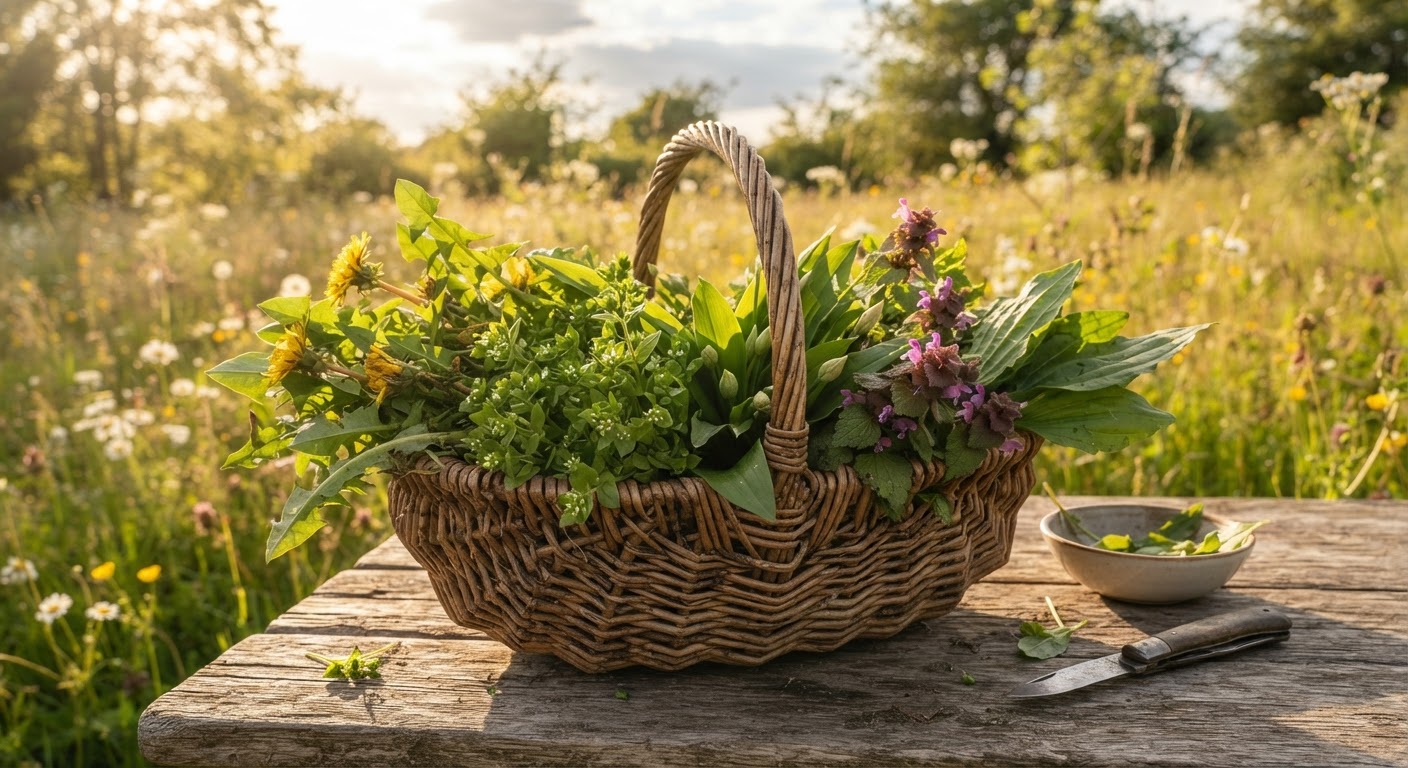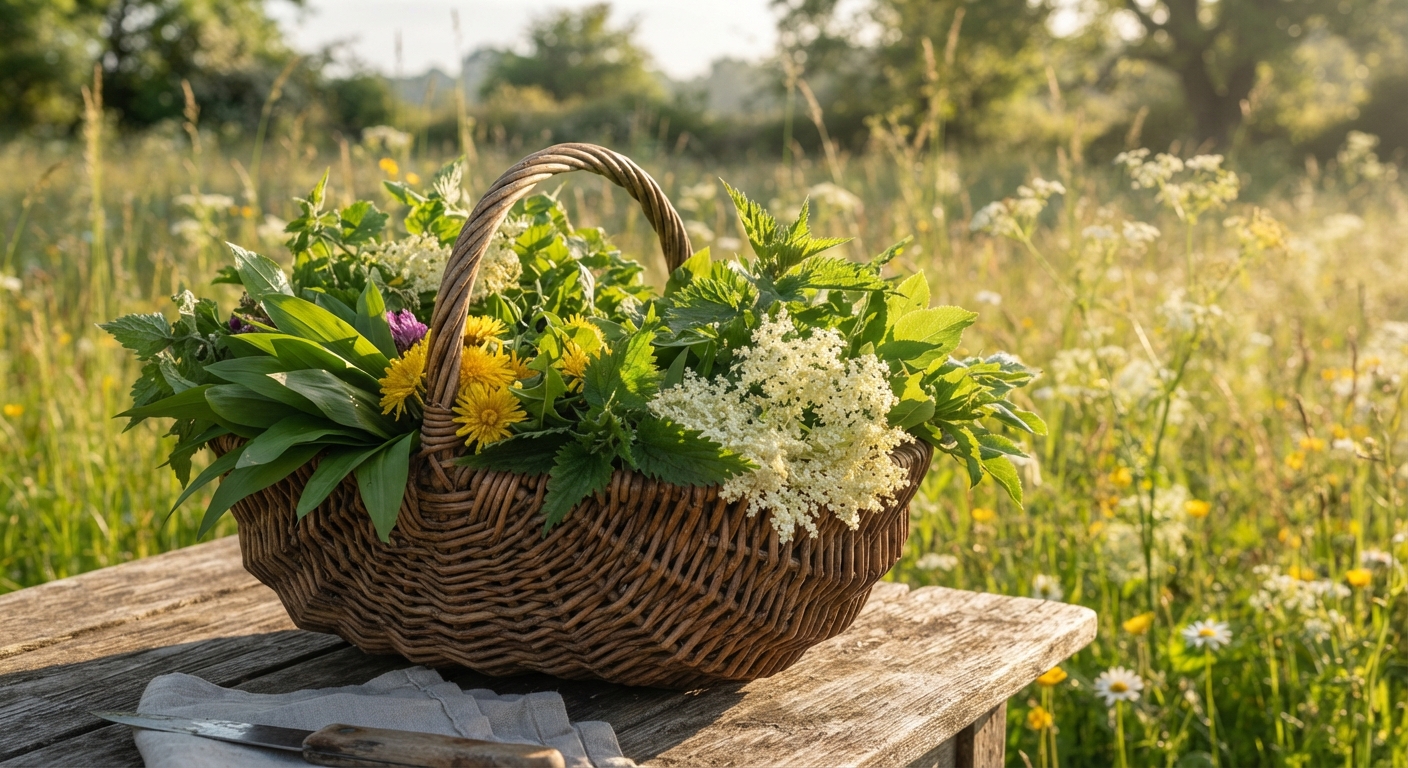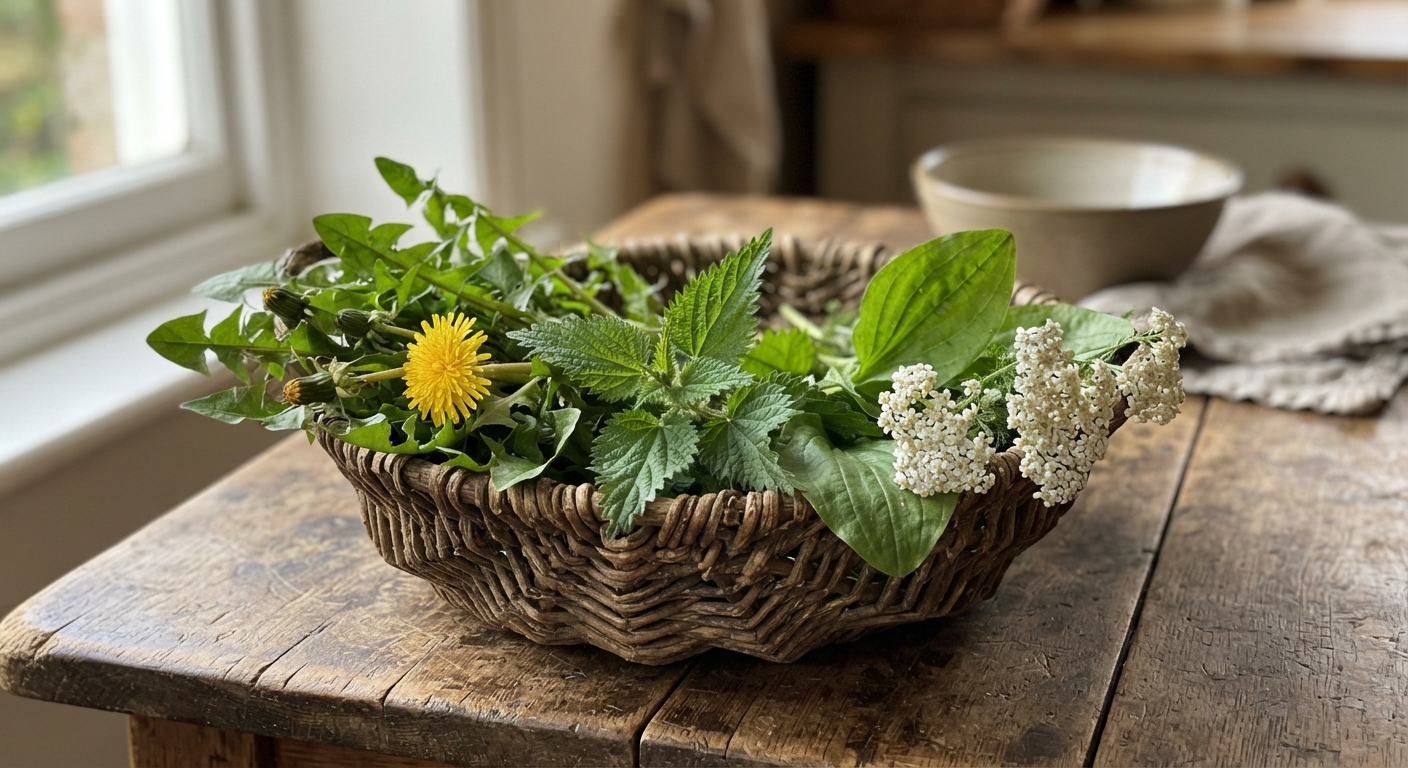
A dandelion will feed you lunch and make you pee. A nettle will sting your hand, then — once cooked — outdo spinach for iron. A weed you’ve stepped on a thousand times will calm a mosquito bite in about sixty seconds.
That’s the quiet truth about wild plants: the most useful ones are rarely just food or just medicine. They’re both. And “both” is exactly where people get sloppy, because the two jobs aren’t equal. Some of these plants are superb food with a side of overhyped folk medicine. A few are real medicine you should treat with respect and eat only sparingly.
This guide sorts the difference. For each of 12 dual-use species, you get the food job, the medicine job, and an honest verdict on which one is actually worth trusting. No botanical degree required — just the ability to identify a plant with certainty before it touches your mouth, which remains the one rule that never bends.
One thing before we start: this is not medical advice. Traditional uses listed here come from folk practice and limited research, not a prescription. If you’re pregnant, nursing, on medication, or managing a chronic condition, talk to someone qualified before treating anything with a plant.
The Quick-Reference Table
Bookmark this. It’s the whole guide in one glance.
| Plant | Best food use | Traditional medicine use | Evidence level | Watch out |
|---|---|---|---|---|
| Dandelion | Young leaves, flowers, roasted root | Diuretic, digestion, liver support | Moderate | Bitter when old; diuretic effect is real |
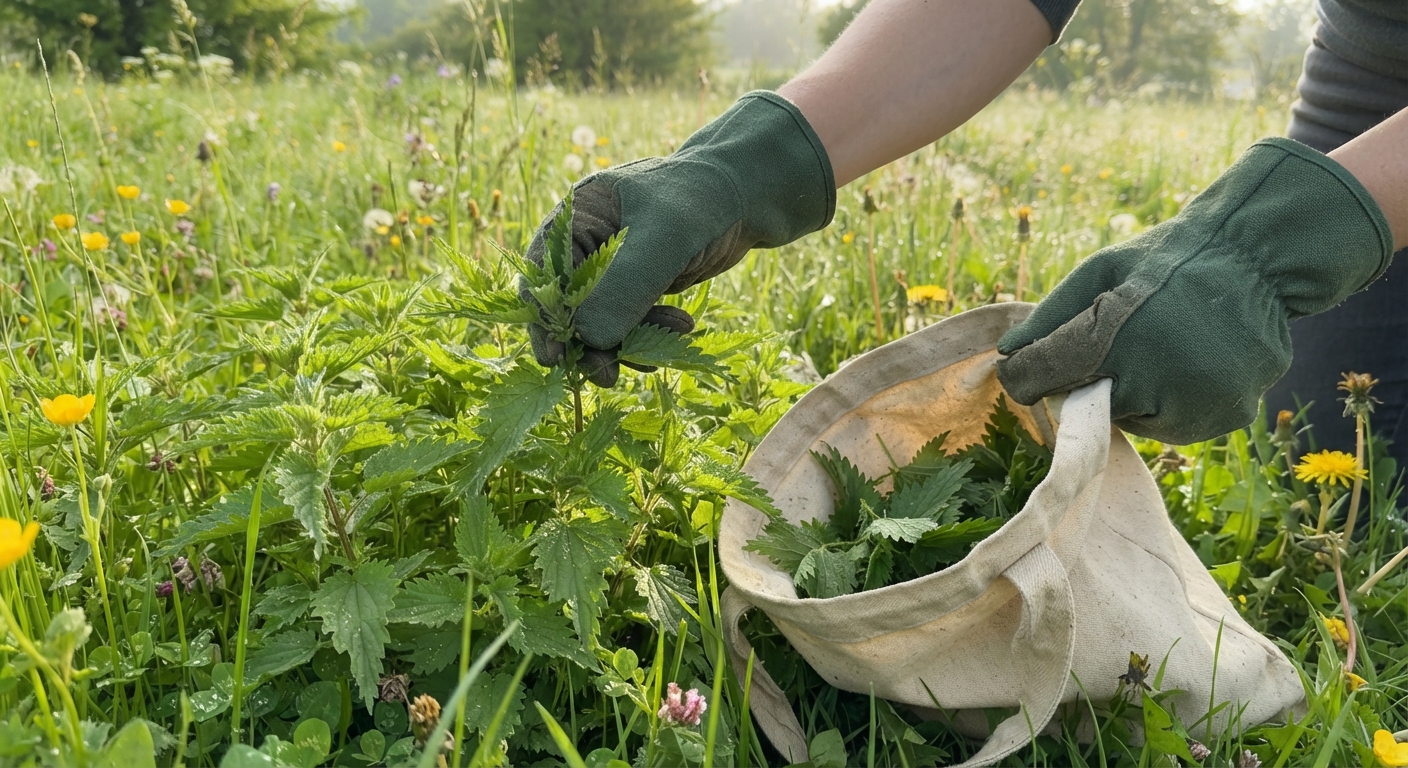
| Stinging Nettle | Cooked young tops (spinach-like) | Allergies, joint pain, iron boost | Moderate | Stings until cooked; harvest with gloves |
| Broadleaf Plantain | Young leaves, seed heads | Bug bites, minor wounds, skin irritation | Good (topical) | Fibrous when mature; use young leaves |
| Yarrow | Small amounts as tea or seasoning | Bleeding, fevers, colds | Moderate | Toxic in large doses; avoid if pregnant |
| Chickweed | Salad green, raw or cooked | Itchy skin, mild inflammation | Weak | Great food, weak medicine |
| Elder | Cooked berries, flower fritters | Cold and flu (elderberry syrup) | Moderate–good | Raw berries, leaves, and stems are toxic |
| Burdock | Peeled root, young leaf stalks | Skin issues, digestion | Weak–moderate | Root is labor-intensive to harvest |
| Violet | Flowers, young leaves | Coughs, lymphatic support | Weak | High in saponins in large amounts |
| Raspberry leaf | The berries (obviously) | Cramps, diarrhea, toning | Weak–moderate | Leaf tea tastes woody; berries are the star |
| Cleavers | Young shoots, cooked | Lymphatic and urinary support | Weak | Prickly texture; eat only young growth |
| Calendula | Petals as garnish, tea | Skin healing, minor burns | Moderate (topical) | Mainly medicinal, not a meal |
| Mullein | Tea from leaves and flowers | Coughs, respiratory irritation | Weak–moderate | Straining the tea is mandatory |
Two columns deserve a moment. “Evidence level” is my blunt read of how much real support sits behind the traditional claim — moderate means actual studies exist, weak means it’s mostly inherited folk knowledge. And “Watch out” is the difference between useful and harmful. Read it before you harvest.
The 12 Plants, Compared
1. Dandelion — Balanced, but the food job wins
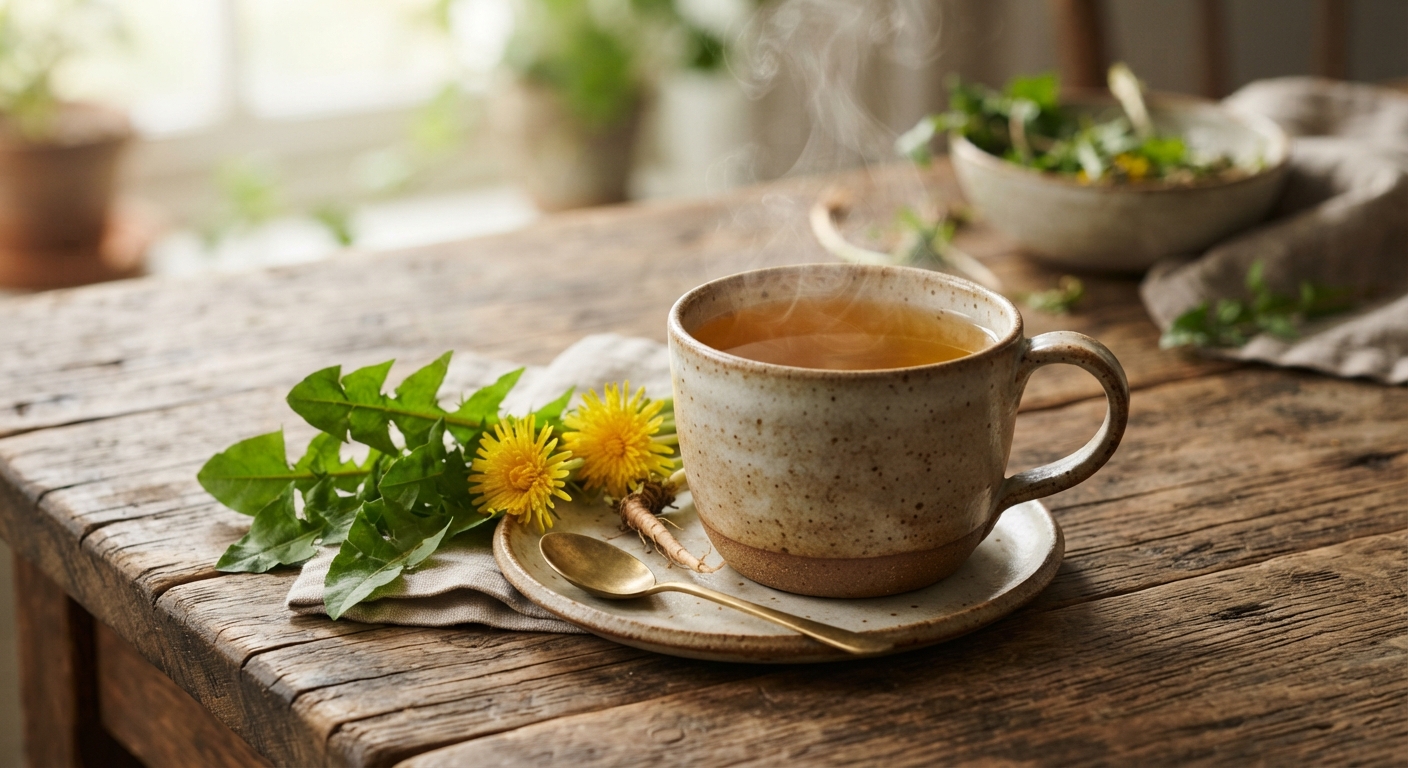
The food job. Young spring leaves in salad or sauté, yellow flowers into fritters or tea, and the roasted root as a coffee stand-in. It’s the single most abundant edible green on the continent.
The medicine job. A genuine diuretic — the “pee the bed” reputation is real, not folklore. Traditional use targets sluggish digestion and water retention, with modest research backing both.
Verdict: eat it freely, treat mildly. As food it’s a benchmark. As medicine it’s gentle and safe for most people, but it won’t cure anything dramatic. Skip it if you’re on diuretics or have gallbladder issues.
2. Stinging Nettle — The rare plant where both jobs are strong
The food job. Cooked nettle tops are one of the most nutrient-dense greens in the world — more iron and calcium than spinach, with a rich, almost meaty flavor once the sting is cooked out.
The medicine job. One of the best-studied wild plants. Nettle shows up in real research on seasonal allergies, joint pain, and even benign prostate issues. It’s not a miracle, but the paper trail is longer than most.
Verdict: harvest with gloves, use with confidence. This is the plant to learn if you want one that genuinely pulls double duty. Just never eat it raw.
3. Broadleaf Plantain — Better medicine than food
The food job. Young, tender leaves work in a salad or as a cooked green, and the seed heads are edible. Fine, but not exciting.
The medicine job. The real reason to know this plant. Chew a leaf (or mash it) and press it on a mosquito bite, bee sting, or minor scrape, and the itching genuinely calms down fast. It’s the best first-aid plant most people already have growing in their driveway.
Verdict: medicine first, food second. Carry it in your mental first-aid kit. The leaves get stringy as they age, so pick young ones if you’re eating it.
4. Yarrow — Real medicine, respect the dose
The food job. A few young leaves as a bitter seasoning or a cup of tea. It’s food only in small amounts — this is not a salad plant.
The medicine job. The field dressing of the old world. Yarrow’s traditional role is stopping minor bleeding and breaking fevers, and it has enough astringent and anti-inflammatory compounds that the reputation has held up for centuries.
Verdict: medicine, used carefully. It’s genuinely effective for small wounds, but it’s also genuinely dose-sensitive — large amounts are toxic, and it’s off-limits during pregnancy. Know it, but don’t overdo it.
5. Chickweed — Eat it all you want, skip the hype
The food job. Mild, tender, spinach-like greens that work raw or cooked. One of the most pleasant beginner plants there is.
The medicine job. Traditionally used as a poultice for itchy, irritated skin. It’s soothing, and that’s about it — the anti-inflammatory claims are mostly anecdotal.
Verdict: food first, medicine a distant second. Fill your basket with it. Just don’t expect it to cure anything; the evidence isn’t there.
6. Elder — Great medicine, and the food comes with a rule
The food job. Elderflower fritters and cordial in spring, cooked elderberries in pies and syrup in late summer. Delicious — as long as they’re cooked.
The medicine job. Elderberry syrup is one of the better-supported traditional cold-and-flu remedies, with real studies behind its effect on symptom length and severity.
Verdict: a two-part plant, and the parts are not interchangeable. Flowers and berries are food after cooking; the raw berries, leaves, and stems are toxic. Never skip the cooking step.
7. Burdock — Good food, if you’re willing to dig
The food job. The peeled taproot, simmered or stir-fried, is a staple in Japanese cooking (gobo). Young leaf stalks work too. It’s a real vegetable — just buried a foot underground.
The medicine job. Traditional use for skin conditions and digestion. The research is thin, and most of the buzz comes from skincare products rather than solid clinical evidence.
Verdict: food if you have a shovel and patience, medicine if you don’t mind weak evidence. Respect the effort-to-reward ratio; digging burdock is a project.
8. Violet — Pretty food, weak medicine
The food job. The flowers are the star — sweet, colorful, and gorgeous on a salad or candied on a cake. Young leaves are edible too.
The medicine job. Traditional cough and lymphatic support, usually as a syrup. Some real compounds exist, but the clinical evidence is sparse.
Verdict: garnish first, medicine a curiosity. Eat the flowers for joy. Don’t lean on violet to fix anything; the science simply isn’t there yet.
9. Raspberry Leaf — The berries are food, the leaf is folk medicine
The food job. You already know this one. The berries are among the best foraging there is.
The medicine job. Raspberry leaf tea has a long folk history for menstrual cramps and as a pregnancy tonic. The evidence is mixed and mostly weak, and the pregnancy claim in particular deserves a professional’s input before you try it.
Verdict: eat the berries, treat the leaf tea as a pleasant drink, not a treatment. The tea is harmless for most and tastes pleasantly earthy, but don’t expect a pharmacy.
10. Cleavers — A texture problem, not a miracle
The food job. Young spring shoots, cooked, are edible and mild. Older plants turn into a sticky, scratchy mess nobody wants in their mouth.
The medicine job. A classic “lymphatic cleanser” in folk herbalism, used for urinary and skin issues. The evidence for any of it is essentially anecdotal.
Verdict: harvest early and only if you want the novelty. As food it’s fine young. As medicine, treat the “detox” claims with heavy skepticism.
11. Calendula — Medicine you’ll mostly use on your skin
The food job. The vivid orange petals brighten salads, rice, and tea. Edible, pretty, but you’re not going to make a meal of them.
The medicine job. The one place calendula genuinely earns its keep: skin. Salves and creams made from it are well-regarded for minor burns, scrapes, and irritation, with decent topical evidence behind them.
Verdict: medicine first, food as decoration. Grow it, dry it, infuse it into oil. It’s one of the more legitimately useful skin plants you can keep around.
12. Mullein — A respiratory tea, not a snack
The food job. The leaves and yellow flowers make a mild tea. That’s the whole food story — you don’t eat mullein.
The medicine job. A respected traditional cough and respiratory remedy, usually as a tea or infusion. The evidence is modest but the use is ancient and the plant is gentle.
Verdict: medicine only, and strain the tea. Mullein leaves are covered in fine hairs that will irritate your throat unless you filter them out. This is the plant where “how you prepare it” matters more than “what it is.”
Food vs. Medicine: How to Decide Which Job to Trust
Here’s the mental model I use, and it’ll keep you out of trouble.
A plant’s food job is easy to verify. You eat it, it tastes good, you don’t get sick, and it’s nutritious. You get immediate feedback. That’s why the food uses of these plants are the most reliable thing on this list.
A plant’s medicine job is harder to verify. Most of these uses come from centuries of folk practice, not randomized trials, and folk practice is a mix of real wisdom and inherited wishful thinking. The only way to sort them is to look at how much actual evidence sits behind each claim — which is exactly what the “evidence level” column above is doing.
The practical rule that falls out of it:
- Strong food + strong medicine (nettle, elder, dandelion): learn these first. Maximum payoff.
- Strong food + weak medicine (chickweed, violet, raspberry, cleavers): eat freely, ignore the health claims.
- Strong medicine + weak food (plantain, yarrow, calendula, mullein): keep these in a first-aid or respiratory kit, not the salad bowl.
- Respect the dose (yarrow, elder raw parts): a plant that’s safe in one amount and toxic in another isn’t optional to learn properly.
Most foraging mistakes happen when someone applies the wrong job to the wrong plant — treating a salad green like a cure, or eating a medicinal plant like a vegetable. Match the job to the plant and most of the risk disappears.
The Rules That Keep This Safe
- Identify with certainty before eating or treating. “It’s probably plantain” doesn’t count. Confirm the plant cold before it touches your skin or your mouth.
- Cook elderberries. Always. Raw elderberries, leaves, and stems are toxic. This is non-negotiable.
- Strain mullein and nettle tea. Tiny hairs from both plants will irritate your throat if you skip this step. A fine mesh or cloth filter is not optional.
- Keep yarrow and calendula for skin and small wounds. They’re effective topical tools and mediocre meals. Use them where they actually work.
- Never treat a serious condition with a wild plant. A fever that won’t break, an infection that’s spreading, or a wound that won’t heal belongs in front of a medical professional, not a poultice.
- Learn the deadly locals in your area before anything else. Hemlock, water hemlock, and whatever else grows near you. Knowing what not to pick is the foundation of every other skill here.
Short FAQ
Which dual-use plant should a beginner learn first?
Dandelion. It’s everywhere, it’s unmistakable, the food use is excellent, and the medicine use (diuretic, digestion) is gentle and well-documented. You can master it in a single afternoon.
Is it safe to make tea from wild plants?
Only after positive identification and only with the right preparation. Some plants, like nettle and mullein, need straining to remove irritating hairs. Others, like yarrow, are dose-sensitive. “Tea” is not automatically safe just because it’s a plant.
Can I use these plants to replace my medication?
No. None of these are a substitute for prescribed treatment, and several interact with medication. Nettle, for example, has a real diuretic effect that can compound with blood-pressure drugs. Ask a professional first.
What’s the biggest mistake people make with dual-use plants?
Treating every edible plant as if its folk-medicine claims were also true, and vice versa. The food job and the medicine job have completely different evidence behind them. Sorting the two is the entire point of this guide.
Why do raw elderberries matter so much?
Because the raw fruit, seeds, leaves, and stems contain compounds that convert into cyanide in the body. Cooking destroys them. It’s the clearest example of a plant where preparation is a safety issue, not a preference.
The Short Version
Wild plants that pull double duty are the best deal in foraging — but only if you match the job to the plant. Nettle and elder earn their reputations as both food and medicine. Dandelion, chickweed, and violet are excellent food with overhyped medicine. Plantain, yarrow, and calendula are genuine medicine you’ll use on skin and wounds, not in a meal.
Learn dandelion and nettle first. Keep plantain in your mental first-aid kit. Cook your elderberries, strain your mullein, and never treat a serious problem with a weed you found in the yard. Do that, and you’ll get the full value out of the plants that do two jobs — without ever confusing the two.