Lost in the Woods? Which Wild Foods Are Worth the Calories
Every survival forum has that one guy repeating “you can go three weeks without food” like it’s comforting information. It’s technically true and practically useless. You’ve been lost for six hours, your phone is at 12%, and you have no idea whether today is day one of three weeks or the start of something much worse. The real question isn’t can you survive without eating. It’s: if I’m going to spend energy finding food, which foods actually give me more than they take?
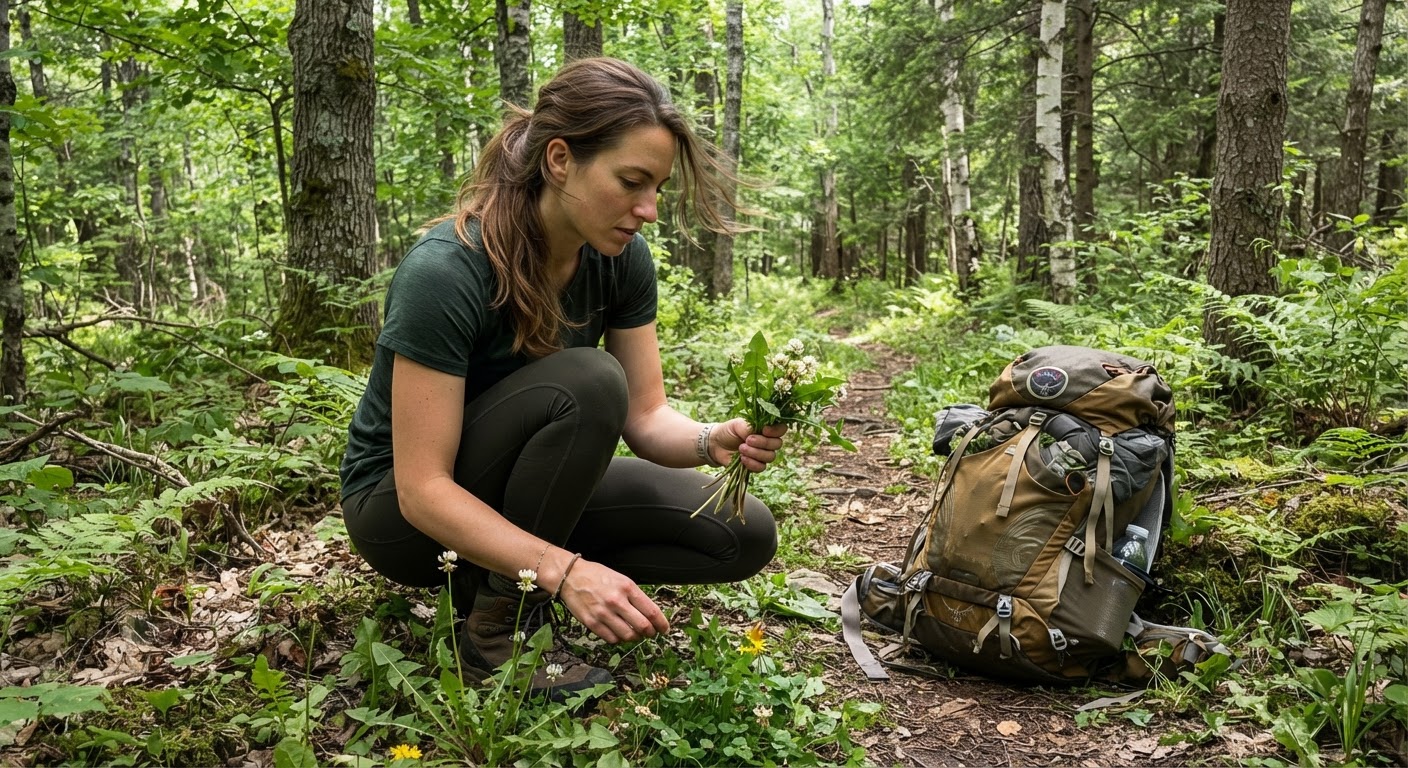
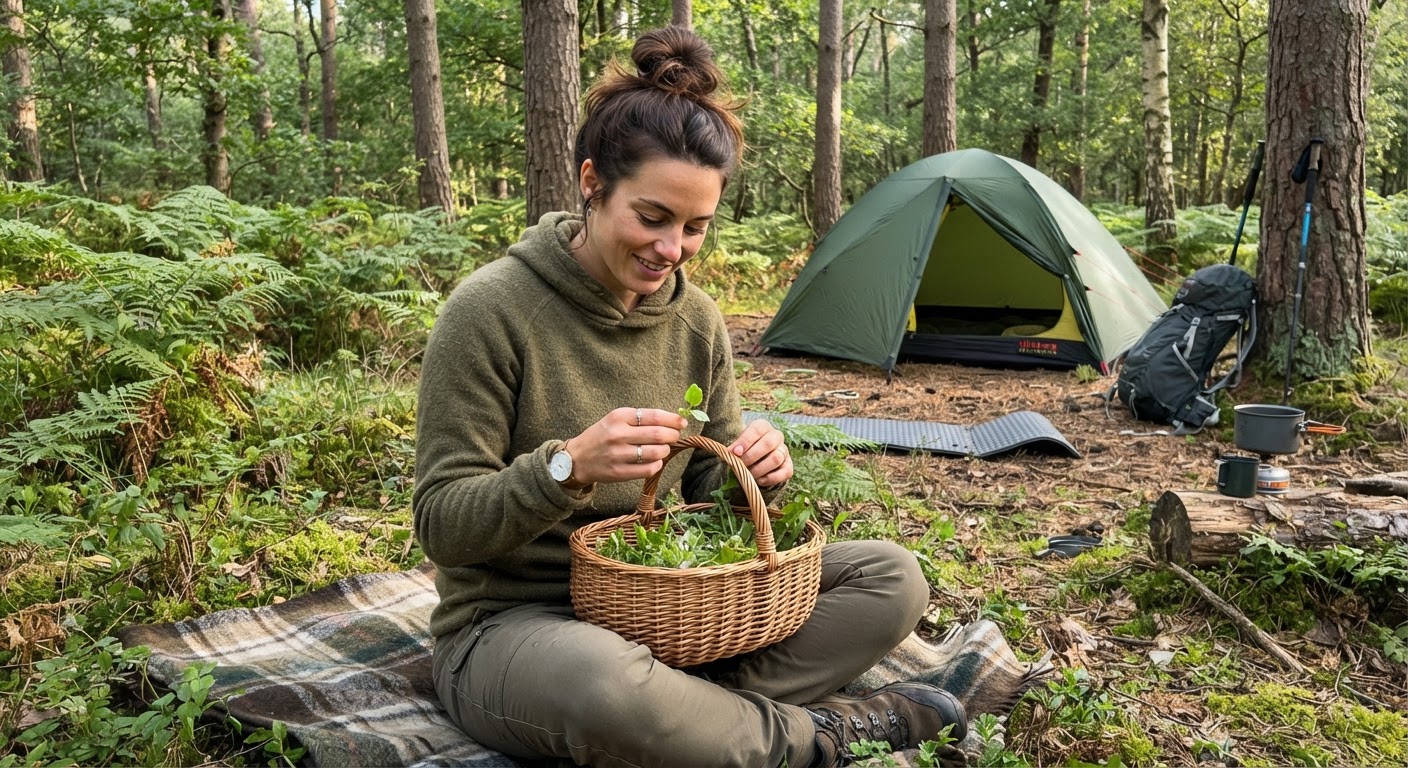
That’s a math question, and almost nobody answers it. Most “lost in the woods” content just lists plants that won’t poison you. Fine. But a salad of dandelion leaves gives you maybe 45 calories per cup — and you’ll burn more than that walking to the next patch and back. Eat enough low-calorie greens to actually matter and you’ve spent the whole day chewing water.
So this article ranks wild foods by what actually matters when you’re lost: calories in versus calories out. Some of the answers surprised me the first time I ran the numbers, and a few beloved “survival foods” fail the test completely.
The One Rule That Decides Everything
Before the list, internalize the rule that survival instructors use behind the scenes:
A food is only worth eating if the calories and nutrients you gain exceed the energy you spend getting it, making it safe, and digesting it — plus the risk you take misidentifying it.
That last part matters more than people think. In a survival situation, a bad ID isn’t a cooking disappointment; it’s vomiting and diarrhea, which dehydrate you at exactly the moment water is your most limited resource. So the rule has three corollaries:
- Density beats volume. Fat and starch beat watery greens. Every time.
- Ease beats abundance. A modest food you can gather in 20 minutes beats a rich one that takes four hours of digging.
- Conspicuous beats delicious. Plants that look identical year-round, with no toxic lookalikes, beat tastier plants you might misidentify when exhausted and stressed.
Run every candidate through those three filters and the list below falls out naturally.
The Shortlist: 6 Wild Foods That Pay You Back
Ranked roughly by how the math works out in a real scenario — not by calories alone, but calories relative to effort and risk.
1. Cattails — the closest thing to a cheat code
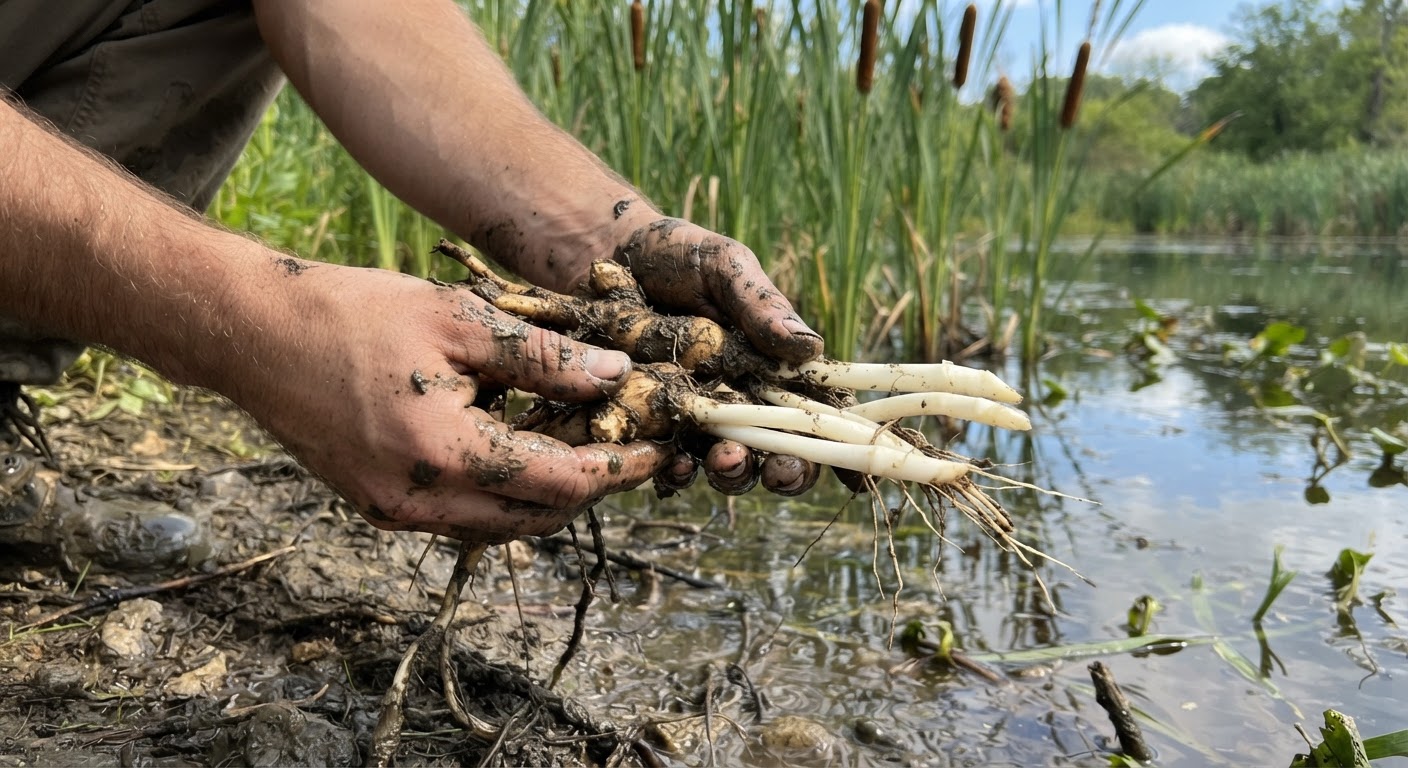
Every part of the cattail (Typha) is usable, but the prize is underground: a network of starchy rhizomes (horizontal roots) that sits within arm’s reach of the water’s edge, all year, on every continent except Antarctica. The roots are roughly 30–45% starch by dry weight, and processing is simple — pull, scrub, mash, cook. In fall and winter you’re after the root starch; in spring the white lower stalk (“Cossack asparagus”) eats like mild raw cucumber. There is no poisonous North American lookalike of any significance, and the plant’s ID is unmistakable: the brown hot-dog-on-a-stick seed head. When people ask me what one plant they should learn before a remote trip, this is my answer, and it isn’t close.
2. Acorns — the calorie king you’re walking past
An oak forest drops thousands of calories on the ground every autumn, and most people walk over them. Leached, dried acorn meal runs around 400 calories per 100 grams — competitive with rice — plus fat that greens simply don’t have. The catch is tannins: raw acorns are bitter and unpleasant, and you should leach them in water (cold-water soaking for eating, hot for speed) before consuming a meal’s worth. That’s labor. But it’s labor you can do sitting still, which matters when you’re conserving energy, and white oak species are often mild enough to eat after a single short soaking. If you’re lost in autumn anywhere near oaks, this is your best calorie-for-effort deal on the continent.
3. Walnuts, hickories, and beechnuts — the autumn jackpot
Any wild nut beats almost any plant in the calorie column: black walnuts and hickory nuts run 600+ calories per 100 grams of kernel, and beechnuts aren’t far behind. The work is cracking shells, which is real work with a rock, but the payoff is the most energy-dense food on this entire list. The limitation is timing — this is a fall-to-early-winter food. Last year’s buried caches lose quality, and by midspring the squirrels have won. If you find yourself lost in nut season, prioritize this over everything else green.
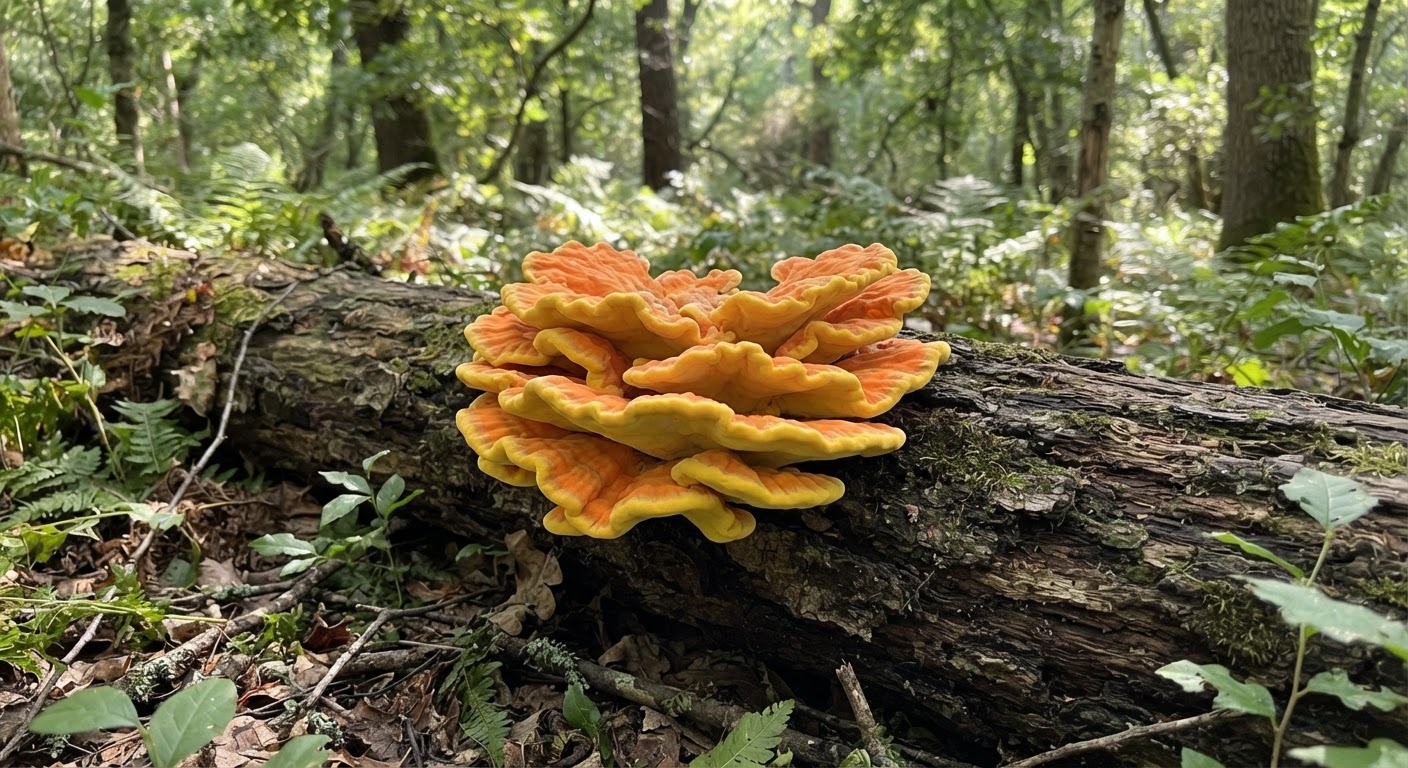
4. Chicken of the woods — the one mushroom exception
I’m generally against advising lost people to eat wild mushrooms, and I’ll hold that line in the FAQ below. Laetiporus (chicken of the woods) is the exception worth knowing: a bright orange shelf fungus growing in overlapping brackets on dead or dying wood, with a white pore surface underneath (that detail separates it from jack-o’-lanterns, which have gills). It has no seriously toxic lookalike in North America when you match the full description — orange top, white pores, shelf formation on wood. It’s not calorie-dense fresh (~30 per 100 g), but brackets can weigh pounds, it requires zero digging or processing, and it cooks into something genuinely meaty. Easy calories with a short learning curve: the only mushroom that clears the bar.
5. Pine family inner bark — slow, boring, and always there
The cambium layer — the slippery white layer between the outer bark and the wood — of pines, spruces, firs, and birches is an honest emergency staple. It’s historically documented famine food across North America and Scandinavia. Scraping it takes effort and the calories are moderate, but it’s available in deep winter when literally nothing else is, it’s instantly recognizable on trees you already know, and a single tree can feed you for days without killing it (scrape from one side; don’t girdle the trunk). Cut thin strips, fry or boil them, or dry and pound into flour. Nobody’s favorite meal. A food that’s there beats a better food that isn’t.
6. Grasshoppers and crickets — the best protein deal in warm months
If it’s summer and grass is around, insects outperform every plant on this list for protein per unit of effort. Grasshoppers and crickets run roughly 100–150 calories per 100 grams with 15–20+ grams of protein — and they’re slow, conspicuous, and catchable by hand in cool early morning hours when they’re sluggish. Remove legs and wings, cook thoroughly (raw insects carry parasites), and eat. Insects feel like the exotic option, but pound for pound they’re easier than fishing without gear and far safer than guessing at plants.
The Foods That Waste Your Time (or Worse)
Now the part that upsets people, because these are the foods every survival show features:
- Wild berries. Safe, common, and beloved — and nearly worthless. Most berries sit at 40–60 calories per 100 grams. You’d need several pounds to replace one granola bar, and berry ID mistakes (see: pokeweed, poison ivy berries, dead nightshade) carry real consequences. Eat a handful for morale and vitamins if the ID is certain. Do not spend hours on them.
- Leafy greens and “survival salad.” Dandelion, clover, wild mustard — safe, nutritious in vitamins, and calorically irrelevant at ~40–50 per 100 g. Foraging a salad costs more energy than it returns. If you’re going to eat greens anyway, fine, but never confuse “won’t poison me” with “worth eating.”
- Most mushrooms other than the exception above. The deadly Amanitas look like several edible genera at various life stages, the consequences are frequently fatal, and the caloric reward is modest. An expert can play this game. A lost, stressed beginner cannot. Skip.
- Big game you can’t take without tools. Without a weapon, snares (illegal in many places, rarely productive without practice), or a fishing setup, hunting is a fantasy that burns calories you don’t have. The exception is trapped fish or crayfish in small streams — if you can build a basic barrier trap, do it. Otherwise, walk away.
- Anything that requires an hour of digging for unclear payoff. Burdock and wild carrot roots are real foods, but wild carrot’s lookalikes include poison hemlock — one of North America’s deadliest plants — and the caloric reward per root is small. The math says no.
The Comparison Table
Here’s the whole article in one grid. Calorie figures are approximate per 100 grams, fresh unless noted, and effort assumes an untrained person.
| Wild food | Approx. calories / 100 g | Effort to get | ID risk | Verdict |
|---|---|---|---|---|
| Hickory / walnut kernels | 600+ | Medium (cracking) | Low | Best density; seasonal |
| Acorns (leached, dried) | ~400 | Medium (leaching) | Very low | Best autumn staple |
| Pine/spruce inner bark | ~300–500 dried | Medium (scraping) | Very low | The winter fallback |
| Cattail root starch | ~250–350 dried | Low–medium | Very low | Top all-around pick |
| Grasshoppers, cooked | ~100–150 | Low (mornings) | Very low | Best protein per effort |
| Chicken of the woods | ~30 fresh | Very low | Low (with white-pore rule) | Easy volume calories |
| Wild berries (safe spp.) | ~40–60 | Low | Moderate | Morale food only |
| Dandelion & other greens | ~40–50 | Low | Low–moderate | Vitamins, not calories |
| Unknown mushrooms | ~20–40 | Low | Extreme | Never |
| Wild carrot / hemlock lookalikes | — | High | Extreme | Never |
Read that middle column against the last one and the pattern is obvious: the safest foods are also the ones nobody photographs for Instagram. Starch and fat don’t look exciting. They keep you alive.
If You Only Remember Five Things
- Water and shelter still come first. Food is third, and you can act like it for 24–48 hours without harm. Don’t burn daylight and sweat chasing calories on day one.
- Learn cattail and acorn before you need them. Between them, you’re covered from spring through winter across most of the continent, with two of the lowest ID risks in foraging.
- Chase starch and fat, not salad. If a food is mostly water, its calorie math is already broken.
- One certain plant beats five probable ones. Risk is a cost in the calorie equation, and it compounds with fatigue.
- Sit-down foods beat chase-down foods. Leaching acorns while resting conserves more energy than it costs. Sprinting after game does the opposite.
Straight Answers to the Questions That Come Up
How long can I actually go without food in the woods? Healthy adults typically handle several days with only reduced energy and focus — the “three weeks” figure is a starvation extreme, not a planning number. But judgment degrades before your body does. Eat something calorie-positive by day two or three if you can do it safely; fuzzier decisions kill more lost people than hunger does.
Is it true I should test unknown plants by rubbing them on my skin first? The universal edibility test exists, and it’s better than blind guessing — but it takes 8+ hours of waiting between stages and can still fail you, because some toxins don’t announce themselves on skin or lips. When you’re lost, the honest version is simpler: eat only plants you identified with total confidence before the trip. The test is a last resort, not a shortcut.
What’s the single best “first plant” to learn for emergencies? Cattail. It’s found on every continent except Antarctica, its ID is unmistakable in every season, every part has a use, there are no dangerous lookalikes, and the calories live in roots you can harvest without tools. If your budget for learning is one plant, that’s the plant.
Do I really have to leach acorns, or is the bitterness just taste? The bitterness is tannins — astringent, stomach-upsetting in quantity, and unnecessary to tolerate. Leaching is easy: crack the acorns, soak the meats in water (change the water until it no longer turns brown and bitter), and dry. Cold-water leaching preserves more of the sweetness; hot water is faster.
Are there mushrooms I can trust as a beginner? One, in practice: chicken of the woods, when it matches the full description — orange overlapping shelves on wood, white pore surface (not gills) underneath. Cook it and try a small first portion even then. Everything else waits until you’re learning with an expert, not while lost.
A Note on Practicing This Before You Need It
Here’s the uncomfortable truth from the table above: the foods that save you are the ones that need a little practice — pulling cattail rhizomes, leaching acorns, scoring inner bark without girdling a tree. Every one of these skills is fun on a casual Saturday and nearly impossible to learn for the first time while cold, lost, and panicking.
Identification is the part worth outsourcing, though. I built Edible Plant Identifier for exactly the moment this article describes: point your camera at a plant, mushroom, or berry and get an instant read on whether it’s a known edible, with notes on lookalikes and which part to use. It works fully offline, so a dead signal in the backcountry doesn’t leave you guessing — though no app replaces careful ID habits and expert confirmation, and I’d never claim otherwise.
Get the free plant you’re standing next to identified, then go home and practice the rest.