Backpacking Emergency Food From Nature: What’s Actually Worth Foraging
A hard day on the trail with a full pack burns somewhere between 4,000 and 5,000 calories. The dandelion greens and clover most people picture when they hear “emergency food from nature” clock in at roughly 25 calories a handful.
That gap is the entire story. When you’re short on food halfway through a backpacking trip, the question isn’t “what can I eat?” — it’s “what’s actually worth the energy I’d spend gathering it?” Foraging burns calories. Cooking wild food burns calories and water. If a plant gives you back less than it costs to collect, it’s a hobby, not a ration.
This guide ranks the natural food sources you’re most likely to run into on trail by what actually matters: calories returned versus effort spent, plus the risk that comes with each one. No romance, just the math.
The Reality Check: Foraging Is a Vitamin Play, Not a Calorie Play
Before the rankings, one thing needs to land, because it changes every decision after it.
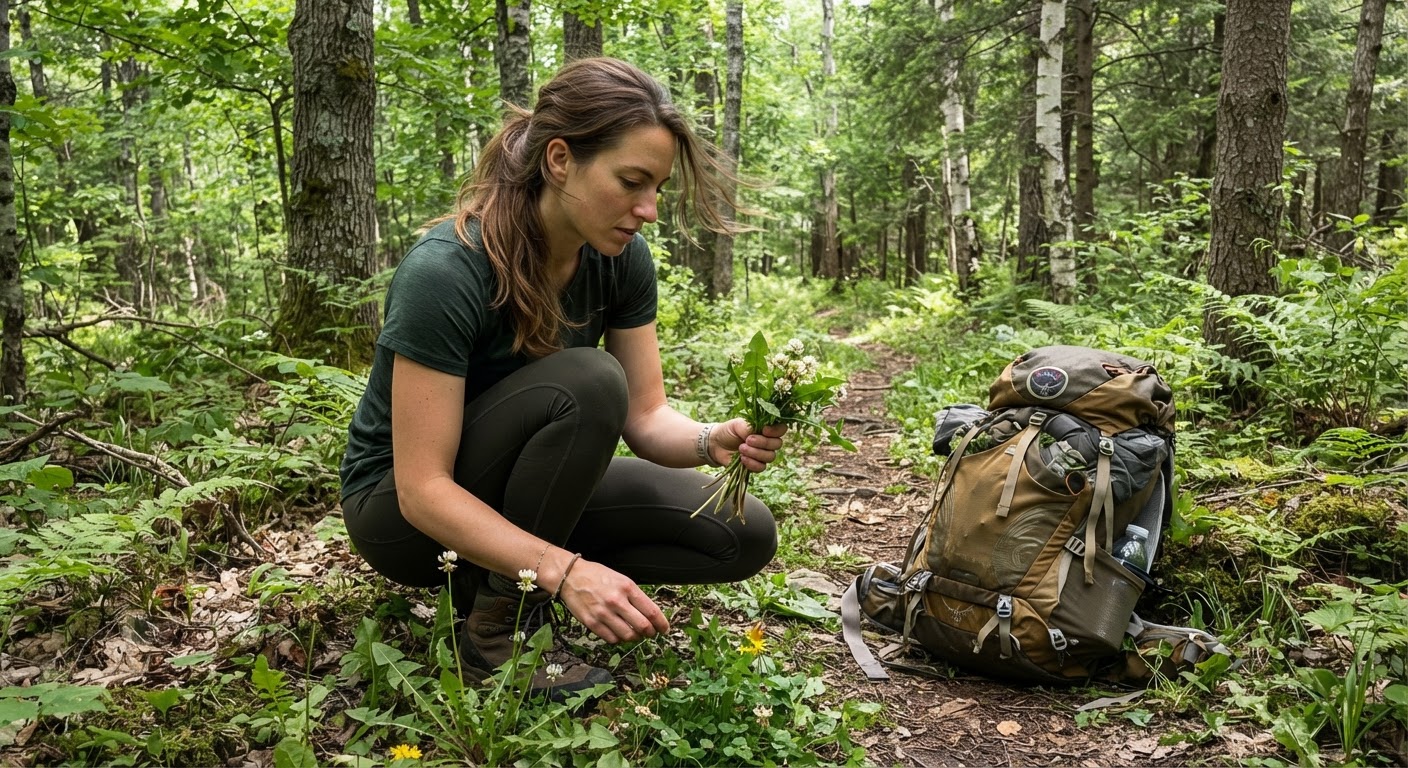
Wild greens are not a meaningful calorie source. A generous cup of dandelion leaves is around 25 calories. Chickweed, clover, plantain, wood sorrel — all in the same single-digit-to-thirty range per serving. You would need to eat an absurd volume of salad greens to replace even one energy bar, and your body would spend more digesting tough raw fiber than it gets back from a lot of it.
What wild food is genuinely good for in an emergency:
- Vitamins and minerals. Vitamin C from pine needle tea or rose hips, iron and calcium from nettles — these matter after days of processed trail food.
- Morale. Eating something fresh, warm, and green when you’re tired and hungry is psychologically real.
- Stretching your real food. Wild greens bulked into a ramen or rice pouch make one meal feel like two.
- Water-adjacent energy. A few specific sources — cattail root, acorns, berries — do provide real carbohydrates, which is where the comparison below focuses.
So the honest frame: forage to supplement, not to survive on. The people who get into trouble are the ones who believe a backpack full of “nature’s pantry” will replace the calories they forgot to pack.
The Quick-Reference Comparison Table
Here’s the whole decision on one screen. Each source is scored for a backpacker mid-trip: calories per reasonable harvest, how much effort it takes, and how badly it can go wrong.
| Wild food source | Realistic calories | Effort to harvest | Risk | Verdict for backpackers |
|---|---|---|---|---|
| Cattail root starch | ~150–250 per large root | High (dig, clean, process) | Low | Worth it near water, if you have the time |
| Acorns (leached) | ~100 per ounce | Very high (leaching) | Medium if skipped | Worth it only with a fire and patience |
| Wild berries | ~60–80 per cup | Low | Medium (lookalikes) | Best effort-to-reward on trail |
| Pine inner bark | ~50 per strip, mostly fiber | Medium | Low | Survival novelty, not real fuel |
| Burdock root | ~100 per cup | High (digging) | Low | Good if you’re already digging |
| Dandelion greens | ~25 per cup | Very low | Very low | Vitamin/salad, not calories |
| Stinging nettle | ~35 per cup, nutrient-dense | Medium (gloves) | Low cooked | Great nutrition, no calories |
| Clover / chickweed / sorrel | ~15–30 per cup | Very low | Very low | Trail nibbles and morale |
Read it once and the pattern jumps out: the sources that give real calories all take real work. The ones you can grab in seconds give almost none. That trade-off is the heart of smart emergency foraging.
Ranked: What’s Worth the Effort on Trail
1. Wild berries — the best effort-to-reward you’ll find
If you see ripe blackberries, raspberries, blueberries, or huckleberries, stop. Berries are the only wild food that reliably pays you back more than the bending-down costs. A cup is 60 to 80 calories of sugar and fiber, they need zero cooking, and they’re genuinely pleasant to eat.
The catch is the one rule you already know: 100% positive ID or skip. Blackberries and raspberries are safe and easy, but anything you can’t name with certainty — especially white, green, or oddly-clustered fruit — is not worth the gamble. Poisonous lookalikes like baneberry and pokeweed berries kill people who “thought they looked like something.”
2. Cattail root — real carbs if you’re already near water
Cattail is the closest thing to an actual trail ration on this list, and for good reason — the starchy root is roughly 150 to 250 calories when you put in the work. The problem is the work itself. Digging a cattail out of the mud, washing it, peeling the outer layer, and pounding the core to separate the starch is a 20 to 30 minute job that requires water and gets you muddy and cold.
Verdict: worth it if you’re camped near a marsh and have a pot, a fire, and daylight to spare. Skip it if you’re mid-mile and moving.
3. Acorns — maximum calories, maximum patience
Ounce for ounce, acorns are the highest-calorie wild food in most forests — about 100 calories per ounce once processed. The “once processed” is the whole catch. Raw acorns are loaded with bitter tannins that will upset your stomach, so they have to be shelled, crushed, and soaked or boiled in several changes of water until the bitterness is gone. That’s a full camp chore, not a trail-side snack.
Only bother if you’re genuinely hunkered down for the evening with a fire and water to spare. The short version: acorns are a “camp meal” food, never an “I need energy right now” food.
4. Burdock root — the underrated digger’s payoff
Burdock’s big taproot runs around 100 calories a cup, and unlike cattail it grows in disturbed soil and trail edges where you’re already walking. Digging it out with a stick or trowel is the only real effort, and the young roots can be peeled and eaten raw or boiled. It’s bland and fibrous, but it’s honest food that doesn’t fight back.
The reason it ranks here instead of higher: identifying burdock from its leaves is easy, but you want first-year roots (before the plant flowers), which takes a little know-how.
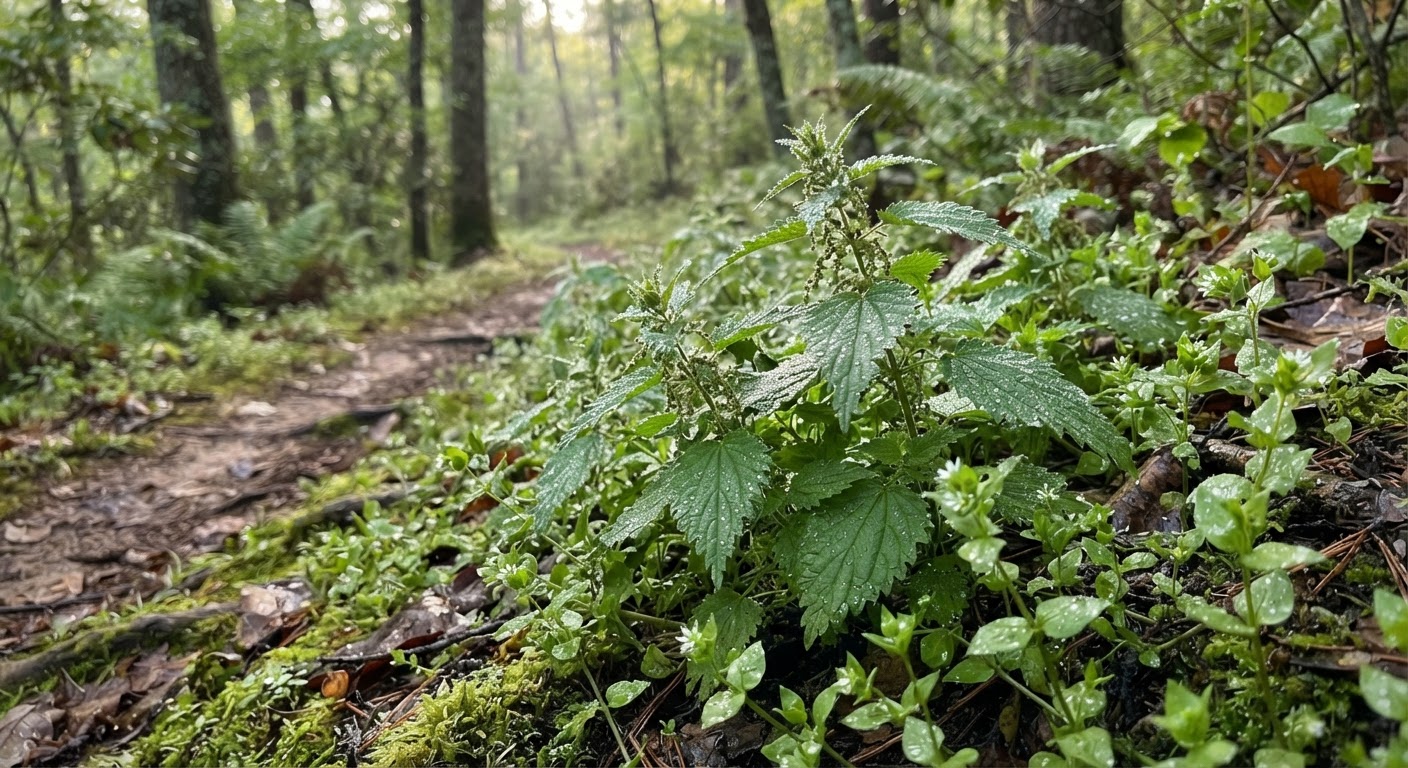
5. Stinging nettle — no calories, exceptional nutrition
Nettles won’t feed you in the calorie sense — about 35 calories a cup — but they’re one of the most nutrient-dense greens in the woods, packed with iron, calcium, and vitamin C. Boil or steam the young tops for five minutes and the sting disappears entirely. On day three of bars and instant noodles, a bowl of cooked nettles feels like a reset button.
Harvest with gloves or folded sleeves, take only the tender top leaves, and you’ll have one of the safest, most satisfying wild meals a backpacker can make. Just don’t expect it to power your next climb.
6. Dandelion, clover, and chickweed — the “everywhere” greens
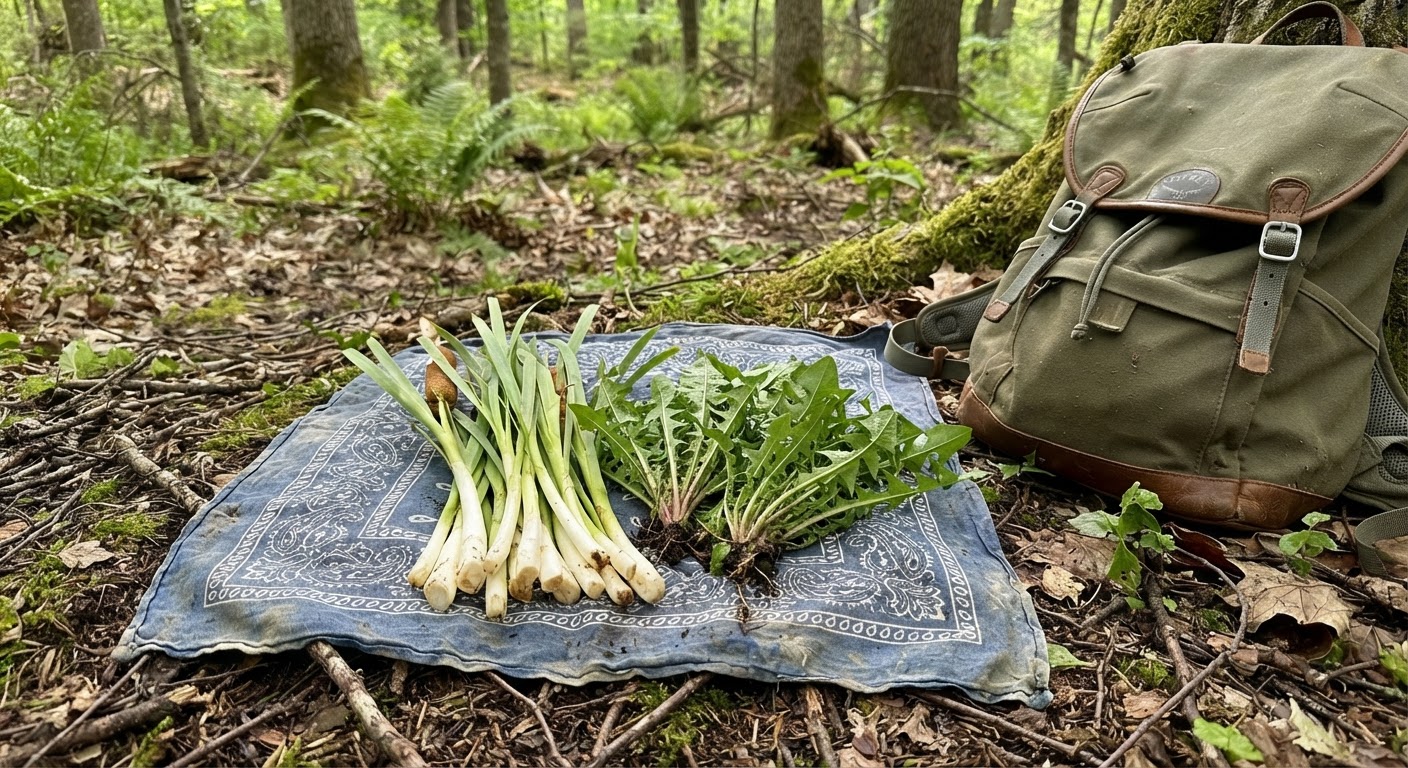
These three are the most reliable plants you’ll find on trail, and they’re all completely safe, low-effort, and almost calorie-free. Their real job is stretching what you already have: throw a handful into a ramen pouch, a rice packet, or a soup mix, and you turn a thin meal into something with texture, vitamins, and bulk.
Chickweed and young dandelion leaves are mild enough to eat raw. Clover flowers are faintly sweet and safe raw. None of them will “save” you — they’ll just make your real food go further, which is genuinely useful when you’re rationing.
The Real Decision: Forage, Ration, or Rest?
When you realize you’re short on food on day two, you have three moves — and most people pick the wrong one out of panic.
Forage costs time and energy, returns little in calories, and pays off mostly in vitamins and morale. Do it when you’re already stopped, near known-safe plants, and not racing daylight.
Ration is almost always the correct move. Split what you have across the remaining days, eat the calorie-dense stuff first, and slow your pace so you burn less. A 20% reduction in speed can cut your calorie burn dramatically — more than any amount of gathered greens will add.
Rest is the one people forget. If you’re low on food and feeling weak, the highest-return thing you can do is stop, make camp early, hydrate, and let your body tap fat reserves instead of burning sugar on the trail. Forced marching on empty is how bad decisions and injuries happen.
The practical order for most situations: ration first, rest when you’re flagging, and forage only as a supplement when you’re already stationary.
What to Skip on the Trail
Three things look tempting and aren’t worth it:
- Mushrooms. The calorie payoff is tiny and the misidentification risk is enormous. Even experts get this wrong. Always skip.
- Unknown berries. If it’s white, green, or you can’t name it, it’s not food. One handful of the wrong fruit ends a trip.
- Tough, bitter, or hairy leaves. If a green is fibrous, unpleasantly bitter, or milky-sapped, it’s either low-value or a warning sign. Palatable is a rough proxy for safe.
The 30-Second Field Checklist
Before you harvest anything, run these five checks:
- Can I name this plant with 100% certainty? If not, it’s scenery, not food.
- Does it have toxic lookalikes nearby? If you can’t tell them apart, skip.
- Is it clean? Avoid plants near trails, campsites, or water that could be contaminated.
- Is the effort worth the return? A 30-minute dig for 50 calories is a loss.
- Do I have a way to cook it? Boiling neutralizes nettle stings and some mild toxins.
If any answer is “no,” put it down and keep walking.
Summary Tips
- Treat foraging as a supplement, never a meal plan. Wild greens stretch real food; they don’t replace it.
- Berries first, roots only when camped. That’s the effort-to-reward hierarchy on trail.
- Ration and slow down before you forage. Cutting your pace saves more calories than gathering adds.
- Cook it when you can. Heat makes greens digestible and neutralizes nettle sting.
- 100% ID or it stays on the ground. There is no “probably edible” on trail.
- Never mushrooms, never unknown berries. Those two rules alone prevent most wilderness food tragedies.
Rapid-Fire FAQ
Can you actually survive on foraged food while backpacking? Not realistically on calories alone. You can supplement vitamins and stretch rations, but wild greens won’t replace the thousands of calories a hiking day burns.
What’s the highest-calorie wild food a backpacker can realistically use? Acorns (after leaching) and cattail root starch. Both require a camp, a fire, and water.
What’s the safest thing to eat with zero prep? Ripe blackberries and raspberries, once you’re certain of the ID. Dandelion and clover are also safe but nearly calorie-free.
Is pine needle tea worth it? Yes, but for vitamin C and a warm drink, not energy. Steep a handful of needles in hot water and skip the bark.
How long can you go without food while backpacking? Weeks, technically — but performance and judgment degrade within a day or two of heavy deficits. Water and shelter are the real priorities.
Should you test an unknown plant with the “taste test”? No. The old universal edibility test is slow, risky, and unreliable. If you don’t know it, don’t eat it.
The Bottom Line
Backpacking emergency food from nature is less about finding a meal and more about making smart trade-offs. The plants worth your time are the ones that return more energy than they cost — berries you can grab in seconds, roots you dig only when you’re already camped, and greens that stretch the food you actually packed. Everything else is scenery.
If you’re headed into the backcountry, the single best “emergency food” plan is to pack a sealed reserve ration you never touch and learn to identify a half-dozen safe plants before you go. That way, if your food runs short, you’re not guessing at leaves with a growling stomach — you’re rationing on purpose and supplementing with things you can name with certainty.
That’s exactly the gap I built Edible Plant Identifier to close. Point your camera at a plant and it gives you a fast ID with lookalike warnings, so you never have to gamble on a berry or a leaf when you’re tired and hungry. It works fully offline, which matters, because the moment you actually need it is the moment the signal’s gone.