Camping Alone in the Forest: The Real Dangers (and Fixes)
There’s a specific moment on every first solo camping trip. It usually lands somewhere between sunset and the first unidentifiable noise of the night, and it sounds like this in your head: nobody knows exactly where I am right now, and nobody is coming.
Good news first: that feeling is normal, it fades with competence, and camping alone in a forest is genuinely one of the best things you can do for your head. The bad news is that most articles about the dangers of solo camping are recycled campfire boogeymen — bear attacks, axe murderers, quicksand. Meanwhile, the things that actually send solo campers into trouble are embarrassingly mundane: a rolled ankle, a fire that didn’t get fully killed, a “quick wander” without a map, weather that wasn’t supposed to arrive until tomorrow.
I’ve made enough of these mistakes for both of us, so think of this as the talk I’d give you over coffee the night before your first solo trip. We’ll go through the seven dangers that actually matter, a 48-hour prep checklist, how to set up camp like someone who’s done this before, exactly what to do when something goes sideways, and the pro-level habits that make solo trips boring — which is the highest compliment a camping trip can earn.
Why Solo Camping Is Different (It’s Not the Forest — It’s the Math)
Here’s the thing people miss when they argue about whether solo camping is “dangerous”: the forest doesn’t change when you’re alone. The trails are the same trails. The weather is the same weather. What changes is the math of small problems.
With a partner, a twisted ankle is an inconvenience — someone grabs your pack, you limp out together, somebody tells dumb jokes to keep your spirits up. Alone, that same ankle is a potential emergency: no one to fetch help, no one to hold the flashlight, no one to keep you warm if you’re stuck sitting still, and — this is the one nobody mentions — no one to talk you out of panic. Panic is contagious in groups. Alone, it has room to grow.
So every danger below gets evaluated through that lens: what does this look like when you’re the only pair of hands, the only decision-maker, and the only person who notices something’s wrong? Keep that framing and solo camping stops being scary and starts being manageable.
The 7 Real Dangers of Camping Alone in the Forest
Before we dig into each one, here’s the whole picture at a glance. If you remember nothing else from this article, remember this table.
| Danger | What It Actually Looks Like | Your First Move |
|---|---|---|
| Navigation slips | “I’ll just check over there” — 15 minutes becomes 2 hours off-trail | Stop. Sit. Don’t take a single step until you can point to where you came from. |
| Weather turns | Forecast said clear; the wind shifts and the temperature drops fast | Check sky and wind at camp, button up shelter before rain, not during |
| Fire gone wrong | Embers you thought were out; a burn on your own hand with no one to drive | Cold-touch rule: if it’s too hot to touch, it’s too hot to leave |
| Injury, no second pair of hands | Ankle rolls on a root 3 km from the trailhead | Sit down, assess honestly, ask: can I walk on it — really? |
| Water and food mistakes | Skipping water because “I’ll fill up later,” snacking on an unknown plant | Purify everything; if you didn’t ID it with certainty, it’s not food |
| Wildlife encounters | Raccoons at the food bag at 2 a.m. — not the bear-movie version | Make noise as you hike, store food away from your tent, never inside it |
| The mental game | Every twig snap at 11 p.m. becomes a monster; the spiral begins | Name it out loud: “that’s a branch.” Then breathe, and get back to a task |
Now let’s break these down properly, because each one has a fix that’s easier than it looks.
1. Navigation slips — the “I’ll just check over there” trap
Nobody gets lost lost anymore, mostly. What actually happens is smaller and sneakier: you drop your pack to go look at a mushroom patch, or take “a shortcut” around a bend of trail, and each tiny drift is invisible because the forest all looks the same and your brain insists you know where you are. Twenty minutes later, nothing looks familiar, and — because you’re solo — there was nobody watching the pack, the time, or the direction.
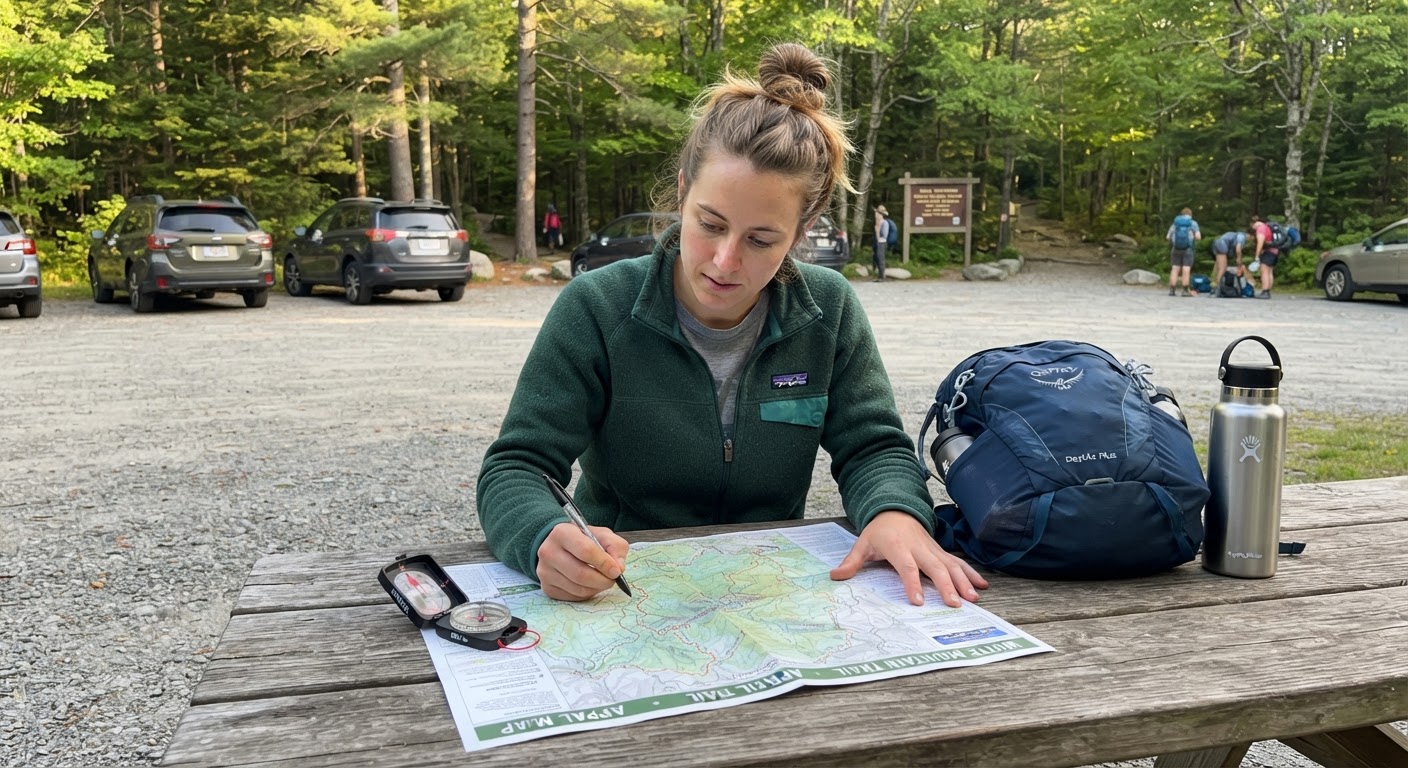
The fix is boring and absolute: the pack never leaves your back on side trips, you always note at least two landmarks behind you, and if you’re going even slightly off-trail, you check your map and compass before you go, not after. If you do realize you’re turned around, the worst possible response is walking faster in a guessing direction. Sit down. Drink water. Ten minutes of calm thinking beats an hour of confident wandering.
2. Weather — the forecast is a rumor, not a promise
Mountain and forest weather does what it wants. The forecast is a useful rumor, not a promise, and when you’re solo, weather mistakes stack up fast: wet gear you can’t share weight with, a tarp you have to pitch alone in the rain, a cold you have to fight by yourself because hypothermia doesn’t care how tough you are.
Three habits cover most of it. First, check the forecast from two sources before you leave, and look specifically at wind and overnight lows — those are what actually ruin trips. Second, watch the sky like it owes you money: cloud lines building in the afternoon, a sudden wind shift, a temperature drop that makes you zip your jacket. Third, set up shelter before you’re tired, not after. Solo, the energy you save at 4 p.m. is the energy you’ll desperately want at 9 p.m. when the rain starts.
3. Fire — when you’re the entire fire crew
Fire is the classic solo camping danger because it hurts you twice: the fire that escapes, and the fire that burns you. With a partner, someone holds the pot while someone steadies the kettle. Alone, you’re pouring hot water at arm’s length with cold fingers at the end of a long day, and that’s how burns happen.
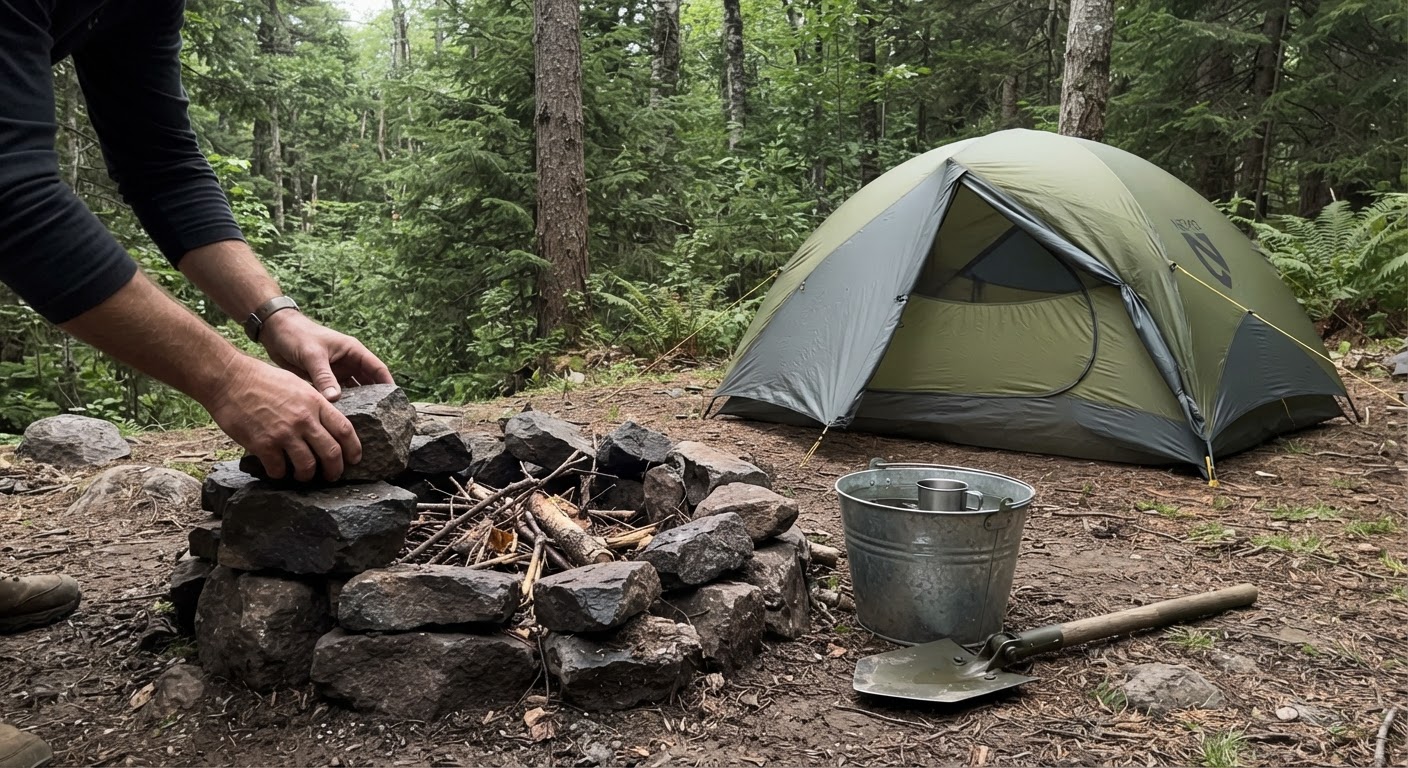
And the escaped-fire scenario is more common than people think — not dramatic flaming forests, but embers smoldering in duff overnight because “they looked out.” The rules that keep solo campers safe:
- Clear a circle down to bare dirt, away from overhanging branches
- Keep fires small — a solo camper needs warmth, not a bonfire
- Never leave a fire unattended, not “for just a minute”
- Kill it completely: water, stir, water again, then the cold-touch test — put your hand near the ash. If it’s too hot to touch, it’s too hot to leave. Every time.
A burn on your hand is an annoyance with a partner and a genuine problem alone, because it’s the hand you need for everything else — tent zippers, water filters, driving home.
4. Injury — no second pair of hands
This is the danger that changes the math the most. The injuries that actually happen to campers are unglamorous: rolled ankles, deep blisters, kitchen cuts, scalds, the occasional falls-on-rocks gash. None of them are deadly on their own. Alone, each one gets a difficulty multiplier, because everything you do afterward — pack up, walk out, filter water — requires the thing that hurts.
Two habits shrink this danger dramatically. First, treat your feet like mission-critical equipment: broken-in boots, good socks, and stop-and-fix blisters the moment they whisper, not an hour later when they’re screaming. Second, learn to do an honest self-assessment. After any fall, sit down and check before standing: can I put weight on it? Can I walk ten steps without it getting worse? Limping out “because it’s probably fine” is how a bad afternoon becomes a night on the forest floor.
5. Water and food — small mistakes, big consequences
Dehydration sneaks up because its symptoms — headache, grumpiness, feeling flat — are easy to blame on being tired. The solo rule is simple and ruthless: drink on a schedule, not on thirst. Thirst shows up late, and when you’re pushing through a long day alone, nobody’s there to say “hey, when did you last drink?”
Water safety is the other half. That clear mountain stream is not a promise — giardia doesn’t announce itself, and there’s no partner to alternate “who gets sick.” Filter, purify, or boil. All of it, every time. One bottle of bad water can turn a two-day trip into the worst week of your year.
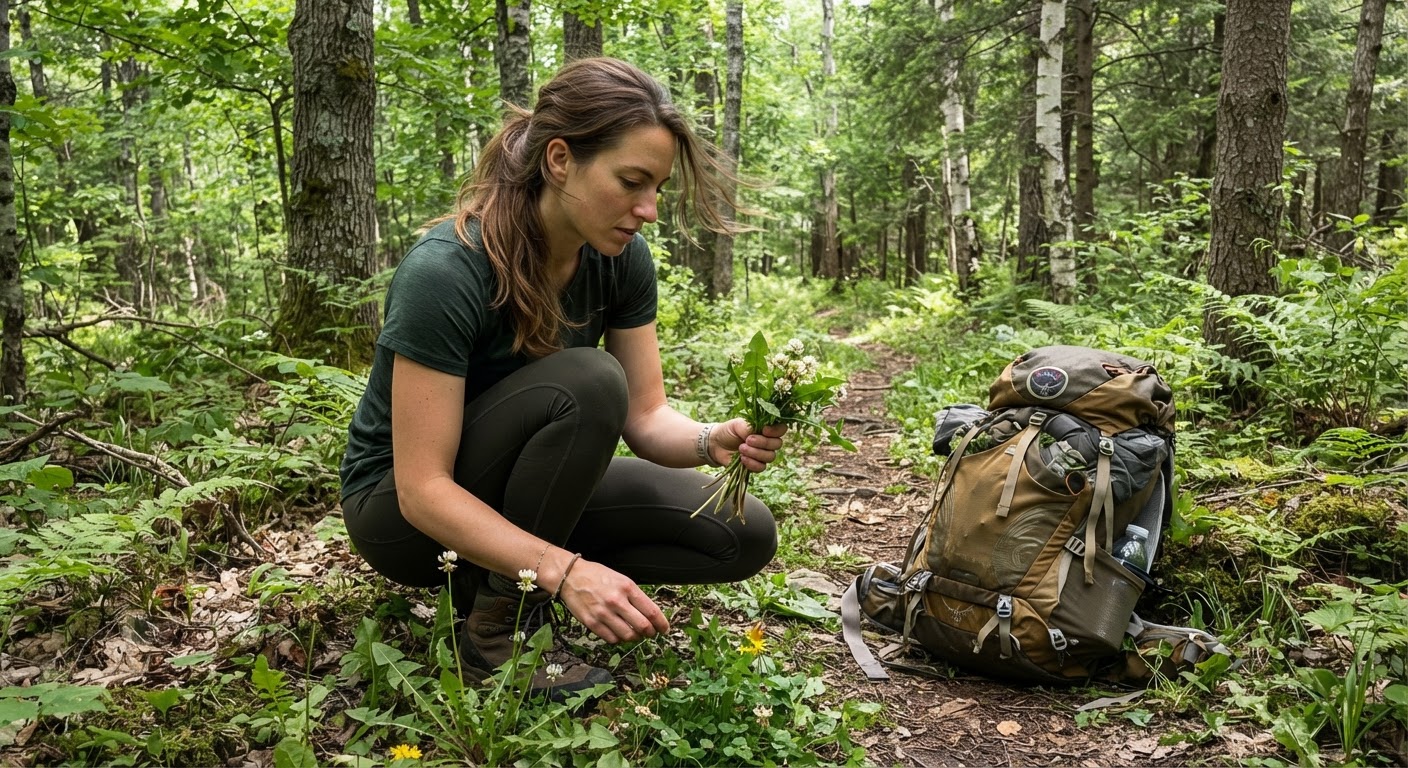
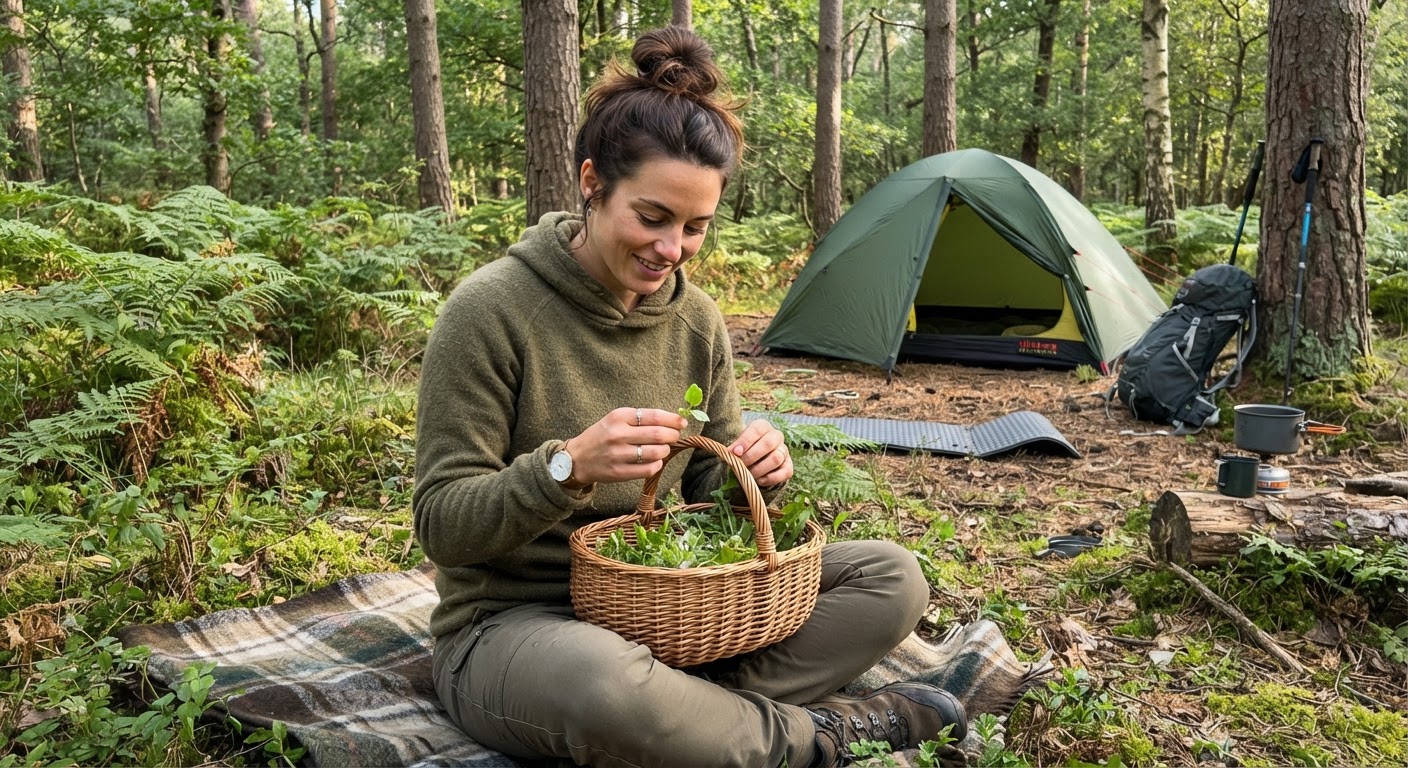
Food deserves its own honest note: if you’re foraging as a supplement to your packed food — which is a great skill — never let hunger make your identification decisions for you. An unknown mushroom or an unverified leaf is not “probably fine” when you’re alone, because there’s no one to go for help if your body disagrees with your guess. When in doubt, eat the food you brought. That’s what it’s for.
6. Wildlife — respect beats fear
Let’s deflate the movie version: the wildlife danger that actually affects solo campers is almost never bears, and it’s certainly never wolves. It’s rodents and raccoons chewing into your food bag because you left it by the tent, and — second place — stinging insects and snakes you never saw because you were looking at your phone.
The playbook is short:
- Make casual noise while you hike (solo hikers are quieter than groups — that’s the one wildlife downside)
- Store food, trash, and anything smelly away from your tent — hung from a branch or in a canister, ideally 30+ meters downwind
- Never, ever keep food in the tent. Not a snack. Not a toothpaste. “Fruit-scented” counts.
- Give every animal an exit. If something doesn’t leave when you make noise, you leave — calmly, facing it, no running.
Do that, and your wildlife encounters will look exactly like mine over the years: a pair of eyes shining in the dark, a muffled “nope,” and a story nobody cares about. That’s what safe wildlife management looks like.
7. The mental game — night noises and the spiral
Here’s the danger that doesn’t make gear lists: your own head at 11:37 p.m. Every solo camper meets the night spiral eventually — a branch snaps, your brain offers three horror-movie explanations, your heart rate climbs, and now you’re lying rigid in the dark doing threat math on shadows.
What actually works, from experience: name the sound out loud. “That’s a branch.” “That’s wind.” Say it in your normal voice. It sounds silly; it works, because naming recruits the rational part of your brain back online. Then give yourself a task — check the guylines, organize tomorrow’s snacks, anything with your hands. Fear shrinks when there’s a job.
And one reframe worth keeping: that hyper-alert feeling is your nervous system doing exactly what it evolved to do. You’re not being a coward; you’re just running software designed for a world with more predators in it. It calms down with exposure. Trip three is dramatically quieter than trip one, mostly between your ears.
Before You Leave: The 48-Hour Prep Checklist
Solo safety is mostly won before you touch the trailhead. Here’s the checklist I actually run, in order. None of it takes more than a few minutes, and together it covers most of what can go wrong.
| When | Task | Why It Matters More Solo |
|---|---|---|
| 48 hours out | File a trip plan with a real person: where, trailhead, route, return time | Your trip plan is the difference between “overdue” and “missing” |
| 48 hours out | Check weather from two sources — wind and overnight lows especially | You have no partner to consult on go/no-go; decide calmly at home |
| 24 hours out | Confirm fire rules and permits for the area | Fire bans change; “I didn’t know” is a fine or a forest fire |
| 24 hours out | Download offline maps + charge the power bank fully | Your phone is navigation, light, and comms — and it will run low |
| Packing | Ten essentials, plus blister kit and a repair strap | When you’re the only hands, small failures cascade — prevent them |
| Day of | Share live location, agree on a check-in message time | “No message by 8 p.m. = call the ranger station” is your rescue plan |
| At trailhead | Text your contact: “started, back by Sunday 4 p.m.” | Removes their guesswork; they know what not to worry about |
That last point deserves a story’s worth of emphasis, because it’s the highest-leverage five minutes in all of solo camping. Tell your contact person three things: where you’re going, when you’ll be back, and what to do if they don’t hear from you — including when to escalate and who to call. A good trip plan says “call the county sheriff’s non-emergency line by 9 p.m. if I haven’t texted,” not “start worrying vaguely.” Rescuers find people with a known last-known-point in hours, not days.
Setting Up Camp Like You Mean It
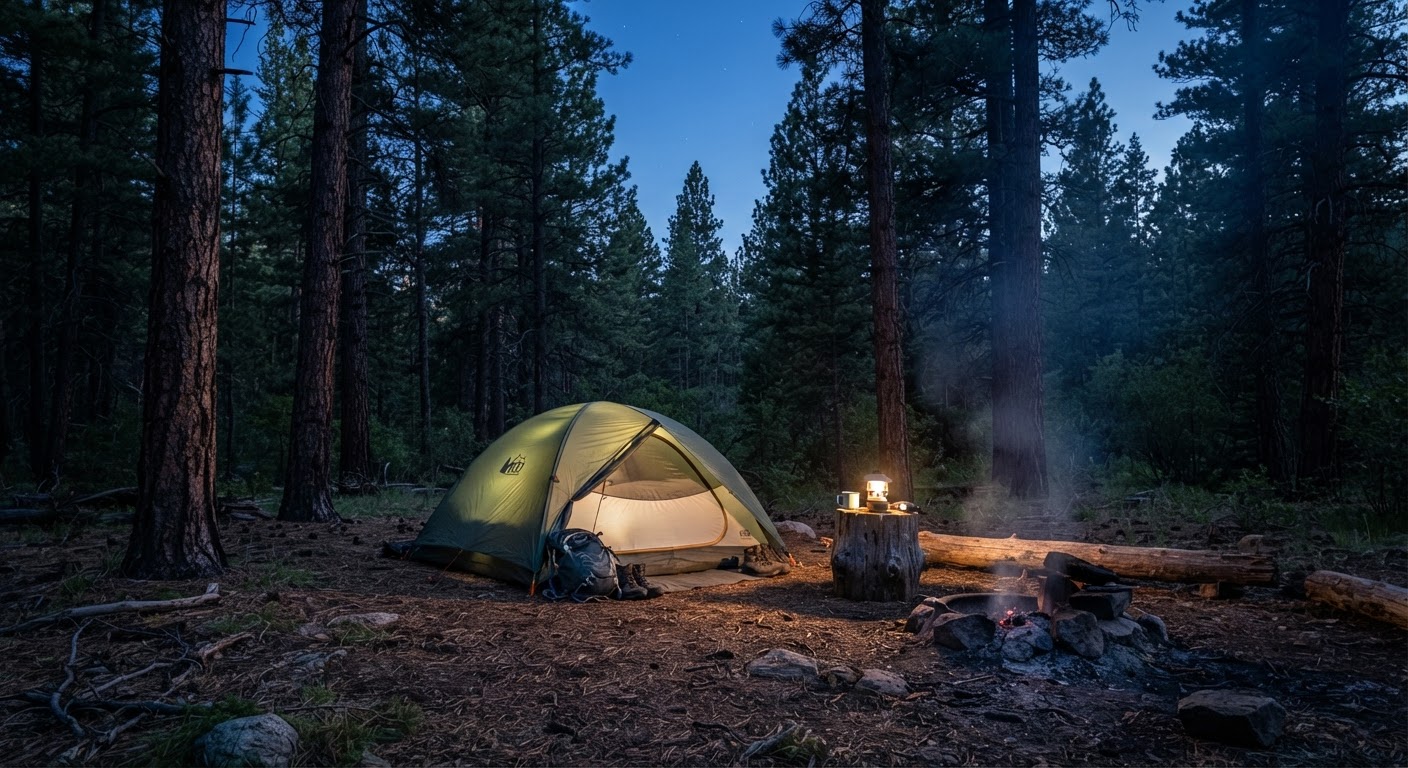
Where and how you set up does more for your safety than any gadget. Walk your campsite like a slow inspector before committing:
- Look up first. Dead standing trees and heavy dead branches — campers call them widowmakers, because that’s what they do — are the single most underestimated campsite hazard. If there’s dead wood overhead, pick another spot. No view is worth it.
- Don’t sleep in a drainage. That nice flat gully is a river the moment it rains hard somewhere uphill, even if the sky above you stays clear.
- Mind the wind. Face your tent door away from the prevailing wind, and note which way smoke would blow if you light a fire.
- The three-distances rule: pitch your tent, cook area, and food storage in a triangle, each a good stone’s-throw apart. Cooking smells stay away from where you sleep, and a curious animal finds the food where the food is — not where you are.
Then do the solo-specific things that never occur to groups: boots and headlamp inside the tent or right by the door (finding your headlamp in the dark with no one to hold a light for you is a special misery), a full water bottle next to your sleeping bag, and the pack’s rain cover on before dark, not during the rain. Small redundancies — because you’re the backup for everything.
When Something Goes Wrong: The Solo Decision Framework
Everything above prevents problems. This is what to do when one happens anyway — and having a sequence in your head before you need it is the whole point, because clear thinking is the first thing stress steals.
Step 1: Stop. Physically sit down. The moment something goes wrong — lost, hurt, gear failure — your body floods with urgency that wants to convert directly into fast walking. Refuse. Sit for a full ten minutes. Almost every solo emergency gets worse because of actions taken in the first panicked five minutes.
Step 2: Name the actual problem, out loud. Not “I’m lost,” which is a fog — but “I walked 20 minutes downhill from the creek junction after taking the left fork.” Precision calms. You’ll often notice the solution while you’re still describing the problem.
Step 3: Inventory your four assets. Daylight remaining. Weather doing right now. Your body’s honest condition. What’s actually in your pack. Every decision comes from these four, and the honest answers are usually better than fear claims they are.
Step 4: Default to staying put. If people know your trip plan — and you did the 48-hour checklist, so they do — staying put is statistically your fastest route to being found. Searchers find stationary people fast. They find walkers slowly.
Step 5: If you must move, move like you want to be found. Follow downhill water only when you genuinely know the terrain drains toward habitation, leave obvious markers at every decision point, and make noise. Three whistle blasts is the universal distress signal; a whistle weighs nothing and outlasts your voice.
Step 6: Spend your phone like money. One text to your contact with your best location description, then airplane mode to save battery. The phone you preserve now is the phone that still works when help is closing in.
The Gear That Actually Matters When There’s No One Else
Full gear lists are everywhere, so I’ll keep this to the items that earn their weight specifically because you’re alone.
| Item | Why It Earns Its Spot |
|---|---|
| Headlamp + spare batteries | Darkness arrives every single night; you have no one to borrow light from |
| Whistle on your pack strap | Three blasts = distress signal, works when you can’t shout or your phone’s dead |
| Water purification (filter or tablets) | No partner to share the risk of “it’s probably fine” water |
| Blister kit (tape + dressings) | Your feet are the ride home; solo, you maintain your own vehicle |
| Sleep system rated 10°F colder than forecast | Cold nights hurt twice as much when there’s no one to huddle with |
| Power bank + cable | Phone = nav, light, comms, and your entire safety margin |
| Paper map + compass (and the skill) | Works in canyons, under canopy, and at 3% battery |
| Small repair kit (tape, cord, strap) | A broken strap is trivia with a partner, a crisis alone |
Notice what’s not here: bear-spray debates, satellite messengers, survival knives the size of an oar. Those are personal choices with real merit — a satellite messenger especially is genuinely excellent if it fits your budget — but none of them substitute for the checklist above. The unglamorous items prevent the actual dangers.
Pro Tips From Trips That Went Right (and One That Didn’t)
These are the habits that separate people who solo camp for decades from people with one cautionary story:
- Camp early. “Summit fever at bedtime” — squeezing in one more viewpoint — is how people end up pitching tents by headlamp, tired, in the dark, and make every mistake at once. Arrive with daylight to spare; it’s the cheapest safety upgrade there is.
- Do the two-direction walk. Before dark, walk 200 meters in each direction from your campsite. You’re loading nighttime landmarks into your brain, so that 2 a.m. trip to pee doesn’t become a navigation problem.
- Run a fire drill at home. Can you find your headlamp, whistle, and first aid kit in your pack by touch? If not, reorganize. In a real situation you’ll be doing this in the dark, stressed, maybe one-handed.
- Write the plan where eyes can see it. A note on the fridge or a shared doc — not just “I told my sister.” Memory under stress is unreliable, and your sister’s is too.
- Tell your contact what NOT to do. Genuinely: “don’t organize a search before Sunday 9 p.m.” Good intentions plus no plan creates chaotic rescues. Precision helps everyone.
- And the one that didn’t go right: I once left my pack — with map, water, and jacket — to “quickly check” a sound 50 meters off trail. Forty minutes later I was thoroughly turned around, the light had gone amber, and I got to practice the decision framework above for real. The lesson cost me nothing but adrenaline, and only because I found the trail by following the sound of a distant creek. The pack has never left my back since. Buy the lesson without the price.
What If the Trip Goes Sideways: The Food Question
One danger deserves its own closing thought, because it’s the one this site lives for: running out of food, or being tempted by the forest’s all-you-can-eat illusion. A solo camper who planned properly never needs to forage — packed food covers the trip, always. But knowing a handful of safe, common wild edibles turns a low-food scare into a non-event, and it’s one of the most satisfying skills you can carry into the woods.
If you want to build that backup knowledge, start with the safe, calorie-dense staples — the ones worth their effort when energy is precious — in our breakdown of which wild foods are actually worth the calories. And before any wild snack passes your lips, make sure you know how to test if a plant is edible the slow, safe way. Solo is exactly the wrong time to gamble on an unverified leaf, because there’s no one to go for help if your body disagrees with your identification.
Your Solo Camping Questions, Answered
Is camping alone in the forest actually dangerous? Less than its reputation, more than a picnic. With a filed trip plan, basic skills, and honest judgment, every danger in this article is manageable — thousands of people solo camp safely every weekend. The danger lives in the shortcuts: no plan told to anyone, untreated water, a fire left “for a minute.” Do the boring things and the forest is friendlier than the internet says.
What’s the number one cause of solo camping emergencies? By every account I’ve seen from search-and-rescue folks: mundane errors — unprepared for weather, wandering without navigation backup, injuries while alone. Not wildlife, not crime. The framework in this article attacks exactly those.
How do you stay safe camping alone as a woman? The safety fundamentals are identical — trip plan, communication, camp setup — but the planning gets stricter. Share live location with someone who’ll actually check it, choose well-used trailheads for early solo trips, trust the “ick” instinct instantly and without apology (leave, no social debt), and consider a personal alarm, which weighs an ounce. Confidence grows fastest on a few familiar trails before you expand your range.
What should you do if you realize you’re lost while camping alone? Stop, sit, ten minutes. Then name your last certain location out loud, work the map with landmarks rather than vibes, and default to staying put if your trip plan was filed. Walk only with purpose and markers. The section above — the Solo Decision Framework — is the full answer, and it’s worth memorizing before you need it.
Do I need to be scared of bears or other predators? Respectful, not scared. In most forests, the animals you’ll actually meet want nothing to do with you, and the food-storage habits in this article eliminate the main reason problems happen at all. If bears live where you camp, learn the area-specific guidance (canister rules, spray handling) before your trip — it’s 20 minutes of reading that buys decades of calm.
How do I get over being scared the first time? Don’t fight it; shrink it. Start small — a busy campground an hour from home, one night — and follow the checklist here so every fear has an answer attached. Fear with a plan is just excitement wearing a disguise. By the second or third trip, the night noises turn from monsters into… well, branches.
The Bottom Line
Camping alone in the forest isn’t about being fearless. It’s about being prepared enough that fear has nothing to chew on. The seven real dangers — navigation slips, weather, fire, injury, water and food, wildlife, and your own head — all have simple, boring, proven fixes, and every one of them lives in this article.
Start small. File the trip plan. Set up camp early. Kill the fire dead. Drink on a schedule. Name the night sounds. And when something does go wrong — something will, eventually, for everyone — you’ll have a framework instead of a panic. That’s the entire secret. Solo camping done right isn’t an extreme sport; it’s a quiet skill that gets warmer every trip, like a fire you finally learned to build.
One last layer of backup worth mentioning: part of solo confidence is knowing your resources, and that includes the plants around your campsite. When you spot something unfamiliar near the trail and want a fast, offline answer, that’s exactly why I built Edible Plant Identifier — point your camera at any leaf and it identifies the plant with edible/not-edible notes and lookalike warnings, fully offline, no signal required. It doesn’t replace expert advice or a field guide’s depth, but as a pocket backup when you’re the only one out there, it’s the tool I always wished existed.