Lost in the Woods: What to Eat (and What to Skip)
Here’s the thing nobody tells you about getting lost: food is almost never your actual problem. The rule of threes says you can go roughly three weeks without eating, but only three days without water and three hours without shelter in bad weather. A growling stomach feels urgent. It isn’t.
That said, if you’re on day two or three and genuinely need calories, eating the wrong plant will kill you faster than hunger will. This is the guide to doing it safely — what to eat, what to skip, and the one decision that matters more than any berry.
The Rules Before You Put Anything in Your Mouth
Four rules. Memorize them now, because you won’t have signal to look them up later.
- If you can’t identify it with 100% confidence, you don’t eat it. In a survival situation, a “probably” is a coin flip with your liver. Skip it.
- Water and shelter come first. Dehydration kills in days. Exposure can kill in hours. Food is a distant third on the priority list.
- Cook or peel when you can. Heat destroys a surprising number of plant toxins and makes tough greens digestible.
- Never eat mushrooms. Full stop. The calorie payoff is tiny, the misidentification risk is enormous. Experts get mushrooms wrong. You will too.
The Quick-Reference Table
Here’s the whole article on one screen. Bookmark this section mentally.
| Food source | Part to eat | How to prep | Risk level |
|---|---|---|---|
| Dandelion | Leaves, flowers, root | Eat raw (young leaves) or boil root | Very low |
| Cattail | Young shoots, flower spike, root starch | Peel shoots, boil root | Very low |
| Pine | Inner bark, needles | Boil needles for tea; roast bark | Low |
| Clover | Leaves, flowers | Eat raw or boiled briefly | Very low |
| Acorns | Nut (leached) | Shell, crush, soak/boil out tannins | Medium if unprocessed |
| Stinging nettle | Young leaves | Boil or steam 5–10 minutes | Low (raw = sting) |
| Broadleaf plantain | Young leaves | Eat raw or boil | Very low |
| Wood sorrel | Leaves, flowers | Eat raw in small amounts | Low (oxalates) |
The 8 Safest Things to Eat When You’re Lost
These are the plants that show up in most temperate woodlands and are hard to confuse with anything deadly — if you know the lookalikes in the next section.
1. Dandelion — the whole plant is food
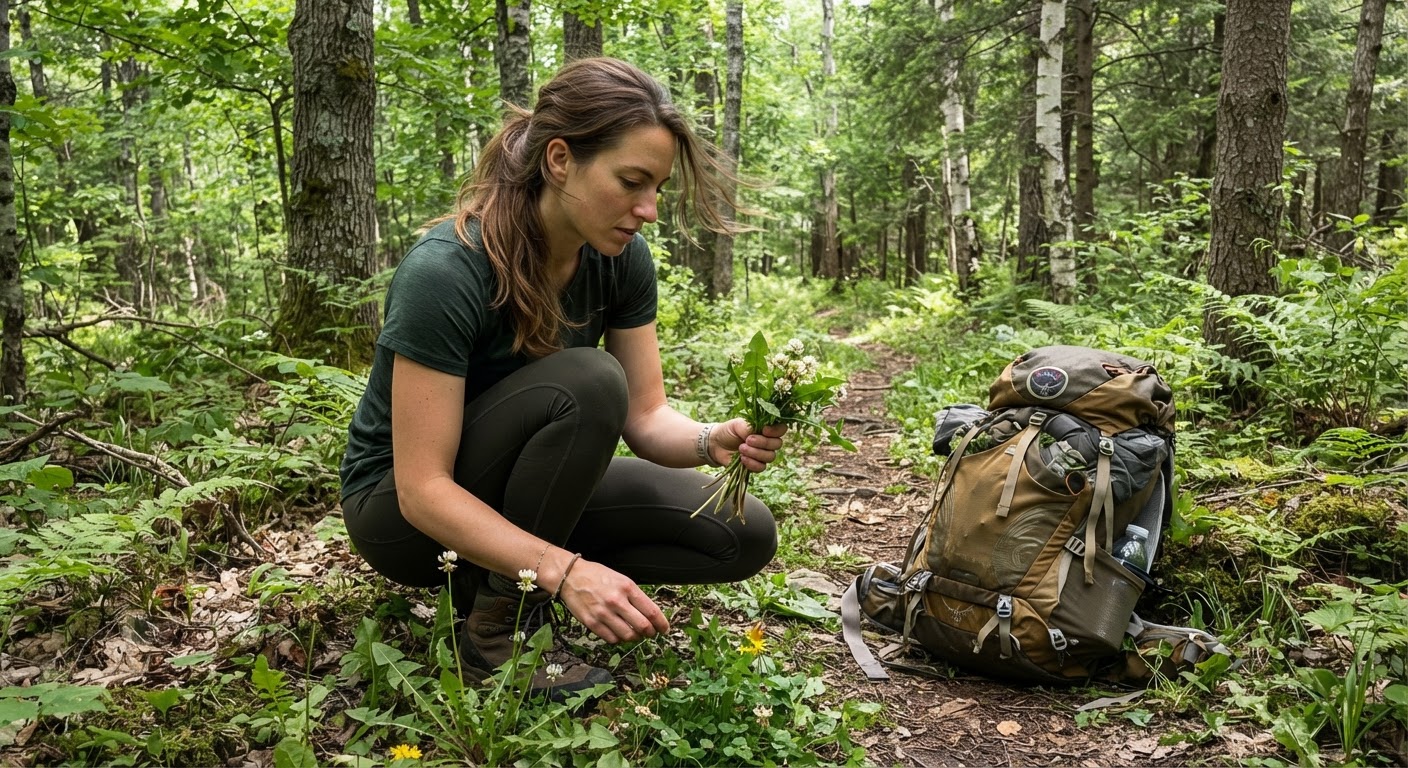
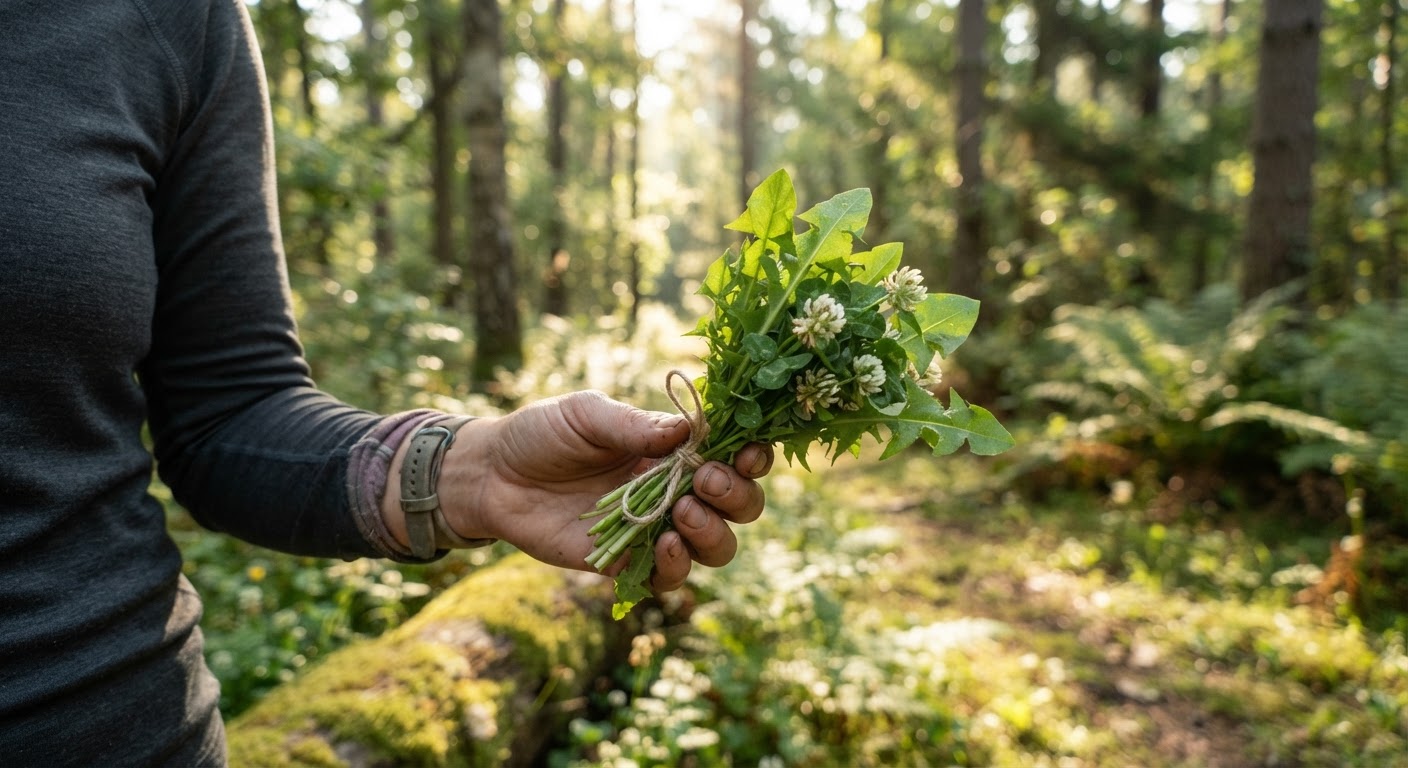
Every part of a dandelion is edible: leaves, flowers, and the taproot. Young leaves taste best raw; older leaves go bitter, so boil them. The root can be boiled like a potato or roasted into a weak coffee substitute. It grows in almost every clearing, meadow, and trail edge on Earth. If you learn exactly one wild food, make it this one.
2. Cattail — the “supermarket of the swamp”
Cattails grow in wet soil, ditches, and pond edges. The young shoots taste like cucumber, the immature flower spike can be boiled and eaten like corn, and the starchy root can be processed into flour. In a real survival pinch, cattail is the closest thing to a grocery store — but it only grows where there’s water, which is handy, because that’s also where you should be.
3. Pine — food and vitamin C in one tree
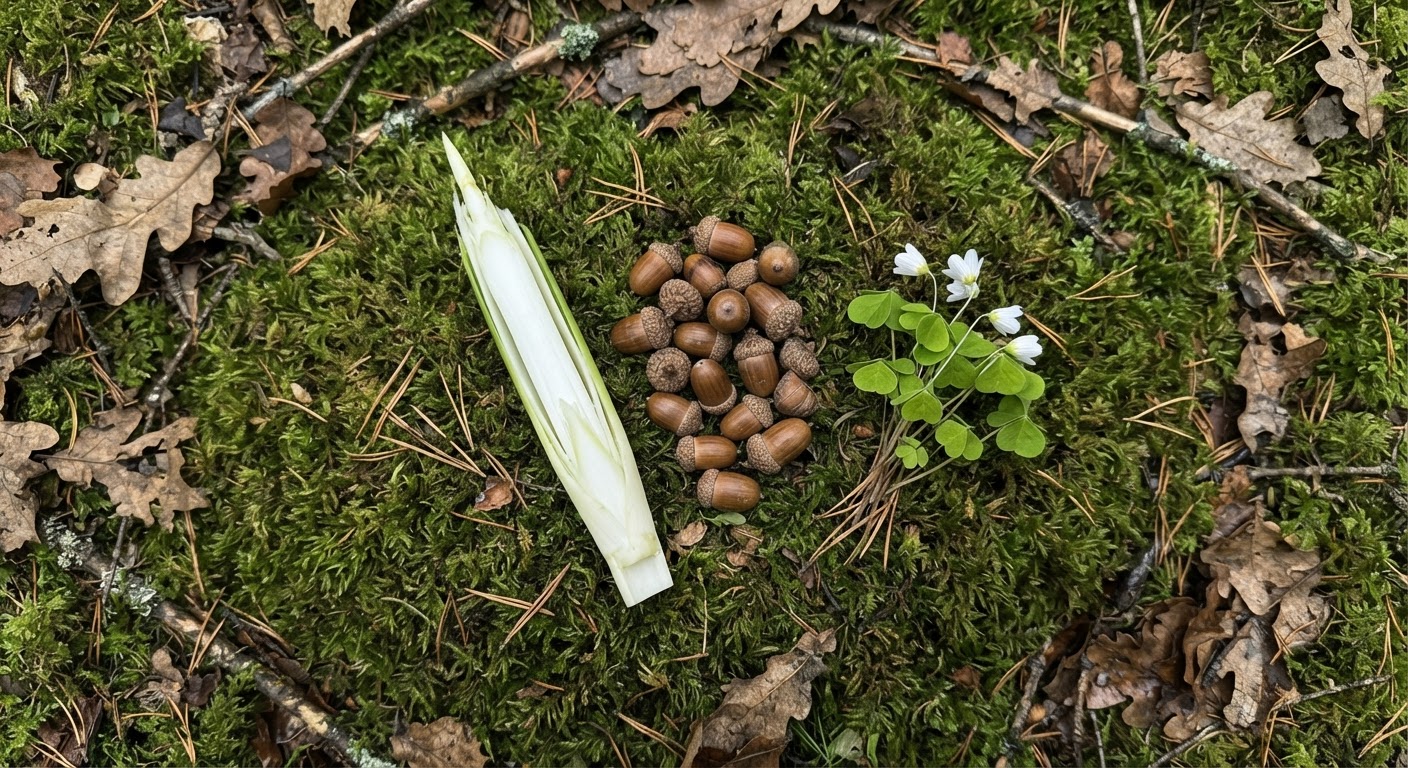
Pine needles boiled in water make a tea packed with vitamin C, which matters more than most people realize if you’re out for days. The soft inner bark (the white layer just under the outer bark) can be eaten raw or roasted. It’s not delicious, but it’s calories and it’s everywhere in conifer country. Skip the yew tree — more on that below.
4. Clover — the lawn weed you already know
White and red clover leaves and flowers are edible raw, though they’re easier to digest lightly boiled. You’ve seen this plant your whole life, which makes it one of the easiest confident identifications you’ll make in the field. Small handfuls, not a meal by themselves.
5. Acorns — food, but only after work
Oaks drop acorns everywhere in the fall, and they’re a real survival food — but raw acorns are loaded with bitter tannins that will upset your stomach. You have to shell them, crush them, and soak or boil them in several changes of water until the bitterness is gone. It’s slow, fuel-heavy work. Worth it only if you’re genuinely stuck for multiple days.
6. Stinging nettle — the “dangerous” one that’s totally safe cooked
Nettles sting on contact, which scares people off — and that’s a shame, because the young leaves are among the most nutritious greens in the wild. Boil or steam them for five to ten minutes and the sting disappears completely. Use gloves or a folded leaf to pick them. You’ll find nettles in damp, rich soil, often near water.
7. Broadleaf plantain — the “band-aid plant” you can also eat
Broadleaf plantain grows in lawns, trails, and disturbed ground nearly everywhere. The young leaves are edible raw or boiled; older leaves get stringy, so stick to the tender ones. It’s the same plant people crush onto bug bites — safe, common, and hard to misidentify.
8. Wood sorrel — tiny, lemony, and easy to spot
Wood sorrel has distinctive clover-like leaves and a sharp, lemony taste. It’s fine to nibble raw for flavor and a little vitamin C, but it contains oxalic acid, so eat it in small amounts. Think garnish, not dinner.
What to Skip: The “Looks Edible, Isn’t” Shortlist
Some plants are so dangerous they deserve their own warning label. When lost and hungry, these are the ones that lure people into fatal mistakes.
- Any mushroom. Repeating this because it’s that important. Even experienced foragers misidentify some species.
- White or yellow berries in clusters. Many are toxic. A few (like white baneberry, “doll’s eyes”) are genuinely lethal.
- Plants with umbrella-shaped flower clusters. Wild carrot is safe; poison hemlock and water hemlock, which look similar, are not. Hemlock kills by paralysis — you stop breathing.
- Milky sap plants. Some are edible, some are toxic, and telling them apart under stress is not a game worth playing.
- Yew. Its red “berry” (actually a fleshy cup) is the most tempting-looking dangerous thing in the woods. The seed inside is toxic, and so is every other part of the plant.
- Anything with a bitter or soapy taste. The universal edibility test says to spit it out. Trust the signal and move on.
The Lookalike Pairs That Kill
This is the section that could save your life. When you’re hungry, tired, and cold, your brain will try to convince you that a plant “looks close enough.” These are the pairs where “close enough” is fatal.
| Safe plant | Deadly lookalike | The tell that separates them |
|---|---|---|
| Wild carrot (Queen Anne’s lace) | Poison hemlock | Wild carrot has hairy stems; hemlock stems are smooth with purple blotches |
| Wild garlic / wild onion | Death camas | Alliums smell strongly of garlic/onion; death camas has no odor |
| Wild grape | Moonseed | Grape seeds are round and several; moonseed has a single crescent-shaped seed |
| Blackberry / raspberry | (none common — aggregate berries are broadly safe) | Cluster berries like these are among the safest wild fruit |
| Elderberry (ripe, cooked) | Water hemlock / pokeweed berries | Elderberry grows in flat clusters; pokeweed hangs in grape-like drops and stains purple |
The smell test for the garlic/camas pair is the most useful one in the whole table. If it doesn’t smell like garlic or onion, it isn’t garlic or onion.
Your 15-Minute Priority Plan
When you first realize you’re lost, your sequence should look like this — and notice where food sits.
Minute 1–5: Stop and stay put. Sit down. Drink some water. Panic burns more calories than walking in circles ever will.
Minute 5–15: Handle shelter and water. Find or make shelter before dark. Locate a water source — that’s also where you’ll find cattail, nettle, and most other edible plants, so the two problems solve each other.
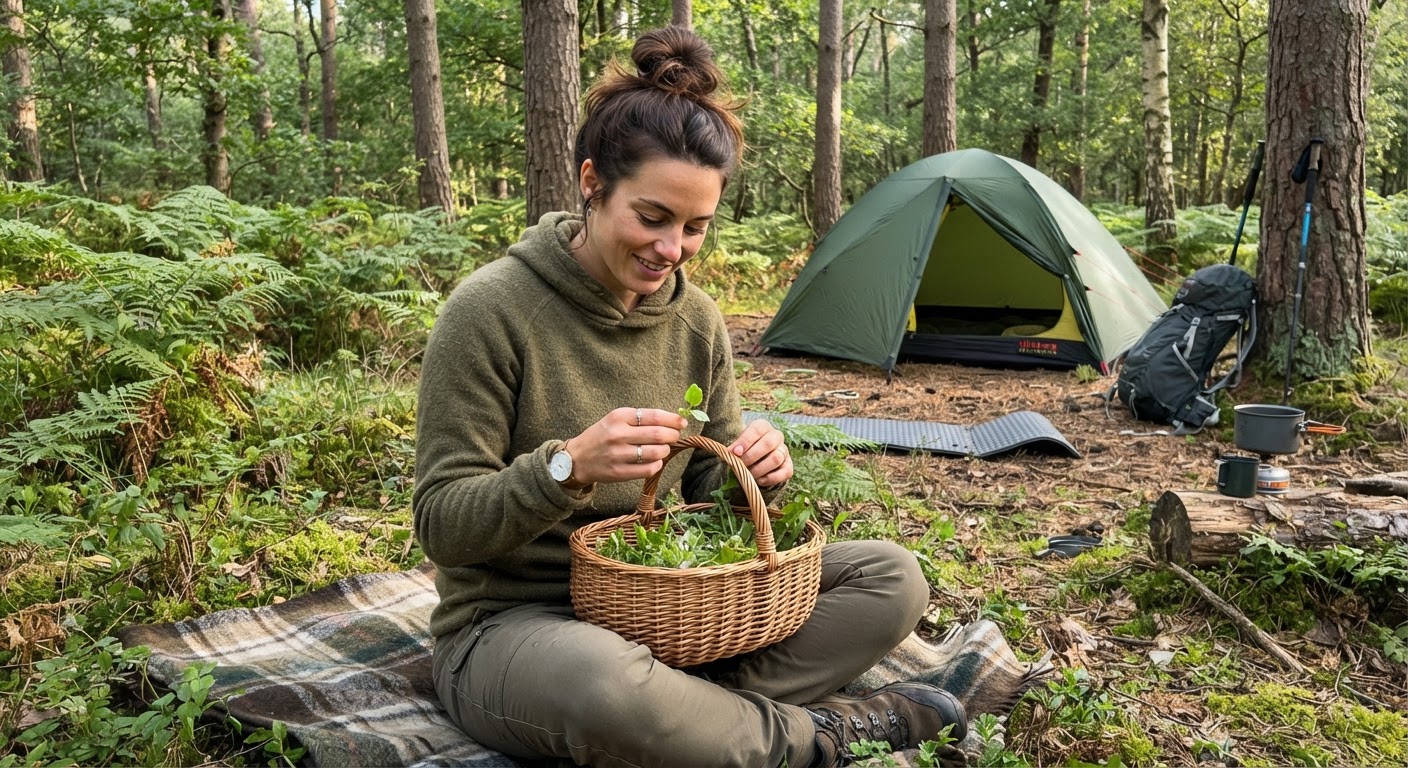
Only after that: think about food. By now you’ve probably noticed dandelions, clover, and plantain near the trail. Harvest sparingly, cook what needs cooking, and don’t eat anything you can’t name.
If you have to move: signal as you go. Food found while wandering is worthless if rescuers can’t find you.
Summary: What to Actually Remember
- Food is third on the priority list. Water and shelter come first.
- Learn dandelion, cattail, clover, and plantain cold. They’re common and safe.
- Acorns are real food but need leaching. Nettles are safe cooked. Pine needles make vitamin C tea.
- Skip all mushrooms, umbrella-cluster plants, yew, and bitter-tasting anything.
- When in doubt, the answer is always: don’t eat it.
Quick Survival FAQ
How long can you actually survive in the woods without food? Weeks, not days — roughly three weeks for a healthy adult. Water is the real clock at about three days. This is why panicking over food is the wrong move.
What’s the single safest wild plant to eat if you know nothing else? Dandelion. The whole plant is edible, it grows almost everywhere, and its lookalikes (chicory, cat’s ear) are also non-toxic.
Should you eat berries you don’t recognize if you’re starving? No. Hunger lowers your judgment and unknown berries are exactly how people poison themselves. Aggregate cluster berries like blackberries and raspberries are the safest bet, and even then only if you’re sure.
Is it true cattails are completely edible? Almost — shoots, immature flower spikes, and the starchy root are all food, and even the pollen is usable. It’s the best single survival plant in wet areas.
Why do survival guides tell you not to eat mushrooms? Because the edible and deadly species look nearly identical in some cases, the calorie payoff is small, and the margin for error is zero. Not worth it when dandelions are ten feet away.
What should you do first if you’re lost — find food or find water? Find water and shelter. Then food. Most people who die in the woods don’t starve to death; they die of exposure or dehydration long before food matters.
When you’re lost, tired, and the light is fading, the difference between a safe meal and a hospital trip comes down to one thing: knowing the plant in front of you. Guessing at ten plants is worse than knowing one. That’s the whole reason I built Edible Plant Identifier — point your camera at a leaf and it tells you what you’re looking at, with identification notes and lookalike warnings for the risky pairs. It works fully offline, so it’s still there when your signal isn’t.