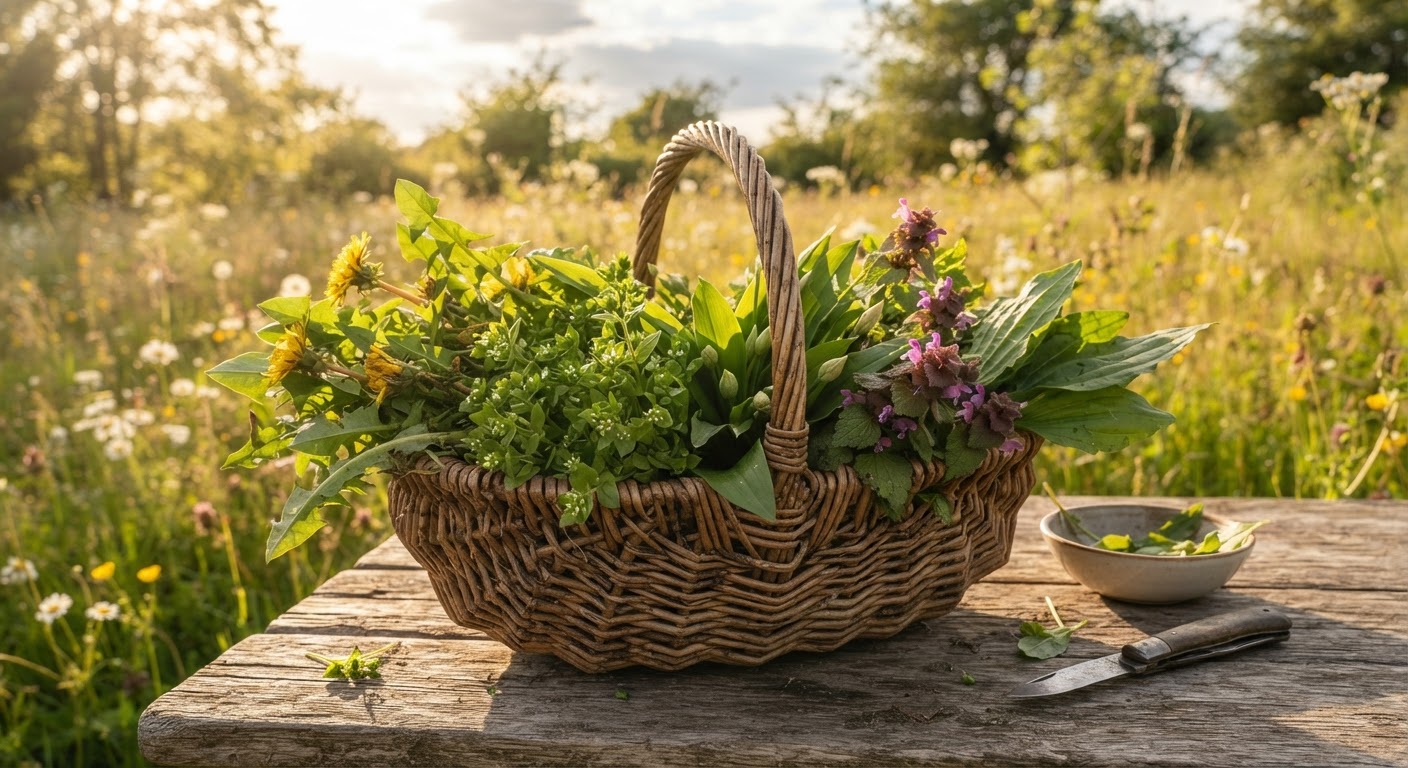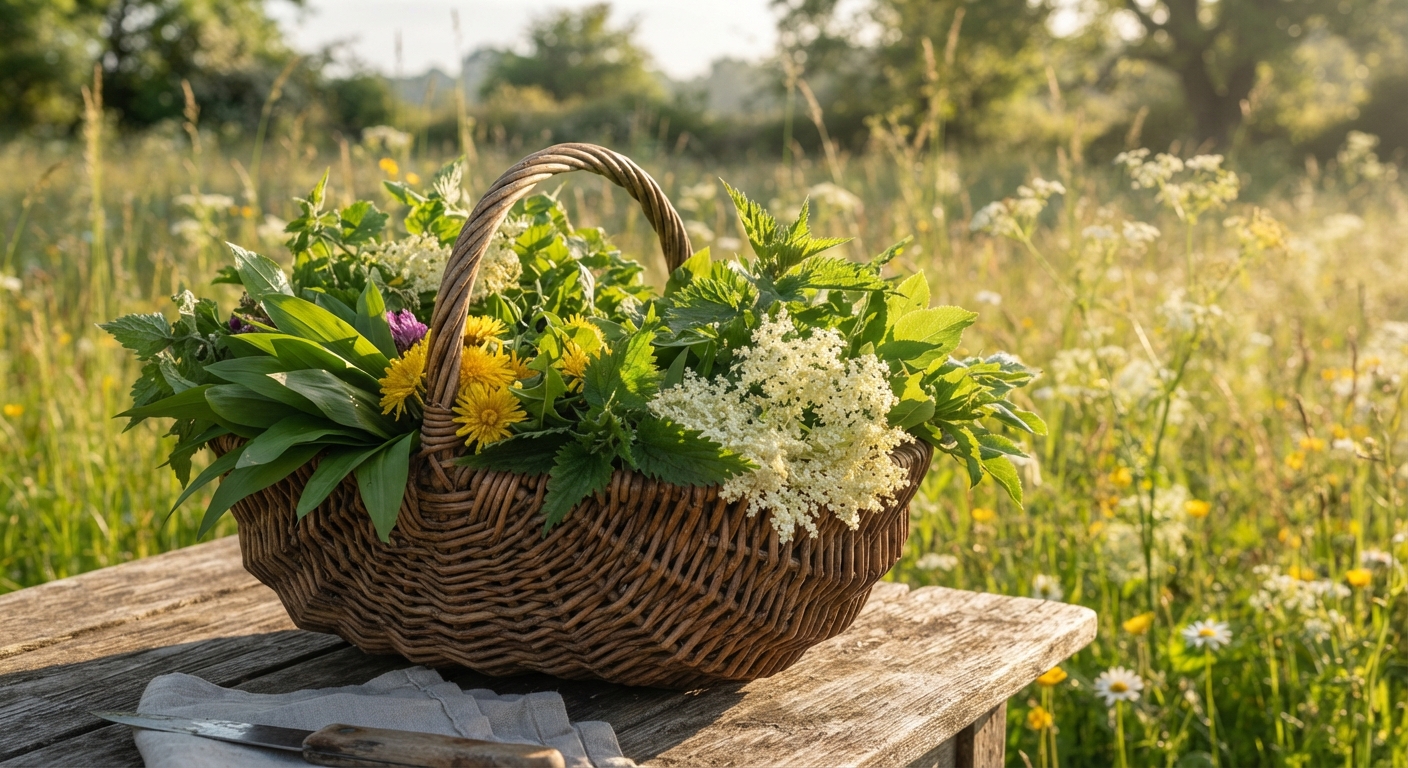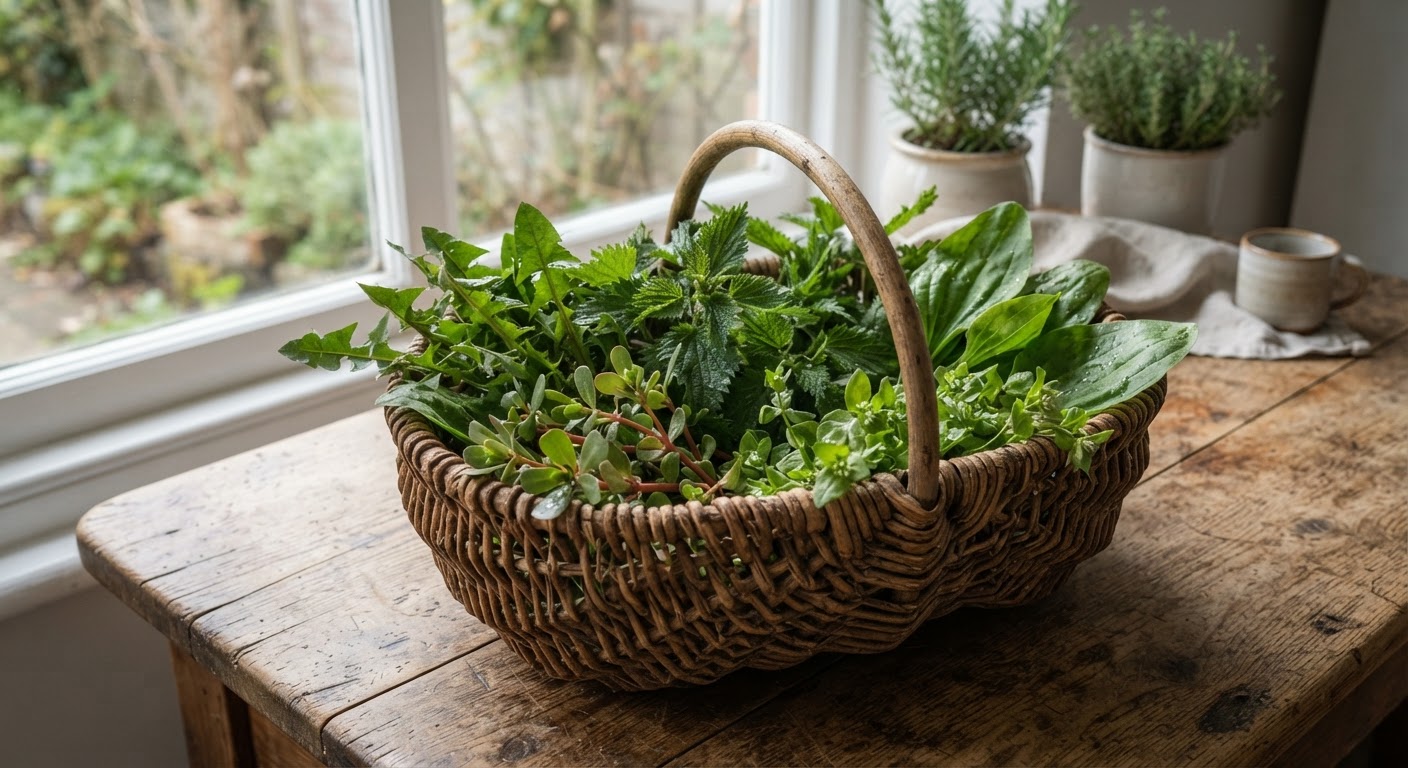
You print out a list of edible wild plants from some blog, tuck it in your pocket, and head to the nearest green space. Ten minutes later you’re staring at a patch of low-growing leaves, flipping between three pages, and muttering, “Is this it? Or is this the one that makes my mouth go numb?”
Here’s the thing nobody tells you: a long, flat list is not a learning tool. It’s a wall of names. Your brain can’t hold fifty plants at once, and in the field it defaults to guessing — which is exactly when mistakes happen.
This guide fixes that. Instead of dumping fifty names on you, I’ve organized a list of edible wild plants into three tiers, ordered by how easy each plant is to identify with certainty and how forgiving it is if you’re a beginner. You start with the Easy Five, build momentum, and only move up when you’re ready.
No botany degree required. Just a pair of eyes, some patience, and the willingness to not eat something you’re only 90% sure about.
The Real Problem With Most Plant Lists
Most “edible wild plants” lists are written by people who already know the plants. That’s the flaw. They sort by alphabet, or by region, or by “coolest fact,” and they assume you can already tell a dandelion from everything else in the lawn.
Beginners don’t fail because the information is missing. They fail because the order is wrong. You get introduced to water hemlock warnings in the same breath as a cheerful recipe for wild garlic, and suddenly every green thing looks dangerous — or worse, every green thing looks edible.
So let’s set one ground rule before the list itself:
You never eat a plant you can’t positively identify. A “maybe” is a “no.” This list is designed so that by the time you reach the harder tiers, “positively identify” actually means something.
How This List Works: The Three-Tier System
Think of this like learning to cook or drive. You don’t start with a soufflé.
- Tier 1 — The Easy Five. Nearly impossible to misidentify once you learn one or two key features. Safe, common, and found almost everywhere. This is your foundation.
- Tier 2 — The Confidence Builders. Still beginner-friendly, but each one has a lookalike you must rule out first. These teach you the habit of double-checking.
- Tier 3 — The Advanced Set. Rewarding, but they demand real ID skill, careful preparation, or both. You graduate here, you don’t start here.
Each plant below includes the one or two features that matter most, the edible part, and the season. Full scientific names are in italics so you can cross-reference a field guide or a good plant ID app when you’re unsure.
Tier 1 — The Easy Five
Start here. Learn all five before you move on. Walk your neighborhood, your lawn, a park edge, and name each one out loud.
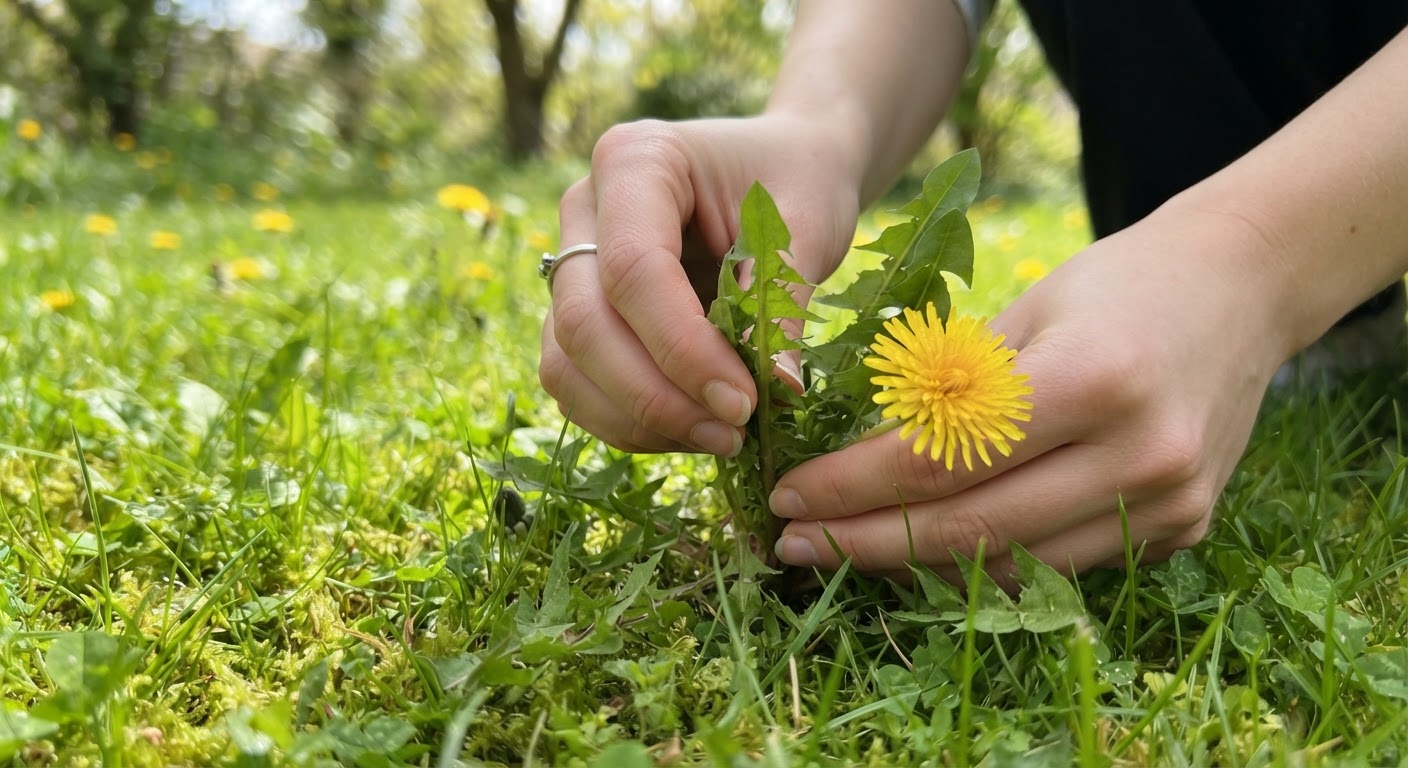
1. Dandelion — Taraxacum officinale
The gateway plant. The key feature: the leaves grow in a flat rosette with deeply toothed edges that point back toward the center, and the plant bleeds a white milky sap when you snap a stem. There is no fuzzy, toxic lookalike that has all three of those together.
Eat the young leaves (bitter but great in salad or sautéed), the flowers (batter and fry them, or make a bright yellow tea), and the roots (roast them for a coffee substitute). Harvest in spring for tender leaves, but they’re edible all season — just more bitter in summer.
2. Broadleaf Plantain — Plantago major
You’ve stepped on this a thousand times. Key features: broad, oval leaves with thick, parallel string-like veins running from stem to tip, and a tall seed spike that looks like a little green rat’s tail. It’s almost impossible to confuse with anything dangerous.
The young leaves are the prize — steam or sauté them like spinach. Older leaves get stringy, so pick small ones. It’s a lawn weed that thrives in compacted soil, so it’s everywhere, including city cracks in the sidewalk.
3. Chickweed — Stellaria media
Look for a tiny white flower with five petals so deeply split they look like ten, and a single line of fine hairs running down one side of the stem (it switches sides at each leaf joint). That hair line is the giveaway.
Eat the whole above-ground plant — stems, leaves, and flowers — raw in salad or wilted. It’s mild, tender, and one of the best-tasting wild greens for skeptics. Found in cool weather, spring through early summer.
4. Purslane — Portulaca oleracea
The key feature is unmistakable: thick, fleshy, paddle-shaped leaves on reddish, rubbery stems that sprawl flat along the ground. Nothing else in the average garden looks quite like it, and it has a juicy, slightly lemony crunch.
Eat leaves and stems raw or cooked. It’s packed with omega-3s and tastes great tossed into a salad or folded into a stir-fry. Peak season is the heat of summer, when most other greens have bolted — which makes it extra useful.
5. Wood Sorrel — Oxalis stricta
Don’t confuse it with clover. Key features: heart-shaped leaflets in groups of three (like clover, but each leaflet has a notch and folds down at night), tiny five-petaled yellow flowers, and a sharp, lemony, tangy taste — the taste test only confirms what you’ve already ID’d, it never replaces it.
Snack on the leaves and flowers raw, or use them as a lemony garnish. The oxalic acid gives it that sour kick, which is also why you eat it in small amounts — a handful, not a bucket.
Tier 2 — The Confidence Builders
These five are still common and still safe — but each has a lookalike, so the habit of ruling out the impostor is the whole point of this tier.
6. Stinging Nettle — Urtica dioica
Unforgettable to touch (tiny stinging hairs), and the sting disappears completely when cooked. Key features: opposite, coarsely toothed leaves with a heart-shaped base, covered in fine stinging hairs. Its lookalikes — like dead nettle (Lamium), which doesn’t sting — are actually safe too, but the sting is your confirmation.
Wear gloves, harvest the top few inches of young shoots in spring, and cook them into soup, pesto, or a spinach substitute. Do not eat them raw.
7. Lamb’s Quarters — Chenopodium album
Often called “wild spinach.” Key feature: a mealy, whitish, almost dusty coating on the young leaves, especially on the underside, plus diamond- to goosefoot-shaped leaves. It can resemble a few toxic nightshades early on, so the powdery coating and the leaf shape are what you check.
Cook the young leaves and tender tops like spinach. It’s one of the most nutritious wild greens around, and it grows prolifically in disturbed soil and gardens.
8. Wild Garlic / Field Garlic — Allium vineale
The rule here is simple and life-saving: if it doesn’t smell strongly of onion or garlic, it is not an allium, and you do not eat it. Many toxic bulbs (death camas, for example) lack the smell. Crush a leaf, sniff, and only proceed if the garlic scent is obvious.
Use the leaves as chives, the bulbs as mild garlic. Harvest in spring before the tops get woody.
9. Wild Violet — Viola sororia
Key features: heart-shaped leaves with scalloped edges, and a distinctive five-petaled purple (sometimes white) flower with a small spur behind it. The leaves are edible and mild; the flowers are the showstopper in salads and as candied decorations. No dangerous lookalike in North America shares the flower’s shape.
Harvest leaves and flowers in spring.
10. Amaranth / Pigweed — Amaranthus retroflexus
A weedy grain and a leafy green in one. Key features: alternate leaves with a distinct notch at the tip, often with a reddish tint to the stem and root. The young leaves cook up like spinach, and the tiny black seeds can be gathered as a grain. Just rule out any lookalike by the notched leaf tip and reddish stem before you harvest.
Tier 3 — The Advanced Set
You should be comfortable with both lower tiers before you touch these. They’re worth it — they’re just not your first week.
11. Elderberry — Sambucus canadensis / Sambucus nigra
The cooked berries make legendary syrup and jam; the raw berries, leaves, stems, and unripe fruit are toxic and will make you sick. Key features: compound leaves with 5–11 toothed leaflets and flat-topped clusters of tiny white flowers that become drooping clusters of dark purple berries. This one demands real care and full cooking, which is exactly why it’s here and not in Tier 1.
12. Burdock — Arctium minus
You’re eating the root (and the young stalks), not the spiky burrs. Key features: enormous, wavy-edged, woolly leaves and the round prickly burrs that stick to your socks. It can be confused with rhubarb from a distance, so confirm the woolly underside and the burrs. Dig the first-year root in fall or spring, peel it, and cook it — it’s a Japanese culinary staple (gobo).
The Step-by-Step Field Workflow
Having a list is step zero. Using it safely is a system. Here’s the workflow I still follow on every single walk.
- Pick one tier at a time. Don’t try to ID all twelve plants on your first outing. Go out looking for one plant until you’ve found it five times in five different spots.
- Confirm three features, not one. Leaf shape, plus flower, plus habitat, plus smell. A single feature can mislead you; three agreeing features almost never do.
- Rule out the lookalike. For every Tier 2 and Tier 3 plant, name the impostor out loud and explain why this plant isn’t it.
- Check the habitat. Dandelions like open lawns; nettles like rich, damp edges. If a plant is growing where it “shouldn’t” be, get suspicious and re-check.
- Harvest clean and young. Pick young leaves and tender tops from areas away from roads, dog paths, and sprayed lawns. Wash everything.
- Eat a small amount first. Even a positively identified wild plant can disagree with an individual stomach. Start with a small cooked portion the first time.
- Log it. A photo, the date, the location, and what you ate. This builds your own personal reference list — the only list that ever really matters.
The Master Reference Tables
Keep these two tables handy — print them, screenshot them, whatever. They compress the whole list into something you can glance at in the field.
Table 1 — Season and Edible Part at a Glance
| Plant | Best Season | Edible Part | Prep Notes |
|---|---|---|---|
| Dandelion | Spring (leaves), all season | Leaves, flowers, roots | Young leaves raw or cooked; roots roasted |
| Broadleaf Plantain | Spring–summer | Young leaves | Cook like spinach; older leaves are stringy |
| Chickweed | Spring–early summer | Whole above-ground | Raw or wilted |
| Purslane | Summer | Leaves and stems | Raw or cooked; lemony crunch |
| Wood Sorrel | Spring–fall | Leaves, flowers | Raw; small amounts only (oxalic acid) |
| Stinging Nettle | Spring | Young shoots | Must cook; wear gloves to harvest |
| Lamb’s Quarters | Spring–summer | Young leaves, tops | Cook like spinach |
| Wild Garlic | Spring | Leaves, bulbs | Confirm onion/garlic smell first |
| Wild Violet | Spring | Leaves, flowers | Raw or candied |
| Amaranth | Summer–fall | Young leaves, seeds | Cook leaves; gather seeds as grain |
| Elderberry | Late summer–fall | Flowers, ripe berries | Cook fully; raw parts are toxic |
| Burdock | Fall–spring | First-year root, stalks | Peel and cook |
Table 2 — The Lookalike Quick Check
| Plant | Main Lookalike Risk | The One Feature That Settles It |
|---|---|---|
| Stinging Nettle | Dead nettle (safe) | Stinging hairs; dead nettle has square stems and no sting |
| Lamb’s Quarters | Young nightshades (toxic) | Mealy white coating on leaf underside |
| Wild Garlic | Death camas / toxic bulbs | Strong onion-garlic smell (toxic bulbs have none) |
| Wood Sorrel | Clover | Heart-shaped leaflets + lemony tang (clover is bland, oval) |
| Elderberry | Water hemlock / pokeberry | Flat flower clusters; only eat fully cooked ripe berries |
| Burdock | Rhubarb (from a distance) | Woolly leaf underside and round burrs |
Pro Tips From Someone Who’s Made the Mistakes
A few hard-won notes that’ll save you a bad afternoon:
- The taste test is a confirmation, never an identification. If you taste to decide what something is, you’ve already done it backwards. Identify first, taste second, and only after you’re certain.
- “Edible” and “tasty” are different words. Some plants on any list are technically edible but genuinely unpleasant. Dandelion in late summer is one of them. Don’t judge a whole category by one bitter leaf — season matters more than the plant.
- Never forage right next to a road or a sprayed lawn. Even a perfectly identified plant can be coated in exhaust residue or herbicide. Twenty meters off the path makes a real difference.
- Your phone is a backup, not a substitute. Plant ID apps are good at narrowing things down and terrible at being your only source of truth. Use them to confirm what you already suspect, then cross-check with a real field guide.
- Learn the toxic plants first, actually. The fastest way to forage with confidence is to know the half-dozen genuinely dangerous plants in your region cold. Once you can spot them instantly, everything else feels less risky.
- Bring a friend the first few times. Two sets of eyes catch what one misses, and honestly, it’s more fun.
Quick Answers to the Questions People Actually Ask
How many wild plants should a beginner learn first? Five. Master the Easy Five completely before adding more. Five plants you know cold beats fifty you half-know.
Is it safe to eat plants straight from the wild? Only after positive identification, and even then, start with a small cooked portion. Never eat something you can’t confidently name and explain.
Do I need any special tools to start foraging? A pair of gloves, a small basket or cloth bag, and a field guide or a good ID app. That’s genuinely it. A small knife helps for harvesting stems.
Which wild plant is the safest for a total beginner? Dandelion. It’s everywhere, and once you know the toothed rosette and the milky sap, you’ve got it. Broadleaf plantain is a close second.
Why do some lists disagree on what’s edible? Because preparation and season change everything. Elderberry is toxic raw and prized cooked. Dandelion is mild in spring and bitter in summer. Context always matters more than a bare name.
What should I do if I’m not 100% sure about a plant? Walk away. Take a photo, note the location, and identify it properly at home. There’s always another one.
The Short Version
A list of edible wild plants only becomes useful when it’s ordered by difficulty, not alphabet. Start with the Easy Five — dandelion, broadleaf plantain, chickweed, purslane, and wood sorrel — and refuse to eat anything you can’t positively identify with three agreeing features. Work through the Confidence Builders to train the double-check habit, and leave elderberry and burdock for when you’ve earned them. Keep the season table in your pocket, confirm every lookalike, and log what you find.
Foraging isn’t about memorizing a long list. It’s about knowing five plants so well that the sixth, seventh, and twelfth start to look familiar on their own. Start small, stay certain, and let the list grow from there.