Let’s not bury the answer — because when you’re standing in your garden staring at a plant and wondering whether to eat it or bin it, you don’t want a 500-word preamble.
Yes, purslane is edible. Every above-ground part of it — leaves, stems, flowers, even the seed pods. What you’re looking at is arguably the most undervalued green growing on the planet: more omega-3 fatty acids than any leafy vegetable ever tested, a vitamin profile that embarrasses spinach, and a lemony-crunchy texture that actual chefs pay money for.
But “is purslane edible” is only half the question. The other half — the one that actually matters when you’re holding a handful of it — is “how do I know this is definitely purslane, and how do I turn it into something I want to eat?”
That’s what this guide is built for. No fluff, no filler, no “purslane is a superfood” hype recycled from a press release. Just the identification markers that never lie, the harvesting rules that keep you safe, and the kitchen methods that turn a backyard weed into a legitimate meal.
Settling the Question — Yes, It’s Edible. But Let’s Talk About What That Actually Means
“Edible” is a surprisingly slippery word. Mushrooms are edible. So are potato chips. Those two sentences describe very different relationships with food.
When botanists and foraging guides say purslane (Portulaca oleracea) is edible, they mean:
- The leaves are mildly tart, slightly salty, with a succulent crunch similar to watercress or baby spinach stems. Eaten raw or cooked.
- The stems are crisp and juicy — thicker stems have a satisfying snap. Entirely edible raw, but the thicker ones benefit from a quick blanch.
- The flowers are tiny yellow bursts with a subtle sweetness. They open only in strong morning sun, closing by afternoon.
- The seed pods contain minuscule black seeds — edible raw, mildly nutty, and historically ground into flour in some cultures.
This plant has been on human menus for over 4,000 years across at least three continents. The ancient Egyptians prescribed it. Traditional Chinese Medicine classified it as a cooling herb for “clearing heat.” Mexican verdolaga with pork and tomatillos is a national dish. Greek villagers toss it raw with sheep’s milk yogurt and garlic. Indian kulfa ki sabzi stir-fries it with mustard seeds and lentils.
So the edible part isn’t debatable. The more useful question is: how do you make sure you’ve actually got purslane in your hand?
Reading Purslane Like a Field Guide — 6 Markers That Never Lie
Most foraging identification guides give you a laundry list of features. The problem: plants don’t always read the textbook. Purslane growing in rich garden soil looks different from purslane surviving in a sidewalk crack. Stressed plants get redder, shorter, more compact. Well-fed plants sprawl luxuriously with stems as thick as pencils.
You need markers that work regardless of growing conditions. Here are six that never fail.
Marker 1: The Flesh Test
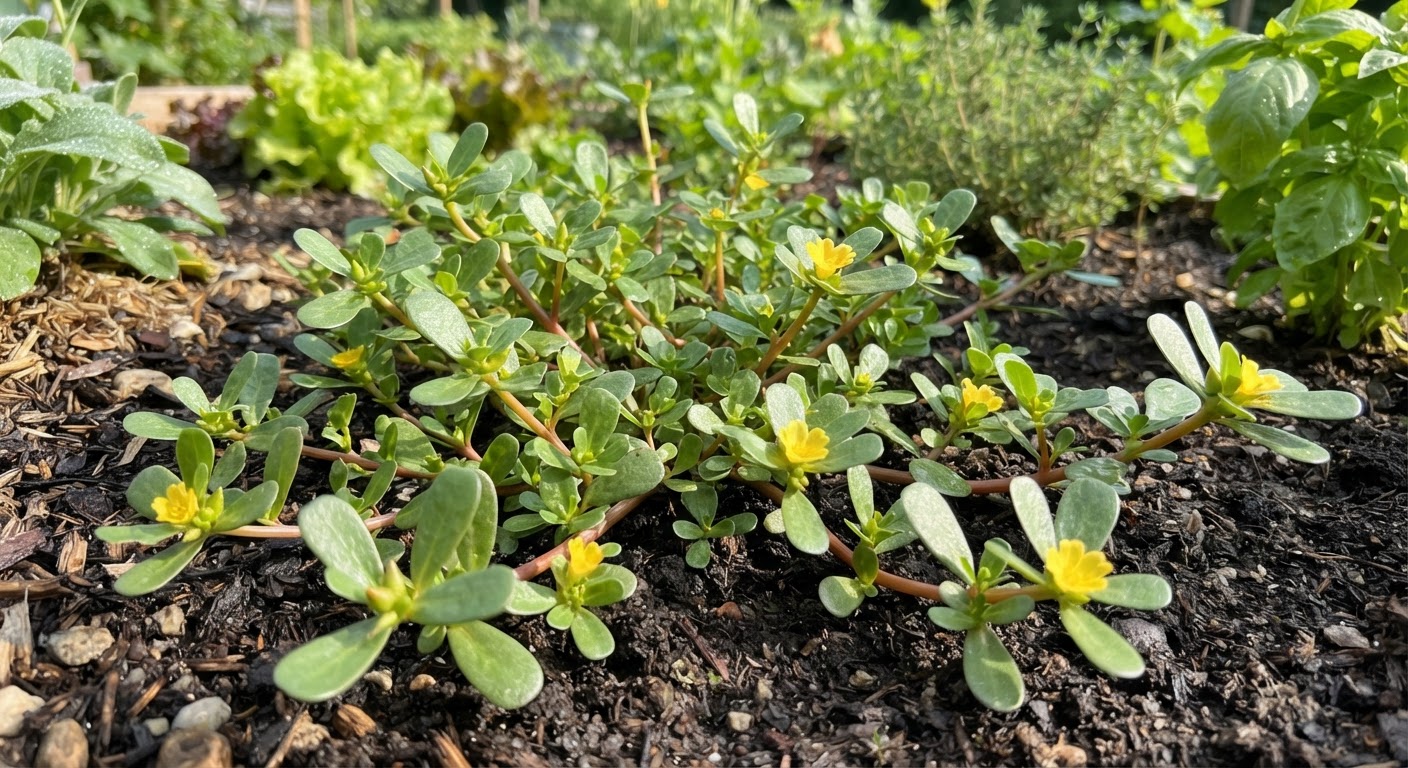
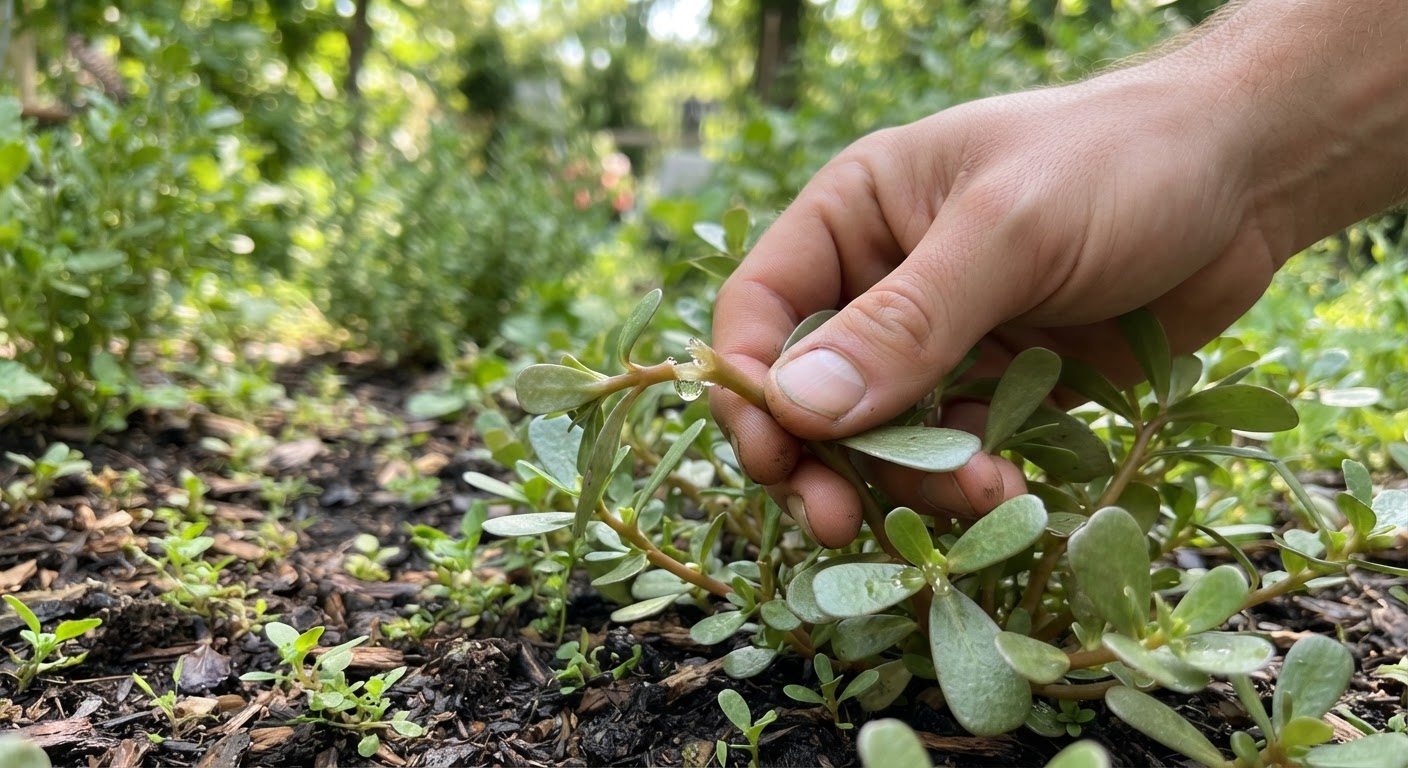
Pinch a leaf between your thumb and forefinger. Purslane leaves are unmistakably succulent — thick, rubbery, almost gel-filled. They feel like a jade plant leaf, not like spinach or lettuce. If the leaf is paper-thin, you’re holding something else. Walk away.
Marker 2: The Stem Color
Look at the base of the stems — the part closest to the ground. Purslane stems are reddish, pinkish, or magenta at the base, gradually transitioning to green toward the growing tips. This gradient is reliable. If every stem is uniformly green from root to tip, it’s probably not purslane. If every stem is solid red, you might have an ornamental portulaca (a close relative — not toxic, but bred for looks, not flavor).
Marker 3: The Sap
Break a stem. Look at the liquid that beads out. Purslane sap is crystal clear and watery, like aloe vera juice. This is your single most important identification marker because it’s the one toxic lookalike fails every time.
Spotted spurge (Euphorbia maculata), the only dangerous purslane mimic a beginner is likely to encounter, oozes white, milky latex when you snap a stem. White sap = not purslane = do not eat. This test takes three seconds and has never produced a false result.
Marker 4: The Growth Pattern
Purslane is a ground-hugger. It sprawls outward in a circular mat, stems radiating from a central taproot like spokes from a wheel hub. Individual stems can stretch 12–16 inches, but they rarely climb more than a few inches off the ground. If you’re looking at something tall and upright with purslane-like leaves, you’ve found something else — possibly a sedum or ornamental portulaca cultivar.
Marker 5: The Morning Flower
Between late spring and early fall, purslane produces tiny yellow flowers with five distinct petals — roughly the diameter of a pencil eraser. They only open in strong direct sunlight, typically mid-morning. Overcast day? After 2 PM? You won’t see them. This on-off flowering behavior is actually useful for ID: if you find the plant in morning sun and spot those tiny yellow blooms, you’ve added another confirmation point.
Marker 6: The Seed Capsule
After flowering, purslane develops a small green capsule at the leaf-stem junction. When ripe, the top pops off like a tiny lid (botanists call this “circumscissile dehiscence” — the lid pops open in a perfect circle). Inside are dozens of minuscule black seeds, smaller than poppy seeds. This seed-capsule-lid structure is unique to the purslane family and almost nothing else in your garden will have it.
The Lookalike Table
Here’s the comparison you’ll actually use in the field. Print it or screenshot it.
| Feature | Purslane ✅ | Spotted Spurge ☠️ | Prostrate Knotweed ⚠️ |
|---|---|---|---|
| Leaf feel | Thick, succulent, rubbery | Thin, flat, papery | Thin, flat, wiry |
| Stem sap | Clear, watery | White, milky | Clear, watery |
| Stem color | Reddish-pink at base, fading to green | Reddish, wiry, hairy | Green to reddish brown, wiry |
| Leaf shape | Paddle-shaped, widest near tip | Oval, often with red spot in center | Narrow, elliptical, smaller |
| Flowers | Yellow, 5 petals | Tiny, white/pink | Tiny, white/pink in leaf axils |
| Growth habit | Thick, sprawling mat | Flat, ground-hugging mat | Wiry mat, stems tough |
| Edibility | Fully edible | Toxic — do not eat | Edible but tough and unpalatable |
The spurge columns should be memorized. The knotweed column is included because beginners sometimes confuse it — knotweed is edible but stringy and not worth the effort. The sap test distinguishes all three instantly.
Where Purslane Hides — and the Spots You Should Skip
Purslane’s superpower is its ability to thrive where other plants give up. Compacted soil, gravel driveways, the crack between your driveway and the curb — purslane sees these as prime real estate.
But not all purslane locations are dinner-worthy. Where a plant grows determines what’s in it.
Best Harvest Locations
- Your own garden beds — assuming you don’t use chemical herbicides or pesticides
- Organic farms and community gardens — but always ask first, even if it’s a weed
- Untreated lawns — residential lawns that haven’t been sprayed for at least 2 seasons
- Wild meadows and fields — far from roads and agricultural runoff
- Container plants — purslane often volunteers in potted plants; these are usually your cleanest source
Locations to Avoid
- Roadside strips and medians — exhaust residue, brake dust, and road salt accumulate in the soil
- Railway edges — historically sprayed with persistent herbicides
- Commercial landscaping — almost certainly treated with chemicals
- Dog-walking routes — you know why
- Industrial sites and old lots — soil may contain heavy metals or industrial residue
- Anywhere with visible herbicide damage — if nearby plants look yellowed, wilted, or twisted, move on
| Location | Safety Verdict | Why |
|---|---|---|
| Your organic garden | ✅ Best option | You control what goes on it |
| Community garden (with permission) | ✅ Excellent | Managed soil, known inputs |
| Untreated backyard lawn | ✅ Good | Just rinse thoroughly |
| Wild meadow > 50ft from road | ✅ Good | Low contamination risk |
| Suburban sidewalk crack | ⚠️ Risky | Unknown spray history, pet waste |
| Roadside ditch | ❌ Avoid | Exhaust, runoff, salt |
| Commercial parking lot island | ❌ Avoid | Heavy chemical treatment |
| Treated lawn (< 2 years since spray) | ❌ Avoid | Residual herbicides |
A practical rule: if you wouldn’t eat soil from that spot, don’t eat the plants growing in it. Plants are biological sponges — they pull what’s in the soil into their tissues.
The Harvest — Exactly How to Pick, Clean, and Store
Harvesting purslane wrong is almost impossible — it’s forgiving. But doing it right means your greens last days instead of hours.
Step 1: Pick in the Morning
Purslane’s leaves are plumpest and most flavorful in early morning, before the sun draws moisture out. Afternoon-harvested purslane wilts faster and tastes slightly more bitter. If you must harvest later, dunk the whole plant in cool water for 10 minutes — it’ll rehydrate noticeably.
Step 2: Take Stems, Not Just Leaves
Pinch or cut stems 2–3 inches above the ground. Taking the whole top portion of a stem encourages the plant to branch and produce more — you’ll get 2–3 harvests from the same plant over a season. Leave the bottom few inches with at least one leaf node so it can regrow.
If you’re pulling the whole plant (to clear a garden bed, for instance), grip it at the base and twist — the central taproot comes out cleanly. That thick root base has the highest mucilage content and makes an excellent thickener for soups and stews.
Step 3: Field-Clean Immediately
Shake off loose dirt. Pluck off any yellowed or damaged leaves. If you’re near a water source, a quick rinse in the field saves kitchen time. Drop harvested stems into a paper bag or cloth sack — never plastic. Plastic traps moisture and turns your crispy purslane into a slimy mess within 2 hours.
Step 4: Kitchen Wash
At home, fill a large bowl with cool water. Submerge the purslane and swish vigorously. Grit and dirt sink. Lift the purslane out (don’t pour through a colander — you’d just pour the grit back over it). Repeat if the water’s still cloudy. A salad spinner finishes the job perfectly.
Step 5: Storage
Wrapped in slightly damp paper towels and placed in a loosely closed plastic bag, fresh purslane keeps 4–5 days in the refrigerator crisper drawer. Don’t wash until you’re ready to use it — moisture in storage accelerates decay.
For longer storage, blanch for 30 seconds, shock in ice water, squeeze out excess moisture, and freeze in portion-sized balls. Frozen purslane works beautifully in soups, stews, and stir-fries — the texture changes, but the nutrition holds up.
From Weedy to Wonderful — 4 Cooking Methods Tested
Here’s an honest observation from years of eating this plant: purslane raw, straight from the ground with nothing else, is… fine. It’s not offensive, but it’s not going to replace your favorite salad green on flavor alone. The magic happens when you match the right preparation to the right dish.
Method 1: Raw in Salads (The Quickest)
Purslane’s natural lemony tang and crunch make it a natural salad ingredient. It pairs beautifully with ingredients that complement its brightness without overpowering it.
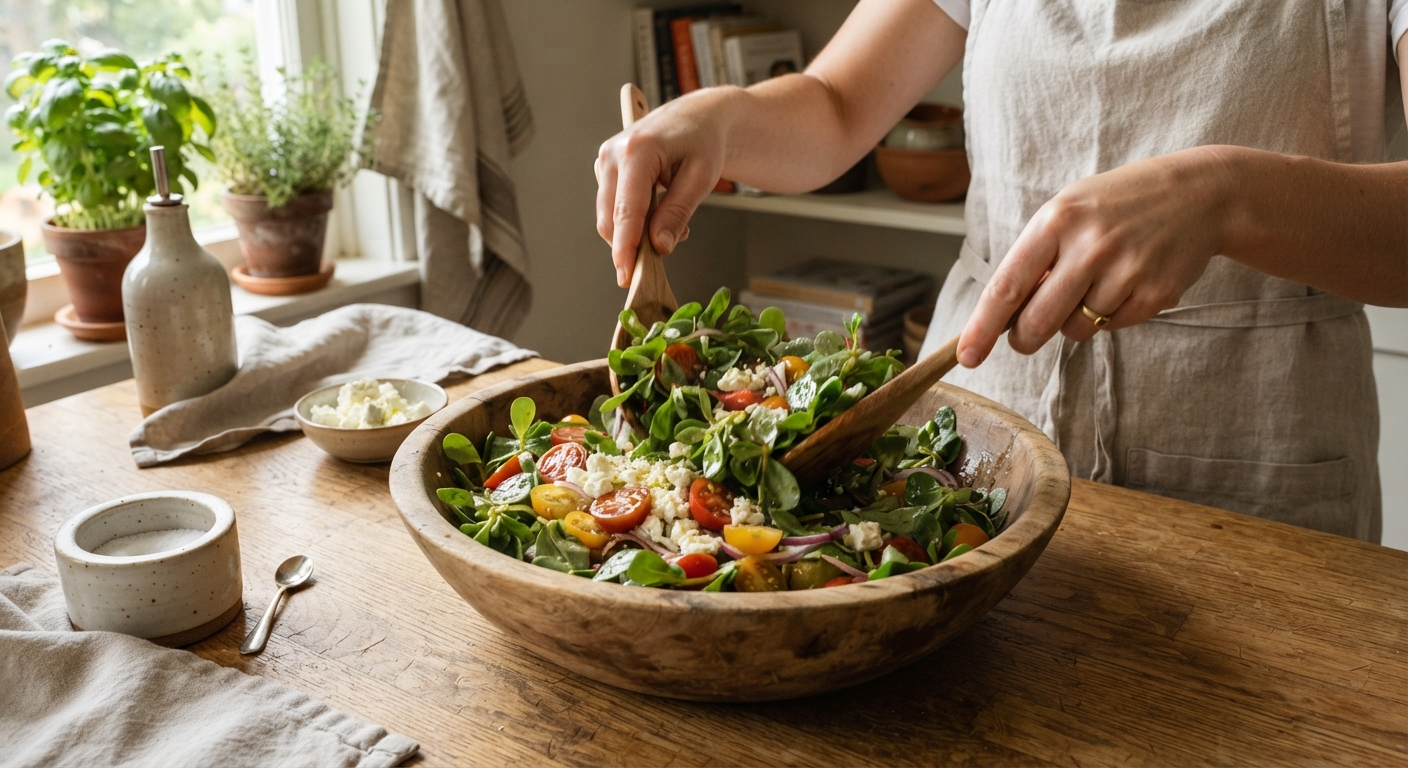
The combination that never fails: Purslane + diced cucumber + cherry tomatoes + crumbled feta + a squeeze of lemon + good olive oil + flaky salt. The cucumber echoes the crunch, the feta adds salt and cream, and the lemon reinforces purslane’s own acidity. This takes four minutes and converts skeptics.
Other raw companions that work: Watermelon (sweet-juicy against tart-crunchy), avocado (creamy against crisp), grilled corn (smoky against bright), peaches (summer in a bowl).
Method 2: Quick-Sautéed (The Weeknight Go-To)
Heat a pan over medium-high. Olive oil, minced garlic, a pinch of red pepper flakes. Once the garlic is fragrant (30 seconds — don’t let it brown), toss in washed purslane stems and leaves. Sauté for 60–90 seconds, just until the leaves wilt and the stems soften slightly. Finish with a splash of lemon juice and salt.
What happens: the mucilage (the same stuff that gives okra its texture) thickens slightly, creating a light, natural sauce. The lemony flavor mellows. The result is reminiscent of sautéed spinach but with more body and a pleasant, subtle tang.
Method 3: Pickled (The Surprising Winner)
This is the method that wins over the biggest purslane skeptics. The crunchy stems take to pickling the way cucumbers do — arguably better, because they stay crisper.
Quick pickle brine: Equal parts water and white vinegar, a tablespoon of salt, a teaspoon of sugar, a crushed garlic clove, and a few peppercorns. Bring to a boil, pour over cleaned purslane stems packed into a jar, let cool, refrigerate. Ready in 2 hours, keeps for 3 weeks. These pickled stems on a taco, a sandwich, or a cheese board are genuinely excellent.
Method 4: Blended into Soups and Stews (The Nutrient Boost)
This is the “I don’t want to taste it but I want the nutrition” method. A handful of purslane thrown into any soup or stew in the last 5 minutes of cooking disappears visually while contributing omega-3s, vitamin C, and minerals. It also works blended into pesto, green smoothies, or salsa verde. You won’t taste it, but your body notices the difference.
Field-Tested Wisdom — Mistakes I Guarantee You’ll Make (So You Can Skip Them)
After watching dozens of beginners encounter purslane for the first time, certain patterns emerge. Here are the eight most common — and avoidable — mistakes.
1. Relying on an app alone for identification. Plant ID apps are impressive. They’re also wrong about 5–15% of the time with common species and significantly more often with lookalikes. Use an app as a starting point for research — never as your final confirmation. The sap test, stem color, and leaf texture are your real verifiers.
2. Harvesting from the wrong spot. The most beautiful, lush purslane patch I’ve ever seen was growing in the drainage ditch behind a gas station. Pass. Location matters more than appearance. A scraggly, half-wilted plant from your organic garden is infinitely safer than a gorgeous specimen from questionable soil.
3. Washing once instead of twice. Purslane grows on the ground. Ground has grit. Grit ruins a salad instantly. The double-wash method (swish in bowl, lift out, drain bowl, refill, repeat) catches the sand that a single rinse misses. This sounds obsessive until you bite into sand once. Then it sounds like common sense.
4. Eating the stems from older plants raw. Young purslane stems are tender and delicious raw. Older, thicker stems — from plants that have been growing for months — get fibrous. Cook those or pickle them. The leaves are fine raw at any age.
5. Confusing purslane with ornamental portulaca. Garden centers sell Portulaca grandiflora (moss rose) as an ornamental — it has purslane’s succulent leaves but produces large, showy flowers in pink, orange, red, and white. It’s in the same genus and isn’t toxic, but it’s been bred for looks, not flavor. Edible in a survival situation, but it’s bitter and disappointing. If it came from a nursery pot with a price tag, it’s probably the ornamental one.
6. Overcooking it. Purslane’s window between “perfectly wilted” and “green mush” is narrow — about 90 seconds of heat. If you’re cooking it, think of it like baby spinach: flash-cook, remove from heat immediately, serve right away.
7. Skipping the stem entirely. A lot of beginners strip leaves and throw away stems. Those stems contain a significant portion of the plant’s omega-3s. Chop them finely or pickle them — don’t waste them.
8. Assuming all purslane tastes the same. It doesn’t. Purslane’s flavor varies noticeably based on growing conditions. Plants from rich, moist garden soil are milder and less tart. Plants from hot, dry, stressed environments are more intensely lemony and slightly saltier. Taste before you commit to a recipe — you might need to adjust your seasoning accordingly.
Eating Purslane When You Have Health Conditions
Purslane is nutritious. It’s also high in oxalates — the same compounds found in spinach, beet greens, and chard that can contribute to kidney stone formation in susceptible individuals.
Here’s what the data actually says, without the panic:
- Purslane contains approximately 1.3–1.7 grams of oxalates per 100 grams of fresh leaves. For context, spinach ranges from 0.6 to 1.0 grams. So purslane is on the higher end, but not dramatically different from what many people eat daily.
- Oxalate sensitivity varies enormously by individual. Most people process dietary oxalates without issue. If you have a history of calcium oxalate kidney stones, you should limit high-oxalate foods — including purslane, spinach, rhubarb, and beet greens.
- Boiling purslane and discarding the water reduces oxalate content by 30–50%. If oxalates are a concern for you, cook your purslane instead of eating it raw.
- Pairing purslane with calcium-rich foods (yogurt, cheese, tahini) can reduce oxalate absorption in the gut, since calcium binds to oxalates before they reach your kidneys.
Pregnancy and nursing: Purslane has a long history of use as a food during pregnancy across multiple cultures. However, it also has traditional use as a uterine stimulant in large medicinal doses. The dose makes the difference — a handful in a salad is food; concentrated purslane extracts are not. Standard dietary amounts appear to be safe, but consult your healthcare provider if you have specific concerns.
Quick-Fire Questions
Q: Can you eat purslane flowers? Yes. They’re tiny, yellow, mildly sweet, and entirely edible raw. Great as a garnish.
Q: Does cooking destroy the omega-3s? Partially. Brief cooking (1–2 minutes sauté) preserves most ALA. Long boiling reduces it. For maximum omega-3s, eat it raw or flash-cooked.
Q: Is purslane the same as watercress? No. Completely different plants, different families. They happen to share a peppery-lemony flavor note, which causes confusion.
Q: Can dogs or chickens eat purslane? Chickens love it and it’s safe for them. Dogs — small amounts are generally fine, but oxalates can be problematic for dogs with kidney issues. Not worth the risk for pets with known health problems.
Q: What does purslane taste like? Lemony, slightly salty, with a crisp succulent texture. Some people detect a faint peppery note. The mucilage gives it a subtle okra-like mouthfeel when cooked.
Q: Is purslane invasive? Yes — aggressively so in many regions. A single plant produces up to 50,000 seeds. This is actually good news for foragers: there will always be more.
Q: Can I eat purslane from my lawn if I haven’t sprayed anything? Yes — as long as you’re certain about the no-spray history. Give it a very thorough wash. Lawns collect more surface contaminants than garden beds.
Q: How do I tell the difference between purslane and spurge if they’re both tiny seedlings? Seedling purslane already has thick, succulent cotyledons (seed leaves) with a reddish tint. Spurge seedlings are thinner and flat. But honestly — if you can’t be certain, wait a week until the plant is large enough to do the sap test. Patience is the safest foraging tool.
The Bottom Line
Purslane is edible, nutritious, free, and probably growing within 50 feet of where you’re reading this. The barrier to eating it isn’t availability — it’s confidence in identification and knowing what to do with it once it’s in your kitchen.
Start with the sap test. If the stem oozes clear liquid, you’re holding purslane. If it’s white, you’re not. Everything else — the recipes, the nutrition facts, the storage tricks — builds on top of that single, three-second verification.
Your grandparents or great-grandparents probably knew this plant by name and ate it regularly. Somewhere along the line, purslane got reclassified from “food” to “weed,” and we collectively forgot what was sitting in our yards. The plant didn’t change. We just stopped paying attention.
Now you know. Go find some purslane, snap a stem, check for clear sap, and eat better than you did yesterday — for free.