You can memorize fifty poisonous plants and still pick the fifty-first one you’ve never seen before. That’s the trap most foraging guides don’t warn you about.
Every year, poison control centers across the United States field thousands of calls about plant exposures. The pattern is almost always the same: someone found a plant that looked familiar, matched one feature they recognized, and stopped checking. The best field guide in the world can’t help you if the plant you’re holding isn’t in it.
This guide takes a different approach. Instead of handing you a list of specific plants to avoid — which will always be incomplete — I’m going to walk you through a system. A method you can apply to any plant, anywhere, regardless of whether you know its name. By the time you finish reading, you’ll have a decision framework that catches dangerous species you’ve never seen in any book.
The goal isn’t to make you afraid of plants. It’s to give you enough confidence in your identification skills that you can relax and enjoy foraging, knowing your safety net is broader than any memorized list could ever be.
Why Memorizing Individual Plants Fails
Before we build the system, let me explain why the “just learn the dangerous ones” approach breaks down in the field.
There are roughly 700 toxic plant species in North America alone — not counting introduced ornamentals, escaped garden plants, or species toxic only in certain parts or seasons. No field guide covers all of them. A single meadow in late summer might contain forty distinct species. If you can only recognize five as toxic, you’re trusting the other thirty-five are safe by default — which is exactly how people end up in emergency rooms.
The shift I want you to make is from “is this plant on my danger list?” to “does this plant show any danger signals?” The first question has an answer that changes depending on where you are and what’s in your field guide. The second question works the same way in Vermont, California, or rural Japan.
Step 1: Learn the Universal Danger Signals
Certain visual patterns appear across unrelated toxic plant families. They’re not coincidences — many of these traits evolved as warning signals, and the same chemical defense strategies produce similar visible characteristics across species that aren’t botanically related. Once you know what to look for, you’ll notice these patterns everywhere.
None of these signals guarantees toxicity on its own, but two or three together should stop you from eating anything.
Universal Plant Danger Signals at a Glance
| Danger Signal | What to Look For | Why It’s a Red Flag | Examples |
|---|---|---|---|
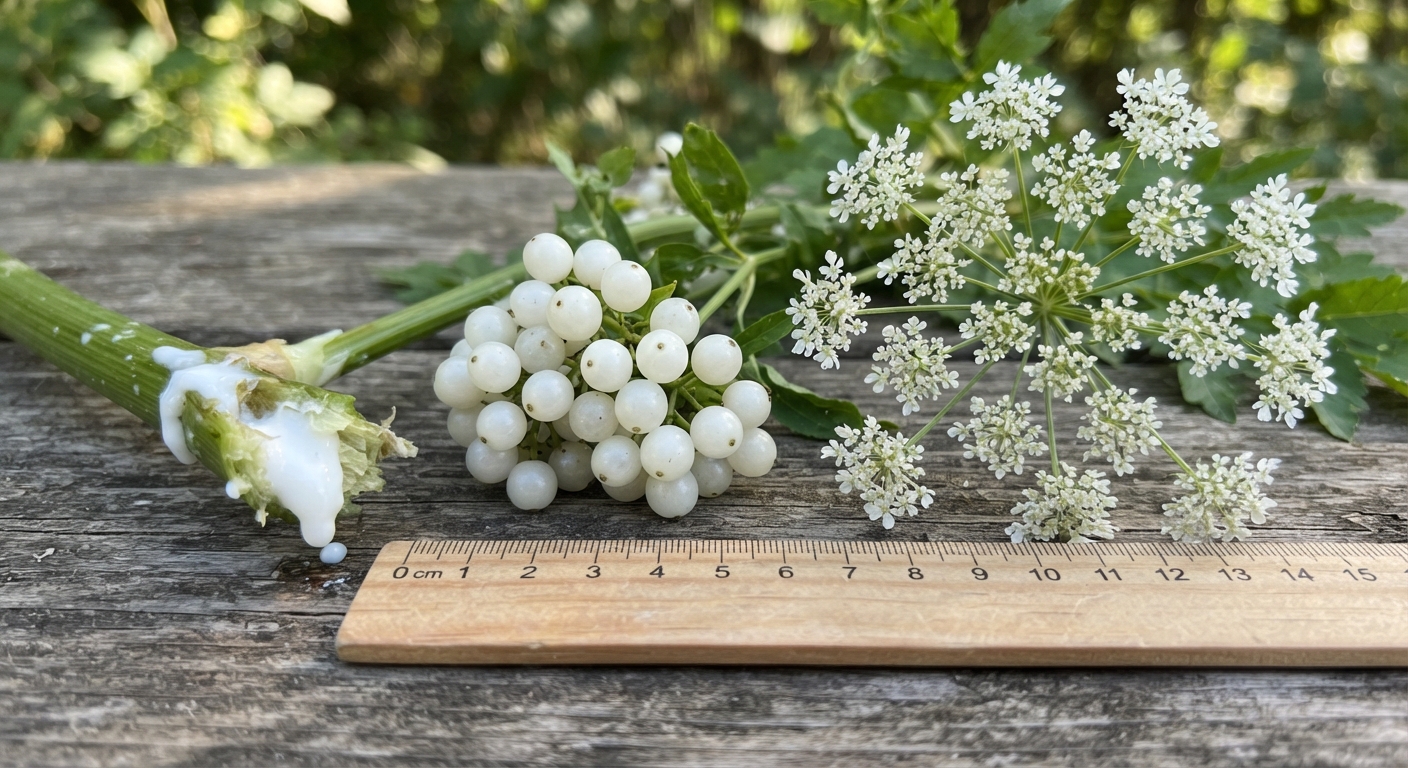
| Milky or colored sap | White, yellow, or orange latex oozing from broken stems or leaves | Many plant defense compounds — alkaloids, glycosides, latex allergens — are suspended in sap | Poison hemlock (yellowish sap), spotted spurge (white latex), dogbane (milky sap) |
| Umbrella-shaped flower clusters | Flat-topped or umbrella-like clusters of tiny white or yellow flowers (Apiaceae family) | The carrot family contains some of the deadliest plants on earth alongside edible members — flower shape alone doesn’t distinguish them | Poison hemlock, water hemlock, fool’s parsley |
| White, yellow, or red berries | Clusters of brightly colored berries on non-woody plants | Bright berries are bird-dispersed — birds tolerate toxins mammals can’t. White berries in particular are a strong danger signal | Doll’s eyes (white), pokeweed (purple-black on magenta stems), bittersweet nightshade (red) |
| Almond or bitter smell when crushed | Leaves or bark that release a sharp, sweet-almond scent when crushed | Cyanogenic glycosides break down into hydrogen cyanide — the characteristic almond odor is the giveaway | Wild cherry wilted leaves, bitter almond, some Prunus species |
| Three-leaf compound leaves | Leaves divided into three distinct leaflets (not to be confused with all compound leaves) | While not universally toxic, the “leaves of three” pattern covers poison ivy, poison oak, and several other irritants | Poison ivy, poison oak, boxelder (mild irritant) |
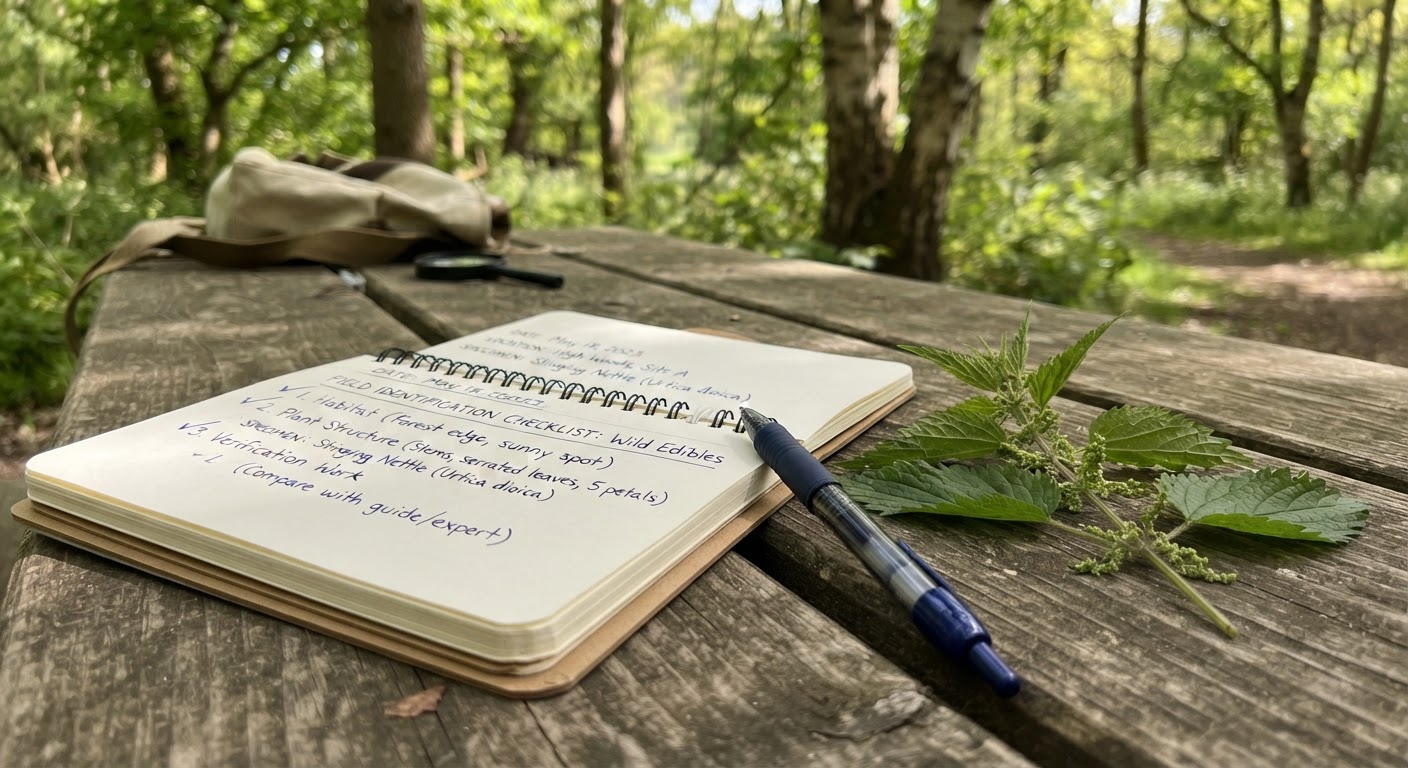
| Spines, fine hairs, or stinging bristles | Visible needles, prickles, or glass-like hairs on stems and leaves | Physical defense often correlates with chemical defense; stinging hairs inject irritants directly | Stinging nettle (formic acid hairs), bull thistle, prickly poppy |
| Unpleasant or acrid taste in a tiny touch test | Bitter, burning, soapy, or numbing sensation when a tiny piece touches the tongue (spit out immediately) | Most mammalian toxins taste unpleasant — this is an evolved deterrent. Never swallow; touch only | Buttercups (acrid burning), most Euphorbia species |
Important caveats: these signals don’t work in isolation. Dandelion has milky sap and is perfectly edible — but it also has unmistakable yellow composite flowers, backward-pointing toothed leaves, and a hollow leafless stem. You’re looking for clusters, not single hits.
The umbel flower rule deserves special emphasis. The Apiaceae family includes carrots, parsley, and dill — but also poison hemlock, water hemlock, and giant hogweed. The edible and deadly members look nearly identical at flowering stage. If you’re new to foraging, admire all umbrella-shaped white flowers from a distance until you’ve spent a full season studying at least one species with an experienced mentor.
Step 2: Know the Toxic Plant Families
Moving beyond individual danger signals, the next layer of your identification system is family-level recognition. Toxic compounds tend to run in families — if one member of a plant family is known to contain dangerous alkaloids, assume all unverified members of that family carry some risk until proven otherwise.
Learning to recognize plant families gives you a massive head start. You don’t need to know Cicuta maculata vs Conium maculatum. You just need to recognize “this is in the carrot family, and I don’t know it to species, so I’m not eating it.”
Major Toxic Plant Families Every Forager Should Recognize
| Plant Family | Key ID Features | Toxic Compounds | Effects If Ingested | Common Dangerous Members |
|---|---|---|---|---|
| Apiaceae (Carrot/Parsley) | Umbrella flower clusters, hollow stems, often aromatic when crushed | Coniine, cicutoxin, furanocoumarins | Respiratory paralysis (hemlock), violent seizures (water hemlock), severe skin burns with sunlight (giant hogweed) | Poison hemlock, water hemlock, giant hogweed, fool’s parsley |
| Solanaceae (Nightshade) | Five-petaled star-shaped flowers, alternate leaves, berry-like fruit | Tropane alkaloids, solanine, glycoalkaloids | Hallucinations, tachycardia, respiratory failure, coma | Deadly nightshade, jimsonweed, black henbane, bittersweet nightshade |
| Euphorbiaceae (Spurge) | Milky white sap, small clustered flowers with no petals, often succulent-like | Diterpene esters, phorbol | Severe skin and mucous membrane irritation, gastrointestinal bleeding if ingested | Spotted spurge, leafy spurge, pencil cactus, manchineel tree |
| Fabaceae (Pea/Legume) — select members | Pea-like flowers, compound leaves, seed pods | Cytisine, lectins, rotenone | Nausea, vomiting, seizures, respiratory arrest | Golden chain tree, rosary pea (abrin — one of the deadliest plant toxins known), Texas mountain laurel |
| Ranunculaceae (Buttercup) | Five-petaled shiny flowers, often yellow or white, deeply divided leaves | Protoanemonin, ranunculin | Severe burning of mouth and throat, gastrointestinal inflammation, blistering | Buttercups, monkshood (aconite), larkspur, hellebore |
| Ericaceae (Heather/Blueberry) — select members | Small bell-shaped flowers, evergreen shrubby growth, simple leaves | Grayanotoxins, andromedotoxin | “Mad honey” poisoning: dizziness, hypotension, heart block, sweating | Mountain laurel, rhododendron, azalea, sheep laurel |
| Liliaceae (Lily) — select members | Parallel-veined leaves, flowers in threes, bulbs | Zygacine, steroidal alkaloids | Severe gastrointestinal distress, bradycardia, hypotension, coma | Death camas, false hellebore, autumn crocus, lily of the valley |
Here’s the practical takeaway from this table: you don’t need to memorize every genus and species in each family. You need to memorize the family-level silhouette. When you look at a plant with umbrella flower clusters on a hollow stem, your brain should immediately flag “Apiaceae — verify before touching.” When you see a plant with shiny five-petaled yellow flowers and deeply cut leaves, your brain should register “Ranunculaceae — possible protoanemonin risk.”
Family-level pattern recognition is what separates experienced foragers from beginners. Beginners identify individual plants. Experienced foragers identify plant families and then drill down to species within a known-safe category. This is the single highest-leverage skill you can develop, and it takes far less time than you might think — there are only about fifteen plant families that produce the vast majority of toxic exposures and serious poisonings in North America.
Step 3: The Three-Point Cross-Reference Method
Okay. You’ve learned the danger signals and you can recognize a few key families. Now let’s build the actual field protocol — the step-by-step checklist you’ll run every time you encounter an unfamiliar plant you’re considering eating.
This method is called the Three-Point Cross-Reference because it requires three independent, non-overlapping identification features before you proceed. If any one of the three points fails or is ambiguous, the plant doesn’t get eaten. Period.
Point 1: Family-Level Confirmation
Identify the plant family first, not the species. Use the characteristic features from the table above. If you’re looking at something with square stems, opposite leaves, and a strong scent when crushed, you’re in the mint family (Lamiaceae) — one of the safest plant families on the planet, with almost no toxic members in North America. If you’re looking at something with umbrella flower clusters, you’re in Apiaceae — proceed with extreme caution.
If you can’t place the plant in a family, or the family contains known toxic members, move on to Point 2 with heightened skepticism.
Point 2: Distinctive Species-Level Features
Now narrow to species. Use a field guide, a reliable identification app (see Step 5), or — ideally — both. Look for features that are unique to this exact species and absent in any lookalikes. This is where most beginners stop. They see “white flowers, fern-like leaves” and call it wild carrot. They skip the stem check. Don’t skip the stem check.
For every plant you identify, ask the question: “What would I need to see to know this is NOT the species I think it is?” If you can’t answer that question, you don’t yet have a positive ID.
Point 3: Habitat and Context Check
Does this plant grow where your field guide says it should? Is it the right season for the part you’re harvesting? Are there any other plants growing in the same patch that could cause confusion?
This is the point that catches errors Point 2 misses. Water hemlock grows in wet meadows and along stream banks. Wild carrot prefers dry, disturbed soil. If you’re standing ankle-deep in a marsh looking at an umbel-flowered plant, the habitat alone should raise an alarm — even if the stem and flowers look “mostly right.”
The Tiebreaker Rule
If Points 1, 2, and 3 all agree, you have a positive identification. If any point contradicts the others — even slightly — the plant remains unidentified and doesn’t go in your basket. No exceptions. No “probably.” No “it looks close enough.”
I’ve seen experienced foragers walk away from a patch of what they were 90% sure was wild carrot because the stem hair was sparser than expected. That’s exactly the right instinct. The plants that hurt people aren’t the ones foragers can’t identify. They’re the ones foragers were almost sure about.
Step 4: What the Universal Edibility Test Gets Wrong
Some survival manuals recommend the “Universal Edibility Test” — touching a plant to your wrist, then lips, then tongue, waiting hours between each step. I want to address this directly because it’s dangerous advice for general foraging.
The test was developed by the U.S. military for survival situations where starvation is imminent and the risk of poisoning is preferable to the certainty of death from hunger. It was never intended for recreational foraging. Here’s what it misses:
It doesn’t account for delayed toxicity. Death camas symptoms can take up to 24 hours to appear. Amanita mushroom poisoning takes 6-24 hours before symptoms start — and by then, irreversible liver damage has already begun. A wrist-touch test catches nothing in that window.
It doesn’t account for cumulative or organ-specific damage. Pyrrolizidine alkaloids found in comfrey and several Senecio species cause gradual, cumulative liver damage over weeks or months. You won’t feel sick after eating them once. You’ll feel sick after eating them for two months and discover your liver enzymes are three times normal.
It doesn’t account for variable toxicity within a species. Pokeweed shoots are edible when young and properly boiled in multiple changes of water. Mature pokeweed berries and roots will give you violent gastroenteritis and, in sufficient quantities, respiratory failure. The “edibility test” treats a plant as a binary — safe or toxic — when reality is far more nuanced.
Apply the Three-Point Cross-Reference instead. If you can’t positively identify the plant to species, and you’re not in a genuine survival situation, find something else to eat. The woods are full of identifiable edible plants. You don’t need to gamble on anything.
Step 5: Digital Tools — Smart Uses and Dangerous Misuses
Plant identification apps have gotten remarkably good. iNaturalist’s computer vision model can frequently narrow identification to genus, and sometimes to species, from a single photograph. But these tools have a failure mode that’s perfectly aligned with what makes foraging dangerous.
The problem: Apps give you a high-confidence suggestion, and that suggestion looks authoritative. It has a Latin name. It might show you similar images. Your brain, which was uncertain a second ago, now has a specific answer to anchor on — and anchoring bias takes over. You stop looking for contradictory evidence. You start looking for confirmatory evidence instead.
This is the exact opposite of how safe identification works.
How to Use Apps Correctly
Think of a plant ID app the way you’d think of a friend who’s taken one botany class — helpful as a starting point, but not someone you’d stake a meal on. Here’s how to integrate apps into your identification workflow without letting them become a crutch:
-
Take the photo, read the suggestion, then close the app. Do not let the algorithm’s answer influence your manual identification steps. Run the Three-Point Cross-Reference independently first. Only open the app afterward to see if it agrees with your conclusion.
-
Never accept a genus-level ID as sufficient. If the app says “Apiaceae” or “Solanaceae,” that’s a red flag — it’s telling you the family but can’t narrow beyond that, which means the plant could be the edible member or the toxic member. In the carrot family, the difference between food and fatality is a stem hair.
-
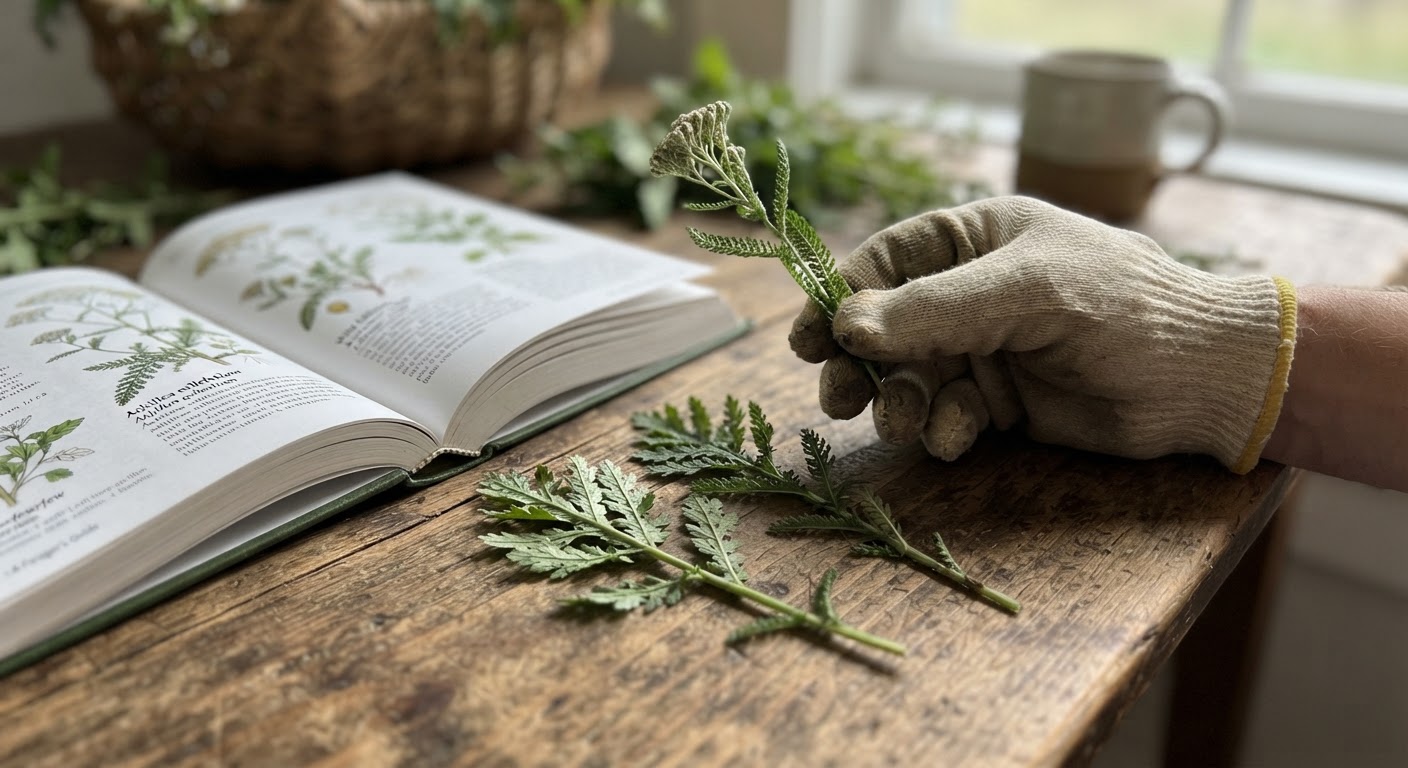
Always photograph multiple plant parts. A single photo of a flower cluster is nearly useless for identification. Take photos of the flower, stem (showing any hairs, ridges, or coloration), leaf arrangement (alternate vs opposite), leaf shape with a size reference (use your hand), and the overall growth habit. Five photos, five angles. If the app gives you a different answer from the flower photo versus the stem photo, something is wrong.
-
Cross-reference with at least two apps and one physical field guide. If iNaturalist, PlantNet, and your field guide all agree, you’ve got a triangulated ID. If they disagree, you don’t have an ID yet.
The key mental shift is treating the app as a hypothesis generator, not an authority. The moment you think “the app said it’s fine,” you’ve handed your safety to a computer vision model trained on user-submitted photos of varying quality. That’s not a risk I’m willing to take on behalf of my liver.
Pro Tips: Lessons I Learned the Hard Way
These aren’t theoretical suggestions. Every tip in this section comes from mistakes I’ve either made myself or watched other foragers make. Learn from us so you don’t have to learn from your own close calls.
Tip 1: The Smell Test Has an Expiration Date
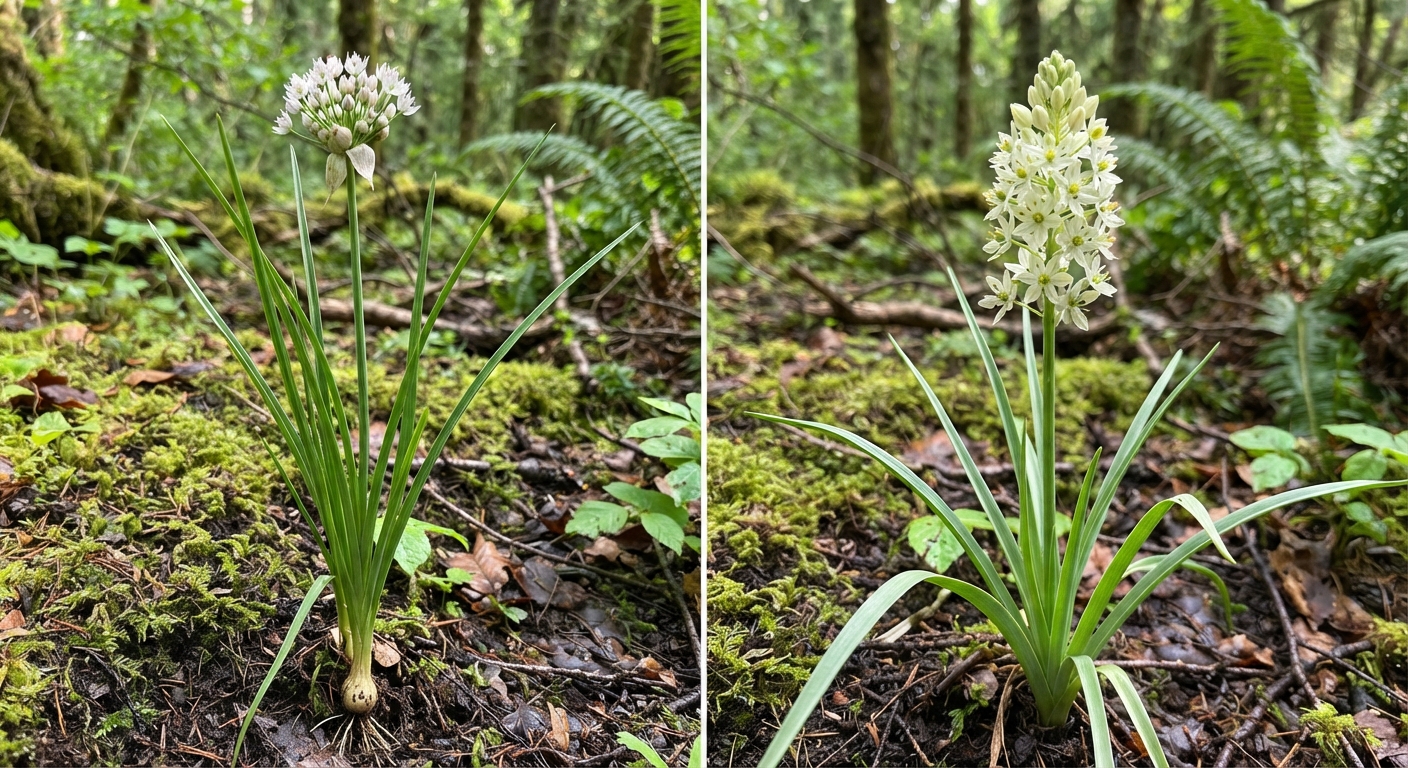
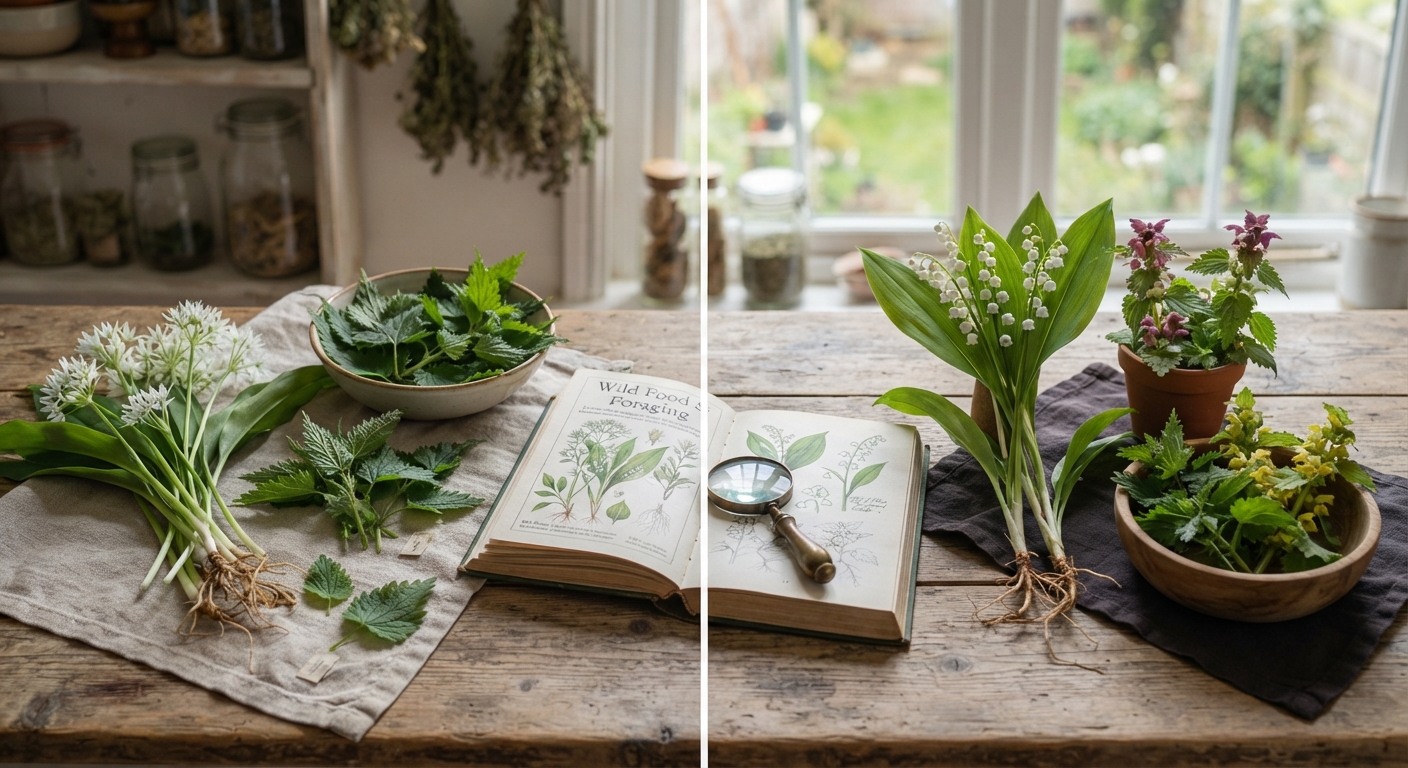
Wild garlic and wild onion smell like… garlic and onion. It’s the safest identification trick in foraging. But after handling garlic mustard or other pungent plants, your fingers transfer scent to everything you touch. If you’ve been crushing wild garlic leaves and then pick up a death camas bulb to examine it, the camas bulb will smell faintly of garlic — and your nose won’t know the difference.
The fix: Sniff your fingers before sniffing a new plant. If your hands already smell allium, wash them with dirt and water (dirt absorbs oils better than water alone) or use unscented hand sanitizer if you have it. Better yet, designate one hand for handling and one for sniffing, and don’t cross-contaminate.
Tip 2: Learn What Bad Specimens Look Like
Field guides show perfect, textbook specimens. Wild plants are half-eaten by insects, growing sideways, or at weird life stages. Practice identifying atypical specimens — damaged, immature, past their prime. If you can only recognize poison hemlock at 6 feet tall with obvious purple splotches, you’ll miss it at 18 inches with faint markings.
Tip 3: Mushrooms Are Not Plants — Treat Them Differently
This is a plant identification guide, but I have to mention this because mushroom foraging is increasingly popular, and the identification rules are fundamentally different. With plants, the dangerous families are well-mapped and the visual signals are relatively consistent. With mushrooms, edible and deadly species can look identical to the naked eye, share the same habitat, and fruit at the same time. The death cap mushroom (Amanita phalloides) looks nearly indistinguishable from the edible paddy straw mushroom (Volvariella volvacea) — and one cap contains enough amatoxin to kill a healthy adult.
If you forage mushrooms, use mushroom-specific resources, join a local mycological society, and never apply plant identification logic to fungi. They play by different rules.
Tip 4: Bring a Second Set of Eyes
I don’t forage unfamiliar plants alone, and neither should you. A second person provides an independent verification check that no amount of personal diligence can replicate. When two people separately arrive at the same identification using different methods (one using a field guide, the other using an app, for example), the probability of a shared error drops dramatically.
If you don’t have an experienced foraging partner, take photos and send them to someone who knows more than you. Online foraging communities (the r/foraging subreddit, various Facebook groups, iNaturalist forums) are surprisingly responsive and full of experts who enjoy helping beginners. Use them. A five-minute wait for a confirmation reply beats an eight-hour wait in an emergency room.
Quick Answers: FAQ
Can a plant be poisonous to touch? Yes. Giant hogweed sap causes severe phototoxic burns with blistering and permanent scarring. Poison ivy causes allergic dermatitis in 85% of people. Never touch unfamiliar plants with bare hands.
Are all white berries poisonous? No, but a large percentage of white-berried North American plants are toxic. Safe rule: white berry, don’t carry. The few edible ones like white mulberry are identifiable once you know them.
What’s the most dangerous plant family for foragers? Apiaceae — the carrot family. It contains deadly poison hemlock and water hemlock alongside common edibles like wild carrot. This family causes more serious poisonings among foragers than all other families combined.
If I cook a poisonous plant, does it become safe? Almost never. Heat breaks down some mild toxins like oxalic acid, but dangerous compounds — coniine, cicutoxin, amatoxins — survive boiling. Never assume cooking neutralizes unknown toxins.
How quickly do symptoms appear? It varies: cyanide in 15 minutes, poison hemlock in 30 min to 2 hours, death camas in 6-24 hours, amatoxin mushrooms in 6-12 hours with false recovery then liver failure. Go to the ER immediately even if you feel fine.
Is poison ivy actually poisonous? Technically no — it contains urushiol, an oil causing allergic dermatitis. Don’t burn it (inhaled particles cause respiratory inflammation), and the myth about eating it to build immunity has hospitalized people.
Building Habits, Not Just Knowledge
Here’s what I want you to take away from this guide: plant identification safety is fundamentally a discipline problem, not a knowledge problem.
The foragers who get into trouble aren’t the ones who don’t know what poison hemlock looks like. They’re the ones who know what it looks like but don’t bother checking the stem because they’re in a hurry, or hungry, or overconfident. The checklists and frameworks in this guide exist to protect you from your own shortcuts. Use them every time. Not just when you’re uncertain — especially when you’re certain, because certainty without verification is exactly what precedes every foraging accident I’ve ever read about.
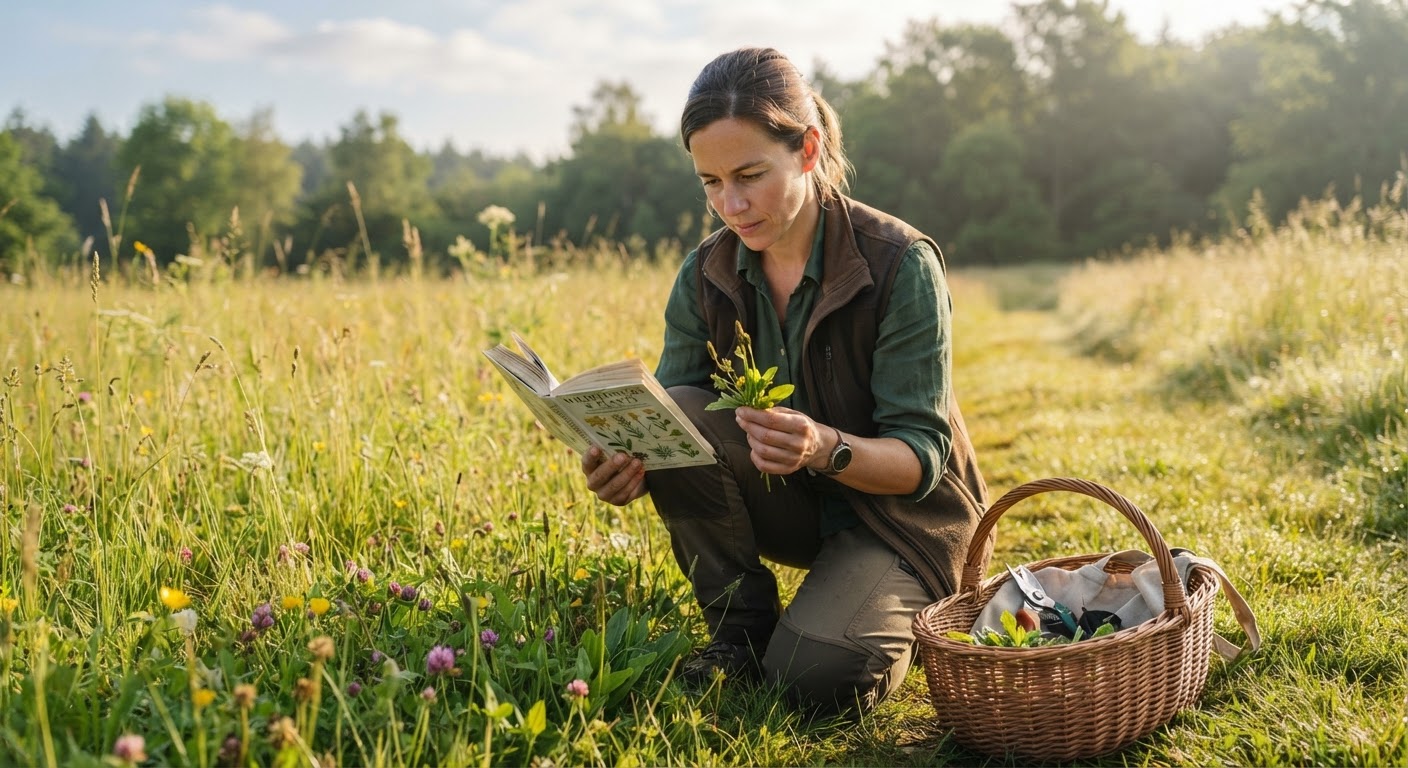
Start your next foraging walk with a small, achievable goal: positively identify three plants using the Three-Point Cross-Reference method, take clear photos of all three, and share your IDs with an online foraging community for confirmation. Don’t eat anything unfamiliar on your first few outings. Just practice the identification process until it feels automatic. The plants will still be there when you’re ready to harvest.
The best foragers I know all share one trait: they’re comfortable saying “I don’t know” about plants they can’t definitively identify. They don’t feel pressure to prove their knowledge by naming every species in sight. They’d rather leave with an empty basket and a clear conscience than a full basket and a wrong guess. Be that forager. Your stomach — and your liver — will thank you.
This article is for educational purposes only. Always consult multiple reliable sources and, when possible, learn from an experienced mentor before consuming any wild plant. If you suspect poisoning, contact your local poison control center or emergency services immediately.