I was fifteen when I first misidentified a plant. Bright green divided leaves along a creek bed—I was sure I’d found wild parsley. My grandmother, who’d foraged in rural Java her entire life, took one look, sniffed it, and threw the bunch in the trash. “Smells wrong.”
She was right. Fool’s parsley—Aethusa cynapium—a mildly toxic lookalike. Not deadly, but enough to make me violently sick. That moment taught me something no book could: identification is never about one feature. It’s about pattern recognition, cross-checking, and trusting your gut when something’s off.
Two decades later, I’ve developed a system—not a shortcut, but a repeatable framework that dramatically reduces risk. This is what I teach every beginner and what I still use myself whenever I encounter an unfamiliar plant.
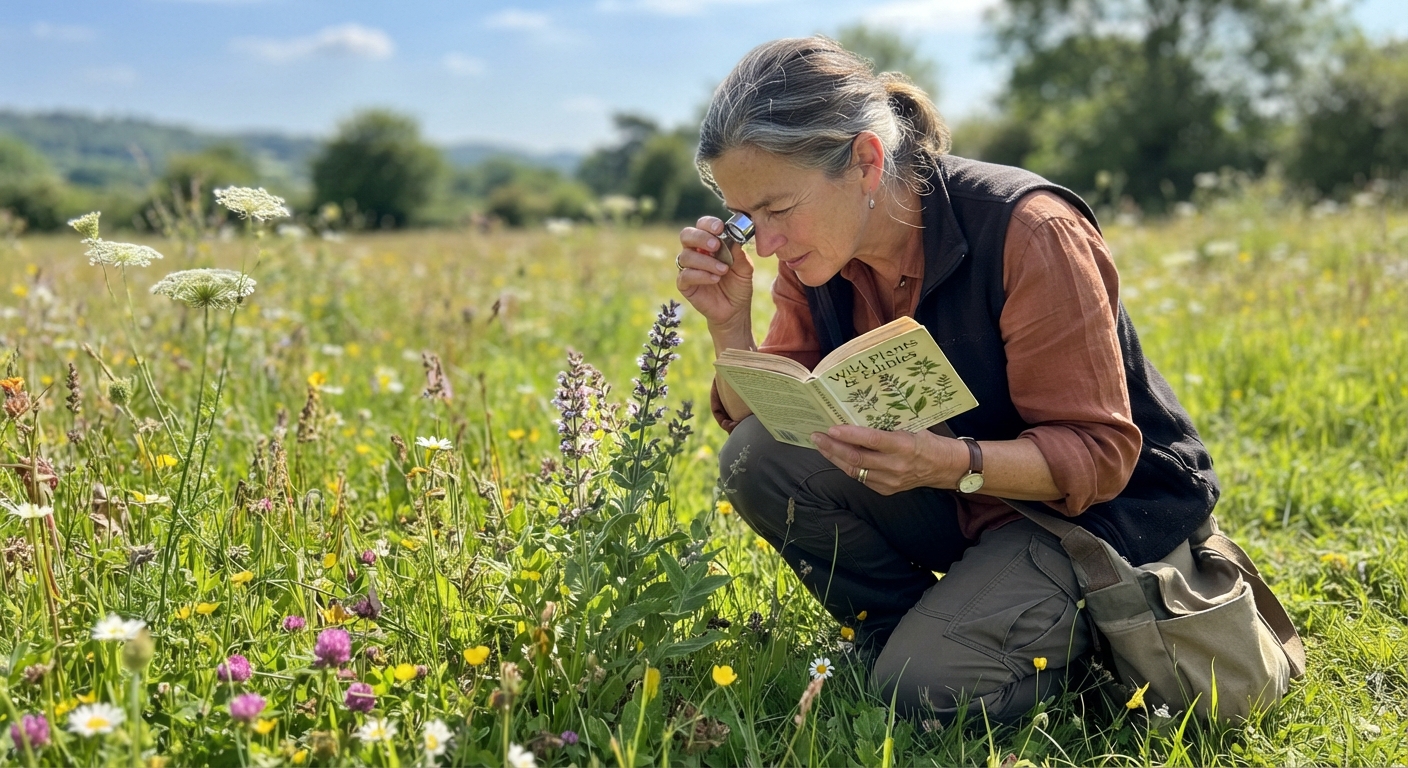
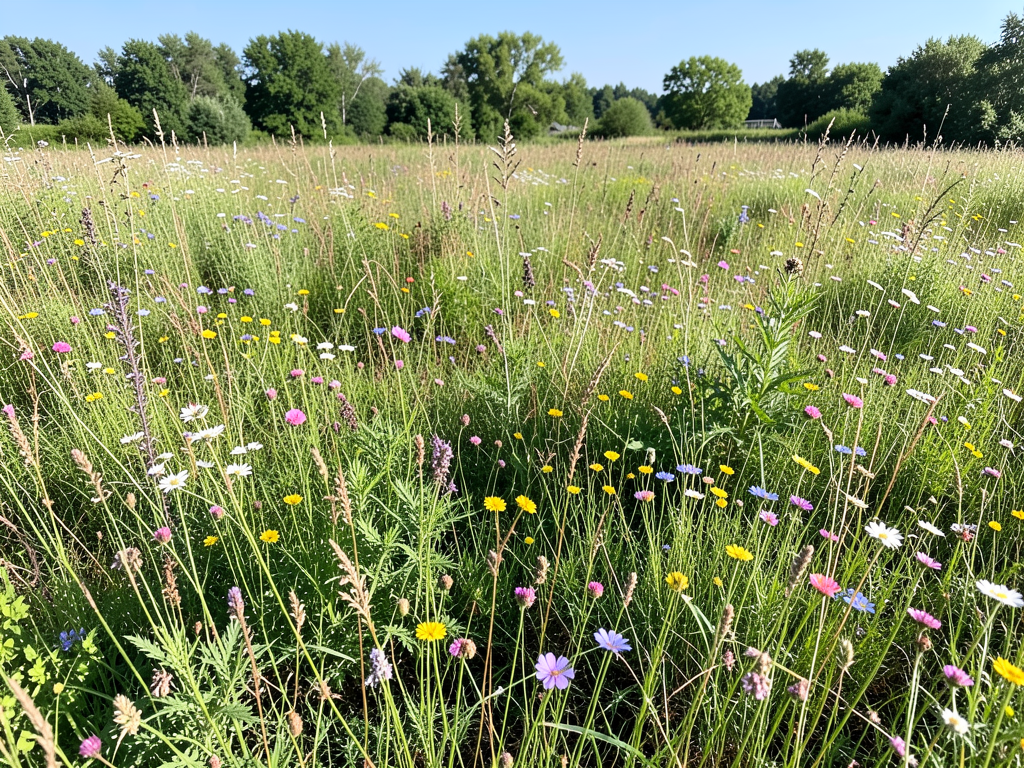
Why a System Beats Memorizing Plants One by One
Most beginners memorize individual plants—dandelion, chickweed, lamb’s quarters. That works for maybe ten plants. The moment they see something unfamiliar, they’re stuck. Or worse, they guess.
A system lets you figure out any plant, not just the ones you’ve memorized. The five steps below build on each other. Skip one, and you’re gambling. Follow all five, and you’ll build a skill that compounds every time you use it.
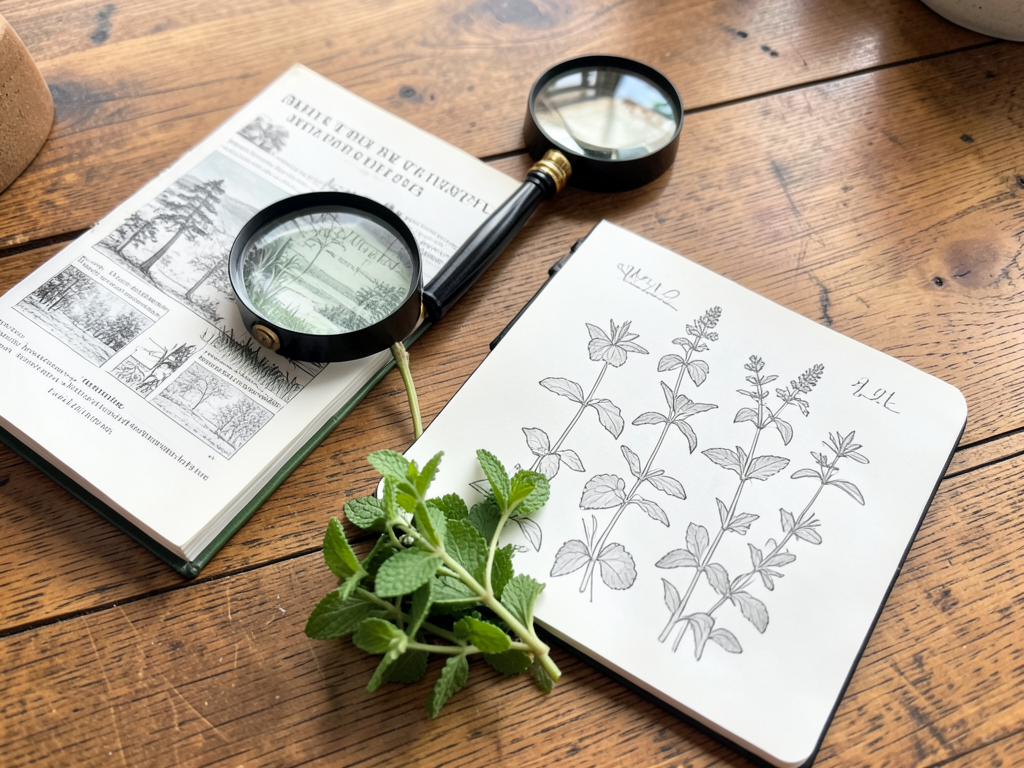
The 5-Step Identification System
Step 1: Observe the Whole Plant First
Beginners almost always zoom straight in on a leaf, match it to a picture, and stop. That’s how you end up with fool’s parsley.
Before touching your field guide, stand back and note:
- Growth form: Tree, shrub, vine, or herbaceous?
- Habitat: Sun or shade? Wet or dry soil? Forest, meadow, or disturbed ground?
- Season and neighbors: Is it flowering? What grows around it? Plant communities don’t lie—if you’re in a wetland and your guide says “dry ridges,” something’s wrong.
Thirty seconds of observation eliminates mountains of wrong guesses. Poison hemlock loves wet ditches. Wild carrot prefers sunny field edges. Habitat alone often tells half the story.
Step 2: Match at Least Five Features—Not Just One
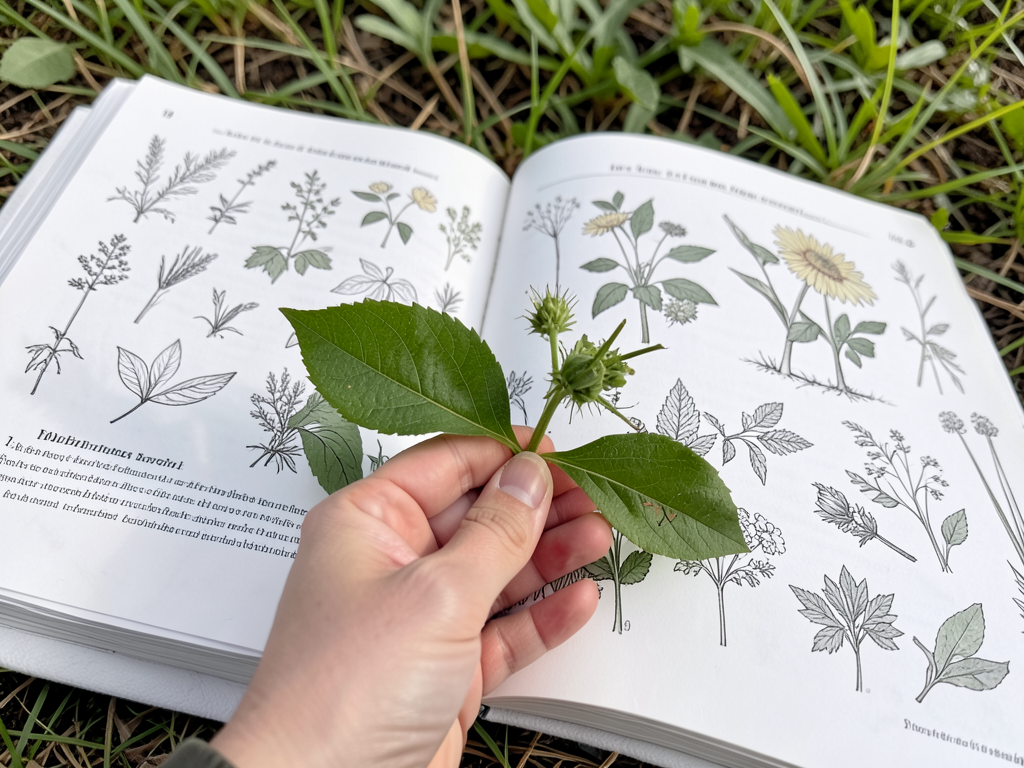
Now zoom in. Match a minimum of five features. Every time. Here’s my checklist:
Leaves. Arrangement on the stem—opposite, alternate, or whorled? This single observation eliminates hundreds of possibilities. Mint family: opposite. Carrot family: alternate, compound.
Stem. Round, square, or ridged? Hairy or smooth? Hollow or solid? Those purple blotches on poison hemlock? That’s the kind of detail that saves lives.
Flowers. The most reliable ID feature because flowers don’t vary based on sun or soil the way leaves do. Count the petals. Note the arrangement—single, cluster, umbel, spike?
Smell. Crush a leaf. Carroty? Minty? Oniony? Or musty and unpleasant? Smell alone separates wild onion from death camas and wild carrot from hemlock.
Root. Only dig if you’re reasonably confident and the plant is abundant. Note shape, color, and smell.
Step 3: Learn the Family Patterns
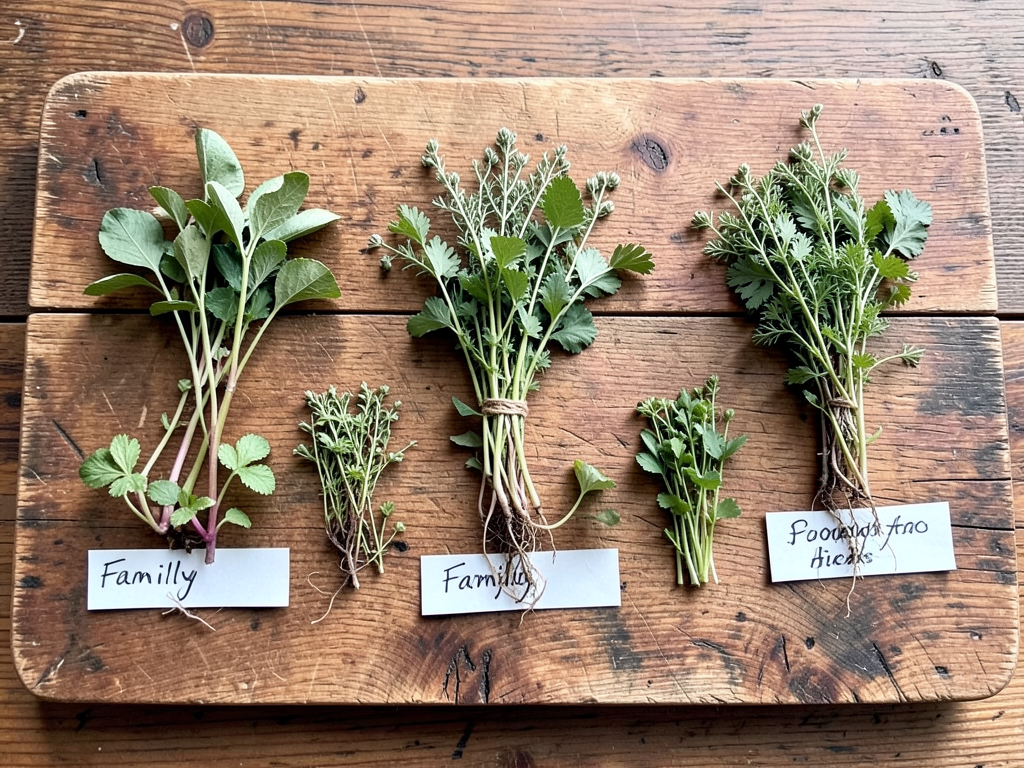
This is what separates intermediate foragers from beginners. Instead of learning plants one by one, learn the signature traits of entire plant families. Once you know a family’s pattern, every new plant in that group becomes easier to place—and dangerous outliers become obvious.
Five families cover most common wild edibles in North America and Europe. Memorize these and you’ll shortcut months of piecemeal learning.
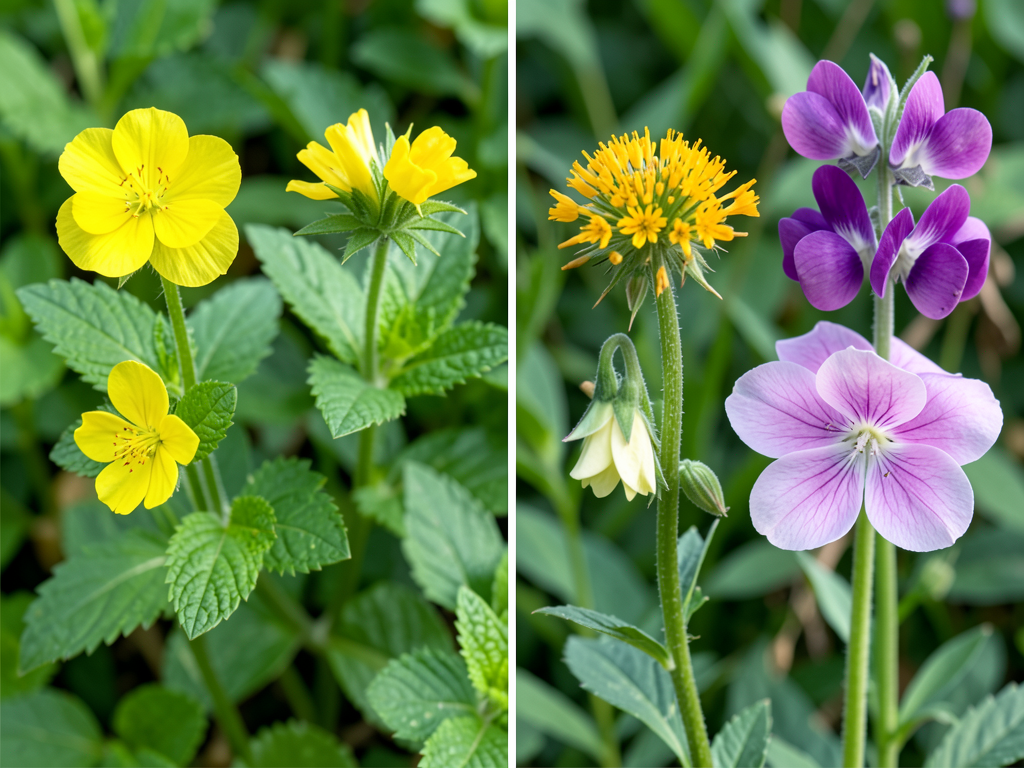
Mustard Family (Brassicaceae) — Safest for Beginners
Four petals in a cross shape, nearly always yellow or white, small and clustered at the stem top. Crush a leaf and nibble—if it tastes like mustard, radish, or peppery greens, you’re in the family. No toxic Brassicaceae produce that burn.
Common edibles: wild mustard, shepherd’s purse, watercress, garlic mustard, pepperweed.
Mint Family (Lamiaceae) — Square Stems Are the Tell
Square stems, opposite leaves, and a strong aromatic smell when crushed. All three present? You’re in Lamiaceae. Very few are toxic, and the ones that are smell medicinal or unpleasant rather than herbal.
Common edibles: wild mint, dead nettle, lemon balm, wild oregano, self-heal, henbit.
Carrot Family (Apiaceae) — Extreme Caution Required
Umbrella-shaped flower clusters (umbels), hollow stems, and feathery compound leaves. This family gives us wild carrot and wild parsnip—but also poison hemlock, water hemlock, and giant hogweed. The toxic members often smell musty, not carroty.
My rule for beginners: don’t harvest anything from the carrot family for your first year. Learn the family pattern. Learn the purple blotches on hemlock stems. Triple-confirm everything. Edibles are for experienced foragers only.
Legume Family (Fabaceae) — Pea Flowers and Pods
Butterfly-shaped flowers with a “banner, wings, and keel” structure, plus fruit in pods. Leaves usually compound with three leaflets (that’s why clover is here). No deadly members in North America, though some cause digestive upset raw in large quantities.
Common edibles: red and white clover, vetch flowers, black locust flowers. Note: wisteria flowers only—seeds and pods are toxic.
Rose Family (Rosaceae) — Five Petals, Familiar Fruits
Five separate petals (usually white or pink), numerous stamens, toothed leaves with stipules at the base. The fruits are generally edible—strawberries, blackberries, raspberries, rose hips, hawthorn berries. But don’t eat large quantities of crushed seeds from apples, cherries, or almonds—they contain cyanogenic compounds.
Common edibles: wild strawberry, blackberry, raspberry, rose hips, hawthorn, wild apple, serviceberry.
Step 4: Cross-Reference With at Least Two Sources
One app or one field guide is never enough. I use a regional guide as primary, then confirm with a second book or app like iNaturalist. Both must agree on habitat, season, size, and every feature—not just the name. If one source says 1–3 feet and your plant is six feet tall, you’ve got the wrong plant, even if the flowers match.
Step 5: The Universal Edibility Test (Survival Only)
The Universal Edibility Test is a survival protocol, not a daily foraging method. In normal situations, never eat anything you haven’t positively identified through steps 1–4. This is for genuine emergencies—lost, no supplies, no other option.
The protocol: Fast 8 hours. Separate the plant into parts (leaves, stems, roots, flowers—test each separately). Rub crushed plant on your inner wrist—wait 15 minutes for any reaction. Touch a piece to your outer lip for 3 minutes—tingling or burning? Discard. Place on tongue for 15 minutes without swallowing. Chew but don’t swallow for 15 minutes. If no reaction after all stages, swallow a tiny amount and wait 8 full hours. Then try a slightly larger portion.
This takes over 24 hours per plant part. It’s tedious and only catches acute toxicity—not long-term liver or kidney damage that accumulates over weeks. Memorize it, but positive botanical ID is always the smarter, safer path.
Essential Tools for Plant Identification
Beyond your eyes and brain, a few tools make identification dramatically more reliable.
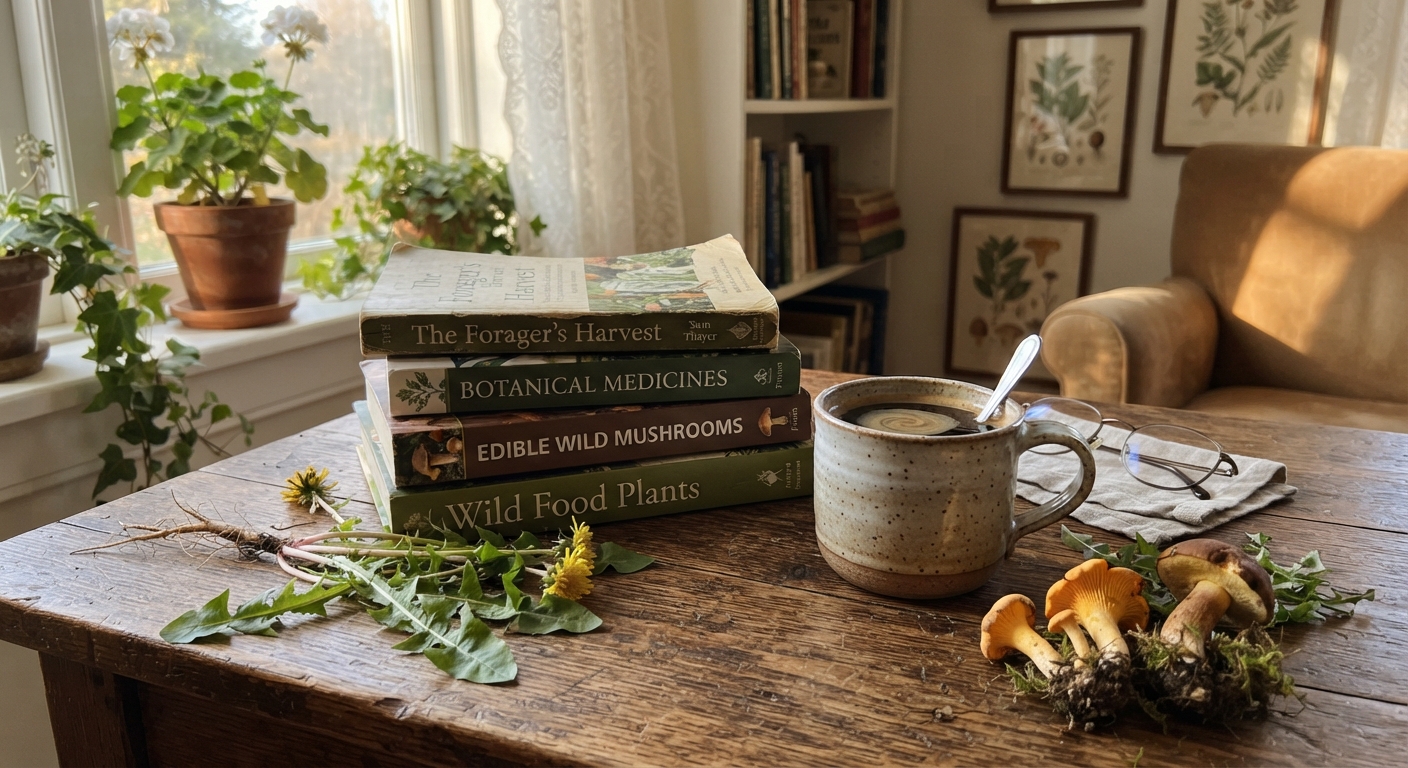
Regional field guide—physical. Phones die. A worn paperback works in any weather. Peterson Field Guide to Edible Wild Plants and Newcomb’s Wildflower Guide for North America. Food for Free by Richard Mabey for the UK.
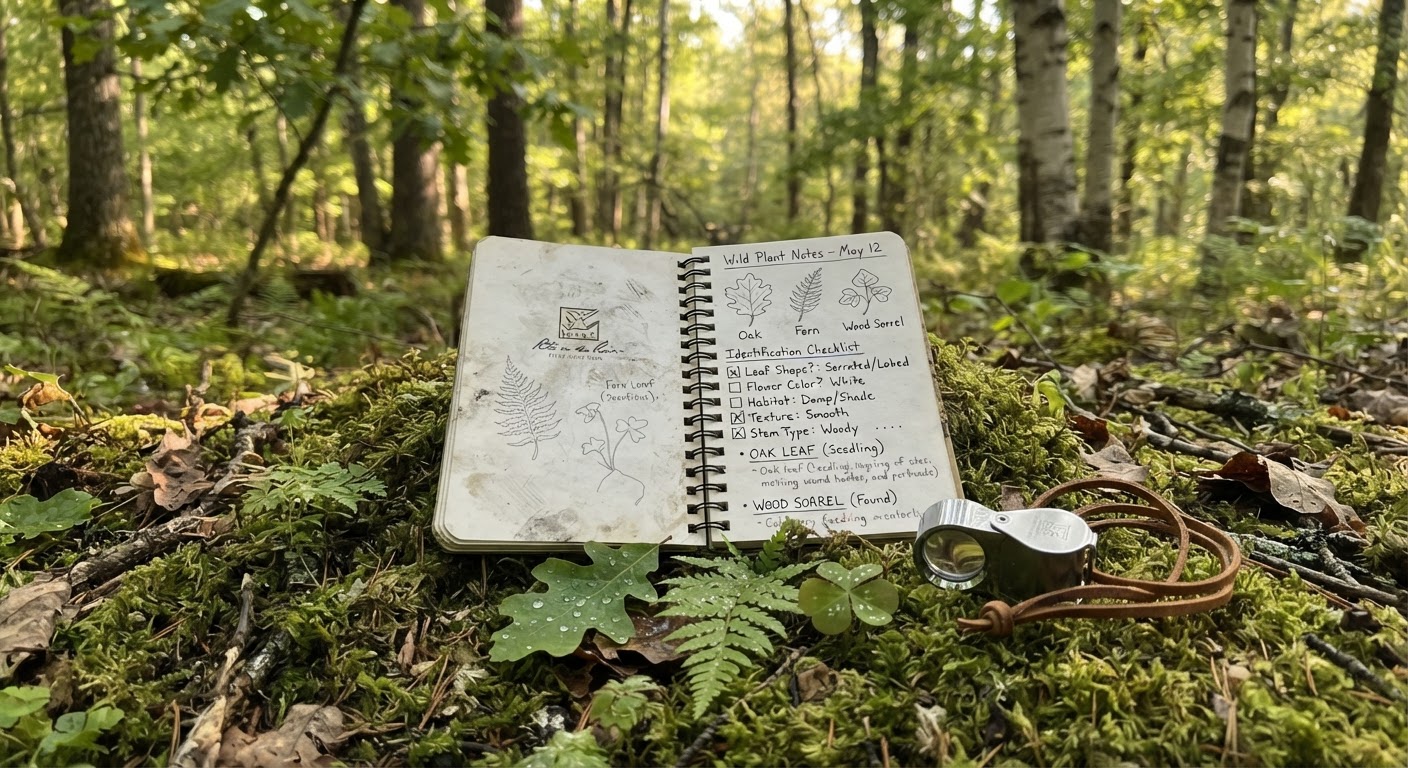
10x hand lens (loupe). A $10 loupe reveals whether that stem is hairy or smooth, whether those flowers are distinct or composite. I wear one on a cord around my neck on every foraging walk.
Plant ID app—confirmation only. iNaturalist and Seek are free and decent for common plants. But apps are confirmation tools, never primary identification. An app’s “92% match” on poison hemlock labeled as wild carrot? That 8% gap carries a body count.
Notebook and pencil. Sketch what you see—leaf shape, flower structure, stem cross-section. Drawing forces you to notice details you’d otherwise overlook.
Camera. Shoot from multiple angles: whole plant in habitat, close-up of leaves, close-up of flowers, stem at ground level.
Common Beginner Mistakes That Can Hurt You
I’ve watched hundreds of beginners make these. I’ve made most of them myself.
Matching one feature and stopping. The leaf looks right—so you stop checking. One bite of water hemlock root (misread as wild celery based on leaves alone) can kill. Match five features minimum.
Trusting an app without verification. I’ve seen leading apps call poison hemlock “wild carrot” at 92% confidence. Apps are starting points, never final authority.
Foraging in polluted areas. Roadsides = heavy metals. Industrial runoff downstream = concentrated contaminants. Dog-walking parks = a different contamination altogether. Know your site.
Eating too much of a new plant at once. Even correctly identified, your body might react. I know a forager who handles lamb’s quarters fine but gets sick from chickweed. Start tiny. Wait a day.
Ignoring the season. A plant you know in summer flower may look completely different as a spring rosette or winter stalks. Learn your target plants in all four seasons.
Seasonal Identification Tips
Spring (March–May)
Easiest season—fresh growth and flowers make features obvious. But it’s also when toxic lookalikes most resemble edibles. Focus on unmistakable early greens: dandelions, chickweed, dead nettle, wild garlic. Stay away from the carrot family until you’re experienced.
Summer (June–August)
Peak diversity. Abundant flowers make ID more reliable—the best season to build plant family knowledge. Mid-summer berries arrive: stick to the rose family (blackberries, raspberries). Learn the difference between aggregate berries (safe) and solitary berries on herbaceous plants (variable).
Fall (September–November)
Fruits, nuts, and roots. Falling leaves remove your best ID tool. Focus on distinctive fruits: persimmons, black walnuts, rose hips. Only dig roots from plants you positively identified in summer and marked.
Winter (December–February)
Hardest season. Herbaceous plants die back. Your toolkit shrinks to bark, buds, persistent fruits, and dried seed heads. Winter is for studying—books, herbarium visits, guided walks—not heavy harvesting.
When to Walk Away (And Feel Good About It)
Walking away is a skill—one of the hardest to learn and one of the most important.
The pressure to not go home empty-handed is real. But the plants don’t care about your ego, your hour-long drive, or your plans for wild-foraged pesto.
Walk away when:
- Any single feature doesn’t match exactly. Not close. Not “probably.” Exact.
- You feel rushed, tired, hungry, or distracted. Fatigue kills attention to detail.
- Something just feels wrong. Your subconscious processes details your conscious brain hasn’t caught yet. Trust it.
- The plant is the only one around. If there’s just one, you shouldn’t harvest it anyway—for ecological and safety reasons.
- You can’t confidently rule out toxic lookalikes. Knowing what a plant isn’t matters as much as knowing what it is.
I’ve walked away from hundreds of plants. Zero regrets. But I’ve heard ER stories that started with “I was pretty sure.”
Foraging connects you to the land, your food, the seasons, your senses. But it’s not a game. The plants have been here longer than we have, and they don’t make exceptions for enthusiasm.
Take your time. Build your knowledge plant by plant, family by family, season by season. The woods aren’t going anywhere.
Frequently Asked Questions
Can I trust plant identification apps to tell me if something is edible?
No—not as your primary tool. Plant ID apps using AI image recognition have improved dramatically, but they still misidentify toxic plants as edible ones with alarming frequency. Use apps as a starting point for your own research, never as a final authority. Cross-reference every app ID with a physical field guide.
What’s the single most reliable feature for identifying plants?
Flowers, when present. Flower structure is the least environmentally variable part of a plant—it doesn’t change much based on sun exposure, soil quality, or water availability the way leaves do. If you find a plant in flower, the flower is your best identification anchor. Count petals, note arrangement, check symmetry.
How long does it take to become confident at plant identification?
For common, unmistakable plants like dandelions and blackberries, you can be confident within a few weeks of regular practice. For broader competence—being able to identify most plants you encounter—expect about one to two years of consistent study. Foraging is a lifelong practice, and even experts with decades of experience consult their field guides regularly.
What’s the most dangerous beginner mistake?
Confirmation bias: deciding what a plant is based on one feature they recognize, then interpreting everything else to fit that conclusion. It’s incredibly easy to do and incredibly dangerous. The antidote is the system I’ve outlined: observe broadly first, match multiple features, cross-reference sources, and be willing to walk away.
Is the universal edibility test safe to use as my main identification method?
Absolutely not. The UET is a survival protocol for genuine emergencies—lost in the wilderness, no supplies, no communication—not a substitute for botanical identification. It takes over 24 hours per plant part, doesn’t detect long-term toxins, and still carries risk. Positive identification through a systematic method is vastly safer and more practical for everyday foraging.
Which plant family is the safest for absolute beginners?
The mustard family (Brassicaceae). The four-petaled cross-shaped flowers are unmistakable once you’ve seen them a few times, and every member produces that characteristic mustard-like, peppery taste when you chew a tiny leaf fragment. No toxic lookalikes produce that flavor. The mint family (square stems, opposite leaves, aromatic) is a close second.
Stay safe out there. Learn the system. Trust your senses. And when in doubt—put it down.
If you’re ready to take the next step, check out our guide to common edible weeds you can find in your backyard and our deep dive into poisonous lookalikes every forager should know.
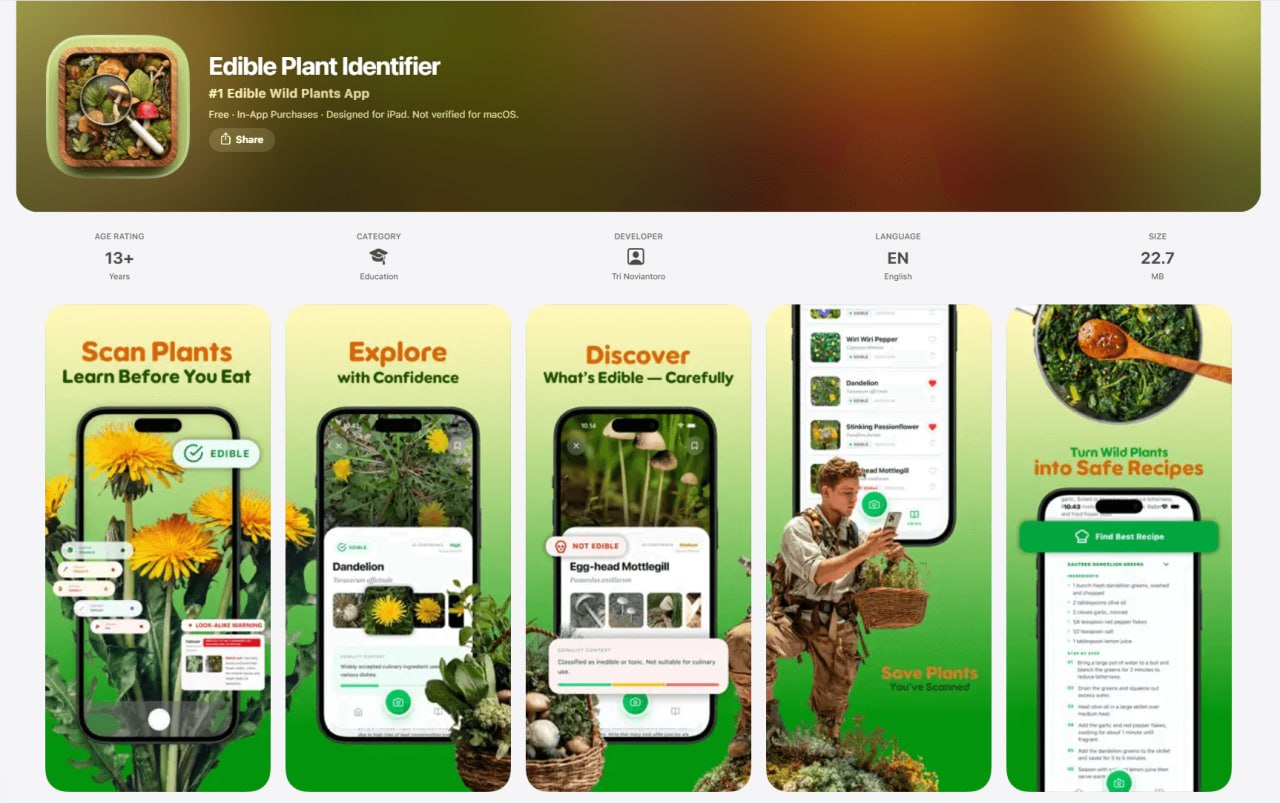
🌿 Identify Any Plant — Instantly
The five-step system in this guide works, but when you’re standing in a field staring at an unknown plant, seconds matter.
Edible Plant Identifier puts identification power in your pocket:
- 📸 Snap a photo — instant plant ID
- ☠️ Toxic lookalike warnings — stay safe
- 🍽️ Edible parts guide — know what to eat
- 📝 Foraging journal — track your finds