Hiking Alone Safety: 7 Food Mistakes That Can Ruin Your Trip
Most solo hiking disasters don’t start with a broken ankle or a sudden storm. They start smaller, and a lot earlier — usually the night before, when you toss a granola bar and a half bottle of water into your pack and figure “that’s enough.”
The pattern is so consistent I can practically predict it. You hike harder than you planned. The bar is gone by hour two. Your stomach starts growling around hour four, right when your legs go soft, and suddenly a trail that felt easy at the trailhead feels endless. That’s the moment — tired, hungry, alone, maybe lightheaded — when people make their worst decisions. They push through a climb they should’ve turned back on. They drink from a stream they shouldn’t. They eye a berry bush and take a chance.
Food mistakes while hiking alone aren’t just a comfort problem. They’re a safety problem, because hunger quietly degrades the judgment and coordination you need to keep yourself out of trouble. This guide covers the seven food mistakes that trip up solo hikers the most, and the exact fixes for each one.
Why Food Hits Solo Hikers Harder
Before the mistakes themselves, it’s worth understanding why eating wrong alone is riskier than eating wrong with a group.
When you hike with a partner, there’s slack in the system. You forget your snacks, and someone hands you half of theirs. You start bonking, and a friend notices you’ve gone quiet and makes you stop and eat. You misidentify a plant, and there’s a second pair of eyes to say “wait, that doesn’t look right.” When you’re alone, all of that slack disappears. There’s no shared food, no one watching for the early signs of low blood sugar, and no second opinion on a questionable berry.
The margin for error gets thinner too. A solo hiker who gets lightheaded on a steep section doesn’t have a spotter. A solo hiker who gets sick from a bad plant is alone with that mistake, possibly miles from help. None of this means you shouldn’t hike alone — some of the best trail days I’ve ever had were solo. It means the food part of your planning has to be tighter, because there’s no buffer behind it.
The 7 Food Mistakes Solo Hikers Make (and How to Fix Each)
Here’s the full list, then we’ll go through each one with a concrete fix. Skip around if you want — this is written to be skimmable.
| # | The Mistake | What It Actually Does | The Fix |
|---|---|---|---|
| 1 | Under-packing calories | Bonking, poor decisions, turning back early | Calculate real needs, then add 20% |
| 2 | No emergency reserve | Nothing left when the day runs long | Seal a backup ration you never touch |
| 3 | Food that needs cooking, but no reliable stove | Cold, uncooked meals when you’re exhausted | Pack no-cook options as the default |
| 4 | Ignoring water and electrolytes | Cramps, headaches, worse judgment | Pair every snack with a hydration plan |
| 5 | Eating unknown wild plants to “top up” | Poisoning, stomach sickness, lost time | Snack only on 100% positive IDs |
| 6 | Sugar-only snacks | Energy crash two hours in | Mix carbs, fat, and protein |
| 7 | No plan for food and animals | Attracting wildlife, losing your food | Store and pack smart from the start |
Mistake 1: Under-Packing Calories
This is the big one, and it’s almost always born of optimism. People plan their food for the hike they hope they’ll have — a moderate day, decent weather, steady pace — not the hike they actually get.
Solo hiking burns real fuel. A person with a loaded pack on hilly terrain can easily burn 400 to 700 calories an hour. A five-hour day can demand 2,000 to 3,500 calories on top of what your body uses just to keep you alive. Most people pack for the low end and live to regret it.
The fix: Estimate your burn honestly, then add 20%. A rough starting point for a moderate day hike is 250–350 calories per hour on trail. If you plan a six-hour hike, that’s roughly 1,500–2,100 calories of food, and I’d round up rather than down. Add extra for cold weather, heavy elevation gain, or a heavy pack — all three ramp up how fast you burn through fuel.
Mistake 2: No Emergency Reserve
Your main food and your emergency food are two different things, and treating them as one is how people end up with nothing. The granola bar you “kept for later” gets eaten at hour three, and suddenly “later” has no backup.
An emergency ration is food you carry specifically to not eat unless something goes wrong — the day runs long, the weather turns, you take a wrong turn and add three miles, or you have to wait out a storm.
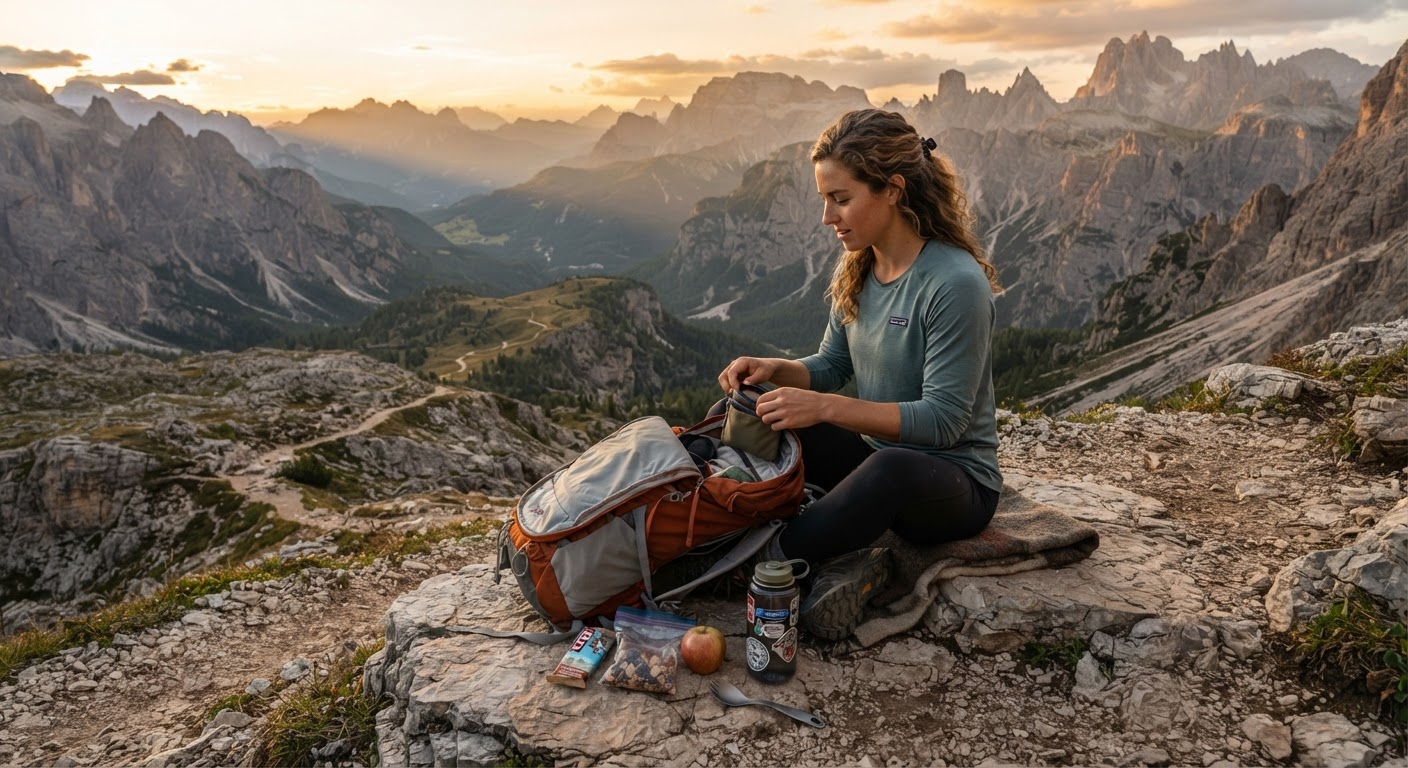
The fix: Seal a small, dense reserve separately from your main food and put it somewhere you won’t casually reach for it. A few hundred calories of something shelf-stable and unappetizing enough that you won’t snack on it for fun — think a sealed energy bar, a small pack of nuts, or a compact emergency ration block. The point isn’t to make it delicious; it’s to make it there when you actually need it.
Mistake 3: Food That Needs Cooking, but No Reliable Stove
On a multi-day trip, a stove is great. On a long day hike, it’s often dead weight — and the food you brought for it becomes useless the moment you realize you’re too tired to bother, or your fuel runs out, or the weather makes cooking miserable.
The specific trap: packing a “meal” that only works cooked, while treating it like it’ll be quick and easy in the field. It rarely is, especially when you’re already drained.
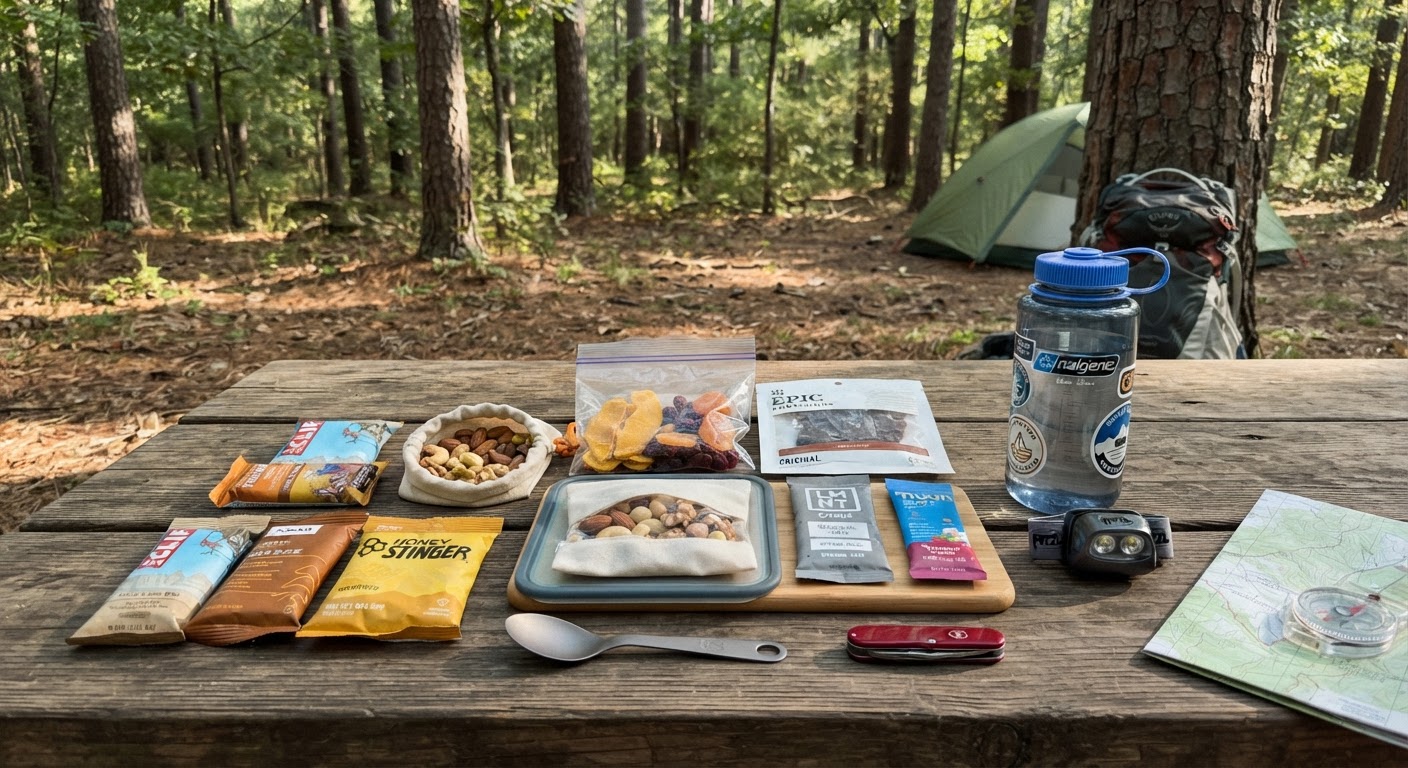
The fix: Make no-cook the default. Things you can eat cold, with no prep: nut butter packets, cured meat, hard cheese, trail mix, dried fruit, tortillas with peanut butter, shelf-stable protein bars. If you do bring a stove on an overnight, carry at least one full meal that needs zero cooking as your fallback — the day you’re too exhausted to cook is exactly the day you most need to eat.
Mistake 4: Ignoring Water and Electrolytes
People treat food and water as separate problems, but they’re the same system. Eat salty, dry trail food without enough water, and you’ll cramp up and get a pounding headache. Sweat for hours without replacing electrolytes, and you can drink plenty of water and still feel awful — a condition called hyponatremia, where you’ve diluted your body’s salt levels.
This one sneaks up on solo hikers because no one’s there to notice you’ve stopped sweating or gone foggy-headed.
The fix: Plan water as part of your food plan, not beside it. Know your water sources before you go, carry more than you think you need, and bring a way to treat water on longer routes. Pair salty snacks with extra water. For sweaty, hot, or multi-hour hikes, add an electrolyte source — a powder packet in your water or salty food like jerky and salted nuts. A rough hydration target is about half a liter per hour of moderate activity, more in heat.
Mistake 5: Eating Unknown Wild Plants to “Top Up”
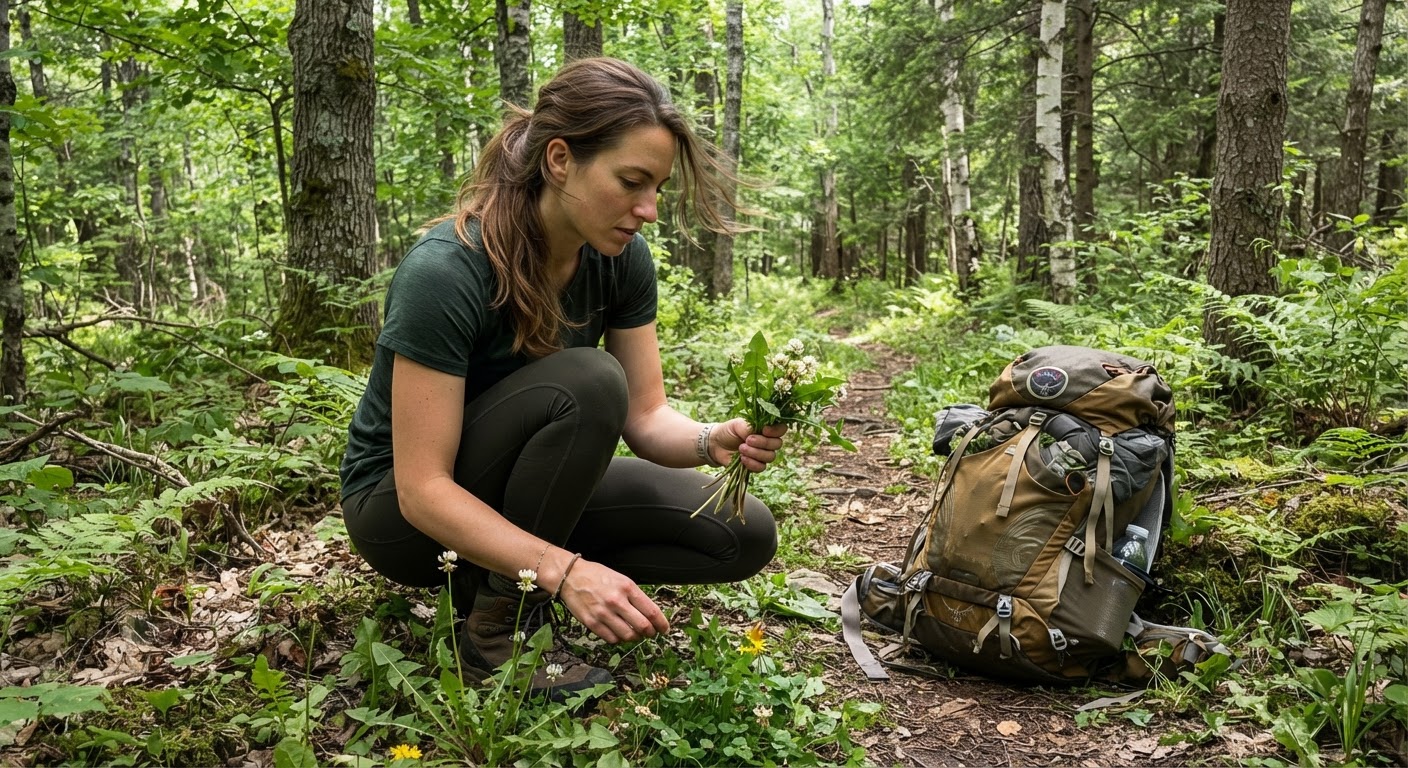
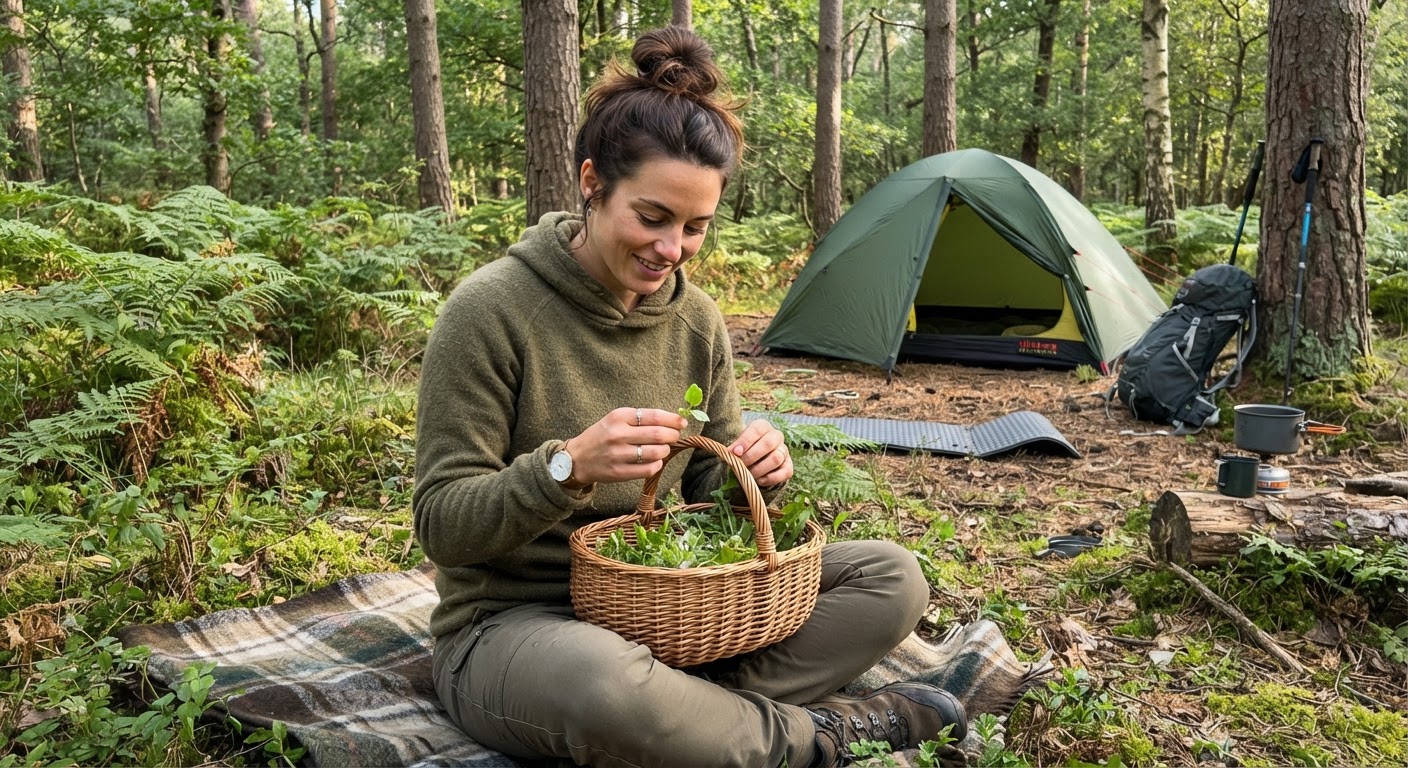
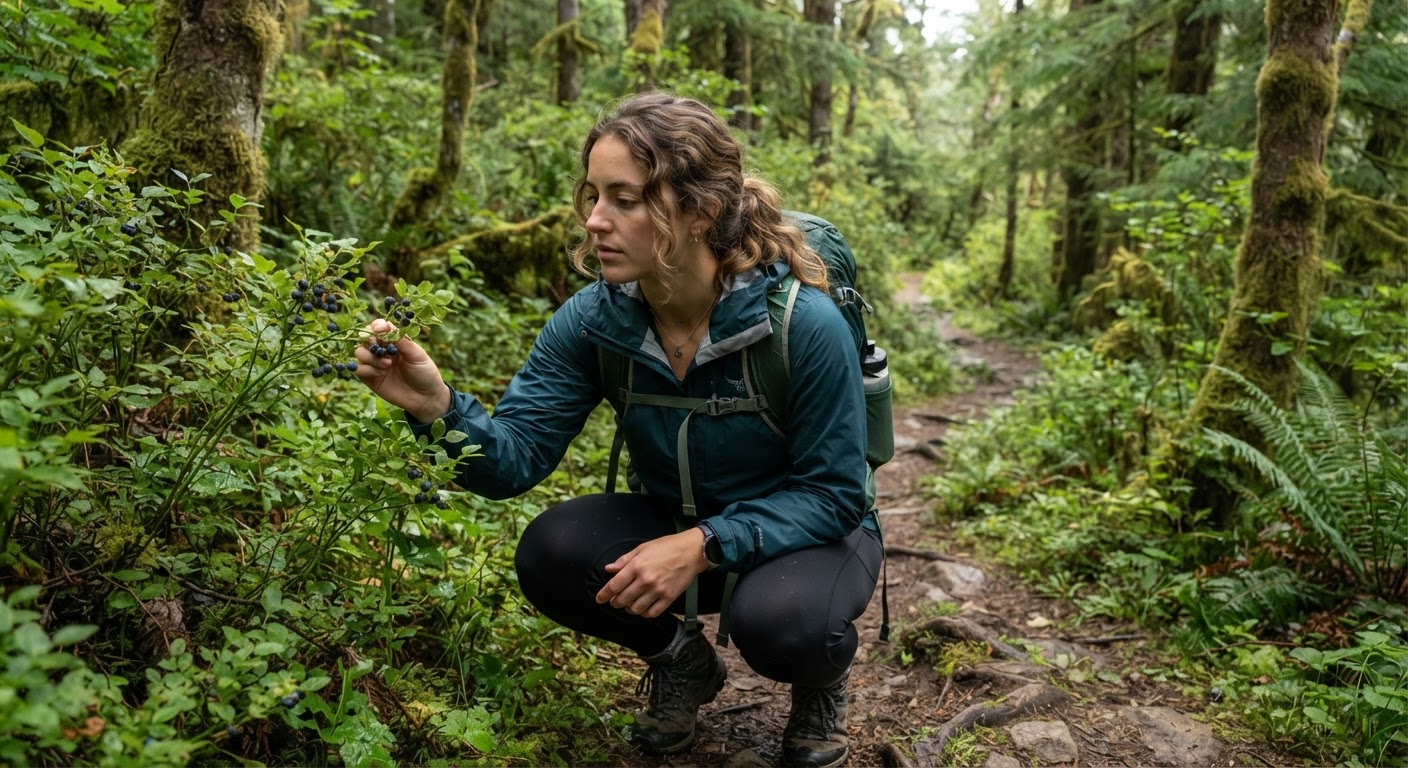
This is the mistake that connects hiking to foraging — and it’s a classic solo-hiker trap. You’re hungry, you’re alone, and the woods are full of things that look like food. A handful of berries here, a nibble of greens there. It feels resourceful. It’s usually not.
Foraging for wild food is a legitimate skill, but it’s a skill you build deliberately, with a field guide and positive identification — not something you improvise mid-hike when your blood sugar is low and your judgment is already compromised. That’s the worst possible headspace for identifying plants, because you’re primed to see what you want to see.
The fix: Treat “wild food” as a bonus you only take when you can identify it with 100% confidence, in a clear head, against a trusted source. If you’re curious about foraging, learn a handful of unmistakable plants before you’re hungry on a trail — dandelion, wild garlic, and blackberries are common starting points. Never eat an unknown plant to solve an immediate hunger problem. The fix for hunger on trail is the food in your pack, not the bush in front of you.
Mistake 6: Sugar-Only Snacks
A bag of candy, some fruit snacks, a sugary granola bar — it all sounds fine until you realize why it isn’t. Simple sugar hits fast and then crashes, usually within an hour or two. On a long solo hike, that crash lands right when you’re furthest from the car and most tempted to make a bad call.
The mistake isn’t sugar itself — a quick hit of glucose is genuinely useful right before a hard climb. The mistake is making sugar your only fuel.
The fix: Build snacks that combine the three macros. Carbs for fast energy, fat for sustained energy, protein for satiety and muscle repair. A mix that works: dried fruit and nuts, peanut-butter-filled pretzels, jerky with a fruit strip, cheese with crackers. Save the pure sugar for the specific moment you need a fast spike, not as your main supply.
Mistake 7: No Plan for Food and Animals
Depending on where you hike, your food can attract everything from squirrels and raccoons to bears. Losing your food to an animal is annoying. Attracting a bear is dangerous. Both are preventable.
The mistake is thinking “that won’t happen on my trail” — right up until a marmot chews through your pack while you’re taking a photo, or you wake up to a raccoon dragging your food bag into the brush.
The fix: Know the wildlife situation for your area before you go. In bear country, follow local guidance — which usually means a bear canister or hanging your food properly, cooking and eating away from where you sleep, and storing scented items (toothpaste counts) with your food, not in your tent. Even in non-bear areas, keep food sealed and close at hand during the day, and don’t leave it unattended. A zippered dry bag and some basic scent discipline solve most problems.
Step-by-Step: Plan Food for a Solo Hike the Right Way
The seven mistakes above are easier to avoid when you have a simple planning routine. Here’s the exact process I use, start to finish.
Step 1 — Know your real numbers. Estimate trail time honestly, including elevation gain. Multiply by 250–350 calories per hour for a baseline. Add 20% for safety margin. That’s your calorie target.
Step 2 — Pick food that can’t fail you. Default to no-cook, shelf-stable, high-energy foods. If you’re going overnight and bringing a stove, still pack one no-cook meal as backup.
Step 3 — Separate the reserve. Seal a few hundred calories of emergency food in its own spot, away from your main stash, and make a mental rule that it doesn’t get touched except in a real problem.
Step 4 — Pair every snack with water. Check your water sources and carry capacity, add electrolytes for long or hot days, and remember salty food means more water.
Step 5 — Account for the night before and the drive home. Most people plan food for the hike but forget the rest of the day. Have something ready for the drive back — a tired hiker with low blood sugar is a worse driver than they realize.
Here’s how a sample plan shakes out for different hike lengths:
| Hike Type | Time on Trail | Calories to Pack | Water to Carry | What That Looks Like |
|---|---|---|---|---|
| Short day hike | 2–3 hours | 600–900 | 1–1.5 L | 2 bars, a nut-butter packet, trail mix, plus a small reserve |
| Moderate day hike | 4–6 hours | 1,500–2,200 | 2–3 L | Full lunch, mixed snacks, electrolytes, sealed emergency ration |
| Long / high-gain day | 7–10 hours | 2,500–3,500 | 3–4 L + filter | Multiple meals, dense snacks, electrolytes, bigger reserve |
| Overnight | 2 days | 4,500–7,000 | Filter + carry | Breakfast + dinner + lunch + snacks per day, no-cook backup |
Pro Tips From Years on the Trail
A few things I learned the hard way, saved here so you don’t have to.
Eat before you’re hungry. By the time you feel hunger, your energy is already dropping. On a long hike, snack in small amounts every hour or so rather than waiting for one big meal. It keeps blood sugar steadier and your head clearer.
The “never-empty” rule. Make a habit of eating your emergency reserve only as a signal to turn around. If you’re reaching for it on a day hike, the hike has gone longer than planned, and the correct move is usually to start heading back, not to push on.
Test your food at home first. A new energy bar might taste great at the kitchen table and terrible at altitude. Don’t discover on mile six that you hate the one food you packed. Try everything once at home.
Pack a little variety. Palate fatigue is real. Eating the same bar all day makes you eat less, and eating less is exactly what you’re trying to avoid. Two or three different snack types go further than a bulk bag of one thing.
Keep a food-and-mood log for your first few hikes. Note what you ate, when you ate it, and how you felt at each point. After two or three trips you’ll know your personal burn rate and crash points better than any formula can tell you.
When in doubt, the wild plant stays in the ground. If you’re tempted to eat something you can’t positively identify, that’s your cue to eat the food in your pack instead. The bush will still be there on a future hike when you’ve learned to identify it properly.
FAQ
How much food should I bring on a solo day hike? A good baseline is 250–350 calories per hour of trail time, plus a 20% margin. For a six-hour hike, that’s roughly 1,800–2,500 calories. Pack for the hike you’ll actually have — cold weather, elevation, and a heavy pack all increase how much you burn.
What’s the single best food for hiking alone? There’s no one best food, but trail mix — nuts, dried fruit, and a little chocolate — is the closest thing to a perfect solo fuel. It’s calorie-dense, needs no cooking, combines carbs with fat, and doesn’t spoil. Pair it with water and some protein like jerky or a nut-butter packet.
Should I eat wild berries while hiking alone if I’m hungry? Only if you can identify them with 100% confidence in a clear head. Being hungry and alone is the worst state for plant identification. The right fix for trail hunger is the food in your pack, not a berry bush you’re guessing at.
Why do I get lightheaded even when I’ve eaten enough? Lightheadedness on trail is often dehydration or low electrolytes, not low calories. If you’ve eaten but feel foggy, check your water and salt intake. Drink steadily, and add electrolytes on long, hot, or sweaty hikes.
Is it dangerous to hike alone if I run out of food? Running low on food alone is manageable if you have an emergency reserve and good judgment — the danger comes from the decisions hunger leads to, like pushing on when you should turn back or eating something questionable. An emergency ration plus the discipline to turn around early are what keep you safe.
How do I keep animals from getting into my food? Store food sealed and close at hand, never leave it unattended during the day, and in bear country follow local rules — usually a bear canister or proper food hang, cooked and eaten away from where you sleep, with scented items stored alongside the food.
What should I eat right before a solo hike? A balanced meal with slow carbs, some protein, and a little fat, eaten one to two hours before you start. Oatmeal with nuts, eggs with toast, or similar. Skip the giant sugary breakfast — it’ll spike you and drop you just as the trail gets hard.
The Bottom Line
Food mistakes on a solo hike are sneaky because none of them feel dangerous in the moment. A skipped snack, a light pack, a “quick look” at a berry bush — each one seems small until they stack up on the back half of a long day, when you’re tired and alone and every choice counts double.
The fix isn’t complicated. Plan your calories honestly and add a margin. Carry a reserve you never casually touch. Default to food that works with zero prep, pair every bite with water, and leave unknown plants in the ground. The difference between a great solo hike and a miserable — or dangerous — one usually comes down to whether you treated food as a first-class part of your safety plan, or as an afterthought at the trailhead.
When I’m out alone, the single most useful backup I carry is certainty about what’s safe to eat. That’s why I built Edible Plant Identifier — point your camera at a plant and it tells you whether it’s a known edible, with identification notes and lookalike warnings for the risky ones. It works fully offline, so it’s still there on the trail where your signal isn’t. It won’t replace real judgment, and it won’t replace the food in your pack — but when you’re tired, hungry, and alone, a clear answer beats a guess every time.