Three years ago, I spent $47 on heirloom tomato seeds, premium potting mix, and a drip irrigation kit. I staked them. I fertilized them. I sang to them, probably. By August, I had harvested exactly four tomatoes — and a thriving, completely uninvited patch of purslane that had spread across every inch of bare soil between the tomato cages.
The tomatoes got blossom-end rot. The purslane — the “weed” I’d been pulling out and throwing into the compost — was the most nutritious green in the entire garden. It had more omega-3 fatty acids than any other leafy vegetable. It needed zero water beyond what rain provided. And I had been treating it like garbage.
That was the summer I stopped fighting weeds and started growing them on purpose.
This guide covers everything I’ve learned since: which wild edibles are actually worth growing, how to source them without damaging natural populations, the surprisingly simple setup they need, and how to harvest so the plants keep producing month after month. If you can grow a weed — and you definitely can — you can grow a wild food garden.
Why Wild Plants Outperform Garden Vegetables — and Why Most Gardeners Overlook Them
Conventional garden vegetables are domesticated divas. Thousands of years of selective breeding turned wild ancestors into the tomatoes, lettuce, and broccoli we know today — and in the process, stripped away most of their survival instincts. A modern head of iceberg lettuce bolts the moment temperatures hit 80°F. A wild chicory will laugh at 95°F, produce greens for six months straight, and reseed itself without being asked.
Here’s what makes wild edibles fundamentally different from garden crops:
They’re adapted to your local conditions already. A Cherokee purple tomato was bred in Tennessee. It might throw a tantrum in your Pacific Northwest clay. But the chickweed growing in your driveway? That plant chose your exact soil, your exact rainfall, your exact temperature swings, and decided conditions were fine. Wild plants are locally adapted in a way no seed catalog can replicate.
They handle neglect. Domesticated vegetables have been bred to produce maximum yield under ideal conditions — fertile soil, consistent water, pest control. Take any of those away and they collapse. Wild plants evolved to survive drought, poor soil, insect pressure, and competing vegetation. They’re not optimized for yield. They’re optimized for not dying. That makes them far more forgiving for beginners and busy gardeners.
They’re nutritional powerhouses. Compare purslane to spinach: purslane has more vitamin E, more vitamin C, more beta-carotene, more magnesium, and seven times the omega-3s. Wild dandelion greens have more calcium than kale. Lamb’s quarters has more protein per calorie than cooked beans. Plants that fight for survival build more defensive compounds — and many of those compounds happen to be the same antioxidants and phytonutrients that benefit human health.
They reproduce themselves. Most garden vegetables are annuals that need to be replanted every year. Many wild edibles are perennials or aggressive self-seeders. Plant them once, harvest forever. That’s not an exaggeration — three of the plants in this guide have been producing in my garden for two years straight from a single seeding.
The 10 Best Edible Wild Plants to Grow — Ranked by Ease
Not every wild edible makes a good garden plant. Some are too aggressive (looking at you, Japanese knotweed). Some taste terrible outside their native habitat. And some are annuals that produce so little biomass you wonder why you bothered.
The table below lists the 10 I’ve had the most success with, ranked from “impossible to kill” to “requires basic attention.”
| # | Plant | Difficulty | Growth Habit | Harvest Window | Edible Parts | Soil Preference | Notes |
|---|---|---|---|---|---|---|---|
| 1 | Purslane (Portulaca oleracea) | Zero effort | Spreading annual | Summer through frost | Leaves, stems, seeds | Any — thrives in compacted, poor soil | Highest omega-3 content of any leafy green. Grows in sidewalk cracks. Literally can’t fail. |
| 2 | Dandelion (Taraxacum officinale) | Zero effort | Taproot perennial | Spring to fall (leaves), fall (roots) | Leaves, flowers, roots | Any, including heavy clay | Every part is edible. More nutritious than kale. Blanch leaves under a pot for milder flavor. |
| 3 | Lamb’s Quarters (Chenopodium album) | Minimal | Upright annual | Late spring to frost | Leaves, seeds | Disturbed soil, rich or poor | Related to quinoa. Leaves taste like spinach but milder. Self-seeds aggressively — thin seedlings. |
| 4 | Chickweed (Stellaria media) | Minimal | Low-spreading annual | Fall through spring | Leaves, stems, flowers | Moist, rich soil | Cool-season green. Dies back in summer heat. Perfect winter/spring filler. |
| 5 | Stinging Nettle (Urtica dioica) | Easy | Upright perennial | Spring to early summer | Young leaves and stems | Rich, moist soil | Needs dedicated bed — spreads by rhizomes. Cooking destroys sting. One of the most nutrient-dense greens available. |
| 6 | Wild Garlic / Field Garlic (Allium vineale) | Easy | Bulb perennial | Year-round (leaves), summer (bulbs) | Leaves, bulbs | Well-drained, any fertility | Tastes like mild garlic-chives. Mow it, ignore it, it doesn’t care. |
| 7 | Violet (Viola sororia / odorata) | Easy | Low perennial | Spring (flowers, leaves) | Flowers, young leaves | Moist, partial shade | Flowers are sweet and beautiful in salads. Leaves are mild and mucilaginous — good thickener for soups. |
| 8 | Wood Sorrel (Oxalis spp.) | Easy | Spreading perennial | Spring to fall | Leaves, flowers, seed pods | Moist, well-drained | Bright lemony flavor. Contains oxalic acid — use as a garnish, not a main green. |
| 9 | Miner’s Lettuce (Claytonia perfoliata) | Moderate | Low annual | Late winter to spring | Leaves, stems, flowers | Cool, moist, rich | Prefers cool weather. Bolts in heat. Best as a winter/early spring crop. |
| 10 | Amaranth (Amaranthus spp.) | Moderate | Tall annual | Summer to fall | Leaves, seeds | Any well-drained | Leaves cook like spinach. Seeds are a grain. Gets tall (4-6 feet) — needs space. |
Two plants I’m deliberately leaving off this list: plantain (Plantago major) — it’s edible but the texture never stops being leathery no matter how you cook it — and curly dock (Rumex crispus), which accumulates oxalates to levels I’m not comfortable recommending.
How Wild Plants Are Fundamentally Different from Domesticated Crops
Before you stick seeds in the ground, there’s one concept that’ll save you months of frustration: domesticated plant advice does not apply to wild edibles.
Every gardening blog assumes you’re growing plants that evolved to depend on humans. Wild plants evolved to survive without us. Here’s how that changes everything:
Stop amending your soil. Most wild edibles prefer lean, disturbed soil. Purslane and lamb’s quarters actually grow better in poor, compacted ground than in rich compost. When I first grew lamb’s quarters in heavily composted beds, the plants shot up five feet tall, produced tough, bitter leaves, and flopped over in the first windstorm. The ones that self-seeded into the gravel path next to the beds stayed compact, tender, and upright. Wild plants in rich soil behave like domesticated plants on fertilizer: leggy, weak, and less flavorful.
Water less than you think you should. Nettle likes moisture. Pretty much everything else on this list prefers to dry out between waterings. Purslane is a succulent — overwater it and the leaves turn mushy and lose their characteristic crunch. Dandelions in dry soil produce more concentrated, flavorful leaves. If you’re watering wild edibles on the same schedule as your lettuce, you’re overdoing it.
They’ll outcompete each other. Domesticated vegetables have been bred to tolerate crowding. Wild plants haven’t. Give lamb’s quarters a foot of space and it’ll grow into a four-foot bush with hundreds of tender leaves. Crowd three of them into a square foot and you’ll get three scraggly, bolting stems. Thin ruthlessly.
Bolting is normal — and sometimes desirable. When lettuce bolts, it’s game over. When dandelions, chickweed, or lamb’s quarters bolt, they’re just entering a different harvest phase — flowers, seeds, and in some cases, the flowering stems themselves are edible. Don’t pull a wild plant just because it’s flowering. Learn which flowers are worth harvesting.
Step 1: Sourcing Your Starter Plants — Seeds, Cuttings, and Ethical Transplanting
You have four options for getting wild plants into your garden. Here they are, from easiest to most ethically complex:
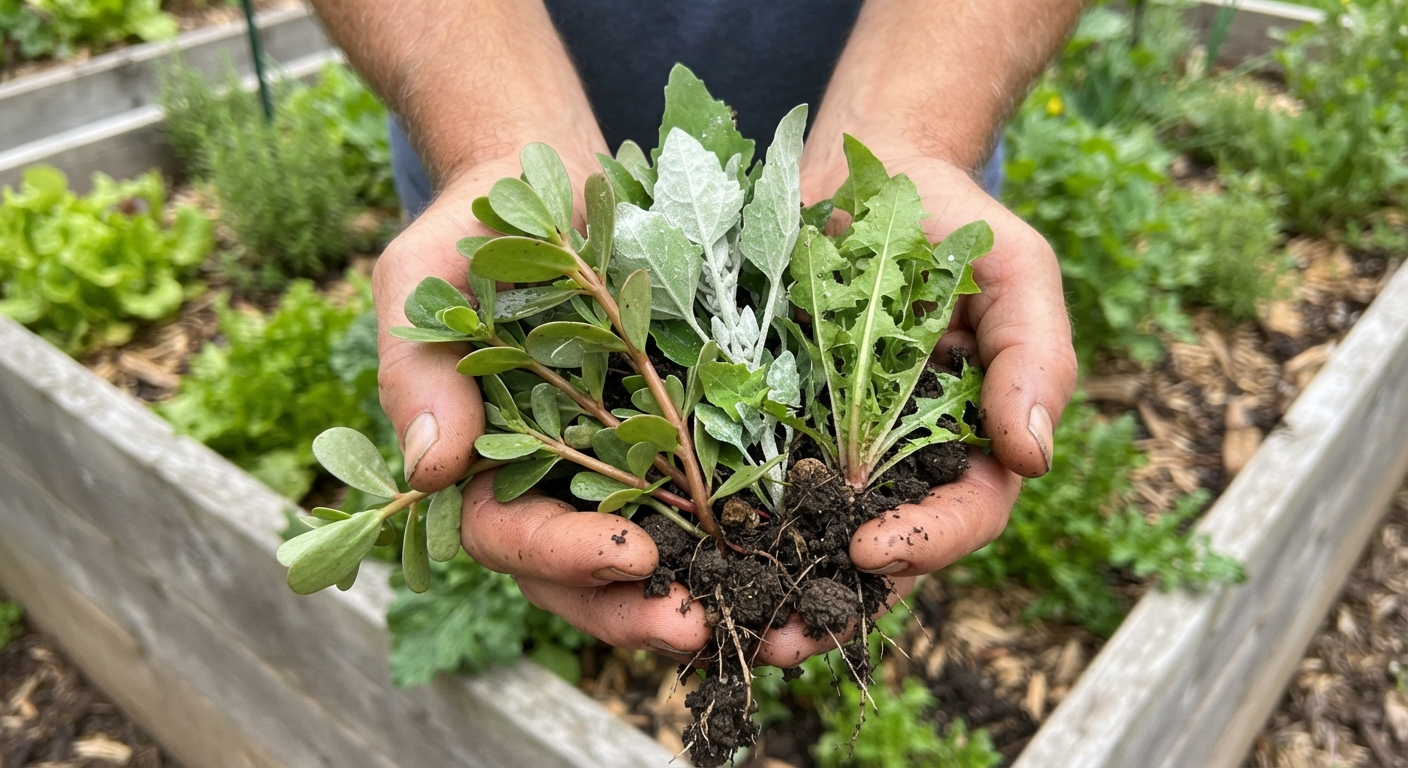
Option A: Buy seeds (easiest, most reliable). Yes, you can buy purslane seeds. And dandelion seeds. And nettle seeds. Companies like Strictly Medicinal Seeds, Johnny’s Selected Seeds, and Baker Creek offer cultivated varieties of wild edibles — often with improved flavor or growth habits. “Golden purslane” is more upright and easier to harvest than wild purslane. “French dandelion” varieties like ‘Vert de Montmagny’ have broader, more tender leaves. Start here if you want predictable results.
Option B: Take cuttings or divisions from a friend’s garden. This is my preferred method for spreading perennials. Once someone has an established nettle patch or wild garlic colony, they’re usually thrilled to give away divisions. For violets and wood sorrel, dig a small chunk of the colony — roots, soil, and all — and transplant directly. Water once. That’s usually all it takes.
Option C: Collect seeds from wild plants (do this responsibly). The ethics here are straightforward: take no more than 10% of the seeds from any single plant population. For common species like dandelion and lamb’s quarters, this is almost impossible to violate — they produce thousands of seeds per plant. For less common species in sensitive habitats, take nothing. Never collect from parks or protected areas. Roadsides are fine for common weeds but avoid plants growing within 50 feet of heavy traffic — they accumulate exhaust particulates.
Option D: Transplant entire wild plants (don’t, unless you know what you’re doing). Digging up wild plants kills most of them. The root damage from transplanting, combined with the shock of moving to different soil and light conditions, means survival rates are low. You’re also removing a plant from its ecosystem. The exception: rescuing plants from construction sites or areas about to be developed. In that case, dig deep, keep the root ball intact, transplant immediately, and water heavily for the first two weeks.
Step 2: Preparing the Growing Space — Wild Plants Don’t Need What You Think
Here’s the setup that’s worked best across three seasons of trial and error:
Pick the right location. Most wild edibles want full sun — six hours minimum. Violets and chickweed will tolerate partial shade. Nettles need consistent moisture, so plant them near a downspout or in a low spot where water collects. Everything else? Give them the sunniest, most neglected corner of your yard.
Skip the compost. Skip the fertilizer. Clear the area of existing weeds (irony noted), rough up the top two inches of soil with a rake, and stop. That’s your soil preparation. If you absolutely must add something, a thin sprinkle of sand improves drainage for Mediterranean species like purslane. Nothing more.
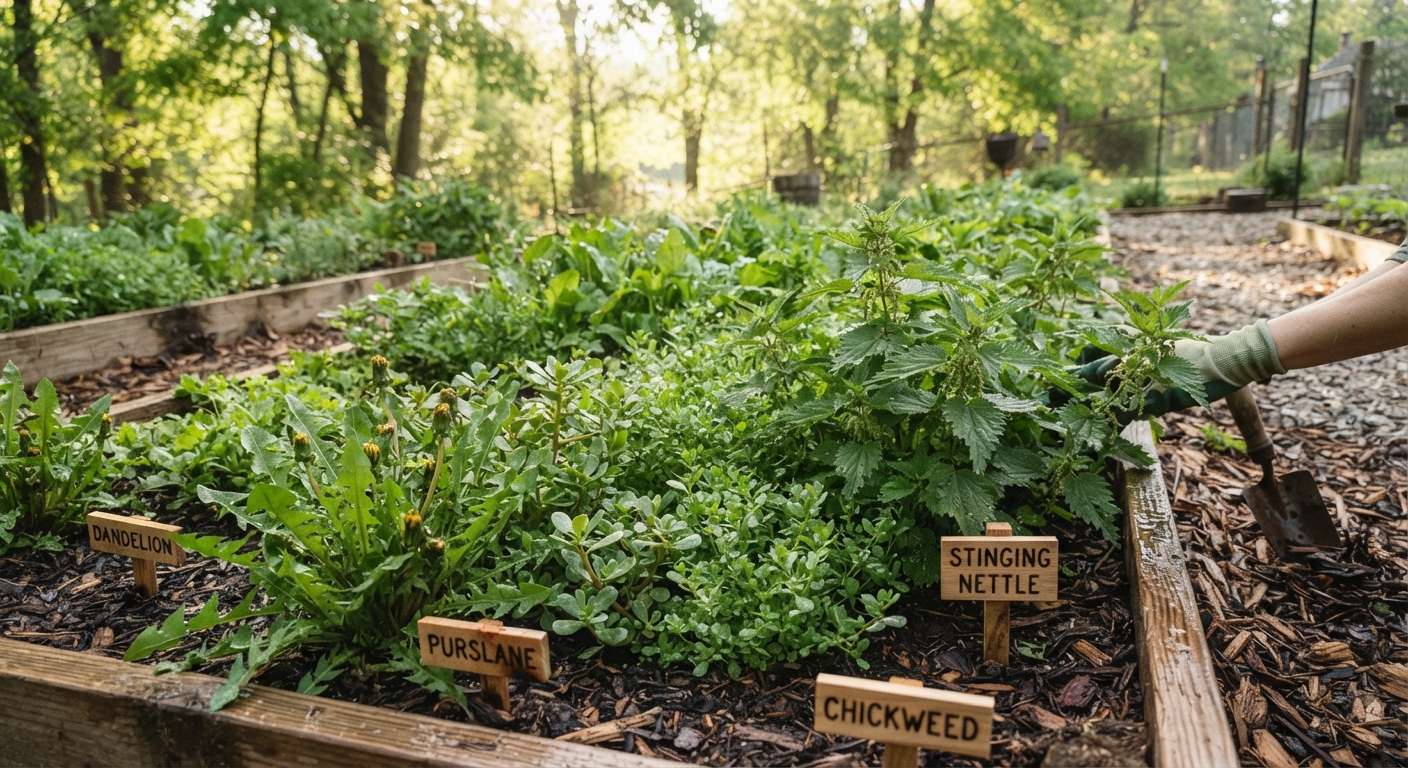
Define your beds — or don’t. I grow wild edibles two ways: in dedicated beds for plants that spread aggressively (nettle, wild garlic, violets), and scattered throughout my regular vegetable garden for everything else. The scattered approach works surprisingly well — purslane as a living mulch under tomatoes, chickweed filling gaps in the winter garden, lamb’s quarters as a “trap crop” that attracts aphids away from your precious kale.
For aggressive spreaders, use barriers. Nettles will colonize every square inch of moist soil you give them. Either plant them in a container sunk into the ground, or install a root barrier — 12-inch-deep metal or heavy plastic edging around the bed. Wild garlic spreads more slowly but still benefits from containment. Everything else on the list is easily managed by pulling unwanted volunteers.
Step 3: Planting Techniques for Each Growth Type
Different wild edibles need different starting approaches. Here’s the breakdown:
Direct-seed these directly in the garden:
- Purslane — Surface-sow. Seeds need light to germinate. Scatter on top of soil, press down gently, mist with water. Germinates in 4-10 days when soil temperatures are above 65°F. Thin to 6-8 inches apart.
- Lamb’s quarters — Sow 1/4 inch deep. Germinates in 5-14 days. Thin to 12 inches apart. These get big.
- Chickweed — Surface-sow in late summer or early fall. Likes cool soil for germination. Thin to 4-6 inches.
- Dandelion — Sow 1/4 inch deep in early spring or fall. Thin to 6-8 inches. For blanched, less bitter leaves, cover established plants with an upside-down pot for 1-2 weeks before harvest.
- Amaranth — Sow 1/4 inch deep after all frost danger passes. Thin to 18 inches. These are tall.
Start these indoors or buy as transplants:
- Stinging nettle — Seeds need cold stratification (4-6 weeks in the refrigerator in damp sand). Alternatively, buy root cuttings or established plants. Plant 18 inches apart.
- Violet — Best started from divisions, not seeds. Seeds need double dormancy (warm then cold period) and are slow to germinate.
Just shove these in the ground:
- Wild garlic bulbs — Separate cloves, plant 2 inches deep in fall. That’s it.
- Wood sorrel — Dig a chunk from an existing patch with roots attached. Plant at the same depth. Water once.
Timing note: Most of these plants prefer cool soil for germination. Early spring and early fall are the ideal planting windows. Summer-planted wild edibles often germinate poorly unless you’re diligent about keeping the soil surface moist.
Step 4: The Minimal-Maintenance Care Routine
Wild plants don’t need a care schedule. But they do respond to a few well-timed interventions:
Watering: Water thoroughly after planting to establish root contact. After that, water only when the top inch of soil is bone dry. Nettles are the exception — they want consistently moist soil, especially in their first year.
Weeding: Yes, you’ll still need to weed. The plants you want (dandelion, purslane, lamb’s quarters) compete with the plants you don’t want (crabgrass, bindweed, thistle). The difference is that mature wild edibles shade out weeds better than most garden vegetables once established.
Thinning: This is the step beginners skip and regret. Lamb’s quarters plants spaced 12 inches apart produce more edible biomass than six plants crammed into the same area. Thin early, thin hard. Eat the thinnings — baby lamb’s quarters and dandelion seedlings are tender enough for salad straight from the ground.
Mulching (optional): A thin layer of straw mulch helps retain moisture for moisture-loving species like nettle and chickweed. For purslane and dandelion, skip mulch entirely — they prefer warm, dry soil and will self-seed more readily into bare ground.
Fertilizing: Don’t. Wild plants on fertilizer produce rapid, weak growth with diluted flavor and fewer defensive phytochemicals. The nutritional density that makes these plants valuable comes partly from the stress of growing in lean soil.
Winter prep: Most of these plants don’t need winter protection. Dandelions, wild garlic, and violets are fully cold-hardy. Chickweed grows actively through winter in all but the coldest climates. Purslane and lamb’s quarters will die with frost — but they’ll have dropped thousands of seeds that’ll sprout next spring without you lifting a finger.
Growing in Containers: Wild Edibles for Apartments and Small Spaces
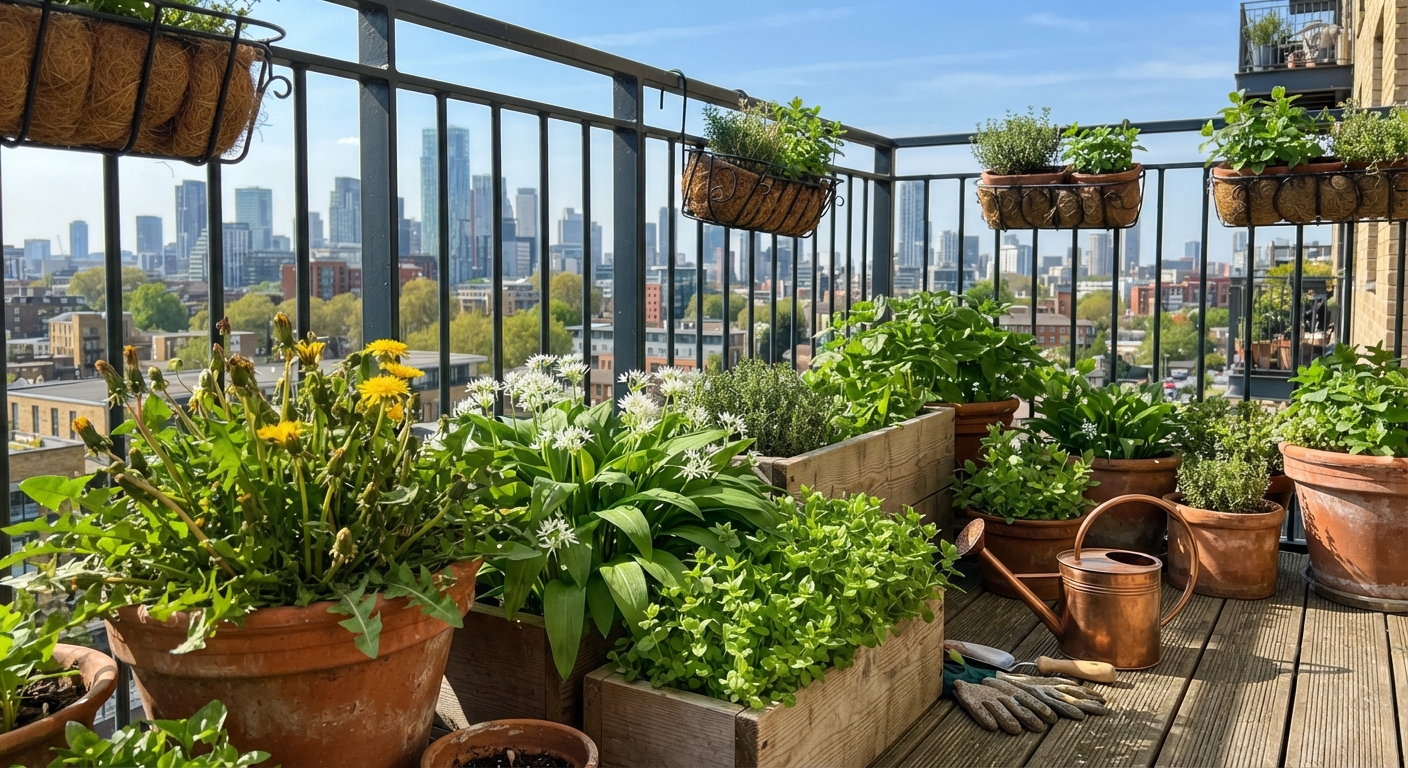
No yard? No problem. Several wild edibles perform beautifully in containers — sometimes even better than in the ground.
Best plants for containers:
- Purslane — The ultimate container plant. A 10-inch pot produces salad greens all summer. Trailing varieties spill beautifully over edges.
- Wild garlic — A 6-inch-deep pot of wild garlic on a kitchen windowsill provides year-round chive-like greens.
- Violets — Shallow-rooted and shade-tolerant. Perfect for balcony pots that don’t get full sun.
- Chickweed — A shallow tray of chickweed on a cool windowsill produces greens all winter.
- Wood sorrel — Tiny root system, loves container life.
Container rules for wild plants:
- Use the worst potting mix you can find. Not kidding. Cheap, sandy, low-organic-matter mix outperforms premium compost-heavy blends for most wild edibles.
- Drainage holes are non-negotiable. Wild plants rot in standing water faster than domesticated ones.
- Don’t fertilize. Ever. Container-grown wild edibles on fertilizer turn leggy and bland.
- Group by water needs. Nettle in one container (frequent water), purslane in another (infrequent water). Don’t mix moisture-lovers with drought-lovers in the same pot.
A balcony setup that actually works:
- One large terra cotta pot: purslane trailing over the edges, wild garlic poking up through the center
- One window box: chickweed and violets for cool-season greens
- One deep pot: a single dandelion plant for occasional leaf harvests
That’s enough to add wild greens to your meals three or four times a week from spring through fall.
Seasonal Growing and Harvest Calendar
The beauty of a wild edible garden is that something is always in season. Here’s what you’ll be harvesting month by month:
| Season | Planting Tasks | Harvesting | What’s at Peak |
|---|---|---|---|
| Early Spring (Mar-Apr) | Sow dandelion, chickweed, nettle seeds. Divide violets. | Chickweed, wild garlic leaves, violet flowers and leaves, overwintered dandelion greens | Chickweed (last harvest before summer die-back), violet flowers |
| Late Spring (May-Jun) | Sow purslane (after frost). Sow lamb’s quarters. Thin spring seedlings. | Nettle tops, wild garlic bulbs, chickweed, dandelion leaves and flowers | Stinging nettle (young shoots are the prize), dandelion flowers |
| Summer (Jul-Aug) | Sow amaranth. Collect purslane seeds for next year. | Purslane, lamb’s quarters, amaranth leaves, dandelion leaves (bitter but usable), wood sorrel | Purslane and lamb’s quarters at their most productive |
| Early Fall (Sep-Oct) | Sow chickweed for winter harvest. Plant wild garlic cloves. Sow dandelion. | Lamb’s quarters seeds (grain), amaranth seeds, dandelion roots, purslane, chickweed | Dandelion roots (sweetest after first frost), amaranth grain |
| Late Fall (Nov-Dec) | Minimal — let self-seeders do their thing. | Chickweed, wild garlic leaves, violet leaves (mild enough for raw salads now), dandelion greens | Chickweed and wild garlic — the winter workhorses |
| Winter (Jan-Feb) | Plan next year’s layout. Start violet divisions indoors. | Chickweed (in mild climates), wild garlic leaves, any dandelion greens that survived | Chickweed — this is its moment |
A note on dandelion bitterness: Dandelion leaves get progressively more bitter as the season goes on. Early spring leaves are mild enough for raw salads. Late summer leaves need blanching or cooking. First-frost leaves get sweet again. The bitterness isn’t a flaw — it’s what makes dandelion an excellent digestive bitter — but don’t expect the same flavor profile in July that you got in April.
Common First-Season Mistakes — and How I Made Them So You Don’t Have To
Mistake 1: Planting everything in rich, amended soil. My first-year nettle patch in compost-rich soil grew seven feet tall, produced stems as thick as my thumb, and the leaves were so tough they could’ve been used as sandpaper. The second year, in unamended clay, the plants topped out at four feet and the leaves were tender and flavorful. Wild plants on rich soil act like teenagers who inherited a trust fund: they get big, lazy, and unpleasant.
Mistake 2: Overcrowding. I planted nine lamb’s quarters seedlings in a two-foot row because they looked so small and innocent. By July, I had a tangled jungle of seven-foot plants, most of which had bolted from stress. Two plants in that same space would have produced more usable greens than all nine combined. Space plants according to the table above. Then double it. No, really.
Mistake 3: Treating bolting like a failure. A customer at a plant sale once asked me how to stop her purslane from flowering. The answer is: you don’t. Purslane flowers produce edible seeds. Lamb’s quarters flowering stems are tender enough to sauté. Dandelion flowers make wine and fritters. Bolting is only a problem if you’re attached to leaf production specifically — and even then, cutting flower stalks early often triggers a new flush of leaves.
Mistake 4: Ignoring the self-seeding. Purslane produces roughly 50,000 seeds per plant. Lamb’s quarters isn’t far behind. If you let every plant go to seed, next year’s garden will be wall-to-wall wild edibles with nowhere to walk. Solution: designate one or two plants per species as seed producers and harvest or pull the rest before they set seed. You’ll have more than enough volunteers next spring without turning your garden into a monoculture.
Mistake 5: Waiting too long to harvest. Wild greens are at their best when young and actively growing. Mature lamb’s quarters leaves develop a slightly tough, dusty texture. Mature purslane stems get woody at the base. Nettles past knee-height start getting fibrous. Harvest early, harvest often, and the plants will keep pushing out new growth.
Harvesting for Continuous Growth
The difference between a plant that produces for two weeks and one that feeds you for two months comes down to how you harvest.
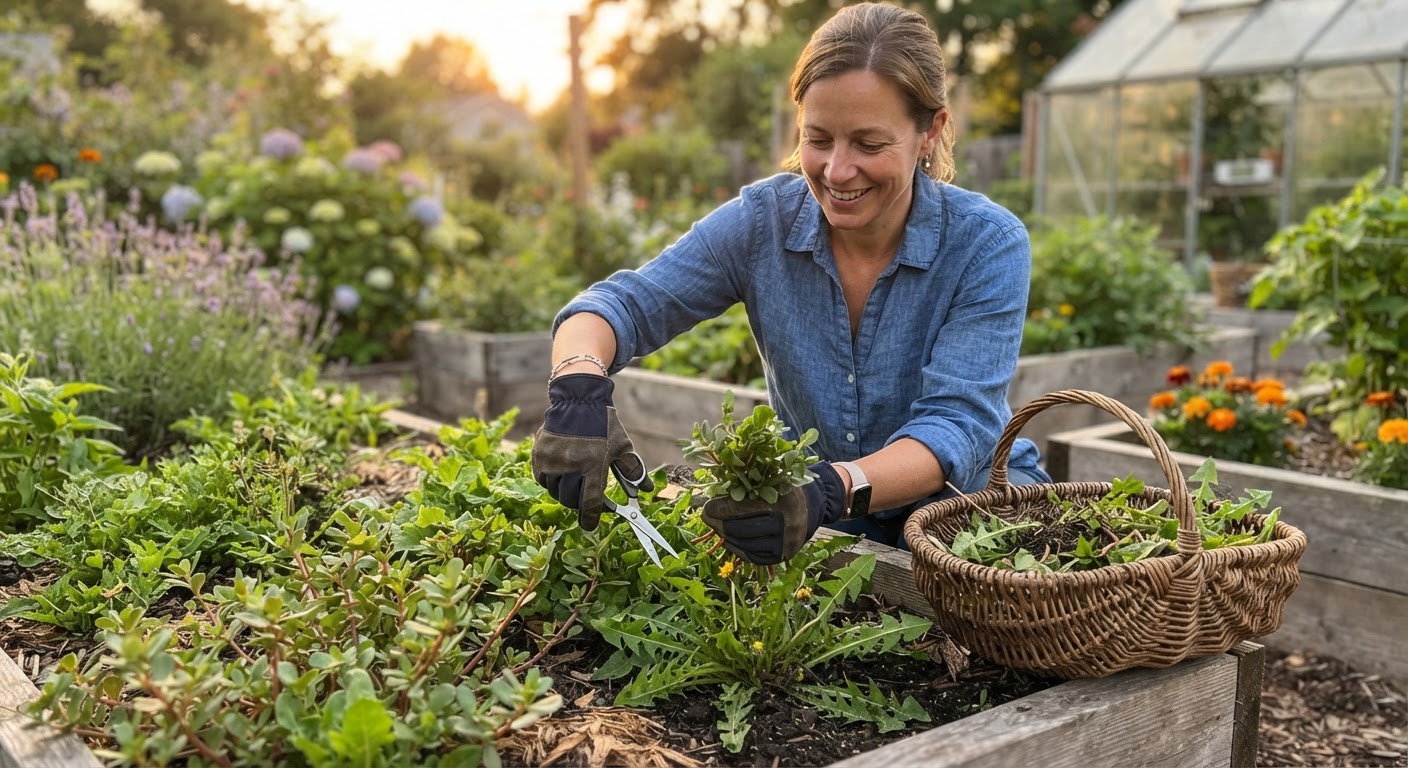
Leaf-by-leaf harvesting (for dandelion, lamb’s quarters, amaranth): Pick the outer, older leaves first. Leave the growing center intact. The plant keeps producing from the center while you harvest from the edges. This works for all the upright leafy plants on the list.
Cut-and-come-again (for nettle, chickweed, purslane): Cut the top 4-6 inches of the plant, leaving at least two sets of leaves below the cut. The plant branches below the cut point and produces multiple new growing tips. Nettle responds to this especially well — a single cut-and-come-again nettle plant can yield four or five harvests in a season.
Whole-plant thinning (for everything): When seedlings are 3-4 inches tall, thin them by pulling entire plants. Eat the thinnings. This is genuinely one of the best wild green salads you’ll ever have — baby plants are uniformly tender and mild.
Root harvesting (for dandelion): Dig dandelion roots in fall of the plant’s second year, after the first frost converts starches to sugars. Wash, chop, and roast at 350°F until dark brown and fragrant. Grind for dandelion root “coffee.” Leave at least a third of your dandelion plants unharvested for next year’s greens.
Seed harvesting (for lamb’s quarters, amaranth, purslane): Wait until seed heads are fully dry on the plant. Cut entire seed heads into a paper bag. Crush and winnow to separate seeds from chaff. Lamb’s quarters and amaranth seeds cook like quinoa. Purslane seeds are tiny — use them like poppy seeds in baking.
Pro Tips from Three Seasons of Trial and Error
Let one plant of each species go fully to seed. Not two. Not three. One. A single lamb’s quarters plant produces enough seed for a hundred square feet of next year’s garden. If you let three plants go to seed, you’ll spend the following spring pulling lamb’s quarters out of your driveway, your lawn, and possibly your neighbor’s yard.
Blanch your dandelions. This is the single technique that transforms dandelion from “edible survival food” to “I’d serve this to dinner guests.” Two weeks before you want to harvest, cover the plant with an upside-down clay pot or a thick cardboard box. The lack of light produces pale, wide, incredibly tender leaves that are only mildly bitter. This is how Europeans have grown dandelions for centuries. Try it once and you’ll never go back to unblanched.
Nettles make the best liquid fertilizer in existence. Fill a bucket with nettle stems, cover with water, let it rot for two weeks (it will smell like a dead animal — do this far from your house), and dilute the resulting liquid 10:1 with water. Your domesticated vegetables will grow like they’re on steroids. It’s absurdly high in nitrogen and trace minerals.
Wood sorrel is your secret weapon for fancy-looking plates. Three wood sorrel leaves arranged on top of a dish make it look like a restaurant entrée. The bright, lemony pop cuts through rich foods. A small patch takes up one square foot and provides garnish for a year.
Don’t grow these if you have small children or pets who eat random garden things. Wild plants blur the line between “food” and “yard” in a way that confuses young kids. If your toddler has learned “don’t eat things from the garden unless mom gives it to you,” a wild edible garden sends mixed signals. Wait until they’re old enough to understand the difference between “this wild plant is food” and “that wild plant (that looks similar) is not.”
Quick Answers to Common Questions
Do wild edibles taste good, or is this a “survival situation” thing?
Purslane tastes like a lemony cucumber with a pleasant crunch. Young lamb’s quarters tastes like spinach, but sweeter. Nettle cooked with butter and garlic tastes like the best spinach you’ve ever had. Violet flowers taste like mild wintergreen. These aren’t “eat in an emergency” foods — they’re genuinely delicious ingredients that happen to grow without being asked.
Will wild edibles take over my entire garden?
Lamb’s quarters and purslane will self-seed enthusiastically. Thinning and selective seed-head removal keep them in check. Nettles spread by underground rhizomes and need containment. Everything else on this list is well-behaved — chickweed dies back in summer, wild garlic spreads slowly, violets and wood sorrel form polite clumps. Aggressive spreaders like mint, Jerusalem artichoke, and Japanese knotweed are conspicuously absent from the recommended list.
Can I grow these indoors?
Wild garlic on a sunny windowsill, yes. Everything else needs more light than a typical indoor setup provides. A sunny south-facing window might support a pot of purslane. But these are outdoor plants by nature.
How do I know the wild seeds I collected aren’t from a polluted area?
Collect from areas at least 50 feet from roads, 100 feet from highways. Avoid industrial sites, railroad rights-of-way, and areas near conventional farms where pesticide drift is possible. If you’re unsure, buy seeds from a reputable source for your first year and collect from your own garden thereafter.
What’s the one plant I should start with if I’m intimidated?
Purslane. It’s impossible to kill, tastes great raw, and produces from summer until frost. If you fail at growing purslane, gardening might not be your thing — and I say that with genuine affection.
Can I mix wild edibles with my regular vegetable garden?
Yes, and you should. Purslane makes excellent living mulch under tomatoes. Chickweed fills bare winter soil that would otherwise erode or compact. Dandelion taproots break up hardpan and mine nutrients from deep soil layers, making them available to shallower-rooted vegetables. Wild plants integrated into a vegetable garden create a more resilient ecosystem than either grown alone.
Are there any wild plants I should absolutely NOT grow?
Avoid anything that’s invasive in your region. Avoid plants with toxic lookalikes unless you’re confident in your ID skills. Avoid any Apiaceae family plant (carrot family) unless you’re an expert — too many deadly lookalikes. And avoid plants with aggressive spreading habits: mint, comfrey, and Jerusalem artichoke will become permanent residents whether you want them to or not.
Your First Wild Food Garden: A Simple Weekend Plan
If you’ve read this far and you’re ready to start, here’s the minimum-viable-garden plan that takes one afternoon:
Saturday morning: Find a sunny 4x4 foot patch of ground. Remove existing weeds. Rough up the soil surface with a rake. Don’t add anything.
Saturday afternoon: Sow one 2-foot row of purslane (surface-scatter, mist). Sow one 2-foot row of lamb’s quarters (1/4 inch deep). Plant three dandelion seeds in a triangle pattern, 8 inches apart. Plant one wild garlic clove 2 inches deep in a corner.
Water once. Wait.
What happens next: In 7-14 days, everything germinates. In 4-6 weeks, you’re harvesting purslane and dandelion greens. In 8 weeks, lamb’s quarters is producing. The wild garlic greens are ready within a month. By the end of summer, your $0 planting (assuming you sourced from a friend or collected seeds) has produced more food than a $47 tomato setup that broke your heart.
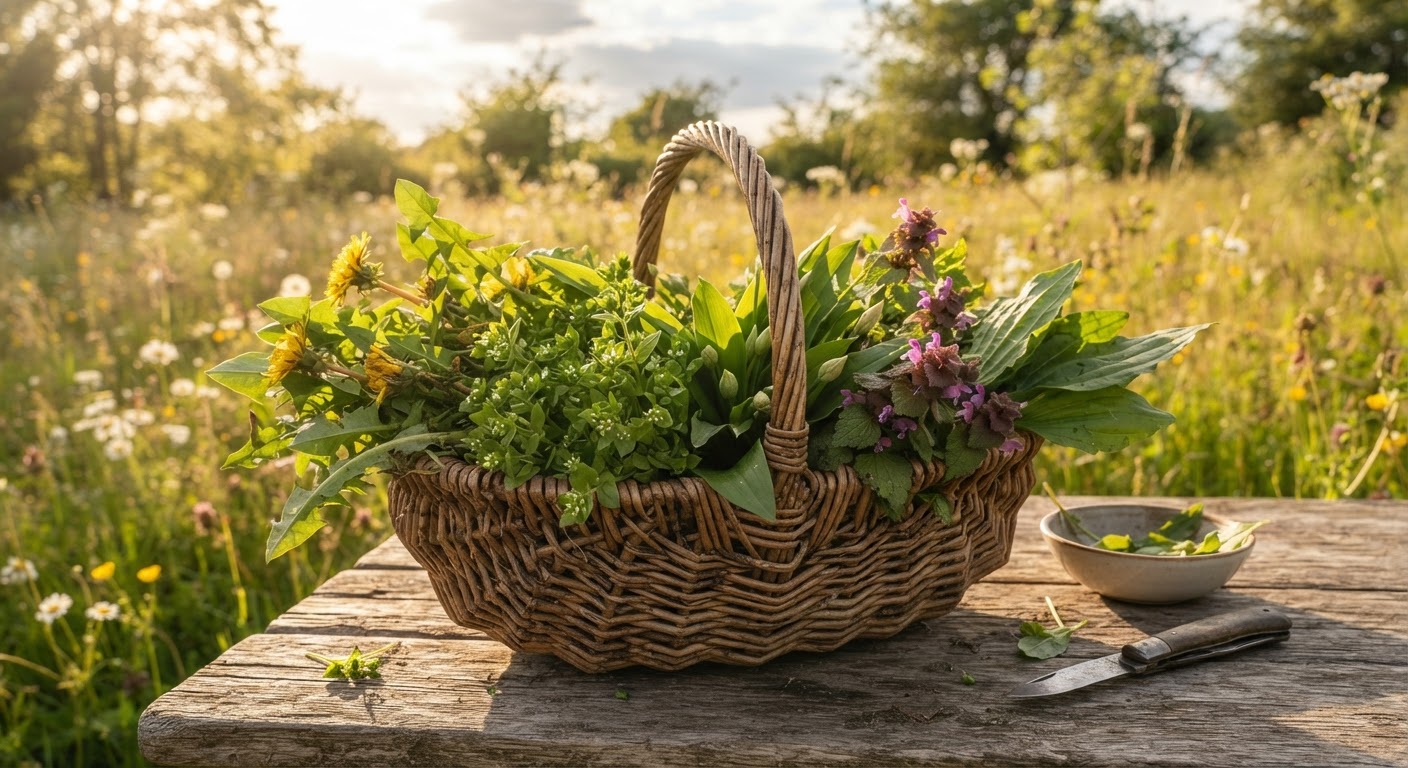
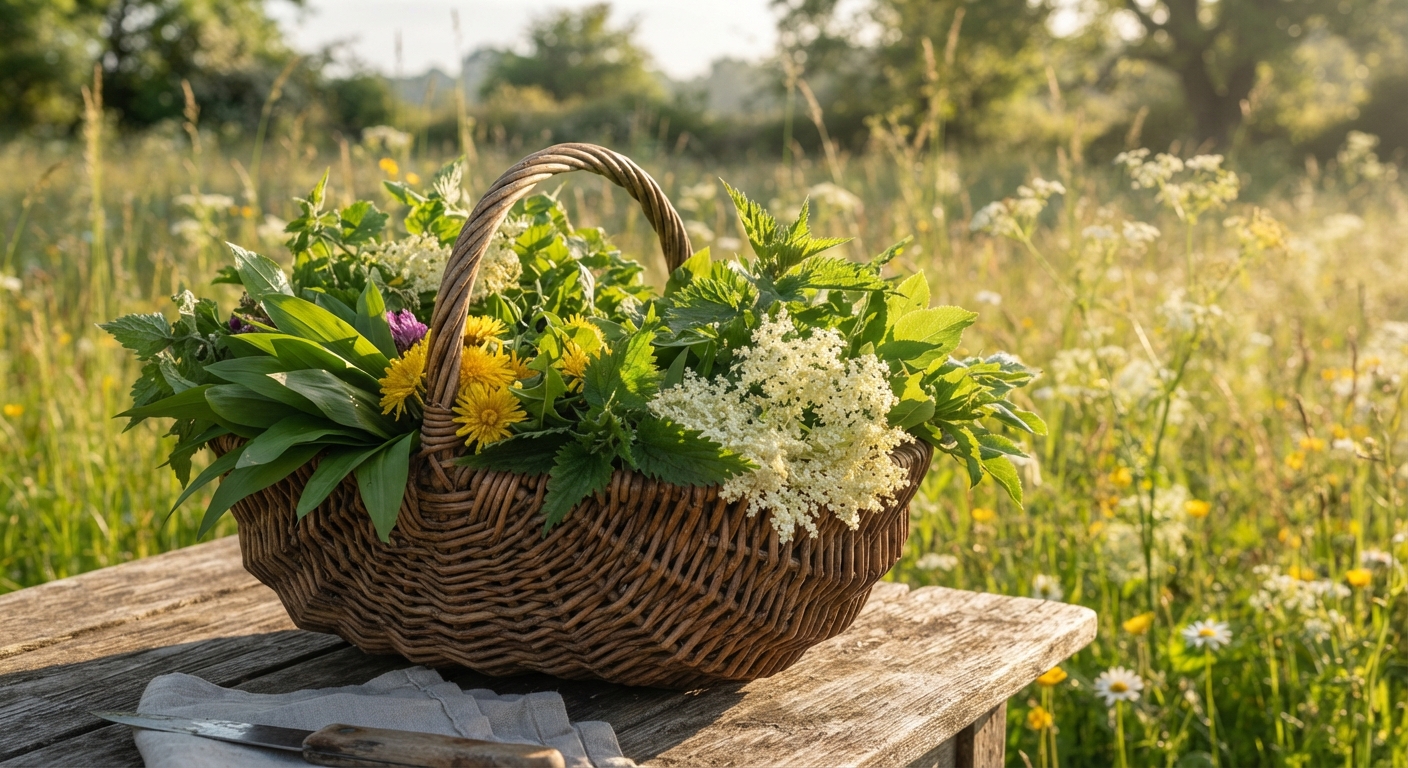
The garden that taught me this lesson — the one where purslane won and tomatoes lost — is still producing. The purslane reseeds itself every spring. The lamb’s quarters colony expanded to exactly the right size and then stabilized. The dandelions come back thicker every year. I haven’t replanted anything in that bed for two seasons. I just show up with scissors and a basket.
That’s the promise of growing wild edibles: you don’t need skill. You don’t need money. You don’t even need a green thumb. The plants already know how to grow. You just need to stop pulling them out.