Ask ten people “what kind of foraging video should I make?” and you’ll get ten different answers — and none of them will ask what actually matters first: what do you want the video to do?
A video that teaches a beginner to identify stinging nettle is a completely different animal from a video meant to rack up views with a satisfying harvest clip. Different audience, different length, different format, different effort. Yet most people skip the format decision entirely and just start filming the plant, which is how you end up with a three-minute walk-through that should have been a fifteen-second Short — or a fifteen-second clip that tried to cram in a full identification and taught nobody anything.
Format is not a creative flourish. It’s the skeleton the whole video hangs on. Get it right and even modest footage reads as professional; get it wrong and you’ll fight the material the entire edit. This guide compares the eight foraging video formats that actually work, with the difficulty and effort spelled out, so you can stop guessing and pick one.
The 8 Formats at a Glance
Here’s the whole comparison on one table. Skim it, then read the sections that match your goals.
| # | Format | Best for | Difficulty | Time per video | Growth potential | Retention |
|---|---|---|---|---|---|---|
| 1 | Single-Plant Tutorial | Teaching one plant cold | Low | 1–2 hours | Steady | High (search-driven) |
| 2 | Safe vs Toxic Comparison | Lookalike safety | Medium | 2–3 hours | High | Very high |
| 3 | Harvest-to-Table Short | Quick, shareable payoff | Low | 30–45 min | Very high | High |
| 4 | Walk-and-Talk Vlog | Building a personal audience | Medium | 1–2 hours | Medium | Medium |
| 5 | Foraging ASMR / Ambient | Relaxation, ambient audience | Low | 45 min | Medium | High (niche) |
| 6 | Seasonal Haul / “In Season Now” | Timeliness, urgency | Low | 1 hour | High (seasonal spikes) | Medium |
| 7 | Myth-Buster / Mistake | Correcting bad info | Medium | 1–2 hours | High | High |
| 8 | Documentary Deep Dive | Authority, long-form trust | High | 1–2 days | Medium | Very high (for the right viewers) |
Two columns deserve a note. “Growth potential” is how fast the format tends to pull in new viewers; “retention” is how well it holds the ones it gets. The formats that rank highest on both — safe-vs-toxic and harvest shorts — are the two I’d tell any beginner to try first. More on that in the decision section.
Format 1 — The Single-Plant Tutorial
The workhorse of the niche. One video, one plant, one clear promise: “by the end, you can identify and safely harvest this.”
Why it works: it maps perfectly onto how people actually search. Nobody types “foraging” into YouTube. They type “how to identify stinging nettle” or “is purslane edible.” A focused single-plant tutorial answers one of those questions completely, which means it keeps pulling views for years instead of burning out in a week.
The format is forgiving, too. You need one plant, a close-up or two, and a clean structure: habitat, identifying features, lookalike warning, harvest, one safety sentence. That’s it.
Difficulty: low. No storytelling gymnastics required — the plant is the story. Make this first if you want a slow, reliable channel that compounds.
Format 2 — The Safe vs Toxic Comparison
The single most valuable format in foraging video, full stop. You put an edible plant next to its toxic lookalike and walk the viewer through the differences: hairy stem vs smooth, purple spots vs none, milky sap vs clear.
Why it works: it’s the question that scares people most — “what if I pick the wrong one?” — and it’s the one every serious forager has to master. A well-made comparison saves people from a genuinely dangerous mistake, which makes it both high-value and highly shareable. Viewers send these to friends.
The catch is that you need both plants, correctly identified, often at the same time of year. That’s a real constraint. But the payoff is a video that reads as authoritative from the first frame.
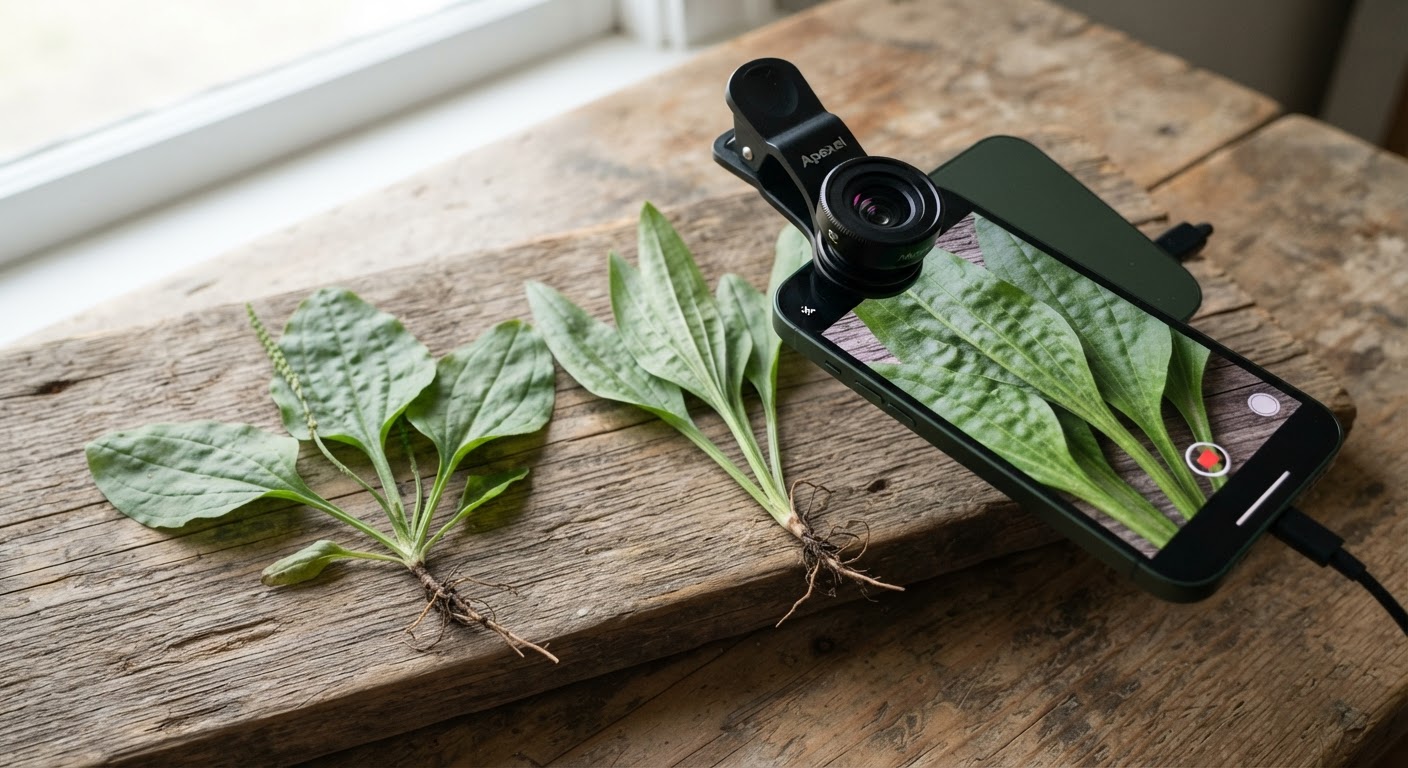
Difficulty: medium. The filming is easy; finding both specimens in the same week is the hard part. Make this second, once you’ve got a plant or two down cold.
Format 3 — The Harvest-to-Table Short
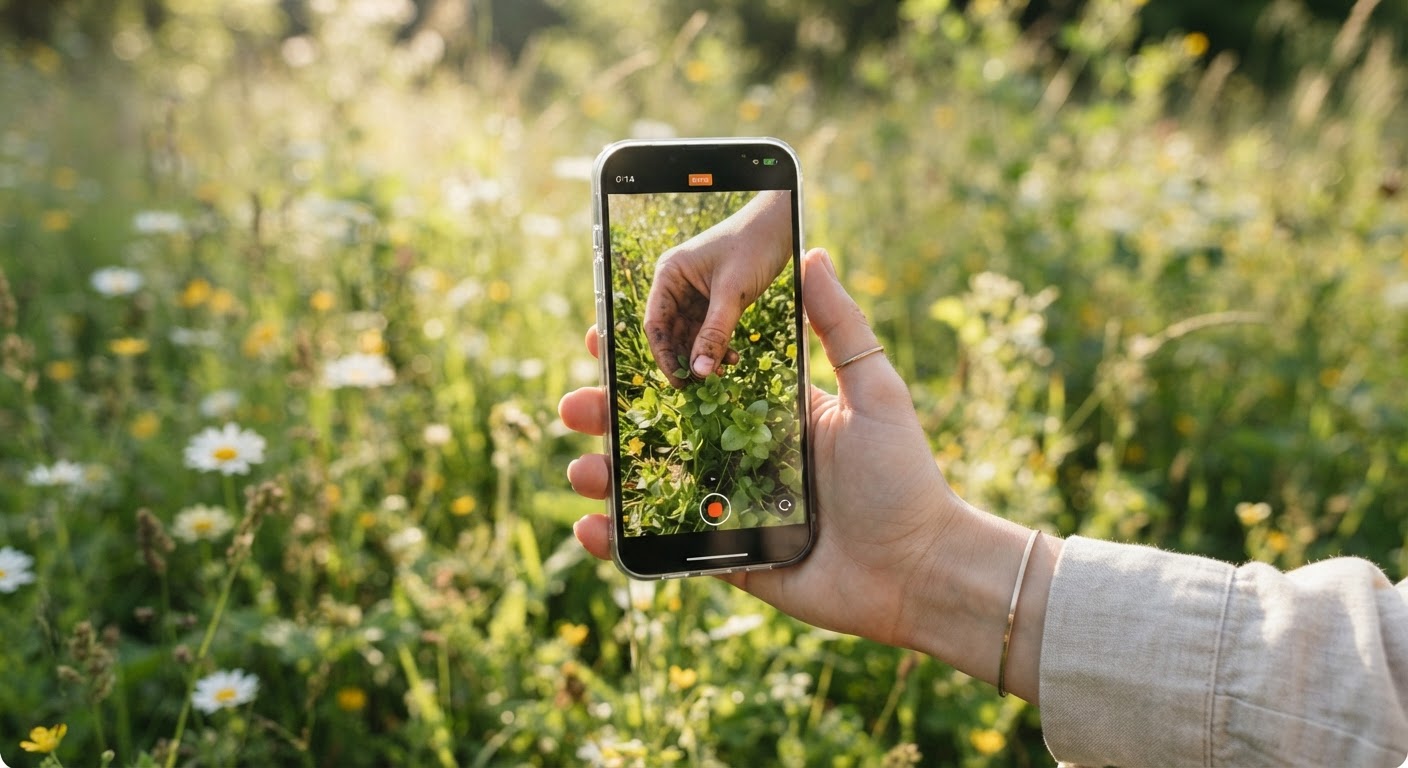
Fifteen to sixty seconds: spot the plant, identify it in one line, harvest it, show the finished dish. Vertical, fast, built for the feed.
Why it works: short-form rewards a quick, satisfying arc, and “foraged → cooked” is exactly that. These clips travel — a beautiful harvest with a clear payoff gets shared far beyond the foraging niche. If growth is your goal, this is where you’ll get it fastest.
The trade-off is that shorts teach less. You can show what you picked and that you cooked it, but not how to identify it with any rigor. Treat the short as a trailer, not the whole lesson — pair it with a full tutorial and point viewers there.
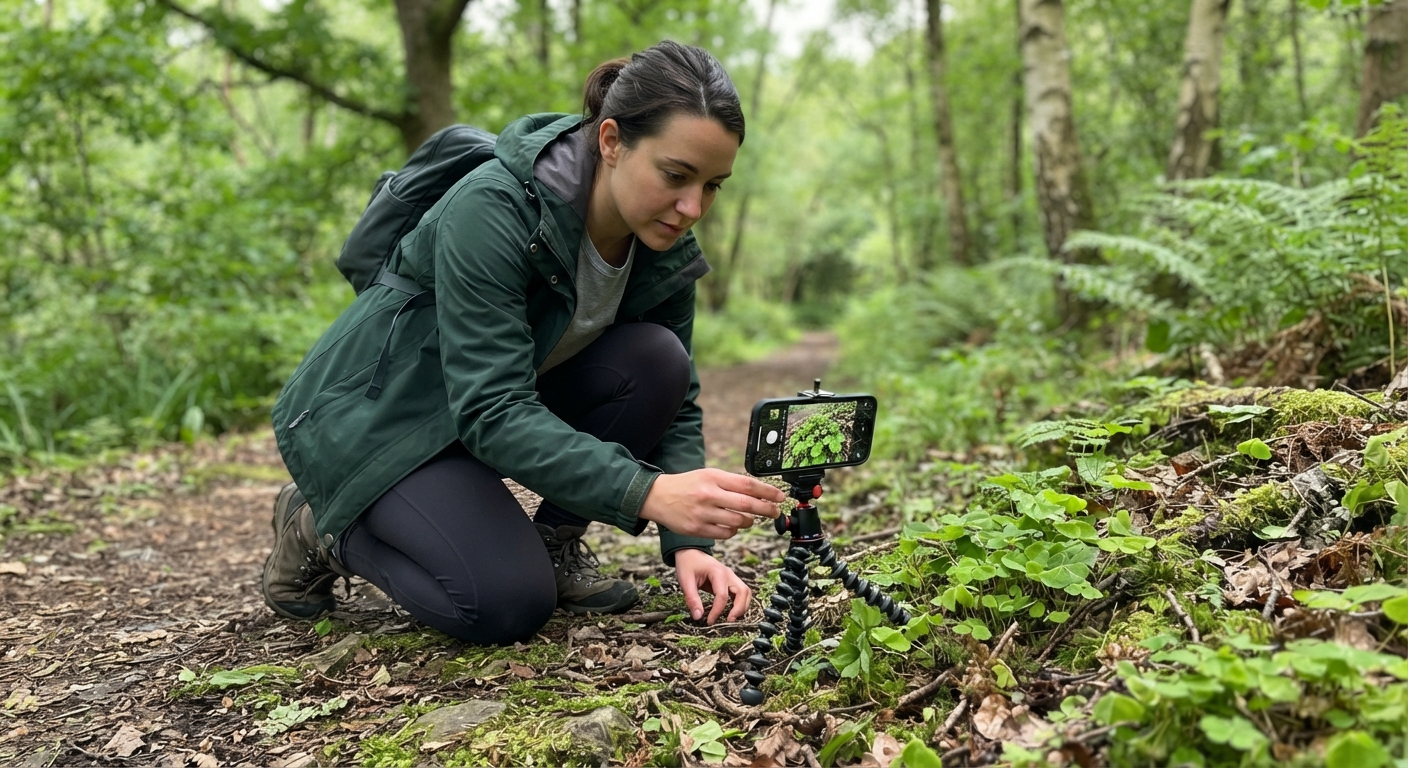
Difficulty: low. A tripod, good light, and a fast edit. Make this when you want reach and don’t mind doing a longer companion video to carry the depth.
Format 4 — The Walk-and-Talk Vlog
You, walking, narrating as you find things. The most personal format and the hardest to make watchable.
Why it works: people don’t follow channels, they follow people. A vlog builds a relationship — viewers show up to spend time with you, not to learn a specific plant. That loyalty is worth more long-term than any single tutorial, because those viewers watch whatever you post.
Why it’s hard: it demands personality, pacing, and decent audio, in that order. A vlog with flat narration and wind-rumble audio is the fastest way to lose someone. This is also the format where a gimbal finally earns its keep.
Difficulty: medium to high. The filming is simple; the being interesting is not. Make this once you’re comfortable on camera and have the audio sorted.
Format 5 — Foraging ASMR / Ambient
No talking, or barely any. Just the sounds: boots on the trail, leaves being cut, a stream nearby, the snap of a stem. Slow, quiet, almost meditative.
Why it works: it serves an audience that isn’t there to learn — they’re there to relax. Ambient foraging sits in the same lane as campfire and rain sounds, and those viewers are loyal and low-maintenance. It’s also the easiest format to film, because you’re not narrating or performing.
The downside is it won’t grow a foraging audience. It grows a relaxation audience. That’s fine if it’s what you want — just be clear-eyed that ambient viewers rarely convert into tutorial viewers.
Difficulty: low. Make this if you enjoy the field more than the editing and don’t mind a slower, quieter channel.
Format 6 — The Seasonal Haul / “In Season Now”
A fast roundup of what’s edible right now in your region: “three wild greens to harvest in early spring.” Timely, urgent, and easy to produce.
Why it works: seasonality is built-in urgency. When wild garlic is up for exactly three weeks, people search for it during those three weeks. A seasonal haul captures that spike, and it’s genuinely useful — beginners want to know what to look for this weekend, not some abstract list.
The flip side is the shelf life: next month the video is partly stale. That’s the trade-off for the spike. A smart approach is to film a short seasonal haul each month, which compounds into a “what to forage year-round” series over a year.
Difficulty: low. Make this monthly if you want steady, cyclical traffic without a lot of editing.
Format 7 — The Myth-Buster / Common Mistake
“Stop eating this plant.” “The one foraging rule everyone gets wrong.” “Why you shouldn’t use that app alone.” A claim, then the correction.
Why it works: controversy and correction are two of the strongest engagement drivers on any platform. A myth-buster gives viewers a reason to click, to comment, and to share — people love being told the common advice is wrong, especially when you back it up.
The responsibility is the catch. If you’re going to correct people, you have to be right, and you have to source it. A sloppy myth-buster that spreads its own misinformation is worse than none at all. Stick to myths you can verify with a field guide and a reliable source.
Difficulty: medium. The filming is easy; the accuracy is the work. Make this when you’ve been foraging long enough to have earned an opinion.
Format 8 — The Documentary Deep Dive
Ten to twenty minutes on one plant, one family, or one question, told as a story with a beginning, middle, and end. The hardest format and the most trusted.
Why it works: this is where you build real authority. A thoughtful deep dive — the history of a plant, the ecology, the safe harvest, the cooking — signals expertise in a way no sixty-second clip can. It’s the format that gets cited, saved, and recommended.
Why it’s rare: it’s slow to make and slower to grow. A documentary takes a day or two of shooting and editing, and it’ll get a fraction of the views of a harvest short. What it does get is trust, which compounds into everything else you make.
Difficulty: high. Make this rarely, and only on a subject you genuinely care about — the care is what carries it.
Short vs Long: Where Your Time Actually Goes
The biggest format decision is length, so let’s settle it plainly.
| Factor | Short-form (under 60s) | Long-form (3–15 min) |
|---|---|---|
| Reach | High — the algorithm pushes vertical video | Lower, but searchable for years |
| Depth | Low — can’t teach identification properly | High — room for features and lookalikes |
| Effort per video | Low (30–45 min) | High (1–2 hours minimum) |
| Shelf life | Short — gone in days | Long — compounds via search |
| Monetization | Weak on its own | Stronger (watch time, ads, sponsorship) |
| Audience loyalty | Low — viewers scroll past | High — viewers subscribe for more |
The trap is thinking you have to choose. You don’t. The strongest channels run both: a short that hooks and a long video that delivers. Use the short to reach new people, and the tutorial or deep dive to turn them into an audience. One feeds the other.
How to Pick Your Format in 60 Seconds
Stop overthinking it. Answer these three questions in order:
- What’s the goal — reach, trust, or teaching? Reach → harvest short or myth-buster. Trust → deep dive or safe-vs-toxic. Teaching → single-plant tutorial.
- How much time do you actually have this week? Under an hour → short or seasonal haul. A few hours → tutorial or comparison. A whole weekend → deep dive.
- What can you film right now? This is the tiebreaker. You can’t make a safe-vs-toxic comparison if the toxic lookalike isn’t in season. Film what’s in front of you, in the format that fits it.
Here’s the sequence I’d hand a total beginner: start with one single-plant tutorial (it teaches you the whole craft), then a safe-vs-toxic comparison (it builds authority), then a harvest short (it builds reach). Three videos, three formats, and you’ll know exactly which one you want to double down on.
5 Habits That Make Any Format Look Professional
Format matters, but these habits matter more — they’re what actually shows up on screen, in every style.
- One promise, kept. Whether it’s fifteen seconds or fifteen minutes, the viewer should know within the first ten seconds what they’ll get, and they should get it. A tutorial that promises “identify nettle” and then delivers two minutes of rambling has already failed.
- The plant is always the close-up. Every format lives or dies on detail. Get the camera close, hold it steady, and show the identifying feature — the rest is context.
- One honest safety sentence. “If you’re not 100% sure, don’t eat it.” It costs five seconds and marks you as responsible, which is its own kind of professional.
- Audio before picture. A viewer forgives soft footage; they won’t forgive wind they can’t hear through. A cheap lav mic near your mouth fixes more than any camera upgrade.
- Edit like the viewer can leave at any second — because they can. Cut the dead air, lead with the payoff, and don’t preserve footage out of nostalgia. Tight reads as professional.
Short FAQ
Which foraging video format grows a channel fastest? Harvest-to-table shorts. They’re quick to make, highly shareable, and favored by short-form algorithms. Pair them with a longer tutorial to convert that reach into an audience.
What’s the best format for a complete beginner? A single-plant tutorial. It’s low-risk, teaches you the whole craft (identification, close-ups, structure), and keeps pulling search traffic for years.
Should I make shorts or long videos? Both, if you can. Shorts reach new people; long videos turn them into subscribers and build trust. If you can only do one, long-form compounds better over time.
Which format builds the most trust and authority? The safe-vs-toxic comparison and the documentary deep dive. Both demonstrate real expertise, which is what separates a responsible forager from a content farm.
Do I need to show my face? No. Several of the strongest formats — tutorial, comparison, ambient, harvest short — work fine hands-and-plants only. Show your face only if it serves the format, like a vlog.
How often should I post? Consistency beats frequency. One solid video a week, in a format you can sustain, beats seven rushed ones. A monthly seasonal haul plus a weekly tutorial is a realistic, sustainable rhythm.
What if the plant I want isn’t in season? Film something else. The right format is the one that matches what’s actually in front of you — don’t force a comparison you can’t shoot correctly.
The Short Version
The format is the video. Pick it deliberately: a single-plant tutorial to teach, a safe-vs-toxic comparison to build authority, a harvest short to reach new people, and a deep dive to earn trust over the long run. Match the format to your goal and to what’s in season, run one short and one long video together if you can, and let the five professional habits — one promise, close-ups, a safety line, good audio, tight editing — do the rest.
Don’t start by buying a camera. Start by deciding what the video is for. The format you choose will do more for your results than any gear you’ll ever own — and it’s a decision you can make right now, for free.