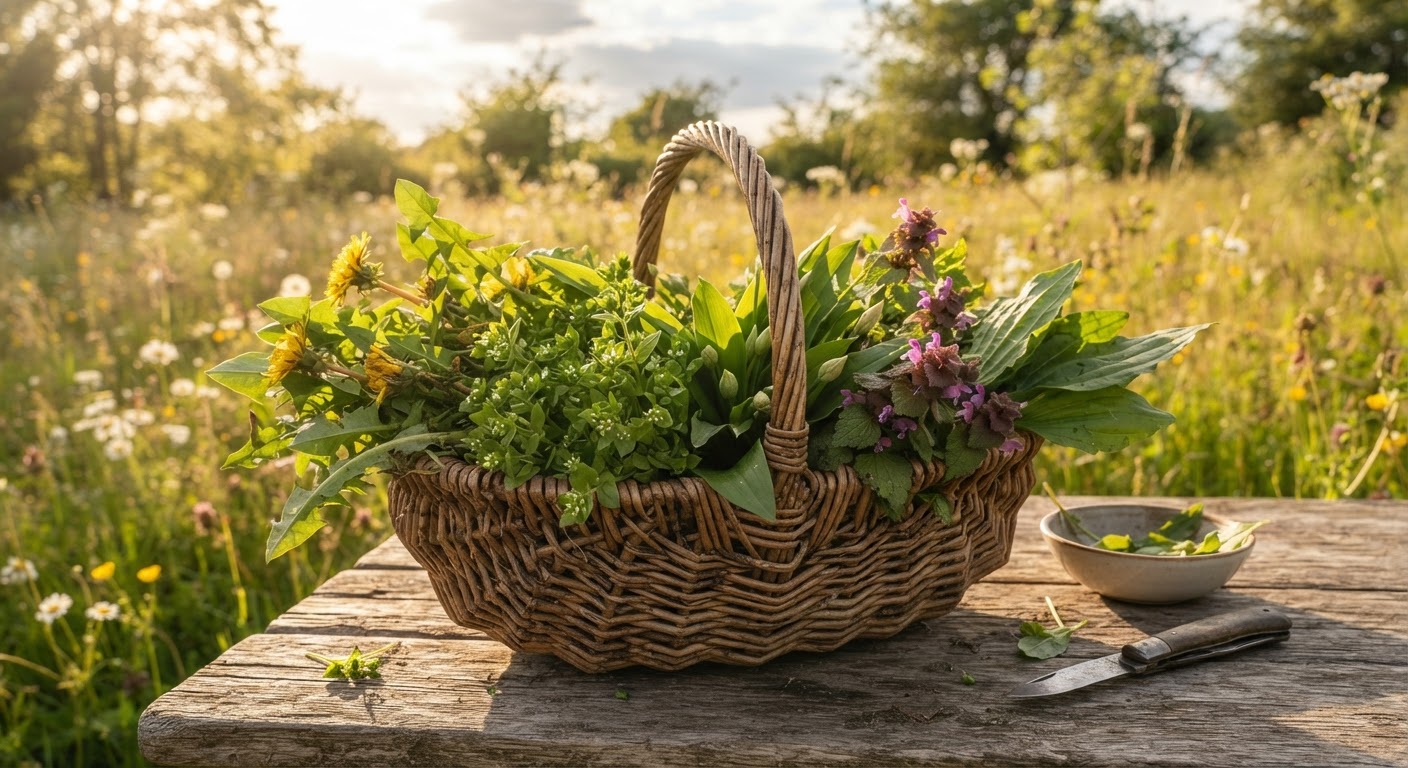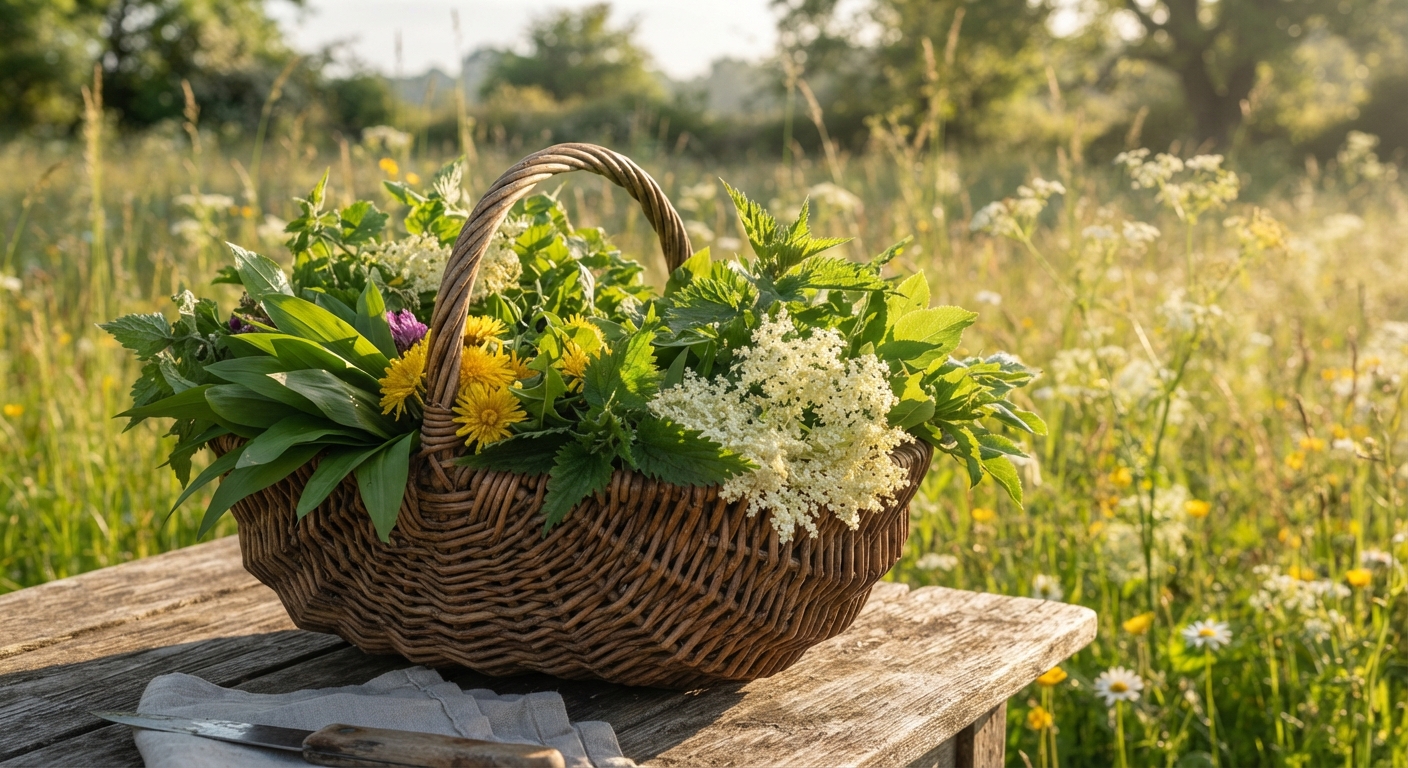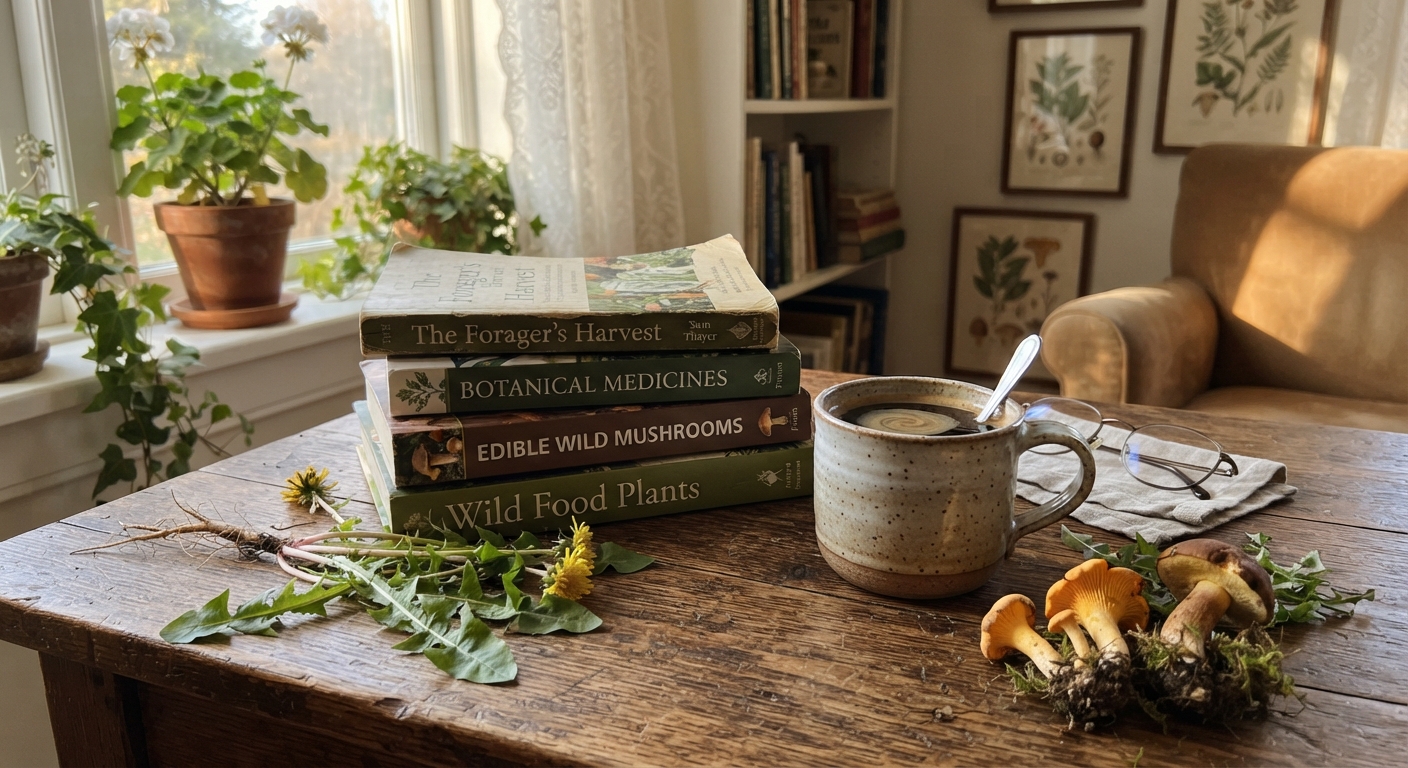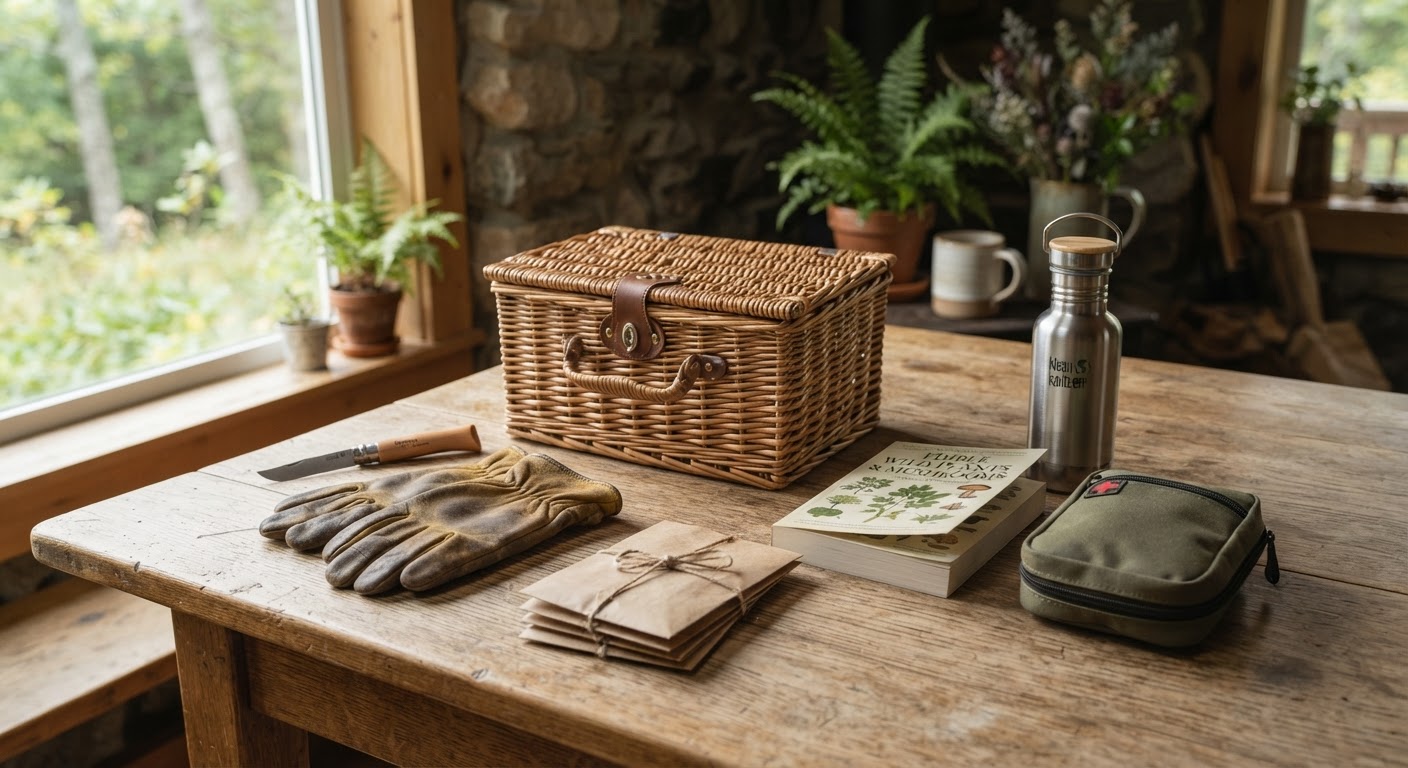
Here’s something most foraging YouTube channels won’t tell you: the guy who filmed a three-hour forest walk with a $400 custom foraging knife and a hand-woven Italian mushroom basket? He does 90% of his actual foraging with a reusable grocery bag and a $12 Opinel.
The foraging gear industry has exploded in the last five years. Walk into any outdoor retailer and you’ll find dedicated “foraging bags” with seventeen compartments, titanium harvesting knives with six blade types, and field guides that weigh more than the mushrooms you’re hoping to find. Some of it is genuinely useful. Most of it isn’t.
After five years of collecting — and culling — foraging equipment, here’s what earned a permanent spot in my pack, what got donated to Goodwill, and the four items so essential that if you have nothing else, you’re still ready to forage.
The Non-Negotiable Four: Start Here Before You Spend a Dollar
If you’re standing in a forest with these four items, you can forage successfully. Everything else on this list adds convenience, but these four prevent problems.
1. A Sharp Pocket Knife — The One Tool You’ll Touch Every Single Trip
You don’t need a specialized foraging knife. You need something sharp that opens with one hand, cleans easily, and doesn’t cost so much you’ll hesitate to get sap on it.
| Feature | Why It Matters |
|---|---|
| Folding, locking blade | Stays safe in your pocket; won’t close on fingers mid-cut |
| 3–4 inch blade length | Long enough for mushroom stems and thick stalks; short enough for precision cuts on delicate greens |
| Stainless or high-carbon steel | Stainless resists rust when cutting wet plants; high-carbon holds an edge longer but needs occasional oiling |
| Easy to disassemble or rinse | Plant sap, mushroom residue, and gritty dirt will build up inside the mechanism |
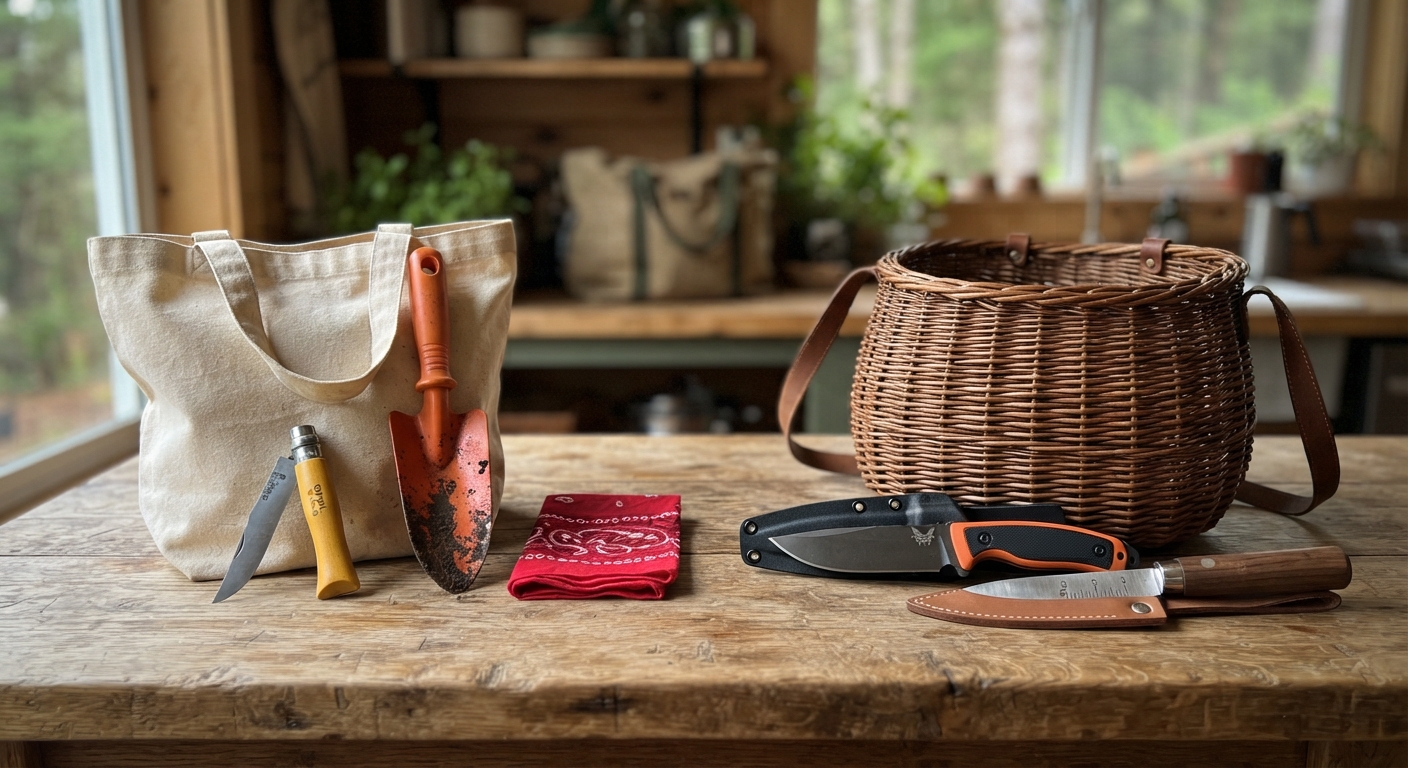
Budget pick: Opinel No. 8 ($15–18) — the classic French folding knife. Carbon steel blade, beechwood handle, weighs almost nothing. I’ve used mine for three seasons straight and it’s still going. The simple collar lock takes one hand to operate once you get the motion down.
Premium pick: Benchmade Bugout ($150+) — ultralight, S30V steel holds an edge through hundreds of cuts, and the axis lock lets you open and close it completely one-handed. Overkill for casual foragers, but if you’re out multiple times weekly, it earns its price over a decade of use.
Skip the: Dedicated “foraging knives” with curved mushroom blades. The curve makes them harder to sharpen, the brush on the end detaches and gets lost by the third trip, and a straight blade does everything the curved one does plus general utility.
2. Collection Container — Basket, Bag, or Both?
This is where beginners overthink. You need something that:
- Holds your harvest without crushing delicate plants
- Allows airflow (mushrooms and greens rot fast in sealed plastic)
- Lets you keep different species separate
| Container | Best For | Avoid Using For |
|---|---|---|
| Woven wicker basket | Mushrooms, berries, sturdy greens | Heavy; single compartment means everything mixes together |
| Mesh foraging bag | Mushrooms (spores drop through mesh), hearty greens | Berries fall right through the holes |
| Canvas tote / reusable grocery bag | Sturdy greens, roots, nuts | Mushrooms get crushed; berries stain the fabric |
| Paper bags (lunch size) | Separating species inside a larger bag; mushrooms | Wet items eventually dissolve the bag if you’re out for hours |
| Belt-mounted mushroom bag | Two-handed picking on slopes | Uncomfortable when overfilled; limited capacity |
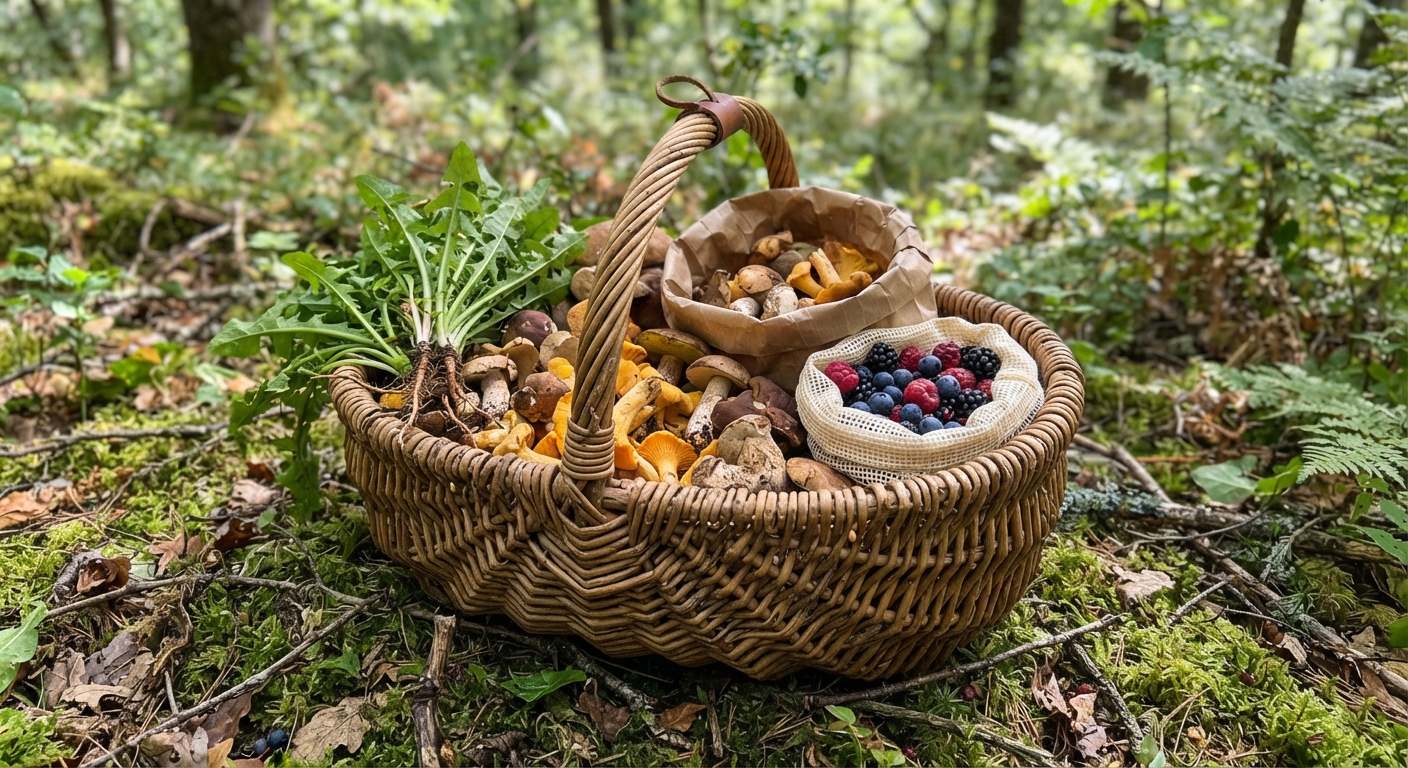
The system that actually works: Bring one large canvas tote or wicker basket as your main container. Inside it, carry 4–5 paper lunch bags plus a couple of mesh produce bags. Each species gets its own paper bag. Mushrooms go in mesh. Nothing gets crushed. Nothing cross-contaminates. When you get home, you’re not sorting through a mashed-together pile of mixed greens and broken berries.
3. Gloves — The Most Underrated Item in Your Kit
Thistles. Stinging nettles. Brambles. Poison ivy weaving through the blackberry patch you’re harvesting from. Gloves solve all four of these problems at once, and they cost less than lunch.
What you actually need: Rose-pruning gloves — leather or synthetic-reinforced palms with gauntlets that extend past your wrists. Standard cloth-back gardening gloves won’t stop nettle stings. Rubber dish gloves tear on contact with anything rough.
Budget pick: Magid Glove Rose Pruning Gloves ($12) — synthetic leather palms, long gauntlet cuff, durable enough for a full season of weekly foraging.
When you can skip gloves: If you’re only harvesting soft berries and delicate greens in managed areas with zero thorny plants. But the first time you reach into a berry bush and grab a hidden thistle by accident, you’ll wish you’d spent the $12.
4. Field Guide — Physical, Not Digital
Yes, phone apps exist. iNaturalist, Seek, and PlantNet are incredible free tools and you should absolutely have them installed. But phones die. Phones lose signal. Phones crack when they tumble out of your pocket onto a creek bed. A physical field guide weighs 12 ounces and works everywhere, in any weather, forever.
What makes a field guide usable in the field (not just on the coffee table):
- Organized by plant family or by season, not by flower color (color changes with lighting and bloom stage)
- Clear photographs or detailed botanical illustrations showing leaves, flowers, and stems
- Range maps confirming the plant actually grows where you’re standing
- Lookalike warnings with side-by-side photo comparisons
- Small enough to fit in a cargo pocket or backpack side pouch
Pick: Sam Thayer’s Field Guide to Edible Wild Plants of Eastern & Central North America ($28) — widely considered the gold standard for clarity and accuracy. If you’re outside that region, search for a guide specific to your state or bioregion. A regional guide beats a national one every time.
Gear 5–7: Not Essential, But Worth the Weight
Once you’ve got the core four, these items solve specific problems that come up often enough to justify the space they take in your pack.
5. Digging Tool — For Roots, Tubers, and Taproots
Dandelion roots, burdock, wild carrot, and cattail rhizomes all need excavation. Your folding knife isn’t designed for digging and you’ll damage both the blade and your wrist trying. A simple garden trowel handles 90% of root-harvesting situations.
Budget: Heavy-duty garden trowel ($8) — the one with a forged blade, not the stamped metal kind that bends on hard soil.
Premium: Barebones Hori Hori ($35) — carbon steel, full tang construction, inch markings etched on the blade for measuring root depth. The serrated edge saws through small roots. This is the one tool on this list that actually justifies its “specialized foraging gear” label.
6. Water Bottle + Rinse System
You’re going to taste-test in the field. You’ll handle plants that leave sticky residue on your hands. A full water bottle solves both — drink from it, rinse your hands with it, swish a leaf clean in the cap for a quick taste. Some foragers add a small spray bottle for field-rinsing mushrooms before they go in the basket. Sounds fussy until you’ve opened your basket at home to find everything coated in mushroom spore sludge.
7. Small First Aid Kit
No, you’re not going to sever an artery harvesting lamb’s quarters. But thorns, insect stings, and minor cuts from your own knife happen to the most careful foragers. A kit the size of an Altoids tin covers 95% of field first-aid situations. Include:
- Tweezers (splinters, ticks, thorns — this alone is worth carrying)
- 3–4 alcohol wipes and Band-Aids
- Antihistamine tablets (allergic reactions to unknown plants happen fast)
- Tecnu or similar poison ivy scrub — applied within 2 hours of exposure, it can prevent the rash entirely
The Full Gear Comparison: What to Buy by Budget
| Category | Start With What You Have ($) | Smart Budget | Mid-Range | Premium |
|---|---|---|---|---|
| Cutting Tool | Any sharp pocket knife you already own ($0) | Opinel No. 8 ($15) | Mora Companion ($20) | Benchmade Bugout ($150) |
| Collection | Paper bags from grocery store ($0) | Canvas tote + paper bags ($12) | Wicker basket + mesh bags ($35) | Hand-woven basket + belt bag ($80+) |
| Gloves | Leather work gloves ($5) | Rose pruning gloves ($12) | Bionic ReliefGrip ($30) | Custom-fit leather gauntlets ($60+) |
| Field Guide | Library book / free online PDFs ($0) | Regional paperback ($18–25) | Thayer’s Field Guide ($28) | Multiple regional guides ($60+) |
| Digging Tool | Stick or flat rock (free) | Garden trowel ($8) | Hori hori knife ($35) | Carbon steel root digger ($50) |
| Rinse | None ($0) | Reusable water bottle ($10) | Bottle + small spray bottle ($18) | Collapsible silicone wash basin ($25) |
| First Aid | Band-Aids in wallet ($1) | Altoids-tin first aid kit ($15) | Compact hiking first aid ($25) | Full wilderness kit ($50) |
| Total | $6–10 | $90–117 | $191–213 | $475+ |
The message in this table: you can forage with pocket change. A complete, functional kit runs under $120. Past $200, you’re paying for durability, weight savings, and craftsmanship — real benefits if you forage weekly, questionable if you go out twice a month.
7 Items Most Beginner Foragers Waste Money On
Some gear solves problems that don’t exist. Some duplicates something you already own. Here’s what the marketing copy won’t tell you.
1. “Foraging-Specific” Clothing
The $80 foraging vest with twenty specialized pockets is a hiking vest with better branding and worse ventilation. Wear what you’d wear on a nature walk: long pants, sturdy shoes, layers appropriate for the weather. Your existing hiking or gardening clothes work identically.
2. Multi-Tool “Foraging Systems”
The belt kit with fourteen attachments — mushroom brush, magnifying glass, folding spork, berry comb, trowel, shears — looks comprehensive in the product photo. In reality: you’ll use the brush once, the magnifying glass never, and the spork exactly when you realize you forgot to pack actual lunch. A knife and a trowel cover everything this system does, without the weight or the price tag.
3. Mushroom-Specific Knives with Built-in Brushes
The curved blade with a brush on the end looks professional hanging in a gear shop. In practice: the brush detaches and gets lost on trip three, the curved blade is a nightmare to sharpen on a flat stone, and the folding mechanism gums up with mushroom residue within two outings. A straight blade plus a soft pastry brush from the dollar store achieves the same result for $4 total.
4. Electronic Field Guides / Standalone Plant ID Devices
A handheld electronic plant identifier costs $80–150 and delivers results comparable to the free PlantNet app already on your phone. If battery anxiety is the concern, bring one of the $15 USB power banks that weighs less than a deck of cards.
5. Over-Compartmentalized “Foraging Backpacks”
A pack with seventeen separate compartments forces you to unpack completely to find the one thing at the bottom. A standard daypack works better: it fits your water, snacks, guidebook, extra layers, and harvest containers in one accessible cavity. You’re foraging, not running a mobile inventory system.
6. Field Processing Gear for Day Trips
Leave the dehydrator and vacuum sealer at home. Unless you’re on a multi-day expedition, field processing is solving a problem you don’t have. Harvest, go home, process in your kitchen.
7. Separate Bags for Every Possible Species
A starter set of five organza bags, three mesh bags, two waxed canvas pouches, and a berry-specific ventilated container… You’re walking through the woods, not photographing a flat lay for Instagram. Paper bags separate species perfectly. They’re free. They work.
Seasonal Add-Ons Worth the Space
These aren’t year-round essentials, but they earn their place during specific seasons.
Spring (greens season): A salad spinner left in the car. Wild greens carry grit in every leaf fold. Spinning them before the drive home means they’re ready to cook the moment you walk through the door.
Summer (berry season): A berry picker or harvest comb. These plastic rake-like tools strip berries off bushes without crushing. For blueberries, huckleberries, and elderberries, they triple your harvesting speed and keep your fingers from turning purple.
Fall (mushroom season): A soft-bristle pastry brush for field-cleaning mushrooms. Cleaning at the source means less dirt in your basket and less scrubbing at the sink. Also: a whistle. Mushroom season overlaps with hunting season in many regions. Don’t be the person a hunter mistakes for game.
Winter (root season): A small folding saw. Frozen ground makes digging almost impossible, but sawing through woody roots and frozen stems is still practical.
The 30-Second Kit Checklist
Before you walk out the door, run through this:
- Pocket knife — sharp, in pocket or side pouch
- Collection container — basket, tote, or bag
- Paper bags — at least 3–4 for separating species
- Gloves — in pack, not optional during nettle or thorn season
- Field guide — physical book, not just the apps on your phone
- Water bottle — full
- Small first aid kit — tweezers and Band-Aids at minimum
- Phone — charged, with offline maps downloaded for the area
- Seasonal add-ons — berry comb, mushroom brush, or folding saw
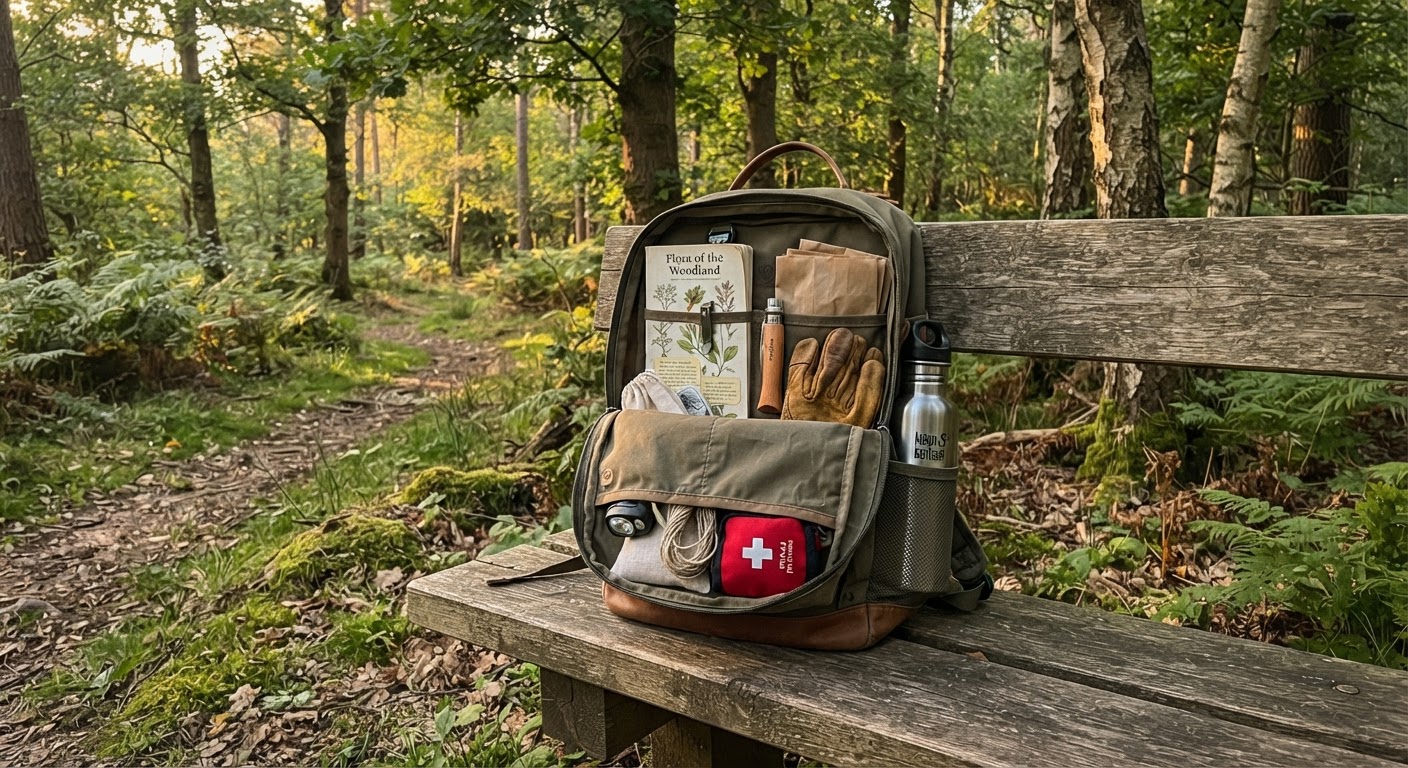
Nine items, most of which you already own somewhere in your house. The entire kit fits in a standard daypack with room left for lunch and an extra layer.
FAQ
Can I just use plastic grocery bags for foraging?
You can, but you shouldn’t. Plastic bags trap moisture and heat. Mushrooms turn slimy in under an hour. Greens wilt and begin fermenting before you get back to the car. Paper bags breathe. If plastic bags are all you have, keep them open and get your harvest home within 30 minutes.
Do I need a different knife for mushrooms versus greens versus roots?
No. A sharp 3–4 inch folding blade handles mushrooms, greens, roots, and everything else. The “mushroom knife” is a marketing invention. One quality pocket knife replaces four specialized tools and costs less than any single one of them.
Is a wicker basket actually better than a backpack?
For mushrooms specifically, yes — the open weave lets spores drop as you walk, which spreads spores to new areas and means more mushrooms next season. For everything else, a backpack or canvas tote works identically. The basket advantage is real but narrow. Don’t buy one until you know you’ll be mushroom hunting often enough to justify it.
What’s the one thing most foragers forget to bring?
Offline maps. Foraging takes you off trails into areas without cell service. Two things happen in sequence: you find a spectacular patch and mark it mentally, then you realize you have no idea which direction the car is. Download maps for your foraging area before leaving home.
How much should I actually spend on my first foraging kit?
Start with what you own: pocket knife, reusable grocery bag, gardening gloves you probably already have stashed somewhere, and a field guide from the library. Forage three times. The items you consistently find yourself wishing you had — those are the ones worth buying. Total first-season spend: $0–40 for most people, and most of that goes to the field guide.
Building a foraging kit follows the same principle as building any tool collection: start with the minimum that gets the job done. Add only what solves a problem you’ve actually encountered in the field. The best gear is the stuff you use — not the stuff that looked convincing in a gear review video.