I still remember the first wild plant I ever ate.
I was eight years old, crouched in my grandmother’s backyard in the countryside, watching her pluck dandelion leaves from between the cracks of her stone pathway. She rinsed them under the garden hose, tossed them into a bowl with olive oil and lemon, and handed me a fork.
“Taste it,” she said. “This grows everywhere. People spend money on lettuce while stepping on better food.”
That slightly bitter, peppery leaf changed how I saw the ground beneath my feet forever.
Two decades later, I’ve eaten wild plants in three countries, taught foraging workshops to hundreds of beginners, and—yes—made almost every mistake in the book. The goal of this guide isn’t to turn you into some survivalist influencer. It’s to give you the confidence to walk outside, recognize five plants you’ve probably stepped on a hundred times, and bring them home for dinner. Safely.
What Is Foraging, Really?
Foraging is exactly what it sounds like: finding and harvesting wild food. But let’s strip away the romanticized Instagram version.
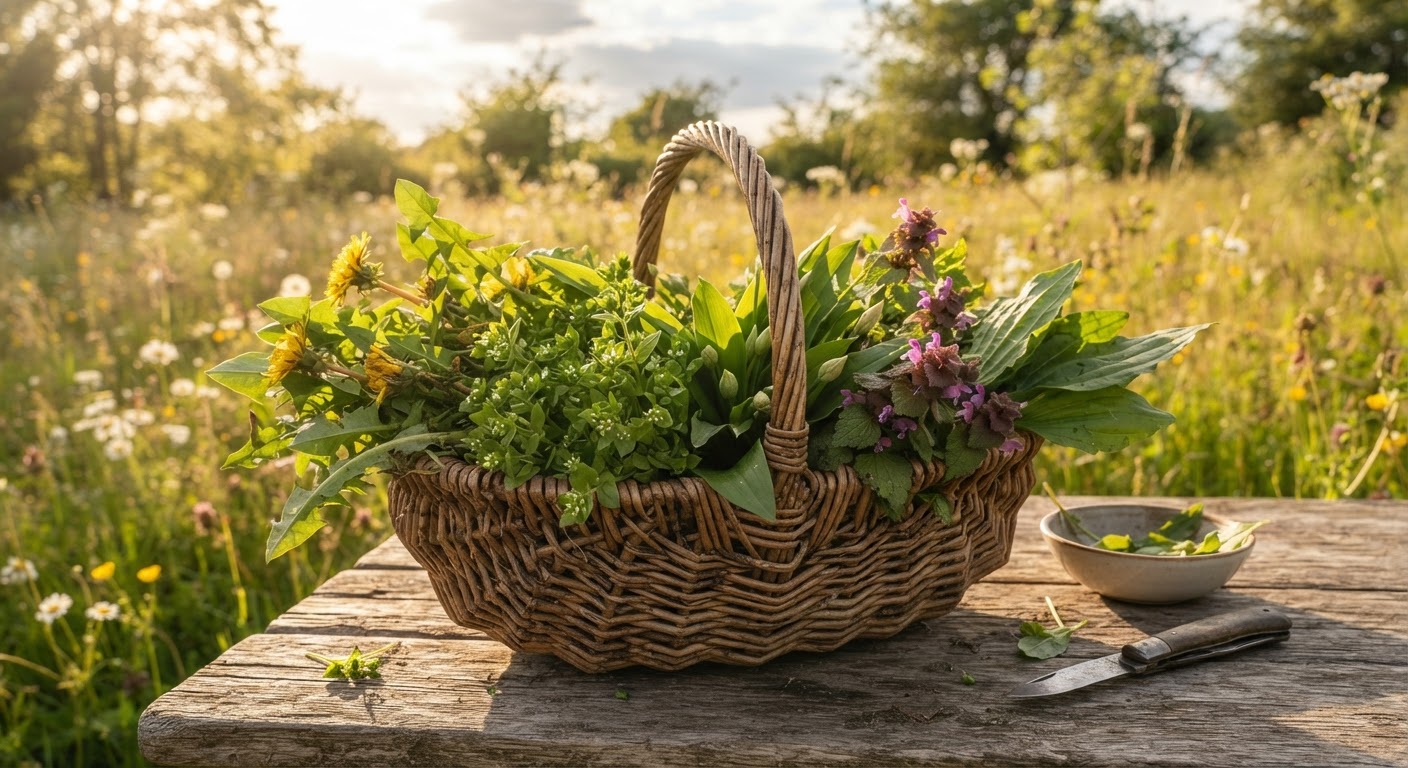
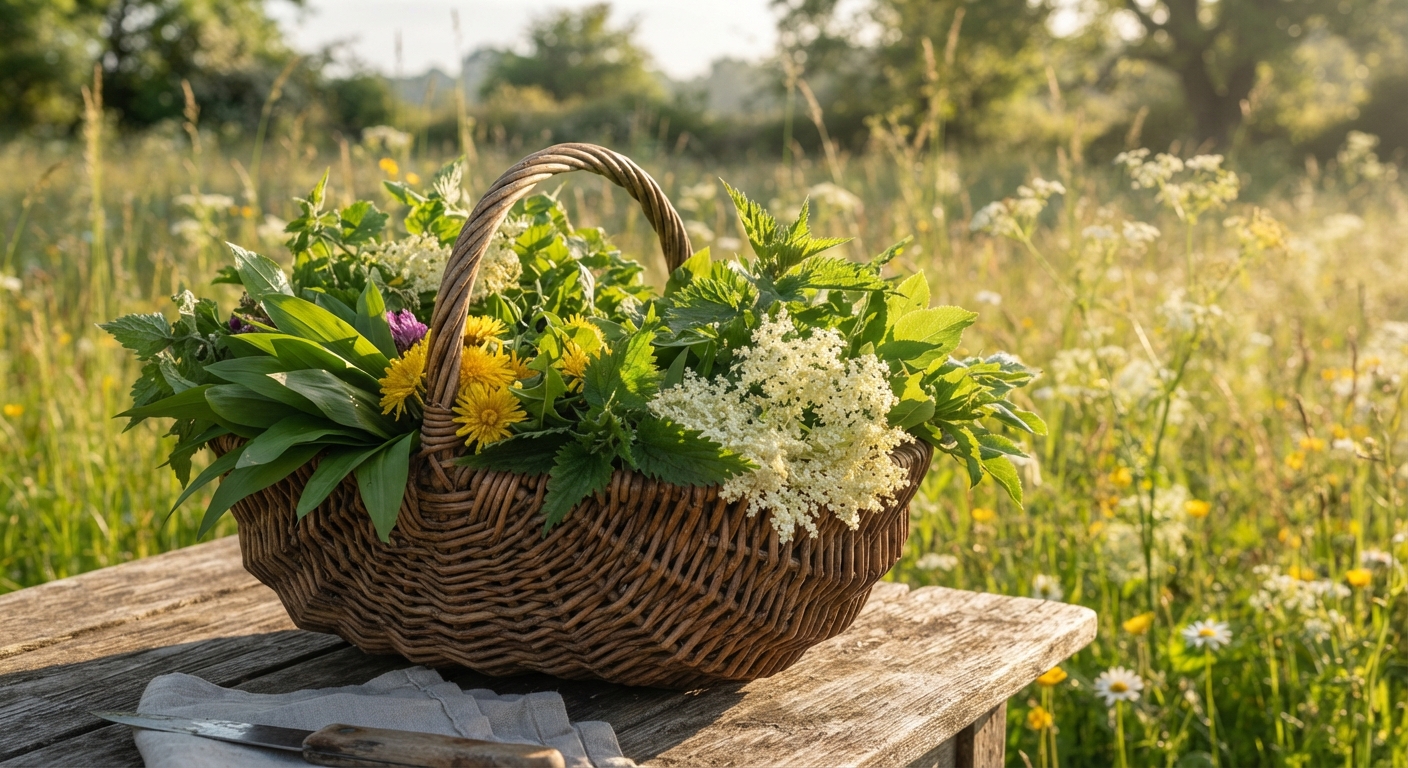
Foraging isn’t about wandering deep into untouched wilderness with a wicker basket and a linen scarf. Most of the best foraging I’ve done has been within a 15-minute walk of a bus stop. Parks, hedgerows, riverbanks, abandoned lots, even cracks in the pavement—wild edible plants don’t care about aesthetics.
Humans foraged for roughly 99% of our existence as a species. Agriculture only showed up about 12,000 years ago. Your ancestors knew which plants were food, medicine, and poison. That knowledge is still buried somewhere in your wiring. Reconnecting with it feels more natural than you’d expect.
The key distinction: foraging is not gardening. You’re not planting anything. You’re not cultivating. You’re engaging with what’s already there—and that comes with a specific set of responsibilities, which we’ll get to.
The Only Tools You Need (Seriously, Don’t Overcomplicate This)
When I started, I bought a foraging knife, a special foraging bag, a foraging belt, and a book about foraging tools. I used exactly none of them after week two.
Here’s what actually matters:
- A basket or cloth bag. Paper bags work fine. Plastic bags make everything sweat and wilt. A simple cotton tote does the job perfectly.
- A pair of gardening gloves. Nettles don’t care about your enthusiasm. Neither do thistles.
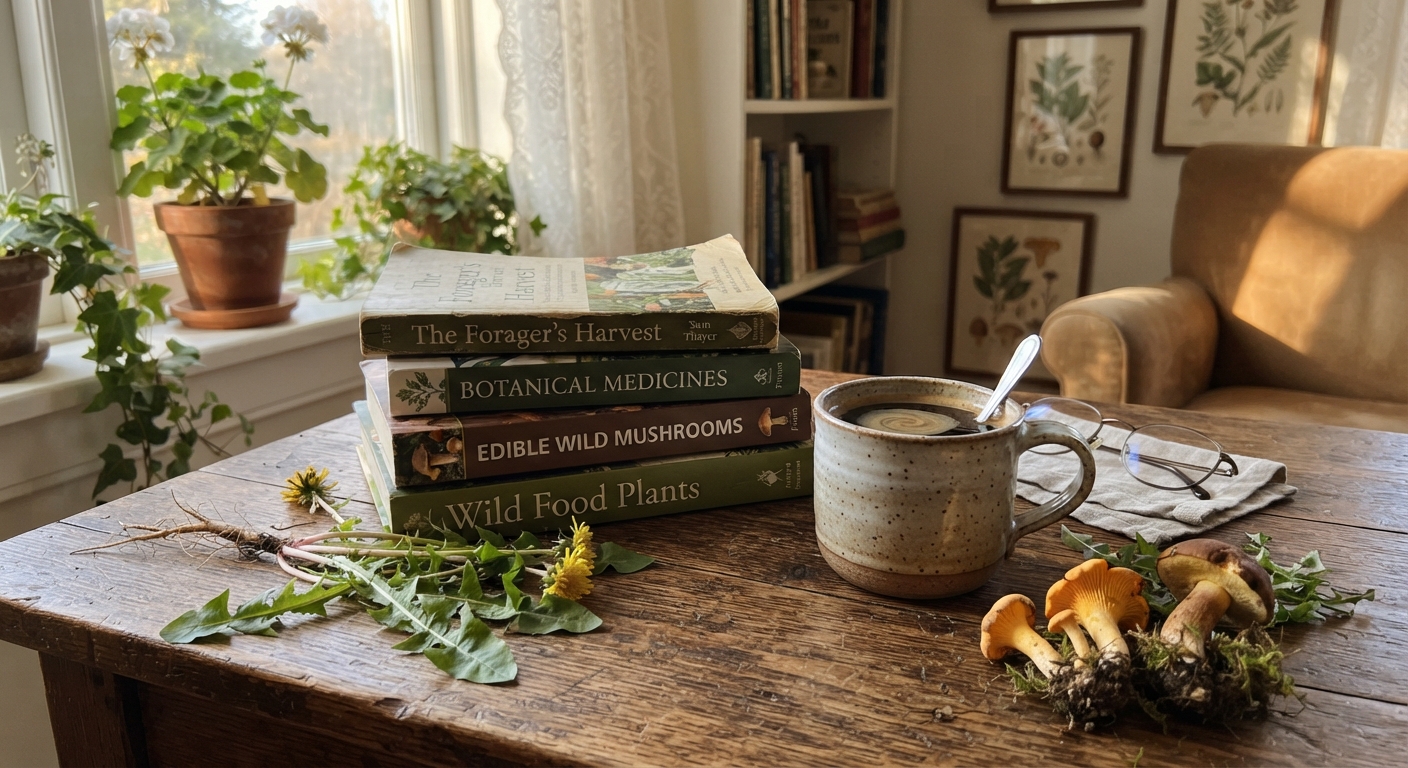
- A field guide. A physical book, not just an app. The Forager’s Calendar by John Wright or Food for Free by Richard Mabey are excellent starting points if you’re in the UK. Peterson Field Guides are solid for North America. Apps are supplements, never your primary tool.
- Scissors or a small pocket knife. Clean cuts are better for the plant than tearing. A basic Opinel or Swiss Army knife is more than enough.
That’s it. You don’t need a foraging license in most places (check local regulations), you don’t need special clothing, and you definitely don’t need a $200 course to get started. The plants don’t care what you’re wearing.
The Three Golden Rules — Memorize These Before You Pick Anything
If you remember nothing else from this entire article, remember these three rules. They’ve kept me out of the emergency room for 20+ years of foraging.
Rule 1: 100% Positive Identification, Every Single Time
Not 90% sure. Not “it looks like the picture.” One. Hundred. Percent.
This means cross-referencing at least two sources. I use a physical field guide plus a reliable app as confirmation. The plant needs to match on multiple features: leaf shape, leaf arrangement on the stem, flower color and structure, smell, habitat, and season.
One plant I almost messed up early on: wild carrot (Queen Anne’s lace) versus poison hemlock. They look similar to an untrained eye. One gives you a nice root vegetable. The other killed Socrates. I now check the stem for purple spots (hemlock) and the smell (wild carrot smells carroty) every single time. No exceptions, no shortcuts.
Rule 2: When in Doubt, Throw It Out
There’s no shame in walking away from a plant you can’t confidently identify. Take photos. Go home. Research. Come back next week. The plant will still be there.
I’ve left hundreds of plants unpicked over the years because something didn’t feel quite right. I’ve never regretted it once.
Rule 3: Start Small — Eat a Tiny Test Portion First
Even with plants you’ve confidently identified, your body might react differently than someone else’s. Eat a small amount—a single leaf or a tiny cooked portion—and wait at least a few hours before eating more. Some people react to plants that others tolerate perfectly fine.
This rule saved a friend of mine who turned out to be allergic to wild garlic. She tried a tiny raw leaf, her lips tingled slightly, and she knew to avoid it. If she’d thrown a handful into a pesto, it could have been a very different evening.
Your First 5 Plants — Unmistakable, Abundant, and Delicious
These five plants are my go-to recommendations for absolute beginners. They’re widespread across North America and Europe, they have few or no dangerous lookalikes, and they actually taste good.
1. Dandelion (Taraxacum officinale)
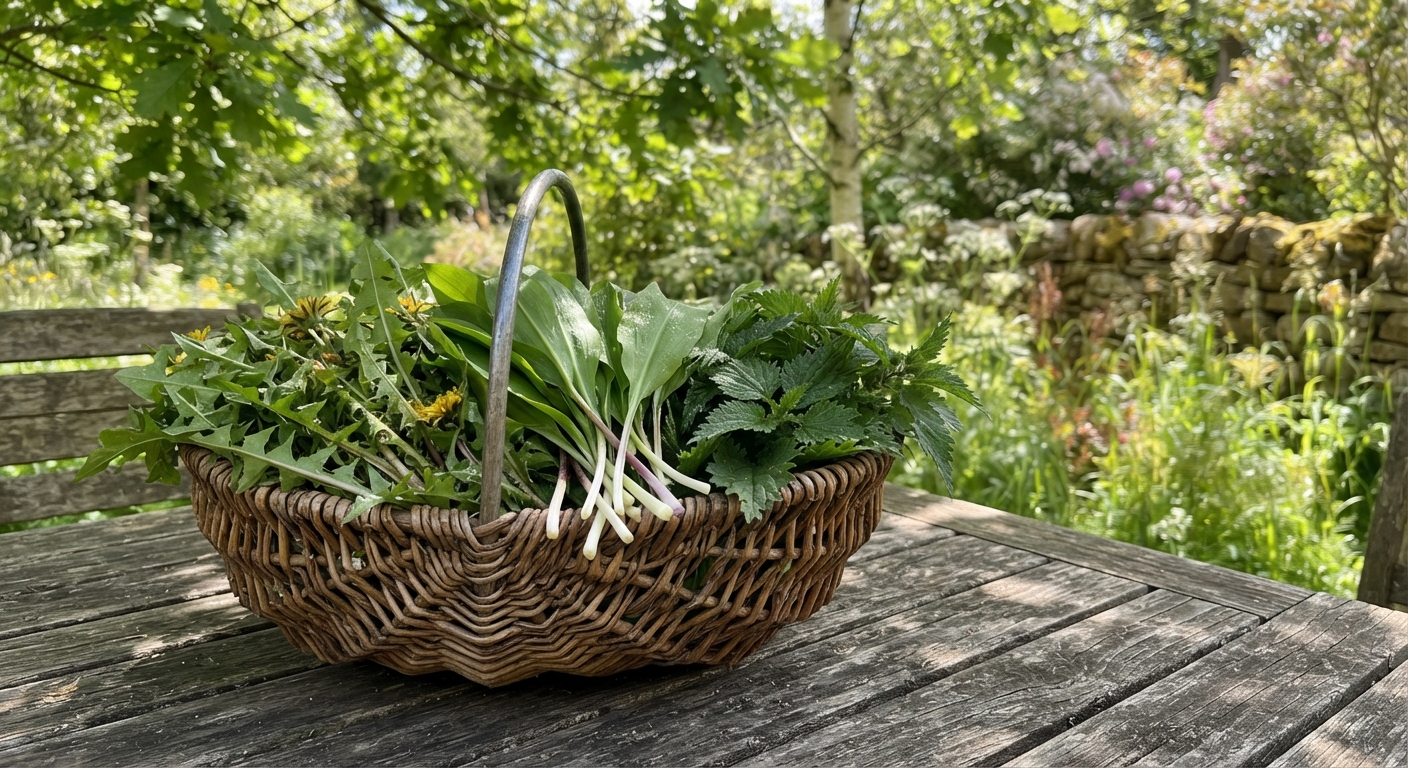
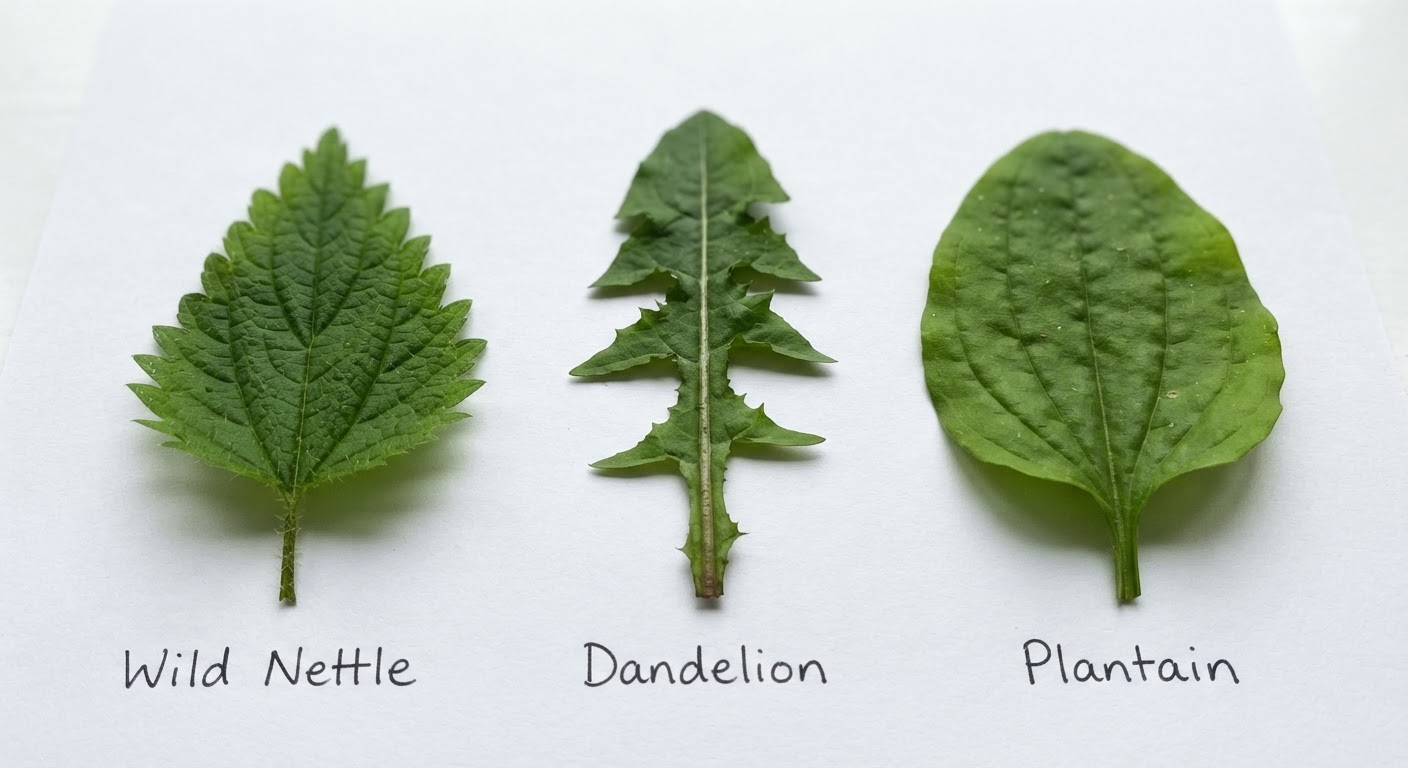
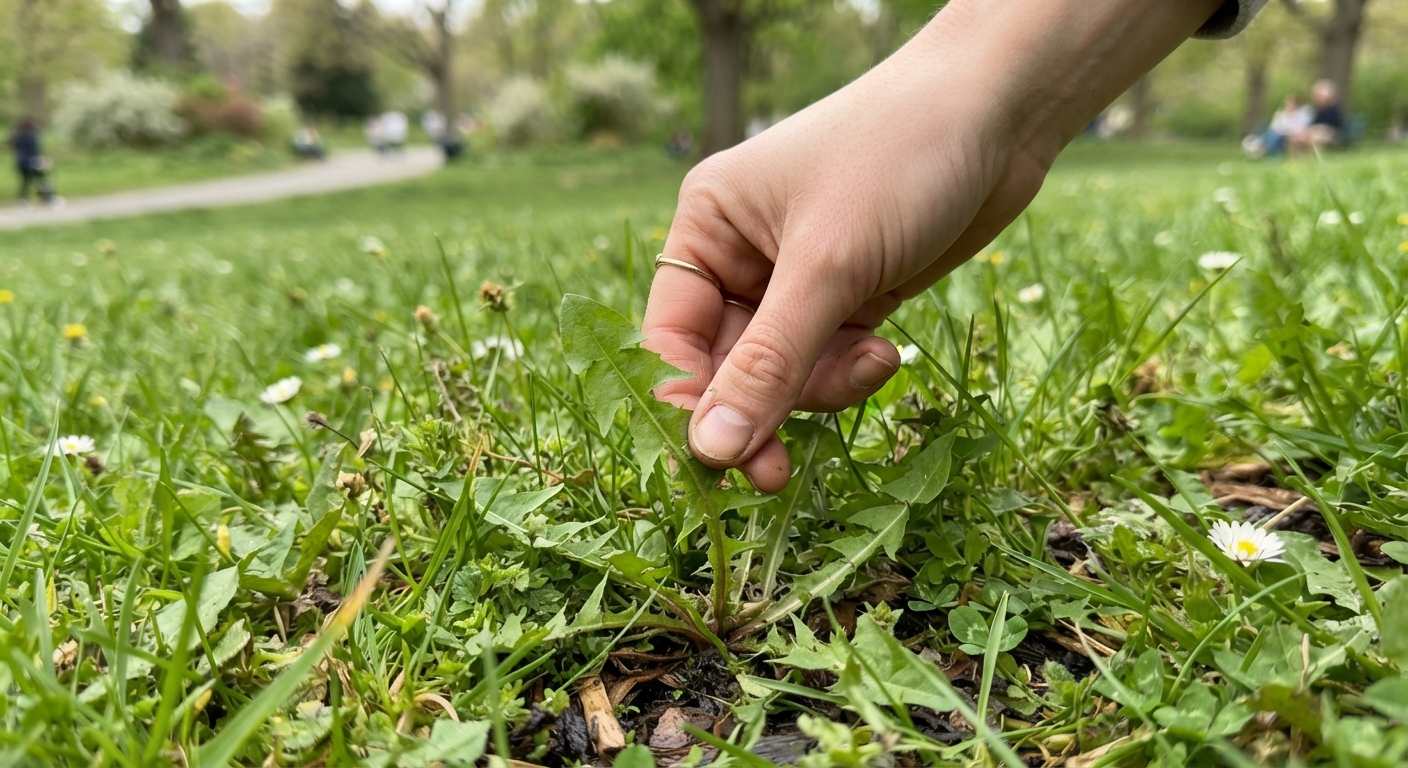
Every part of this plant is edible. Leaves, flowers, and roots. You’ve seen it a thousand times. It’s the one plant most beginners should start with because it’s genuinely impossible to mistake—the jagged leaves, the hollow stem with milky sap, the bright yellow composite flower.
How to eat it: Young leaves are less bitter—add them raw to salads. Older leaves benefit from a quick blanch or sauté. The flowers make a lovely fritter or can be steeped into tea. Roots can be roasted and ground as a coffee substitute.
Where to find it: Lawns, parks, fields, sidewalk cracks. Avoid spots that are obviously sprayed with herbicides. If the lawn looks like a golf course, skip it.
2. Wild Garlic / Ramsons (Allium ursinum)
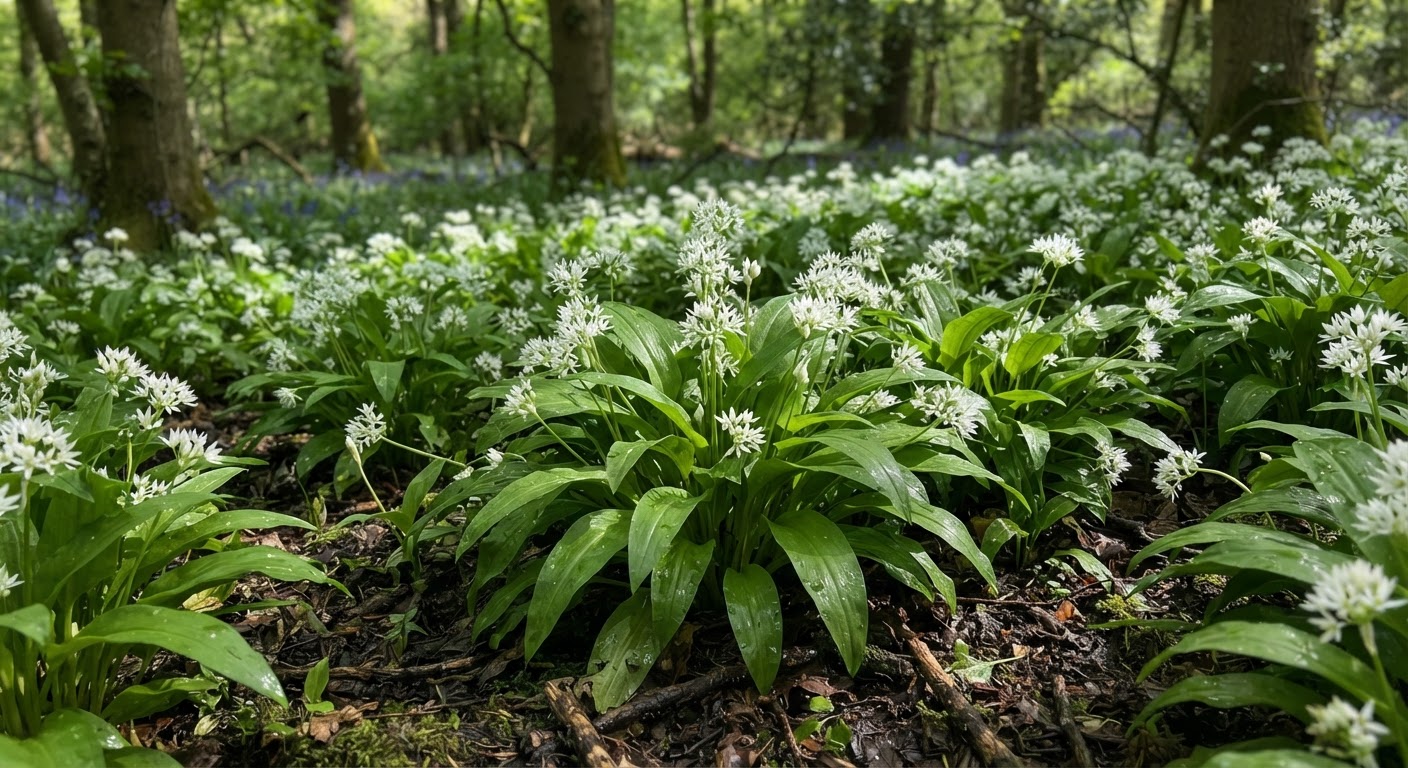
Wild garlic announces itself before you even see it. The smell is unmistakable—walk through a patch in spring and the air is thick with garlic. The broad, pointed leaves and clusters of white star-shaped flowers make it easy to identify.
How to eat it: Leaves are fantastic raw in salads, blended into pesto, or wilted like spinach. The flowers are edible too and make a beautiful garnish.
One critical warning: The leaves can resemble lily of the valley, which is poisonous. The difference? Crush a leaf. If it smells strongly of garlic, you’re safe. No garlic smell, no eat. Never rely on visual identification alone for this one.
3. Stinging Nettle (Urtica dioica)
I know—suggesting a plant that stings you seems cruel. But nettles are arguably the most nutritious wild green available, packed with iron, calcium, and vitamins. Once cooked or dried, the sting disappears completely.
How to eat it: Wear gloves to harvest the top 4–6 inches of young growth. Blanch in boiling water for 30 seconds—the sting is destroyed immediately. Use exactly like spinach: soups, pesto, saag, or simply sautéed with butter and garlic. Nettle tea is also excellent.
Where to find it: Rich soil, woodland edges, near streams, and—ironically—around abandoned farm buildings. If there’s a patch of nettles, the soil is probably good.
4. Blackberry / Bramble (Rubus fruticosus)
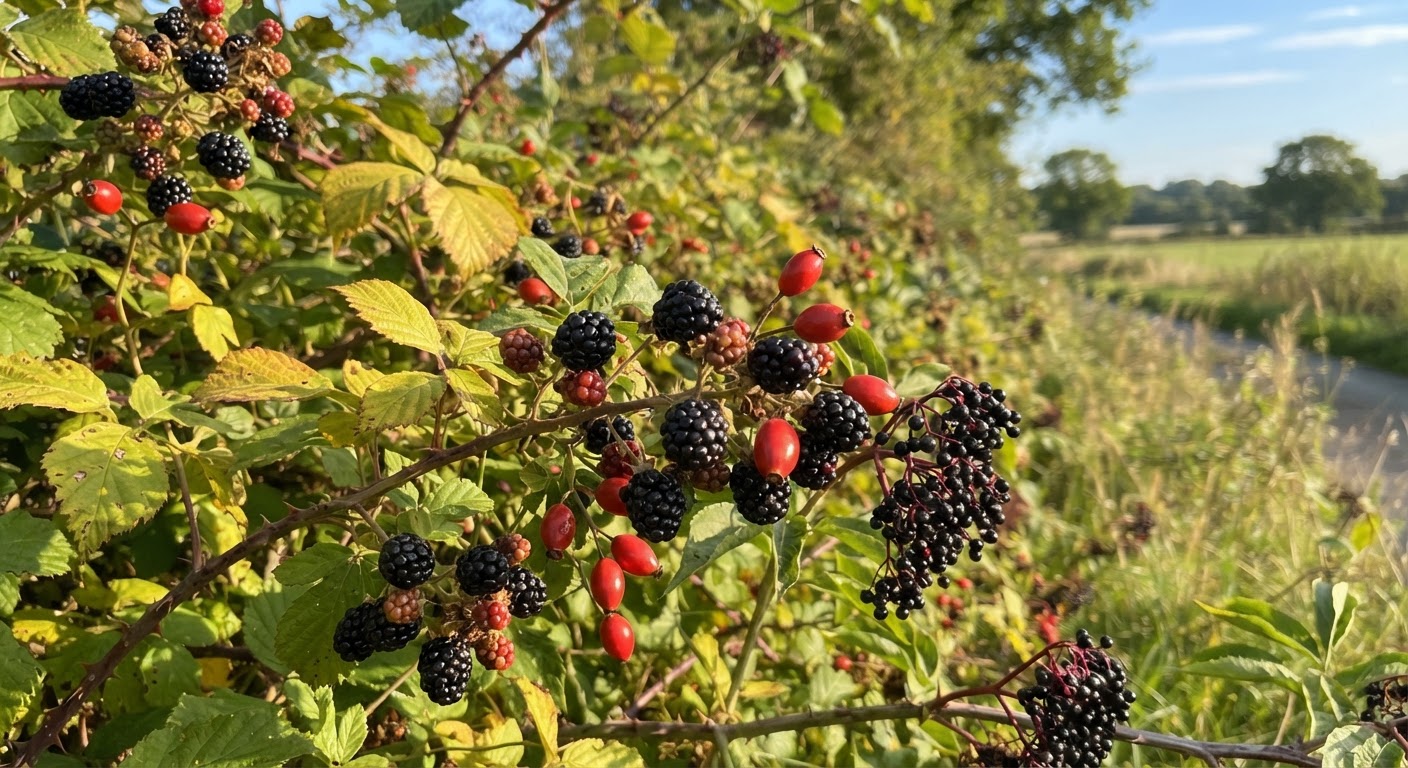
This is the gateway drug of foraging. Everyone knows what a blackberry looks like. The thorny arching stems, the serrated leaves, the white-to-pink flowers, and those glossy black aggregate berries in late summer.
How to eat it: Raw, straight off the bush. In crumbles, jams, pies, or muddled into drinks. The young leaves can also be dried for tea.
Where to find it: Brambles grow almost anywhere—hedgerows, woodland edges, railway embankments, overgrown gardens. Pick berries above knee height (dogs) and away from busy roads.
5. Chickweed (Stellaria media)
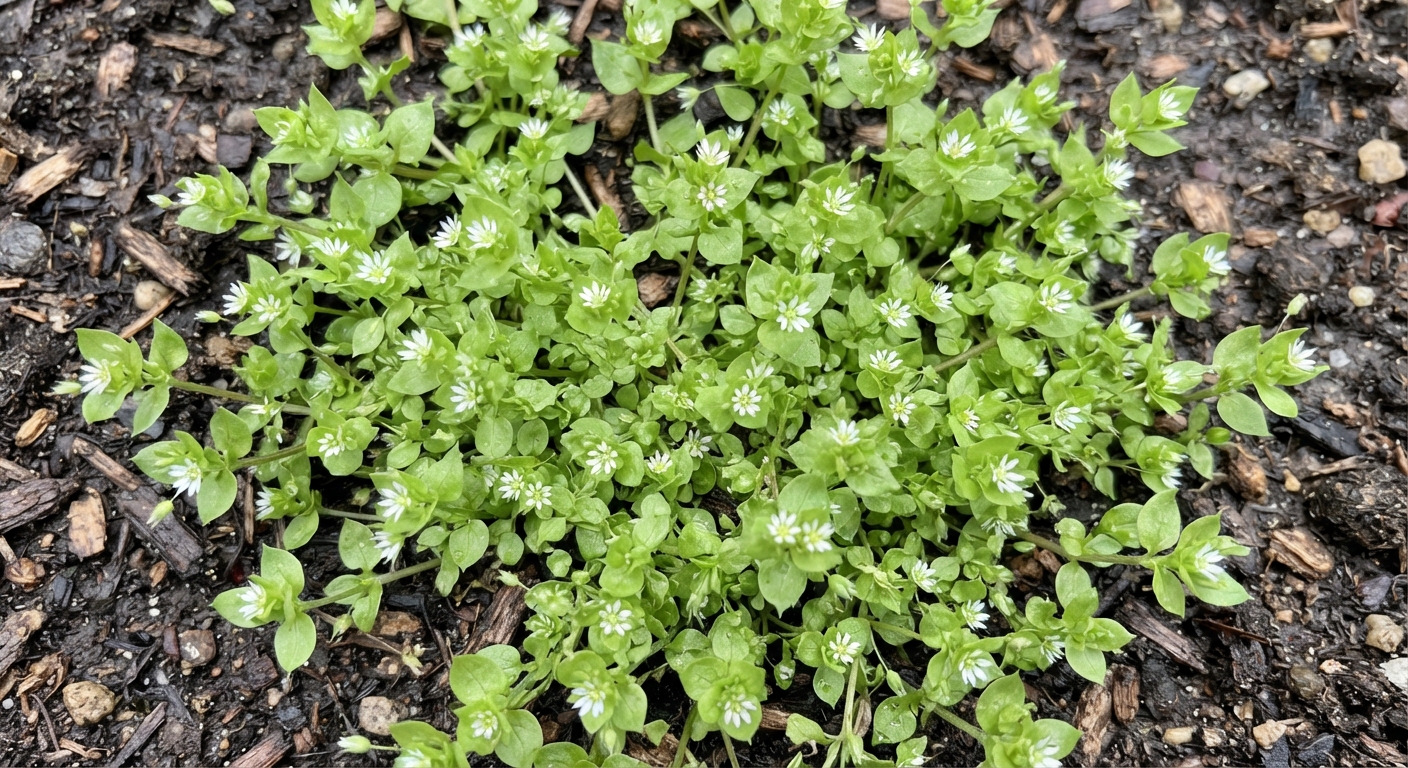
Chickweed is the underrated superstar of urban foraging. It grows in a sprawling mat, has tiny white star-shaped flowers, and the stems have a distinctive single line of hairs running down one side. It tastes mild and fresh, like a cross between lettuce and corn silk.
How to eat it: Raw in salads, on sandwiches, or wilted briefly. It’s delicate, so don’t overcook it.
Where to find it: Gardens, disturbed soil, plant pots, vegetable beds. If you have a garden, there’s a good chance chickweed is already growing in it.
The Most Common Beginner Mistakes (I’ve Made Most of Them)
Learn from my embarrassment.
Mistake 1: Relying on one app for identification. Plant identification apps are impressive these days, but they get things wrong. I’ve seen apps confidently misidentify hemlock as wild carrot. Use an app as a hint, then confirm with a field guide and at least one other source.
Mistake 2: Foraging near roads or sprayed areas. Plants absorb what’s in their environment. Roadside plants accumulate exhaust residue and heavy metals. Park plants may be regularly treated with pesticides. The best foraging spots are at least 30 feet from busy roads and not on manicured lawns.
Mistake 3: Eating too much of a new plant at once. Your digestive system needs time to adapt to wild foods, which are often more fibrous and contain compounds your body isn’t used to. Start small. Always.
Mistake 4: Not checking local foraging laws. In the UK, foraging for personal use is generally legal under the Theft Act (as long as you’re not uprooting plants without permission). In many US national parks, foraging is strictly prohibited. Always check the rules for your specific location.
Mistake 5: Uprooting plants. This matters for sustainability and—in many places—legality. Unless you’re harvesting a root vegetable like dandelion root, cut leaves and stems above ground level. The plant will regrow.
A Beginner’s Seasonal Foraging Calendar
Foraging has a rhythm, and learning it is half the fun. Here’s what to look for throughout the year:
| Season | What’s Available | What to Look For |
|---|---|---|
| Spring (Mar–May) | Wild garlic, nettles, dandelion, chickweed, hawthorn leaves | Tender new growth, woodland floors, hedgerows |
| Summer (Jun–Aug) | Blackberries, raspberries, elderflower, fat hen, purslane | Sunny hedgerows, disturbed ground, coastal paths |
| Autumn (Sep–Nov) | Blackberries (late), elderberries, hawthorn berries, rosehips, sweet chestnuts | Hedgerows, park trees, woodland edges |
| Winter (Dec–Feb) | Dandelion (year-round), chickweed, hairy bittercress, rosehips (lingering) | Sheltered spots, south-facing banks, mild microclimates |
One thing that surprised me as a beginner: foraging doesn’t stop in winter. Some of the best chickweed and dandelion salads I’ve eaten were picked in January during a mild spell.
Foraging Etiquette — The Rules Nobody Writes Down
Good foragers leave no trace. Better foragers leave a place healthier than they found it.
Take only what you need. A good rule of thumb: never take more than 10–20% of what’s available from any single patch. Leave enough for wildlife—those berries were feeding birds long before you showed up—and enough for the plant to regenerate.
Don’t trample. The plants around the one you’re harvesting matter just as much. Watch where you step. I’ve seen foraging groups completely flatten a patch of wildflowers trying to reach one mushroom.
Ask permission on private land. This seems obvious, but you’d be surprised how many people skip it. In my experience, most landowners are curious and friendly when you explain what you’re doing. The worst they can say is no.
Know your protected species. Some wild plants are legally protected. In the UK, this includes species like lady’s slipper orchid and certain ferns. If you don’t recognize it, don’t pick it—this rule serves identification and legal concerns equally well.
Share your spots sparingly. A foraging patch is a bit like a fishing hole. Tell one trusted friend, not all of social media. A single viral TikTok can strip a patch clean in a weekend.
Frequently Asked Questions
Is foraging legal? It depends entirely on where you are. In England and Wales, the Theft Act 1968 allows foraging of the “four Fs”—fruit, foliage, fungi, and flowers—for personal use from common land, provided you don’t uproot plants. Scotland has broader “right to roam” laws. In the United States, rules vary by state, county, and specific park. Always check local regulations before you pick.
Can I forage in city parks? Technically, maybe. Practically, urban parks are often heavily sprayed and not ideal. Many city parks also have bylaws against removing plant material. Check with your local council or parks department before foraging in any maintained public space.
What if I think I’ve eaten something poisonous? Don’t wait. Call emergency services or poison control immediately. Take a photo of the plant you ate, or bring a sample with you. Time matters. This is why Rule 1 exists—prevention is always better than treatment.
How long does it take to learn plant identification properly? You can learn your first 5–10 plants in a couple of weekends. Real competency—the ability to confidently identify hundreds of species across multiple seasons and habitats—takes years. Start small, stay humble, and never stop learning.
Your First Foraging Walk — A Simple Plan
Here’s exactly how to do your first foraging outing:
- Pick one plant. Don’t try to learn five at once. Pick dandelion—it’s everywhere and unmistakable.
- Bring your field guide. Flip to the dandelion page. Confirm: jagged leaves, hollow stem, milky sap, yellow composite flower.
- Find a clean spot. A friend’s unsprayed garden, a wild meadow, an organic farm with permission.
- Harvest a small amount. Four or five leaves is plenty.
- Take it home, wash it, eat a tiny piece. Wait a few hours.
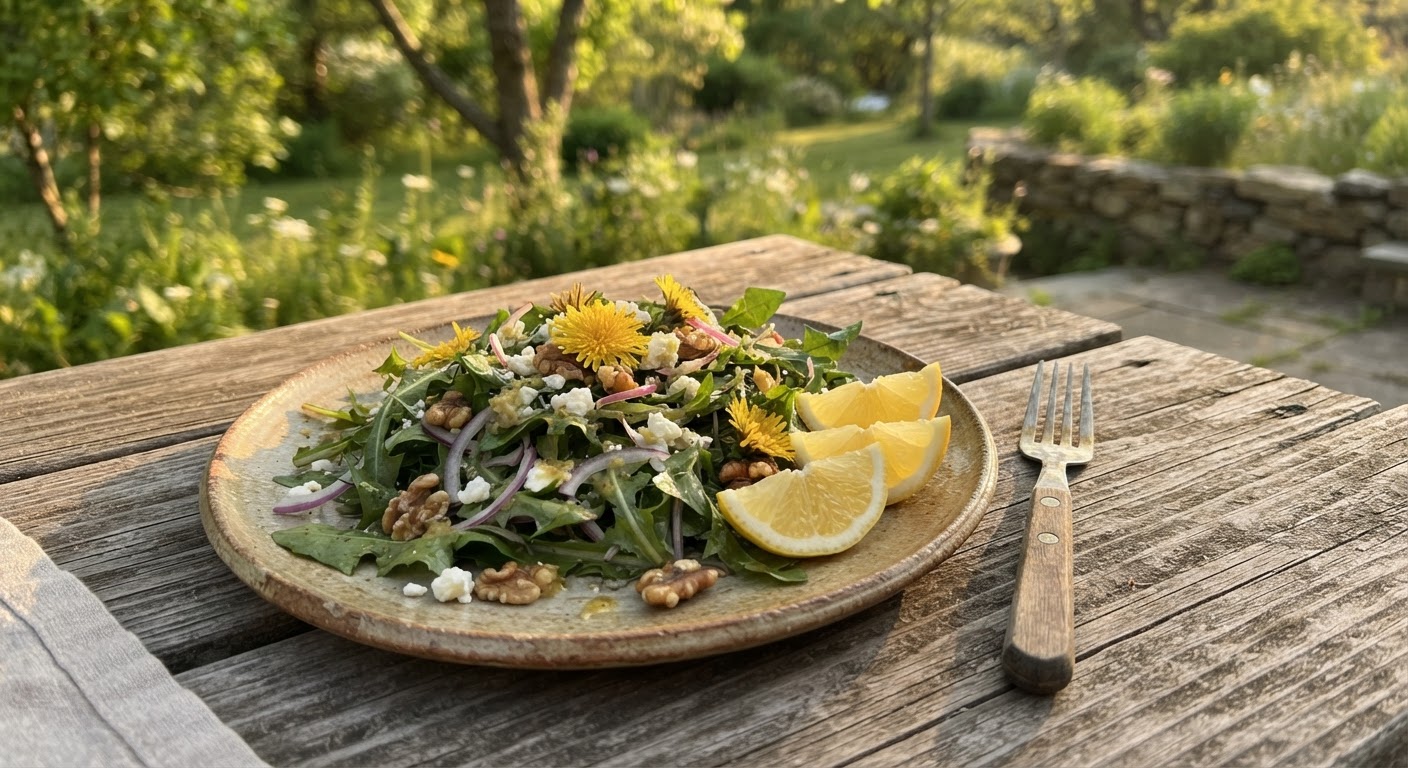
- Make something simple. Dandelion salad with olive oil, lemon, and salt. That’s it. That’s the whole experience.
That first meal won’t just taste good. It’ll taste like something you did yourself—something most people have forgotten how to do.
And that feeling? It’s addictive in the best possible way.
Happy foraging. Start slow, stay safe, and always be 100% sure.
Related articles you might enjoy:
- How to Identify Dandelion: The Ultimate Beginner’s Plant
- Wild Garlic Pesto Recipe: Foraging to Plate in 15 Minutes
- Nettle Soup: The Easiest Wild Food Recipe You’ll Ever Make
- Foraging Safety: Poisonous Lookalikes You Must Know
- Urban Foraging: Finding Wild Food in the City