Empty Fridge? 9 Wild Plants You Can Pick and Eat Today
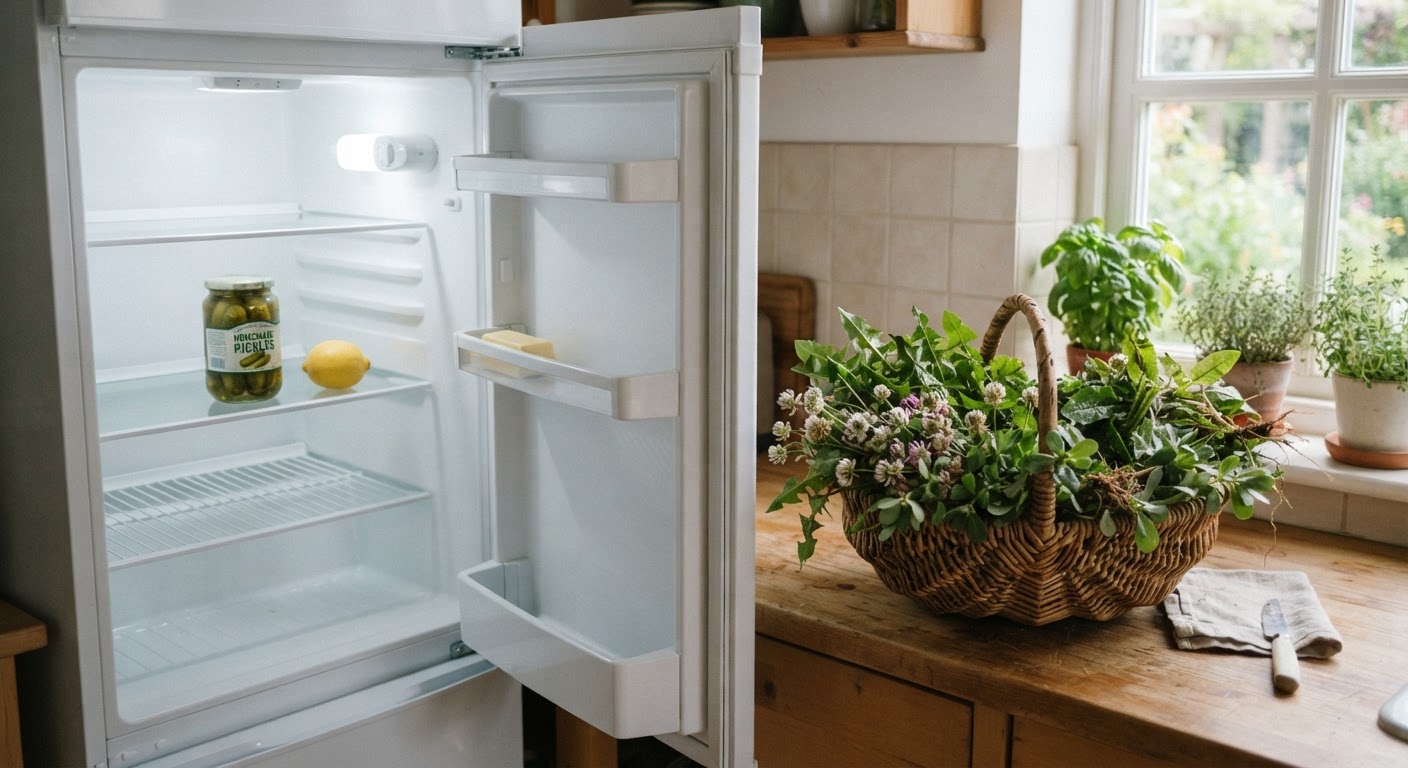
It’s 6 p.m., and the fridge is holding half a jar of pickles, a wrinkled lemon, and a cheese drawer that’s become a science experiment. Payday is Friday. Takeout is $40 you don’t want to spend. Here’s the thing almost nobody stops to notice: there’s a free grocery store growing within a five-minute walk of your front door — in the lawn, the sidewalk cracks, the park, the sunny patch of dirt next to the bus stop.
This isn’t a survival guide. You’re not lost or stranded, and nobody’s life is on the line. This is the everyday version of foraging: what to pick when the fridge is empty and you want something green, free, and genuinely good to eat, without driving anywhere or spending a dollar.
Below is the shortlist of wild plants you can realistically find near home today — how to spot them, how to eat them, and the few rules that keep you out of trouble. If you want the 60-second version, skip straight to the comparison table.
The 30-Second Safety Filter
Before you grab a bowl and head outside, three rules. These aren’t the full foraging lecture — they’re the bare minimum for picking greens around your own neighborhood.
- Positive ID only. If you’re not 100% sure what a plant is, you don’t eat it. “Probably dandelion” is not a species.
- Pick clean. Skip anything within about 20 feet of a busy road, any spot dogs visit, and any lawn that’s been sprayed. The same plant is food in one spot and not-food in another.
- First taste is small. Even safe plants can disagree with you the first time. Eat a small portion, wait, then have more.
That’s it. Now the plants.
The 9 Wild Plants to Pick When the Fridge Is Empty
1. Dandelion (Taraxacum officinale)
The whole plant is food, top to bottom.
- What to eat: Young leaves raw in salad, older leaves blanched to cut the bitterness, flowers raw or fried, roots roasted as a coffee substitute.
- Where to find it: Everywhere. Lawns, sidewalks, parks, cracks in the driveway. It’s the one wild plant most people already recognize.
- Taste: Bitter and peppery. The bitterness is a clue to the nutrient load — dandelion is packed with vitamins A, C, and K.
- Watch for: The lookalikes (hawkbit, cat’s ear) are edible too, so this is one of the safest plants on the list. A single flower on a hollow, milky stem means dandelion.
2. Chickweed (Stellaria media)
A mild, tender green that likes cool, damp, shaded spots — the back edge of a garden bed or under a hedge.
- What to eat: Tops and tender stems, raw in salad or lightly cooked. Tastes like a mild spinach.
- Where to find it: Garden beds, shaded lawn edges, damp soil. Often still green when everything else has gone dormant.
- Watch for: Spurge, a toxic lookalike with white sap and flat, matted leaves. Chickweed has a single line of fine hairs running up one side of the stem — roll it between your fingers and the hairs switch sides. No hairs, no eat.
3. White Clover (Trifolium repens)
- What to eat: Leaves raw or cooked, flowers raw (sweet) or dried for tea.
- Where to find it: Lawns everywhere. Probably in your own yard right now.
- Taste: Mild, slightly sweet flowers, grassy leaves. Eat the flowers raw; cook the leaves.
- Watch for: Go easy on it raw — clover can be gassy. Cook the leaves if you’re eating more than a nibble.
4. Broadleaf Plantain (Plantago major)
Not the banana. A low, rosette-forming weed with broad oval leaves and pronounced parallel veins.
- What to eat: Young leaves cooked — raw they’re tough and stringy. Older leaves get too fibrous, so stick to the young ones.
- Where to find it: Compacted soil, path edges, driveways, lawns. It thrives right where other plants get trampled.
- Taste: Mild, earthy, a bit chewy. Boil or sauté briefly.
- Watch for: The stringy veins are the giveaway. Strip a leaf and if it holds together with thread-like veins, it’s plantain.
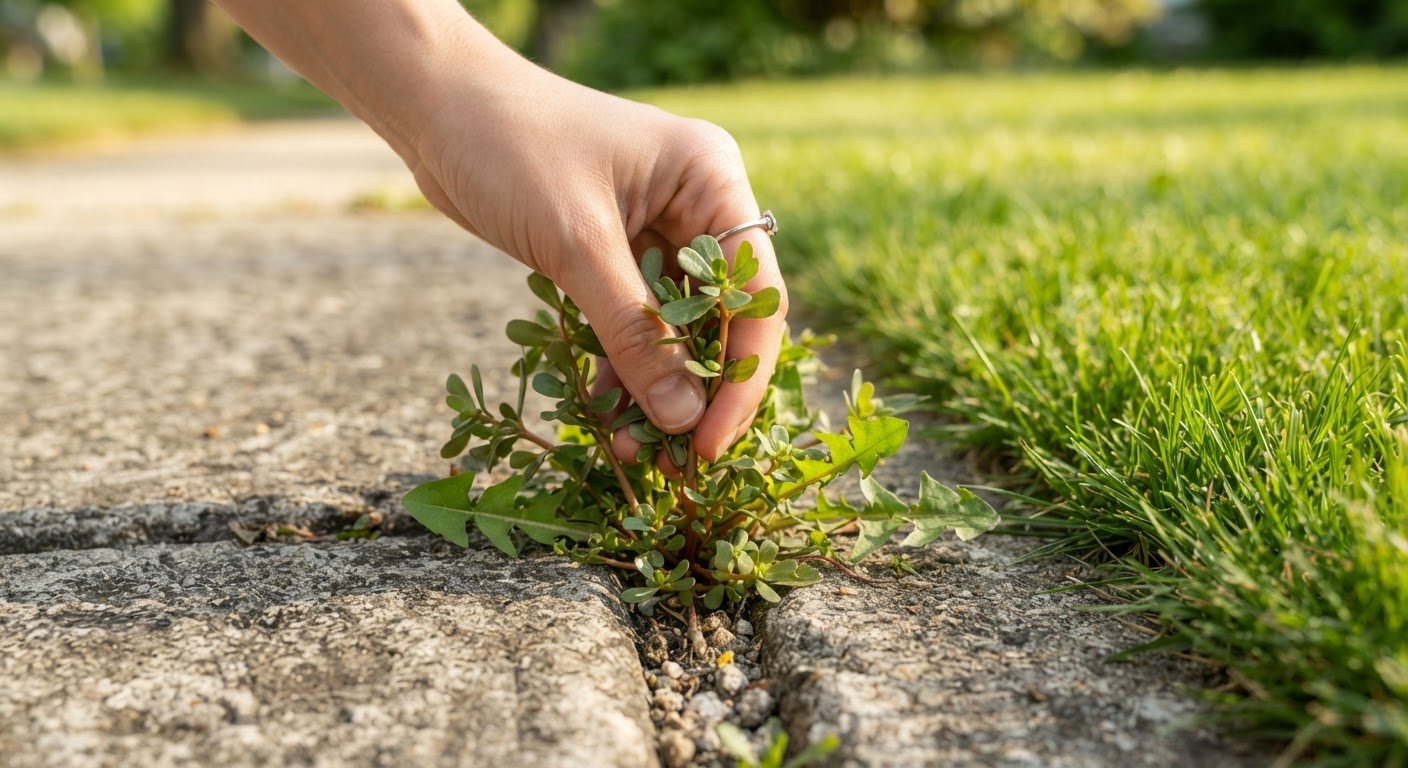
5. Purslane (Portulaca oleracea)
The hidden gem on this list. Purslane has more omega-3 fatty acids than almost any leafy green, and it’s succulent and crisp.
- What to eat: Stems and leaves raw in salad, or lightly sautéed. Slightly lemony, slightly salty.
- Where to find it: Garden beds, cracks in pavement, sunny bare dirt. It loves heat.
- Watch for: Spotted spurge, a toxic lookalike that also grows flat with reddish stems. Purslane’s stems are thick, smooth, and juicy; spurge leaks white sap when snapped. White sap? Leave it.
6. Wild Garlic / Onion Grass (Allium vineale and friends)
- What to eat: Leaves and bulbs, chopped like chives or scallions.
- Where to find it: Lawns and fields — you’ll smell it before you see it when the mower runs.
- Taste: Like garlic and chives. Excellent chopped into eggs, potatoes, or anything savory.
- Watch for: The smell is the whole ID. Real alliums smell like onion or garlic. The toxic lookalikes — like death camas — don’t. No onion smell, no eat.
7. Wood Sorrel (Oxalis spp.)
The “sour grass” with clover-like leaves and a sharp lemon flavor.
- What to eat: Leaves and flowers raw, in small amounts. Great in salads and as a garnish.
- Where to find it: Shaded lawns, woodland edges, garden beds.
- Taste: Bright, lemony, tangy. Kids love it.
- Watch for: Contains oxalic acid — the same stuff as spinach. Fine in small amounts, not by the bowlful every day.
8. Stinging Nettle (Urtica dioica)
The only plant on this list that requires cooking, and worth it — it’s basically wild spinach with a serious protein count.
- What to eat: Young tops, cooked. Boiling or steaming kills the sting in about 30 seconds.
- Where to find it: Rich soil, stream edges, field edges, sometimes an overgrown backyard corner.
- Taste: Rich, green, spinach-like. Great in soup, pesto, or as a cooked green.
- Watch for: The sting is the ID. Wear gloves, take the top few inches of new growth, and cook before eating. Never raw.
9. Lamb’s Quarters (Chenopodium album)
Also called goosefoot or wild spinach — one of the most nutritious wild greens there is.
- What to eat: Young leaves raw or cooked; cook the older leaves. Use it anywhere you’d use spinach.
- Where to find it: Disturbed soil — gardens, field edges, vacant lots, compost piles. It loves rich, tilled dirt.
- Taste: Mild, slightly nutty, very spinach-like.
- Watch for: The powdery white coating on young leaves is a good marker. Don’t over-harvest from heavily fertilized soil — this plant accumulates nitrates.
Quick Comparison: What to Pick First
If the fridge is empty and you’ve got 20 minutes of daylight left, here’s how the nine stack up on what actually matters.
| Plant | Best part | Effort to gather | Flavor | Prep | Watch out for |
|---|---|---|---|---|---|
| Dandelion | Leaves, flowers | Very low | Bitter, peppery | None to blanch | Basically none |
| Chickweed | Tender tops | Low | Mild spinach | None | Spurge lookalike |
| White clover | Flowers, leaves | Very low | Sweet, mild | None | Gas in excess |
| Broadleaf plantain | Young leaves | Low | Earthy | Cook | Tough when old |
| Purslane | Stems, leaves | Low | Lemony, salty | None | Spotted spurge |
| Wild garlic | Leaves, bulbs | Low | Garlic | Chop | Non-smelly lookalikes |
| Wood sorrel | Leaves, flowers | Very low | Tangy lemon | None | Oxalic acid (limit) |
| Stinging nettle | Young tops | Medium | Spinach | Must cook | The sting (gloves) |
| Lamb’s quarters | Young leaves | Low | Mild, nutty | Cook older leaves | Nitrates in rich soil |
Yard vs. Sidewalk vs. Park: Where Should You Actually Pick?
One of the biggest mistakes new foragers make is treating every location the same. They’re not. Here’s the breakdown.
- Your own yard (best). You know what’s been sprayed, and you control it. If you haven’t applied herbicide, your lawn is the safest foraging spot you have — dandelion, clover, plantain, and onion grass probably already live there.
- Sidewalk cracks and vacant lots (use judgment). Great for purslane and dandelion, but you have no idea what’s been sprayed or visited. Stick to spots that clearly aren’t maintained, avoid the strip right next to the road, and wash everything twice.
- Public parks (check the rules). Many parks prohibit picking, and many are sprayed. Even where picking is allowed, go off the main path and away from the treated borders. When in doubt, skip it.
- Garden beds and community plots (ask first). Chickweed and lamb’s quarters love cultivated soil, but if it’s not your plot, it’s not your call.
The rule of thumb: the closer to your own doorstep and the further from traffic and spraying, the better.
Quick Start: 20 Minutes to a Bowl of Free Greens
Skip the theory. Here’s the fastest route from an empty fridge to a bowl of food.
- Grab a bowl, a pair of scissors, and gloves if you’re going for nettles.
- Hit your yard first: dandelion leaves, a handful of clover flowers, maybe some onion grass.
- Add purslane from a dry, sunny spot if you can find it.
- Wash everything thoroughly in cold water — twice.
- Toss the tender greens raw with oil, salt, and a squeeze of lemon (or use wood sorrel as the lemon).
- Sauté or blanch anything bitter or tough — dandelion, plantain, lamb’s quarters — for two minutes with a little oil and garlic.
- Eat a small amount first if any of these are new to you. Then finish the bowl.
That’s a real meal, for free, in about 20 minutes. It won’t replace a steak, but it’ll replace a $15 sad salad, and it’ll taste better than you expect.
The Plants to Skip Entirely Tonight
A few things you’ll probably see today that you should leave alone:
- Unknown berries. The red ones, the dark ones, the pretty ones. Berries cause more wild-food poisonings than anything else because so many safe and toxic ones look alike. If you can’t name it with certainty, it’s not on the menu.
- Mushrooms. Not today. Never a “fridge is empty, let me try this” food. The margin for error is zero, and the stakes can be a liver transplant.
- Anything with white sap (besides a known dandelion relative) or umbrella-shaped flower clusters like wild carrot — that family includes poison hemlock, and it is not worth your life to save $10 on dinner.
- Anything you can’t name in one second. If you have to squint, compare three photos, and ask a group, you’re not sure enough to eat it.
When the fridge is empty, the goal is a free, safe meal — not a botany exam. Stick to the nine above and you’ll eat well with zero drama.
Summary: Your Empty-Fridge Cheat Sheet
- Pick only what you can name with 100% certainty.
- Start in your own yard — it’s the safest spot, and the best plants are probably already there.
- The easy five for tonight: dandelion, chickweed, clover, purslane, and onion grass — all common, all low-risk, and most need zero cooking.
- Cook the tough or bitter ones — dandelion, plantain, lamb’s quarters — for two minutes and they transform.
- Skip all berries, mushrooms, and anything with white sap.
- Wash twice, taste small, then eat.
FAQ
Is it actually legal to pick wild plants in my neighborhood?
On your own property, yes. On public land it varies by location — many parks and nature reserves prohibit removing plants, so check local rules before you pick. Never harvest from private property without permission.
Can I really replace a meal with wild greens?
As calories, mostly no — wild greens are light on calories but heavy on vitamins and minerals. Treat them as the vegetable side of a free meal: combine them with whatever starch or protein you already have, like rice, eggs, potatoes, or pasta.
What if I pick the wrong plant?
That’s what the rules are for. Stick to plants you can positively identify, avoid the toxic lookalikes flagged above, and eat a small amount first. If you feel numbness, burning, or stomach pain, stop eating and seek medical help.
Do wild plants need to be cooked?
Some do, some don’t. Tender greens like chickweed, purslane, and clover are fine raw. Bitter or tough greens — dandelion, plantain, lamb’s quarters — are better cooked. Nettle must always be cooked.
How do I know my yard hasn’t been sprayed?
If you maintain it yourself, you know. If you rent or recently moved in, assume it may have been treated unless you know otherwise. When in doubt, stick to plants growing in a spot that clearly isn’t a maintained lawn.
Here’s the honest limitation of a list like this: reading about nine plants isn’t the same as knowing them when you’re staring at a lawn full of green. A dandelion is obvious. Chickweed versus spurge, or purslane versus spotted spurge — those are the moments that make people pause, and pausing is exactly when you reach for your phone. That’s why I built Edible Plant Identifier. Point your camera at a leaf and it tells you whether it’s a known edible, with identification notes and lookalike warnings. It works fully offline, so it works in the corner of your yard with no signal, and it’s the fastest way to turn “I think that’s chickweed” into “that’s chickweed, and here’s how to eat it.”