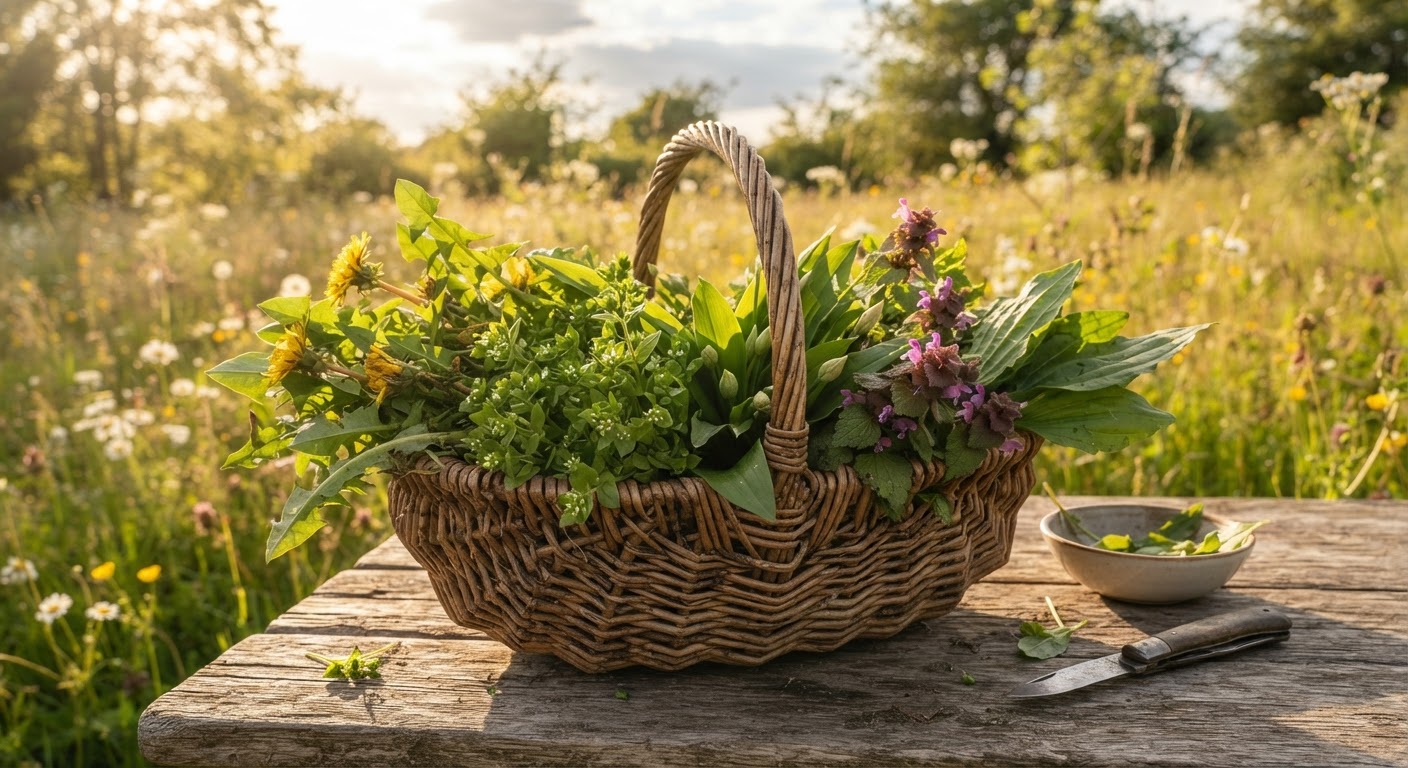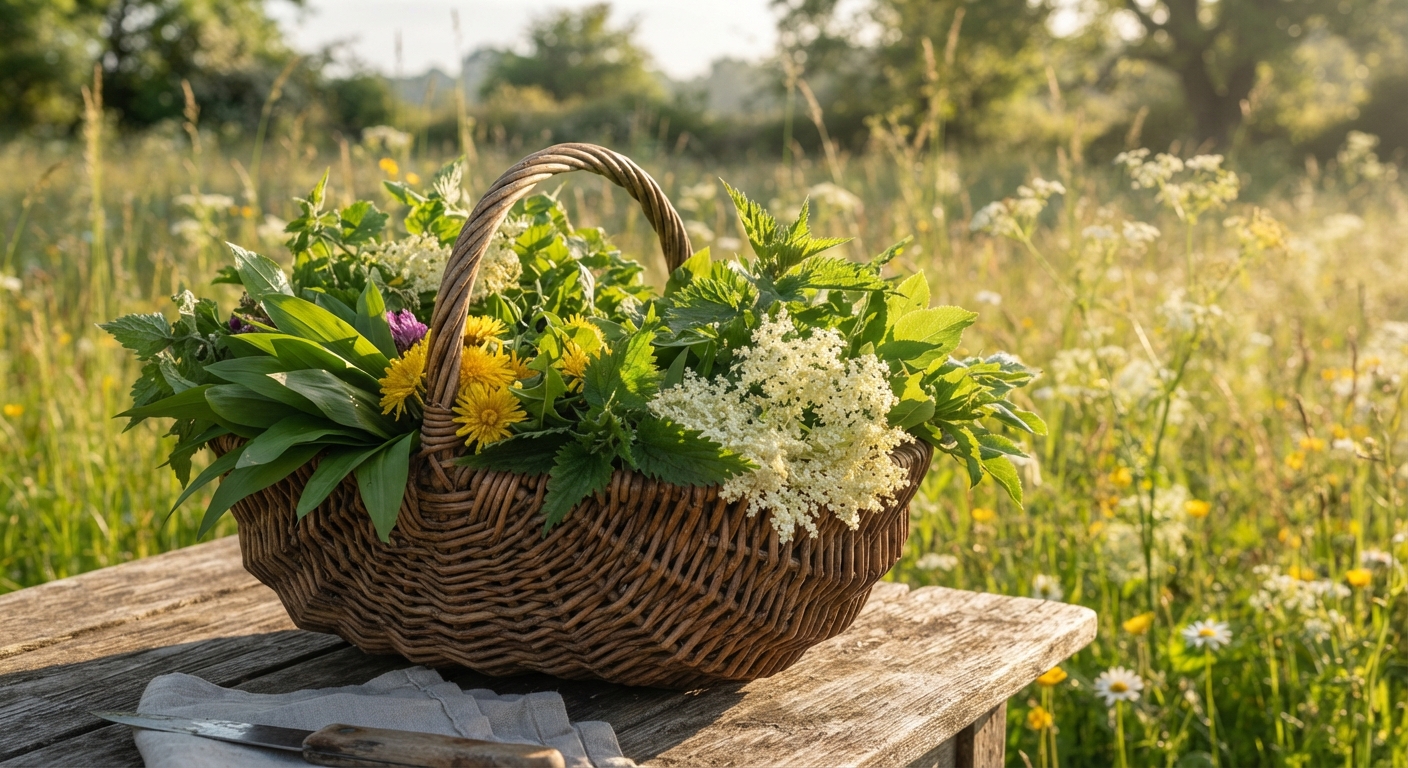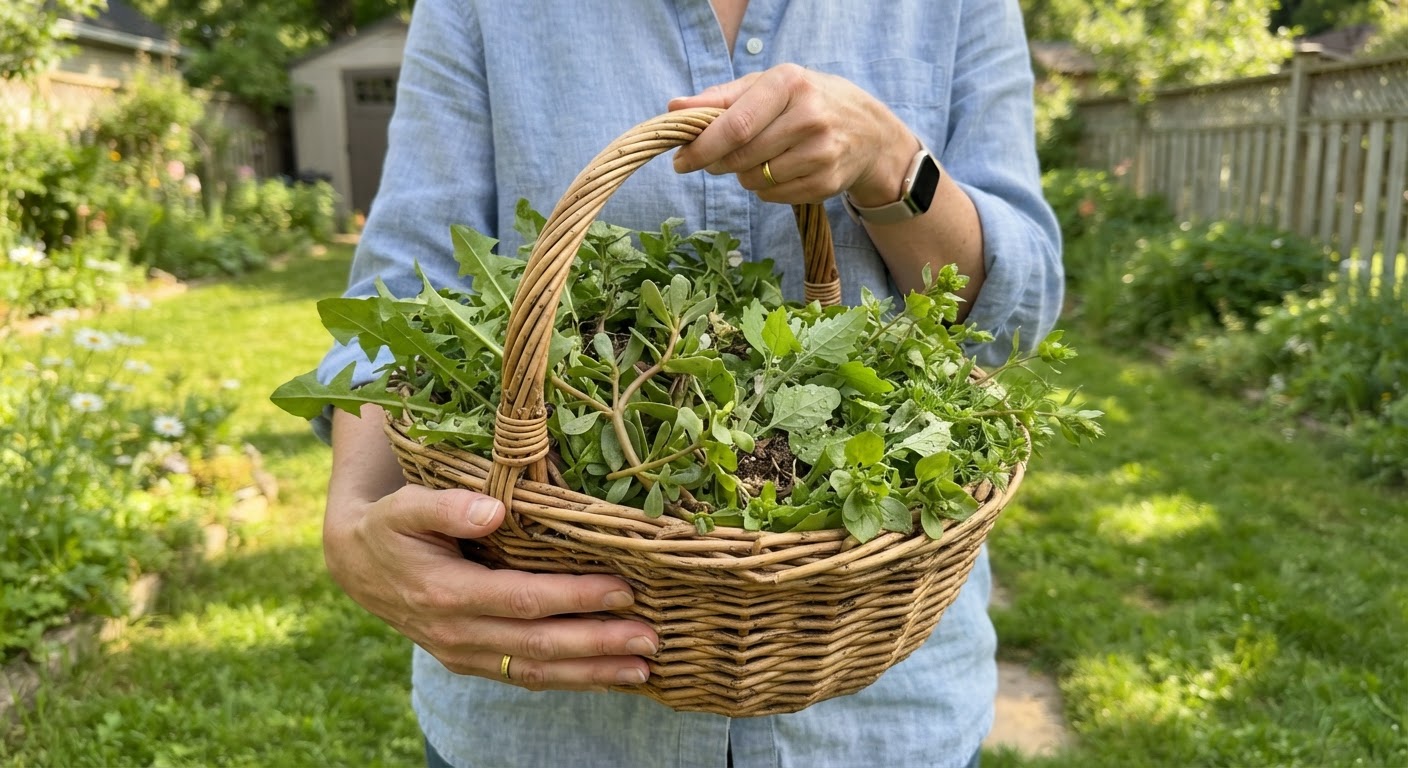
The last beginner I took foraging showed up wearing hiking boots and carrying a brand-new field guide the size of a dictionary. Two hours later he walked out of the woods with an empty basket and a blister. Meanwhile, the lawn he’d parked his car on had three different edible greens growing in it. I pointed that out and watched his face do that thing where confusion turns into annoyance.
That trip taught me more than it taught him. Most people fail at foraging wild vegetables not because they can’t identify plants, but because they look in the wrong places in the wrong order. They treat foraging like a treasure hunt across an entire forest, when it’s actually a matter of learning a handful of specific habitats — and the two or three plants that reliably grow in each.
This guide takes a habitat-first approach. Instead of throwing forty species at you, I’ll show you the five habitats where wild vegetables actually grow, what thrives in each, how to run a quick identification check, and a repeatable field-to-basket routine. By the end you’ll know exactly where to look before you even think about what to pick.
The Mistake That Keeps Beginners Hungry
Here’s the problem with the way most foraging advice is structured. It’s organized by plant, not by place. You read about dandelions, then nettles, then purslane — all jumbled together — and your brain files them into one big “wild plants” bucket. When you step outside, you don’t know whether to look down at your feet, up the hill, or into the creek.
Plants don’t grow randomly. Every wild vegetable has a habitat it prefers, and those habitats are surprisingly predictable. The lawn, the meadow, the woodland edge, the wet ground, and the disturbed roadside — those five cover the overwhelming majority of edible wild vegetables a beginner will ever meet. Learn the habitat first, and the plants inside it become obvious. Walk through the woods with a “dandelion checklist” in your head, and you’ll miss the nettles growing three feet to your left.
This is the single biggest shift that separates people who actually eat wild greens from people who just collect books about them. Habitats are easy to remember because they’re visual. You can see a wet, shaded stream bank from fifty yards away. You cannot see “Urtica dioica” from fifty yards away.
The second mistake is subtler: beginners harvest too broadly and learn too shallowly. They pick one of everything, bring home a mixed bag they can’t confidently identify, panic, and throw it all out. A habitat-first approach fixes this too, because each habitat only demands two or three plants from you at a time.
Your Five Habitats (and What Grows in Each)
Think of these as five rooms in the same house. You don’t need to master the whole house at once — you just need to know which room you’re standing in.
Habitat 1 — The Lawn and Backyard
This is the most underrated foraging ground on earth, and it’s probably within ten steps of your door. Lawns love three things: dandelion, broadleaf plantain, and chickweed — though you’ll also find purslane and violet leaves if the grass isn’t heavily sprayed.
The greens here are small, tender, and mild. They’re also the lowest-risk place to start because the plants are so common you’ll see them dozens of times before you ever pick one. The trade-off is spraying. Never harvest from a lawn that’s been treated with herbicide or pesticide, and if you’re not sure, move on to a field instead. Your neighbor’s perfect, weed-free lawn is not a salad bar; it’s a chemistry experiment.
Habitat 2 — Field and Meadow
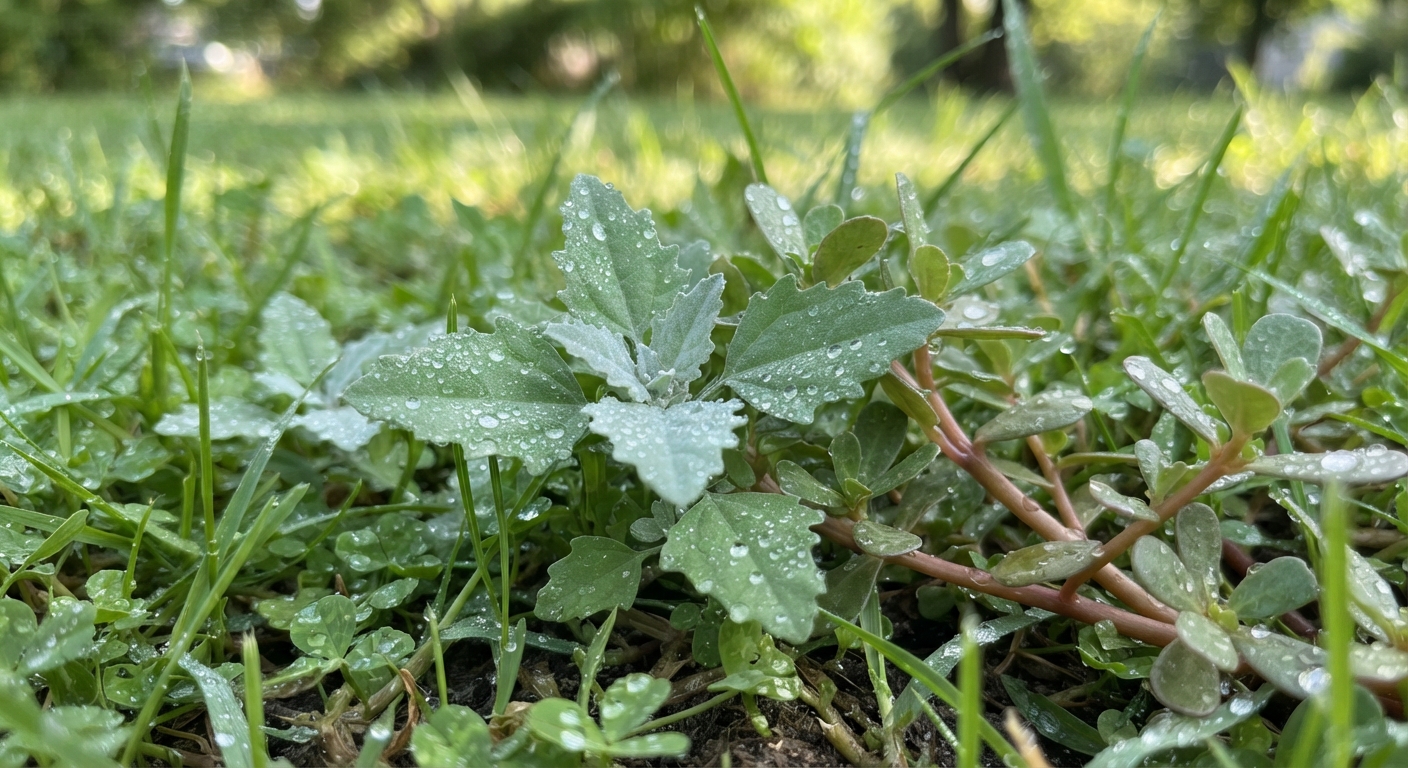
Open, sunny, and grass-dominated. This is where wild vegetables get big. Lamb’s quarters, curly dock, wild mustard, and amaranth all thrive in the kind of open meadow or overgrown pasture where the soil gets disturbed every few years. Meadows tend to produce more volume than lawns — a good lamb’s quarters patch can fill a basket in ten minutes.
The catch is that meadows are also where you’re most likely to meet a lookalike, because so many fast-growing leafy plants share the same open niche. Your identification checks matter more here than in your backyard. The good news is that the big, obvious ones — lamb’s quarters with its white, mealy leaf coating, curly dock with its wavy leaf edges — are genuinely hard to confuse once you’ve seen them once.
Habitat 3 — Woodland Edge and Forest Floor
The transition zone where trees meet open ground is a goldmine for greens, and it stays cool and shaded longer into the season than any open field. This is stinging nettle territory, along with garlic mustard, wood sorrel, and wild violets. Nettles, in particular, are a woodland-edge plant — if you’re wandering deep into a dark, closed-canopy forest looking for them, you’re in the wrong place.
Woodland edges also hold their moisture, which means greens here stay tender and less bitter well into late spring. The shade itself is a signal. When an open meadow’s greens have bolted and turned tough and bitter, walk twenty feet toward the tree line and you’ll often find the same season’s harvest still young.
Habitat 4 — Wet Ground and Streamsides
Water changes everything. Along creeks, ditches, and marshy seeps you’ll find watercress, cattail shoots, and, in many regions, wild water mint. These are the strongest-flavored and most succulent of the wild vegetables, and they demand the most caution, for two reasons.
First, watercress has a serious toxic lookalike — fool’s watercress and water hemlock both share its habitat, and water hemlock is deadly. This is the one habitat where you do not cut corners on identification. Second, wet ground is where runoff collects, so anything growing in a roadside ditch or downstream of livestock or septic systems is carrying whatever washed into that water. Harvest water plants only from clean, flowing water, and cook them if you have any doubt.
Habitat 5 — Disturbed Ground and Roadsides
Every plant I’ve named so far is, in some sense, a weed — and weeds love disturbance. Construction sites, garden edges, the strip between a sidewalk and a road, freshly turned soil: these are the places where purslane, lamb’s quarters, amaranth, and chickweed explode. Disturbed ground is the easiest habitat to read because the plants colonize it so fast and so visibly.
It’s also the habitat I’m most cautious about recommending, because “disturbed” often means “near a road” — and that means exhaust, road salt, and dog traffic. Harvest from disturbed ground that’s set back from traffic and away from any obvious contamination. A community garden’s weed pile, a fallow farm field, or a backyard bed you’ve just cleared are all perfect. A highway median is not.
The Field-to-Basket Routine, Step by Step
You know the five habitats. Here’s the working routine that turns that knowledge into a full basket without a panic attack at the kitchen counter.
Step 1: Pick One Habitat, Not One Species
Before you leave the house, choose a single habitat within walking distance and commit to it. “I’m going to the woodland edge behind the park” is a plan. “I’m going to find some wild food” is a wish. By narrowing to one habitat, you shrink the number of plants you need to identify from dozens to a handful, and you stop the wandering that burns time and confidence.
Step 2: Learn Two or Three Plants Cold
For your chosen habitat, study two or three plants until you could describe them to a friend without looking at a book. Not forty plants. Two or three, deeply. You want the leaf shape, the growth habit, the habitat itself, the season, and the one feature that makes it unmistakable. For lamb’s quarters, it’s the white powdery coating on new leaves. For stinging nettle, it’s the stinging hairs — which, counterintuitively, are the very reason it’s easy to be sure you have nettle.
Step 3: Run the Three-Feature Check
Never confirm a plant on one feature alone. Use three independent features and make them different kinds of evidence — appearance, habitat, and season, for example. “It has wavy leaf edges, it’s growing in open disturbed soil, and it’s mid-spring” is a real confirmation. “It’s green and leafy” is how people get sick. If all three checks agree, harvest. If one doesn’t fit, leave it and move on. There’s always more.
Step 4: Harvest, Clean, and Cook
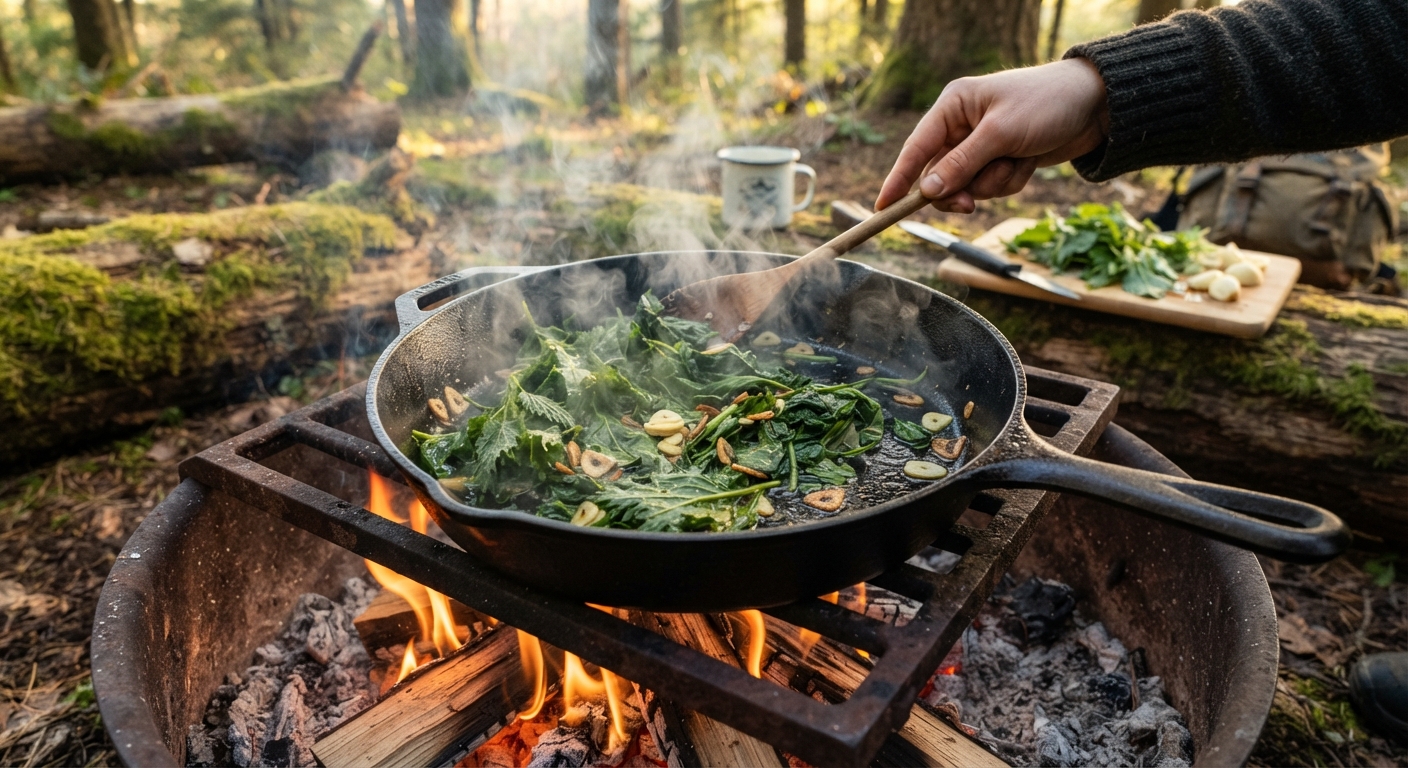
Harvest young leaves from clean plants, and take only what you’ll use — leaving the growing tip means the plant keeps producing. Wash greens in two changes of cold water, with a splash of vinegar in the first rinse to knock off anything alive. Then cook them the way the plant demands: tender chickweed can go in a salad raw, while tougher greens like nettle and dock want a quick blanch or a hot pan with oil and garlic. Wild vegetables are forgiving in the pan — a little salt, fat, and heat fixes almost everything.
Identification Table: The Core Wild Vegetables
This table is your cheat sheet. It groups each plant by its preferred habitat, gives you the season, the three features to check, and the one thing to watch out for.
| Plant | Habitat | Season | Three Key Features | Watch Out For |
|---|---|---|---|---|
| Dandelion | Lawn, meadow | Spring–fall | Jagged leaves, milky sap, single yellow flower | Bitter when old; pick young leaves |
| Lamb’s quarters | Meadow, disturbed | Spring–summer | White mealy coating, diamond leaves, erect habit | Bolted plants turn unpalatable |
| Purslane | Lawn, disturbed | Summer | Succulent red stems, paddle leaves, low mat | Spurge lookalike has milky sap |
| Stinging nettle | Woodland edge, wet | Spring | Stinging hairs, opposite serrated leaves, square stem | Wear gloves; cook to disarm sting |
| Garlic mustard | Woodland edge | Spring | Crushed garlic smell, kidney leaves, white flowers | Pull roots to stop spread |
| Chickweed | Lawn, meadow | Spring, fall | Single line of hairs on stem, star flowers, small | Scarlet pimpernel lookalike has red flowers |
| Curly dock | Meadow, disturbed | Spring | Wavy leaf edges, tall seed stalk, basal rosette | High oxalate; cook young leaves |
| Watercress | Streamside | Spring–summer | Hollow stems, peppery taste, round leaflets | Deadly water hemlock lookalikes |
| Amaranth | Disturbed, field | Summer | Grain-like seed heads, notched leaf tips, reddish root | Similar to pigweed; confirm seed head |
| Wood sorrel | Woodland edge, lawn | Spring–fall | Clover-like leaves, sour taste, yellow flowers | Eat in moderation (oxalic acid) |
Season and Habitat at a Glance
The second table answers the question people actually ask in the field: “It’s [month], I’m standing in [place], what should I even look for?”
| Season | Lawn & Backyard | Field & Meadow | Woodland Edge | Wet Ground | Disturbed Ground |
|---|---|---|---|---|---|
| Early spring | Chickweed, dandelion | — | Nettle shoots, garlic mustard | Watercress | Chickweed |
| Late spring | Dandelion, plantain | Lamb’s quarters, dock | Nettle, violet leaves | Cattail shoots | Lamb’s quarters |
| Summer | Purslane | Amaranth, dock | Wood sorrel | Water mint | Purslane, amaranth |
| Fall | Chickweed, dandelion | Dock, mustard | Violet leaves | Watercress | Chickweed |
Notice the pattern: each habitat has a “peak” when its greens are at their best, and learning that rhythm is worth more than memorizing fifty species. When the lawn dandelions turn bitter in high summer, you pivot to the meadow’s amaranth. When the meadow bakes dry, you slide into the shaded woodland edge. Foraging is seasonal rotation, not a single lucky day.
Pro Tips From the Field
A few habits I’ve picked up the hard way, the ones that actually stick:
- Learn the “spray smell.” Treated lawns and fields often have a faint chemical odor or uniformly perfect, weed-free grass. Both are red flags. If a spot looks too clean, it probably is.
- The tender tip test. For almost every green, pinch the growing tip. If it’s crisp and snaps, the plant is worth harvesting. If it’s fibrous and stringy, it has bolted — move on.
- Carry two bags. One for greens you’re 100% sure of, one for “maybe.” Anything in the maybe bag gets re-identified at home with a book and better light, and if it doesn’t clear the three-feature check, it goes in the compost, not the pan.
- Bitter is a feature, not a flaw. Wild greens are more bitter and mineral-tasting than store lettuce. That’s what makes them interesting. Blanching, salting, and pairing with fat and acid all tame it.
- Start where you already are. The best first forage is your own unsprayed yard or a nearby park, not a three-hour drive to pristine wilderness. Short, frequent, local trips beat one epic expedition.
FAQ
Is foraging wild vegetables actually safe for a total beginner? Yes, with the right filter. The greens covered here are among the most beginner-forgiving wild foods there are — none of the common lawn and meadow greens have deadly lookalikes, and mistakes tend to taste bad rather than hurt you. The real danger zones are wet-ground plants like watercress, where you must rule out water hemlock, so give those more respect.
Do I need to cook wild vegetables, or can I eat them raw? It depends on the plant. Tender greens like chickweed, purslane, and young dandelion are fine raw in a salad. Tougher or higher-oxalate greens like nettle, dock, and lamb’s quarters are better cooked — a quick blanch or sauté removes the sting and softens the texture.
How do I know a plant hasn’t been sprayed or contaminated? Treat every unknown spot as suspect. Avoid lawns and roadsides that show signs of treatment or heavy traffic. Prefer clean flowing water for aquatic plants, harvest away from the road, and wash everything thoroughly. When in doubt, cook it — heat won’t neutralize herbicide, but it will handle most biological contamination.
What’s the single best wild vegetable for a first-timer? Dandelion. It’s everywhere, impossible to seriously misidentify once you know the jagged leaves and milky sap, and the young leaves are genuinely good. Lamb’s quarters is a close second for volume.
When is the best season to start? Spring, no contest. That’s when wild vegetables are young, tender, and least bitter, and when the greatest number of species are in their edible window. Early morning after a rain is the ideal moment to harvest — crisp plants, no heat stress.
The Bottom Line
Foraging wild vegetables isn’t a talent and it isn’t a memory test. It’s a habit of looking in the right place, at the right time, with a small, solid set of checks. Learn the five habitats, master two or three plants in each, and run the three-feature check every single time — and you’ll never come home with an empty basket again.
The greens are already there, growing under your feet and along the edges of every path you walk. You just needed the right map. Now you have it.