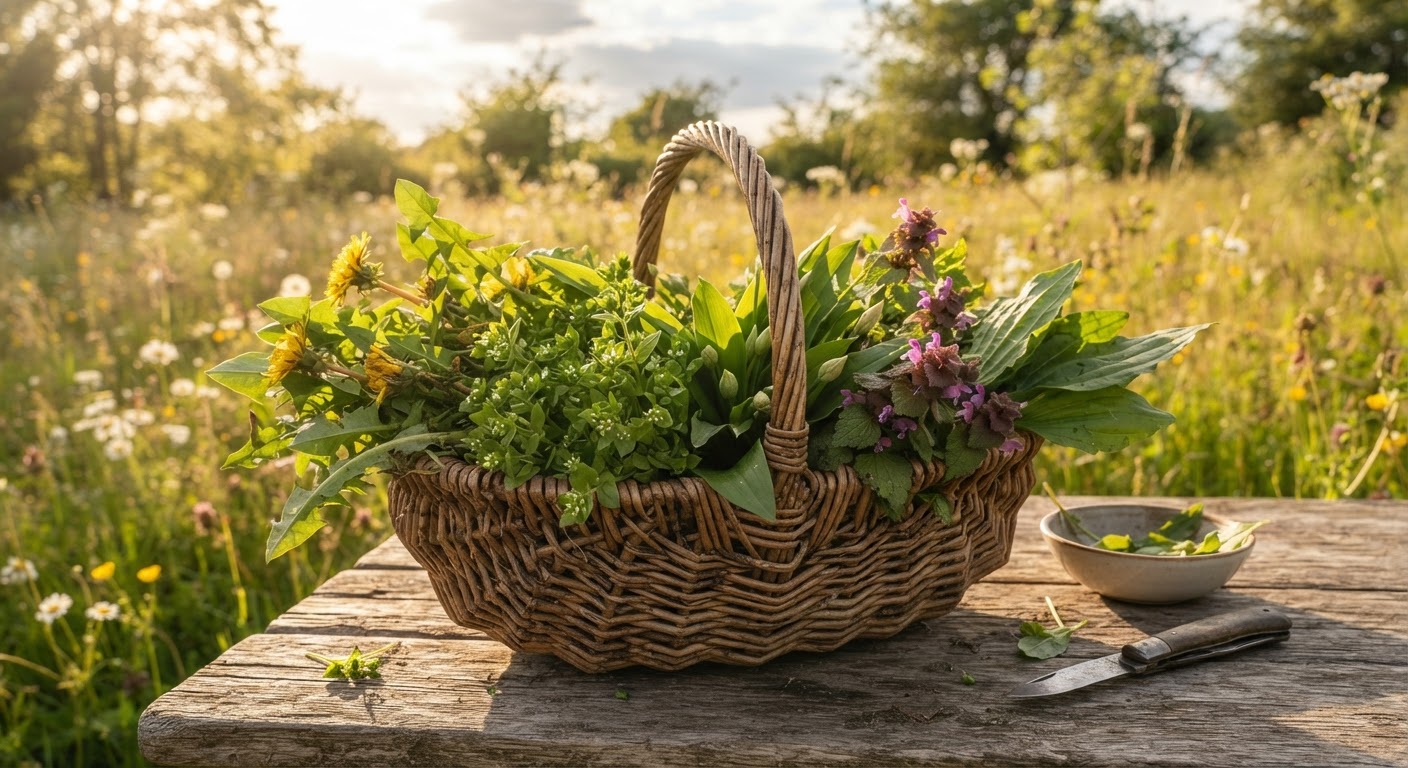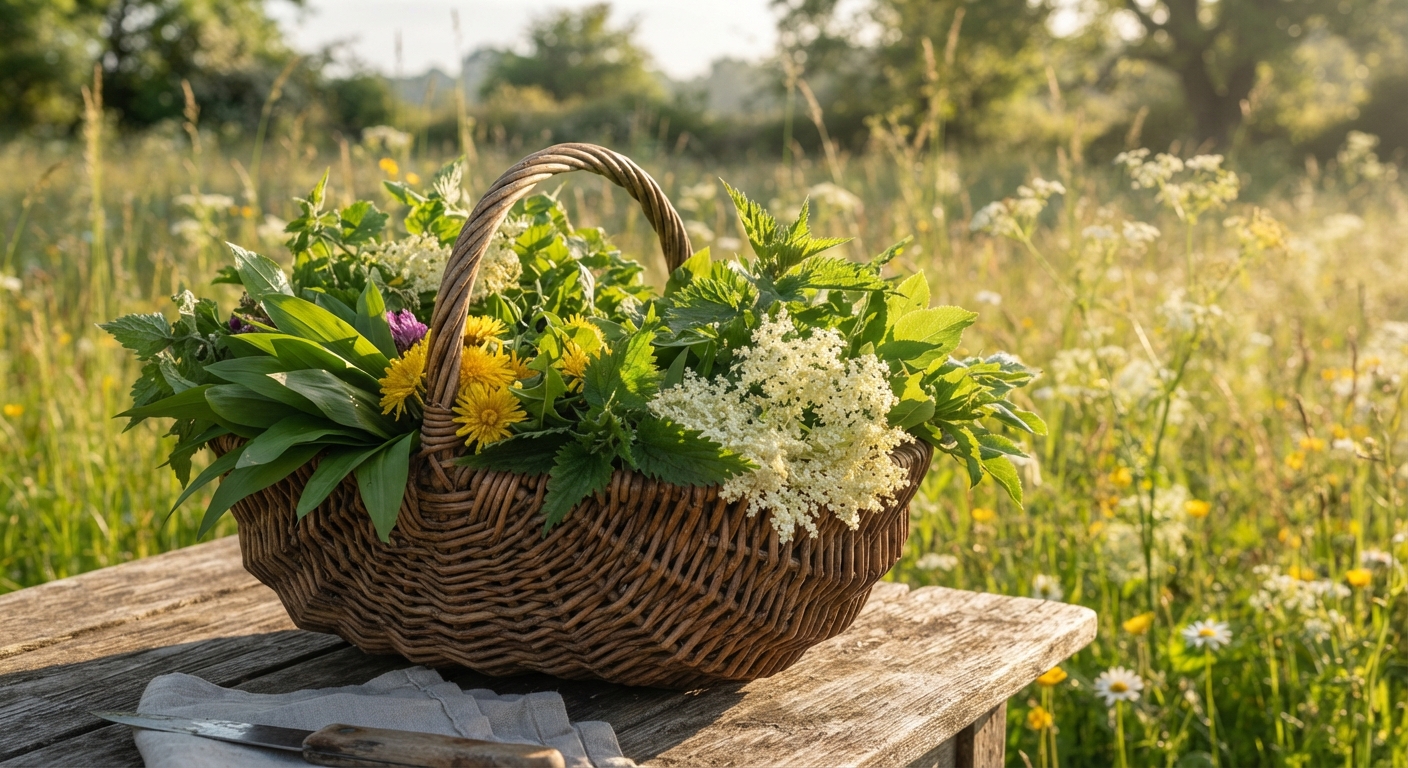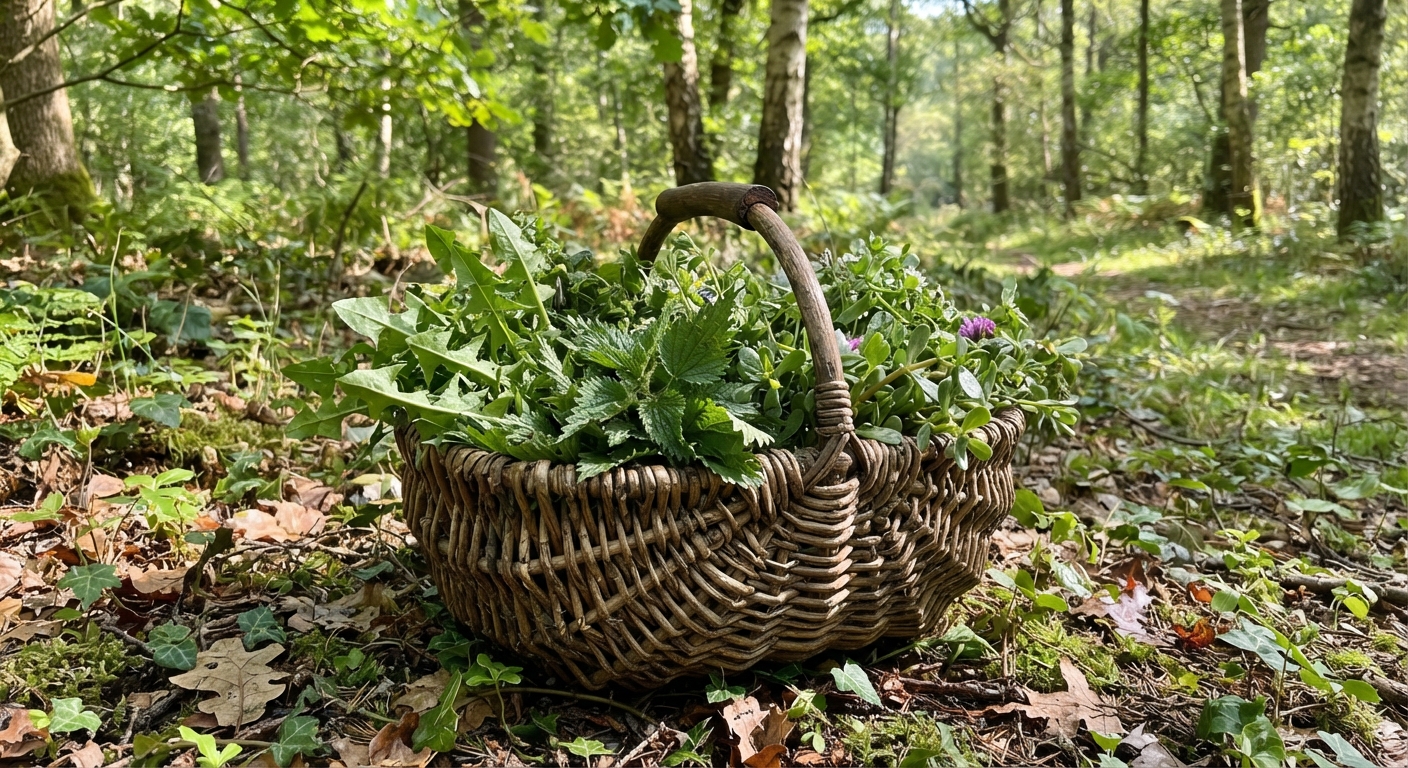
Most people walk past dinner every day without noticing. Next time you’re at a park, look down — the odds are decent you’re standing within ten feet of something you could eat. Not in a survivalist, desperate-measures way. In a “this plant has more vitamin A than the spinach in your fridge” way.
Wild vegetables are not a consolation prize for people who can’t get to a grocery store. On a nutrient-per-gram basis, many of them outclass their domesticated counterparts by significant margins. Dandelion greens have roughly seven times the vitamin K of iceberg lettuce. Purslane contains more omega-3 fatty acids than any other leafy green tested. Lamb’s quarters — the “weed” people yank out of garden beds — has more calcium than kale.
The real barrier to foraging wild vegetables isn’t scarcity. It’s knowing which plants are worth the effort, which ones taste good enough to actually cook with, and how to pick them without picking something that’ll make you sick.
This list covers twelve wild vegetables that meet three criteria: they’re common across large geographical ranges, they’re beginner-friendly to identify, and they actually taste good — not just “tolerable,” but genuinely worth cooking.
Quick Reference: All 12 at a Glance
Before diving into details, here’s your cheat sheet. Print it, screenshot it, save it to your phone for when you’re out in the field without a signal.
| Wild Vegetable | Best Season | Flavor Profile | Key ID Trait | Eat Raw? |
|---|---|---|---|---|
| Dandelion (Taraxacum officinale) | Early spring & fall | Bitter, peppery (young leaves milder) | Serrated leaves, single yellow flower per hollow stem, milky sap | Yes (young leaves) |
| Stinging Nettle (Urtica dioica) | Spring (before flowering) | Earthy, spinach-like with a slight mineral tang | Serrated opposite leaves, tiny stinging hairs on stem and leaves | No (must cook) |
| Lamb’s Quarters (Chenopodium album) | Late spring to early fall | Mild, nutty, similar to spinach or chard | Diamond-shaped leaves with white mealy coating underneath, often grows in disturbed soil | Yes (young leaves) |
| Purslane (Portulaca oleracea) | Summer | Slightly sour, lemony, succulent texture | Thick reddish stems, paddle-shaped fleshy leaves, grows flat against ground | Yes |
| Chickweed (Stellaria media) | Early spring & fall | Mild, grassy, reminiscent of corn silk | Tiny white star-shaped flowers, single line of fine hairs running down one side of the stem only | Yes |
| Wood Sorrel (Oxalis spp.) | Spring through fall | Bright, lemony, tangy — unmistakable | Three heart-shaped leaflets (looks like clover but with a sour taste), small yellow or white flowers | Yes (small amounts) |
| Fiddlehead Ferns (ostrich fern, Matteuccia struthiopteris) | Early spring (tight window) | Nutty, grassy, somewhere between asparagus and green beans | Tightly coiled green fronds with a U-shaped groove on the inner stem, papery brown scales | No (must cook) |
| Wild Asparagus (Asparagus officinalis) | Mid to late spring | Nearly identical to store-bought asparagus, slightly nuttier | Thin green spears with scale-like leaves, ferny foliage on older plants, often near fence lines, ditches, and roadsides | Yes (tender tips) |
| Cattail Shoots (Typha spp.) | Early spring | Mild, sweet, cucumber-like when raw; nutty when cooked | Tall grass-like blades growing in standing water, last year’s brown cigar-shaped seed heads as a location marker | Yes (young shoots) |
| Watercress (Nasturtium officinale) | Spring & fall | Peppery, sharp, wasabi-like heat | Rounded compound leaves growing in flowing shallow water, clusters of small white flowers, hollow stems | Yes (from clean water) |
| Garlic Mustard (Alliaria petiolata) | Spring (first-year plants); early spring (second-year leaves) | Garlic-onion blend with a mild bitterness when mature | Heart-shaped scalloped leaves with a distinct garlic smell when crushed, white flower clusters on second-year plants | Yes (young leaves) |
| Amaranth / Pigweed (Amaranthus retroflexus) | Summer | Mild, slightly sweet, comparable to spinach | Alternate oval leaves with prominent veins, reddish-tinged stems, dense green flower spikes | Yes (young leaves); seeds also edible |
The 12 Wild Vegetables — Detail, Harvest, and Kitchen Advice
1. Dandelion (Taraxacum officinale)
If you only learn one wild vegetable, make it dandelion. It grows on every continent except Antarctica. The entire plant is edible — roots, leaves, flowers — and the identification is about as low-risk as foraging gets.
How to spot it: Forget the “lookalike” paranoia with dandelion. The combination of deeply serrated leaves, a single yellow flower atop a hollow, leafless stem, and white milky sap when you break any part of the plant is unmistakable. Sow thistle and cat’s ear have similar flowers but branch differently and lack the milky sap.
When to harvest: Pick leaves in early spring before flowers appear for the mildest flavor. Second-best harvest window is fall, after the first light frost sweetens them. Summer leaves are edible but aggressively bitter — some people blanch them twice to tame the intensity.
How to cook: Young spring leaves work raw in salads, especially tossed with a fatty dressing (bacon vinaigrette does heavy lifting here). Sauté mature leaves with garlic and olive oil — the bitterness mellows significantly with heat. Dandelion flowers make a surprisingly good tempura; dip in a light batter and fry for 30 seconds.
What you’re getting: Per 100g, raw dandelion greens deliver 187% of your daily vitamin A, 535% of vitamin K, and more calcium than a glass of milk.
2. Stinging Nettle (Urtica dioica)
The plant that fights back — and is absolutely worth the hassle of harvesting. Nettle ranks among the most nutrient-dense wild greens on this list and has the culinary versatility to match.
How to spot it: Opposite leaves with serrated edges, square-ish stems, and — critically — the stinging hairs. If you brush against it and your skin burns for the next 20 minutes, you found nettle. No other common plant produces that exact reaction. The lookalikes (mint family members) lack the sting and have square stems with a distinct aromatic smell when crushed.
When to harvest: Before the plant flowers — typically April through early June in most of its range. After flowering, nettle develops gritty particles called cystoliths that some people find irritating even after cooking. Take only the top 4-6 inches of each plant; those young tips contain the best flavor and texture.
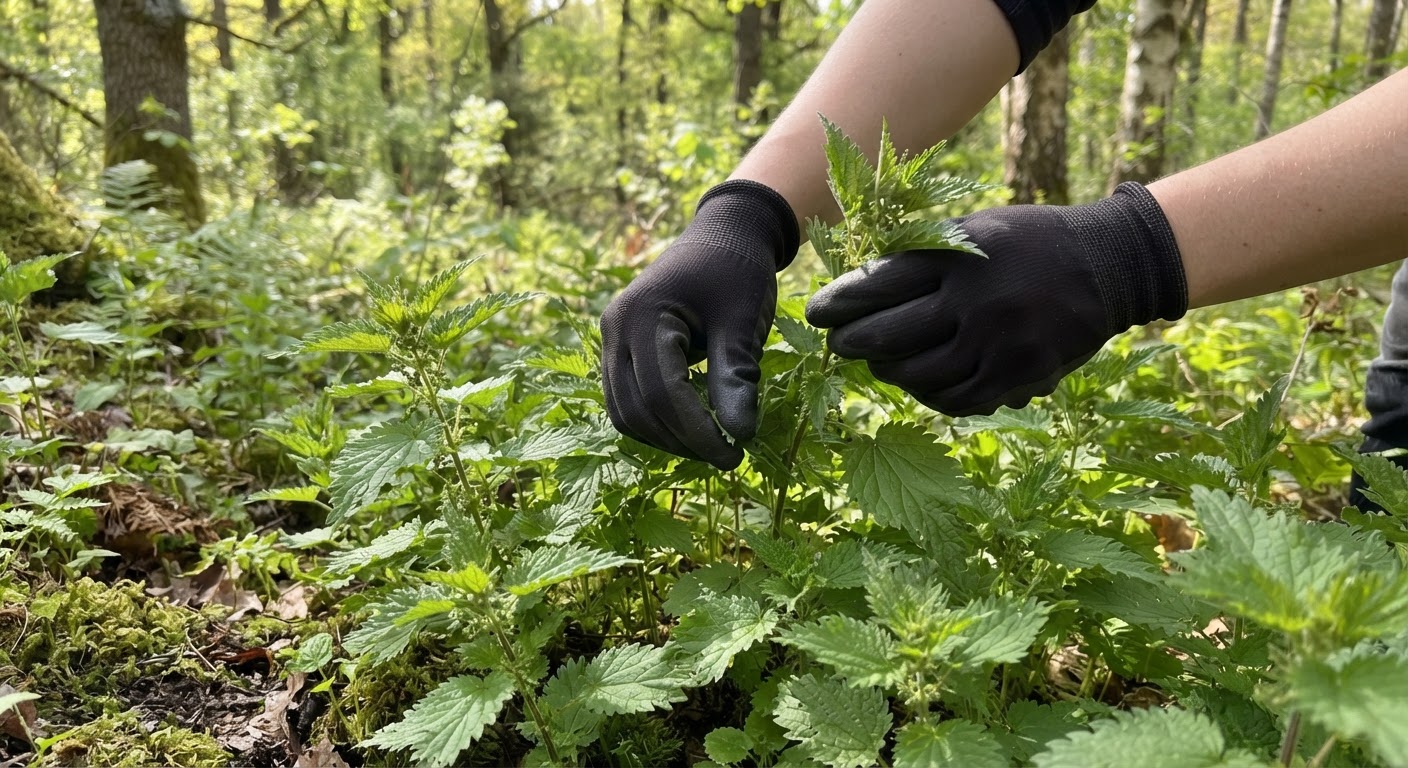
Harvest gear: Bring gloves. Thick leather or rubber. A paper bag or cloth sack. Tongs if you’re feeling cautious. Cooking neutralizes the sting entirely — blanched nettle has exactly zero defensive capabilities left.
How to cook: Blanch for 30-60 seconds in boiling water, then shock in ice water. After this, use it anywhere you’d use spinach: soups, pesto, quiches, pasta fillings, or simply sautéed with butter and salt. Nettle soup is a European spring tradition for good reason — the earthy depth is something farmed greens rarely match.
What you’re getting: Nettle provides iron, calcium, magnesium, and vitamins A, C, and K. It’s also one of the highest-protein leafy greens — roughly 2.7g protein per 100g, which is unusually high for a leaf.
3. Lamb’s Quarters (Chenopodium album)
The plant that fueled civilizations. Lamb’s quarters was a staple food crop in Europe and North America long before spinach arrived on the scene — and nutritionally speaking, switching to spinach might have been a downgrade.
How to spot it: Diamond-shaped leaves with irregularly toothed edges and a silvery-white powdery coating on the underside. The coating is the giveaway — no other common lookalike has it. The plant can grow anywhere from knee-high to over six feet in good soil. Young leaves near the top have the best texture; older lower leaves get tough.
When to harvest: Spring through fall. This plant keeps producing edible growth as long as it hasn’t set seed. In disturbed soil — garden beds, construction sites, field edges — one patch can feed you for months if you harvest selectively from the top.
How to cook: Treat it like spinach and you can’t go wrong. Steam it, sauté it, add it to curries and stews. The flavor is milder than spinach — less mineral-forward, more nutty. Raw young leaves work in salads; older leaves benefit from cooking. Lamb’s quarters also makes an excellent addition to smoothies if you’re the type who greens their breakfast.
What you’re getting: Calcium (309mg per 100g — that’s more than kale), vitamin A, vitamin C, and respectable amounts of protein for a leafy green. The seeds are also edible and were historically ground into flour.
4. Purslane (Portulaca oleracea)
Purslane breaks the “leafy green” mold. Instead of the thin, papery texture of most wild greens, purslane is succulent — thick, fleshy leaves on reddish stems that sprawl flat across the ground. It’s the wild plant most likely to be growing in the cracks of your driveway right now.
How to spot it: Thick, paddle-shaped leaves arranged in clusters along reddish-pink stems. The whole plant hugs the ground, rarely rising more than a few inches high. Small yellow flowers open only in direct sunlight. The most common lookalike is spurge — break a stem: purslane oozes clear sap, spurge oozes milky white sap (and is toxic).
When to harvest: Summer. Purslane thrives in heat when most other greens have bolted or turned bitter. It’s one of the only wild greens worth harvesting in July and August.
How to cook: Purslane’s slightly sour, lemony flavor and crunchy-but-tender texture make it a standout in salads — toss it with tomatoes, cucumber, and olive oil. It also shines in Mexican and Middle Eastern cooking: add it to salsas, chop it into yogurt sauces, or sauté it briefly with onion. Cooking too long turns it slimy, so keep heat brief or eat it raw.
What you’re getting: Omega-3 fatty acids (alpha-linolenic acid) in amounts that rival some fish oils, plus vitamin E, vitamin C, and glutathione — an antioxidant that’s relatively rare in food sources. The omega-3 content is the headline here; purslane consistently tests higher than any other leafy vegetable for ALA.
5. Chickweed (Stellaria media)
Chickweed is the wild green that hides in plain sight. It forms dense, low mats of delicate foliage in lawns, garden beds, and along woodland edges — and once you learn to spot it, you’ll see it everywhere.
How to spot it: Small, pointed oval leaves growing in opposite pairs along thin, creeping stems. The diagnostic feature: a single, precise line of fine hairs running down one side of the stem only — it switches sides at each leaf node. The flowers are tiny (about the size of a pencil eraser), white, and star-shaped with five deeply cleft petals that look like ten.
When to harvest: Early spring and fall. Chickweed bolts and fades once summer heat arrives, but reappears when temperatures cool. Pick the top few inches of the plant, which are the most tender.
How to cook: Eat chickweed raw for the best texture — it wilts almost instantly with heat. Its flavor is mild and grassy, somewhere between lettuce and corn silk. Use it as a salad base, blend it into pesto, or pile it onto sandwiches. Cooked chickweed works in soups and stir-fries but loses much of its delicate character; think of it as a fresh herb more than a cooking green.
What you’re getting: Vitamin C, vitamin A, iron, and saponins — mild compounds that give it a slightly soapy mouthfeel if eaten in large quantities. Moderation is the play here; it’s a salad ingredient, not a whole meal.
6. Wood Sorrel (Oxalis spp.)
Wood sorrel is the wild vegetable that most people already know without realizing it. If you spent any time outdoors as a kid, you probably picked these three-heart-shaped-leaf clusters and chewed on them without knowing what they were.
How to spot it: Three heart-shaped leaflets that fold down at night or in direct heat — exactly like a clover, except when you taste one, it’s sharply lemony. The flowers are small, with five petals, usually yellow or white depending on the species. Wood sorrel grows in shady, moist areas: forest edges, garden beds, the shady side of buildings.
A note on oxalic acid: Wood sorrel contains oxalic acid, the same compound that gives rhubarb and spinach their tang. The amount is moderate — a handful in a salad is fine for most people. Don’t eat bowlfuls, and anyone with kidney stone history should skip it or eat sparingly.
How to cook: Wood sorrel is best raw. Cooking destroys the bright acidity that makes it interesting. Use it as a garnish, toss it into salads, or blend it into a sauce for fish — the lemony punch works beautifully as a finishing element. A handful of chopped wood sorrel stirred into a cream sauce right before serving gives you something close to a sorrel sauce without needing to grow French sorrel.
7. Fiddlehead Ferns (Ostrich Fern, Matteuccia struthiopteris)
Fiddleheads are the poster child for seasonal urgency in foraging — their harvest window is measured in days, not weeks, and half the challenge is timing it right.
How to spot it: Tightly coiled bright green fronds emerging from a brown, papery crown near the ground. Two key ID features make ostrich fern fiddleheads safe: a deep U-shaped groove running along the inside of the stem (like a celery stalk cut in half), and brown papery scales that rub off easily. Other fern species lack the U-groove, have fuzzy or woolly coatings, or are cylindrical rather than grooved. Not all fern fiddleheads are edible — some are carcinogenic — so this plant demands confident identification.
When to harvest: The window is roughly two weeks in early spring. You want the fiddleheads when they’re still tightly coiled and no taller than about six inches. Once the coil starts to loosen and the frond begins to unfurl, you’ve missed it — the texture turns fibrous and unpleasant.
How to cook: Never eat fiddleheads raw. Boil or steam them for 10-12 minutes, then sauté in butter with garlic. The flavor lands somewhere between asparagus and green beans, with a nutty, earthy undertone that pairs well with mushrooms and spring onions. Undercooked fiddleheads have been linked to foodborne illness, so don’t skip the boil.
What you’re getting: Vitamin A, vitamin C, niacin, potassium, and a meaningful dose of omega-3 and omega-6 fatty acids for a green vegetable.
8. Wild Asparagus (Asparagus officinalis)
Wild asparagus is, genetically, the exact same species as the bundles you buy at the grocery store — just left to its own devices for generations. The spears come up thinner and the flavor is more concentrated, but otherwise it’s the same plant.
How to spot it: In spring, look for pencil-thin green spears pushing up through grass and weeds in sunny, open areas. The tips are tight and compact, just like cultivated asparagus. But the real trick to finding wild asparagus isn’t spotting the spears — it’s spotting last year’s dead stalks in late summer and fall, then returning to those locations the following spring. The mature plant looks like a tall, wispy, feathery bush — it’s the asparagus fern you know from floral arrangements.
Where to look: Fence lines, railroad edges, roadside ditches, old homesteads, and field margins. Wild asparagus is an escapee from cultivation, so any area with a history of human settlement is worth scanning. The best patches are often in rural areas near old farmhouses that have been gone for decades.
How to cook: Treat it exactly like store-bought asparagus, but reduce cooking time by about 30% — the thinner spears cook faster. Snap the woody bottom off each stalk (it breaks naturally at the right point), then grill, roast, sauté, or steam. Butter, salt, and a squeeze of lemon is all you need.
9. Cattail Shoots (Typha spp.)
Cattails are often called the “supermarket of the swamp” and for good reason — nearly every part of the plant is edible at some point in its growth cycle. The young shoots, harvested in early spring, are the vegetable-star entry on the menu.
How to spot it: The mature plant is unmistakable: tall, flat, grass-like leaves growing directly from shallow water with the iconic brown cigar-shaped seed head rising above them. Those brown cigars persist through winter, making cattail one of the easiest wild edibles to locate even outside its harvest season.
When to harvest: Early spring, when new green shoots are 1-3 feet tall. Grab the shoot near the base and pull straight up with a twisting motion — the tender white lower portion will separate from the rhizome. Peel away the outer green leaves until you reach the pale, tender core.
How to cook: The peeled inner core can be eaten raw — it’s crisp, mild, and slightly sweet, similar to cucumber. Sautéed in butter, it takes on a nutty flavor. Slice it into rounds and add it to stir-fries, or chop it into salads for a water chestnut-like crunch. The pollen (harvested later in summer) is a bright yellow flour substitute.
Harvest consideration: Cattails are excellent water purifiers, which means they absorb whatever is in the water around them. Harvest only from clean water sources — no agricultural runoff, no industrial areas, no stagnant drainage ponds. This is not the plant to pick from a random roadside ditch.
10. Watercress (Nasturtium officinale)
Watercress is one of the few wild vegetables that regularly shows up in high-end restaurants and farmers markets — yet grows wild in clean, flowing streams across much of North America and Europe. It’s peppery. It’s crisp. And it might be growing fifteen minutes from your house.
How to spot it: Look for rounded, compound leaves with 3-5 oval leaflets growing in flowing, shallow water. The stems are hollow and float partially on the water’s surface. Small white four-petaled flowers appear in clusters. The leaves have a shiny, almost waxy appearance. The peppery taste is the easiest confirmation — no toxic lookalike has that sharp, wasabi-like heat.
Critical safety warning: Watercress grows in water, and that water needs to be clean. The biggest risk with wild watercress isn’t misidentification — it’s liver fluke (Fasciola hepatica), a parasite that can be present in water downstream from livestock. Harvest only from clear, flowing water in areas without upstream grazing animals. Cook watercress if you have any doubt about water quality. Thoroughly wash all wild-harvested watercress, even from clean sources.
How to cook: Raw watercress is the star of the show — the peppery heat disappears with cooking. Toss it into salads, pile it onto roast beef sandwiches, blend it into soup as a finishing element (stirred in after the soup comes off the heat to preserve the bite). If you want to cook it, a very brief wilt in hot oil preserves more flavor than boiling.
What you’re getting: Watercress is a nutrient powerhouse — gram for gram, it contains more vitamin C than oranges, more calcium than whole milk, and more iron than spinach. It’s also rich in vitamin K, vitamin A, and several antioxidant compounds.
11. Garlic Mustard (Alliaria petiolata)
Garlic mustard is an invasive species in North America, which means two things: first, you can harvest it without any guilt whatsoever, and second, you’ll find it in massive quantities. It forms dense stands in woodland understories and along trail edges across most of the eastern US and Canada.
How to spot it: Two growth stages. First-year plants are low rosettes of kidney-shaped leaves with scalloped, toothed edges. Second-year plants send up a 1-3 foot stalk with alternate, more triangular leaves and clusters of small white flowers at the top. The diagnostic feature that makes misidentification nearly impossible: crush a leaf. If it smells strongly of garlic, you’ve got garlic mustard. No other woodland plant produces that aroma.
When to harvest: First-year rosettes are available almost year-round in mild climates — including winter. Second-year leaves are best in early spring before the plant flowers, after which they turn tough and intensely bitter. The flower buds and young seed pods (green, not brown) are also edible and have a pleasant, horseradish-like heat.
How to cook: Young first-year leaves are mild enough for raw use in salads and pesto. Second-year leaves benefit from cooking — sauté them, add them to soups, or braise them like collard greens. Garlic mustard pesto (leaves blended with olive oil, nuts, parmesan, and garlic) is a foraging community staple for a reason — it’s dead simple and genuinely delicious.
12. Amaranth / Pigweed (Amaranthus retroflexus)
Amaranth closes out this list as the warm-season green that keeps producing long after spring’s bounty has faded. It’s also one of the most nutritionally complete wild vegetables on this list — the leaves are excellent, and the seeds have been a staple grain in Central and South America for thousands of years.
How to spot it: A tall, upright plant (2-6 feet) with alternate oval or diamond-shaped leaves on long stalks. The stems often have reddish streaks. The diagnostic feature is the dense, bristly green flower spike at the top of the plant, which can be several inches long and looks somewhat like a bottlebrush. Leaves have prominent veins on the underside.
When to harvest: Summer, when amaranth thrives in the heat. Pick young leaves from the top of the plant — they’re the most tender. Don’t strip the plant; take from multiple plants and leave enough for each to keep growing.
How to cook: Young leaves can go raw into salads. Mature leaves should be cooked — steam, sauté, or add to soups and stews. The flavor is mild and slightly sweet. In many cuisines — Greek, Indian, Caribbean, Chinese — amaranth greens are a standard vegetable, prepared much like spinach. The seeds, harvested in late summer when the flower heads have dried, can be cooked as a grain or popped like miniature popcorn.
What you’re getting: Amaranth leaves deliver protein (roughly 2.5g per 100g), calcium, iron, magnesium, and vitamins A and C. The seeds are a complete protein containing all essential amino acids — rare among plant foods.
The 3 Rules That Prevent Most Foraging Accidents
Before you head out, internalize these. They apply regardless of which of the twelve vegetables you’re targeting:
Rule 1: Positive ID, Every Single Time
Never eat something because it “looks close enough.” If you cannot name the specific plant with 100% confidence — and name its toxic lookalikes with the same confidence — leave it. Waiting a week to confirm an ID is better than a trip to the emergency room. Cross-reference at least two reliable sources: a field guide (physical book), a second forager who knows the plant, or a verified plant ID app like iNaturalist used in conjunction with your own knowledge.
Rule 2: Test Small Before You Commit
Even correctly identified wild plants can trigger allergic reactions in some people. The first time you eat any new wild vegetable, consume a small amount (a tablespoon cooked or a few leaves raw), then wait 24 hours. If nothing happens, you’re most likely fine. This is not paranoia — it’s the same logic behind introducing new foods to infants.
Rule 3: Location Matters More Than Most People Think
Avoid harvesting from:
- Roadsides (heavy metal accumulation from exhaust and brake dust)
- Areas treated with herbicides or pesticides (lawns, golf courses, conventionally farmed field edges)
- Downstream from industrial or agricultural operations
- Dog-walking routes (fecal contamination)
When in doubt, harvest at least 50 feet from any road and avoid any area that looks too manicured. Urban foraging requires an extra layer of caution — city soil can carry lead and other contaminants from decades of previous land use.
How to Prep Your Wild Haul: A Kitchen Workflow
Once you’ve brought your greens home, the difference between a gritty, disappointing meal and something you’d serve to guests comes down to three steps:
Step 1 — Wash twice. Fill a sink or large bowl with cold water. Submerge your greens and agitate them gently with your hands, then lift them out (don’t pour — you’ll dump the grit back on). Dump the water, rinse the bowl, and repeat. Most wild greens need this process at least twice. Plants like lamb’s quarters with their mealy coating and purslane with its ground-hugging growth habit sometimes need three washes.
Step 2 — Sort aggressively. Wild-harvested greens come with debris — bits of grass, small twigs, other plant species that snuck into your bag. Pick through your haul and remove anything that isn’t what you intended to harvest. This is tedious but non-negotiable. A single bitter leaf from the wrong plant can ruin a dish.
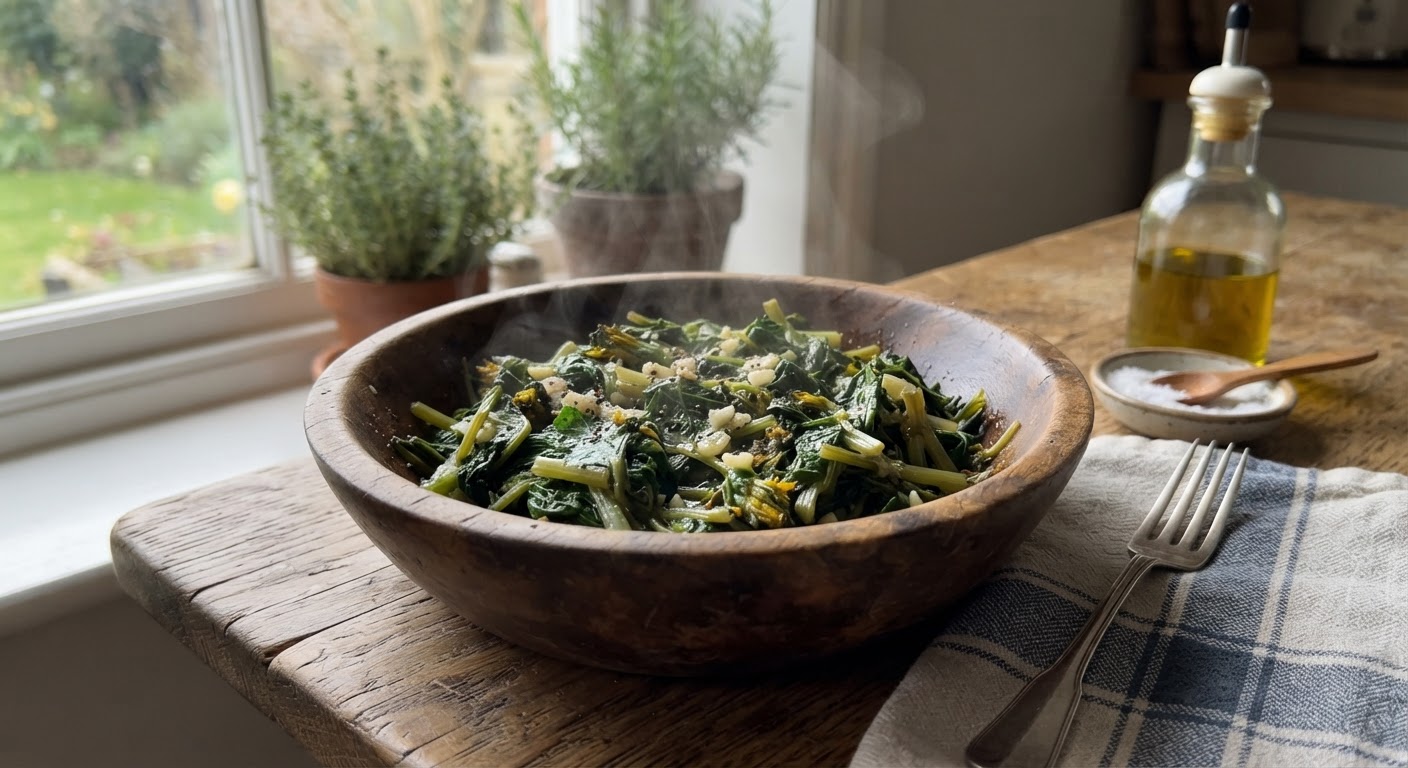
Step 3 — Blanch when needed. Wild greens tend to be more assertive than their domesticated counterparts — more bitterness, more texture, more… wildness. A 30-60 second blanch in boiling salted water followed by an ice water shock tames bitterness, preserves color, and gives you a blank canvas for cooking. Nettle and mature dandelion greens almost always benefit from this step. Purslane, chickweed, and wood sorrel usually don’t need it.
One Chart to Prioritize Your Foraging Season
If you want to eat wild vegetables year-round, you need to know when each plant peaks. This seasonal map covers the twelve species on this list across temperate North America:
| Season | What’s Available | What to Focus On |
|---|---|---|
| Early Spring (March–April) | Nettle tops, dandelion greens (mild), chickweed, fiddleheads, cattail shoots, garlic mustard rosettes | Fiddleheads first — shortest window. Then nettles before they flower. |
| Late Spring (May–early June) | Wild asparagus, lamb’s quarters (new growth), watercress, garlic mustard (second-year), wood sorrel | Asparagus and watercress peak. Lamb’s quarters starting to flush. |
| Summer (June–August) | Purslane, amaranth, lamb’s quarters, wood sorrel | Purslane is the star — it thrives when everything else has bolted. Amaranth just getting started. |
| Fall (September–November) | Dandelion greens (sweetened by frost), chickweed, watercress, garlic mustard rosettes, lamb’s quarters (until frost) | Dandelion second harvest — the fall leaves are sweeter than spring. Chickweed returns. |
| Winter (December–February) | Garlic mustard rosettes (in milder regions), watercress (if water isn’t frozen), chickweed (during warm spells) | Garlic mustard in the South; watercress if accessible. Limited but not zero. |
This schedule shifts based on your latitude and elevation. Southern Appalachia runs about three weeks ahead of upstate New York. Mountain elevations delay everything by 2-3 weeks per 1,000 feet of altitude gain.
FAQ: The Questions People Actually Ask
Do I need a license to forage wild vegetables?
Depends where you are. Public lands have different rules than private. US national forests generally allow personal-use plant collection without a permit (check with the specific forest’s ranger district). National parks prohibit removing anything. State parks vary — some allow foraging, some don’t, some require permits. Private land requires landowner permission. Always check local regulations before harvesting. In the UK, the Theft Act technically makes it illegal to uproot any wild plant without landowner permission, though personal foraging of above-ground parts is generally tolerated on public rights of way.
Can I freeze wild vegetables?
Yes — most of them, with a blanch step. Blanch greens for 30-60 seconds, shock in ice water, squeeze out excess moisture, and freeze in portions. Nettle, lamb’s quarters, dandelion, and amaranth greens freeze particularly well. Purslane and chickweed don’t — they turn to mush. Fiddleheads freeze well after a full 2-3 minute blanch.
What’s the easiest wild vegetable for a complete beginner?
Dandelion, no contest. Universal distribution, impossible to misidentify if you check for the hollow stem and single flower per stalk, and even the worst dandelion greens are just “too bitter” rather than dangerous. Lamb’s quarters is a close second for its spinach-like usability.
How do I avoid pesticides when foraging?
Ask yourself whether the area gets sprayed. Lawns — yes, almost certainly. Golf courses — heavily treated. Agricultural field margins — possible drift. Parks you know are maintained — likely. Deep woods, abandoned lots, and truly unmanaged spaces are lower risk. If you can see manicured grass, assume it’s been treated with something.
Are there wild vegetables I should avoid because of sustainability concerns?
Ramps are the poster child for overharvesting — their slow growth cycle (5-7 years from seed to maturity) means aggressive harvesting can collapse a local population. Some foragers now take only one leaf per plant or avoid bulb harvesting entirely. Other vegetables on this list are far more resilient: dandelion, purslane, lamb’s quarters, garlic mustard, and amaranth are all abundant and harvest-tolerant.
Bottom Line
You don’t need to memorize twelve plants overnight. Pick two that are in season right now where you live. Learn to identify them cold — not “I think this is it,” but “I’d bet dinner on this.” Find them. Harvest a small amount. Cook them simply. See what you think.
Foraging wild vegetables isn’t an all-or-nothing lifestyle switch. It’s a skill that layers onto your existing cooking knowledge. Once you know dandelion and lamb’s quarters, you’ll start noticing them everywhere — the vacant lot on your commute, the edge of the parking lot at the trailhead, the unmowed corner of your own yard.
The plants have been there the whole time. You just learned to see them.