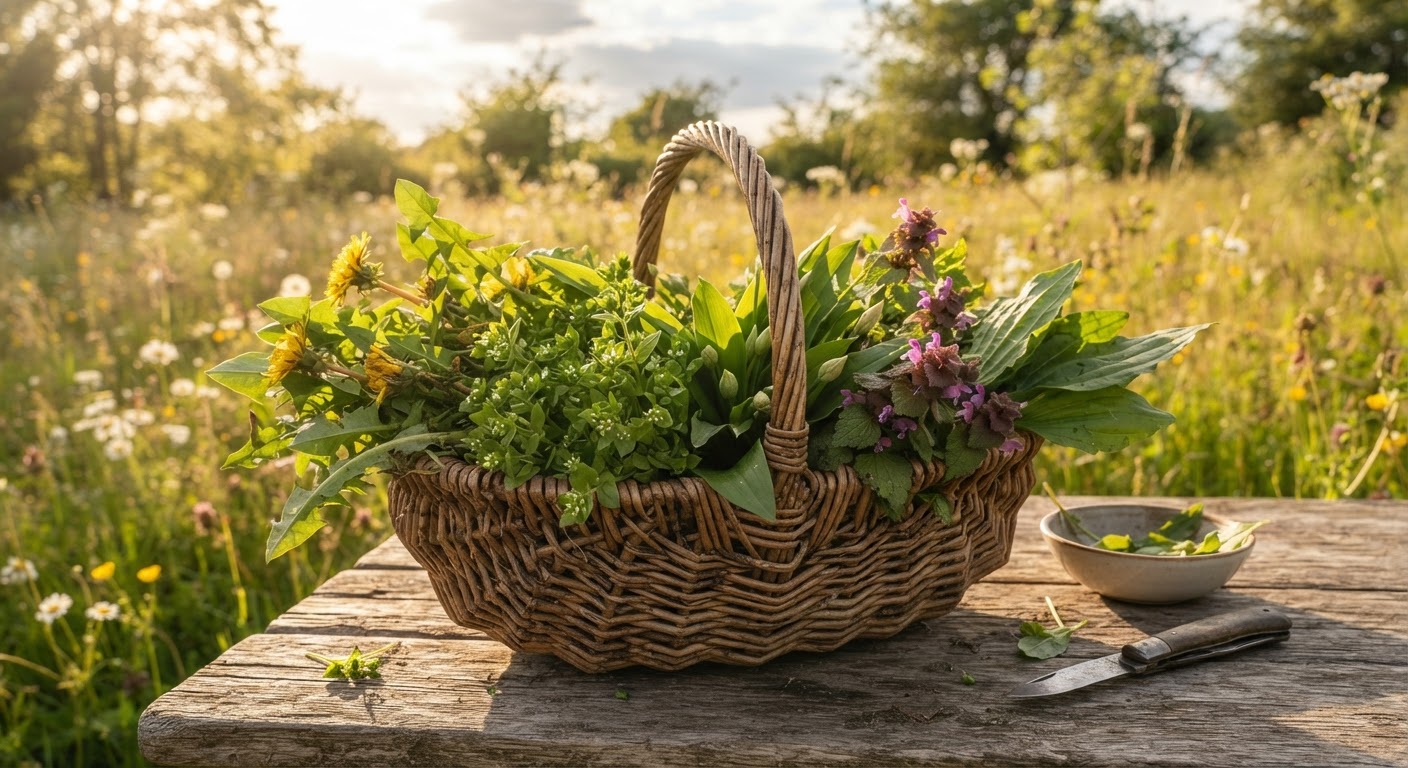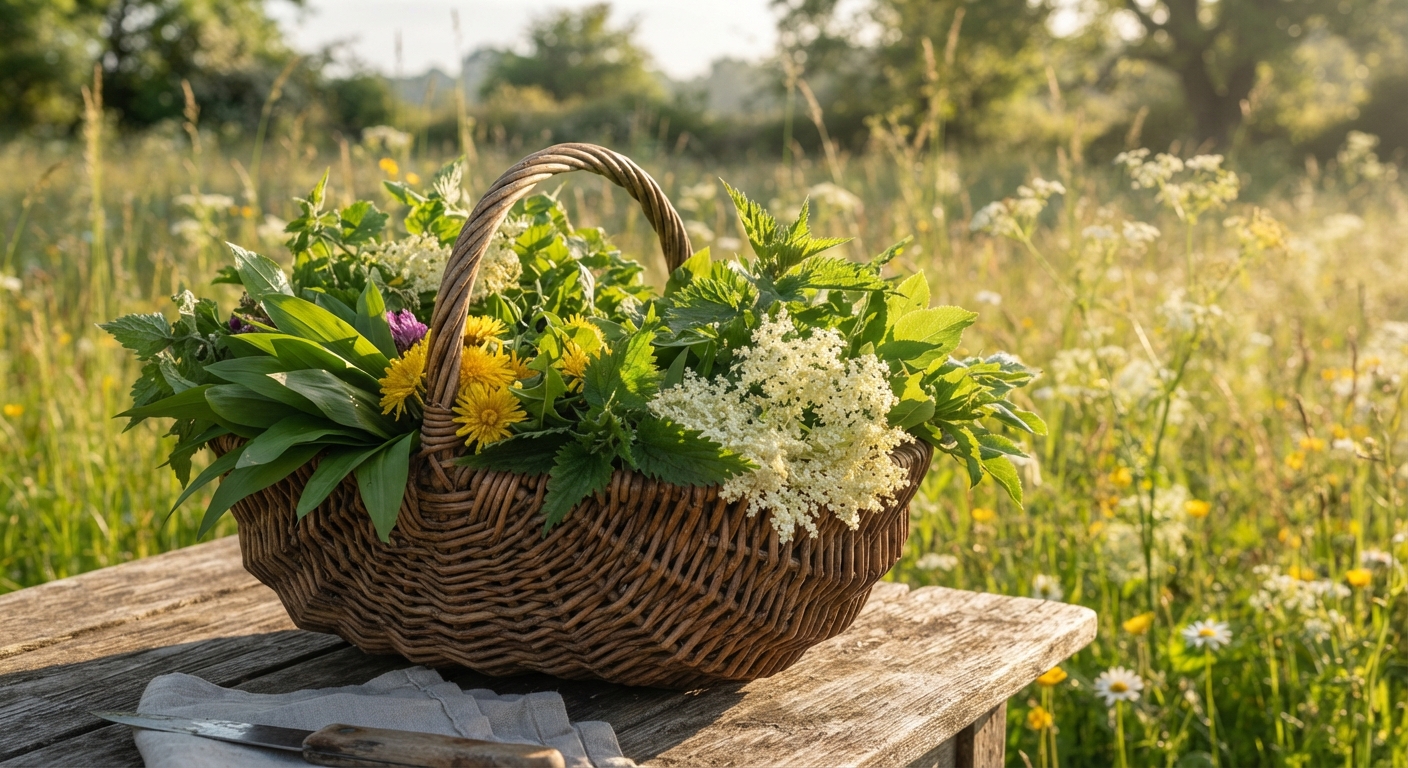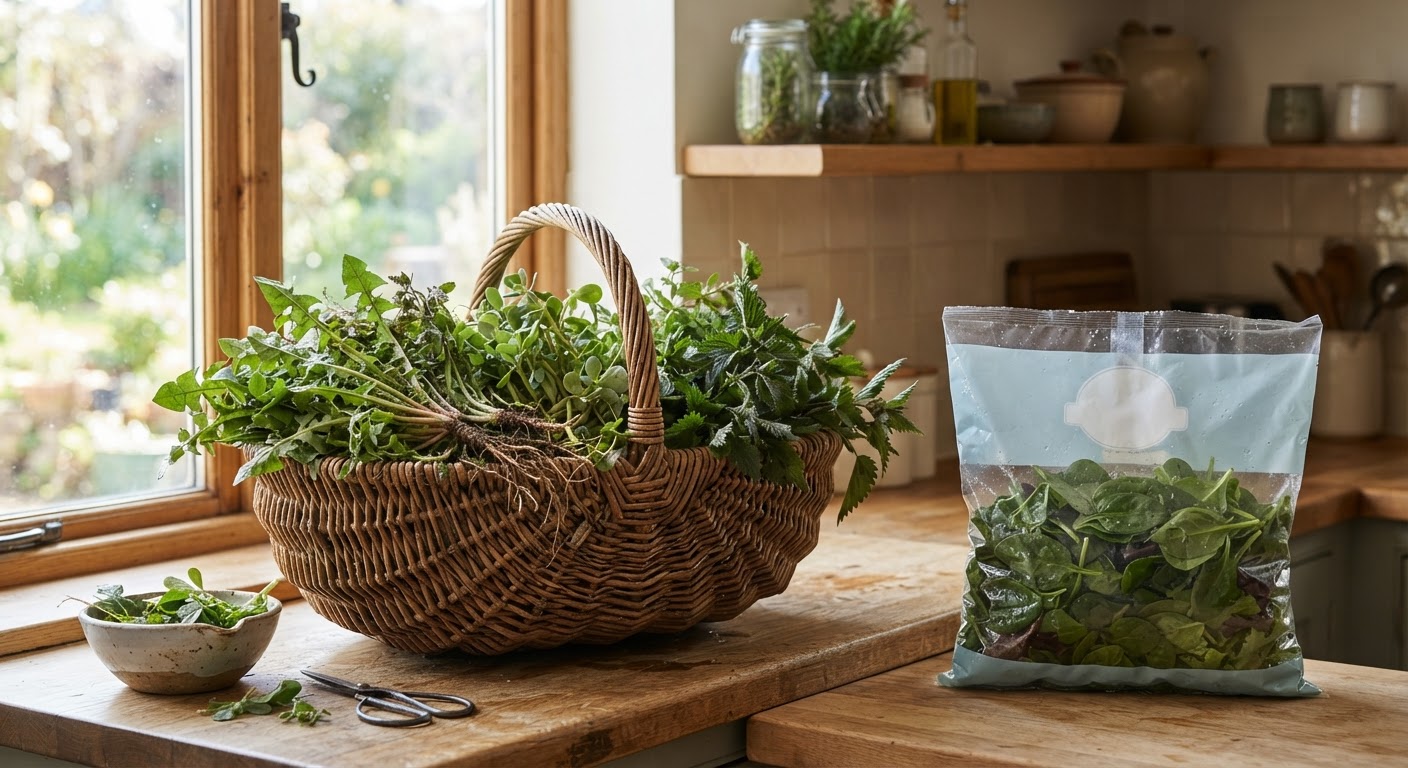
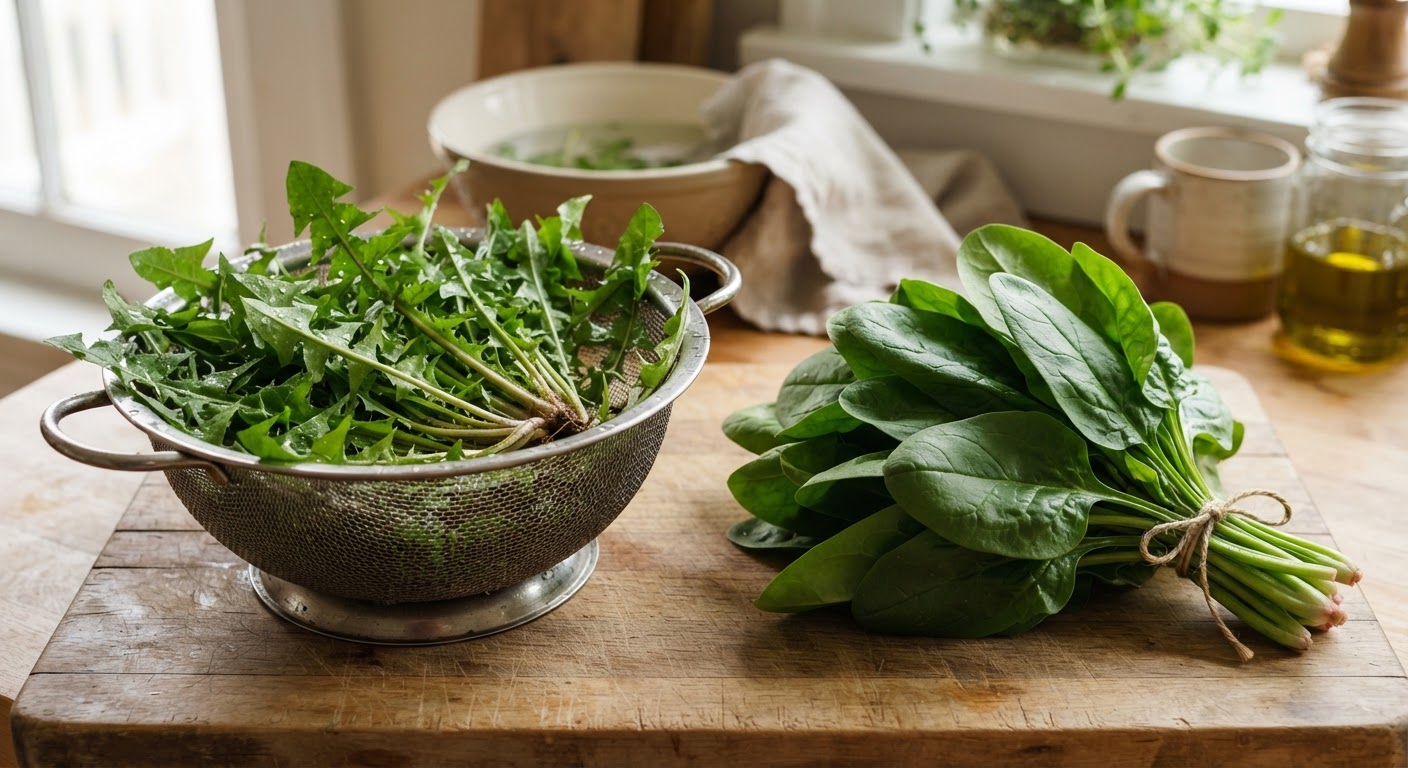
A five-ounce bag of organic baby spinach costs about four dollars and starts to wilt by day three. The dandelion greens pushing through the cracks in your driveway are free, fresher than anything that shipped a week ago, and denser in several nutrients than the greens in that bag. You’re not paying for better food. You’re paying for the convenience of not having to look down.
That gap — free wild greens versus shrink-wrapped supermarket leaves — is the whole reason foraging keeps growing. But “free” doesn’t automatically mean “worth it.” Some wild plants are a straight upgrade over what you buy. A few are more trouble than they’re worth. And all of them come with one non-negotiable catch: you have to identify them correctly, every single time.
This guide runs eight common edible wild plants head-to-head against their closest store-bought rival, on four things that actually matter in a kitchen: nutrition, cost, taste, and prep effort. At the end, you get a short starter lineup of the three plants worth learning first.
One rule before the scorecard, because it outweighs every matchup below: never eat a wild plant you can’t identify with 100% confidence. Cross-check any new plant against at least two reliable sources — a regional field guide and a trusted photo database — before it goes near your mouth.
The Scorecard at a Glance
Here’s the full picture in one table. “Beginner score” combines how easy the plant is to identify with how hard it is to mess up — 5 is the easiest.
| Wild Plant | Closest Store Rival | Where It Wins | Where It Loses | Beginner Score |
|---|---|---|---|---|
| Dandelion greens | Spinach | Calcium, iron, vitamin A; cost | Bitterness | 5/5 |
| Purslane | Romaine lettuce | Omega-3, vitamin A; cost | Slimy texture when cooked | 5/5 |
| Stinging nettle | Kale | Iron, calcium, protein; cost | Must be cooked to remove sting | 3/5 |
| Lamb’s quarters | Spinach | Calcium, vitamin A, C; cost | Oxalates (same as spinach) | 4/5 |
| Wild garlic | Scallions | Flavor intensity; cost | Seasonal, easy to confuse | 4/5 |
| Chickweed | Baby spinach | Mild taste, vitamin C | Tiny, low yield per plant | 4/5 |
| Wood sorrel | Lemon / cultivated sorrel | Sour kick, vitamin C | Oxalic acid in large amounts | 4/5 |
| Amaranth greens | Kale / spinach | Iron, calcium, vitamin A | Needs cooking, short season | 3/5 |
The takeaway from that table isn’t “wild is always better.” It’s that a handful of wild plants beat their store rivals so thoroughly that the only real cost is learning to spot them.
Round 1: Dandelion Greens vs. Spinach
Dandelion (Taraxacum officinale) is the beginner’s default, and for good reason: it’s everywhere, it’s nearly impossible to misidentify once you know the toothed leaves and the single hollow flower stem, and its nutrition profile embarrasses most bagged greens.
Per 100 grams, raw dandelion greens deliver more calcium and iron than spinach, along with high levels of vitamin A and vitamin K. The catch is the taste — genuinely bitter, especially in older leaves harvested after the plant has flowered.
Verdict: For cooking, dandelion wins on nutrition and cost. Pick young leaves in early spring for a milder bite, and pair the bitterness with fat — bacon, olive oil, or a squeeze of lemon — rather than trying to hide it.
Round 2: Purslane vs. Romaine Lettuce
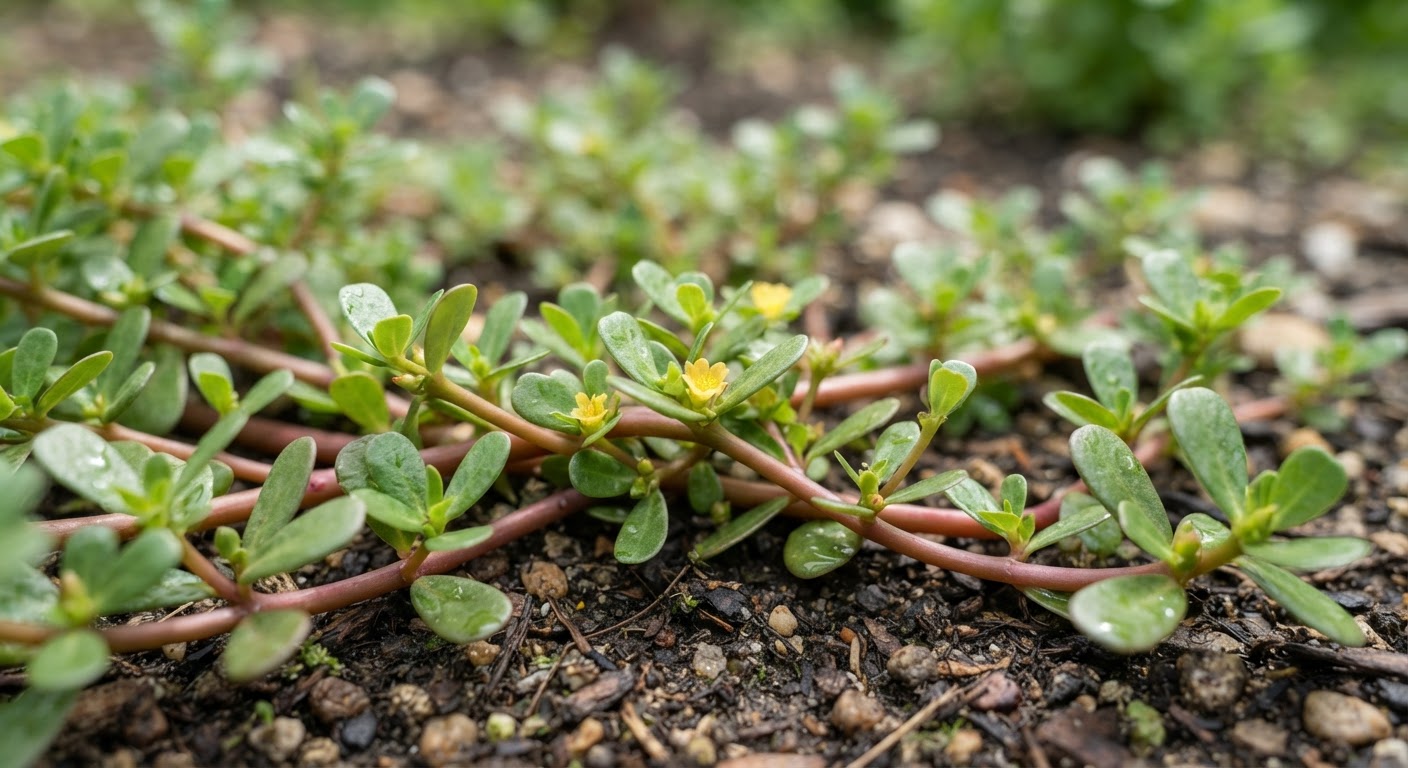
Purslane (Portulaca oleracea) looks like a weed — thick reddish stems, small paddle-shaped leaves, growing flat along garden beds and sidewalk cracks. It’s also one of the richest plant sources of omega-3 fatty acids (ALA) on land, which is the kind of detail that makes romaine lettuce look like crunchy water by comparison.
Purslane carries vitamin A, vitamin C, and magnesium, and it holds up in salads with a lemony, slightly salty crunch. The one complaint people have is texture: cooked purslane turns mucilaginous, a little like okra. Eat it raw and you avoid that entirely.
Verdict: Purslane smokes romaine on nutrition and beats it on cost. Use it raw in salads or stirred into dishes at the very last second if you insist on cooking it.
Round 3: Stinging Nettle vs. Kale
Stinging nettle (Urtica dioica) is the one wild green that scares people off — and the one that rewards them most if they push through. The leaves are covered in tiny silica-tipped hairs that inject formic acid on contact, which is exactly why you harvest with gloves and why you always cook or blanch it before eating.
Once blanched, the sting vanishes and the leaves become a mild, spinach-like green that’s unusually high in iron, calcium, and protein for a leafy vegetable. Nutritionally it trades blows with kale; on cost it wins outright, since nettles grow thick in damp, disturbed soil across most of North America and Europe.
Verdict: Kale edges it out on pure convenience — no gloves required. Nettle wins on nutrition per dollar and on flavor that’s gentler than raw kale. Blanch for 1–2 minutes and the sting is gone.
Round 4: Lamb’s Quarters vs. Spinach
Lamb’s quarters (Chenopodium album) is the weed gardeners rip out by the fistful and foragers quietly turn into dinner. Its leaves are coated in a fine, silvery-white dust that makes them easy to recognize, and its nutrition profile is basically a mirror of spinach: high in calcium, vitamin A, and vitamin C.
Like spinach, it contains oxalates, so if you’re sensitive to oxalate-heavy foods you’ll treat it the same way — cook it and don’t eat it by the bucket. The taste is milder and more forgiving than dandelion, which makes it a better “gateway” green for people who hate bitterness.
Verdict: A near-perfect spinach substitute that grows for free in your yard. If you learn only one wild green for cooking, this is a strong candidate.
Round 5: Wild Garlic vs. Scallions
Wild garlic (Allium ursinum) and North American ramps (Allium tricoccum) both deliver an allium punch — garlic-meets-onion — that no supermarket scallion can match. A single leaf can carry more flavor than a whole bunch of scallions.
The tradeoffs are real, though. Wild garlic is seasonal (spring), and ramps are so heavily foraged in some regions that overharvesting has become a genuine conservation problem. The identification rule matters here too: any allium you forage must smell unmistakably like onion or garlic. If it doesn’t, it could be a toxic lookalike such as death camas.
Verdict: For flavor intensity, wild garlic wins and it isn’t close. But harvest sustainably — take a leaf or two per plant, never the bulb, and leave the patch for next year.
Round 6: Chickweed vs. Baby Spinach
Chickweed (Stellaria media) is a delicate, low-growing plant with tiny white star-shaped flowers and a single line of fine hairs running down one side of the stem. It’s one of the mildest wild greens there is — soft, fresh, and faintly grassy, with none of the bitterness that puts people off dandelion.
It’s a respectable source of vitamin C and minerals, and it works raw in salads exactly where you’d use baby spinach. The downside is yield: chickweed plants are small, so filling a bowl takes patience.
Verdict: A fine baby-spinach alternative if you already know how to spot it, but not the most efficient green to forage in bulk. Great for a salad garnish rather than a main dish.
Round 7: Wood Sorrel vs. Lemon
Wood sorrel (Oxalis spp.) isn’t a green you’d build a meal around — it’s a seasoning. The shamrock-shaped leaves taste sharply sour, like green apple crossed with lemon, thanks to oxalic acid. A few leaves brighten a salad or a fish dish the way a squeeze of lemon would.
That oxalic acid is also the caution. In very large quantities it can interfere with calcium absorption and, in extreme cases, cause problems, so treat wood sorrel as a garnish, not a vegetable. It’s high in vitamin C and grows abundantly in lawns and woodland edges.
Verdict: Wood sorrel is a free flavor accent, not a food staple. Use it sparingly, exactly like lemon juice.
Round 8: Amaranth Greens vs. Kale
Amaranth (Amaranthus spp.) is best known for its seeds — a gluten-free pseudo-grain — but the leaves deserve attention too. They’re high in iron, calcium, and vitamin A, and in many parts of the world (India, the Caribbean, parts of Africa) they’re a staple cooked green.
Amaranth leaves need cooking; raw they’re coarse and, in some varieties, slightly astringent. The plants are easy to recognize by their dense, upright flower spikes, but the window for tender young leaves is short — once they bolt, the leaves toughen.
Verdict: Cooked amaranth greens are a legit kale rival on nutrition. They’re a better “grow it yourself” plant than a casual foraging target, since the best leaves come early in the season.
Your Starter Lineup
If you’re new and want the highest return for the least risk, learn these three in order:
- Dandelion — everywhere, hard to misidentify, nutritionally outstanding.
- Purslane — easy to spot, beats lettuce on every metric, great raw.
- Lamb’s quarters — mild, spinach-like, and abundant in gardens.
Master those three and you’ll have eaten your first genuinely free, genuinely nutritious meals from wild plants — and built the identification habits that make every plant after them easier.
Five Rules That Matter More Than Any Plant
The matchups above are useless if you skip these. Tattoo them onto your foraging brain:
- 100% ID, or it doesn’t go in the basket. No “probably,” no “it looks like the picture.”
- Use two identification features, and one must rule out the toxic lookalike. A single leaf shape isn’t enough.
- Harvest away from roads, sprayed lawns, and dog-walking paths. Wild greens absorb whatever is in the soil and air around them.
- Cook or blanch nettles and amaranth. The sting and the astringency both disappear with heat.
- Go slow with oxalates. Dandelion, lamb’s quarters, wood sorrel, and purslane all contain them; eat in normal food amounts, not bucketfuls.
Straight Answers to Common Questions
Is it actually safe to eat weeds from my own yard? Only if you can identify them with certainty and the area is free of pesticides, herbicides, and pet waste. If you’ve ever sprayed the lawn, the answer is no.
Which wild edible plant is the absolute easiest to start with? Dandelion. It’s abundant, its toothed leaves and single hollow flower stem are distinctive, and it has no seriously dangerous lookalike for anyone who learns those two features.
Do wild greens really have more nutrients than supermarket greens? Often yes for specific nutrients — dandelion and lamb’s quarters routinely beat spinach on calcium and several vitamins per serving. The difference is real but not magical; you still need a varied diet.
Why do I have to cook stinging nettle? The fine hairs on the leaves inject formic acid and other irritants. Blanching or cooking for a minute or two destroys them and makes the leaves completely safe to eat.
What’s the one mistake every beginner should avoid? Eating something based on a single photo match. Always confirm at least two identifying features, and if any doubt remains, take a photo, go home, and ask an experienced forager or a regional identification group.