My neighbor Dave has been foraging for six years. Last month, I watched him ask his workshop group: “How many edible plants can you reliably identify right now?”
People threw out numbers — fifteen, twenty, thirty. Then Dave pulled out his phone. “Sixty seconds. Write down every edible wild plant you’d bet your lunch on.”
The average was six.
Six plants that people felt genuinely confident about — the kind of confidence where you’d put the leaf in your mouth without a second thought. These were people who had been foraging for over a year.
That gap between “plants I’ve read about” and “plants I would actually eat” is where every foraging beginner gets stuck. You scroll through lists with fifty species, save a dozen blog posts, buy two field guides — and then you stand in an actual field and realize you can’t tell wood sorrel from clover with 100% certainty.
This guide solves that problem differently. Instead of another flat list, it organizes plants into a confidence tier system — green, yellow, and red — based on how hard each plant is to misidentify. Start in green tier, where the plants are basically impossible to screw up. Stay there until you’re bored. Then add yellow tier plants one at a time. Red tier is for later.
Why Every Edible Wild Plants List Fails (And How Tiers Fix It)
Open any foraging book and you’ll see an alphabetical list: Amaranthus on page 42, Viola on page 218, sixty species with no indication of which ones could land you in an emergency room if you mess up.
The issue isn’t the information. It’s the organization. When every plant gets equal space, your brain treats them as equally safe — but they’re not. Purslane has one lookalike (spurge), ruled out with a two-second stem test. Queen Anne’s lace has a lookalike (poison hemlock) that killed Socrates. These plants don’t belong in the same mental category.
The tier system organizes plants around what actually matters in the field: how much can go wrong?
Here’s the framework:
| Tier | Risk Level | What’s Required | Example Plants | When to Move On |
|---|---|---|---|---|
| 🟢 Green | Near-zero misidentification risk | One unmistakable ID feature | Dandelion, Nettle, Wild Garlic, Cattail | When you can ID all six from 10 feet away |
| 🟡 Yellow | Has a specific lookalike; test confirms safety | Two confirmation features plus a yes/no test | Purslane, Chickweed, Lamb’s Quarters, Wood Sorrel | When you can reliably distinguish each yellow-tier plant from its lookalike in 30 seconds |
| 🔴 Red | Toxic if misidentified or improperly prepared | Multiple confirmations, processing knowledge | Pokeweed, Elderberry, Wild Carrot, Bracken Fern | After one full season with green and yellow tier plants |
This framework doubles as a learning accelerator. Every green tier plant you master builds pattern recognition — leaf shapes, stem textures, growth habits — that makes yellow tier plants easier. Skip green and go straight to yellow, and you’re building that circuitry while simultaneously spotting dangerous lookalikes. That’s how mistakes happen.
Green Tier: The Six Plants You Can’t Mess Up
These plants earn their green tier status by having at least one of these qualities: no toxic lookalikes in North America or Europe, or an identification feature so unmistakable that it overrides visual confusion. Start here. Forage these six plants until you could pick them out of a lineup in your sleep. Only then move to yellow.
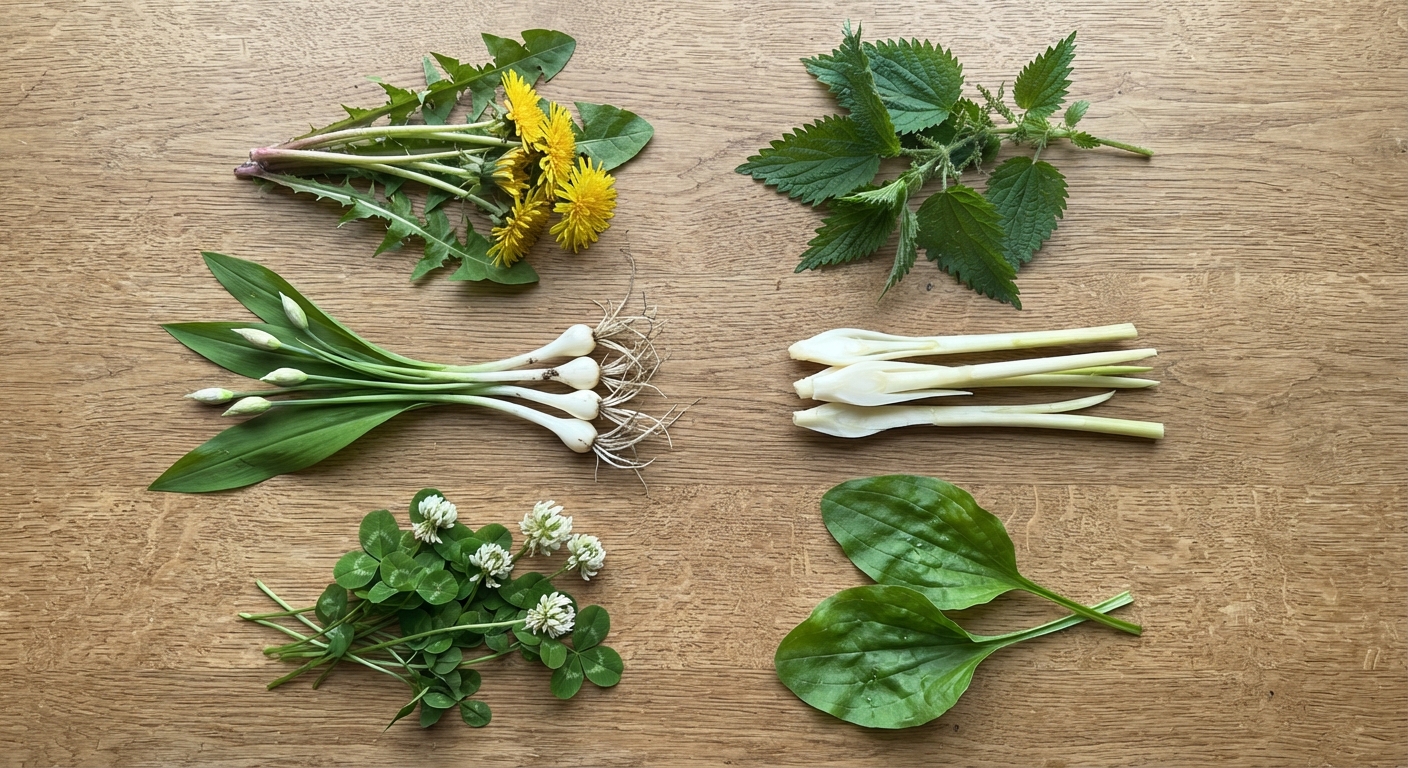
1. Dandelion (Taraxacum officinale)
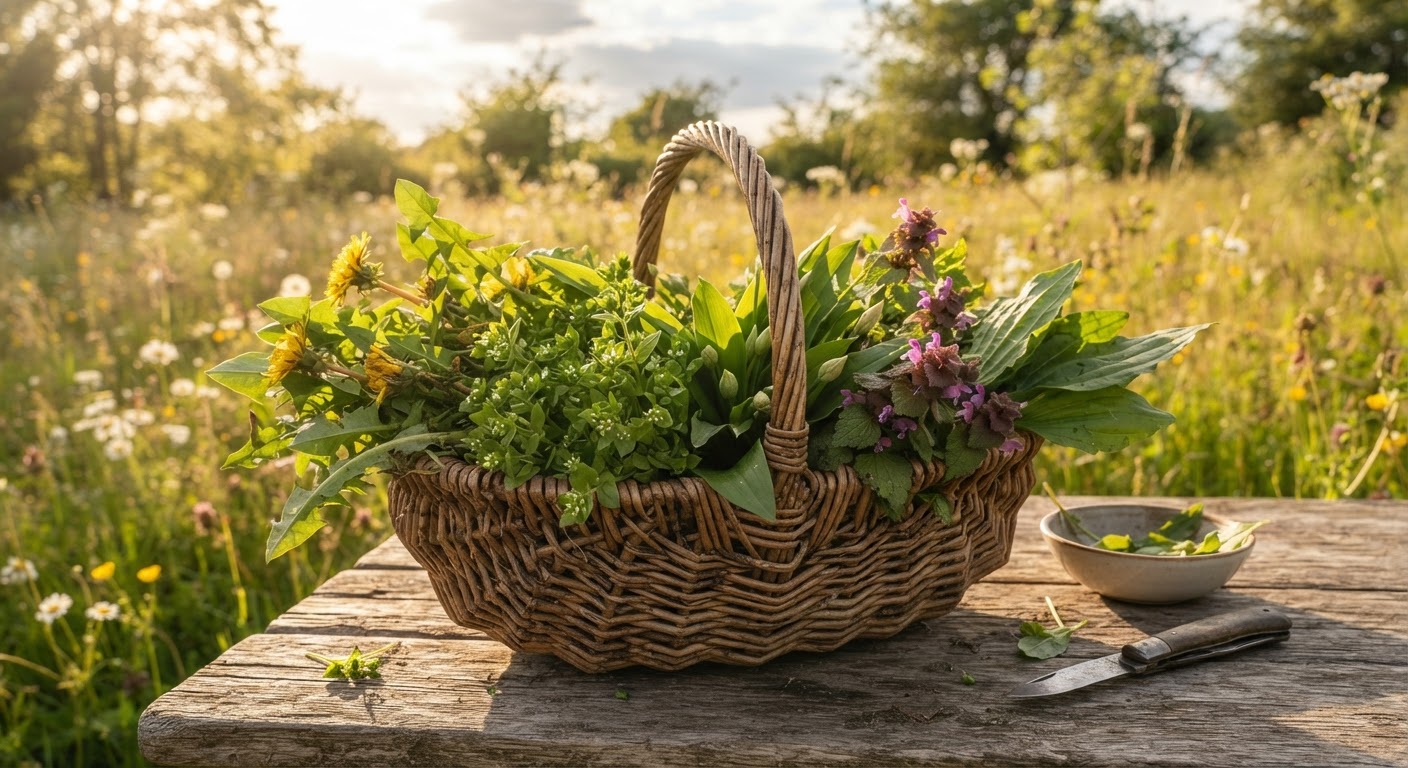
If you can’t identify a dandelion, you might need to spend more time outdoors. The deeply toothed leaves (French: dent de lion, lion’s tooth), hollow flower stem with one yellow flower per stalk, and white latex sap when you break the stem — these are the three ID markers. No toxic lookalikes, period. Chicory and cat’s ear (Hypochaeris) look vaguely similar but are also edible, so even if you misidentify one, you’re fine.
What to eat: Young leaves in salads (pre-flowering, they’re less bitter), flowers battered and fried, roots roasted for a coffee substitute. When: March through November in most temperate regions.
The detail that matters: Dandelion leaves from a frequently mowed lawn are tender and mildly bitter. The giant leaves from an abandoned field edge taste like chewing aspirin. Location determines flavor more than season.
2. Stinging Nettle (Urtica dioica)
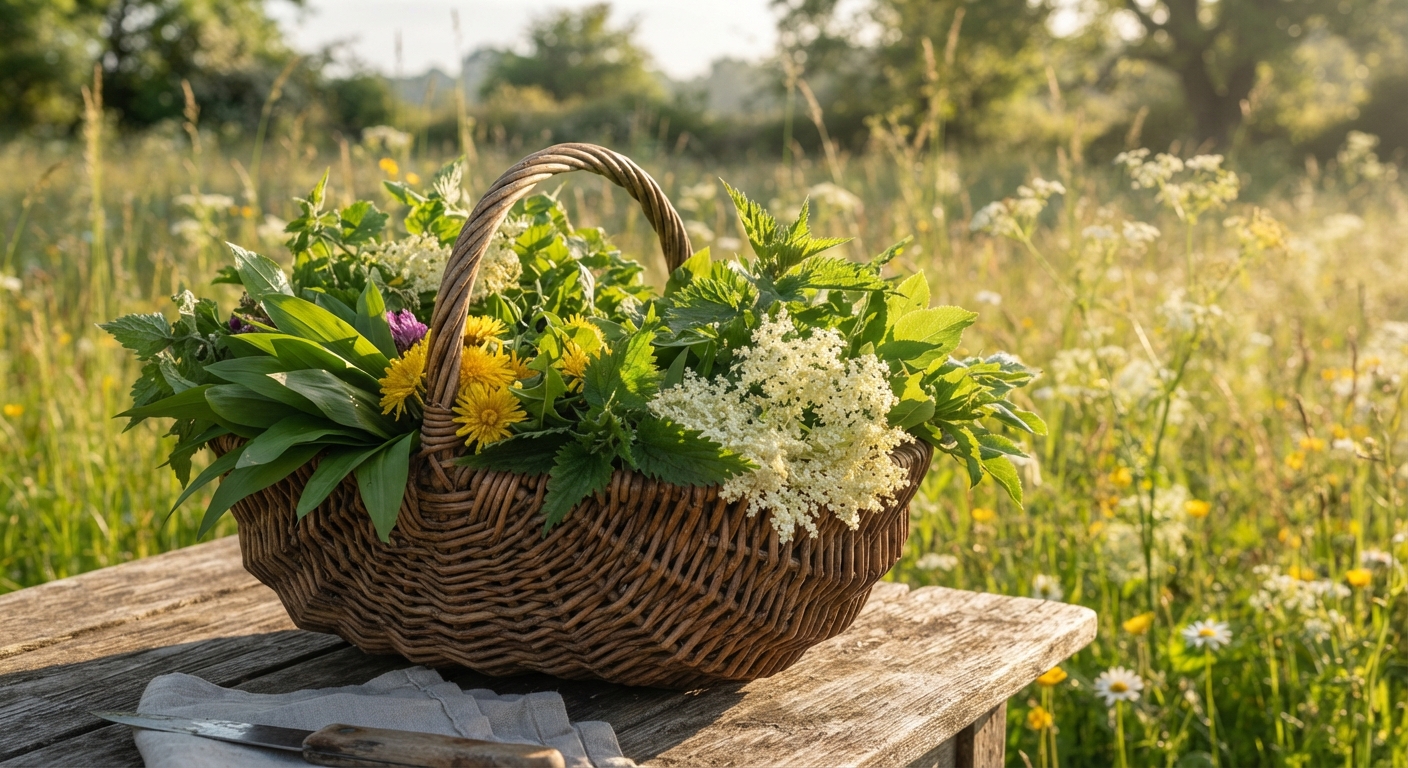
The sting is the identification feature. No other common plant in North America or Europe delivers the same immediate, unmistakable prickling-burning sensation from brushing against it. Serrated, heart-shaped leaves growing opposite on square stems, covered in tiny glass-like hairs that inject formic acid and histamine. If you’re unsure whether it’s nettle, touch it — you’ll know in two seconds.
What to eat: Young tops and leaves, cooked. Blanching for 30 seconds in boiling water destroys the sting completely. After cooking, treat it exactly like spinach — nettle soup, nettle pesto, nettle saag. When: Early spring through early summer (before flowering); young regrowth in fall. Nutritional note: More iron than spinach, more protein than most leafy greens, and significant vitamin C.
Harvest tip: Wear leather or rubber gloves. Use scissors and drop directly into a bag. Do not use fabric gloves — the hairs go right through. If you get stung, dock leaves (Rumex) often grow nearby; crush them and rub the juice on the sting. The science on whether dock actually works is mixed, but it’s a tradition for a reason.
3. Wild Garlic / Field Garlic (Allium species)
The smell eliminates the risk. Crush any part of the plant between your fingers — if it smells unmistakably like garlic or onion, it’s an Allium and it’s edible. If it doesn’t smell, don’t eat it. This is the one case where a single identification feature is sufficient, because the plants that look like wild garlic but don’t smell (death camas, star-of-Bethlehem) are genuinely dangerous.
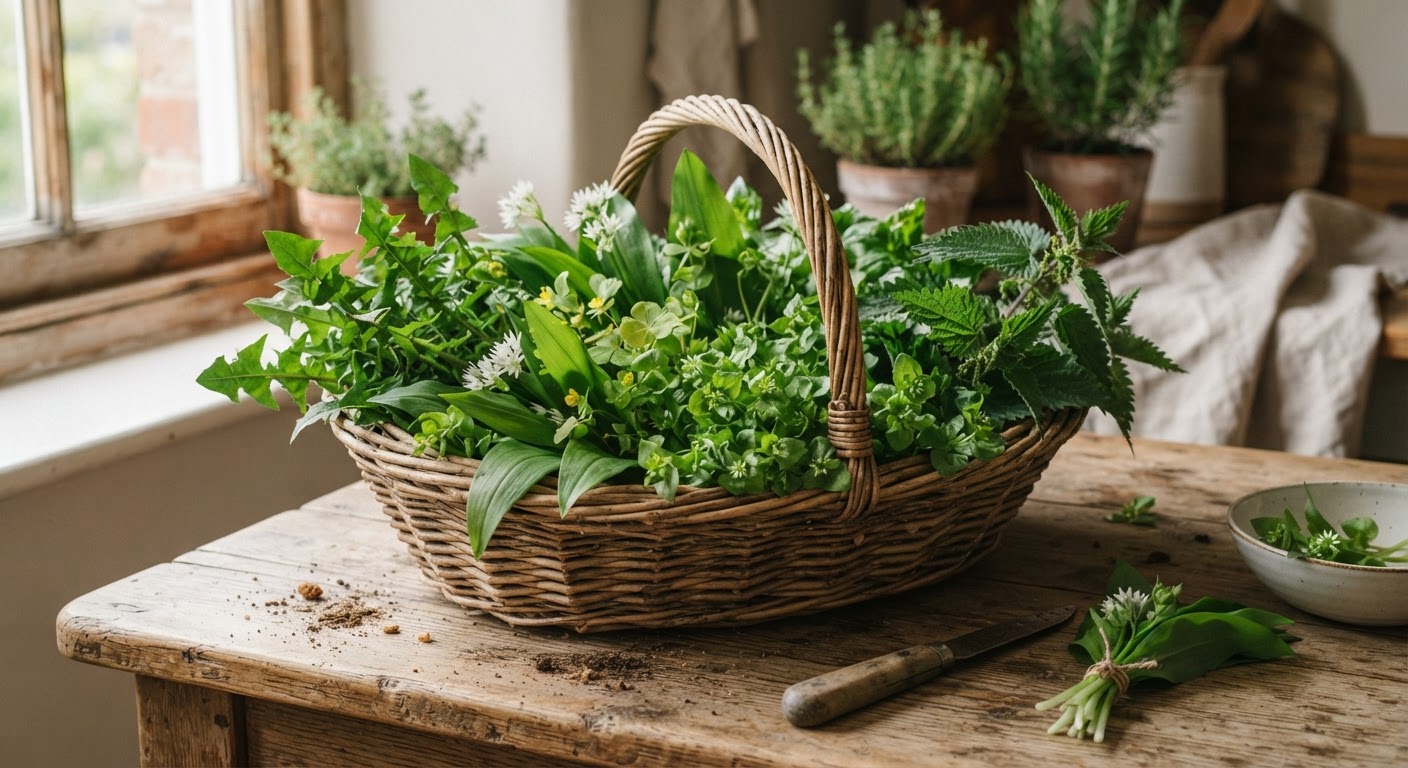
What to eat: Leaves (raw or cooked like chives), bulbs (like small onions), flowers (garnish). When: Spring through early summer. Where: Damp meadows, shaded woodland edges, lawns, and riverbanks.
Field garlic (Allium vineale) and wild garlic/ramsons (Allium ursinum) are the two most common species you’ll encounter. Field garlic has hollow, tubular leaves. Ramsons have broad, flat leaves. Both smell like garlic. Both are edible.
4. Cattail (Typha species)
The cigar-shaped brown seed head is unmistakable from any distance. Called the “supermarket of the swamp” — every part is edible: young shoots (peel and eat raw or cooked), immature green flower spikes (boil like corn), pollen (used as flour), rhizomes (processed for starch). Where: Marshes, pond edges, ditches with clean water. One caution: Don’t harvest from water you wouldn’t drink — cattails absorb agricultural runoff and heavy metals.
5. White Clover (Trifolium repens)
Three-leaflet structure with a white V-shaped marking per leaflet, globe-shaped white (sometimes pink-tinged) flower head. Grows in lawns across the entire northern hemisphere. No toxic lookalikes. What to eat: Leaves in salads or cooked, flowers raw or dried for tea. Clover blossom tea with honey tastes remarkably like chamomile. When: Spring through fall, year-round in mild climates.
6. Broadleaf Plantain (Plantago major)
You’ve walked on this plant thousands of times. Broad, oval leaves with parallel veins radiating from the base, seed stalks like green rat tails. Thrives in compacted soil — sidewalks, driveways, paths. Zero toxic lookalikes. What to eat: Young leaves (salads, sautéed, smoothies — pick them spoon-sized). Older leaves get tough. When: Year-round in most climates. Bonus: Crushed plantain leaves applied to insect stings and minor cuts act as an antimicrobial poultice — one of the most universal herbal remedies across cultures.
Yellow Tier: Five Plants Worth the Extra Thirty Seconds
Yellow tier plants are common, nutritious, and absolutely worth learning — but each one has a specific lookalike that you need to rule out. The rule for yellow tier: never harvest without performing the confirmation test.
Yellow Tier Lookalike Reference
| Edible Plant | Lookalike | The Test | Consequence of Mistake |
|---|---|---|---|
| Purslane (Portulaca oleracea) | Spurge (Euphorbia spp.) | Break stem — purslane leaks clear sap, spurge leaks white/milky sap | Skin irritation, GI distress |
| Chickweed (Stellaria media) | Scarlet Pimpernel (Anagallis arvensis) | Check flower — chickweed has 5 deeply split white petals (looks like 10), pimpernel has orange/red flowers. Check stem hairs — chickweed has a single line of hairs | Mild toxicity |
| Lamb’s Quarters (Chenopodium album) | Black Nightshade (Solanum nigrum) | Check leaf underside — lamb’s quarters has white/powdery coating. Nightshade is smooth green underneath | Nightshade berries are toxic (leaves less so) |
| Wood Sorrel (Oxalis spp.) | Clover (Trifolium spp.) | Heart-shaped leaflets (sorrel) vs oval leaflets (clover). Taste test: sorrel is sour/lemony | Clover is edible anyway, so no danger — but you’ll be disappointed in your salad |
| Wild Strawberry (Fragaria vesca) | Mock Strawberry (Potentilla indica) | Check flower color — wild strawberry has white flowers with yellow centers. Mock has yellow flowers. Berry taste: wild strawberry is sweet, mock is bland/watery | No toxicity. Mock strawberry is just tasteless |
Purslane: The Omega-3 Powerhouse
Purslane sprawls flat against the ground with thick reddish stems and fleshy paddle-shaped leaves — like a miniature jade plant colonizing your garden beds. Flavor is mild, slightly lemony, with a satisfying crunch.
The spurge lookalike is the only concern. Spurge has thinner stems and leaks white, milky latex when broken. Purslane leaks clear sap. This two-second test is 100% reliable.
What to eat: Raw in salads, sautéed, or pickled. When: Mid-summer through early fall — purslane loves heat. Nutritional note: Contains more omega-3 fatty acids than any other leafy vegetable (~350 mg per 100g).
Chickweed: The Winter Salad Green
Chickweed forms dense, low mats of thin stems with small oval leaves in opposite pairs. Tiny flowers — 5mm across, with five petals so deeply split they look like ten. The diagnostic feature: a single line of hairs running down one side of the stem, switching sides at each leaf node. Run your finger along it — smooth on one side, slightly rough on the other.
When: Late fall through early spring. Chickweed dies back in summer heat — making it the off-season superstar when nothing else is available. What to eat: Raw in salads (mild, grassy flavor), don’t overcook — turns to mush fast.
Lamb’s Quarters: The Spinach You Didn’t Plant
Often called “wild spinach,” lamb’s quarters grows up to six feet with diamond-shaped, toothed leaves coated in a white powdery bloom on young growth — most visible on leaf undersides. Rub a leaf and you’ll feel a slightly gritty texture. It’s not dirt — it’s a natural edible coating.
What to eat: Young leaves and tender tips, cooked like spinach. Contains oxalic acid — cook to reduce, and moderate if prone to kidney stones. When: Late spring through early fall. Where: Disturbed soil, garden beds, farm edges — anywhere soil has been turned recently.
Wood Sorrel: Nature’s Sour Candy
Three heart-shaped leaflets, each with a fold down the middle, fold up at night. Small white-with-pink-veins or yellow flowers. The taste is unmistakable — a sharp, clean, lemony burst. Bite a leaf and you’ll know instantly.
Why yellow tier? Oxalic acid levels are higher than most greens. A handful in a salad is fine. Eating a bowlful is not. Skip if you have kidney issues. What to eat: Leaves and flowers raw on the trail, in salads, or as a backcountry lemon substitute in soups.
Wild Strawberry: The Real Deal
Wild strawberries (Fragaria vesca/virginiana) are marble-sized but pack flavor — one wild berry equals five supermarket ones in intensity. The key distinction from mock strawberry: real wild strawberries have white flowers with yellow centers. Mock strawberries have yellow flowers. Mock strawberries are edible but tasteless, so the risk is disappointment, not danger.
What to eat: Berries raw, young leaves dried for tea. When: Late spring through mid-summer for berries; leaves spring through fall.
Red Tier: Plants for the Experienced Forager
Red tier plants require additional knowledge, multiple identification confirmations, or specific processing methods. Come back after a full season with green and yellow tier plants.
Pokeweed (Phytolacca americana): Only young shoots (6-8 inches, no red in stem) are edible after boiling in two changes of water. Every other part — mature leaves, red stems, berries, root — is toxic. The timing window is narrow and the margin for error is small. Skip it if you’re unsure.
Elderberry (Sambucus spp.): Flowers and fully ripe, cooked berries are safe for syrup and jam. Raw berries, stems, and leaves contain cyanogenic glycosides. Berries must be dark purple-black and cooked. Use a fork to strip berries from stems.
Wild Carrot / Queen Anne’s Lace (Daucus carota): Edible root, smells like carrot — but nearly identical to poison hemlock and water hemlock. Hairy stem vs. smooth, and a dark purple flower in the umbel center are the distinctions, but the stakes are too high for beginners. Many experienced foragers avoid the entire carrot family.
Bracken Fern (Pteridium aquilinum): Traditional food in East Asia but contains ptaquiloside, a probable carcinogen. Ostrich fern fiddleheads (deep U-groove in stem) are a safer fiddlehead alternative.
Seasonal Harvest Calendar: What’s Available When
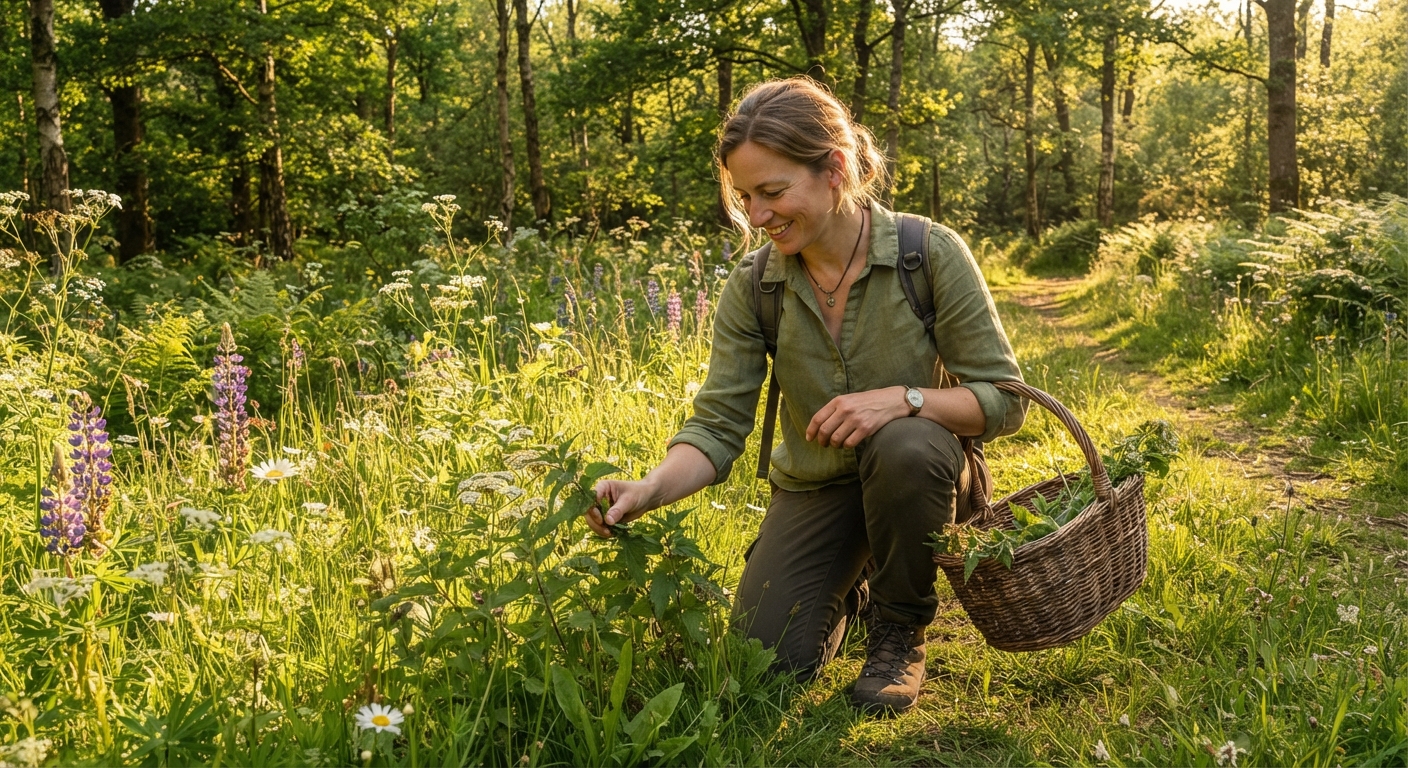
One of the biggest frustrations for new foragers is going out in the wrong month and finding nothing. This calendar covers the 15 plants in green and yellow tiers — all of which you can find in most temperate regions of North America and Europe.
| Plant | Mar | Apr | May | Jun | Jul | Aug | Sep | Oct | Nov | Notes |
|---|---|---|---|---|---|---|---|---|---|---|
| Dandelion | ✅ | ✅ | ✅ | ✅ | ✅ | ✅ | ✅ | 🟡 | 🟡 | Leaves most tender Mar–May; roots best in fall |
| Stinging Nettle | 🟡 | ✅ | ✅ | 🟡 | — | 🟡 | 🟡 | 🟡 | — | Best before flowering; fall regrowth tender |
| Wild Garlic | 🟡 | ✅ | ✅ | 🟡 | — | — | — | — | — | Spring-only; gone by summer heat |
| Cattail | 🟡 | ✅ | ✅ | ✅ | ✅ | ✅ | 🟡 | — | — | Shoots in spring; pollen in Jun–Jul |
| White Clover | 🟡 | ✅ | ✅ | ✅ | ✅ | ✅ | ✅ | 🟡 | 🟡 | Year-round in mild climates |
| Plantain | ✅ | ✅ | ✅ | ✅ | ✅ | ✅ | ✅ | ✅ | ✅ | Truly year-round; young leaves best |
| Purslane | — | — | — | 🟡 | ✅ | ✅ | ✅ | 🟡 | — | Heat-loving; peak Jul–Aug |
| Chickweed | ✅ | ✅ | 🟡 | — | — | — | — | ✅ | ✅ | Cool-season superstar; gone in summer |
| Lamb’s Quarters | — | 🟡 | ✅ | ✅ | ✅ | ✅ | 🟡 | — | — | Young plants best; gets tough late season |
| Wood Sorrel | ✅ | ✅ | ✅ | ✅ | ✅ | ✅ | ✅ | ✅ | ✅ | Year-round if conditions stay moist |
| Wild Strawberry | — | 🟡 | ✅ | ✅ | 🟡 | — | — | — | — | Brief season; berries peak Jun |
| Legend | — | — | — | — | — | — | — | — | — | ✅ Peak |
This calendar isn’t universal — coastal California has a very different rhythm from Minnesota — but it’s directionally correct for most temperate regions. Use it as a starting point and adjust based on what you actually find in your local area. The plants will tell you more than any calendar can.
Pro Tips from Someone Who Has Made Every Mistake
1. Learn Plants in Reverse
Start with “what does the toxic lookalike look like?” before learning the edible plant. If you learn spurge before purslane, or hemlock before wild carrot, your brain is tuned to spot danger first.
2. The Five-Sense Test
Use at least three senses per plant: sight (leaf shape, growth habit), touch (stem texture, sap consistency), smell (crushed leaf). For wood sorrel or wild Allium, taste is the fourth — a tiny nibble, spat out. Sound counts too — a hollow dandelion stem snaps differently from fibrous chicory.
3. The Foraging Walk vs. the Identification Walk
When learning a new plant, go out specifically to find that plant and nothing else. No basket. No harvesting. Find it in three different locations. Only then graduate to harvesting. Mixing learning and harvesting in the same outing is how mistakes happen.
4. One New Plant Per Week
Your brain consolidates pattern recognition during sleep. Learn ten plants in one afternoon and you’ll retain maybe three. One plant per week for a season gives you thirty plants you can identify at the level of instinct — not memorization. That’s more than most people learn in a lifetime.
Frequently Asked Questions
Can I eat wild plants raw, or do they all need cooking?
Some are better raw (dandelion young leaves, wood sorrel, chickweed, clover), some must be cooked (stinging nettle, pokeweed shoots, elderberries), and some are fine either way (purslane, lamb’s quarters, plantain). Green tier plants are generally safe raw, but cooking improves palatability by reducing bitterness and fiber. When in doubt, cook it — heat eliminates many potential irritants.
How do I know if a plant has been sprayed with pesticides?
You don’t, unless you know the land management practices. Start with your own pesticide-free yard. For public land, call the parks department about spraying schedules. Avoid roadsides (exhaust, road salt, herbicide drift) and conventional farmland edges. Forage uphill from roads and away from visibly managed areas.
Can I forage on public land?
Laws vary dramatically. US national parks generally prohibit foraging (limited exceptions for certain berries/mushrooms). National forests often allow it with a permit. State parks range from prohibition to unrestricted. City parks usually forbid plant removal. Always check local regulations. “Take only pictures, leave only footprints” applies on unverified land.
What’s the single most common beginner mistake?
Harvesting before being 100% sure of the identification. Excitement overrides caution. The fix: identify the plant on two separate occasions, from a distance and up close, before harvesting. First finding confirms the ID. Second finding is for dinner.
Your First Week: A Practical Roadmap
If you’ve read this far, here’s what to actually do tomorrow:
Day 1: Walk around your neighborhood or a local park. Find and photograph dandelions, plantain, and white clover. You will find all three. Confirm the ID markers for each (hollow stem with latex, parallel-veined leaves, white V on clover leaflets). Do not harvest. Just look.
Day 3: Return to the same area. Can you spot these three plants from 20 feet away without bending down? If yes, you’re ready to harvest a small amount — a handful of dandelion greens, a few clover flower heads for tea.
Day 5: Add stinging nettle to your search. Find a damp, slightly shaded area — stream banks, forest edges, abandoned garden corners. Wear gloves. Confirm the sting, then the leaf shape. Harvest young tops (top 4-6 inches) into a bag.
Day 7: Cook your first foraged meal. Sauté the nettles with garlic and olive oil (2 minutes in boiling water first to neutralize the sting). Toss the dandelion greens into the same pan. Garnish with clover flowers. This is a real meal you found yourself, and it cost nothing.
Green tier. One week. Four plants. This is the foundation. Everything else builds from here — but only when you’re ready.
The plants have been here for millions of years. They’re not going anywhere. Take your time.