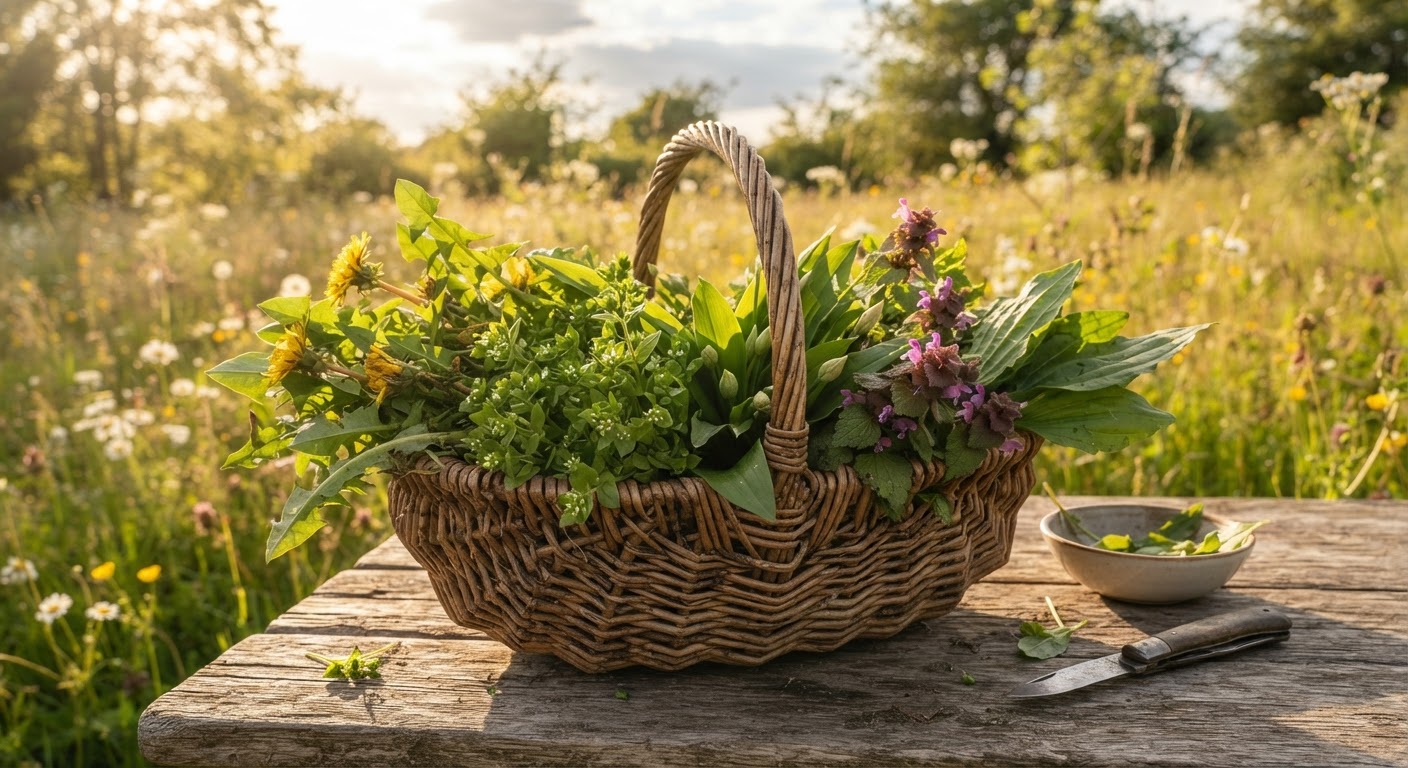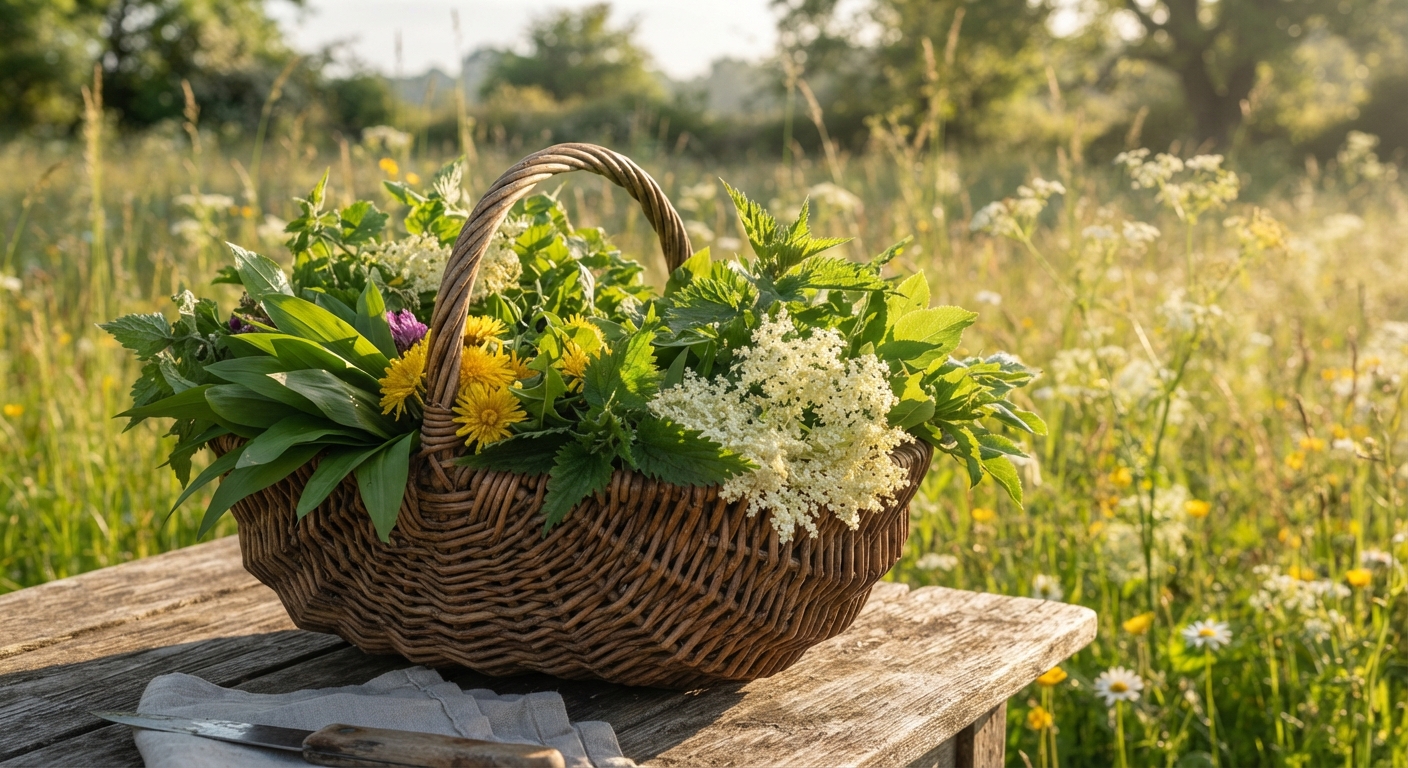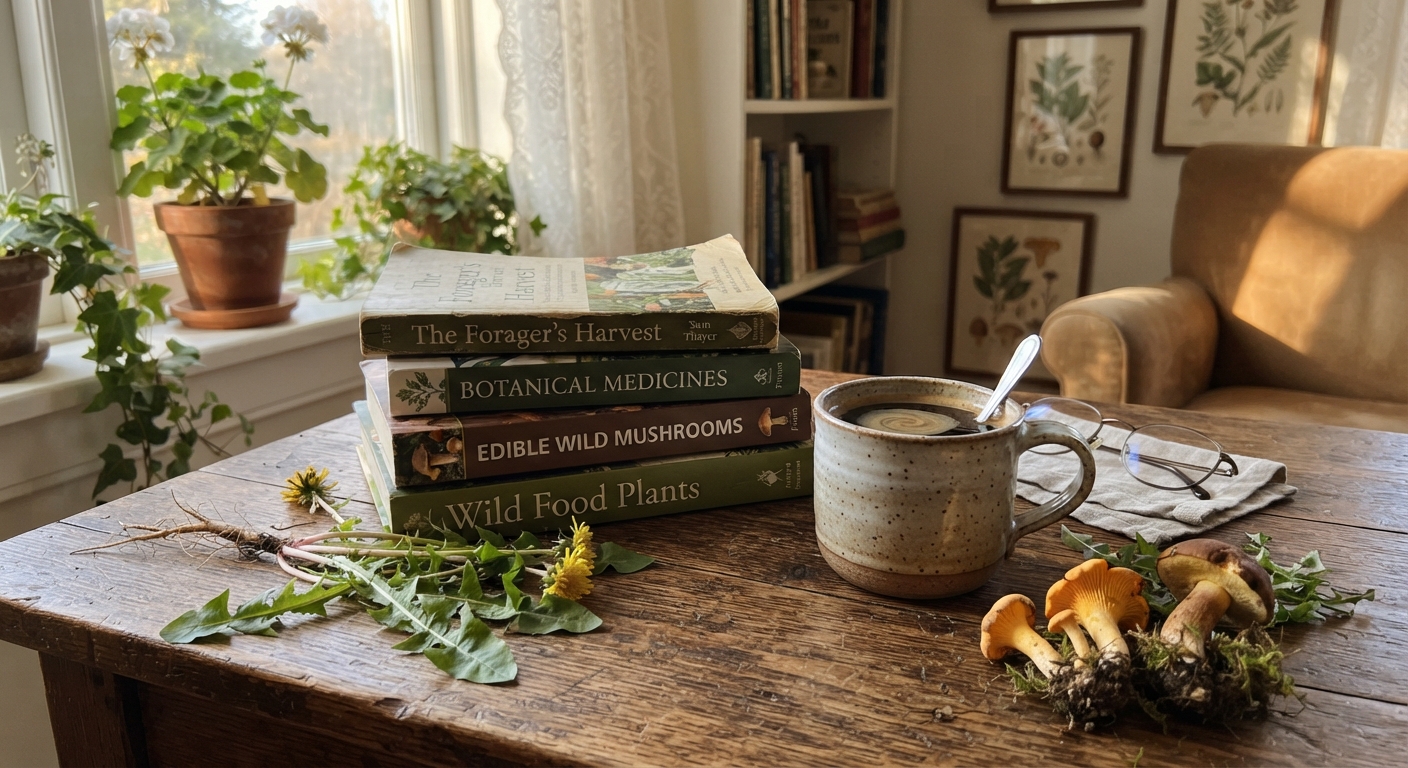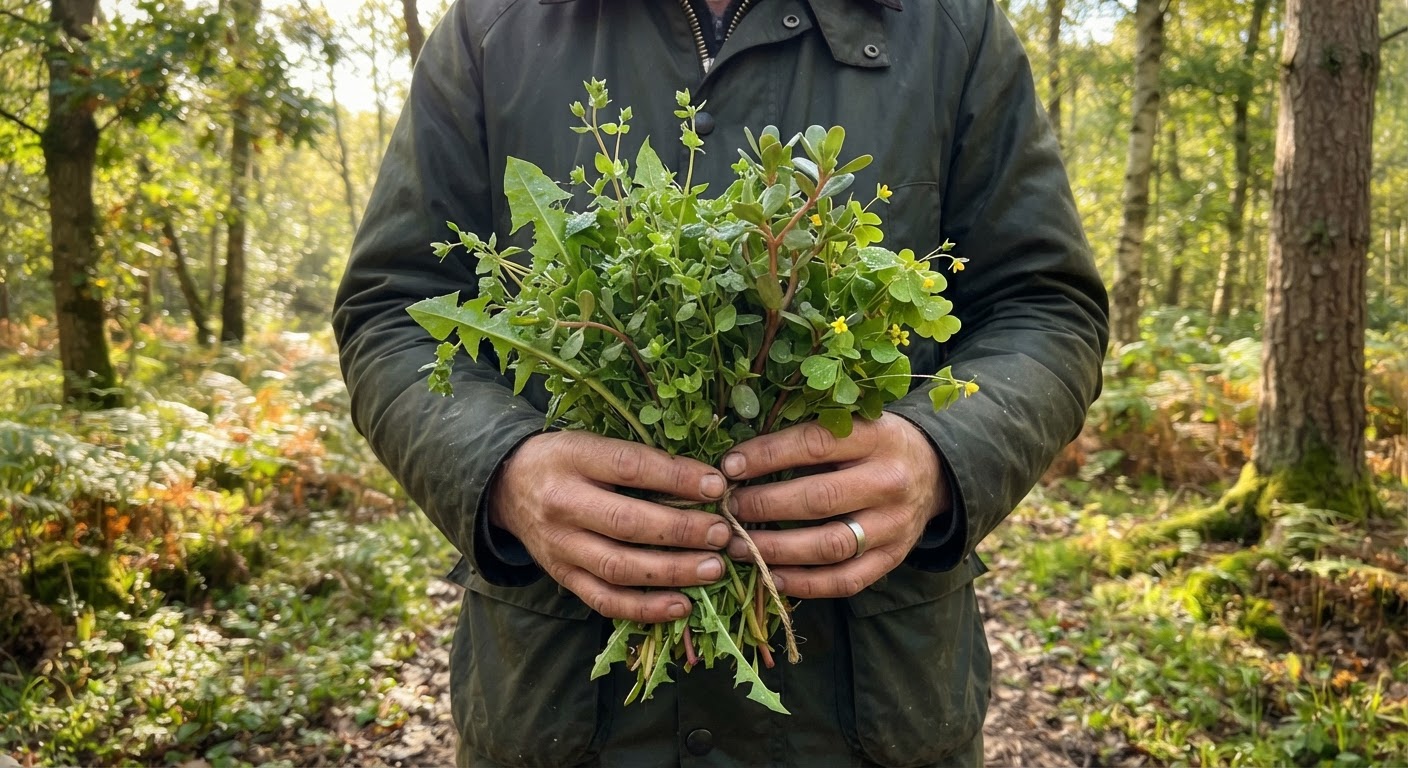
Here’s something most foraging guides won’t tell you upfront: you can memorize fifty plant species and still come home with an empty basket. The difference between a productive forager and a frustrated one isn’t how many plants they can name — it’s knowing which ones actually show up where they forage, which ones taste good enough to bother with, and which ones won’t send them down a four-hour identification rabbit hole.
I’ve watched beginners spend an entire afternoon trying to positively identify a plant that, when they finally cooked it, tasted like boiled lawn clippings. Meanwhile, four other species they’d walked past without a second glance would have filled their basket in twenty minutes.
This guide is built to solve that exact problem. Ten common edible wild plants, each scored on three things that actually matter when you’re standing in a field trying to decide what to pick: how easy it is to identify without doubt, whether it actually tastes good, and how flexible it is in the kitchen once you get it home.
If you learn the top three, you’ve got a reliable wild larder. Learn five, and you can put together a meal anywhere from spring through fall. Learn all ten, and you’re the person at parties who can look at someone’s unkempt lawn and start planning dinner.
The Scoring System
Before the list, here’s what the numbers mean.
| Score | ID Confidence | Flavor | Kitchen Versatility |
|---|---|---|---|
| 5 | Unmistakable — no dangerous lookalikes, multiple confirming features | Genuinely delicious — you’d serve it to guests | Works in dozens of dishes, raw and cooked |
| 4 | Very reliable — one or two mild lookalikes, easy to rule out | Pleasant — good enough to cook regularly | Flexible — 5–10 solid applications |
| 3 | Moderate — needs attention to detail, a few lookalikes worth knowing | Okay — not exciting on its own, works with seasoning | Limited — 3–5 reliable uses |
| 2 | Tricky — requires multiple confirmatory checks | Tolerable — edible but you probably won’t crave it | Niche — one or two specific preparations |
| 1 | High risk — easily confused with toxic species at some life stage | Unpleasant — survival food territory | Barely — boil and hope |
The 10 Plants, Ranked From Easiest to Trickiest
1. Dandelion (Taraxacum officinale)
ID Confidence: 5 | Flavor: 3 (young leaves) / 1 (mature) | Kitchen Versatility: 4
If you get this one wrong, you probably also struggle with identifying grass. Dandelion’s combination of jagged leaves, hollow leafless flower stalks, single yellow blooms, and white milky sap is basically a fingerprint. The only plant anyone seriously confuses with dandelion is chicory, and chicory is also edible, so the risk calculation is about as forgiving as foraging gets.
What’s worth eating: Young spring leaves — and I mean young, before the flower buds appear — have a pleasant bitterness that works with fatty dressings. The flowers make a surprisingly good fritter when battered and fried. The roots, roasted and ground, produce a decent coffee substitute that outsold actual coffee during the Civil War and WWII rationing.
What’s not: Mature summer leaves. They’re technically edible but the bitterness is weaponized. A double-blanch helps, but at some point you’re spending forty minutes to make something taste like plain spinach. Just wait for the fall growth.
Kitchen move to try: Dandelion flower tempura. Pick flowers on a dry, sunny day when they’re fully open. Dip in a light tempura batter, fry for thirty seconds in hot oil. Salt immediately after draining. The flower structure traps the batter in a way that creates an absurdly crispy shell around a slightly sweet, vegetal center.
One thing to know: Dandelion greens deliver more vitamin A (187% DV per 100g) than spinach, and more calcium than milk by weight. The nutrition density isn’t folklore.
2. Purslane (Portulaca oleracea)
ID Confidence: 4 | Flavor: 4 | Kitchen Versatility: 4
Purslane is the plant that makes you reassess everything you thought you knew about “weeds.” It grows in sidewalk cracks, thrives in the hottest, driest parts of summer when most wild greens have bolted or turned bitter, and — most importantly — tastes like something you’d actually want to eat.
How to nail the ID: Reddish, fleshy stems that creep flat against the ground. Small, paddle-shaped succulent leaves, thick and juicy to the touch. Small yellow flowers that only open on sunny mornings. Break a stem — if the inside is clear, watery, and the stem feels crisp like a succulent, you’re holding purslane.
The lookalike to know: Spurge (Euphorbia spp.) grows similarly low to the ground but has thinner stems, leaves that aren’t succulent, and most critically — a milky white sap when you break the stem. Milky sap = spurge = don’t eat. Clear sap = purslane = dinner. This is the one check you need.
What it tastes like: Slightly lemony, slightly salty, with a crunchy-succulent texture that pops between your teeth. Raw in salads it adds a brightness that lettuce can’t match. Cooked briefly, it takes on a mucilaginous quality — like okra but milder — that thickens soups and stews beautifully.
The nutrition angle you’ll actually care about: Purslane has the highest omega-3 fatty acid content of any leafy green ever tested. It’s not a small margin either — we’re talking levels closer to fish oil than to other vegetables. For a plant that costs exactly zero dollars from a sidewalk crack, that’s remarkable.
Kitchen move to try: Purslane and yogurt salad, Turkish-style. Chop washed purslane stems and leaves roughly, mix with thick yogurt, minced garlic, salt, and a drizzle of olive oil. The yogurt cuts the slight tang of the purslane; the purslane adds crunch to the yogurt. Serve cold on a hot day.
3. Wood Sorrel (Oxalis spp.)
ID Confidence: 5 | Flavor: 4 | Kitchen Versatility: 2
This one scores a 5 on ID confidence for the same reason it scores a 2 on kitchen versatility — the flavor is so distinctive you can confirm it with zero visual identification. Wood sorrel tastes like lemon candy. Not “slightly citrus” or “mildly tangy.” Straight-up sour, the kind that makes children and inexperienced adults make a face the first time they try it.
The three-leaf trick: Wood sorrel has three heart-shaped leaflets that look almost exactly like clover. The difference? Clover leaves are oval or teardrop-shaped; sorrel leaves are distinctly heart-shaped with a crease down the middle. If you’re not sure, taste a tiny piece. Clover tastes like grass. Sorrel tastes like a lemon. You’ll know immediately.
The oxalic acid note: Wood sorrel contains oxalic acid — it’s the same compound that gives rhubarb, spinach, and chard their distinctive bite. A handful in a salad is fine. Eating a salad made entirely of wood sorrel every day for a week is not. The dose makes the poison. If you have kidney issues, go light.
Kitchen move to try: Wood sorrel sauce for fish. Finely chop a handful of wood sorrel leaves and stems, mix into melted butter with a pinch of salt. Spoon over grilled trout or white fish. The acidity cuts through the oiliness exactly like a lemon-butter sauce, but with more depth and zero prep.
One thing to know: Wood sorrel wilts almost immediately after picking. Use it within an hour or two, or watch it turn into a sad green puddle in your bag.
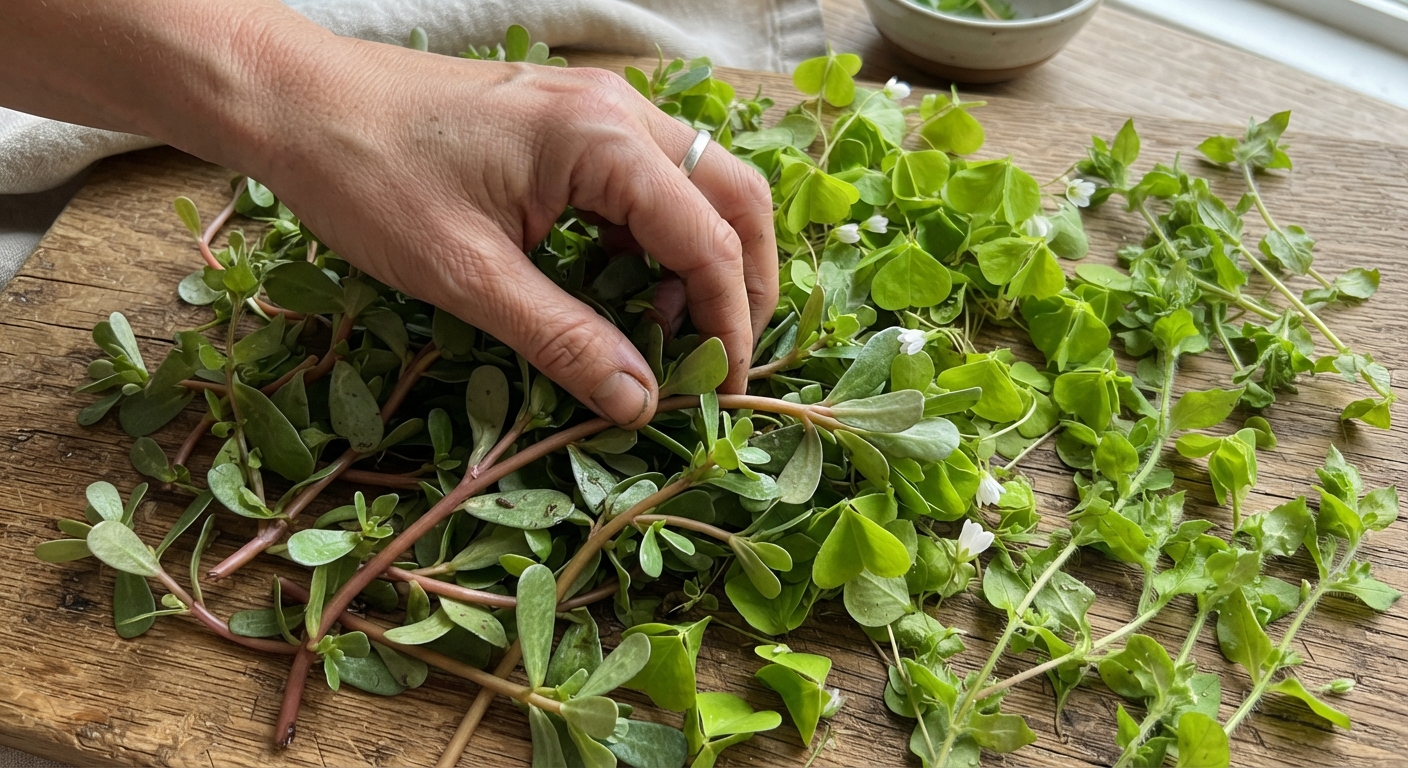
4. Chickweed (Stellaria media)
ID Confidence: 4 | Flavor: 3 | Kitchen Versatility: 3
Chickweed is the quiet achiever of the foraging world. It doesn’t taste dramatic, it doesn’t look impressive, and most people have probably pulled it out of garden beds without ever learning its name. But it’s available in abundance during the spring and fall shoulder seasons when other greens are scarce, and it plays well with almost anything in the kitchen.
The one ID feature that settles it: Chickweed has a single line of fine hairs running along one side of the stem. Not all around the stem — just one strip. And at each leaf node, the line of hairs switches to the opposite side. Run your finger along the stem; you’ll feel the hairs grab on one side only. No other common plant does this.
It also has: Tiny white flowers with five petals so deeply cleft they look like ten petals. The flowers are smaller than a pencil eraser. If you spot these flowers on a low, sprawling plant with the signature hair line, the ID is solid.
The lookalike: Scarlet pimpernel (Anagallis arvensis) has a similar growth habit but its flowers are orange-red, the stem has no hair line, and the sap is slightly colored. If you’re going by the hair-line check, you won’t confuse them.
What it tastes like: Mild. Grassy. A bit like raw corn silk or very young pea shoots. Pleasant but not exciting on its own — which actually makes it more useful, not less. Chickweed doesn’t compete with other flavors, so you can add it to anything for bulk, texture, and nutrients without changing the dish’s identity.
Kitchen move to try: Chickweed pesto. It sounds ambitious, but the mild flavor means the garlic, pine nuts, and parmesan dominate — you’re essentially making a traditional pesto where chickweed replaces basil. Use it on pasta, spread it on sandwiches, or thin it with olive oil for a salad dressing.
5. Lamb’s Quarters (Chenopodium album)
ID Confidence: 4 | Flavor: 4 | Kitchen Versatility: 5
Lamb’s quarters is the plant that makes you ask why anyone domesticated spinach. It’s more nutritious, more forgiving to grow, and in many people’s assessment, tastes better. The fact that it pops up uninvited in gardens and vacant lots across the northern hemisphere is either a cosmic joke or an offering.
How to spot it: The diamond-shaped leaves with a white, powdery, mealy coating on the underside — like someone dusted them with flour. The coating isn’t subtle; it rubs off on your fingers and repels water. The youngest leaves at the growing tip are often tinged with magenta or pink at the base. This combination — white dust underneath, diamond leaves, pinkish new growth — is distinctive.
The lookalike question: Black nightshade (Solanum nigrum) has vaguely similar leaves when young, but lacks the white coating. At any rate, if you’re not sure, wait until the plant matures a bit. Lamb’s quarters produces dense spikes of tiny green flowers and seeds. Nightshade produces small white flowers that develop into black berries. By the time either seeds, there’s zero ambiguity.
What it tastes like: Rich, nutty, and genuinely reminiscent of spinach — but sweeter and more complex. There’s a mineral quality to it, which sounds unappealing on paper but translates to “this tastes like something that contains actual nutrients” in practice.
Kitchen versatility, substantiated: Lamb’s quarters can go anywhere spinach goes — and then some. Raw young leaves in salads. Sautéed with garlic. Steamed and dressed with sesame oil. Baked into spanakopita as a direct spinach substitute. Folded into omelets. Pureed into soup. Mixed into ricotta for pasta filling. The seeds are edible too — the plant’s relative, quinoa, gives you an idea of what you’re working with.
One thing to know: Lamb’s quarters contains oxalic acid, like spinach. The cooking water from a batch of boiled lamb’s quarters will leach some of it out. If you’re eating it regularly, cook it rather than eating it raw, and don’t reuse the cooking liquid.
6. Chickory (Cichorium intybus)
ID Confidence: 4 | Flavor: 2 | Kitchen Versatility: 3
Chicory gets included on this list not because it’s the tastiest plant you’ll find, but because it’s everywhere, impossible to misidentify once it flowers, and the root has a specific use that makes it worth knowing about.
How to spot it: Chicory looks like a scruffy, lanky version of dandelion on a tall stem. The flowers are the key — clear sky blue, about an inch and a half across, with fringed square-tipped petals that look like they were cut with pinking shears. They bloom along a wiry stem that can reach four feet, and each individual flower only lasts a single day. Blue flowers on a tall roadside stem in summer? Almost certainly chicory.
What’s worth eating: The leaves, when very young (pre-flowering), are bitter but edible. Blanched and sautéed with bacon, they’re decent. The root is the real prize — scrub it clean, roast it at 350°F until dark and fragrant, then grind it. You’ve just made chicory “coffee,” which has approximately zero caffeine but a toasty, nutty bitterness that people have been adding to actual coffee for centuries.
The New Orleans connection: Chicory coffee isn’t some obscure survival hack — it’s a legitimate culinary tradition, most famously in New Orleans, where coffee blended with roasted chicory root has been standard since the Civil War era. Café du Monde serves it. If you’re curious about what the root’s potential is, that’s the reference point.
Kitchen move to try: Roast chicory root, grind it fine, and blend it 1:3 with your regular coffee grounds. Brew as normal. It adds body and a subtle chocolatey undertone that you might find yourself missing when you go back to straight coffee.
7. Cattail (Typha spp.)
ID Confidence: 5 | Flavor: 3 | Kitchen Versatility: 4
Cattail is a plant you already know by sight. The brown cigar-shaped seed heads are possibly the most recognized plant silhouette in North America, and there’s something almost unfair about a plant this easy to find also being edible — in multiple parts, across multiple seasons.
What to eat, when:
| Part | Season | How to harvest | Best use |
|---|---|---|---|
| Young shoots | Early spring (under 2 ft tall) | Grasp the inner stem low and pull — it releases from the rhizome with a pop | Raw (cucumber-like), sliced into salads or quick-pickled |
| Green flower spikes | Late spring, while still in the sheath | Cut the stalk, peel away the outer leaves until you reach the pale green spike | Boiled for 5–10 min, eaten like corn on the cob with butter |
| Yellow pollen | Early summer, when the upper spike is golden | Bend the stalk into a bag and shake — the pollen drops as a fine yellow powder | Flour substitute, mixed 1:1 with wheat flour for pancakes or flatbreads |
| Rhizomes | Fall through winter | Dig from the mud, scrub thoroughly, crush in water to separate starch from fiber | Starch settles as cattail “flour” — labor-intensive but functional |
The mistake beginners make: Eating the brown mature seed head. It’s not toxic, but it’s like eating a dry, fibrous cotton ball. The edible window for each part is narrow — miss it by two weeks and you’ve missed it for the season.
Kitchen move to try: Cattail shoot refrigerator pickles. Slice peeled young shoots into rounds, pack into a jar with vinegar, water, sugar, salt, and dill. Refrigerate for 24 hours. They stay crisp and the mild cattail flavor absorbs the brine better than cucumbers do.
Water quality matters: Cattails grow in standing water, and they absorb whatever’s in that water. If the pond or ditch you’re looking at receives agricultural runoff, roadside drainage, or industrial discharge, move on. Clean water = clean cattails. This is not a plant where you want to play guessing games with heavy metals.
8. Garlic Mustard (Alliaria petiolata)
ID Confidence: 4 | Flavor: 4 | Kitchen Versatility: 4
Garlic mustard is invasive in North America, which creates an unusual foraging situation: you’re doing the ecosystem a favor by eating as much of it as you can. For once, “take all you want” is not just permitted but actively good practice.
The one-second ID: Crush a leaf between your fingers and smell it. Does it smell like garlic crossed with mustard greens? That’s garlic mustard. No other woodland plant produces that exact aroma. You can confirm with visual cues — scalloped heart-shaped leaves on first-year rosettes, small white four-petaled flowers on second-year flower stalks — but the smell test is so distinctive it essentially replaces everything else.
Year one vs. year two: Garlic mustard is biennial. First-year plants are low rosettes of kidney-shaped leaves with scalloped edges — these are the mildest and best for eating. Second-year plants send up a flowering stalk with more triangular, sharply toothed leaves — these are tougher and bitter. Harvest first-year rosettes whenever you find them. Harvest second-year leaves only very early in spring, before the flower buds open.
What it tastes like: The name is accurate. It’s a gentle garlic flavor with a mustard-green finish. Raw, the garlic dominates. Cooked, the mustard note comes forward and the garlic mellows. It’s genuinely good — not just “good for a wild plant.”
Kitchen move to try: Garlic mustard compound butter. Finely chop raw leaves, mix into softened butter with salt and a squeeze of lemon. Roll into a log in parchment paper and refrigerate. Melt a slice over grilled steak, roasted vegetables, or spread on good bread. The butter captures the garlic note without the acridity raw garlic sometimes brings.
Harvest with intent: Pull the entire plant including roots. Bag it and don’t drop any seed heads on the ground. Invasive means invasive — garlic mustard spreads aggressively through seed dispersal and it’ll colonize your favorite morel patch if you let it. The best way to eat it is to kill it.
9. Fiddleheads (Ostrich Fern, Matteuccia struthiopteris)
ID Confidence: 3 | Flavor: 5 | Kitchen Versatility: 3
Fiddleheads score a 3 on ID confidence for a reason: fern identification at the fiddlehead stage demands attention, and not all ferns are edible. But if you nail the ostrich fern ID, the reward is one of the best-tasting wild vegetables on the continent.
The non-negotiable ID checks for ostrich fern:
- The groove: The stem has a deep, U-shaped groove running along the inside — like a celery stalk, but deeper and cleaner. No other common fern has this.
- The papery scales: The coiled fiddlehead is covered with light brown, papery scales that rub off easily. Bracken fern, a species some sources call edible and others call carcinogenic, has fuzzy hairs instead.
- The smooth stem: No fuzz, no hair, no bumps. Smooth and grooved, period.
- No “thumb”: Some fiddleheads have a distinct thumb-like protrusion on the side of the coil. Ostrich ferns don’t.
If all four checks pass, you’re holding an ostrich fern fiddlehead. If any one of them fails, you’re not. This is a plant where “I’m pretty sure” is not good enough. Be 100% sure or walk away.
What it tastes like: Nutty and grassy, somewhere between asparagus, green beans, and artichoke. Not “hints of” — it legitimately bridges all three. The texture when properly cooked is tender with a slight snap, like perfectly blanched asparagus.
Kitchen move to try: Fiddleheads with brown butter and lemon. Blanch fiddleheads for 2 minutes (the FDA recommends cooking fiddleheads thoroughly — don’t skip this), drain, then sauté in brown butter until the edges just begin to crisp. Squeeze lemon over the top and serve immediately. Simple enough to not compete with the fiddlehead’s flavor, but with enough fat and acid to elevate it.
The timing problem: Fiddlehead season lasts about two to three weeks in any given location. The window opens when the soil temperature hits the right range and closes when the ferns unfurl past the tight-coil stage. If you find a productive patch, mark it on a map and come back the same week next year.
10. Wild Asparagus (Asparagus officinalis)
ID Confidence: 3 | Flavor: 5 | Kitchen Versatility: 5
Wild asparagus is domesticated asparagus that escaped. Same species, same taste, but thinner stalks, more intense flavor, and the satisfaction of finding something that costs $5 a bunch at the store growing for free along a fence line.
How to find it: You spot last year’s plants first — tall, feathery, fern-like foliage, four to six feet high, often turning golden in the fall. These “asparagus ferns” mark the spot. Return to that exact location in the following spring and look for the new spears pushing up through the same root mass. Asparagus is perennial; once you find a patch, it’ll produce for twenty years or more.
The lookalike concern: Young asparagus spears emerging from the ground don’t have many distinguishing features at the spear stage — they look like, well, green spears. This is why the fern-spotting method matters. Find the ferns in summer or fall, memorize the location, harvest in spring. If you’re trying to ID an asparagus spear in isolation in the spring without the context of last year’s growth, you’re guessing. Don’t guess.
Where to look: Ditch banks, fence lines, railroad right-of-ways, old homestead sites. Asparagus persists in places where gardens used to be and in ditches where wind-blown seeds have established. If you see an old farmhouse foundation, walk the perimeter. Asparagus patches often outlast the buildings.
Kitchen move: Treat it exactly like store-bought asparagus, but expect more concentrated flavor. Thicker wild spears can develop a woody outer layer — peel the bottom third with a vegetable peeler before cooking. The thin “pencil” spears can go straight into the pan. Sautéed in butter with salt and a squeeze of lemon is all you need.
Common Mistakes That Trip Up New Foragers
After watching enough beginners in the field, some patterns are worth pointing out.
Mistake 1: Harvesting by memory, not by checklist. You found a patch of lamb’s quarters here last month, so you walk back and grab a handful of green leaves without re-checking. The problem: plants change appearance as they age, and new species can grow up through the same patch. Re-ID every time. Every single time. The five seconds it takes is cheaper than a night spent regretting it.
Mistake 2: Trusting a single ID feature. “It has a garlic smell” is not an ID. It’s one data point. The full ID picture includes growth habit, leaf shape, stem structure, flowers (or lack thereof), growing location, and seasonality — plus the smell. One check = not enough.
Mistake 3: Grabbing from the wrong spot. Roadside plants absorb brake dust, exhaust residue, and road salt. Plants from manicured lawns have likely been sprayed. Plants downstream from farms may have pesticide runoff. The “pristine wilderness” isn’t required, but use your head about where you’re picking. A dandelion from a highway median is a dandelion, but it’s also a sponge for everything that highway produced in the last six months.
Mistake 4: Over-harvesting a single patch. Take no more than a third of what you find in any given area. For plants that reproduce from seed (dandelion, lamb’s quarters, purslane), leaving enough plants to flower ensures next year’s crop. For perennials (wild asparagus, ramps), the plant itself needs its leaves to collect energy for the root. Strip it bare and it might not come back.
Mistake 5: Eating large quantities of a plant you’ve never eaten before. Your digestive system isn’t used to wild foods. Start with a small portion — a few leaves in a salad, not a whole plate. Give your body the chance to tell you whether it’s on board before committing.
Quick-Start Priority: The Three You Should Learn First
If the full list feels like a lot, here’s the cheat-sheet version. Learn these three and you’ll have something to eat from spring through fall in almost any location:
| Plant | Why It’s Top 3 | Best Season | Your First Recipe |
|---|---|---|---|
| Dandelion | Impossible to misidentify, grows everywhere, multiple edible parts | Spring & fall | Young leaves in a bacon vinaigrette salad |
| Purslane | Abundant in summer when other greens have bolted, tastes genuinely good, omega-3 bonus | Summer | Raw in a yogurt salad with garlic |
| Lamb’s Quarters | More nutritious than spinach, mild flavor that works in anything, easy to ID with the white coating | Late spring through early fall | Sautéed with olive oil and garlic as a simple side |
Once you’re comfortable finding, identifying, and cooking with these three, the next tier to add: wood sorrel (for acid in salads and sauces), garlic mustard (for free garlic flavor and ecosystem brownie points), and chickweed (for the spring and fall shoulder seasons when other greens are scarce).
FAQ
Q: Can I eat any wild plant if I cook it thoroughly?
No. Cooking neutralizes some plant toxins and pathogens, but not all. Cooking destroys the sting in nettles and breaks down some oxalates in greens, but it won’t make a toxic mushroom safe or neutralize the compounds in plants like hemlock or pokeweed (the latter requires specific preparation — boiling in multiple changes of water — and even then is an intermediate-level plant to approach). Cooking is a safety layer, not a safety guarantee. Positive identification comes first.
Q: What’s the one piece of gear that makes the biggest difference?
A field guide specific to your region — not a general-purpose app or a Facebook identification group. The best field guides use detailed botanical illustrations or high-quality photographs, include lookalike warnings, and are organized by plant family. Phone apps that claim to identify plants from a photo are a supplement, not a replacement. They’re right often enough to be dangerous and wrong often enough to be dangerous in a different way.
Q: Are plants from the city safe to eat?
It depends entirely on the site, not the city. A plant growing in a raised bed at a community garden with clean soil is different from a plant growing through a crack in a parking lot that’s absorbed decades of oil drips. Urban vacant lots often have lead in the soil from old paint or industrial history. If you’re foraging in a city, prioritize plants growing in parks or managed green spaces away from roads, and if you’re planning to forage an urban site regularly, a soil test kit is $30 well spent.
Q: Is foraging legal where I live?
Regulations vary by country and by land type. In the US, foraging is generally permitted on national forest and BLM land (often with limits on quantity), restricted or prohibited in national parks (check the specific park’s rules — policy varies), and requires landowner permission on private property. State and local parks set their own policies; some allow foraging for personal use, others prohibit it entirely. Look up the rules before you pick.