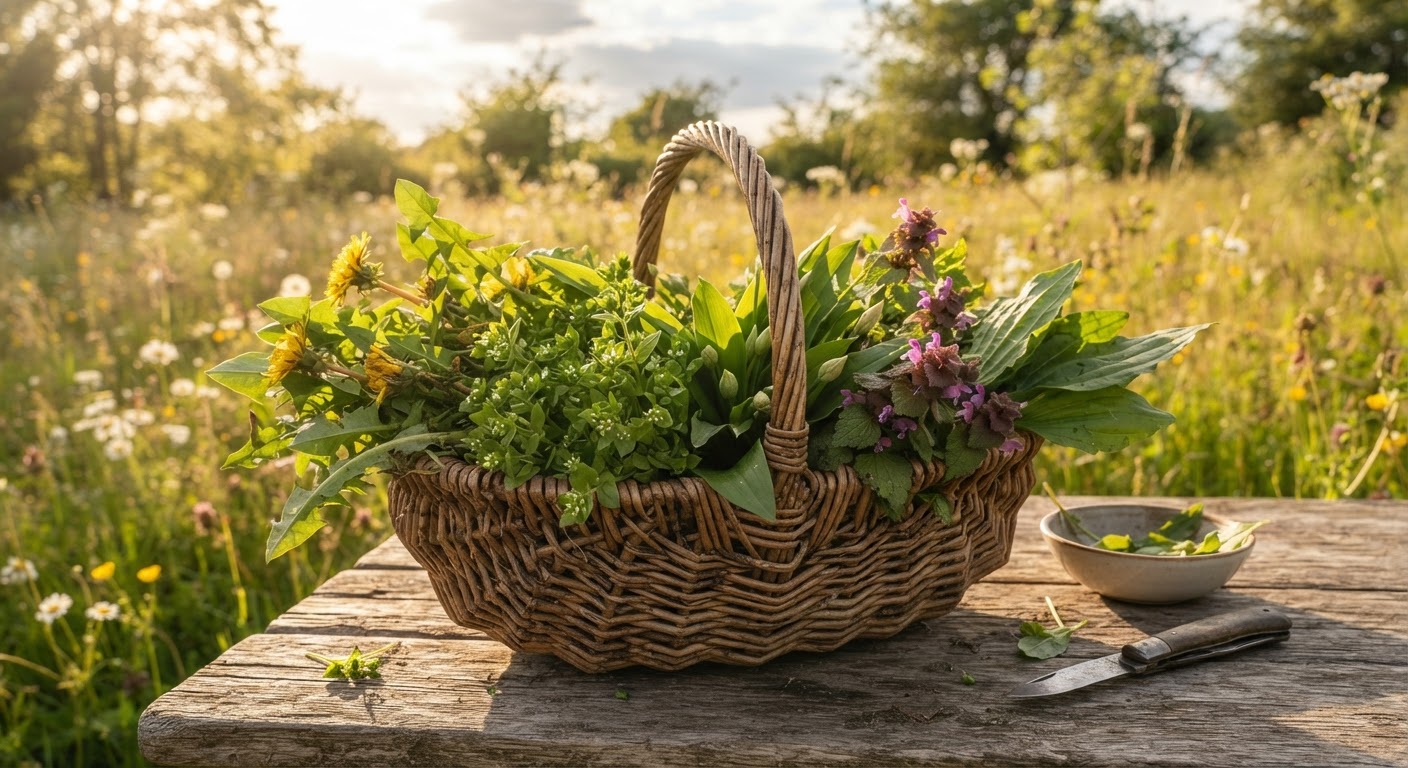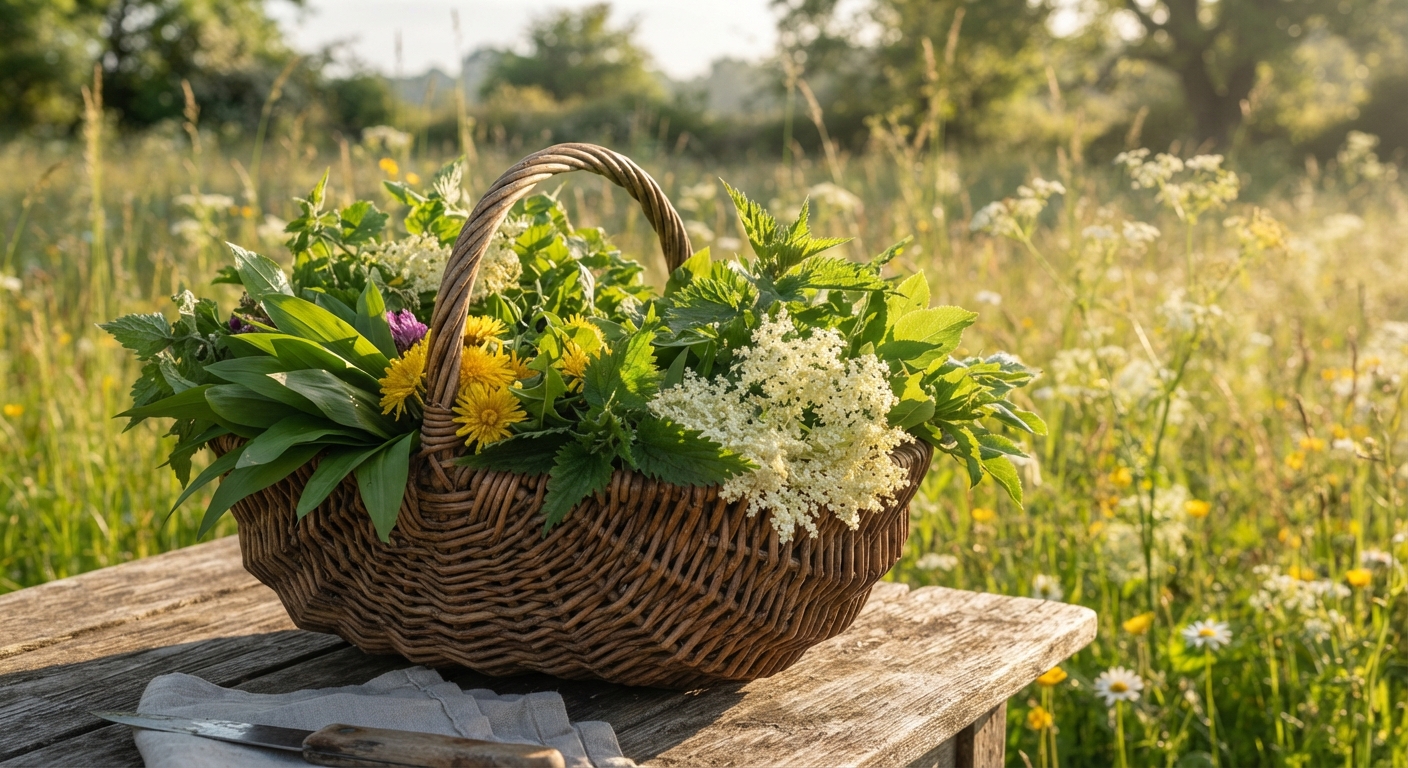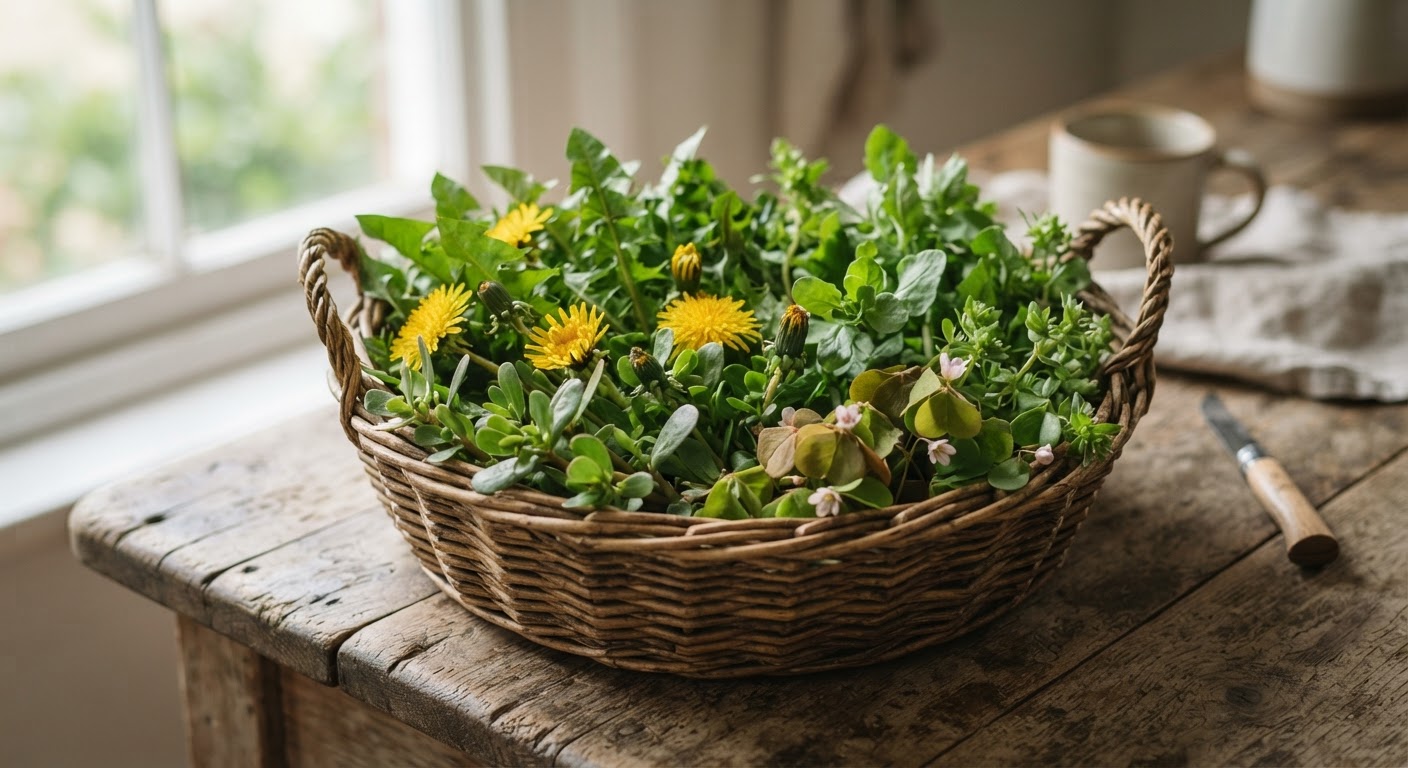
Some wild plants are worth bending down for. Others are a thirty-minute detour for a mouthful of bitter leaves. Most foraging guides refuse to say which is which — they hand you a long list of edible wild plants and let you figure out the rest. That’s why beginners burn out chasing the wrong species and give up before they ever eat anything good.
This guide does the opposite. It ranks 15 common edible wild plants by a single question: how much do you get back for the effort you put in? Each plant gets scored on three things — how easy it is to identify, how common it is to find, and how well it actually pays off in the kitchen. High score means learn it now. Low score means it can wait.
No botany degree required. The whole point is to point you at the plants that make foraging feel easy, so you stick with it long enough to get good.
How the Scoring Works
Every plant below is scored from 1 to 10 on three separate measures, then totaled out of 30.
- ID ease — how hard it is to mistake this plant for something dangerous. A 10 means there’s basically no deadly lookalike. A 6 means you need to rule something out first.
- Abundance — how likely you are to stumble across it in an ordinary backyard, park edge, or vacant lot, not a remote wilderness.
- Payoff — how much food you actually get, and how good it tastes once it’s on the plate. Volume and flavor, not novelty.
The ground rule hasn’t changed just because we’re ranking: you never eat anything you can’t positively identify. A high “ID ease” score is a reason to learn a plant carefully, not a license to guess. If you’re not certain, take a photo and confirm it with a regional field guide before it touches your mouth.
The Ranking: Best Effort-to-Reward First
Here’s the list, ordered from highest total score to lowest. The first five are the plants I’d teach anyone on their very first afternoon out.
1. Dandelion — 28/30
ID 10 · Abundance 10 · Payoff 8
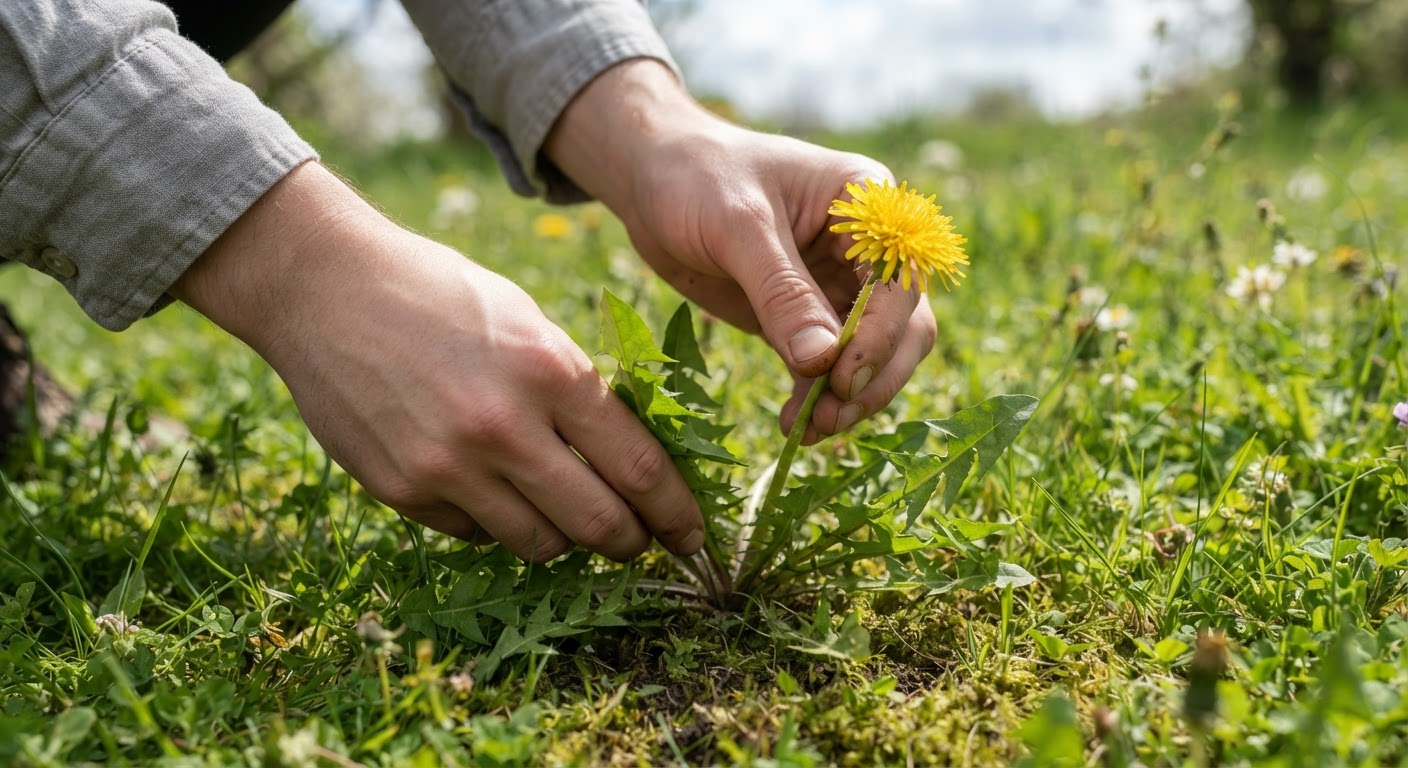
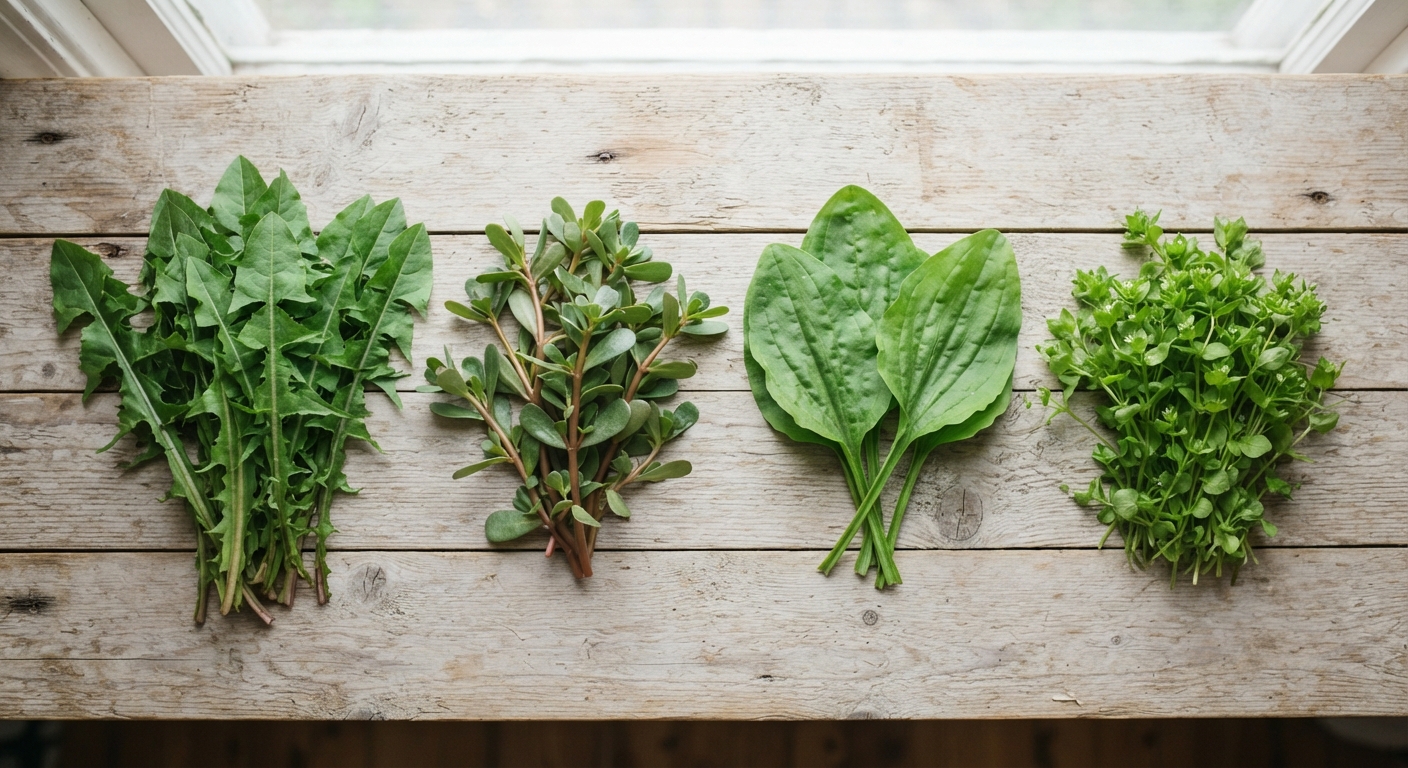
The benchmark plant. If you can’t find a dandelion within fifty feet of your front door, you’re not trying. The toothed rosette of leaves, the hollow flower stem, and the milky sap are so distinctive that nothing dangerous imitates the full combination.
Every part is usable. Young spring leaves go into salads or a quick sauté, the yellow flowers make fritters and tea, and the roasted root is a classic coffee stand-in. The only knock on its payoff score is bitterness — older, late-summer leaves need a blanch before they’re pleasant. Pick young, and it’s a different plant.
2. Purslane — 27/30
ID 9 · Abundance 9 · Payoff 9
Purslane is the plant that turns skeptics into foragers. It sprawls flat along garden soil and sidewalk cracks with thick, fleshy, paddle-shaped leaves and reddish, rubbery stems. The one check that matters: break a stem, and if white sap oozes out, it’s spurge, not purslane. Purslane’s sap runs clear.
Taste-wise it’s a genuine win — a juicy, slightly lemony crunch that works raw in salads or tossed into a stir-fry, and it’s loaded with omega-3s. Best part: it peaks in the heat of summer, exactly when most other wild greens have bolted or turned bitter.
3. Lamb’s Quarters — 26/30
ID 8 · Abundance 9 · Payoff 9
“Wild spinach” is a fair name. Lamb’s quarters cooks up so mild and tender that most people can’t tell it from the store-bought version. Look for diamond- to goosefoot-shaped leaves with a powdery, mealy white coating on the youngest leaves and undersides.
The ID ease drops to 8 for one reason: very young plants can superficially resemble a few toxic nightshades. The white mealy coating and the leaf shape are what you confirm before picking. Once you know it, you’ll see it everywhere in disturbed soil, garden beds, and the unkempt edges of parking lots.
4. Stinging Nettle — 26/30
ID 9 · Abundance 7 · Payoff 10
Nettle gets the highest payoff score on this list. It’s one of the most nutrient-dense greens on the planet, and cooked young tops taste like a richer, deeper spinach. The sting is the identification — those tiny hairs are almost impossible to mistake for anything else, and they vanish the moment the plant hits boiling water.
The trade-off is handling. You need gloves to harvest the top few inches of young spring shoots, and you can’t eat it raw. That’s why its abundance sits lower too — it prefers damp, rich edges rather than your average dry lawn. Worth the minor hassle, every time.
5. Broadleaf Plantain — 25/30
ID 9 · Abundance 10 · Payoff 6
You’ve stepped on this one for years without knowing it. Broad, oval leaves with thick, parallel string-like veins, and a seed spike like a tiny green rat’s tail. It grows in compacted soil and sidewalk cracks, so it’s genuinely everywhere.
The payoff score is honest: plantain is food, not a delicacy. Young leaves are fine sautéed or in soup, but older leaves turn stringy fast. Still, for a plant that requires zero effort to find and almost zero skill to identify, it earns its place in the top five.
6. Chickweed — 24/30
ID 8 · Abundance 8 · Payoff 8
The best-tasting wild green for people who think wild greens taste bad. Chickweed is mild, tender, and genuinely good raw in a salad. The tell is a tiny white flower with five petals so deeply split they look like ten, plus a single line of fine hairs running down one side of the stem — it switches sides at each joint.
That one-sided hair line is what separates it from some toxic spurges, which is why ID ease isn’t a full 10. Learn the hair line cold and it’s a wonderful, forgiving early-spring green.
7. Wild Garlic — 23/30
ID 7 · Abundance 7 · Payoff 9
The rule for wild garlic is the simplest and most life-saving on this list: if it doesn’t smell strongly of onion or garlic when you crush a leaf, it is not an allium, and you do not eat it. Toxic bulbs like death camas have no onion scent.
That smell test keeps it safe, but it’s why ID ease sits at 7 — you’re relying on your nose, not your eyes, and you must actually do the crush-and-sniff every time. The payoff is real: leaves work like chives, and the small bulbs are a mild wild garlic. Harvest in spring before the tops go woody.
8. Amaranth (Pigweed) — 23/30
ID 7 · Abundance 8 · Payoff 8
Two foods in one plant. The young leaves cook like spinach, and the tiny black seeds can be gathered as a grain — which is exactly how amaranth was eaten for thousands of years. Look for alternate leaves with a distinct notch at the tip and a reddish tint to the stem and root.
The notch and the red tint are your confirmation, since a few lookalikes share the general shape. It thrives in the hottest months when other greens have quit, making it a useful late-summer bonus.
9. Wood Sorrel — 22/30
ID 9 · Abundance 8 · Payoff 5
The trail snack. Heart-shaped leaflets in groups of three and a sharp, lemony tang that settles any doubt the moment you taste it. The taste is a confirmation, never an identification — identify the shape first, then enjoy the sour kick.
Payoff is low because of oxalic acid: wood sorrel is a garnish, not a meal. A handful is fine; a bucket is not. Treat it as a wild lemon substitute — scatter the leaves and flowers over a salad or steep them into a lemonade-style drink.
10. Cattail — 22/30
ID 8 · Abundance 6 · Payoff 8
The “supermarket of the swamp” earns its nickname. Young shoots, immature flower spikes, and the starchy root all have uses at different times of year. The ID is easy — those brown cigar-shaped seed heads on tall stalks don’t look like much else.
The catch is habitat. You need wetland, pond edges, or slow streams, and you need to be sure the water isn’t polluted, since cattails filter whatever they grow in. If you live near clean water, it’s a fantastic plant. If you don’t, it’s a low priority.
11. Wild Violet — 20/30
ID 8 · Abundance 7 · Payoff 5
More garnish than food, but a lovely one. Heart-shaped leaves with scalloped edges and a five-petaled purple (sometimes white) flower with a small spur behind it. Both leaves and flowers are edible and mild; the flowers are the real prize, brightening salads or getting candied for desserts.
It scores lower simply because there’s not much volume there. You gather violets for beauty and a little nutrition, not a meal. Nice to know, not a survival staple.
12. Elderberry — 19/30
ID 6 · Abundance 6 · Payoff 7
Saved for last because it demands the most care. Cooked, ripe elderberries make legendary syrup and jam. Raw berries, leaves, stems, and unripe fruit are toxic and will make you sick. The plant needs full cooking, every time, no shortcuts.
ID ease drops because elderberry has serious lookalikes, including water hemlock and pokeberry, and the difference matters. Learn the compound leaves with 5–11 toothed leaflets and the flat-topped flower clusters before you go anywhere near the fruit. It’s a genuinely rewarding plant — just not your first one.
The Full Scorecard
Here’s the whole ranking compressed into one table. Skim it, screenshot it, print it — it’s designed to be a thirty-second reference.
| Rank | Plant | ID Ease | Abundance | Payoff | Total | Best Time |
|---|---|---|---|---|---|---|
| 1 | Dandelion | 10 | 10 | 8 | 28 | Spring (leaves) |
| 2 | Purslane | 9 | 9 | 9 | 27 | Summer |
| 3 | Lamb’s Quarters | 8 | 9 | 9 | 26 | Spring–summer |
| 4 | Stinging Nettle | 9 | 7 | 10 | 26 | Spring |
| 5 | Broadleaf Plantain | 9 | 10 | 6 | 25 | Spring–summer |
| 6 | Chickweed | 8 | 8 | 8 | 24 | Spring–early summer |
| 7 | Wild Garlic | 7 | 7 | 9 | 23 | Spring |
| 8 | Amaranth (Pigweed) | 7 | 8 | 8 | 23 | Summer–fall |
| 9 | Wood Sorrel | 9 | 8 | 5 | 22 | Spring–fall |
| 10 | Cattail | 8 | 6 | 8 | 22 | Spring–fall |
| 11 | Wild Violet | 8 | 7 | 5 | 20 | Spring |
| 12 | Elderberry | 6 | 6 | 7 | 19 | Late summer–fall |
A 5-Minute Field Cheat Sheet
Forget memorizing all twelve at once. Here’s the practical sequence that gets you eating wild food fast.
- This weekend, learn dandelion and purslane only. Two plants. Confirm each with three features — leaf shape, stem, and sap or flower — until you can name them instantly in five different spots.
- Harvest clean and young. Pick from areas at least 50 feet from roads and well away from sprayed lawns. Take young growth, and never more than a third of any patch.
- Wash like you mean it. Dunk and swish in cold water, change it until it runs clear, and inspect every leaf. You’re doing a final identity check, not just rinsing.
- Cook with the blanch trick. Thirty seconds in boiling water, then an ice bath, then a quick sauté with garlic and oil. It fixes bitterness and makes nettle safe to handle.
- Add one plant per week. Purslane next, then lamb’s quarters, then nettle (gloves on), then chickweed. By week five you’ll have a personal list that beats any blog.
Three Rules That Beat Any List
A ranking is useful. These three habits are worth more than all twelve scores combined.
- Identify first, taste second, never the reverse. The sour tang confirms wood sorrel only after you’ve already identified the leaf shape. Tasting to decide what something is means you’ve done it backwards.
- Confirm three features, not one. A single trait can mislead you. Three agreeing features — shape, plus flower or stem, plus habitat or smell — almost never do.
- Start with a small cooked portion. Even a correctly identified plant can disagree with one person’s stomach. A little the first time tells you more than any guide.
Fast Answers
| Question | The short answer |
|---|---|
| Which plant should I learn first? | Dandelion. It’s everywhere and nothing dangerous looks like it. |
| Are these plants safe to eat raw? | Some — purslane, chickweed, and wood sorrel are fine raw. Nettle must be cooked; dandelion is better cooked. |
| Do I need any special tools? | Gloves for nettle, a cloth bag, and a regional field guide. That’s it. |
| Why do lists disagree on what’s edible? | Season and preparation change everything. Elderberry is toxic raw and prized cooked. Context matters more than the name. |
| What if I’m not 100% sure about a plant? | Walk away. Photograph it, note the location, and identify it properly at home. |
| Is foraging actually worth the effort? | If you start with the high-score plants on this list, yes — and faster than you expect. The first time you eat greens you picked ten minutes earlier, the effort stops feeling like effort. |
The Bottom Line
A list of edible wild plants only helps when it tells you where to start — and just as importantly, what to ignore. Skip the low-score plants for now. Learn dandelion and purslane this weekend, add one plant a week, and cook everything with the blanch-and-sauté method. That’s the whole system.
Foraging rewards momentum. The plants that make it feel easy are the ones that keep you coming back — and those are exactly the ones at the top of this list.