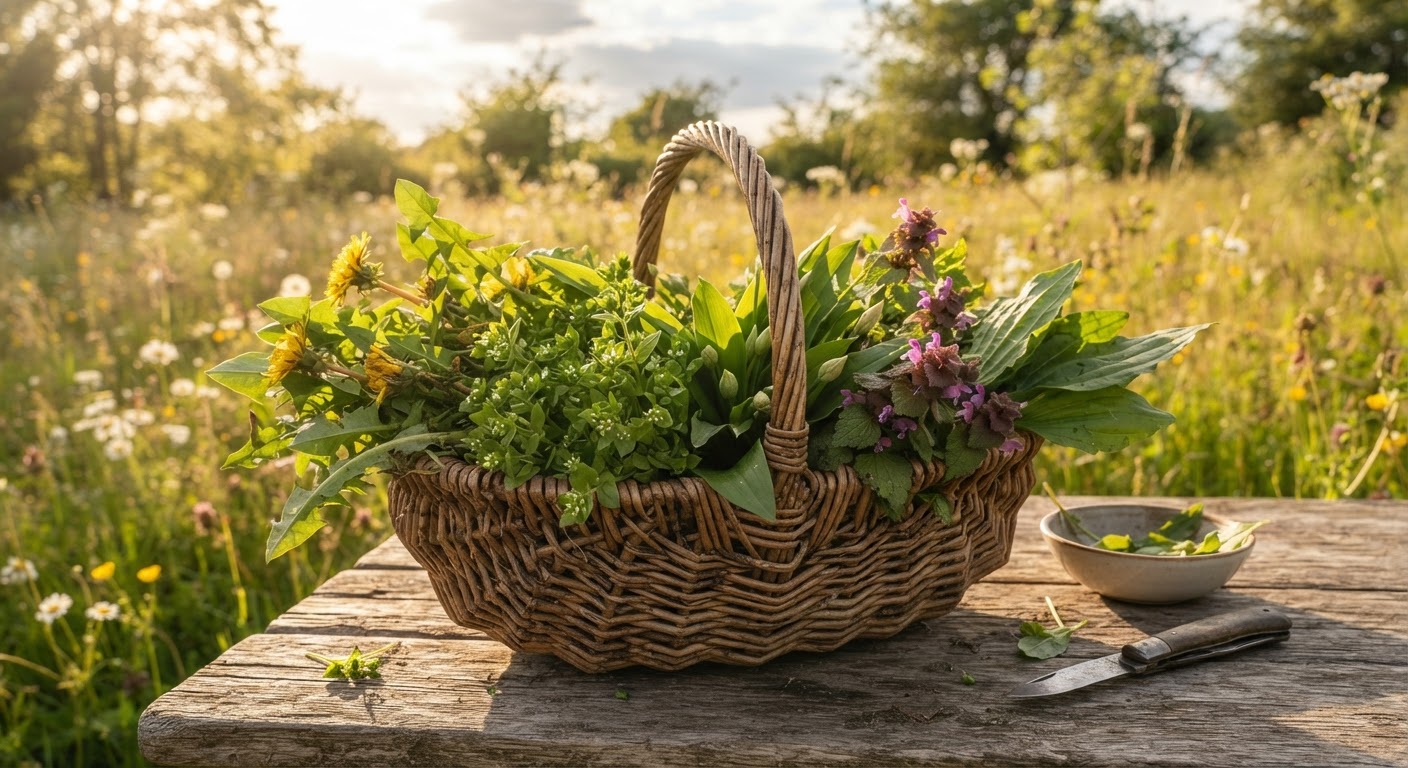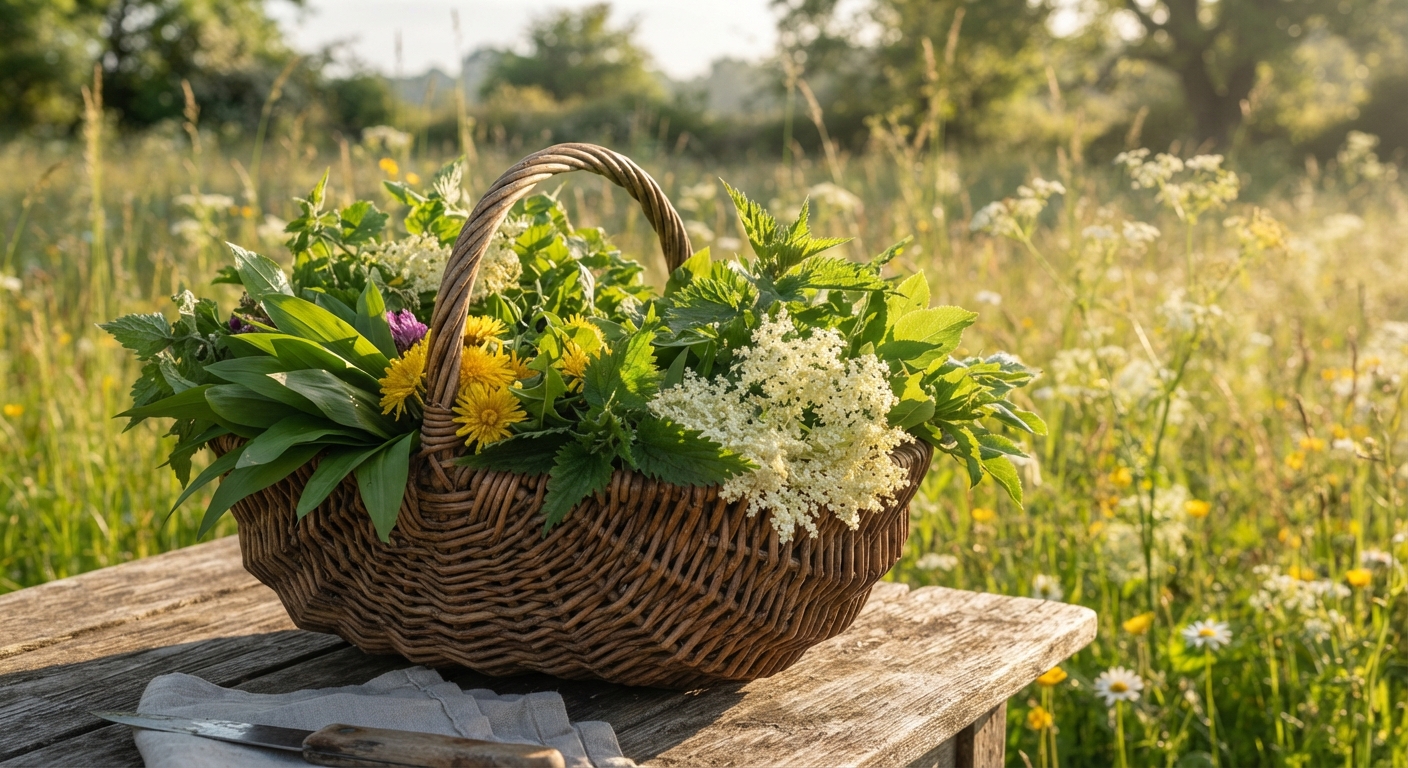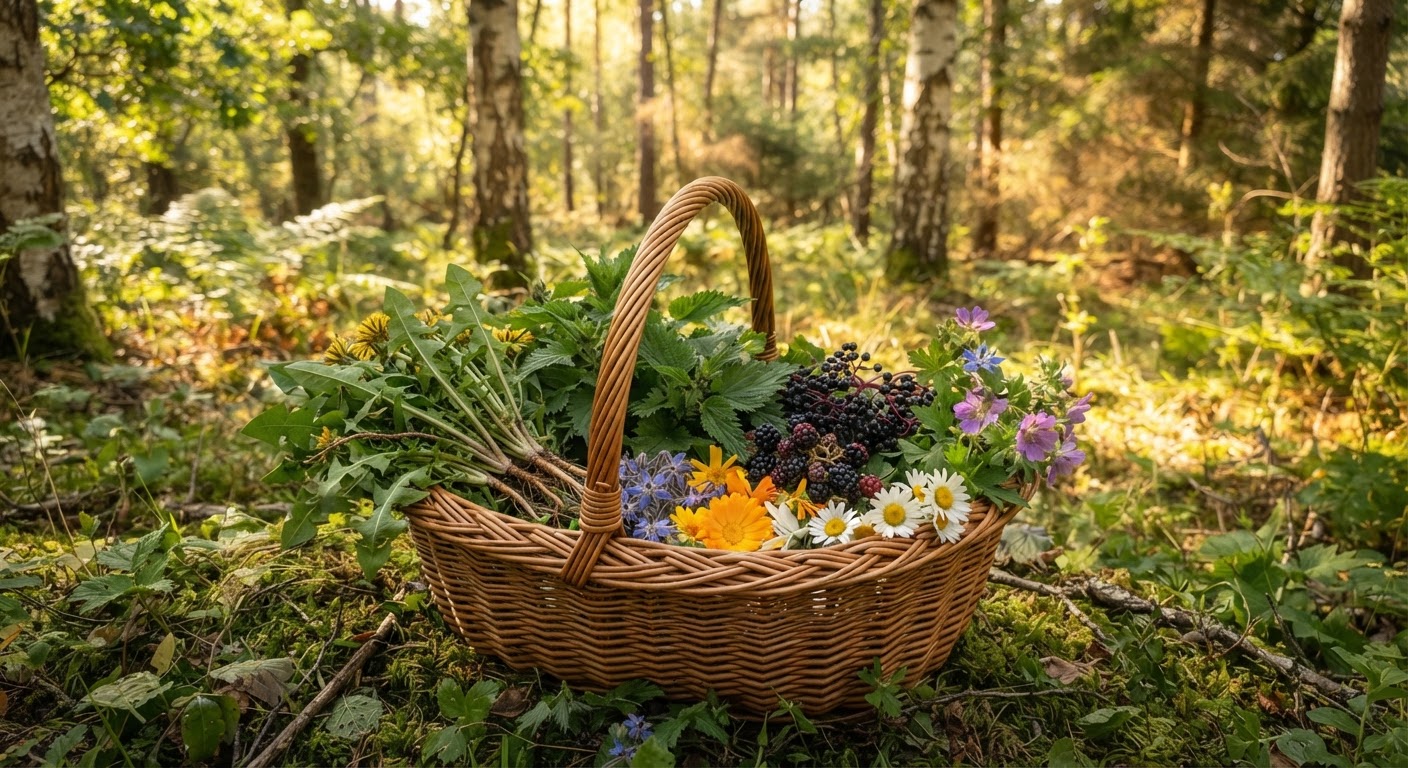
Walk into any backyard, park, or forest trail in North America, and you’re likely surrounded by food you’ve been overlooking for years. The patch of “weeds” near your fence? Probably edible. Those bright red berries along the hiking path? Someone’s jam recipe is waiting.
The world of edible wild plants is vast, surprisingly accessible, and — when approached with the right knowledge — one of the most rewarding skills you can develop. You don’t need to be a survival expert or a trained botanist to get started. You just need to know what you’re looking at, what’s safe, and what’s not.
This guide covers 25+ edible wild plants organized by category — leafy greens, roots, berries, flowers, and nuts. Every plant here has been foraged, identified, and eaten by experienced foragers across North America. No exotic rarities. Just real, abundant plants you can actually find.
Foraging Safety First: The Golden Rules
Before we dive into the plant list, let’s get one thing absolutely clear. Foraging mistakes can kill you. That’s not hyperbole. Every year, people end up in emergency rooms because they misidentified a plant. The difference between wild carrot and poison hemlock is subtle. So is the difference between wild grape and Canada moonseed.
The non-negotiable rules:
- 100% positive identification before consumption. Not 90%. Not “pretty sure.” One hundred percent. Use at least three identification features — leaf shape, flower structure, stem characteristics, habitat, and smell.
- Never forage near roads, railroads, or industrial sites. Plants absorb heavy metals and pesticides from contaminated soil. Give yourself at least 50 feet from any road, more for busy highways.
- Learn the deadly lookalikes first. Before you memorize edible plants, study the toxic ones that resemble them. Hemlock, water hemlock, death camas, and poison ivy should be on your must-know list.
- Start with unmistakable plants. Dandelions, cattails, and blackberries are nearly impossible to misidentify. Build confidence there before tackling anything trickier.
- Try one new plant at a time. Even if you’ve positively identified something, your body might react differently. Eat a small amount first, wait 24 hours.
- Know the land status. Foraging is illegal in many national parks, protected reserves, and private property without permission. Check local regulations.
The bottom line: foraging is safe when you’re methodical. It’s dangerous when you’re casual. Choose to be methodical.
Leafy Greens and Edible Weeds
These are the easiest starting point for beginners. Most grow abundantly in disturbed soil — backyards, gardens, parks, and field edges. They’re nutritious, versatile in the kitchen, and often more flavorful than their grocery store cousins.
1. Dandelion (Taraxacum officinale)
If you learn only one wild plant, make it dandelion. The entire plant is edible — roots, leaves, flowers, even the buds. Young leaves picked before flowering are mildly bitter and excellent raw in salads. Older leaves benefit from blanching. The roots can be roasted and ground into a caffeine-free coffee substitute. The bright yellow flowers make a surprisingly sweet fritter or can be fermented into wine.
Key ID features: Jagged, tooth-shaped leaves growing in a basal rosette. Hollow flower stalks with single yellow composite flower heads. Milky white sap in stems and leaves.
Season: Leaves — early spring through fall (youngest in spring). Flowers — spring through early summer. Roots — fall.
Lookalike warning: None seriously toxic, but always confirm the hollow stem and milky sap.
2. Stinging Nettle (Urtica dioica)
Yes, it stings. No, you shouldn’t let that stop you. Once cooked, nettles lose their sting entirely and transform into one of the most nutritious greens on the planet — richer in iron than spinach and packed with protein for a leafy green. Think of them as wild spinach with a deeper, earthier flavor.
Key ID features: Heart-shaped, serrated leaves growing in opposite pairs along a square stem. Tiny stinging hairs on stems and leaf undersides. Grows in dense patches in moist, rich soil.
Harvest tip: Wear gloves. Cut only the top 4-6 inches of young plants (before flowering). Older plants develop gritty cystoliths that can irritate the kidneys.
Season: Spring through early summer. Stop harvesting once plants flower.
3. Purslane (Portulaca oleracea)
Purslane is quietly one of the most nutritious plants on Earth. It has more omega-3 fatty acids than any other leafy green — yes, including kale and spinach. The succulent leaves have a pleasant lemony crunch and a slightly mucilaginous texture (similar to okra). It grows flat along the ground, often in sidewalk cracks, garden beds, and dry, disturbed soil.
Key ID features: Smooth, reddish stems radiating from a central point. Thick, paddle-shaped succulent leaves. Small yellow flowers. Entire plant rarely exceeds 6 inches tall.
Lookalike warning: Spurge (Euphorbia species) resembles purslane but has much thinner stems that exude a white, milky sap when broken. Purslane’s sap is clear. Spurge is toxic — snap the stem and check.
Season: Mid-summer through early fall.
4. Lamb’s Quarters (Chenopodium album)
Also called wild spinach or goosefoot, lamb’s quarters tastes remarkably like spinach — mild, slightly mineral-rich, and tender. The leaves have a distinctive powdery white coating on the undersides that helps with identification. It grows abundantly in gardens and farm fields, often taller than the cultivated crops around it.
Key ID features: Diamond-shaped leaves with jagged edges and a white, mealy coating underneath. Upright growth habit, reaching 3-6 feet. Tiny green flowers in clusters at the top of the plant.
Cooking: Use young leaves raw in salads or cook like spinach. Seeds can also be harvested and ground into a dark flour.
Season: Spring through fall. Leaves become tough once the plant goes to seed.
5. Chickweed (Stellaria media)
Chickweed is a delicate, low-growing winter annual that forms dense mats in moist, cultivated soil. The tiny leaves and tender stems are perfect raw — slightly sweet, reminiscent of corn silk or young lettuce. It’s one of the first greens to appear in early spring and one of the last to fade in late fall.
Key ID features: Small, pointed oval leaves growing in opposite pairs. Distinctive single line of fine hairs running along one side of the stem (alternating between nodes). Tiny white star-shaped flowers with five deeply cleft petals (appearing as ten).
Lookalike warning: Scarlet pimpernel has similar growth but square stems and red-orange flowers. Spurge (toxic) has milky sap. Chickweed has clear sap and that telltale hairline on the stem.
Season: Early spring and fall — chickweed dislikes summer heat.
6. Broadleaf Plantain (Plantago major)
Not the banana. This plantain is a common lawn weed with broad, oval leaves marked by prominent parallel veins. It grows in compacted soil — driveways, footpaths, playgrounds. The young leaves are edible raw but become tough and fibrous with age, making them better suited for cooking or tea.
Key ID features: Broad, oval leaves with 5-9 distinct parallel veins. Leaves grow in a flat basal rosette. Tall, slender flower spikes that look like tiny green bottle brushes.
Medicinal note: Chewed plantain leaves make an effective field poultice for insect bites, minor cuts, and stinging nettle stings. The leaves contain allantoin, a cell-proliferating compound.
Season: Spring through fall, best in spring.
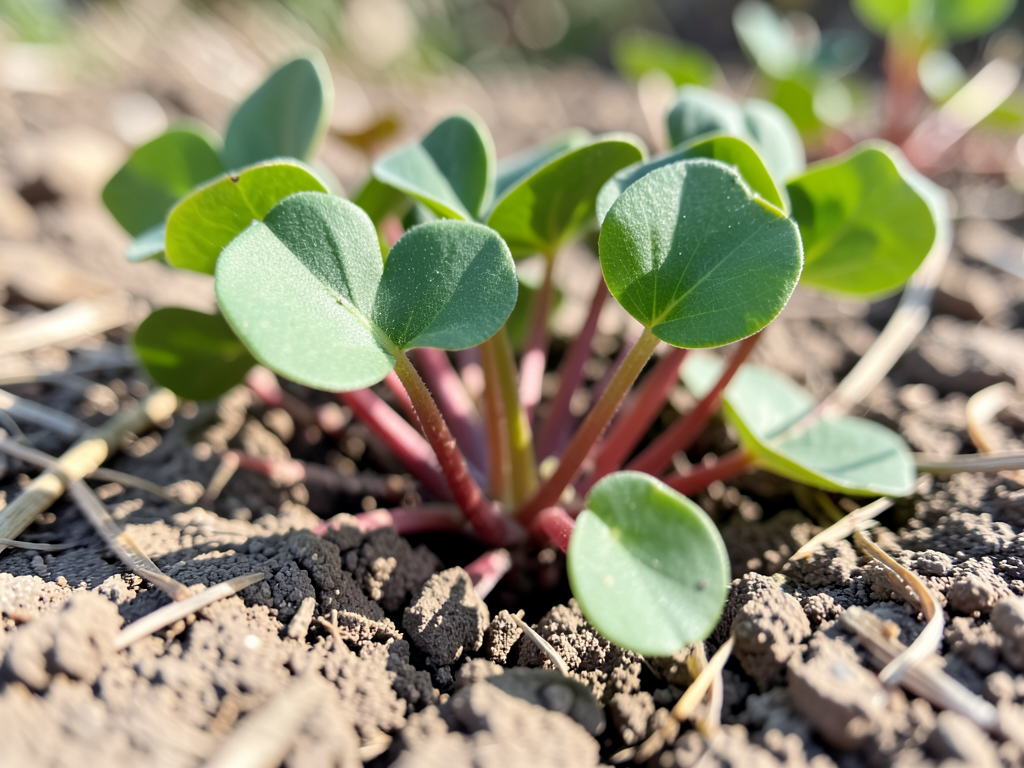
7. Wood Sorrel (Oxalis species)
Wood sorrel looks like a miniature clover with heart-shaped leaflets, but it tastes nothing like clover — it has a bright, lemony tang that comes from oxalic acid. It’s wonderful as a trailside nibble, a salad accent, or a garnish on fish and soups. The flowers range from yellow to pink to white depending on species.
Key ID features: Three heart-shaped leaflets (like clover but with a fold down the center of each leaflet). Five-petaled flowers. Tangy, sour taste when chewed.
Caution: The oxalic acid content means you shouldn’t eat large quantities, especially if you have kidney issues or gout. A handful in a salad is fine for most people.
8. Wild Garlic / Ramps (Allium species)
If it smells like garlic or onion, it’s in the Allium family — and it’s edible. This is the single most useful rule in foraging. Wild garlic (Allium ursinum in Europe, Allium vineale in North America), wild onion, and ramps (Allium tricoccum) all share that unmistakable allium scent.
Key ID features: Grass-like or broad leaves, depending on species. Strong onion/garlic smell when crushed. Umbels of small white or pink flowers.
Critical warning: Some toxic lilies (lily of the valley, death camas) have similar leaves but NO onion smell. The smell test is non-negotiable — if it doesn’t smell like garlic or onion, don’t eat it.
Roots, Tubers, and Underground Treasures
Root foraging requires more effort than picking leaves, but the caloric payoff can be significant. These plants provide real sustenance in survival situations.
9. Cattail (Typha species)
Cattails are the supermarket of the marsh. Every part is useful. The young shoots in spring taste like cucumber or zucchini. The green flower heads can be boiled and eaten like corn on the cob. The yellow pollen is high in protein and can be used as flour. And the starchy rhizomes can be processed into a gluten-free flour.
Key ID features: Tall, strap-like leaves growing in dense stands in shallow water. Distinctive brown “hot dog” seed head on a tall stalk. Found in wetlands, ditches, and pond edges.
Lookalike warning: Wild iris has similar leaves when not flowering and grows in the same habitat. Iris is toxic. Wait until you can confirm the brown cattail head before harvesting. If there’s no brown head, don’t guess.
Season: Shoots — spring. Flower heads — early summer. Pollen — mid-summer. Rhizomes — fall through winter.
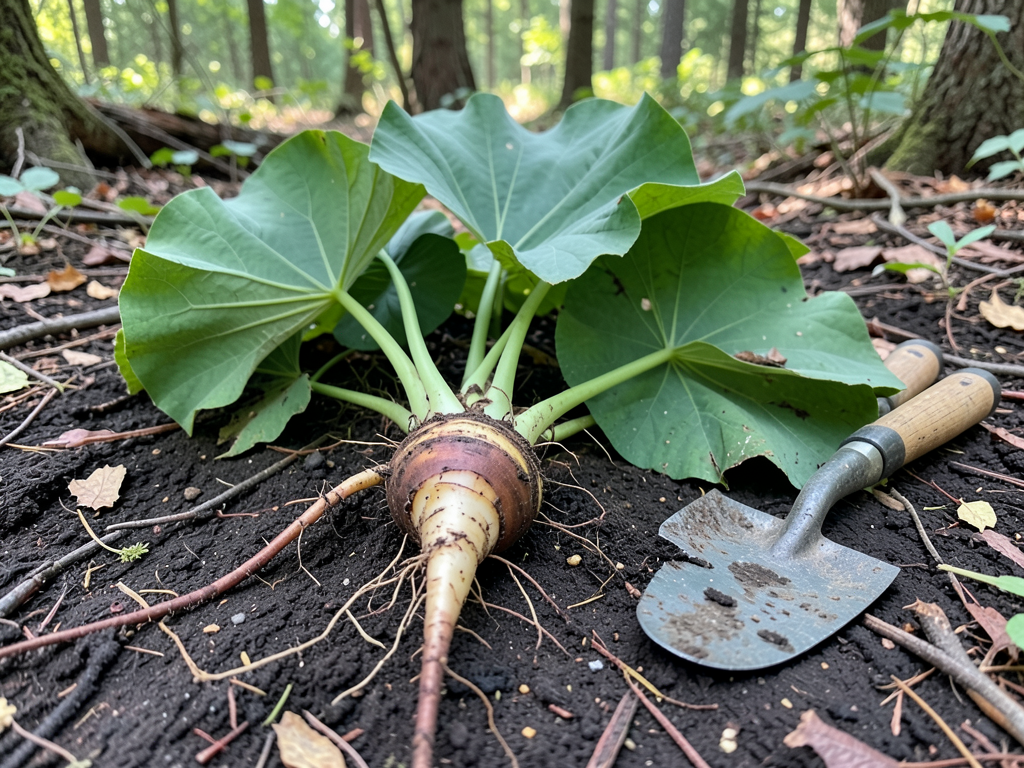
10. Burdock (Arctium species)
Burdock root (gobo in Japanese cuisine) is a staple in Asian cooking but grows as a “weed” across North America. The long taproot has an earthy, slightly sweet flavor that works beautifully in stir-fries, soups, and pickles. First-year roots are tender and mild; second-year roots become woody.
Key ID features: Large, elephant-ear-shaped basal leaves with woolly undersides. Tall flower stalks with purple thistle-like blooms that turn into clingy burs. As a biennial, first-year plants stay low to the ground.
Harvest tip: You’ll need a digging tool — burdock roots can go 2 feet deep. Harvest in fall from first-year plants (look for the basal rosette without a flower stalk).
11. Jerusalem Artichoke / Sunchoke (Helianthus tuberosus)
Not from Jerusalem, not an artichoke. Sunchokes are the tuber of a native North American sunflower species. They taste like a cross between a potato and an artichoke heart, with a satisfying crunch when raw and a creamy texture when roasted. Sunchokes store their carbohydrates as inulin rather than starch, giving them a lower glycemic impact than potatoes.
Key ID features: Tall sunflower-like plants reaching 6-10 feet. Rough, hairy leaves and stems. Bright yellow composite flowers in late summer. Tubers are knobby, tan-skinned, and resemble ginger root.
Word of caution: Sunchokes are notorious for causing gas. Start with small portions. Cooking them with a bit of lemon juice or vinegar can help break down the inulin.
Season: Tubers — late fall through winter (sweetest after frost).
12. Wild Carrot / Queen Anne’s Lace (Daucus carota)
Wild carrot is the ancestor of our cultivated carrot. The first-year taproot is edible — paler, more fibrous, and more aromatic than grocery carrots, but perfectly usable in soups and stews. The aromatic seeds can be used as a spice.
Key ID features: Lacy, fern-like leaves. Flat-topped umbels of tiny white flowers, often with a single dark purple flower at the center. Hairy stems (important!). Crushed leaves smell distinctly of carrot.
Extremely dangerous lookalikes: Poison hemlock (Conium maculatum) and water hemlock (Cicuta species) look similar and are DEADLY. Key differences: wild carrot has HAIRY stems. Hemlock stems are smooth with purple blotches. Wild carrot smells like carrot when crushed; hemlock smells unpleasant and musty. Do not harvest wild carrot unless you can confidently distinguish it from hemlock. Many experienced foragers skip it entirely because the risk is too high.
Wild Berries and Fruits
Wild berries are the gateway drug of foraging. They’re sweet, instantly recognizable, and abundant. The rule of thumb for wild berries: aggregate berries (clusters of small drupelets, like blackberries and raspberries) are almost universally safe in North America.
13. Blackberry / Bramble (Rubus species)
The wild blackberry needs no introduction. These thorny canes fill roadsides, forest edges, and abandoned fields across North America. The fruit is unmistakable — clusters of dark purple-black drupelets that pull free from the central core when ripe.
Key ID features: Thorny, arching canes. Compound leaves with 3-5 serrated leaflets. White or pink five-petaled flowers. Aggregate fruit that turns from red to black when ripe.
Season: Mid-summer through early fall, depending on species and latitude.
14. Elderberry (Sambucus canadensis / Sambucus nigra)
Elderberry has been used for centuries as both food and medicine. The dark purple berries make exceptional syrup, jam, wine, and pie. They’re rich in vitamin C and antioxidants, with genuine immune-supporting properties.
Key ID features: Woody shrub or small tree, 5-12 feet tall. Compound leaves with 5-11 serrated leaflets. Flat-topped clusters of tiny white flowers (elderflowers) in late spring, followed by drooping clusters of dark purple-black berries.
Critical warning: Raw elderberries, leaves, stems, bark, and unripe (red) berries contain cyanogenic glycosides and can cause nausea and vomiting. Always cook the berries. The red elderberry (Sambucus racemosa) has red berries and is more toxic — stick to the purple-black varieties.
Season: Flowers — late spring. Berries — late summer.
15. Mulberry (Morus species)
Mulberries look like elongated blackberries hanging from trees, and they’re one of the sweetest wild fruits you’ll find. Red mulberry (Morus rubra) is native to eastern North America; white mulberry (Morus alba) was introduced from Asia and has naturalized widely. Both produce edible fruit.
Key ID features: Medium-sized tree with variable leaf shapes (some lobed, some unlobed — often on the same tree). Fruit resembles an elongated blackberry, ripening from white to red to deep purple.
Season: Late spring through mid-summer.
16. Wild Strawberry (Fragaria virginiana / Fragaria vesca)
Wild strawberries are tiny — about the size of your fingernail — but they deliver more concentrated flavor than any store-bought strawberry you’ve tasted. If you find a patch, you’ll understand why people spend hours picking these miniature jewels.
Key ID features: Low-growing plant with three-part leaves (similar to cultivated strawberry but smaller). White five-petaled flowers. Small red berries with seeds embedded on the surface.
Lookalike warning: Mock strawberry (Potentilla indica) has yellow flowers instead of white and produces dry, tasteless red berries. They’re not toxic — just disappointing.
Season: Late spring through early summer.
17. Serviceberry / Juneberry / Saskatoon (Amelanchier species)
Serviceberries look like a cross between blueberries and apples, with a flavor that’s sweeter and more complex than either. Native Americans used them extensively in pemmican — a high-energy survival food. The trees are also stunning ornamentals with white spring blossoms and brilliant fall color.
Key ID features: Small tree or large shrub. Oval, finely toothed leaves. White five-petaled flowers in early spring (before most other trees leaf out). Red-purple berries that resemble blueberries, ripening in June-July.
Season: Early summer (typically June, hence “Juneberry”).
Edible Flowers
Edible flowers add color, flavor, and a touch of elegance to salads, desserts, and drinks. The key rule: always confirm the flower is from a confirmed edible species, and never eat flowers from florists or garden centers (which may be sprayed with pesticides).
18. Common Violet (Viola sororia / Viola odorata)
Violets are one of the first flowers of spring, and both the leaves and flowers are edible. The purple, white, or blue flowers have a mild, slightly sweet flavor and make gorgeous salad garnishes. Candied violets are a classic pastry decoration. The young leaves are mild and can be eaten like spinach before the plant goes to seed.
Key ID features: Low-growing plant with heart-shaped leaves. Distinctive five-petaled flowers (two upper, two side, one lower with a spur). Flowers in shades of purple, blue, white, or yellow.
Season: Leaves — early spring through fall. Flowers — spring.
19. Red Clover and White Clover (Trifolium pratense / Trifolium repens)
Clover flowers have a delicate sweetness and are packed with nutrients, including protein, calcium, and magnesium. They can be eaten raw, steeped as tea, dried and ground into flour, or battered and fried as fritters. The leaves are also edible but are best cooked — raw clover leaves can be difficult to digest.
Key ID features: Three-part leaves (occasionally four) with a pale chevron marking. Pink-purple pom-pom flowers (red clover) or white globular flower heads (white clover). Common in lawns and meadows.
Season: Spring through fall, peaking in late spring.
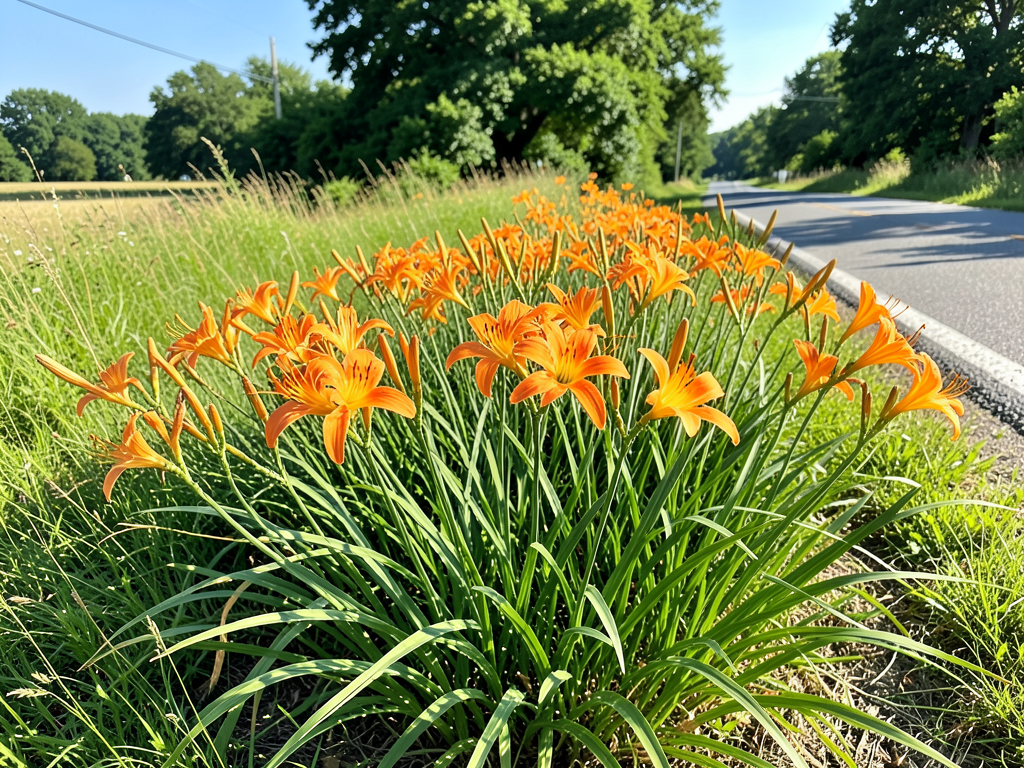
20. Daylily (Hemerocallis fulva)
The common orange daylily that fills roadside ditches every summer is not just beautiful — it’s delicious. Every part is edible at the right stage: young shoots in spring, flower buds before they open, open flowers (stuffed or in salads), and the tubers year-round. The unopened buds sautéed in butter are particularly good — reminiscent of green beans with a subtle sweetness.
Key ID features: Clump-forming perennial with long, arching strap-like leaves. Tall flower stalks bearing multiple orange, lily-shaped blooms that open for a single day. Orange daylily is the classic roadside variety.
Important: True lilies (Lilium species) can be toxic to cats and may cause digestive upset. Daylilies are in the genus Hemerocallis, not Lilium. Still, some people experience digestive issues from eating daylilies — try a small amount first.
Season: Shoots — spring. Flower buds and flowers — early to mid-summer. Tubers — year-round.
21. Elderflower (Sambucus flowers)
Elderflowers are the blossoms of the elderberry shrub — delicate, cream-white, with an intoxicating floral scent that makes some of the best cordial, champagne, and fritters you’ll ever taste. The entire flower head can be dipped in a light batter and fried until golden, producing a crispy, aromatic treat.
Key ID features: Flat clusters of tiny cream-white flowers, each with five petals and five prominent stamens. Distinctive sweet, musky fragrance. Shrub with compound leaves (see elderberry entry above).
Season: Late spring through early summer.
Nuts and Seeds
Foraging nuts provides real calories — the kind that sustain you through winter. They’re also satisfying to gather in the crisp fall air.
22. Acorn (Quercus species)
Acorns have sustained human civilizations for thousands of years, and they remain one of the most abundant wild food sources on the planet. The catch: acorns contain bitter tannins that must be leached out before eating. Once processed, acorn flour is nutty, slightly sweet, and gluten-free — excellent for bread, pancakes, and cookies.
Key ID features: Oak trees with lobed or toothed leaves. Acorns with a cap covering the top portion. White oak acorns are generally milder than red oak acorns (lower tannin content).
Processing: Shell the acorns, grind the nutmeat, then leach the tannins by soaking in multiple changes of cold water (faster) or in a stream bag (traditional method) until the water runs clear and the bitterness is gone. Then dry and grind into flour.
Season: Fall (September through November).
23. Black Walnut (Juglans nigra)
Black walnuts have a bold, earthy flavor that makes English walnuts taste bland by comparison. They’re also harder to crack and will stain your hands black in the process — wear gloves. The green outer husk can be used to make a dark brown dye or a tincture with anti-parasitic properties.
Key ID features: Large compound leaves with 13-23 leaflets. Round green husks that turn black as they ripen. The nuts inside have deeply grooved, hard shells.
Processing: Remove the green husk (wear gloves), then dry the nuts for several weeks before cracking. The husks can be composted or used for dye.
Season: Fall (September-October).
24. Pine Nuts (Pinus species)
Yes, the pine nuts in your pesto come from actual pine cones. Several pine species across North America produce large, harvestable seeds — particularly piñon pines in the Southwest (Pinus edulis) and digger pines in California. The cones must be harvested before they open and release their seeds, then heated to encourage opening.
Key ID features: Needle clusters (2-5 per bundle, depending on species). Woody cones. Look for large-seeded species: piñon, sugar pine, digger pine, and ponderosa pine.
Season: Late summer through fall.
Edible Wild Plants by Season — At a Glance
| Season | What to Look For |
|---|---|
| Early Spring | Dandelion greens, chickweed, stinging nettle, wild garlic, violet leaves & flowers |
| Late Spring | Elderflowers, wild strawberry, mulberry, lambs quarters, daylily shoots |
| Summer | Blackberry, serviceberry, purslane, daylily buds/flowers, cattail pollen |
| Fall | Acorns, black walnut, pine nuts, burdock root, cattail rhizomes, sunchoke tubers |
| Winter | Sunchoke tubers, cattail rhizomes (in unfrozen ground), dried rose hips |
Foraging isn’t just a summer hobby. With the right knowledge, you can find wild food in every season.
Dangerous Look-Alikes Every Forager Must Know
If you take away nothing else from this guide, memorize these pairs. The plants on the left are edible. The plants on the right can kill you.
| Edible | Deadly Look-Alike | How to Tell Them Apart |
|---|---|---|
| Wild carrot | Poison hemlock | Wild carrot has HAIRY stems. Hemlock has smooth stems with purple blotches. |
| Wild garlic / Ramps | Lily of the valley, Death camas | Crush the leaf. If it smells like garlic/onion, it’s safe. No smell = toxic. |
| Wild grape | Canada moonseed | Grape vines have tendrils and round seeds. Moonseed has NO tendrils and crescent-shaped seeds. |
| Blueberry / Serviceberry | Pokeweed berries | Pokeweed grows on a red-purple stalk in a raceme (not individually). Blueberries have a five-pointed crown on the blossom end. |
| Purslane | Spurge | Break the stem. Purslane has clear sap. Spurge has milky white sap. |
| Blackberry / Raspberry | None in North America | Aggregate berries (clusters of drupelets) are universally safe. |
The rule is simple: if you’re not 100% sure, don’t eat it. No wild meal is worth a trip to the emergency room.
Sustainable Foraging: Leave Enough for Tomorrow
Foraging is a gift from the land, and it comes with responsibility. Over-harvesting can damage plant populations, disrupt ecosystems, and ruin foraging spots for everyone.
The 1-in-5 Rule: Harvest no more than 1 out of every 5 plants you find. If there are five dandelion rosettes in a patch, harvest one. If you’re picking leaves, take only a few from each plant. The plant needs its leaves to survive.
Know the at-risk species: Ramps (wild leeks) grow slowly and have been over-harvested to the point of local extinction in parts of Appalachia. If you forage ramps, take only leaves — never the bulb — and only from abundant patches.
Harvest invasives freely: Many common edible “weeds” are actually invasive species — dandelion, garlic mustard, Japanese knotweed, autumn olive. Harvesting these aggressively is ecologically beneficial.
Leave no trace: Pack out any trash you find. Don’t trample surrounding vegetation. Don’t broadcast GPS coordinates of your best mushroom spots on social media — that’s how good foraging spots get stripped bare.
Frequently Asked Questions
Q: Do I need a license to forage wild plants? A: In most of North America, personal foraging on public lands doesn’t require a license. However, rules vary by location. National parks typically prohibit foraging. National forests often allow personal-use foraging with some restrictions. State and municipal parks vary widely. Always check local regulations. On private property, you need the landowner’s permission.
Q: Can I forage in the winter? A: Yes. Cattail rhizomes, sunchoke tubers, and burdock roots can be dug as long as the ground isn’t frozen solid. Rose hips, some nuts, and dried seed heads persist through winter. Evergreen tree needles (pine, spruce) can be used for vitamin C-rich tea year-round.
Q: How do I know if a plant has been sprayed with pesticides? A: You can’t — and this is a real concern, especially in urban areas. Signs of spraying include uniformly dead vegetation around the target plant, chemical smell, or knowing the area is managed (golf courses, manicured parks, residential lawns). When in doubt, skip it. Forage in less-maintained areas: forest edges, abandoned lots, rural roadsides at least 50 feet from the road.
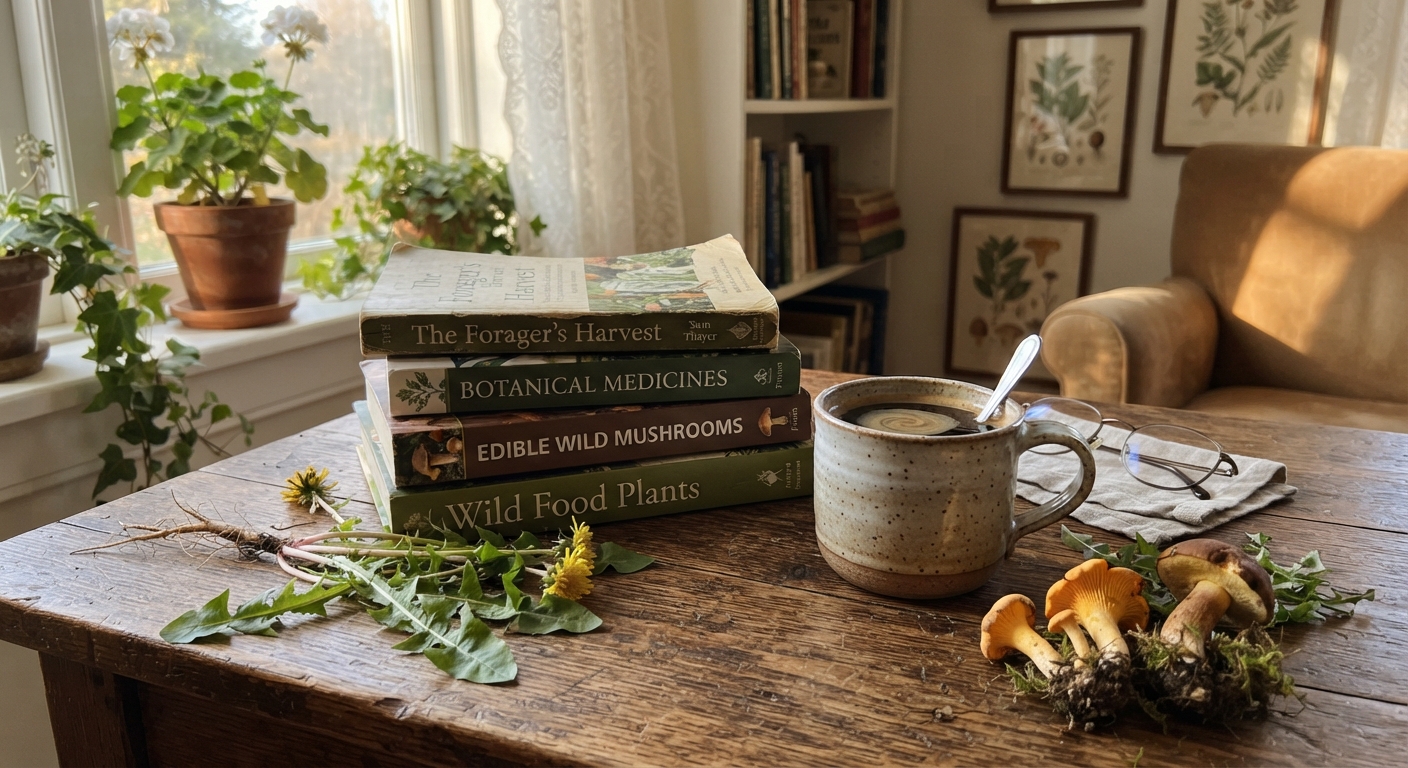
Q: What’s the best beginner foraging book? A: Samuel Thayer’s The Forager’s Harvest and Nature’s Garden are widely considered the gold standard for North American foraging. Thayer prioritizes depth over breadth — he covers fewer plants but in extraordinary detail, with personal stories and practical harvesting instruction.
Q: Can I use a plant identification app for foraging? A: Apps like the Edible Plant Identifier can be useful as a starting point, but never rely on an app alone for plant identification before eating something. Apps can be wrong. Use them to narrow down possibilities, then confirm with multiple field guides, in-person expertise, and the three-feature identification rule.
Your First Foraging Trip: A Practical Checklist
Here’s what to bring on your first outing:
- ✅ A reliable field guide (physical or digital — but physical works without battery)
- ✅ Gloves (leather or thick gardening gloves for nettles and thorns)
- ✅ A basket or cloth bag (plastic bags make greens wilt faster)
- ✅ Scissors or a sharp knife for clean cuts
- ✅ A small trowel for root digging
- ✅ Water and snacks (foraging burns energy)
- ✅ Phone for photos (document what you find — don’t rely on it for ID alone)
- ✅ Permission (confirmed land access)
And the most important tool you’ll bring: patience. Your first trip might yield only dandelion greens and a few blackberries. That’s perfect. Those are safe, unmistakable plants. Build your repertoire one species at a time, and never let excitement over new finds override your commitment to safety.
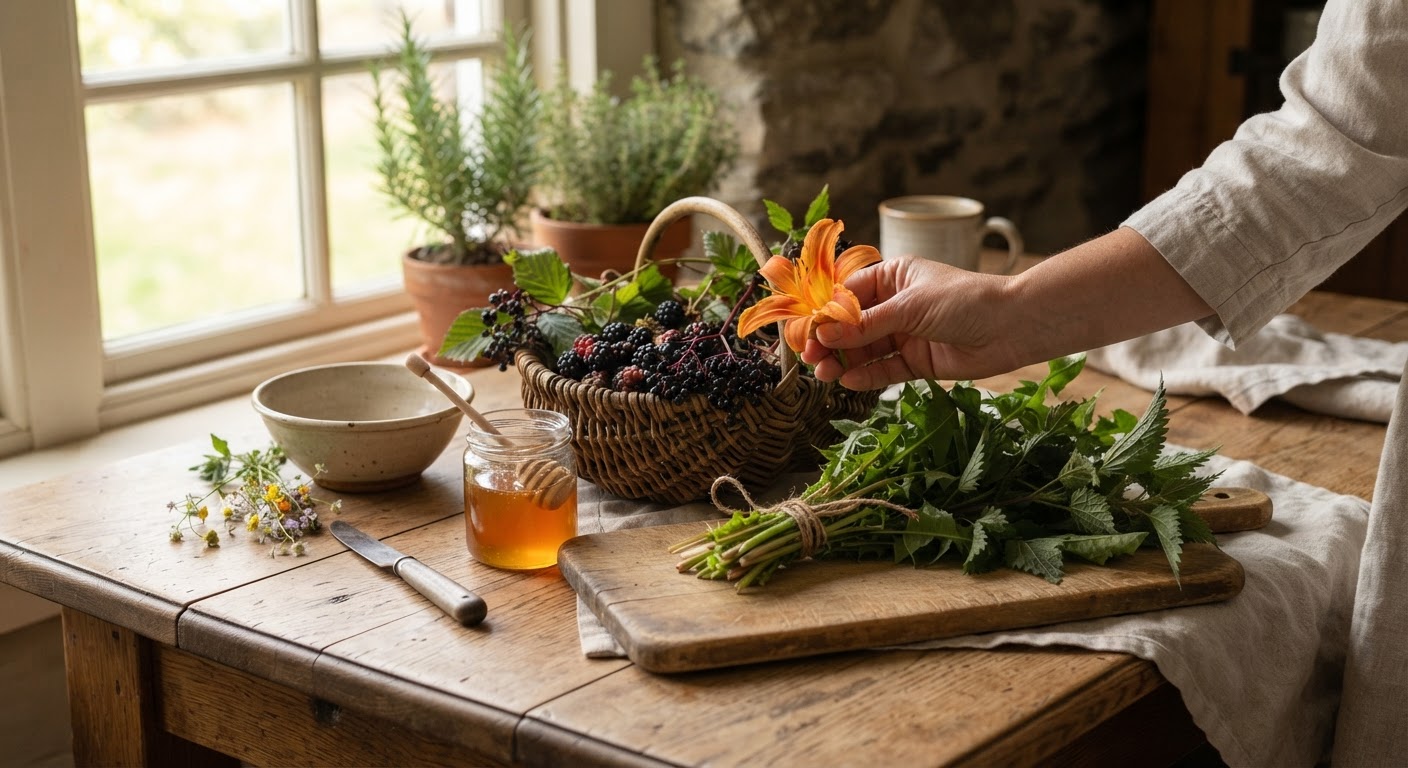
Foraging reconnects you with the land in a way that grocery stores never can. Every plant you learn to identify becomes a landmark. Every season brings new arrivals to the menu. And every meal you make from wild ingredients carries the story of where you found it, what the weather was like, and the satisfaction of self-reliance.
Start with the easy ones. Be relentlessly careful. Share what you find. There’s a wild pantry out there, and it’s been waiting for you.
This guide is for informational purposes only. Always consult multiple authoritative sources before consuming any wild plant. Edible Wild Plants is not responsible for misidentification or adverse reactions. When in doubt, don’t eat it.