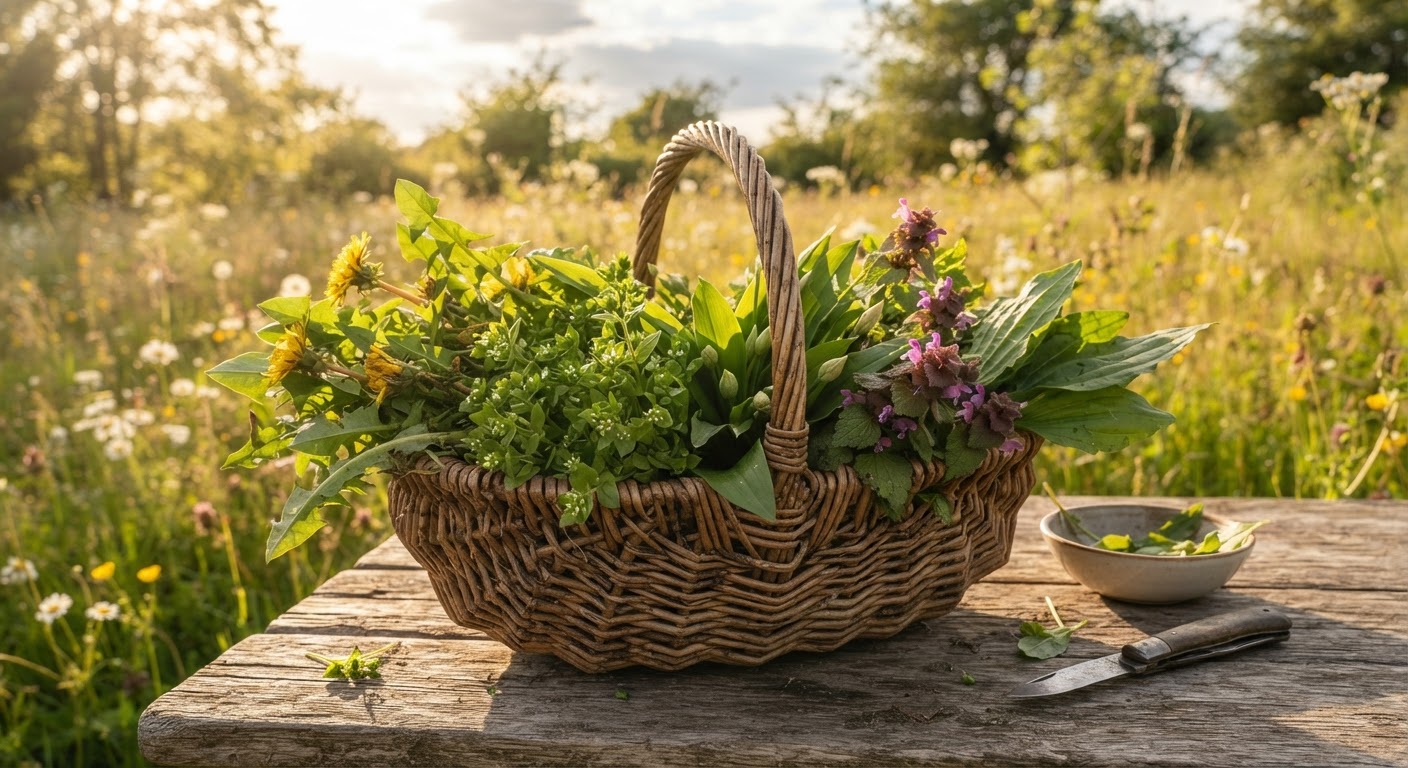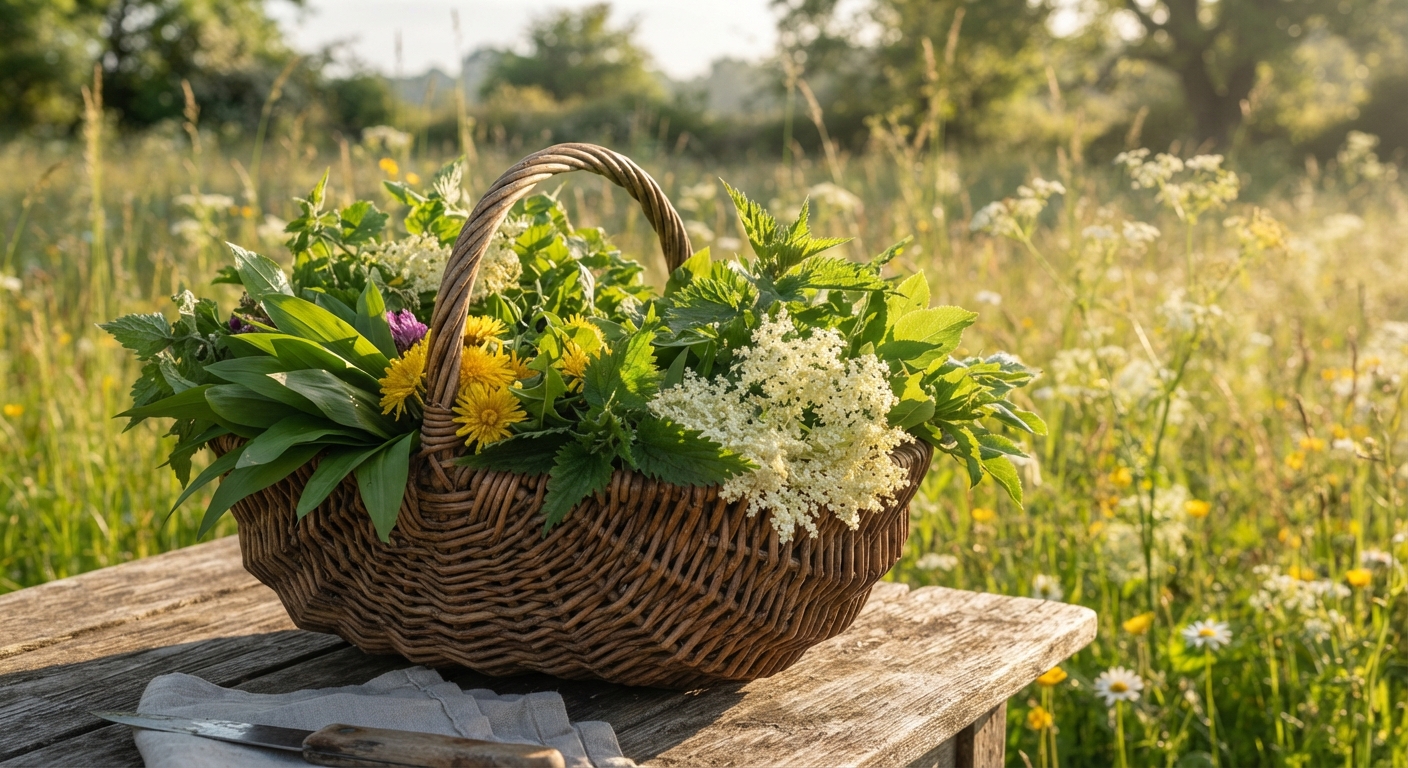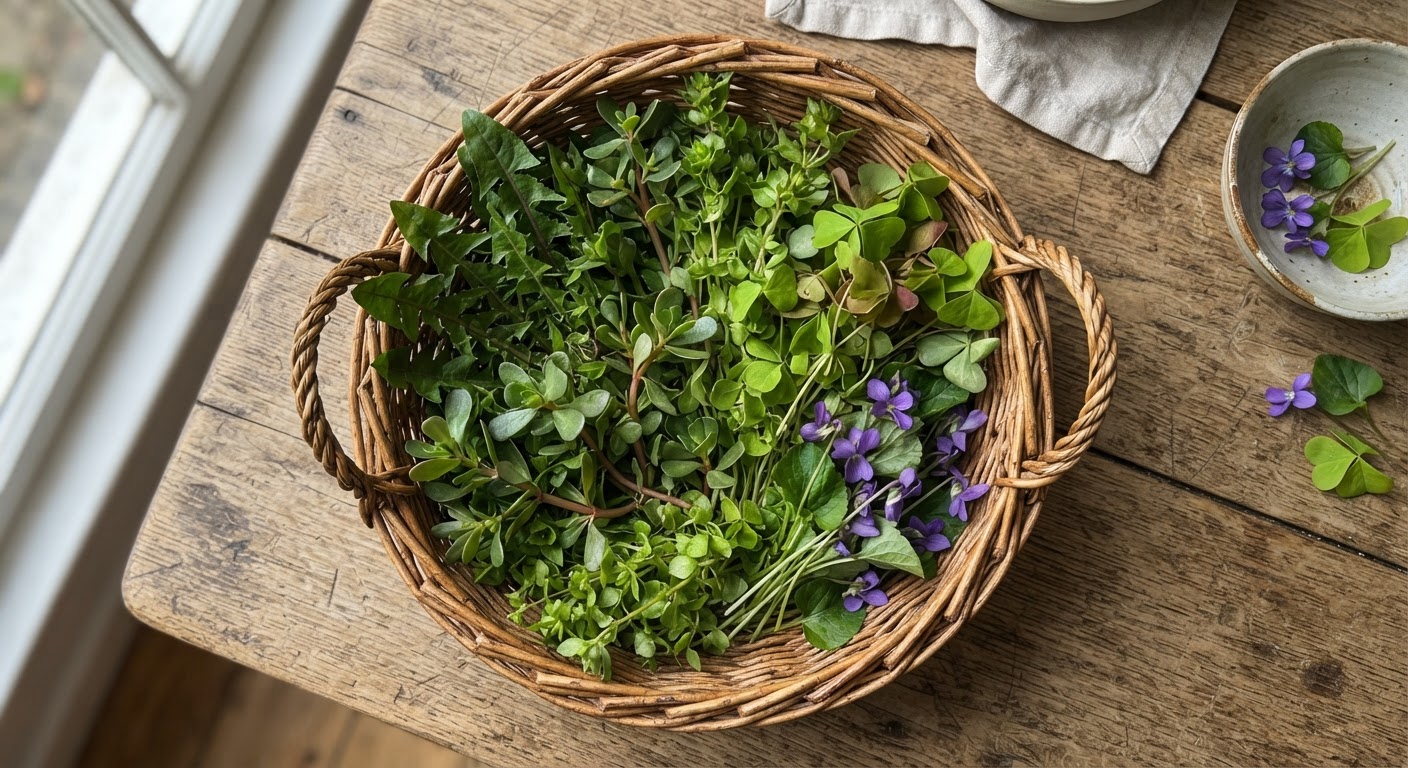
Most “edible wild plants” lists have a quiet flaw. They list the plants, describe them, and stop — leaving you to assume every entry takes the same amount of work to turn into a meal. It doesn’t.
Purslane can go from sidewalk crack to salad bowl in thirty seconds. Acorns need days of soaking and grinding. Both are edible. Both are “on the list.” But lumping them together is why so many beginners pick a hard plant first, burn an afternoon on prep, and decide foraging isn’t for them.
The fix is to sort the list by effort, not by name. That’s what this guide does. You get the full list up front in one table, then each plant grouped by how much work it actually demands — so you can start with the wins and work up to the projects only if you want to.
The Whole List in One Table
Here’s everything covered below, side by side. Read the “Effort” column first — it’s the one most lists leave out.
| Plant | Effort | How you eat it | Flavor | Best season | ID confidence |
|---|---|---|---|---|---|
| Purslane (Portulaca oleracea) | Pick & eat | Raw in salad, or sautéed | Mild, crisp, slightly lemony | Late spring–fall | High |
| Chickweed (Stellaria media) | Pick & eat | Raw, like sprouts | Mild, tender, grassy | Spring–fall | High |
| Wood sorrel (Oxalis spp.) | Pick & eat | Raw, small amounts | Bright, lemony, tangy | Spring–fall | High |
| Wild violet (Viola spp.) | Pick & eat | Raw flowers and leaves | Mild, faintly sweet | Spring | High |
| Dandelion (Taraxacum officinale) | Quick cook | Leaves blanched/sautéed, flowers raw, roots roasted | Bitter to mildly sweet | Spring–fall | High |
| Lamb’s quarters (Chenopodium album) | Quick cook | Cooked like spinach | Mild, spinach-like | Late spring–fall | Medium |
| Stinging nettle (Urtica dioica) | Quick cook | Always cooked (sauté, soup) | Rich, spinach-like | Early spring | High |
| Garlic mustard (Alliaria petiolata) | Quick cook | Leaves raw or cooked, roots as horseradish | Garlicky, peppery | Spring–early summer | Medium |
| Cattail (Typha spp.) | Real work | Shoots cooked, pollen as flour, roots processed | Mild, starchy | Spring–summer | Medium |
| Burdock (Arctium spp.) | Real work | Root peeled and cooked | Earthy, artichoke-like | Fall–spring | Medium |
| Acorn (Quercus spp.) | Real work | Leached, dried, ground into flour | Nutty after leaching | Fall | High |
| Daylily (Hemerocallis fulva) | Real work | Tubers cooked, buds sautéed | Mild, slightly sweet | Spring–fall | Medium |
Three of those columns deserve a caveat before we go further. “ID confidence” is how likely a careful beginner is to identify it correctly with a field guide — it is not a guarantee. “Best season” varies by region and elevation. And “Effort” assumes you’ve already positively identified the plant; the identification work is separate from the kitchen work. Never let a short “effort” line tempt you into skipping the ID step.
Tier 1 — Pick It and Eat It Raw
These are the zero-prep plants. Rinse them, and they’re food. If you’re brand new, this is your entire first month.
Purslane
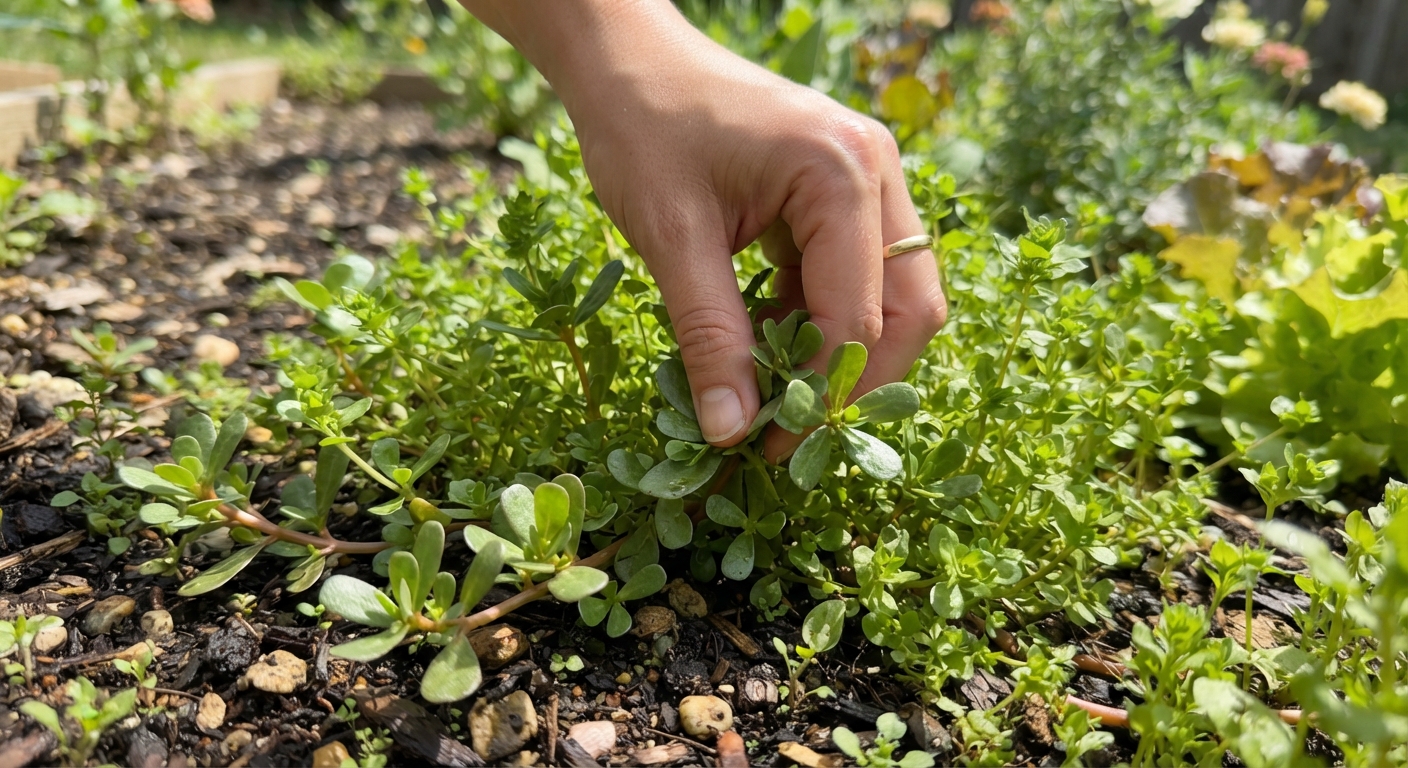
The easiest win in foraging. Purslane grows flat in dry, sunny spots — cracks in pavement, garden edges, the base of a driveway. You’ll know it by the thick, rubbery, paddle-shaped leaves on reddish stems, and by the way the whole plant sits low in a mat instead of standing up.
Pick the tips, rinse, toss in a salad. It’s crunchy and faintly lemony, and it holds up better than most lettuce. The one lookalike to rule out is spotted spurge, which has a milky white sap when you break a stem. Purslane’s sap runs clear. Break a stem and check — that single habit is the difference between a free salad and a stomachache.
Chickweed
Chickweed is the friendliest plant on this list: mild enough to eat raw by the handful, tender like sprouts, and easy to spot. Look for small, oval leaves in pairs and a single line of fine hairs running down one side of the stem — that hair line is its signature, and no toxic lookalike has it. The tiny white flowers look like they have ten petals but are actually five deeply notched ones.
Eat the top few inches raw in sandwiches and salads. It’s so gentle that even people who claim to hate “weeds” usually like chickweed.
Wood sorrel
The one that tastes like lemon candy. Wood sorrel has three heart-shaped leaves (like a clover that’s been told to be prettier) and tiny five-petal yellow or white flowers. Chew a leaf and you’ll get a sharp, sour, genuinely pleasant burst — it’s high in oxalic acid, which is exactly what gives it that tang.
That oxalic acid is also the reason for the one rule here: eat it in small amounts, and skip it if you have kidney issues. A few leaves to brighten a salad is perfect. A whole bowl is too much.
Wild violet
Violet leaves and flowers are both edible, and the flowers are the payoff — mild and faintly sweet, and they make a plain salad look like something from a magazine. The leaves are heart-shaped with scalloped edges and a slightly waxy feel. Pick flowers in spring when they’re fresh and vivid.
Nothing dangerous looks much like a violet flower in full bloom, which makes this a gentle, high-reward first plant.
Tier 2 — Five Minutes in a Pan
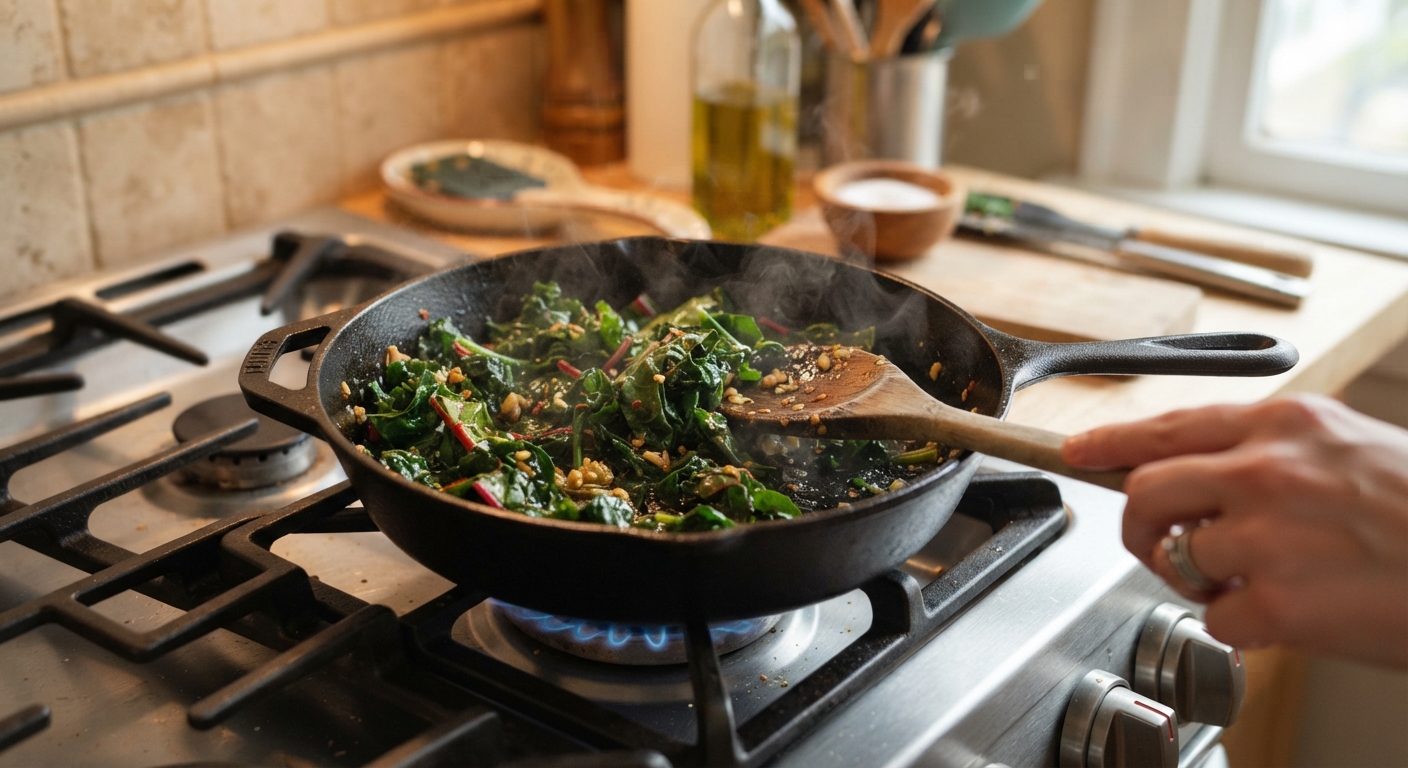
These plants are abundant and nutritious, but they want a little heat first. The prep is still short — a rinse, a rough chop, a few minutes in a hot pan.
Dandelion
The most famous wild green, and the most misunderstood. Dandelion leaves are edible from spring through fall, but they get aggressively bitter once the plant flowers and the weather turns hot. The trick is timing and cooking, not avoidance.
Young leaves can go in a salad raw. Older leaves want a quick blanch — thirty to sixty seconds in boiling salted water — then a sauté with olive oil, garlic, and a squeeze of lemon. That fat-acid-salt combination is what turns “bitter weed” into a side dish people ask for. The flowers are a separate treat: dip them in a light batter and fry them, or pull the petals for a fritter.
Lamb’s quarters
Often called “wild spinach,” and the name is earned. Lamb’s quarters has diamond-shaped leaves with a silvery, almost powdery coating on the underside — that mealy finish is how you tell it apart. Cook it exactly like spinach: a rinse, then a quick wilt in a pan with butter, garlic, and salt.
It’s one of the few wild greens that doesn’t need blanching to tame bitterness, because it barely has any. That makes it the most forgiving “cooked” plant on this list.
Stinging nettle
The plant that scares people and rewards them anyway. Yes, it stings — the tiny hairs on the stem and leaf undersides deliver a sharp, itchy burn. That sting is also the reason to trust it: once you learn the serrated opposite leaves and square stem, you’ll never confuse it with much, and the sting disappears completely the moment you cook it.
Wear gloves to harvest the young top leaves, then blanch or sauté. The result tastes like spinach but richer, with a mineral depth grocery spinach can’t match. Nettle soup and nettle pesto are two of the best beginner dishes in all of foraging.
Garlic mustard
The invasive you should be eating. Garlic mustard is a biennial with round-to-heart-shaped leaves that smell strongly of garlic when crushed — crush a leaf and sniff, and there’s your ID. The first-year leaves are the mildest; the second-year plants get taller, flower, and turn more bitter and peppery.
Use young leaves raw in pesto or cooked like spinach. If you find a plant with a good taproot, that root grated fresh has a horseradish-like bite. Eating an invasive species is the rare case where foraging is actively helpful to the local ecosystem.
Tier 3 — Worth It, but Real Work
These are the projects. They’re genuinely good food, but they demand time, technique, or both. Don’t start here — come back once you’ve had a few wins.
Cattail
The “supermarket of the swamp,” and like a supermarket, it takes some processing. In spring, the young shoots can be peeled and eaten raw or cooked — the tender white core tastes like mild cucumber. Later, the green flower heads can be boiled and eaten like corn. The yellow pollen is collected as a flour substitute, and the roots are the real project: peeled, pounded in water, and left to settle so the starch separates out.
The reward is real — cattail starch is a legitimate survival food — but each part needs its own technique and its own timing. Worth learning, but not your Tuesday night dinner.
Burdock
The root is the food, and it’s delicious — earthy and artichoke-like, the vegetable behind Japanese gobo. The catch is the digging. Burdock sends a long, deep taproot down, so you’re working hard in hard soil to pull it out, then peeling and slicing it before cooking.
The ID is straightforward: huge, wavy-edged leaves with a fuzzy underside, and burrs that stick to everything in fall. But between the digging, peeling, and the fact that the root needs a proper cook, burdock belongs on the “weekend project” list.
Acorn
The most honest entry on this list, because acorns are not ready to eat when they fall. Raw acorns are loaded with bitter tannins, and removing them is the whole job: shell, grind, then leach in many changes of cold water until the bitterness is gone, then dry and grind into flour.
It’s slow, it’s water-intensive, and it’s deeply satisfying when you finally bake a flatbread from acorns you processed yourself. If you only ever do one “hard” plant, make it this one — it teaches you more about traditional food processing than any guide can.
Daylily
One caution up front, because it matters: stick to the common orange daylily (Hemerocallis fulva), and skip the tubers if you’re at all unsure, since true lilies (Lilium) are toxic and the plants can be confused. The young shoots and unopened flower buds are the easy, safe part — buds sautéed in butter are a classic foraged side. The small tubers need digging, washing, and cooking, which is where the effort creeps in.
Daylily is a good plant, but it’s the one on this list where the “know your lookalikes” rule does the heaviest lifting. If you’re not completely certain, the buds are the part to learn first.
Raw vs Cooked: What Actually Changes
Most of the effort on this list comes down to one decision: raw or cooked. Here’s what’s actually happening when you apply heat.
| Factor | Raw | Cooked |
|---|---|---|
| Bitterness | Full strength — can be harsh in mature leaves | Reduced — blanching pulls bitterness into the water |
| Sting / irritants | Present (nettle stings, oxalic tang) | Neutralized (nettle sting gone, oxalates partly broken down) |
| Texture | Fibrous, especially older leaves | Tender — heat softens cell walls |
| Flavor | Bright, sharp, fresh | Mellowed, deeper, richer |
| Time | None | A few minutes, plus a blanching step for bitter greens |
| Best for | Purslane, chickweed, wood sorrel, violet, young dandelion | Nettle, lamb’s quarters, mature dandelion, garlic mustard |
The one habit that saves the most beginner meals: blanch bitter greens before you cook them. A thirty-second dunk in boiling salted water, then straight into cold water to stop the cooking, strips out a surprising amount of bitterness without turning the greens to mush. From there, fat, acid, and salt do the rest. Bitterness isn’t a reason to reject a plant — it’s a flavor to dress, and most “foraging is gross” stories come down to someone eating a bitter leaf plain.
Five Rules That Beat Memorizing a Hundred Plants
You don’t need a bigger list. You need these five habits, in this order.
- Learn five plants cold before you learn fifty. Identification confidence is the whole game, and it comes from repetition. Five plants you can spot from across the yard will feed you more reliably than fifty you half-remember.
- Match three features, never one. A leaf shape alone isn’t an identification. Stack leaf, stem, flower, habitat, and season. If any one feature doesn’t match, stop — the mismatch is the signal.
- Learn the toxic lookalike before the edible plant. Before purslane, learn spotted spurge. Before anything in the carrot family, learn poison hemlock and water hemlock — or just skip that family entirely for your first season.
- Harvest clean and high. No roadsides, no sprayed lawns, no dog-walk zones, nothing downhill from a farm field. Aim above the “traffic line” in public spaces, and take a little from many plants, never all from one.
- Taste a tiny bit before you harvest a lot. Even correctly identified plants vary by season and location. Nibble, wait, then decide how much to pick.
Fast Answers
Here are the questions people actually ask, answered in one or two lines.
Which edible wild plant is easiest to start with? Purslane. It’s common, unmistakable once you check for clear (not milky) sap, and good raw in a salad.
What’s the safest wild plant for a total beginner? Chickweed. It’s mild enough to eat raw, and its single line of stem hairs is a feature no toxic lookalike shares.
Do I have to cook wild greens? No. Purslane, chickweed, wood sorrel, violet, and young dandelion are fine raw. Nettle must be cooked, and mature or bitter greens taste better cooked.
Why are some wild greens so bitter? Bitterness is a plant’s natural defense, and it intensifies after the plant flowers or grows in hot, dry conditions. Blanch and dress with fat, acid, and salt to balance it.
Is foraging actually safe? Yes, when you positively identify the plant and harvest from a clean location. The danger isn’t wild plants — it’s eating something you only think you’ve identified.
How do I know a plant isn’t poisonous? Identify it with three matching features, confirm against a field guide, and know the toxic lookalikes nearby. If you can’t name it with certainty, you don’t eat it.
What’s the one plant I should never eat? Any plant in the carrot family (umbrella-shaped flower clusters, ferny leaves) until you’re well past beginner level — it holds poison hemlock and water hemlock.
Can I forage in the city? Sometimes. Avoid roadsides, sprayed lawns, and dog-walk areas; community gardens, clean parks, and your own untreated yard are better bets.
The Short Version
An edible wild plants list is only as useful as the effort column you attach to it. Start with the pick-and-eat tier — purslane, chickweed, wood sorrel, violet — because early wins are what keep you going. Add the five-minute pan plants — dandelion, lamb’s quarters, nettle, garlic mustard — once you’ve got a couple of raw successes under your belt. Save cattail, burdock, acorn, and daylily for the weekend you’re ready to actually enjoy the work.
Through all of it, the rules don’t change: five plants learned cold, three matching features, the lookalike learned first, clean harvest sites, and a tiny taste before a big haul. Master those and you won’t need a longer list. You’ll just need a basket and a walk.