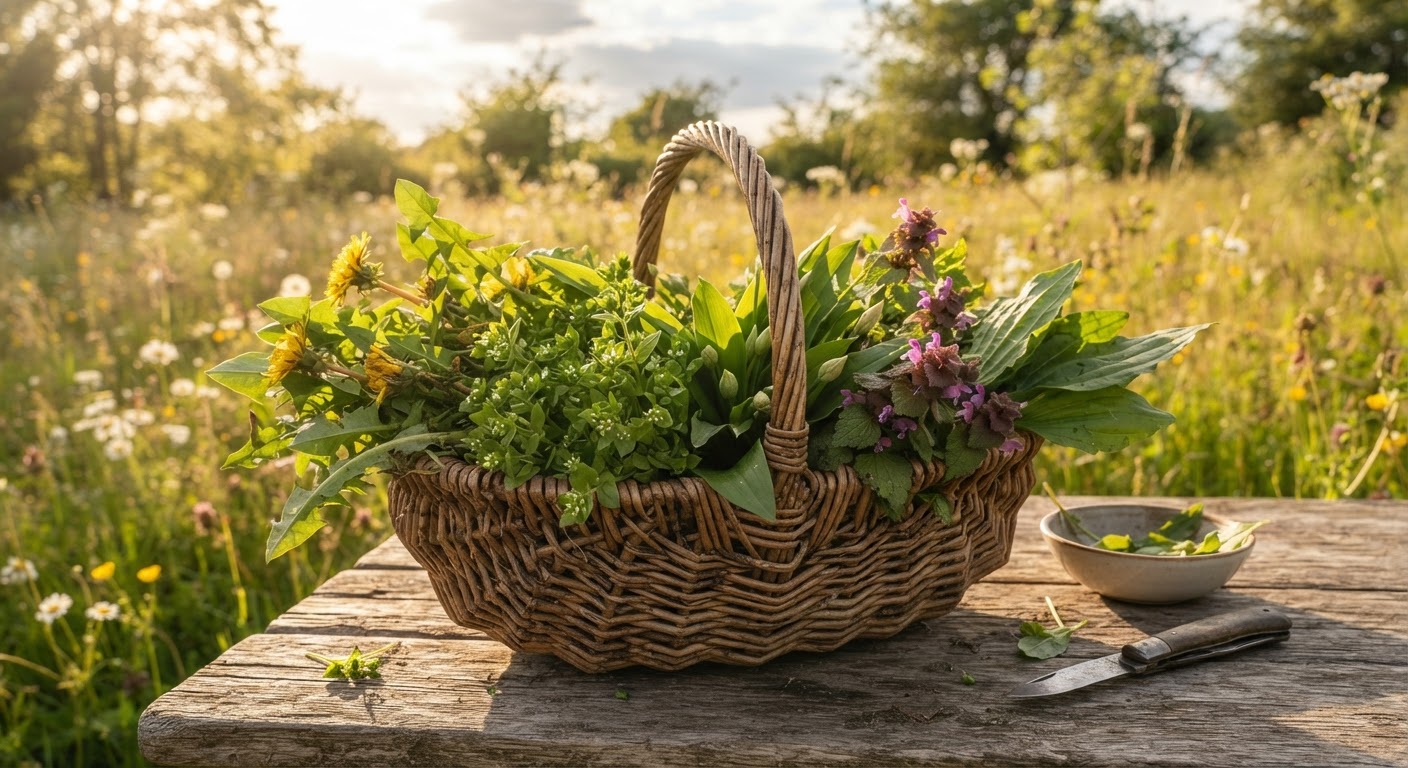
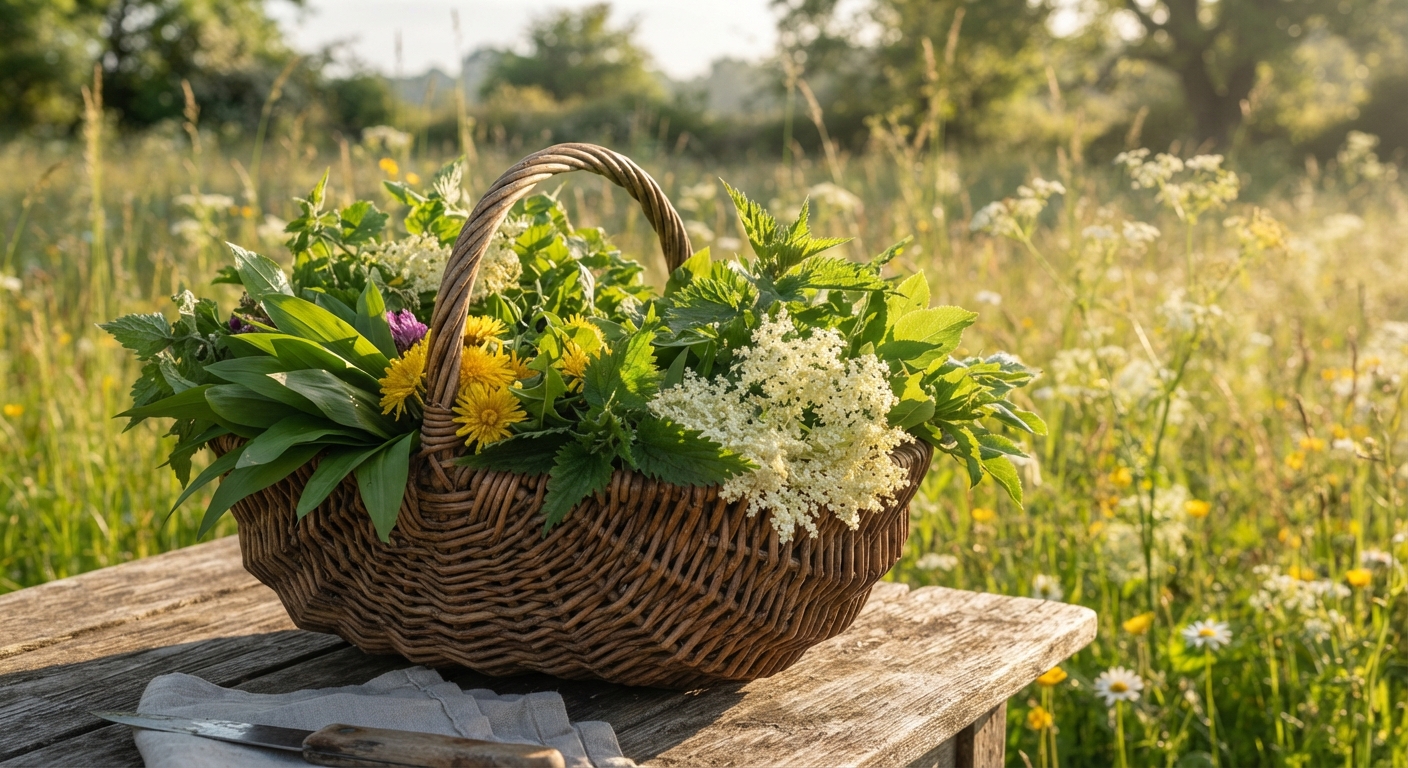
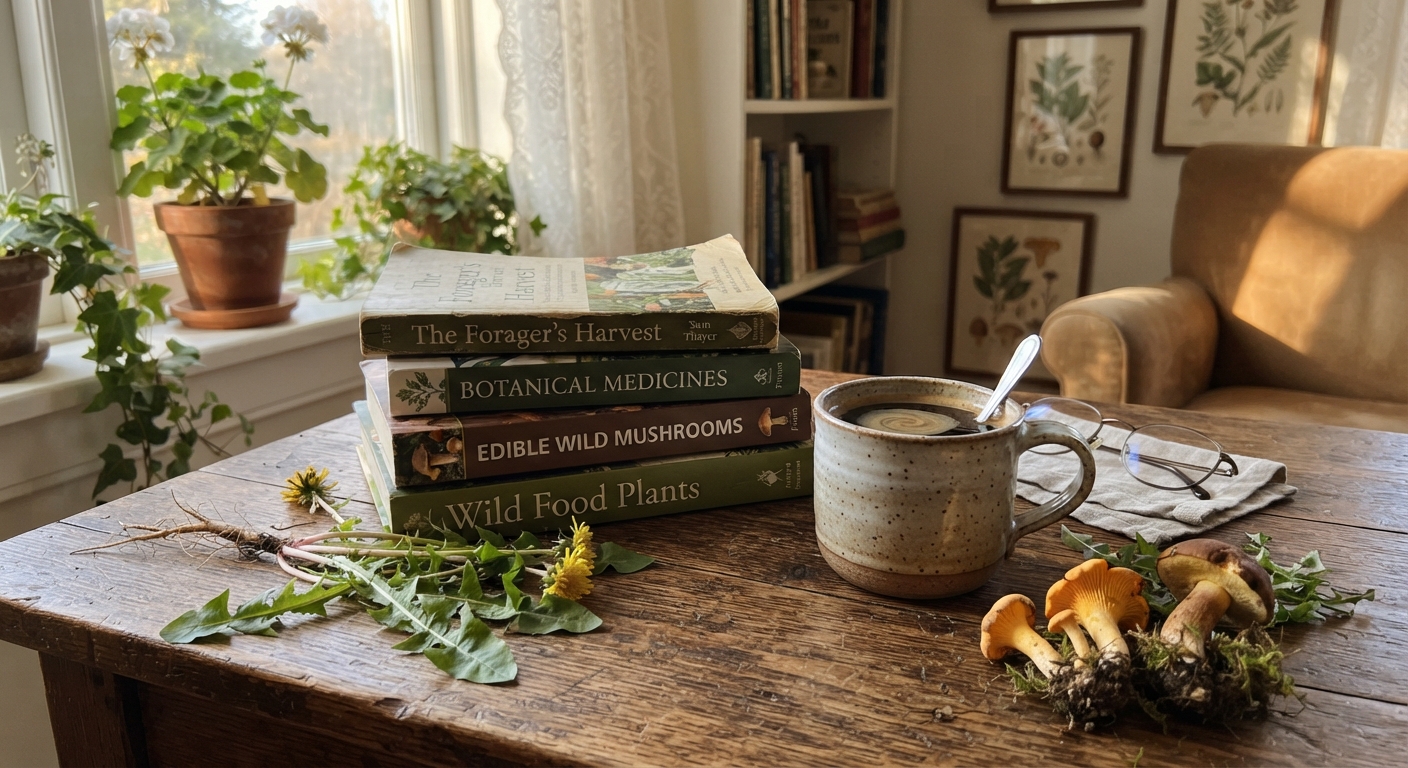
My first foraging basket held exactly four things: a bruised dandelion, three shriveled blackberries, one plant I later learned was poisonous, and a mushroom that turned out to be an old dog toy. It was 2019, I was broke, living in rural Oregon, and my landlord had just given me a book called Edible Wild Plants of the Pacific Northwest. “Figured you might need this,” he said, looking at my mostly-empty fridge.
That year changed everything. I stopped looking at untended lots, forest edges, and overgrown backyards as “weeds” and started seeing them as free grocery stores. By summer’s end, roughly 40% of my meals included something I’d picked within walking distance of my apartment.
What surprised me most wasn’t the variety of edible plants growing around us — it was how few people know about them. The average American walks past dozens of edible plant species every day without recognizing a single one.
This guide is the list I wish I’d had when I started. Twenty-five wild edible plants you can find across North America, organized by what you’re actually going to eat: greens, berries, roots, flowers, and “bonus” plants that don’t quite fit anywhere else. Every plant here has been personally identified, harvested, and eaten by me — no copied encyclopedia entries.
The Golden Rules of Wild Foraging
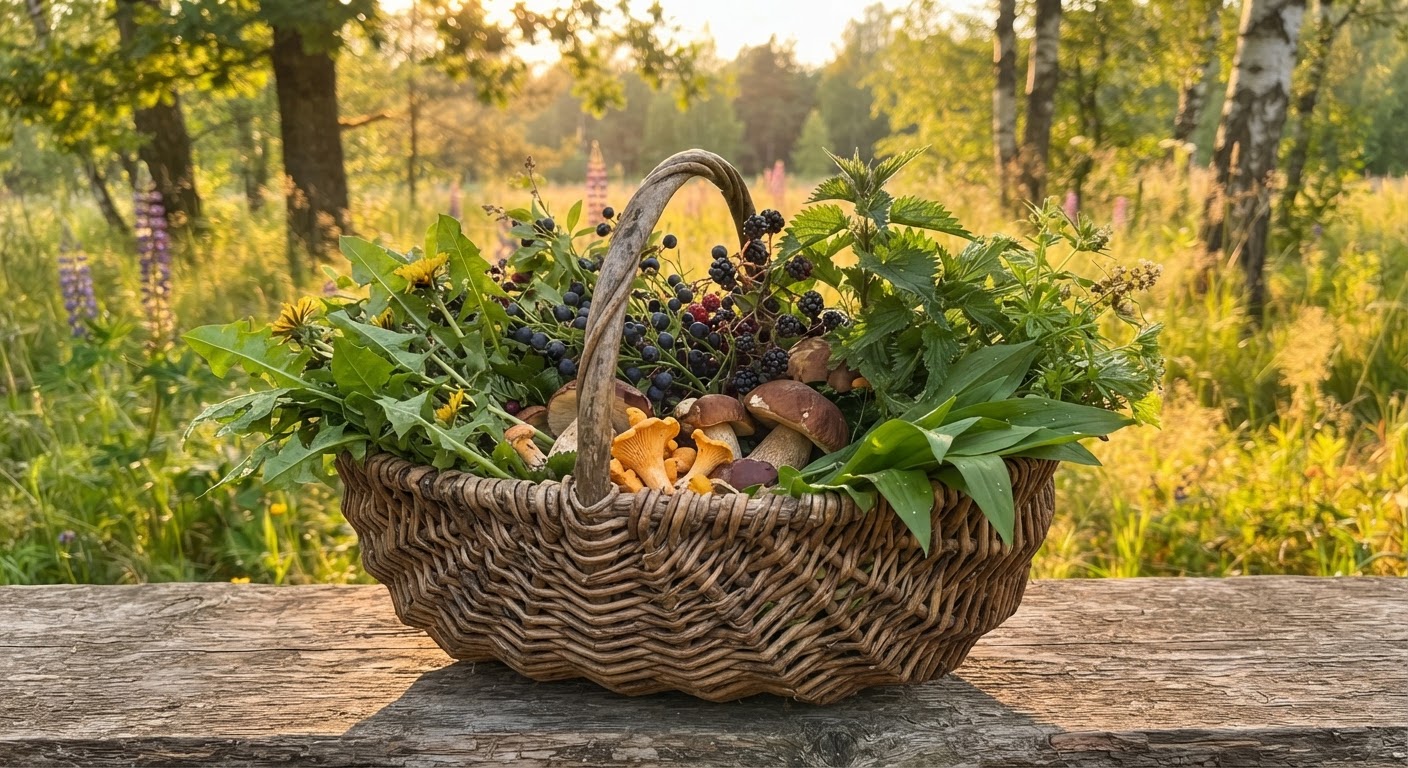
Before we get to the list, memorize these four rules. They’ve kept me alive through years of foraging.
Rule 1: 100% positive identification. No exceptions. If you’re 99% sure, you’re 0% sure. Many edible plants have toxic look-alikes. One wrong identification of water hemlock, death camas, or destroying angel mushroom can kill you. Carry a reliable field guide, use multiple identification sources, and when in doubt — don’t eat it.
Rule 2: Learn your local toxic plants first. Before memorizing what’s edible, learn the five deadliest plants in your region. This is counterintuitive advice that most foraging guides skip, but it’s the single most important safety measure you can take. In North America, start with water hemlock, poison hemlock, death camas, white snakeroot, and pokeweed (when improperly prepared).
Rule 3: The “one-inch” rule for new plants. The first time you eat any wild plant, consume a piece no bigger than your thumbnail. Wait 24 hours. Some people have allergic reactions to plants that are perfectly safe for the general population. I learned this the hard way with lamb’s quarters — perfectly edible, but apparently my cousin’s body disagrees.
Rule 4: Don’t forage where chemicals live. Avoid roadsides (vehicle exhaust, road salt), railroad tracks (herbicides), dog parks (obvious reasons), conventionally farmed field edges (pesticide drift), and industrial areas. A good rule of thumb: if you wouldn’t drink water from a puddle there, don’t eat plants from there.
Wild Edible Greens: Nature’s Free Salad Bar
Wild greens are the easiest entry point for beginner foragers. They’re abundant, hard to confuse with toxic plants (with training), and most can be eaten raw or cooked. Here are the greens you’ll find in almost any North American neighborhood.
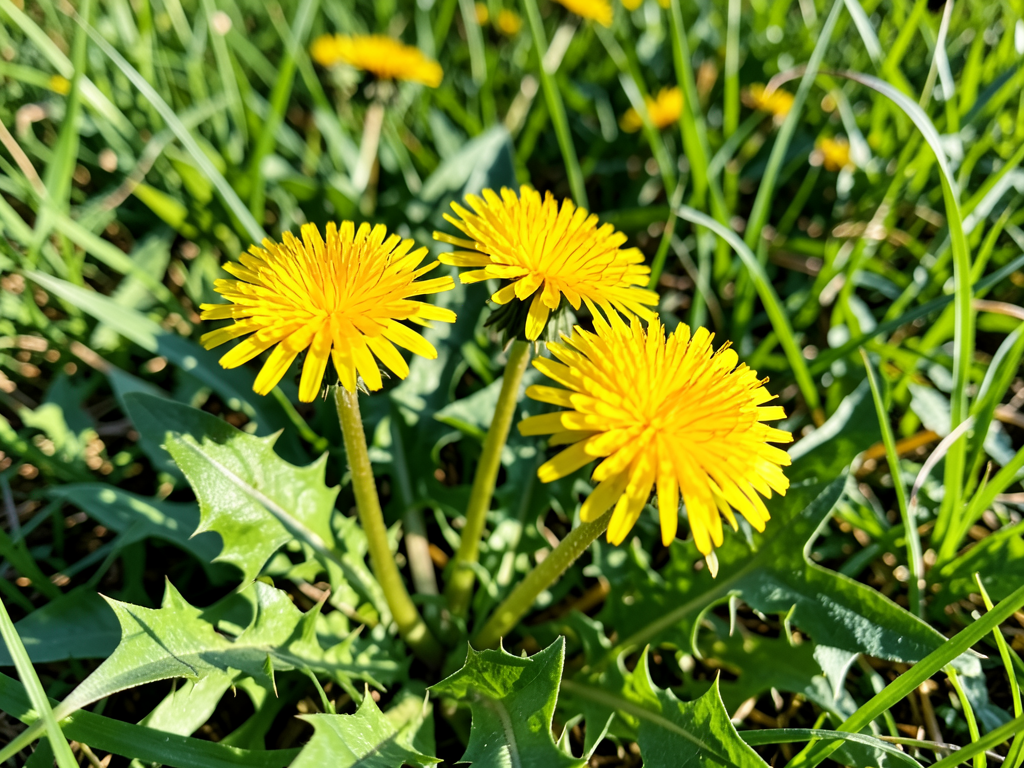
1. Dandelion (Taraxacum officinale)
If you recognize only one wild plant, make it dandelion. Every single part is edible: roots (roasted for coffee substitute), leaves (salads, sautés), flowers (fritters, wine, jelly), and even the unopened flower buds (pickled as “wild capers”).
The leaves are best harvested in early spring before the plant flowers. Once those yellow blooms appear, the greens turn bitter enough to make you question your life choices. Young spring leaves have a pleasant, slightly peppery flavor similar to arugula. Blanching for 60 seconds removes most bitterness from older leaves.
Dandelion is also a nutritional powerhouse — more vitamin A than carrots, more potassium than bananas, and significant amounts of calcium, iron, and vitamin C. The greens contain inulin, a prebiotic fiber that supports gut health.
How to identify: You already know what a dandelion looks like. But the key identification features are: deeply toothed leaves growing in a basal rosette (all leaves emerge from the base, not a stem), hollow flower stalks that exude white latex when broken, and single yellow composite flowers that transform into the familiar white seed heads. There are no toxic dandelion look-alikes in North America, making it one of the safest plants for beginners.
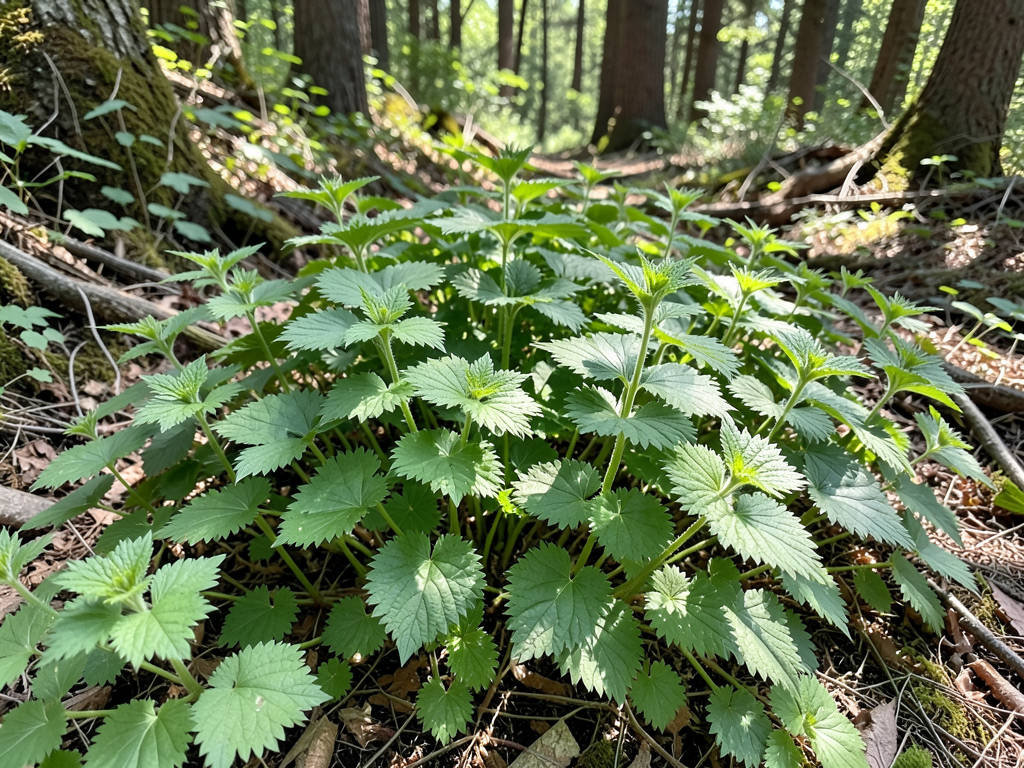
2. Stinging Nettle (Urtica dioica)
I know what you’re thinking: “The plant that causes burning welts on skin is edible?” Yes — and it’s one of the most nutritious leafy greens on the planet. Cooking completely neutralizes the stinging hairs (which are microscopic silica needles injecting histamine and formic acid).
Nettle tastes like a richer, earthier spinach. It’s fantastic in soups, pestos, teas, and anywhere you’d use cooked spinach. Nutritionally, it’s packed with protein (up to 25% by dry weight), iron, calcium, magnesium, and vitamins A, C, and K. Athletes and herbalists prize nettle tea for its mineral content.
Harvest the top 4-6 inches of young plants in spring using thick gloves. Once the plant flowers, the leaves develop gritty particles called cystoliths that can irritate the kidneys — stick to pre-flowering plants.
Look-alike warning: Several mint family plants (dead nettles, Lamium species) resemble stinging nettle but lack the sting. These are also edible but have a different flavor profile. The real test: if you touch it and it doesn’t sting, it’s not stinging nettle.
3. Lamb’s Quarters (Chenopodium album)
Also called wild spinach, goosefoot, or fat hen, lamb’s quarters might be the most underappreciated wild edible in existence. It grows virtually everywhere humans have disturbed soil: gardens, vacant lots, construction sites, agricultural fields.
The young leaves and tender stem tips can be eaten raw or cooked, and they genuinely taste like spinach — mild, slightly nutty, without the bitterness that characterizes many wild greens. The leaves have a distinctive dusty-white coating on the underside that repels water (you’ll see beads of water rolling off).
Lamb’s quarters is incredibly nutritious, containing more protein, calcium, vitamin A, and B vitamins than cultivated spinach. The seeds are also edible and can be ground into a flour-like substance, though harvesting enough is labor-intensive.
How to identify: Alternate, diamond-shaped to lance-shaped leaves with irregularly toothed margins. The most distinctive feature is the white-mealy coating on young leaves and growing tips, making the plant look dusted with flour. Mature plants can reach 6 feet tall.
Look-alike warning: The only potentially dangerous look-alike is black nightshade (Solanum nigrum), which has similar leaf shape. However, black nightshade leaves are smooth (not mealy) and the plant will have distinctive white star-shaped flowers with yellow centers and later, black berries. Lambs quarters never has flowers like this.
4. Purslane (Portulaca oleracea)
Purslane is the succulent of the weed world. Its thick, fleshy, reddish stems and paddle-shaped leaves form low mats in gardens, sidewalk cracks, and cultivated fields. The entire above-ground plant is edible raw: leaves, stems, flowers, and seeds.
The flavor is mild, slightly lemony, with a pleasant crunch. Purslane contains more omega-3 fatty acids than any other leafy green plant — a rare plant-based source of ALA. It’s also rich in vitamin E, vitamin C, magnesium, and glutathione, a powerful antioxidant.
Purslane’s mucilaginous texture (similar to okra) makes it an excellent thickener for soups and stews. Raw, it adds juiciness to salads. In Mexican cuisine, it’s known as verdolagas and cooked with pork and tomatillos.
How to identify: Succulent, reddish-purple stems growing flat along the ground. Smooth, paddle-shaped leaves about the size of a fingernail, arranged in small clusters. Tiny yellow flowers that open only in morning sun. A broken stem exudes clear, watery sap.
Look-alike warning: Prostrate spurge (Euphorbia maculata) grows similarly flat but has much smaller leaves, thinner stems, and exudes white, milky sap when broken — not clear. Spurge is toxic. The sap test is definitive: clear = purslane, white = toxic spurge.
5. Chickweed (Stellaria media)
Chickweed is the mildest wild green you’ll ever taste — think butter lettuce crossed with corn silk. It’s one of the first edible plants to appear in early spring and one of the last to disappear in late fall, making it a reliable year-round food source in mild climates.
The entire above-ground plant is edible raw or cooked. It’s exceptional in salads, sandwiches, and as a garnish, but cooking turns it into a mushy green mass — stick to raw applications whenever possible.
Don’t underestimate chickweed’s nutritional profile: it’s rich in vitamin C, calcium, magnesium, and potassium. Traditional herbalists use it as a cooling anti-inflammatory for skin conditions and as a gentle diuretic.
How to identify: Low-growing plant with delicate stems forming tangled mats. The key identification feature is a single line of fine hairs running along one side of the stem (visible with a magnifying glass or sharp eyes). Leaves are small, oval, and grow in opposite pairs. Tiny white flowers have five petals so deeply cleft they appear to be ten petals.
Look-alike warning: Scarlet pimpernel (Anagallis arvensis) has a similar growth habit but its stems are square and hairless, and its tiny flowers are orange-red, not white. It’s toxic. Another lookalike, mouse-ear chickweed, is actually a related edible species but has fuzzy leaves (hence “mouse-ear”) rather than the smooth leaves of common chickweed.
6. Wood Sorrel (Oxalis species)
With its distinctive three-part clover-like leaves and delicate five-petaled yellow or pink flowers, wood sorrel is one of the easiest wild edibles to spot. The entire plant is edible and has a sharp, lemony tang from oxalic acid — the same compound that gives rhubarb and spinach their characteristic bite.
Wood sorrel makes an excellent trail-side thirst quencher and adds bright acidity to salads and sandwiches. It’s also wonderful as a garnish on fish, soups, and egg dishes. A handful of wood sorrel steeped in hot water with honey makes a surprisingly good lemonade substitute.
Important caution: The oxalic acid content means you should consume wood sorrel in moderation. People with kidney stones, gout, or rheumatoid arthritis should avoid it entirely. For most people, a handful as a salad addition poses no risk.
How to identify: Three heart-shaped leaflets (like clover but with a fold down the center), often purplish underneath. The stems have a distinct tangy lemon flavor — nibble a tiny piece if unsure. Yellow, pink, or white five-petaled flowers depending on species.
7. Garlic Mustard (Alliaria petiolata)
Garlic mustard is an aggressive invasive species in North America — which makes it one of the few plants you can forage with complete ethical impunity. In fact, many conservation organizations actively encourage harvesting it.
The leaves, flowers, and roots all taste distinctly of garlic with a mild mustardy undertone. First-year plants form low rosettes of kidney-shaped leaves; second-year plants send up flowering stalks with triangular, toothed leaves and clusters of small white four-petaled flowers.
Use young leaves raw in pesto, salads, and as a sandwich green. Older leaves become bitter but cook down nicely. The roots, harvested in early spring or late fall, can be used like horseradish. The flowers make a beautiful, mildly garlicky garnish.
Wild Edible Berries and Fruits
Wild berries need no introduction — they’re the gateway drug of foraging. Even people who’d never dream of eating a “weed” will happily pluck wild blackberries from a trailside bush. Just remember Rule 1: positive identification. Some wild berries will make you dinner; others will make you dead.
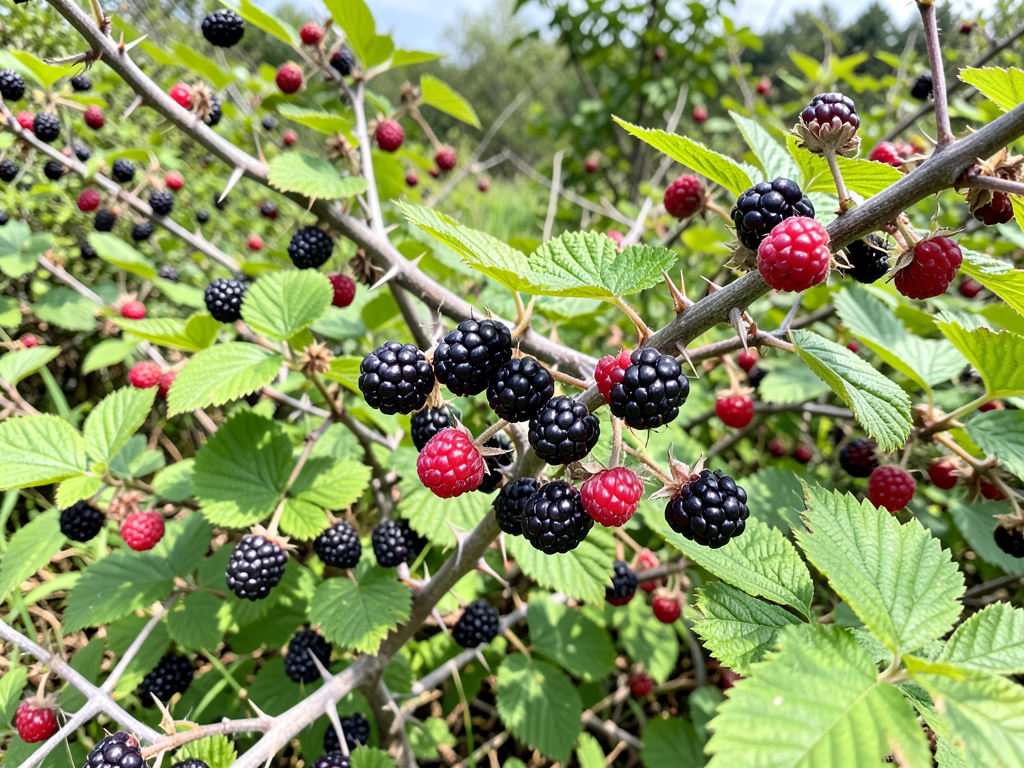
8. Blackberries and Raspberries (Rubus species)
The Rubus genus is the beginner forager’s best friend. Every compound berry growing on thorny canes in North America — blackberries, raspberries, wineberries, thimbleberries, salmonberries, dewberries — is edible. This is the closest thing to a “free pass” in the foraging world.
The fruits need no description. Wild blackberries and raspberries are smaller but often more intensely flavored than their cultivated cousins. Harvest from mid-summer through early fall depending on species and location. Blackberries are ready when they pull easily from the stem without resistance — if you have to tug, they’re not ripe.
Beyond the berries, young raspberry and blackberry leaves make an excellent herbal tea, particularly when fermented slightly (crush the leaves, wrap in a damp cloth for 24-48 hours, then dry). The resulting tea has a flavor reminiscent of black tea with fruity notes.
9. Elderberry (Sambucus canadensis / Sambucus nigra)
Elderberries are small, dark purple-black berries that grow in large flat clusters. They’re one of the most famous wild medicinal foods — elderberry syrup is a traditional cold and flu remedy with some legitimate scientific backing for immune support.
The berries MUST be cooked before eating. Raw elderberries contain cyanogenic glycosides that can cause nausea, vomiting, and diarrhea. Cooking neutralizes these compounds completely. Elderberry jam, syrup, pie, and wine are all traditional preparations.
Critical warning: Every other part of the elder plant — leaves, stems, roots, bark, and unripe berries — is toxic. Only eat fully ripe, dark purple-black berries that have been cooked. Red elderberry (Sambucus racemosa) has red berries that are generally considered toxic — stick to the blue-black species.
10. Serviceberry (Amelanchier species)
Serviceberries (also called saskatoons, juneberries, or shadbush) look and taste like a cross between blueberries and almonds, with their own distinctive floral sweetness. They grow on shrubs or small trees and ripen in early summer, often the first wild fruit ready to harvest.
The berries are excellent raw, in pies, jams, and dried like raisins. They were a staple food for many Native American tribes, often pounded with dried meat and fat to make pemmican — the original energy bar.
How to identify: Small trees or large shrubs with smooth gray bark marked by vertical stripes. White five-petaled flowers in early spring before leaves appear. Fruits are small (1/4 to 1/3 inch), round, reddish-purple to deep purple when ripe, with a crown at the end. The taste is the clincher — sweet, juicy, with a subtle almond note from the seeds.
11. Mulberry (Morus species)
Mulberries look like elongated blackberries growing on trees rather than canes. Red mulberry (Morus rubra) is native to eastern North America, while white mulberry (Morus alba) was introduced from Asia for silk production and has naturalized widely.
Both produce delicious fruit in late spring to early summer. The berries are excellent fresh, in pies, jams, cobblers, and dried. White mulberry fruits can be white, pink, reddish, or dark purple — color alone doesn’t distinguish the species.
How to identify: Trees with variable leaf shapes (some lobed, some unlobed, often on the same branch). The fruits look like blackberry clusters directly attached to the branch. Ripe berries are soft and easily detach. An easy test: hold a white cloth beneath the branch and shake — if ripe berries rain down, you’ve found mulberries.
12. Wild Strawberry (Fragaria virginiana / Fragaria vesca)
Wild strawberries are nothing like the monster-sized, watery berries at the supermarket. They’re tiny — often no bigger than your pinky fingernail — but the flavor is so concentrated it makes you understand why people bothered domesticating strawberries in the first place.
Finding enough wild strawberries to fill a bowl is an exercise in patience, but that’s almost beside the point. Eating sun-warmed wild strawberries directly from the plant while hiking is one of the purest foraging experiences you can have.
The leaves and runners are also useful — dried wild strawberry leaves make a mild, pleasant tea. Native Americans used strawberry leaf tea for digestive issues and as a general health tonic.
Look-alike warning: Mock strawberry (Potentilla indica), also called Indian strawberry, produces similar red fruits with yellow seeds embedded in the surface rather than the sunken seeds of true strawberries. Mock strawberry fruits are edible but utterly flavorless — a tragic disappointment for the unaware forager. True wild strawberries have white flowers and fruits that point downward; mock strawberries have yellow flowers and fruits that point upward.
Roots, Tubers, and Underground Foods
Root vegetables require more effort to harvest but offer substantial calories — crucial information if you’re foraging for survival rather than culinary adventure.
13. Jerusalem Artichoke (Helianthus tuberosus)
Also called sunchoke, Jerusalem artichoke is the tuber of a native North American sunflower species. The knobby, ginger-like roots have a sweet, nutty, slightly artichoke-like flavor when cooked and a satisfying water chestnut-like crunch when raw.
These plants are absurdly productive — a single patch will produce more tubers than one family can eat. They’re also nearly impossible to overharvest, as even a tiny tuber fragment left in the soil will regrow.
Important digestive note: Jerusalem artichokes contain inulin, a carbohydrate humans can’t fully digest. Gut bacteria ferment it, which produces gas. Some people tolerate sunchokes fine; others experience what the foraging community lovingly calls “fartichokes.” Start with small portions to gauge your tolerance, and cooking longer helps break down inulin.
14. Burdock Root (Arctium lappa / Arctium minus)
Burdock is the plant that inspired Velcro — its round burrs stick to everything. But beneath the soil, the first-year taproot is a staple vegetable in Japanese cuisine, where it’s called gobo. The flavor is earthy, sweet, and slightly artichoke-like.
Harvest first-year roots (before the plant sends up a flowering stalk) in late fall or early spring. Peel the root — the outer skin is bitter — and slice into matchsticks for stir-fries, soups, or the Japanese dish kinpira gobo (burdock and carrot sautéed in soy sauce and mirin).
Look-alike warning: Burdock has no seriously toxic look-alikes, but the large leaves can be confused with rhubarb. Rhubarb has red stalks and toxic leaves that contain oxalic acid and anthraquinone glycosides. The rule: if it has burrs, it’s burdock.
15. Cattail (Typha species)
Cattails are the supermarket of wetlands. Virtually every part of the plant is edible at some point in its growth cycle: young shoots (peeled and eaten raw or cooked like asparagus), immature flower heads (boiled and eaten like corn on the cob), pollen (used as flour extender), and the starchy rhizomes (processed into flour).
The rhizome flour is particularly interesting — it’s labor-intensive but provides a significant carbohydrate source. Peel the rhizomes, crush them in water to release the starch, strain out the fibers, and let the starch settle. This cattail starch can be used as flour in pancakes, breads, and thickening soups.
How to identify: Cattails are unmistakable with their tall stalks and distinctive brown cigar-shaped seed heads. The look-alike to watch for is the toxic blue flag iris (Iris versicolor), which grows in similar habitats. Before the cattail develops its distinctive seed head, the leaves alone can look similar to iris. If you can see the brown cattail head, you’re safe. If you can’t, examine the leaf base: cattail leaves emerge from the water in a round, tubular arrangement; iris leaves are flat and fan-shaped.
Edible Wild Flowers
Flowers aren’t just for Instagram. Many common wildflowers add color, flavor, and surprising nutrition to meals.
16. Red Clover (Trifolium pratense)
Red clover’s pink-purple flower heads are sweet, mild, and excellent raw in salads or dried for tea. The flowers are actually clusters of dozens of tiny tubular florets, each containing a drop of sweet nectar.
Red clover tea is a traditional women’s health remedy, and the flowers contain isoflavones — plant compounds that may help with menopausal symptoms. Even if you’re not interested in the herbal medicine aspect, the flowers are a beautiful, tasty addition to salads, baked goods, and infused vinegars.
Pull individual florets from the flower head for salads; the whole flower head can be steeped for tea or battered and fried as fritters. Fresh flowers are best; wilted clover heads are difficult to digest.
17. Daylily (Hemerocallis fulva)
Daylily flowers and buds are a popular vegetable in Chinese cuisine (known as jin zhen or “golden needles”), and quite honestly, they deserve more attention in Western cooking. The unopened flower buds have a texture reminiscent of green beans crossed with asparagus, while the fully opened flowers have delicate, slightly sweet petals.
Harvest the unopened flower buds when they’re still firm and greenish-yellow. Sauté with garlic and soy sauce, add to stir-fries, or batter and deep-fry tempura-style. The opened flowers can be stuffed with herbed cheese as an elegant appetizer or torn into salads.
Important caution: Only eat Hemerocallis fulva (the common orange daylily). Do not confuse it with true lilies (Lilium species), tiger lilies, or Easter lilies, which are potentially toxic. Also, some people experience digestive upset from raw daylily flowers — cook them if you’re trying them for the first time. Never eat daylilies from florist shops or garden centers, which may have been treated with pesticides not approved for food crops.
18. Violet (Viola species)
Wild violets are among the first flowers to appear in spring, and their delicate purple, white, or yellow blossoms are completely edible. The flowers have a mild, sweet, slightly lettuce-like flavor that works beautifully in salads, desserts, and as candied decorations for cakes.
Violet leaves are also edible and rich in vitamins A and C. They’re mild enough for raw salads — unlike many wild greens that need cooking — and have a pleasant, mucilaginous quality that thickens soups naturally.
True violets have five-petaled flowers with bilateral symmetry (one larger bottom petal, two side petals, and two smaller top petals). African violets (Saintpaulia) are not true violets and should not be eaten, though they’re not seriously toxic.
Mushrooms: Proceed With Extreme Caution
Mushrooms deserve their own section because they’re categorically different from plants. The safety margin for mushroom identification is razor-thin. I’m including only species with no deadly look-alikes — but even these require 100% confident identification.
If you’re not already experienced with mushroom identification, skip this section entirely. Take a class, join a mycological society, and go on guided forays before you start mushroom foraging on your own. Mushroom poisoning is not a stomachache — it’s liver failure, kidney dialysis, and occasionally, death.
19. Morel (Morchella species)
Morels are the most coveted wild mushroom in North America, with a nutty, earthy, almost meaty flavor that makes grown adults weep. They appear in spring, often in areas that have experienced forest fires the previous year, and their distinctive honeycomb cap makes them relatively easy to identify.
The look-alike is Gyromitra species (false morels), which are toxic and contain monomethylhydrazine — the same compound found in rocket fuel. The key difference: slice a morel in half lengthwise. True morels are completely hollow from the tip of the cap to the base of the stem. False morels have a chambered or cottony interior. This “hollow test” is definitive.
Always cook morels thoroughly. Raw morels contain a heat-sensitive toxin that can cause digestive distress. Never eat morels with alcohol — a small subset of people experience a reaction when combining the two.
20. Chanterelle (Cantharellus species)
Chanterelles are golden-orange, vase-shaped mushrooms with a fruity aroma reminiscent of apricots and a delicate, peppery flavor. They appear in summer and fall, growing on the forest floor near hardwood trees — especially oaks.
Chanterelles have false gills that look like forked, wavy ridges running down the stem, rather than the thin, separate, blade-like true gills of most mushrooms. This is the single most important identification feature.
The look-alike is the jack-o’-lantern mushroom (Omphalotus olearius), which is toxic and causes severe gastrointestinal distress. Jack-o’-lanterns have true knife-blade gills (not forked ridges), grow in large clusters on wood (not scattered on soil), and glow faintly in the dark (bioluminescence). Chanterelles grow individually or in loose groups on soil, never in dense clusters on dead wood.
21. Chicken of the Woods (Laetiporus species)
Chicken of the Woods is the mushroom that actually tastes like chicken. Its bright orange-yellow shelf-like brackets grow on living or dead hardwood trees, and the tender outer edges have a texture and flavor remarkably similar to chicken breast.
This is generally considered one of the safest wild mushrooms for beginners because it has no seriously toxic look-alikes. The bright orange color, shelf-like growth on trees, and yellow pore surface (not gills) make it distinctive.
That said, some people are allergic. Start with a small piece. Also, avoid specimens growing on conifers (pine, hemlock, cedar) or eucalyptus — these seem to absorb compounds from the tree that make people sick. Stick to specimens from hardwoods like oak and maple.
Bonus Wild Edible Plants
These plants don’t fit neatly into the categories above but are too useful to omit.
22. Plantain (Plantago major / Plantago lanceolata)
Not the banana relative — broadleaf plantain is the low-growing weed with wide, oval leaves and distinctive vertical seed spikes that look like tiny green antennae. It grows in lawns, sidewalk cracks, and disturbed soil nearly everywhere.
Young leaves are edible raw in salads (mild, slightly bitter) and excellent cooked. But plantain’s true superpower is as a first-aid plant: chew a leaf into a poultice and apply to insect bites, stings, minor cuts, and rashes. The plant contains aucubin, a compound with documented anti-inflammatory and antimicrobial properties. It genuinely works — this is the plant I reach for when mosquitos feast on me during summer foraging trips.
23. Yarrow (Achillea millefolium)
Yarrow is a medicinal foraging superstar disguised as a common wildflower. Its feathery, fern-like leaves and flat-topped clusters of small white (sometimes pink) flowers are found in fields, roadsides, and meadows across the Northern Hemisphere.
Use fresh yarrow leaves as a styptic: crush them and press against minor cuts to stop bleeding. The botanical name Achillea comes from Achilles, who supposedly used yarrow to treat his soldiers’ wounds during the Trojan War. Yarrow tea is a traditional cold and fever remedy. A few young leaves can be chopped finely into salads for a bitter, aromatic accent.
Note: Yarrow is in the Asteraceae family — people allergic to ragweed, chrysanthemums, or daisies should approach cautiously.
24. Amaranth (Amaranthus species)
Amaranth is simultaneously a despised agricultural weed (pigweed) and a revered ancient grain. The young leaves are one of the best-tasting wild greens available — mild, slightly sweet, similar to spinach but without any bitterness. Harvest when plants are under 12 inches tall; older leaves become tough and less palatable.
The seeds are the real prize. A single amaranth plant can produce over 100,000 tiny seeds that can be cooked as a hot cereal, popped like miniature popcorn, or ground into gluten-free flour. Amaranth was a staple crop of the Aztec civilization and remains one of the most nutritious grains on the planet, with a complete protein profile unusual for a plant food.
Collect seed heads when most seeds are dark and rub them between your hands over a bucket. Winnowing (separating seeds from chaff) is a skill that takes practice — use a light breeze or a fan on low setting.
25. Wild Rose (Rosa species)
Wild rose petals and hips (the fruit) are both edible and delicious. The petals have a floral, perfumed sweetness that works in salads, jams, syrups, and Middle Eastern-inspired dishes. Rose petal jam with a touch of cardamom is genuinely one of the most elegant foods you can make from foraged ingredients.
Rose hips, which develop after the flowers fade, are one of the richest natural sources of vitamin C — containing 20 to 40 times the vitamin C of oranges by weight. Harvest them after the first frost, when they soften and sweeten slightly. They make excellent tea, jelly, syrup, and soup (Scandinavian nyponsoppa is a classic).
Remove the seeds and tiny irritating hairs inside rose hips before eating — those hairs were the original itching powder.
Common Beginner Mistakes (I Made Them All)
Mistake 1: Eating too much of a new plant too fast. Your digestive system isn’t used to wild foods. Introduce them gradually, one new plant at a time, in small amounts. I gave myself three days of abdominal discomfort by eating an entire salad bowl of lamb’s quarters the first time I tried it. The plant was perfectly safe — my gut just wasn’t ready.
Mistake 2: Foraging without verifying the land status. National Parks and many state parks prohibit foraging. Nature preserves and conservation areas almost always prohibit it. Private land requires permission. Legal foraging areas include National Forests (generally permissive), Bureau of Land Management land, and some state forests. Check local regulations.
Mistake 3: Assuming “natural” means “safe.” Water hemlock is 100% natural, 100% organic, and will kill you within hours. Poison ivy is a native plant. Natural does not equal edible. This seems obvious, but in the excitement of discovering wild food, beginners often let their guard down.
Mistake 4: Relying on a single field guide or app. Cross-reference at least three sources for any new plant identification. A physical field guide, an app like iNaturalist or Seek, and a reputable website. If all three agree, you’re moving in the right direction. If one disagrees, keep investigating.
Mistake 5: Harvesting from contaminated areas without thinking. That beautiful patch of watercress growing in the drainage ditch downstream from a cattle pasture? It’s filtering agricultural runoff. The lush dandelions along the highway? Coated in brake dust and exhaust residue. Always assess what’s upstream and upwind of your foraging spot.
Seasonal Foraging Calendar
Here’s what you can typically find throughout the year in temperate North America. Timing varies by latitude and elevation — plants in Georgia appear weeks before the same species in Maine.
| Season | Greens | Fruits & Berries | Roots & Mushrooms | Flowers |
|---|---|---|---|---|
| Early Spring (Mar–Apr) | Dandelion, chickweed, nettle, garlic mustard | — | Burdock root, Jerusalem artichoke | Violet, redbud |
| Late Spring (May–Jun) | Lamb’s quarters, purslane, amaranth | Mulberry, serviceberry | Morel mushrooms | Red clover, daylily buds, wild rose petals |
| Summer (Jul–Aug) | Wood sorrel, plantain, amaranth | Blackberry, raspberry, wild strawberry | Chanterelle, chicken of the woods | Daylily flowers, clover |
| Fall (Sep–Oct) | Chickweed (second flush) | Elderberry, wild grape, hackberry | Hen of the woods, puffball | — |
| Winter (Nov–Feb) | Chickweed, wintercress | Rose hips, frozen blackberries | Burdock root, Jerusalem artichoke | — |
Frequently Asked Questions
Q: Can I eat plants from my own backyard? Yes — if you don’t use chemical pesticides, herbicides, or synthetic fertilizers, and if you can positively identify the plants. Many common lawn “weeds” including dandelion, plantain, chickweed, and violet are edible. A surprising number of suburban lawns are more productive food sources than the vegetable gardens they surround — the food is just misidentified as weeds.
Q: What’s the safest wild plant for absolute beginners? Dandelion. Every part is edible, it has no toxic look-alikes, and you’ve been able to recognize it since you were five years old. Start with young greens sautéed in olive oil with garlic and a squeeze of lemon. Then try the flower fritters — dip flowers in a thin pancake batter, fry until golden, dust with powdered sugar. You’ll never look at your lawn the same way.
Q: Should I wash wild plants before eating? Absolutely. Wash thoroughly in cold water, just as you would store-bought produce. Soak greens in a bowl of cold water with a splash of vinegar for 5 minutes to remove insects, soil, and surface contaminants. Then rinse under running water. This is especially important for plants growing low to the ground.
Q: Do I need a permit to forage? It depends entirely on location. National Forests generally allow personal-use foraging without a permit (though commercial harvesting requires one). State and local parks vary widely — some prohibit all foraging, others allow it, and many fall into a regulatory gray area. Research the specific rules for your foraging location before harvesting. Conservation areas almost universally prohibit removing any plant material.
Q: Can I freeze or preserve wild foraged plants? Yes, most wild greens can be blanched and frozen like spinach. Berries freeze beautifully on a sheet tray (spread them in a single layer, freeze until solid, then transfer to freezer bags). Mushrooms are best dried — string them with a needle and thread and hang in a dry, well-ventilated area. Roots like Jerusalem artichoke and burdock store well in a root cellar or refrigerator crisper drawer packed in damp sand.
The Bottom Line
Foraging isn’t about replacing grocery stores — it’s about reconnecting with a skill that every human ancestor going back 300,000 years practiced daily. There’s something profound about walking through a meadow, recognizing twenty edible species, and realizing that food doesn’t have to come from a fluorescent-lit aisle wrapped in plastic.
Start with the easy ones: dandelion, blackberry, plantain, chickweed. Build your identification skills one plant at a time. Use multiple sources. When in doubt, don’t eat it. And never forget Rule 1: 100% positive identification, no exceptions.
The plants are already there, growing in the neglected corners of our world. They don’t need planting, watering, or tending. They just need someone who knows what they’re looking at.
Ready to start foraging? Check out our guide to the best foraging books for beginners and the essential foraging tools you’ll need for your first harvest. For digital tools, see our review of the best foraging apps of 2026.