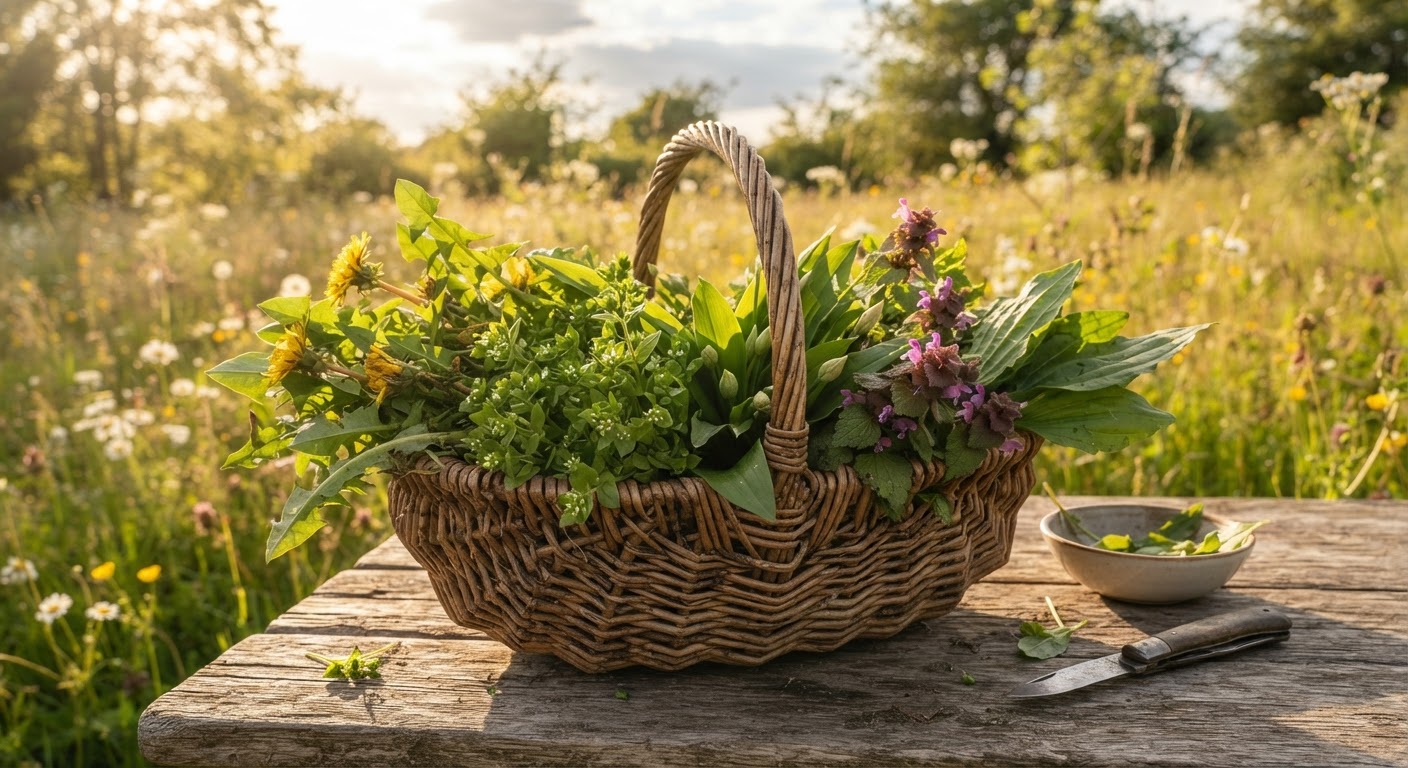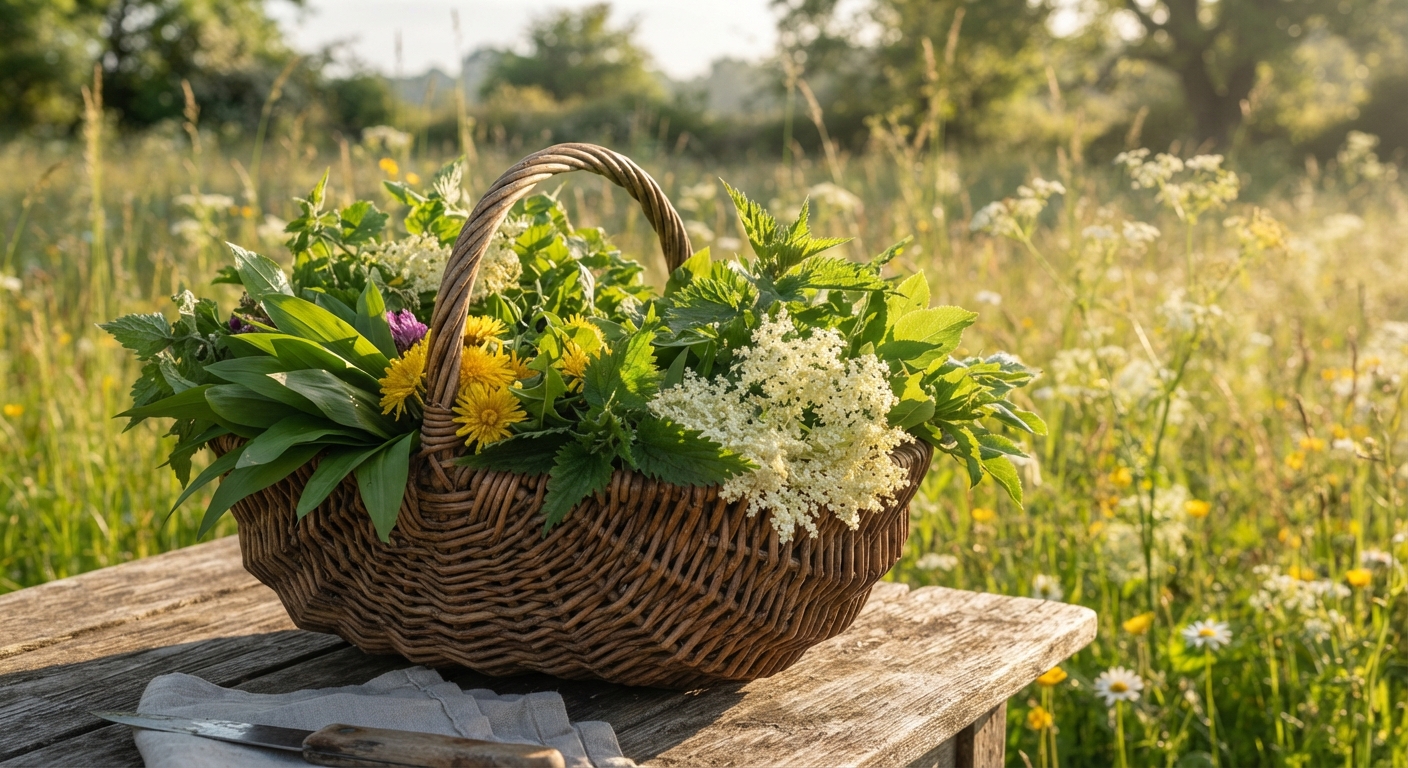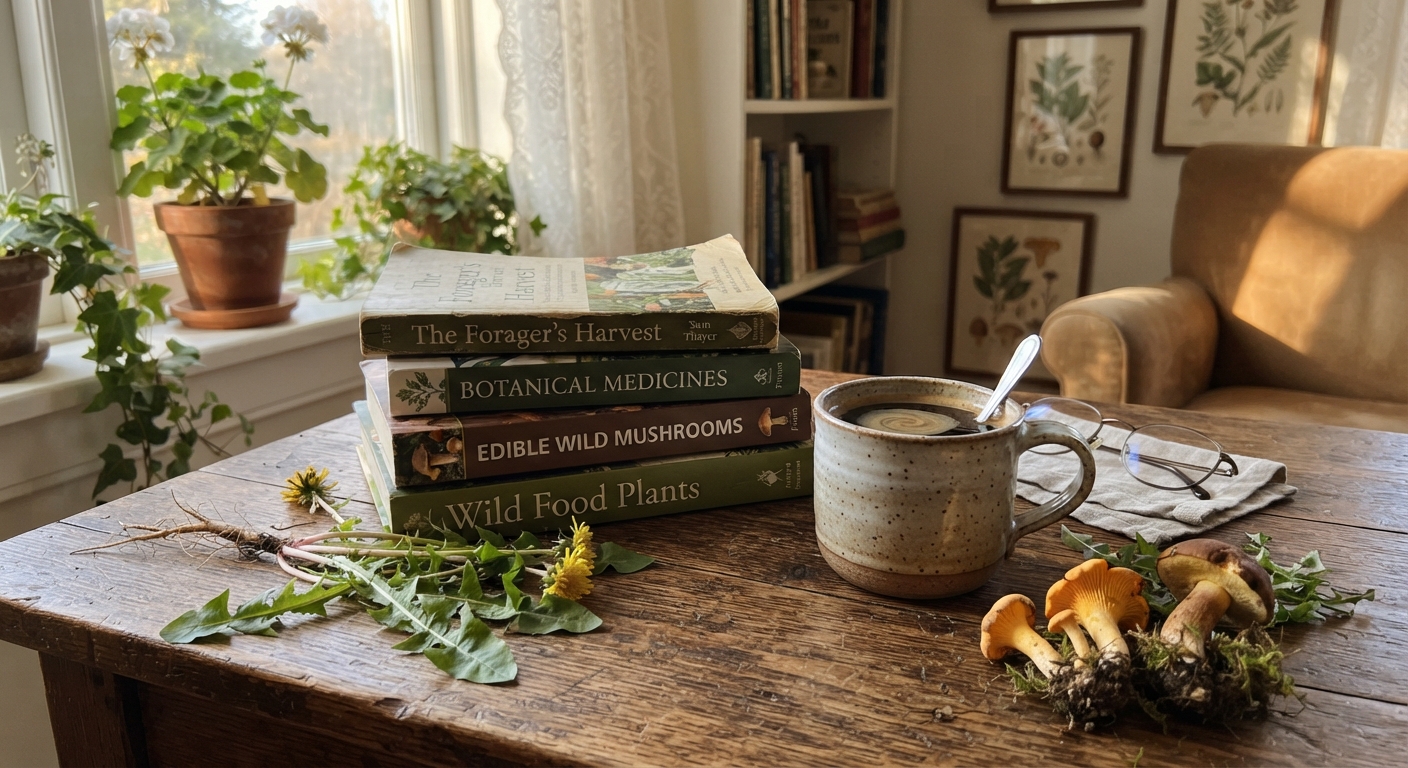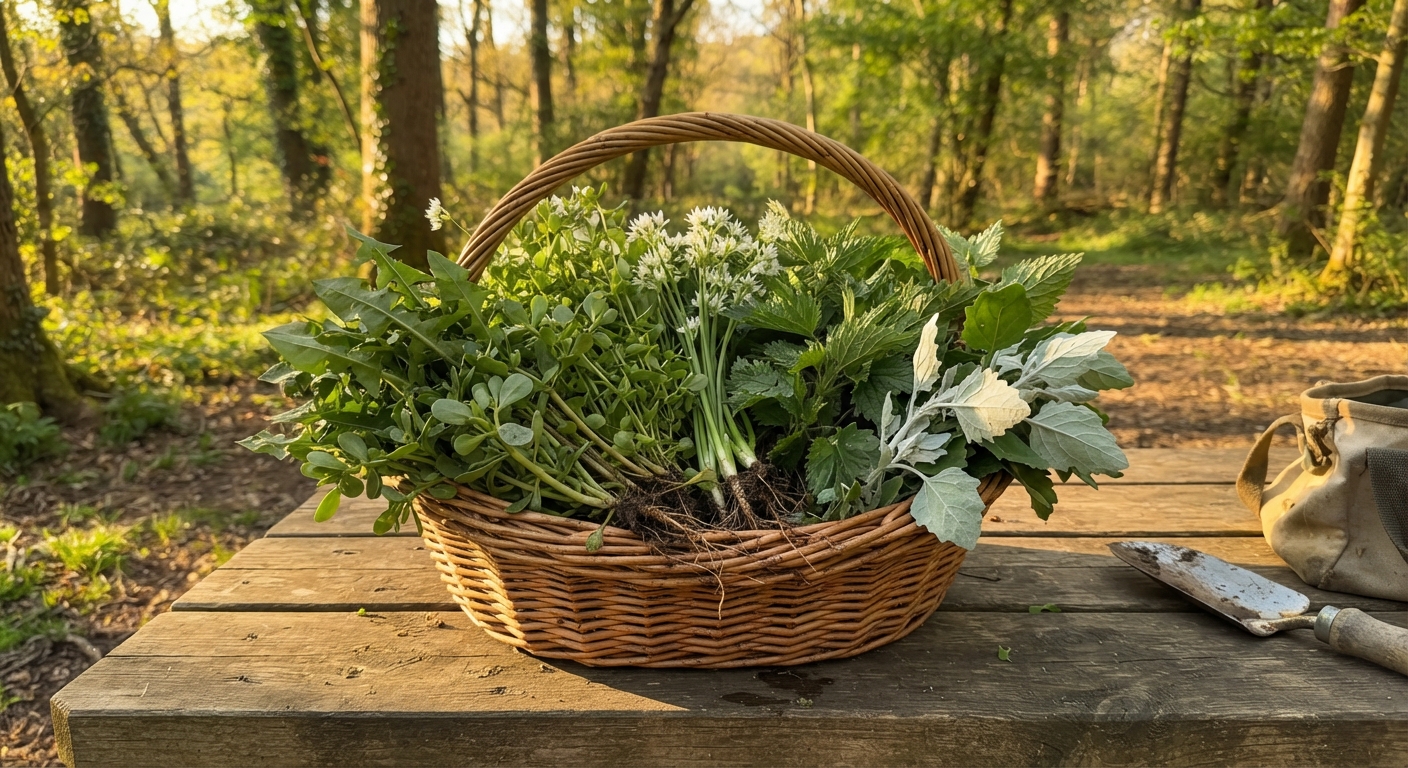
Scroll through any “list of edible wild plants” online and you’ll hit the same wall within five minutes. Two hundred plant names. Latin binomials you can’t pronounce. And absolutely zero indication of whether you should start with dandelions or dive straight into wild mushrooms — a decision that separates a great salad from a trip to the emergency room.
The question isn’t “what’s edible out there?” The real question — the one most guides never answer — is “what should I learn first, and in what order?”
This guide answers that question directly. Instead of dumping 200 plant names on you, it organizes edible wild plants into three tiers based on how easy they are to identify, how hard they are to confuse with something toxic, and how worthwhile they are as actual food. You’ll walk away with a clear learning sequence, not just another list.
Why Most “Edible Wild Plants Lists” Set Beginners Up to Fail
Before we dive into the plants themselves, let’s address why the typical approach doesn’t work.
The average “edible wild plants list” article names 50+ species with a thumbnail photo and one sentence each. It’s designed to rank in Google, not to help you actually identify anything in the field. Here’s what those lists consistently get wrong:
They don’t tell you about lookalikes. Knowing that wild carrot (Daucus carota) has an edible root is useless if nobody mentions that poison hemlock (Conium maculatum) has an almost identical root and kills you by respiratory failure within hours. The carrot family alone contains some of the deadliest plants on the continent alongside some of the most beloved wild foods. A responsible guide doesn’t pretend this problem doesn’t exist.
They don’t distinguish between “edible” and “worth eating.” Pine bark is technically edible. So is grass. So are dozens of plants that taste like bitter cardboard and take an hour to process into something resembling food. A good guide separates “you can eat this and live” from “you’ll actually want to eat this again.”
They ignore regional availability. A plant that blankets Pacific Northwest forests might be absent from the Southeast entirely. Lists written for European foragers often include species with toxic North American lookalikes that European guides never mention. Your location determines what’s safe, not a generic list.
They skip the seasonality problem. A plant you can harvest in April might be tough and bitter by June. Another might only be identifiable for a two-week flowering window. Without seasonal information, you’re hunting blind.
This guide addresses all four problems head-on.
The Tier System: A Framework for Learning Edible Wild Plants
Here’s the structure that actually works for beginners. Plants are organized into three tiers based on identification difficulty and reward ratio.
| Tier | Description | Identification Difficulty | Risk Level | Examples | How Many to Learn First |
|---|---|---|---|---|---|
| Tier 1 — No-Brainers | Plants with zero toxic lookalikes that are abundant, easy to recognize, and genuinely good to eat | Very easy — one or two unmistakable features | Essentially zero | Dandelion, purslane, chickweed, lamb’s quarters, violet, wood sorrel, wild garlic | Learn 7–10 of these first |
| Tier 2 — Pay Attention | Edible plants that have lookalikes, but the lookalikes are non-toxic or easily distinguished with one key feature | Moderate — requires checking 1–2 specific features | Low to moderate | Wild strawberry, mulberry, burdock, cattail, curly dock, amaranth, plantain, elderberry | Add 5–8 of these after mastering Tier 1 |
| Tier 3 — Do Your Homework | Plants with toxic lookalikes that require careful identification, or plants that need specific processing to be safe | High — multiple features to confirm, some similar to toxic species | Moderate to high (if misidentified) | Wild carrot, wild mushrooms, water hemlock family plants, pokeweed, mayapple | Learn ONLY after Tier 1 & 2 are second nature, and ideally with an experienced forager |
The golden rule: Never eat a Tier 3 plant based on one identification feature alone. Always cross-reference at least three distinct characteristics — leaf shape, stem structure, flower arrangement, habitat, smell — before harvesting.
If that sounds cautious, it is. The emergency room doctors I’ve spoken to about foraging accidents all say the same thing: every single case involved someone who was “pretty sure.” Be certain, not pretty sure.
Tier 1 — The No-Brainers: 12 Plants You Cannot Mess Up
These are your starting lineup. Every plant below has a combination of features that makes it virtually impossible to misidentify as something dangerous. Learn these first, and you’ll have a reliable foraging foundation before tackling anything trickier.
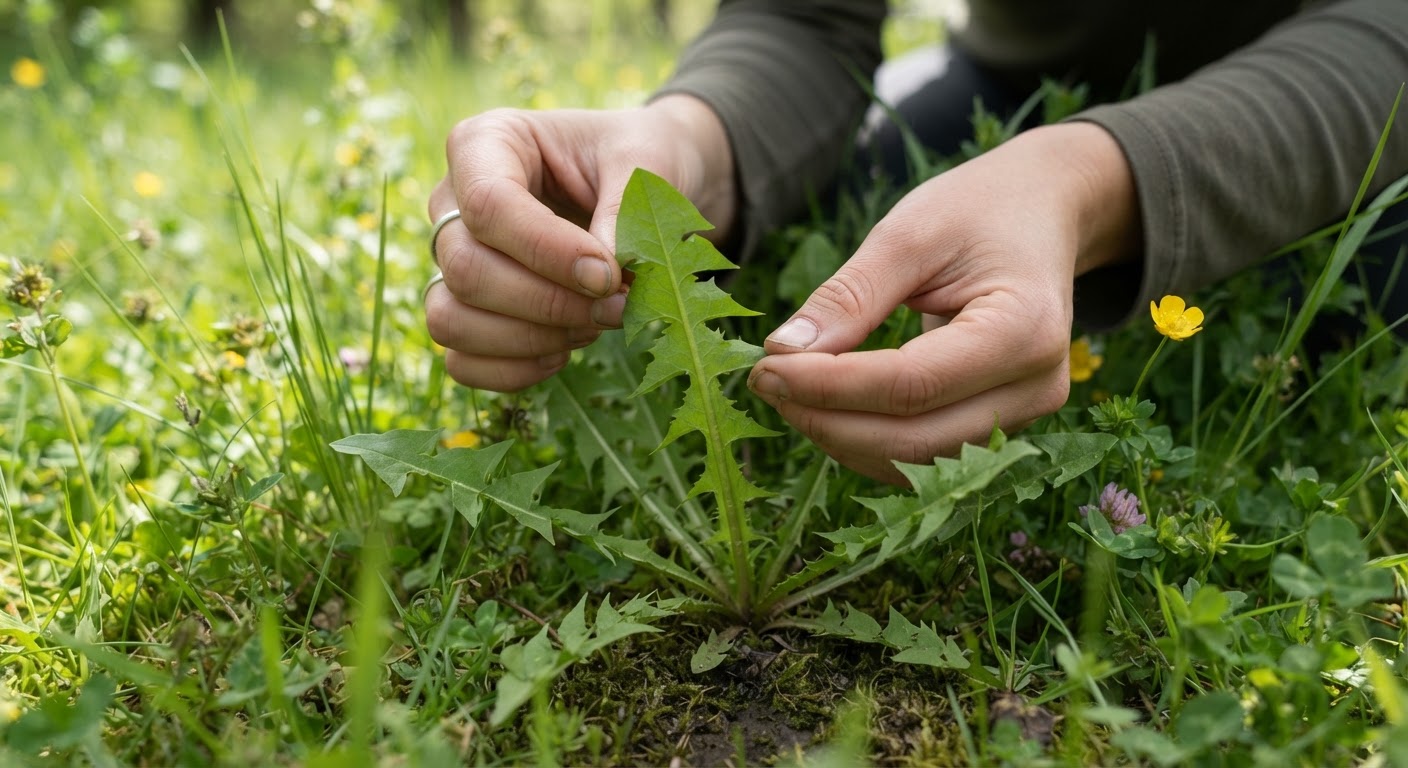
1. Dandelion (Taraxacum officinale)
What you’re after: Leaves (spring), flower buds (late spring), open flowers (early summer), roots (fall).
Why it’s Tier 1: The “five finger check” eliminates every lookalike. Leaves grow in a flat rosette with no central stem. Each leaf has deeply toothed lobes that point downward toward the base. Each flower sits alone on a single hollow stem that oozes white sap when broken. No hairs anywhere on the plant. Pass all five checks and you have a dandelion — there is no poisonous plant that matches all five.
What it tastes like: Young spring leaves are mildly bitter, like arugula but earthier. Summer leaves are intensely bitter — blanch them first. Flower petals are sweet and pollen-like. Roots roasted and ground make a credible coffee substitute.
How to eat it: Raw young leaves in salads and pestos. Sautéed flower buds in butter — they taste remarkably like peas. Flower petals pulled from the green base and tossed into pancake batter or fritter dough. Roots dried, roasted at 350°F until dark brown, then ground and brewed.
2. Purslane (Portulaca oleracea)
What you’re after: Succulent leaves, tender stems, and seeds — all edible raw or cooked.
Why it’s Tier 1: Purslane looks like a tiny jade plant sprawled flat on the ground. The stems are red-tinged, thick, and rubbery. The leaves are paddle-shaped, plump with moisture, and grow in opposite pairs. Snap a leaf — it should be crisp and juicy inside, like a succulent. The only potential mix-up is spurge (Euphorbia spp.), which has thinner stems, smaller leaves, and white sap that’s a skin irritant. Purslane’s sap is clear. Break a stem: clear sap = purslane (edible), white sap = spurge (leave it alone). That’s the only check you need.
What it tastes like: Mildly tangy with a pleasant crunch. The stems have a slight lemony saltiness. Some compare the texture to watercress or nopales.
Why it’s nutritionally notable: Purslane contains more omega-3 fatty acids than any other leafy green ever tested. It’s also loaded with vitamin E, vitamin C, magnesium, and beta-carotene.
3. Lamb’s Quarters (Chenopodium album)
What you’re after: Young leaves and tender growing tips. The seeds are also edible (this plant is related to quinoa).
Why it’s Tier 1: The giveaway is the white, powdery, crystalline coating on the youngest leaves and growing tips — it looks like someone dusted the plant with flour. Run your finger across it and the powder comes off. Underneath, the leaves are goosefoot-shaped (roughly triangular with wavy edges) and alternate along the stem. Nothing toxic has this combination of floury coating and goosefoot leaf shape.
What it tastes like: Remarkably similar to spinach but milder and sweeter. It doesn’t have the oxalic acid bite that spinach does. Many foragers prefer lamb’s quarters to spinach for cooked dishes.
4. Chickweed (Stellaria media)
What you’re after: Tender stems, leaves, and tiny white flowers. The whole above-ground plant is edible.
Why it’s Tier 1: Chickweed has one feature that nothing else has: a single line of fine hairs running up one side of the stem, switching sides at each leaf node. Pluck a stem, hold it up to the light, and rotate it slowly — you’ll see the hair line. Also, the tiny white flowers have five petals so deeply split that they look like ten. Between the hair line and the split petals, chickweed is unmistakable. The only potential confusion is scarlet pimpernel (Anagallis arvensis), which is mildly toxic — but scarlet pimpernel has orange or red flowers, square stems, and no hair line. If your plant has white flowers, round stems, and a single hair line, it’s chickweed.
What it tastes like: Mild, grassy, slightly sweet — like young corn silk or butter lettuce. One of the mildest wild greens available.
5. Wild Violet (Viola sororia / odorata)
What you’re after: Flowers (raw or candied) and young leaves (cooked).
Why it’s Tier 1: The distinctive irregular flower shape — two upper petals, two side petals, one larger lower petal with a nectar spur behind it — is unique. No toxic plant in North America produces this flower shape. Leaves are heart-shaped with scalloped edges and grow on individual stems from the base.
What it tastes like: Flowers are lightly sweet and floral — perfect for salads, garnishes, or candied for desserts. Young leaves are mild and slightly mucilaginous (slimy when cooked), which makes them useful as a soup thickener.
6. Wood Sorrel (Oxalis spp.)
What you’re after: Leaves, flowers, and immature seed pods — all raw.
Why it’s Tier 1: The leaves look like three-leaf clovers but are distinctly heart-shaped rather than oval. The flowers have five petals, usually yellow or white with pink veins. The dead giveaway: chew a leaf. It tastes intensely lemony — like citrus candy. No toxic plant tastes like lemon. The sourness comes from oxalic acid, which means you should eat it as a garnish or trail nibble, not as a main green.
7. Wild Garlic / Field Garlic (Allium vineale)
What you’re after: Hollow, tubular leaves (year-round) and small underground bulbs (summer).
Why it’s Tier 1: The smell. Crush a leaf between your fingers. If it smells like garlic or onion, it’s in the Allium genus and is edible. If it doesn’t smell like garlic or onion, it’s not an Allium — do not eat it. This is the single most reliable safety test in foraging because no toxic plant in North America produces a garlic-onion odor. Death camas (Toxicoscordion spp.) looks vaguely similar to wild onions but has zero onion smell. Smell test first, every time.
8. Stinging Nettle (Urtica dioica)
What you’re after: Young leaves and tender top 4–6 inches of stem (spring to early summer only).
Why it’s Tier 1: The sting gives it away instantly. Touch it and you’ll know — the tiny silica-tipped hairs inject histamine and other compounds that cause temporary burning and itching. No toxic plant stings like nettle does. The stinging hairs are completely neutralized by cooking, drying, or blending.
What it tastes like: Cooked nettle tastes like a richer, deeper spinach with an almost savory umami quality. It makes exceptional soup, pesto, and spanakopita filling.
Harvesting tip: Wear gloves. Use scissors and tongs. Harvest only the top 4–6 inches of young plants — older leaves and stems develop gritty mineral deposits called cystoliths that can irritate the digestive tract.
9. Plantain (Plantago major / lanceolata)
What you’re after: Young tender leaves (cooked). Older leaves are too fibrous — the parallel veins are actual string-like fibers that don’t break down with chewing.
Why it’s Tier 1: The distinctive parallel veins running the length of each leaf, combined with the leafless flower spikes that look like tiny green bottle brushes, make plantain unmistakable. It’s the “band-aid plant” — crush a leaf and apply it to minor cuts and stings for a genuine soothing effect.
What it tastes like: Young leaves cook down into a mild, slightly earthy green. Not the most exciting flavor, but pleasant and reliably available. The young flower spikes can be eaten like asparagus tips when still tender.
10. Burdock (Arctium spp.)
What you’re after: First-year roots (fall of the first year or early spring of the second year, before the flower stalk appears) and peeled young leaf stalks.
Why it’s Tier 1 (for roots): The massive, wavy-edged, fuzzy leaves with white woolly undersides are hard to confuse with anything else at that scale. The key is digging up a first-year plant — identifiable because it has only a basal rosette of leaves and no central flower stalk. Second-year plants send up a tall stalk with purple thistle-like flowers (the burs that inspired Velcro) — by this point the root is woody and inedible.
What it tastes like: The root has an earthy, sweet, artichoke-like flavor. It’s a staple vegetable in Japanese cuisine (gobo). Peeled and sliced into rounds, then sautéed or added to stir-fries, it’s genuinely delicious.
11. Amaranth / Pigweed (Amaranthus spp.)
What you’re after: Young leaves (cooked like spinach) and seeds (harvested in fall).
Why it’s Tier 1: The distinctive elongated flower/seed heads look like fuzzy cattail-like plumes in shades of red, purple, or green. The leaves are diamond-shaped with prominent veins and long stalks. The stems are often streaked with red. No toxic plant produces these distinctive seed heads.
12. Cattail (Typha spp.)
What you’re after: Young shoots (spring), green flower spikes (late spring), pollen (early summer), rhizomes (fall/winter).
Why it’s Tier 1: Cattails are arguably the single most useful wild edible in North America — and they’re unmistakable. The distinctive brown cigar-shaped seed head is unique. The only lookalike concern is the toxic iris species, which have similar leaves — but iris leaves are flat and fan-shaped at the base, while cattail leaves are rounded at the base and D-shaped in cross-section. Also, iris never produces the brown cigar head.
What it tastes like: Young shoots are crisp and cucumber-like when eaten raw. The green immature flower spikes can be boiled and eaten like corn on the cob — they taste mildly sweet and corny. The golden pollen is a flour substitute. The rhizome starch requires processing (soak, crush, strain, settle) but yields a usable cooking flour.
The Seasonal Harvest Calendar: What’s Available Every Month
This table maps Tier 1 plants against availability windows for temperate North America. Adjust earlier for southern regions, later for northern.
| Plant | Jan | Feb | Mar | Apr | May | Jun | Jul | Aug | Sep | Oct | Nov | Dec | Part to Harvest |
|---|---|---|---|---|---|---|---|---|---|---|---|---|---|
| Dandelion | — | 🟢 | 🟢🟢 | 🟢🟢🟢 | 🌸🌸 | 🌸 | 🟢 | 🟢 | 🌱 | 🌱🌱 | 🟢 | — | Leaves 🟢 / Flowers 🌸 / Roots 🌱 |
| Purslane | — | — | — | — | 🟢 | 🟢🟢 | 🟢🟢🟢 | 🟢🟢🟢 | 🟢🟢 | — | — | — | Leaves & stems |
| Lamb’s Quarters | — | — | — | 🟢 | 🟢🟢 | 🟢🟢🟢 | 🟢🟢 | 🟢 | 🌾 | 🌾 | — | — | Leaves 🟢 / Seeds 🌾 |
| Chickweed | 🟢🟢 | 🟢🟢🟢 | 🟢🟢🟢 | 🟢🟢 | — | — | — | — | 🟢 | 🟢🟢 | 🟢🟢🟢 | 🟢🟢 | Leaves & stems (cool season) |
| Wild Violet | — | — | 🟢🌸 | 🌸🌸 | 🌸 | 🟢 | 🟢 | 🟢 | 🟢 | — | — | — | Flowers 🌸 / Leaves 🟢 |
| Wood Sorrel | — | — | 🟢 | 🟢🟢 | 🟢🟢🟢 | 🟢🟢🟢 | 🟢🟢 | 🟢🟢 | 🟢 | 🟢 | — | — | Leaves & flowers |
| Wild Garlic | 🟢 | 🟢 | 🟢🟢 | 🟢🟢🟢 | 🟢🟢🟢 | 🟢🟢 | 🟢 | 🧄 | 🧄 | 🟢 | 🟢 | 🟢 | Leaves 🟢 / Bulbs 🧄 |
| Stinging Nettle | — | — | 🟢 | 🟢🟢🟢 | 🟢🟢 | — | — | — | 🟢 | 🟢 | — | — | Young tops only |
| Plantain | — | — | 🟢 | 🟢🟢 | 🟢🟢🟢 | 🟢🟢 | 🟢🟢 | 🟢🟢 | 🟢 | 🟢 | — | — | Young leaves |
| Burdock | 🌱 | 🌱 | — | — | — | — | — | — | 🌱🌱 | 🌱🌱🌱 | 🌱🌱 | 🌱 | Roots (1st year plants) |
| Cattail | — | — | 🌱 | 🌱🌱 | 🌽🌽 | 🌼 | — | — | 🌱 | 🌱 | — | — | Shoots 🌱 / Flower spikes 🌽 / Pollen 🌼 |
| Amaranth | — | — | — | — | — | 🟢 | 🟢🟢 | 🟢🟢🟢 | 🟢🌾 | 🌾🌾 | — | — | Leaves 🟢 / Seeds 🌾 |
🟢🟢🟢 = Peak harvest / 🌸 = Flowers available / 🌱 = Roots / 🌾 = Seeds / 🌽 = Flower spikes / 🧄 = Bulbs / — = Dormant or too tough
How to use this table: Pick the current month, scan down the column, and immediately see which plants are at peak harvest right now. In July, for example, purslane and lamb’s quarters are at their absolute prime, while chickweed has gone dormant waiting for cooler weather. This is your “what should I look for today” cheat sheet.
The Universal Safety Rules: Non-Negotiable Before You Harvest Anything
These rules apply regardless of tier. Follow them every time, no exceptions.
Rule 1: 100% Positive Identification, Every Single Time
“Pretty sure” is not enough. You need to be 100% certain using at least three distinct features. If even one feature doesn’t match the description, walk away. The plant will still be there next week. Your liver won’t grow back if you get it wrong.
Rule 2: Know the Toxic Lookalikes Before the Edible Plant
Before learning an edible plant, learn its dangerous lookalikes first. For wild carrot, study poison hemlock and water hemlock until you can identify them instantly. The time to learn what’s dangerous is before you’re hungry in the field, not after.
Rule 3: Harvest from Clean Areas Only
Avoid: roadsides (heavy metal accumulation from exhaust), railroad tracks (herbicide spraying), conventionally farmed field edges (pesticide drift), dog-walking parks (fecal contamination), and any area within 50 feet of visibly treated lawns. If you wouldn’t drink water from a puddle there, don’t eat plants growing there either.
Rule 4: The Small-Sample Test for New Plants
Even with positive identification, when eating a wild plant for the first time, eat a small amount (a tablespoon) and wait several hours before eating more. Individual allergic reactions to otherwise safe wild plants are uncommon but real. This test costs you nothing and could save you from discovering a sensitivity the hard way.
Rule 5: Cook What You’re Unsure About
Heat neutralizes many plant defense compounds. If you’re trying a new edible plant that’s in the “edible but better cooked” category, cook it thoroughly. Many wild greens — including some nettle relatives, pokeweed, and mature dandelion greens — are significantly more palatable and digestible after cooking.
Pro Tips: Things It Took Years of Foraging to Figure Out
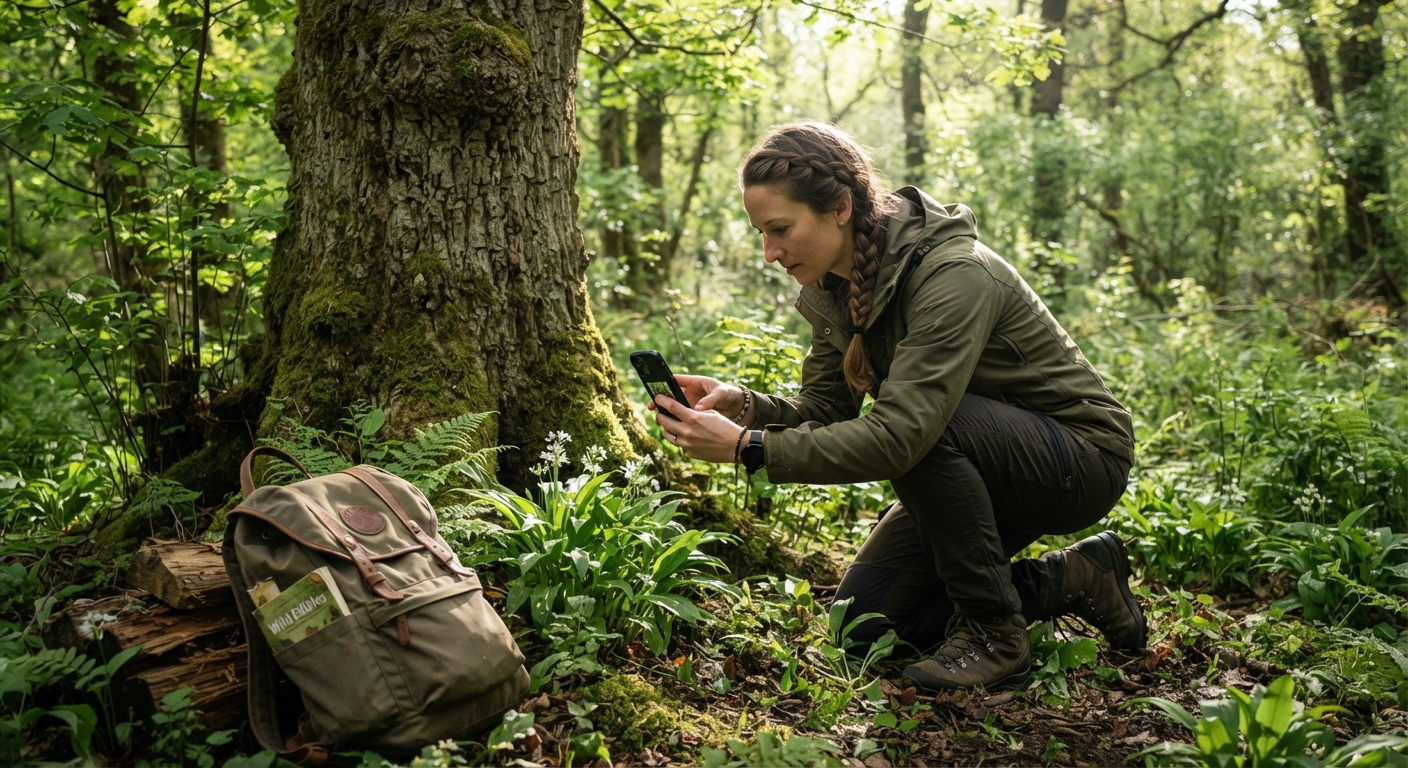
Here are the lessons that field guides rarely mention but that make the difference between a frustrating walk and a productive harvest.
The Morning Rule
Harvest greens in the morning, after the dew has dried but before the midday sun hits. Morning-harvested greens are crisper, less bitter, and last longer before wilting. This is especially true for purslane, which uses a specialized photosynthesis called CAM that stores acids overnight and converts them to sugars during the day — morning purslane is noticeably less tangy.
The “Smell It” Shortcut
Your nose is one of the best identification tools you have. Members of the mint family have square stems and smell like mint. Onions and garlic smell unmistakably like onions and garlic. Crushing a leaf between your fingers and smelling it takes two seconds and rules out entire families of plants instantly. Get in the habit of doing this with every unfamiliar plant.
Learn Plants by Family, Not Individually
This is the single biggest accelerator for beginners. Instead of memorizing 35 individual plants, learn the key features of five plant families. Once you know that the Mint family (Lamiaceae) has square stems, opposite leaves, and aromatic oils, you’ve instantly unlocked a dozen edible species — wild mint, oregano, thyme, bee balm, lemon balm, dead nettle. The Mustard family (Brassicaceae) has four-petaled flowers in a cross shape and peppery-tasting leaves — that’s wild mustard, garlic mustard, shepherd’s purse, watercress, and wintercress, all edible. Five plant families cover the majority of common wild edibles.
The One-New-Plant-Per-Walk Rule
When you’re starting out, limit yourself to identifying — not even harvesting, just identifying — one new plant per foraging walk. Spend the walk finding as many examples of that single plant as you can. Look at it in different light, at different growth stages, in different habitats. By the end of the walk, that plant will be burned into your visual memory. Do this ten times and you’ll have ten plants you can identify at a glance, from twenty feet away, in any season. That’s a real skill set, not just a list.
Bring Two Bags
One for greens and tender leaves (needs moisture — line it with a damp cloth). One for roots, bulbs, and mushrooms (needs airflow — use a mesh or paper bag). Greens wilt when packed tightly with heavy items. Roots and mushrooms get slimy when they sit in moisture. Two bags solve this entirely.
Frequently Asked Edible Wild Plant Questions
“What’s the single easiest edible plant to start with?”
Dandelion. It grows everywhere, every part is edible, the identification is ironclad with the five-finger method, it tastes good enough to actually want to eat, and you can harvest it in some form nearly year-round. If you only learn one plant this year, make it dandelion.
“Can I eat weeds from my own backyard?”
Yes — IF you know what’s been applied to your yard. If you’ve used herbicides, pesticides, or synthetic fertilizers in the last two years, skip the backyard and find a cleaner location. If your yard is chemical-free and your neighbors don’t spray anything that drifts over the fence, backyard weeds can be some of the safest, most convenient foraging available.
“What if I eat something by mistake?”
Call poison control immediately. Take a photo of the plant you ate, and if possible, bring a sample with you. Don’t induce vomiting unless instructed by a medical professional — some plant toxins do more damage coming back up. Save a sample of the plant for identification. In North America, the Poison Help line is 1-800-222-1222. Save this number in your phone before you ever go foraging.
“How do I know if a plant has been sprayed with chemicals?”
Sprayed plants often show: unnaturally uniform wilting or yellowing across multiple species, bleached spots on leaves, twisted or distorted new growth that doesn’t match normal growth patterns, and a general “something is off” uniformity across an area. Healthy wild plant communities are diverse and irregular — a patch where everything looks uniformly sick is a red flag. When in doubt, move on.
“Do I really need to learn Latin names?”
For Tier 1 plants, no — common names are fine because these plants have zero dangerous lookalikes. For Tier 2 and especially Tier 3 plants, scientific names become important because different regions use the same common name for completely different species. “Pigweed” can refer to edible amaranth or toxic Salsola species depending on where you live. The Latin name removes the ambiguity.
“Is it safe to eat plants from city parks?”
Generally no, for three reasons. First, many city parks are regularly sprayed with herbicides. Second, parks receive heavy foot traffic and pet waste — the soil carries pathogens you don’t want on your food. Third, park soil in older cities often has elevated lead levels from decades of leaded gasoline and paint. Wild areas, nature preserves, state forests, and private land (with permission) are far better options.
“How do I get permission to forage on private land?”
Knock on the door and ask politely. Explain what you’re looking for (specifically — “I’m looking for wild blackberries along your fence line” works better than “can I walk around your property?”). Offer to share your harvest. Most landowners are more curious than suspicious, especially if you’re respectful and specific. Bring a field guide to show them what you’re after — it demonstrates that you know what you’re doing and aren’t just casing the property.
Your First Month: A Practical Learning Sequence
If you’re brand new to foraging, here’s exactly what to do in your first 30 days. No guesswork, no overwhelm.
Week 1: Learn two Tier 1 plants. Pick dandelion and one other from the list above that’s in season. Study their identification features from three different sources. Find ten examples of each in the field without harvesting.
Week 2: Harvest and eat your first wild meal. Harvest the plants you learned in Week 1. Start with a small cooked preparation — dandelion greens sautéed with garlic and olive oil, for example. A single wild ingredient in a familiar dish. Note the flavor, texture, and how you feel afterward.
Week 3: Add two more Tier 1 plants. Repeat the Week 1 process with two new plants that are currently in season. By now, your eye is starting to recognize plant families and patterns automatically.
Week 4: Prepare a multi-plant wild meal. Combine what you’ve learned. A salad with chickweed and violet flowers. Sautéed purslane with wild garlic. Nettle soup. Notice how different plants complement each other — this is where foraging stops feeling like a survival skill and starts feeling like cooking.
This slow, deliberate approach builds genuine confidence. You’re not memorizing a list — you’re building relationships with individual plants, one at a time.
What’s Not on This List (and Why)
If you’re comparing this guide to other “edible wild plants lists,” you might notice some conspicuous absences. Here’s why certain popular wild edibles didn’t make the Tier 1 cut:
Wild mushrooms: Not a single mushroom appears in Tier 1 or 2. This is intentional. Mushroom foraging requires a completely separate skill set from plant foraging — the stakes are higher (liver failure vs. stomach upset), the identification standards are stricter, and the learning curve is steeper. If you want to learn mushrooms, find a local mycological society and go on guided walks. Books and apps are supplementary tools for mushroom hunting, not primary teachers. Start with plants. Come back to mushrooms when you’ve been foraging plants for at least a full year.
Wild carrot / Queen Anne’s lace (Daucus carota): Delicious root, widespread plant, and a member of the carrot family that includes poison hemlock and water hemlock — two of the deadliest plants in North America. Wild carrot is a Tier 3 plant. The identification features are learnable (hairy stems, the central dark floret, the “bird’s nest” seed head), but I don’t recommend it as a beginner plant because the consequences of a mistake are death, not indigestion.
Pokeweed (Phytolacca americana): A Southern spring tradition, but it requires a specific triple-boiling process with water changes to be safe. Raw or improperly prepared pokeweed is toxic. It’s a Tier 3 plant for processing complexity alone.
Acorns: Edible after extensive leaching to remove tannins. The processing is time-consuming and water-intensive. Worth learning eventually, but not where you should start.
The Most Important Mindset Shift
The biggest barrier for most new foragers isn’t identification — it’s reframing “weeds” as food.
Nearly every Tier 1 plant is something gardeners actively destroy. Homeowners spend billions annually killing dandelions, purslane, chickweed, and lamb’s quarters — plants that are more nutritious than the vegetables they’re protecting. The chemical herbicides used to kill these plants are far more dangerous than anything the plants themselves produce.
When you start seeing purslane not as an invader in your garden beds but as free omega-3-rich greens for tonight’s dinner, something shifts. The world doesn’t become a supermarket exactly — it becomes something better. It becomes a place where food grows everywhere, and you’re one of the few people who knows how to recognize it.
Start with dandelion. Learn it cold. Then purslane. Then one more. Before you know it, every walk becomes a potential harvest, and every weedy lot becomes a grocery store hiding in plain sight.
Your next step: Pick one plant from the Tier 1 list that’s in season where you live right now. Find three reliable identification resources for it. Go outside and find ten examples without picking anything. Come back tomorrow and find ten more. When you can spot that plant instantly at twenty feet, in any light, at any growth stage — that’s when you’ve truly learned it. Then move to the next one.
Happy foraging — and as always, when in doubt, leave it out.