Ask a cook what they’re looking for in a market and they’ll never say “plants.” They say greens, roots, fruit, herbs. They think in parts — the flat leaf that goes in the pan, the knob that gets scrubbed, the berry that ends up in a crumble.
Foragers get handed the exact opposite. We get a flat list of Latin names with no sense of what actually gets eaten, when it shows up, or what you do with it once it’s in your hand. A name like Taraxacum officinale tells you nothing about whether you’re eating the leaf, the flower, the root, or all three.
So this list is organized the way your brain actually works: by plant part. Instead of one undifferentiated wall of names, you get six short lists — leafy greens, flowers, roots and tubers, fruits and berries, nuts and seeds, and shoots and stalks. Each entry tells you the part you eat, the season it’s worth picking, and the one caution that matters.
The rule that sits above everything below doesn’t change: never eat a wild plant you can’t identify with 100% confidence. This list shortens the learning curve. It does not remove it. Cross-check anything you plan to eat against a regional field guide and a trusted photo database.
Why Sorting by Plant Part Works
Most beginner mistakes happen because a list mixes categories. You read about dandelion and elderberry in the same breath, and your brain files them both as “green thing.” But dandelion is eaten for its leaves (and flowers and root), while elderberry fruit must be cooked and its leaves and raw berries are toxic. Same list. Completely different safety rules.
Sorting by part fixes this because each part has its own pattern:
- Greens are the lowest-risk category to start with — most are eaten raw or briefly cooked, and the dangerous lookalikes are learnable.
- Flowers are usually a garnish or tea ingredient, rarely a meal, so volume matters less.
- Roots and tubers are the highest-risk category. Digging one up often means you can no longer see the leaves, flowers, and stem that identified the plant in the first place.
- Berries sit in the middle — most are safe, but a handful of lookalikes are genuinely dangerous.
- Nuts and seeds usually need processing (leaching, shelling) before they’re food.
- Shoots and stalks are seasonal and fast — they’re only tender for a few weeks a year.
Keep that frame in your head and the lists below stop feeling like a jumble of names.
The Quick-Reference Table
Here’s a condensed version of the full list so you can skim first and read the detail after. “Ease” is how beginner-friendly the plant is to learn and eat, out of five.
| Plant | Part Eaten | Season | Ease | One Thing to Remember |
|---|---|---|---|---|
| Dandelion (Taraxacum officinale) | Leaves, flowers, root | Spring–fall | 5/5 | Hairless, toothed leaves + one flower per hollow stem |
| Chickweed (Stellaria media) | Leaves, stems, flowers | Spring–fall | 5/5 | A single line of fine hairs down the stem |
| Lamb’s quarters (Chenopodium album) | Leaves, seeds | Spring–summer | 4/5 | Powdery white coating under young leaves |
| Stinging nettle (Urtica dioica) | Leaves, shoots | Spring | 4/5 | Cooking kills the sting completely |
| Purslane (Portulaca oleracea) | Leaves, stems | Summer | 5/5 | Thick, juicy, reddish stems; no poisonous lookalike |
| Wood sorrel (Oxalis spp.) | Leaves, flowers | Spring–fall | 5/5 | Lemony taste + heart-shaped leaves |
| Wild blackberry/raspberry (Rubus) | Fruit, young shoots | Summer | 5/5 | No toxic lookalike in North America |
| Elderberry (Sambucus spp.) | Flowers, berries (cooked) | Late spring–late summer | 3/5 | Raw berries and all green parts are toxic |
| Mulberry (Morus) | Fruit | Late spring–summer | 5/5 | Tree fruit, not a bramble — no thorns |
| Rose hips (Rosa spp.) | Fruit (hips) | Fall | 4/5 | High vitamin C; remove the itchy seeds |
| Acorn (Quercus spp.) | Nut (leached) | Fall | 2/5 | Must be leached of tannins before eating |
| Burdock (Arctium spp.) | Root, young stalks | Fall–spring | 3/5 | Long taproot; peel and boil young roots |
| Cattail (Typha spp.) | Shoots, flower spike, rhizome, pollen | Spring–summer | 4/5 | “Supermarket of the swamp” — multiple edible parts |
| Wild asparagus (Asparagus officinalis) | Young spears | Spring | 4/5 | Looks exactly like the garden version |
Leafy Greens: Your Starting Point
If you learn nothing else, learn the greens. They’re common, they’re abundant, and most of them can be confirmed with two or three details. Here are the ones worth your time, in rough order of how easy they are to start with.
-
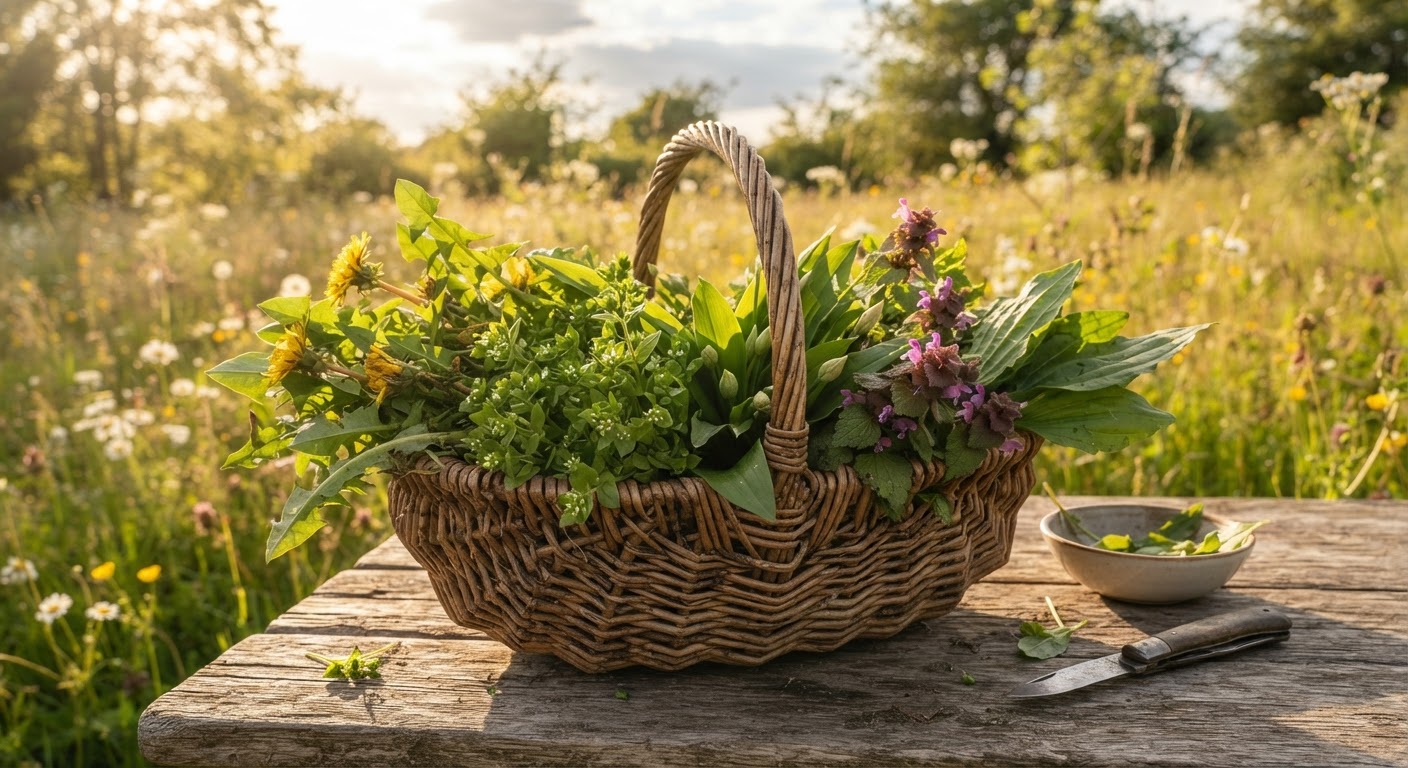
Dandelion — Young spring leaves are the mildest; older leaves turn bitter, so blanch or sauté them. The root can be roasted as a coffee substitute. This is the gateway plant for a reason: it’s everywhere and its identification marks are unmistakable.
-
Chickweed — A mild, tender salad green that grows in cool weather. The tell is a single line of fine hairs running up one side of the stem, switching sides at each leaf node. If you don’t see that line, you don’t have chickweed.
-
Lamb’s quarters — Often called “wild spinach.” It has a powdery, almost waterproof coating on the underside of young leaves that older spinach doesn’t. Boil it like spinach and it behaves like spinach.
-
Stinging nettle — The sting is the identification and the defense. Wear gloves to harvest, then cook it — boiling for even a minute or two destroys the stinging chemicals. It’s one of the most nutritious wild greens available.
-
Purslane — A summer succulent with thick, reddish, juice-filled stems. Its crisp, slightly lemony bite makes it great raw in salads. There’s no poisonous lookalike in North America, which makes it one of the safest greens to learn.
-
Broadleaf plantain — The lawn weed everyone walks past. Young leaves are mild; older ones are stringy, so cook them and pick out the tough ribs.
-
Wood sorrel — Not a bulk green, but a garnish. Its lemony tang comes from oxalic acid, so treat it like a seasoning, not a salad base.
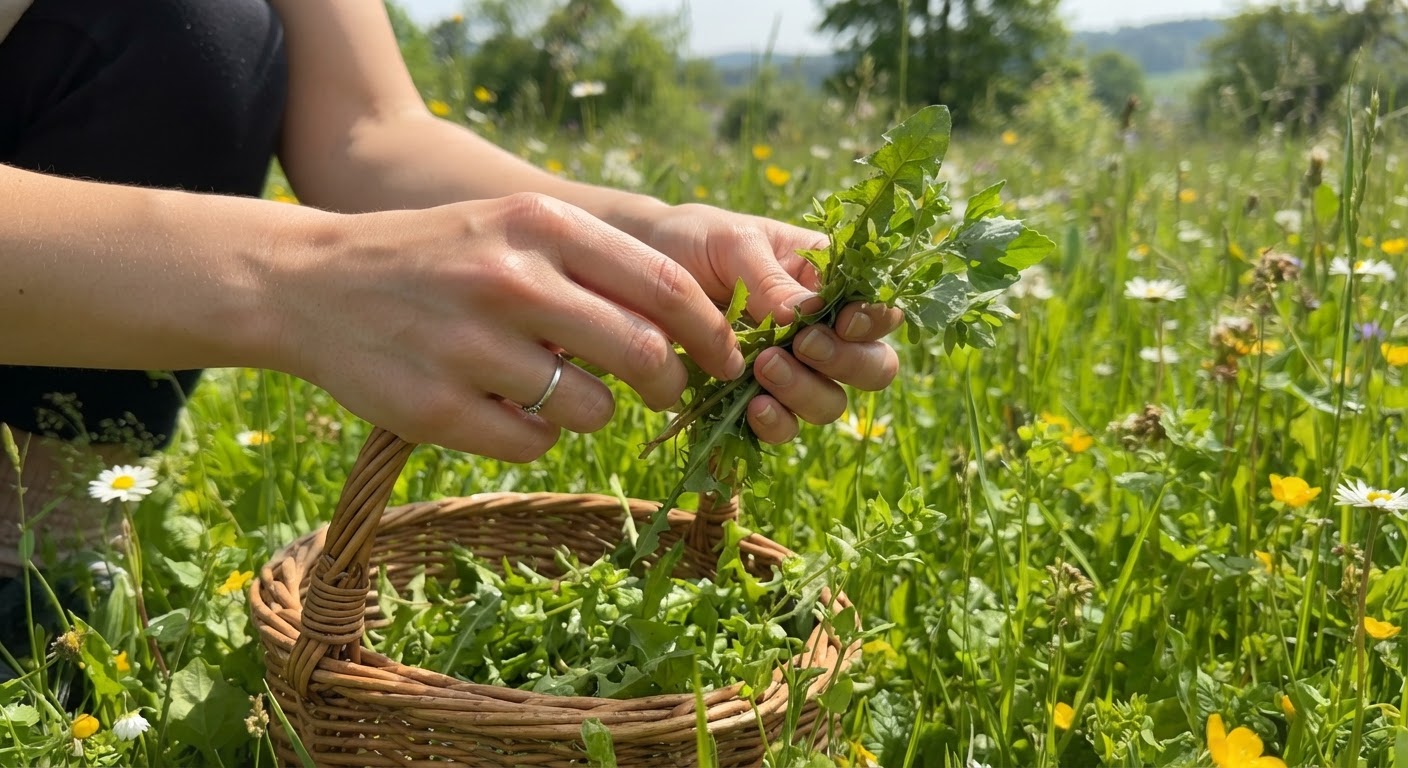
Greens quick rule: If a leaf is smooth, soft, and matches every mark in your guide, it’s probably in the safe-to-learn group. If it has a milky white sap, fine hairs, or a bitter smell you can’t place, slow down and check twice.
Flowers: Small, Pretty, and Easy to Overuse
Wild flowers are mostly a garnish, a tea, or a syrup ingredient. Because you eat them in small amounts, the risk is lower — but only if you’re certain of the flower. Many are beautiful and some are toxic, and they can sit right next to each other.
- Dandelion flowers — Sweetest when fully open. Fry them in batter, or steep for a mild tea. The green base under the petals is bitter; many people separate it out.
- Clover flowers (red and white) — Mild and slightly sweet. White clover is more palatable raw; red clover is better in tea. Both belong to the pea family, which is a good sign.
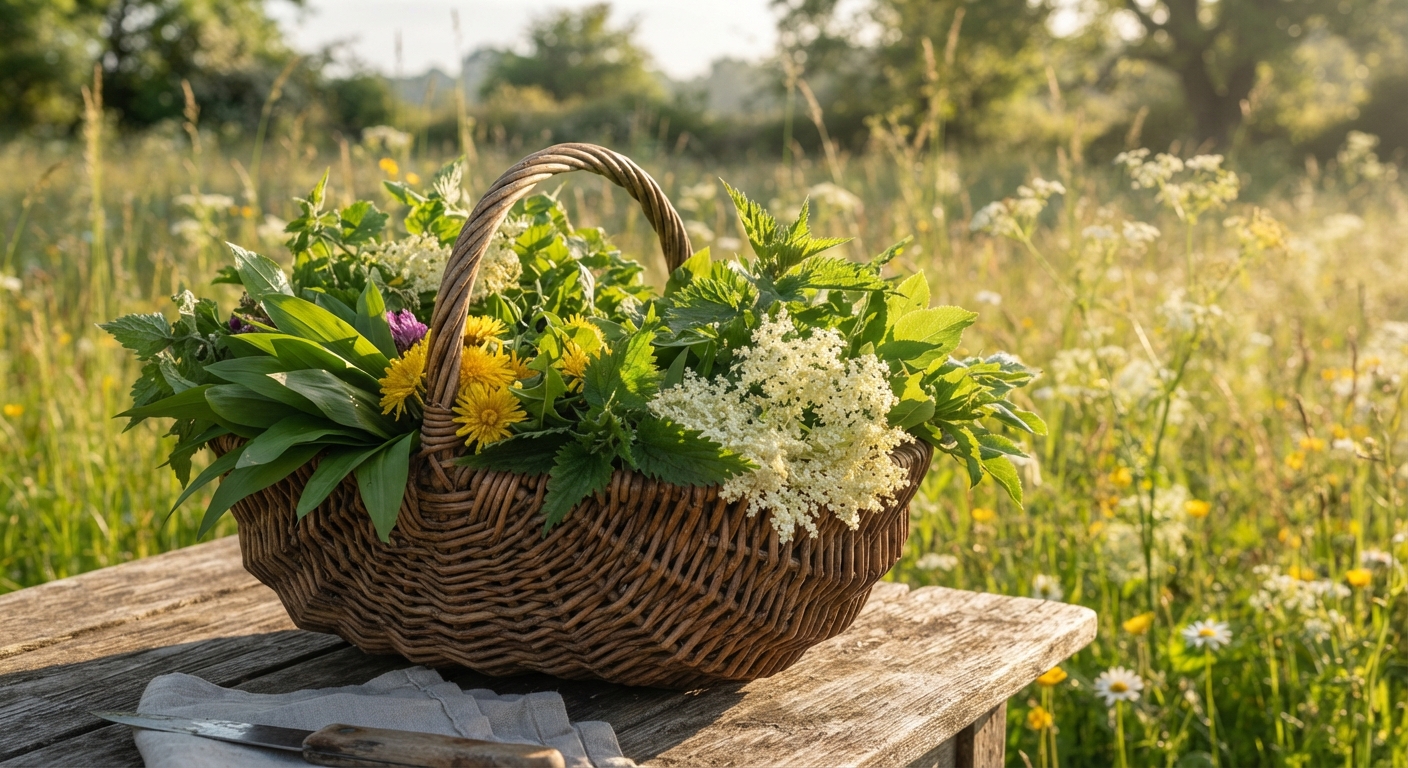
- Elderflower — Fragrant white umbrella clusters used for syrup and cordial. Harvest in late spring when the flowers smell sweet. The same bush produces elderberries later in summer, and the flowers, like the berries, need heat for anything beyond light use.
- Violets — Sweet, mild, and decorative. They’re a classic sugared garnish for desserts.
- Daylily buds — Plump unopened buds can be sautéed. This one is a caution case: daylily (Hemerocallis) is not the same as true lily (Lilium), and true lilies are toxic to cats and not food for people either. Many foragers skip daylily entirely until they’ve got several seasons behind them.
Flowers quick rule: Only eat flowers you can trace back to a fully identified plant, leaves and all. If you can’t name the whole plant, you can’t safely eat just the flower.
Roots and Tubers: The High-Risk Category
This is where new foragers get hurt, and the reason is simple: by the time you’ve dug up a root, the leaves, flowers, and stem that identified it may be gone or damaged. If you harvest a root, identify the plant first, while it’s still whole, and keep a leaf with the root until you get home.
- Burdock root — A long taproot, mild and earthy. Peel young roots and boil them, or slice and stir-fry. This is a genuinely good vegetable that most people have only met as a weed.
- Dandelion root — Bitter and earthy; most people roast it for a coffee-like brew rather than eating it straight.
- Jerusalem artichoke (sunchoke) — A native sunflower with knobby, nutty tubers. Easy to grow wild in North America, easy to identify by the tall yellow flowers. Roast them like potatoes.
- Cattail rhizome — Starchy and fibrous. Harvesting it is work: the starch has to be separated from the fibers, which is a wet, messy job. Most people eat the shoots and flower spike instead (see below).
- Wild carrot (Queen Anne’s lace) — Listed here with a bright-red warning. Its root smells like carrot, and it’s technically edible when young and tender — but it is nearly identical to poison hemlock and water hemlock, both of which can kill you. Do not start here. Many experienced foragers simply never bother, because the margin for error is too thin.
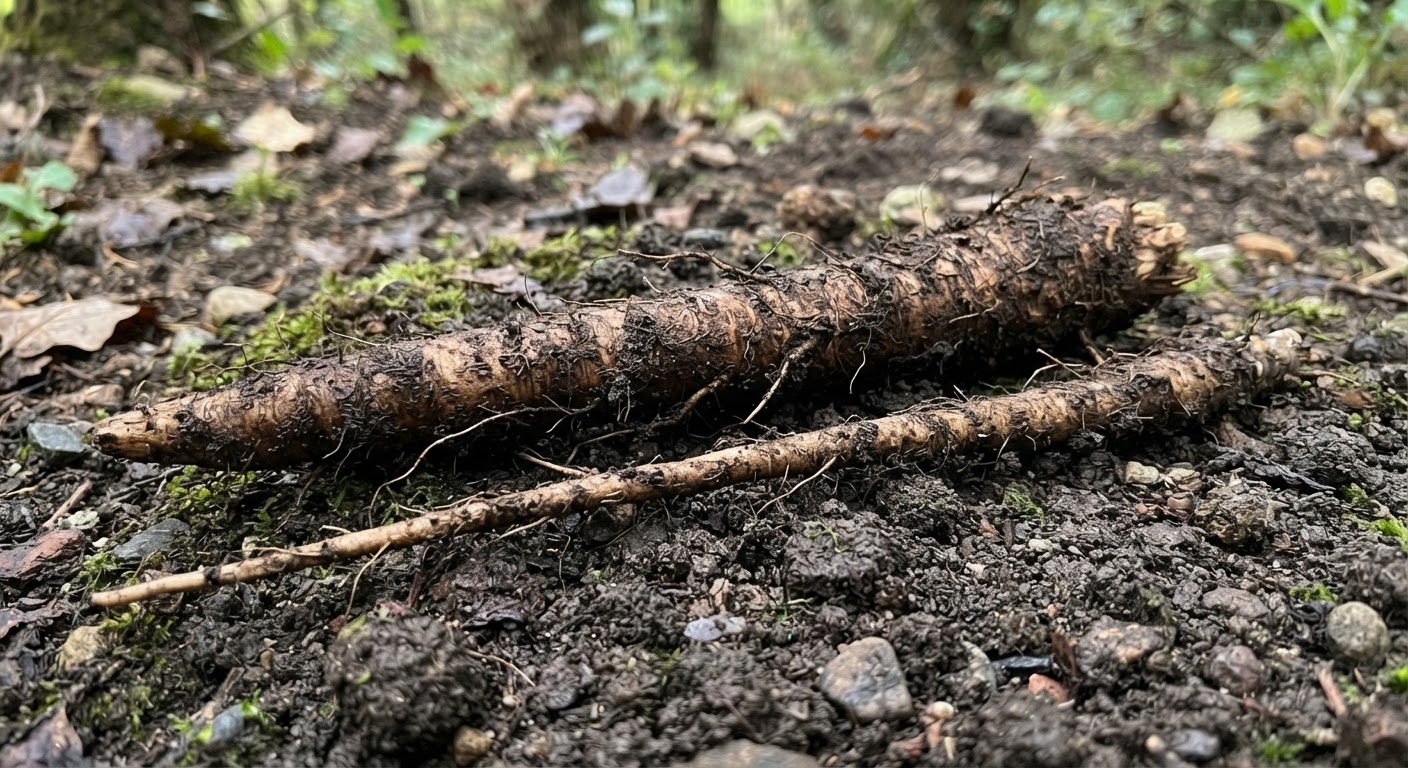
Roots quick rule: If you’re new, treat every wild root as “not food” until you’ve positively identified the whole living plant, leaves and all, and confirmed it against a guide that includes its lookalikes.
Fruits and Berries: The Highest Reward
Berries are what most people start foraging for, and for good reason: they’re recognizable, seasonal, and genuinely delicious. The safety rule here is narrower than most people think — it comes down to learning a few specific lookalikes rather than memorizing every berry.
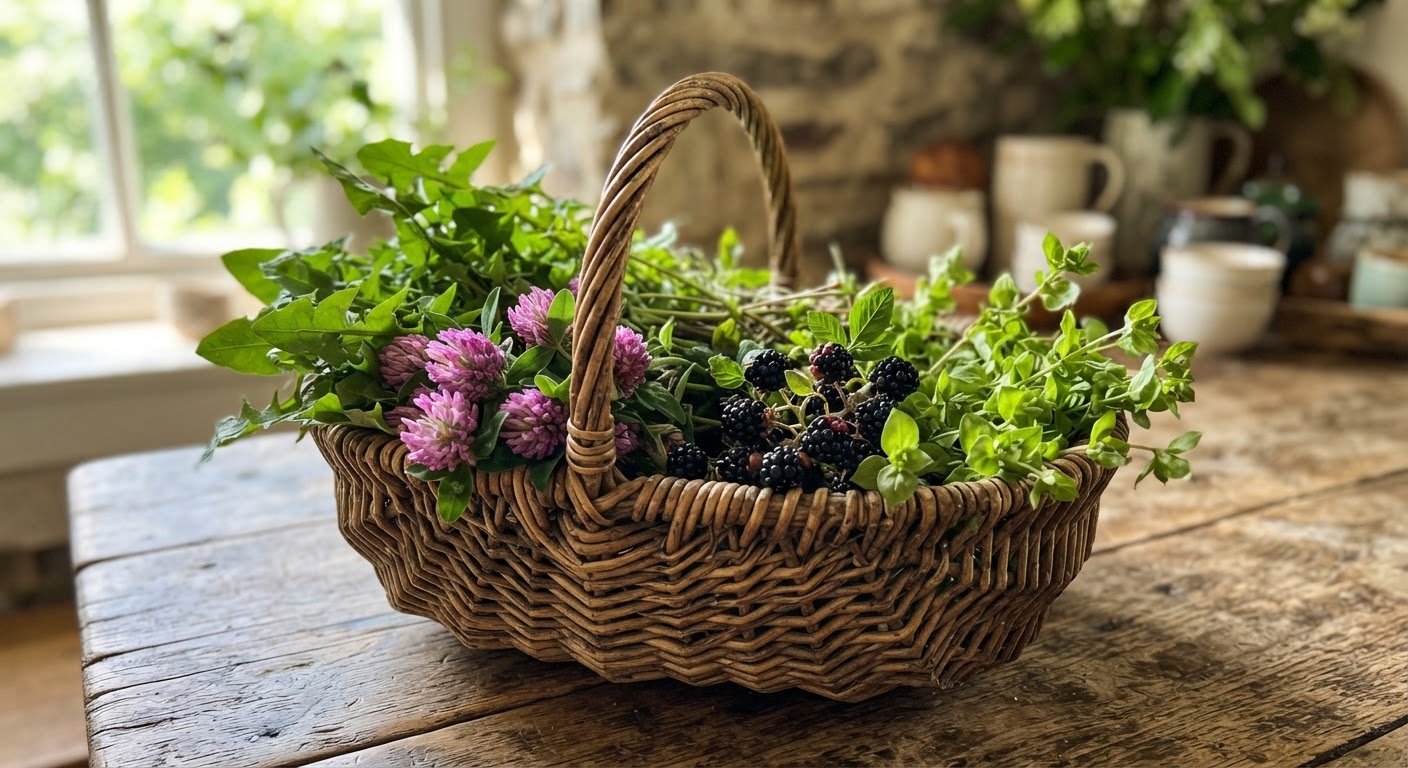
- Wild blackberries and raspberries (Rubus) — The safest starting point in North America, where there is no toxic lookalike for the classic bramble berry. If it looks like a blackberry or raspberry on a thorny cane, it’s a Rubus, and it’s edible.
- Mulberries — Look like elongated blackberries but grow on a tree, not a bramble. No thorns, no canes. Ripe fruit is sweet and stains everything it touches.
- Serviceberries (Juneberries) — Blueberry-like fruit on a small tree or shrub, ripening in early summer. Often gone before most people notice them, because birds get there first.
- Wild strawberries — Tiny, intensely flavored, and far better than the supermarket version. The fruit is safe; just confirm the plant’s leaves match strawberry, not a lookalike.
- Rose hips — The swollen fruit left after rose petals drop, loaded with vitamin C. Best after the first frost, and you must remove the fine, irritating seeds inside before using them.
- Elderberries — Rich and useful for syrup and jam, but cooked only. Raw elderberries, along with the leaves and stems, contain compounds that can make you sick. Cook them thoroughly and you’re fine.
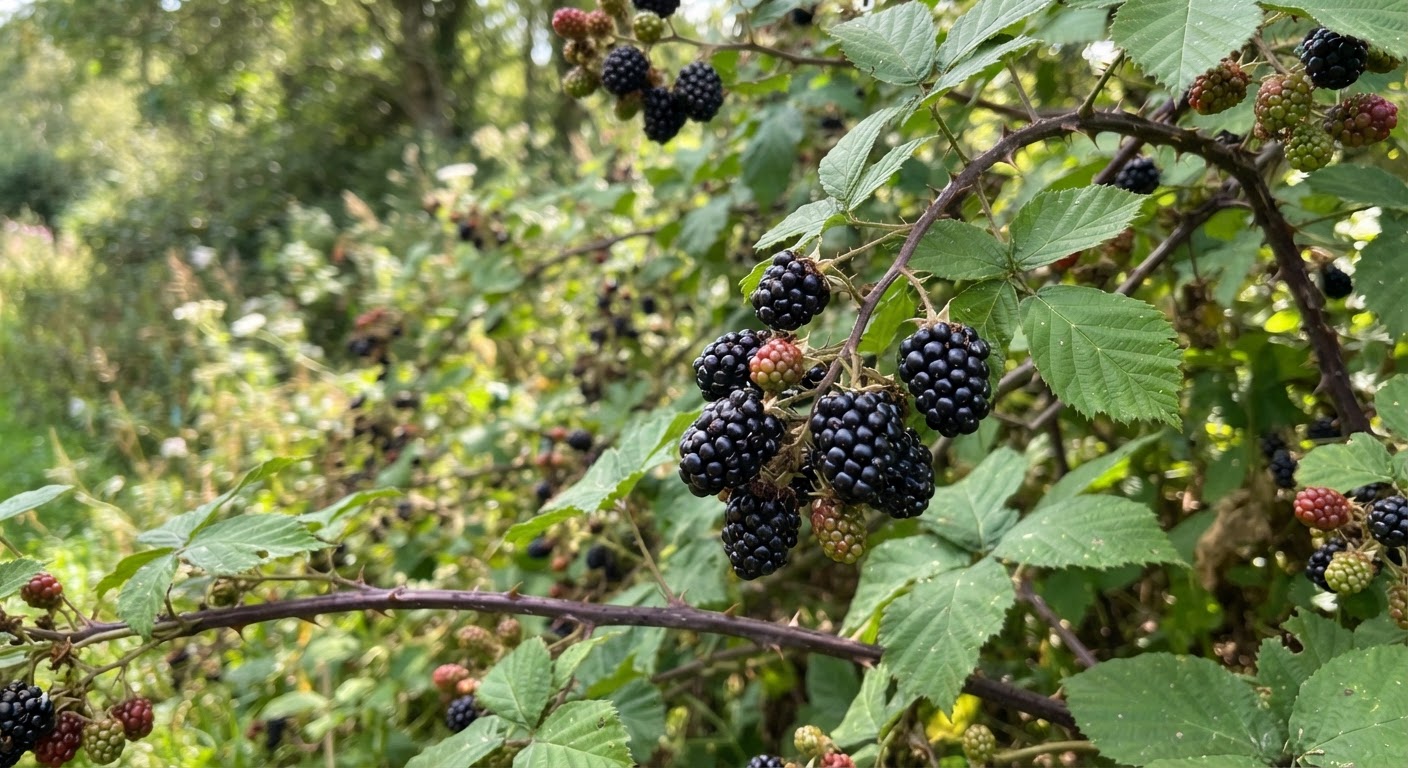
Berries quick rule: “Red or black, round and plump” is not an identification method. Learn the handful of genuinely dangerous lookalikes in your region — and remember that aggregate berries (made of little bumps like a blackberry) are almost always safe, while single round berries need more care.
Nuts and Seeds: Calories That Need Work
Wild nuts are the best calories on this list — and the most work. Nearly all of them require some processing before they’re food.
- Acorns — The classic wild staple. They’re full of bitter tannins that have to be leached out with cold or hot water before they’re edible, then ground into flour. White oak acorns are generally less bitter than red oak. It’s a two-day project, but the result is real, shelf-stable food.
- Black walnuts — Intensely flavored but famously hard to crack. The green husk stains hands for weeks and has to be removed first, then the shell itself needs a hammer.
- Hickory nuts — Rich and buttery, easier to crack than black walnut, but identifying the right hickory species matters — some are too bitter to bother with.
- Lamb’s quarters seeds — A bonus from a plant you already know. The tiny black seeds can be gathered in late summer and cooked like a grain, though collecting enough is tedious.
Nuts quick rule: If a nut is bitter, your mouth is telling you something — usually tannins or alkaloids. Bitterness is a signal to stop, not to power through.
Shoots, Stems, and Stalks: Fast and Seasonal
These are the spring forager’s reward. The edible window is short — often two or three weeks — so they reward you for paying attention to timing.
- Cattail shoots — In early spring, the young shoots can be pulled up and the tender white core eaten raw or cooked. Later, the green flower spike (before it turns into the brown “corn dog”) can be boiled and eaten like corn.
- Japanese knotweed — A serious invasive species, which makes it the one plant you can harvest with zero guilt. The young, hollow, asparagus-like shoots are tart and rhubarb-like, and the classic advice is to harvest it freely — just cook it, and never dump the scraps where they can spread.
- Wild asparagus — Essentially identical to the cultivated plant, just growing on a roadside or ditch edge. Snap the tender top and leave the woody base.
- Burdock stalks — The young flower stalks can be peeled and cooked, though the root is the more common harvest.
Shoots quick rule: Shoots are only good when they snap cleanly. If a stalk bends instead of snapping, you missed the window — leave it for the plant.
Three Lookalike Pairs That Matter Most
You don’t need to memorize every dangerous plant in the world. You need to lock in the lookalike pairs that sit next to the plants you actually intend to eat.
| The Safe Plant | The Dangerous Lookalike | The Difference That Saves You |
|---|---|---|
| Wild carrot (young root) | Poison hemlock / water hemlock | Carrot smells like carrot; hemlock has purple blotches on the stem and often a musty smell |
| Elderberry | Water hemlock (and others) | Elderberry grows as a woody shrub with clusters of small fruit; hemlock is an herb with umbrella flower heads |
| Wild grape (fruit) | Canada moonseed | Grapes have round seeds; moonseed has a single crescent-shaped seed and a bitter taste |
These three pairs are why “I’m pretty sure” is never good enough. When in doubt, cross-check against a regional guide and a photo database — and walk away if the answer isn’t a clean yes.
A 5-Minute Routine to Lock These In
Reading a list once won’t make it stick. Here’s the routine that actually works, and it takes less time than scrolling a feed.
- Pick one plant from the greens list — not ten. One.
- Find it three times in the wild before you even think about eating it. Identification you’ve repeated is identification you’ll trust.
- Confirm against two sources — a regional field guide and a photo database — and make sure both agree with what’s in your hand.
- Harvest a tiny amount and prepare it the way the entry above describes. Small portions first, always.
- Write down what you learned — the smell, the texture, the season, the location. A few lines beats a “mental note” every time.
Most people try to learn too much too fast. Five plants you know cold will feed you more reliably than fifty you half-recognize.
Quick Answers, in One Table
Instead of a long FAQ, here are the questions that actually come up when someone first starts this — answered as briefly as they deserve.
| Question | Short Answer |
|---|---|
| What’s the safest edible wild plant to start with? | Dandelion. Abundant, unmistakable, and every part is usable. |
| How do I know a wild plant is safe to eat? | Positive ID from a field guide + a photo database, repeated three times, before you eat anything. |
| Are all white-berried plants poisonous? | Many are, and it’s a useful caution — but “rule” beats “guess”: never eat a berry you can’t positively identify. |
| Can I eat dandelions from my lawn? | Yes, if the lawn isn’t sprayed with herbicides or pesticides. Pick from untreated areas. |
| Why cook elderberries? | Raw elderberries and green parts can cause nausea. Heat breaks down the problem compounds. |
| What’s the riskiest category for beginners? | Roots and tubers — you often lose the leaves that identified the plant, and some deadly lookalikes exist. |
| Is foraging legal everywhere? | No. Rules vary by park, state, and country. Check local regulations before you harvest on public land. |
The Bottom Line
You don’t need a fifty-plant list. You need a frame that makes sense — and “what part do I eat?” is the cleanest frame there is. Start with the greens, learn the berries when the season arrives, and leave the roots until you’ve got a full season of identification behind you.
One plant. Three positive sightings. Two confirming sources. Then, and only then, one small taste. That’s the entire method, and it’s kept foragers fed and safe for a very long time.