The first time I watched my grandmother walk through the kebun behind her house in Central Java, she pointed at what I thought were weeds. “That one’s for soup,” she said, plucking a handful of leaves. “That one’s for stomach aches. And this one…” she crushed a leaf between her fingers and held it to my nose — it smelled like lime and mint had a baby. “This one we eat raw with sambal.”
I was twelve. I had walked past those plants hundreds of times and never knew they were food. She knew forty-seven edible wild plants by name. Not from books. From her grandmother, who learned from hers, stretching back through generations of Javanese women who fed their families from the land.
Indonesia sits at the intersection of two major biogeographic regions — the Indo-Malayan and Australasian realms — making it one of the most biodiverse places on Earth. The archipelago’s 17,000-plus islands harbor over 30,000 plant species, and ethnobotanists have documented at least 1,500 that are edible. Most Indonesians interact with maybe fifty of them at the market. The rest grow wild, largely ignored by a population urbanizing faster than any other in Southeast Asia.
This guide isn’t just a list of plants. It’s a bridge between traditional knowledge that’s fading and a modern interest in wild food that’s growing. Whether you’re an expat living in Bali wondering what’s safe to pick, a local rediscovering your culinary heritage, or a traveler who wants to understand the landscape differently — here’s what you need to know about edible wild plants in Indonesia.
Why Indonesian Wild Plants Deserve Your Attention
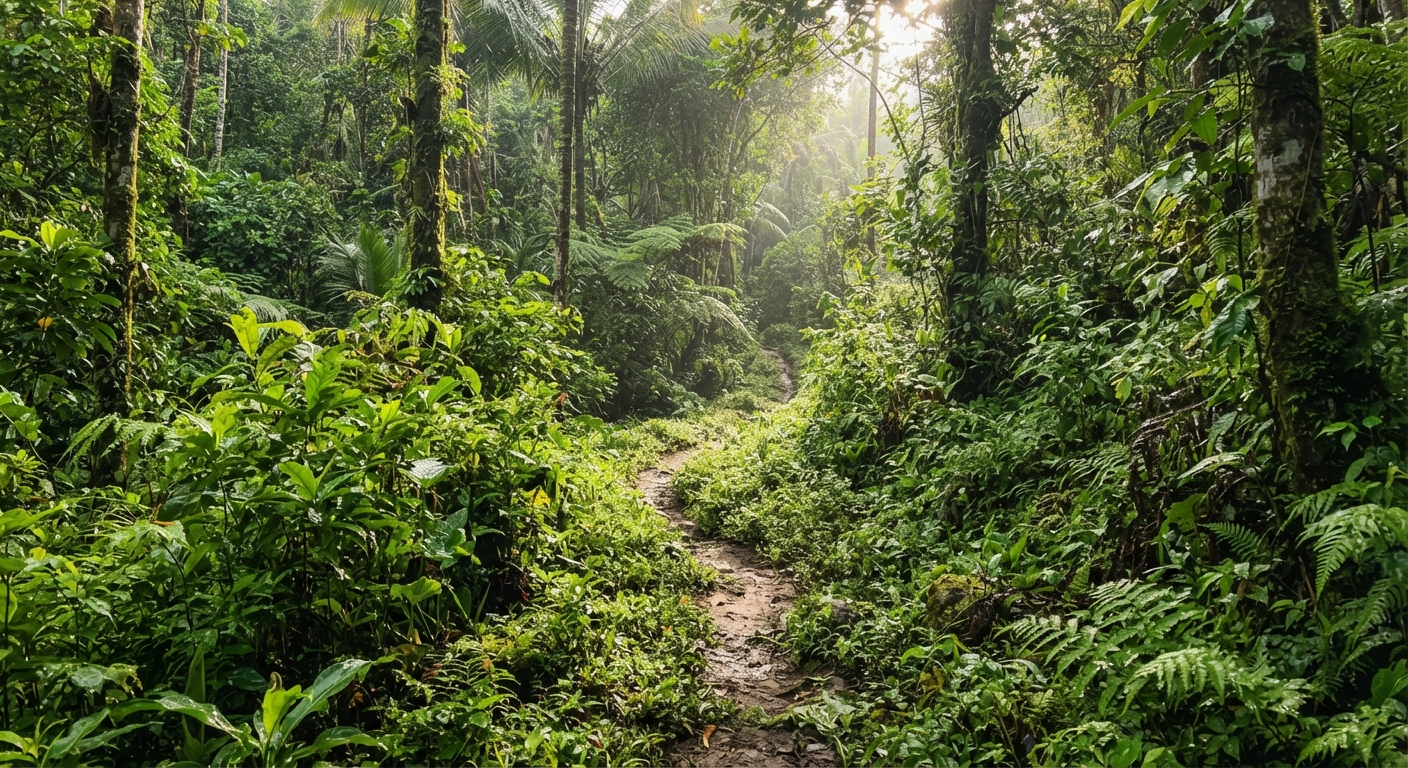
The global foraging movement has largely centered on temperate climates — Europe, North America, Australia. Books and YouTube channels overflow with content about ramps, morels, dandelion greens, and elderberries. Meanwhile, one of the world’s richest foraging territories sits largely undocumented in English-language resources.
Indonesia isn’t just “another tropical country with edible plants.” It’s an archipelago where every major island has distinct ecosystems, distinct edible species, and distinct culinary traditions around wild food. What grows edible on Java might not exist on Sulawesi. What Sumatran villagers eat as a daily green might be completely unknown in Papua.
Nutritional Density You Won’t Find in Supermarket Greens
Wild plants tend to be nutritionally denser than their cultivated cousins. A 2022 study from Institut Pertanian Bogor analyzed the nutrient profiles of 28 Indonesian wild edible greens and found that many contained significantly higher levels of iron, calcium, and vitamin A than cultivated spinach or kale. Daun kenikir (Cosmos caudatus), for instance, delivered nearly triple the calcium of supermarket lettuce per 100 grams.
Wild plants haven’t been bred for shelf life, uniform appearance, or shipping durability. They’ve been shaped by evolution to survive, which often means packing more protective compounds — many of which turn out to be the same antioxidants and phytonutrients that benefit human health.
A Genetic Library That’s Disappearing
Here’s something most foraging articles won’t tell you: Indonesia loses an estimated 1.1 million hectares of forest annually. When those forests disappear, they don’t just take trees. They take wild gingers used in traditional medicine, edible ferns that have fed communities for centuries, and wild fruit trees whose genetics have never been studied.
Every foraging guide written about Indonesian plants — especially in English — contributes to documenting and valuing what exists. Knowledge preservation is an underappreciated side effect of the foraging movement.
Common Edible Wild Greens in Indonesia
These are the plants you’re most likely to encounter across Java, Sumatra, Bali, and beyond. They grow in disturbed areas — roadsides, garden edges, rice field margins — which means you don’t need to trek into deep jungle to find them.
Daun Pepaya (Carica papaya — Wild Papaya Leaves)
Yes, papaya leaves. Most people associate papaya with the fruit, but the leaves are a common wild vegetable in Indonesian cooking. They’re bitter in the best way — think arugula meets kale, with a peppery finish that mellows dramatically when cooked.
How to identify: Large, deeply lobed leaves with 5-7 main divisions, growing from a single trunk. Wild papaya plants are shorter than cultivated varieties and often grow along riverbanks and disturbed soil.
How to eat: Never eat them raw — the latex in the leaf can irritate your mouth. Boil for 5-7 minutes with a pinch of salt to reduce bitterness. Traditionally prepared as buntil (boiled in coconut milk with anchovies) or simply steamed and served with sambal terasi.
What they’re good for: Papaya leaves contain papain, an enzyme that aids protein digestion. They’re also rich in vitamins A, C, and E. Traditional Jamu medicine uses them for digestive health and increasing appetite.
Daun Singkong (Manihot esculenta — Cassava Leaves)
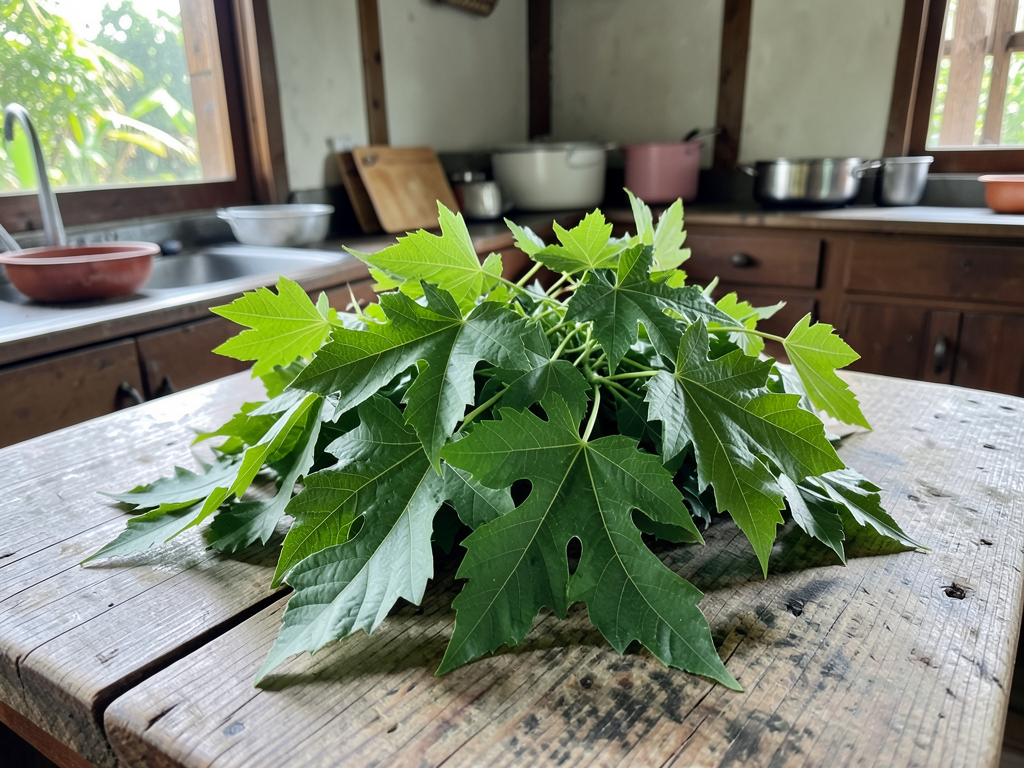
If Indonesia had a national wild green, cassava leaves might win the title. They grow everywhere — roadside ditches, abandoned lots, the edges of rice paddies. Every traditional market sells bundles of them for next to nothing.
How to identify: Palmate leaves with 5-7 narrow, pointed lobes radiating from a central point. The plant grows as a shrub, usually 1-3 meters tall, with distinctive woody stems and swollen roots underground.
How to eat: Must be thoroughly cooked. Cassava leaves contain cyanogenic compounds that break down with heat. Boil for at least 10 minutes, drain the water, then cook in coconut milk with garlic, shallots, and chili for the classic Padang-style gulai daun singkong. The flavor is earthy, slightly nutty, with a texture similar to well-cooked kale.
Critical safety note: Never eat cassava leaves raw or undercooked. The cyanide compounds are real — cooking eliminates them completely, but raw consumption can cause serious illness. This is why you’ll never see cassava leaf salad on any Indonesian menu.
Pakis / Fern Tips (Diplazium esculentum — Vegetable Fern)
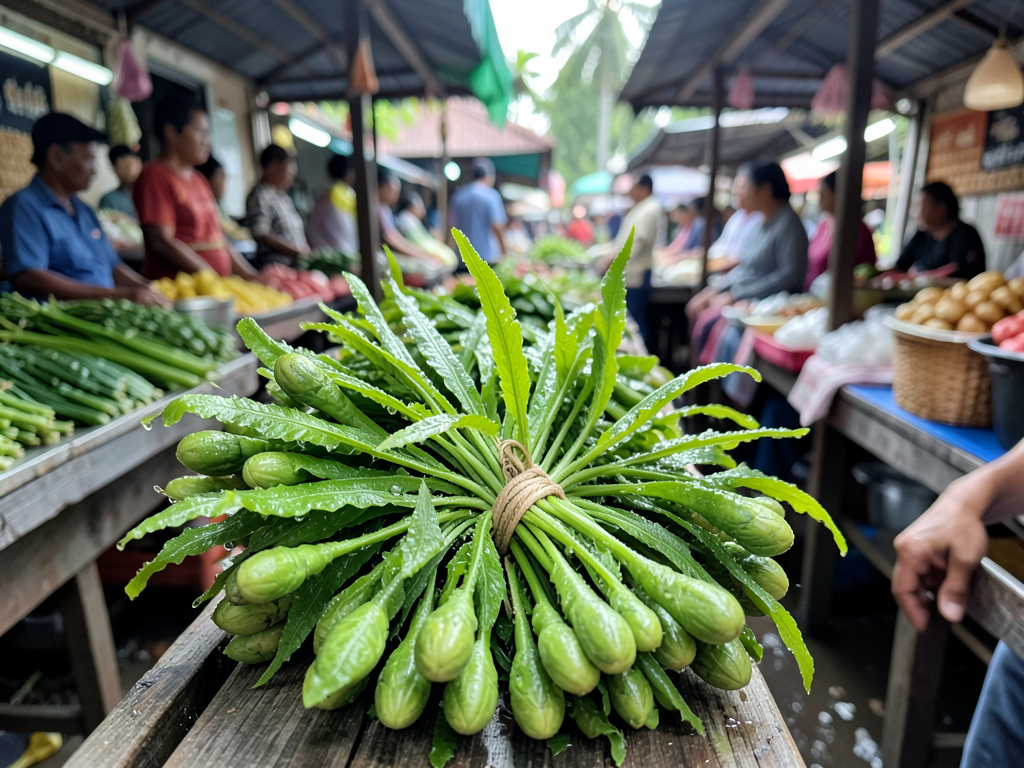
Walk through any Indonesian wet market in the morning and you’ll see bundles of bright green, tightly curled fern fronds — pakis or paku. This is the most widely consumed wild fern in Southeast Asia, and it’s genuinely delicious.
How to identify: Young, tightly coiled fronds (fiddleheads) emerging from a central crown. The stalks are smooth, green to reddish, and the unfurled tips look like violin scrolls. Grows in moist, shaded areas near water.
How to eat: Snap off the tender tips — about 10-15 cm from the end. Blanch briefly and stir-fry with garlic, chili, and shrimp paste for tumis pakis. The texture is crisp-tender, somewhere between asparagus and green beans. The flavor is mild and slightly grassy, absorbing sauces beautifully.
Look-alike warning: Some ornamental ferns are toxic. Only harvest the vegetable fern (Diplazium esculentum) from areas you’re confident haven’t been sprayed with pesticides. If you’re unsure, buy them from a local market first to learn the appearance.
Genjer (Limnocharis flava — Yellow Velvetleaf)
Genjer has a complicated history in Indonesia. During the Japanese occupation and subsequent economic hardship, it was known as a “poor person’s food.” In the 1960s, it became politically charged — associated with leftist movements. Today, it’s experiencing a culinary renaissance as younger Indonesians rediscover traditional foods.
How to identify: An aquatic plant growing in shallow water or muddy soil. Leaves are oval to heart-shaped, light green, with prominent parallel veins. The flowers are yellow with three petals. Grows abundantly in rice paddies, ditches, and wetlands.
How to eat: The young leaves and flower buds are the edible parts. Popular Sundanese preparation involves blanching and serving as lalapan (raw vegetables for dipping) — though genjer is always briefly cooked. It also shines in sayur bening (clear vegetable soup) and pecel (vegetables with peanut sauce). The taste is mild and slightly sweet, similar to spinach but with more texture.
Daun Kenikir (Cosmos caudatus — Wild Cosmos)
This is the wild green that surprises everyone. Kenikir looks like an ornamental garden flower — and it is, in many countries. In Indonesia and Malaysia, it’s a beloved vegetable with a distinct, complex flavor.
How to identify: Tall, slender plants with finely divided, feathery leaves and pink or purple daisy-like flowers. Grows up to 2 meters tall, often found along roadsides, field edges, and in backyard gardens.
How to eat: The young leaves and shoots are eaten raw or lightly cooked. Raw kenikir has a bold, almost metallic flavor that takes getting used to — Indonesians describe it as sedap tapi agak pahit (delicious but slightly bitter). It’s a key ingredient in urap (mixed vegetables with spiced coconut) and pecel. Cooked kenikir mellows significantly and pairs beautifully with coconut milk-based dishes.
Wild Tropical Fruits of Indonesia
Beyond the well-known mangosteen, rambutan, and durian that fill fruit markets, Indonesia’s forests harbor wild fruits that most visitors never taste. These fruits rarely appear in commercial markets because they don’t transport well, have short seasons, or simply aren’t cultivated.
Cempedak (Artocarpus integer)
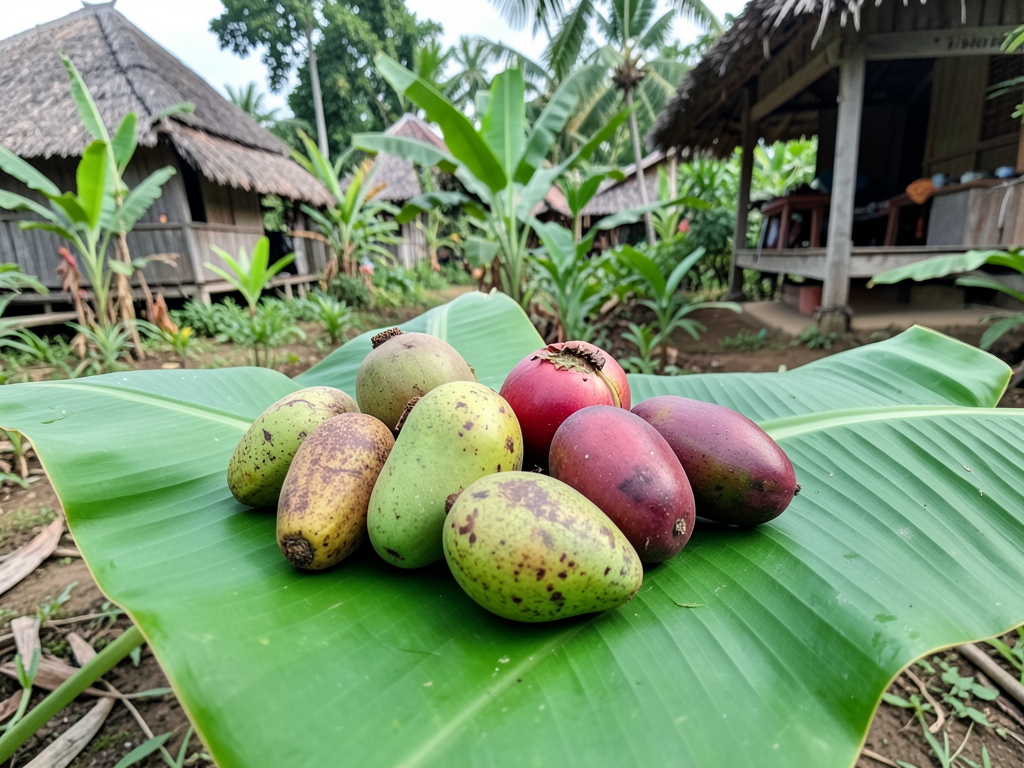
Cempedak looks like a smaller, elongated jackfruit, but the flavor is entirely different. Where jackfruit is mild and versatile, cempedak tastes like honey-drenched banana crossed with durian — intensely sweet, aromatic, and slightly funky.
The fruit grows wild in secondary forests throughout Sumatra, Kalimantan, and Java. The best way to eat it is fresh, but cempedak goreng — battered and deep-fried segments — is arguably one of the greatest fried desserts in the world. The seeds are also edible when boiled or roasted, with a chestnut-like texture.
Jambu Mawar (Syzygium jambos — Rose Apple)
Not to be confused with the red jambu air (water apple) common in markets, jambu mawar is a wild relative with pale yellow fruit that smells — as the name suggests — like roses. The flesh is crisp, juicy, and subtly sweet with a floral perfume that lingers.
These trees grow wild in villages and forest margins across Java and Sumatra. The fruit bruises almost instantly upon picking, which is why you’ll never see it in supermarkets. But if you find a tree while walking through a village, and the owner is friendly, ask politely — most people are happy to share fruit that would otherwise fall and rot.
Salak Hutan (Salacca zalacca — Wild Snake Fruit)
Cultivated salak is widely available in Indonesian markets — the teardrop-shaped fruit with scaly brown skin. The wild variety, salak hutan, is smaller, more astringent, and grows in the understory of lowland rainforests.
The flavor is intensely sour with a hint of sweetness and a texture crisper than the cultivated version. It’s an acquired taste, but one that foragers prize. In parts of Sumatra, wild salak is fermented into a traditional vinegar or eaten with salt and chili as a palate cleanser.
Rukem (Flacourtia rukam)
If you’ve never heard of rukem, you’re not alone. This small, round fruit — about the size of a large cherry — grows on thorny shrubs throughout Indonesia and Southeast Asia. When ripe, the fruit turns deep purple-red and tastes somewhere between a plum and a cranberry, with a slight astringency.
Rukem is rarely cultivated commercially, but rural communities throughout Java and Sumatra know it well. Children pick it from hedgerows as a trail snack. It can also be made into jam, though you’ll need to add significant sugar to tame the tartness.
Traditional Medicinal Wild Plants
The line between food and medicine is blurry in Indonesian traditional knowledge. Many wild plants serve dual purposes — eaten regularly as vegetables while also being used to treat specific ailments.
Pegagan (Centella asiatica — Gotu Kola)
Pegagan grows as a low, creeping ground cover in moist, shady areas throughout Indonesia. The small, round leaves with scalloped edges are easy to identify, and in many villages, they’re simply picked and eaten fresh as a salad green.
Traditional use considers pegagan a brain tonic — something that sharpens memory and clears the mind. Modern research has actually backed this up: studies have found that Centella asiatica compounds can improve cognitive function and may have neuroprotective properties. It’s also used topically for wound healing and skin conditions.
Fresh pegagan tastes mild and slightly grassy, similar to watercress. Try it in a simple salad with shallots, lime juice, and a little coconut.
Sirih (Piper betle — Betel Leaf)
You’ll recognize sirih from the betel chewing tradition common across Southeast Asia, but the leaf has culinary and medicinal uses far beyond that cultural practice. The heart-shaped leaves are glossy green and grow on a climbing vine found wild throughout the archipelago.
Sirih leaves have antimicrobial, antiseptic, and anti-inflammatory properties. Traditional midwives in Indonesia have used sirih for postpartum care for generations. The leaves contain eugenol, the same compound that gives cloves their medicinal properties.
In cooking, young sirih leaves are sometimes wrapped around spiced meat mixtures (similar to Vietnamese bò lá lốt) or used to infuse soups with their aromatic, slightly peppery flavor.
Sambiloto (Andrographis paniculata — King of Bitters)
The Indonesian name says it all — sambiloto roughly translates to “as bitter as possible.” This plant is intensely, profoundly bitter, which is exactly why it’s valued. Traditional Jamu practitioners use it for everything from fever to digestive issues, and it’s one of the most widely studied Indonesian medicinal plants.
Modern pharmacology has identified andrographolide — the main active compound — as having significant anti-inflammatory, antiviral, and immune-modulating effects. During cold and flu season, many Indonesians still reach for sambiloto capsules or bitter Jamu shots.
As a wild edible, sambiloto is more medicine than food. The leaves are occasionally eaten fresh in tiny quantities, but most people consume it as a boiled decoction or commercial supplement. It’s a powerful reminder that “edible” doesn’t always mean tasty — but it does mean useful.
Safety Rules for Foraging in Indonesia
Wild food in a tropical country comes with unique risks that temperate-zone foraging guides might not mention. The abundance of life in Indonesia means abundance of look-alikes, and some of those are dangerous.
Rule 1: Assume Nothing About Familiar-Looking Plants
A plant that looks exactly like something you eat back home might be a toxic relative. Southeast Asia has its own species — sometimes entire genera — that evolved separately from temperate-zone counterparts. Water hemlock doesn’t grow in Indonesia, but other toxic Apiaceae-family plants do. Identify from Indonesian-specific resources whenever possible.
Rule 2: Avoid Waterways Near Agriculture
That beautiful patch of genjer growing in a rice paddy downstream from conventional farms? It’s probably been absorbing pesticide runoff. Many Indonesian wild edibles are aquatic or semi-aquatic, making them particularly vulnerable to agricultural chemical contamination. Stick to clean, flowing water sources.
Rule 3: Watch for Roadside Contamination
It’s tempting to pick wild greens along quiet village roads, but even light traffic deposits heavy metals and exhaust particulates on plants. Go at least 20 meters from any road, and further from busy ones. The most pristine foraging spots are often deep in village gardens, forest edges, and river valleys far from development.
Rule 4: Cook Most Greens Thoroughly
Unlike the raw-salad culture of Western foraging, Indonesian wild greens are almost always cooked. There’s a reason for this — many contain compounds that require heat to break down (cassava leaves), anti-nutrients that cooking neutralizes, or simply need the bitterness reduced. When in doubt, cook it.
Rule 5: Learn from Locals
This is the single most important rule. Indonesians in rural areas possess generations of knowledge about what grows where, what’s edible, and how to prepare it safely. Ibu-ibu in villages can tell you not just which plant to pick, but which part of which plant at which time of year — and what to combine it with. No book or app can replace that knowledge.
Seasonal Guide: When to Find What
Indonesia’s equatorial climate means seasons are defined by rainfall rather than temperature. This creates distinctive foraging windows that repeat reliably each year.
| Season | Months | What’s Available |
|---|---|---|
| Rainy Season Peak | December–February | Fern tips (pakis) at their most abundant; genjer flowering in flooded paddies; wild mushrooms appear in forests |
| Late Rainy Season | March–May | Young leaves of cassava, papaya, and kenikir are most tender; pegagan spreads aggressively |
| Dry Season | June–September | Wild fruits ripen — cempedak, salak hutan, rukem, jambu mawar all come into season |
| Early Rainy Season | October–November | First rains trigger new growth; young shoots and leaves emerge across all species |
This table is a rough guide for Java and Bali. Eastern Indonesia (Nusa Tenggara, Maluku, Papua) has different rainfall patterns — generally drier with a shorter wet season — which shifts these windows by a month or two.
Foraging Etiquette in Indonesian Communities
Foraging in Indonesia isn’t just about finding plants. It’s about navigating social relationships in communities where land ownership, customary law (adat), and hospitality intersect in complex ways.
Ask Permission, Even on “Empty” Land
In many parts of Indonesia, land that looks abandoned isn’t. It may be under customary ownership, left fallow intentionally, or part of a village commons with unwritten rules about who can harvest what. A simple “Maaf, boleh saya ambil daun singkong di sini?” (Excuse me, may I take cassava leaves here?) goes a long way.
Take Less Than You Think You Should
Traditional foraging cultures operate on an unspoken principle: leave enough for the plant to regenerate and for others to harvest. When my grandmother picked daun pepaya, she never took more than one-third of the leaves from any single plant. The plant needs leaves to survive, and the next person might need them too.
Offer Something in Return
If someone lets you forage on their land or shares their knowledge with you, find a way to reciprocate. Share some of what you harvested. Offer to buy something from their small warung. At minimum, express genuine gratitude — ideally in Bahasa Indonesia or the local language.
Bringing Indonesian Wild Plants into Your Kitchen
Once you’ve foraged safely, the real fun begins. Indonesian wild greens transform in the kitchen in ways that might surprise you if you’re used to Western vegetables.
Basic Preparation Method for Most Wild Greens
Most Indonesian wild greens — cassava leaves, papaya leaves, kenikir, genjer — follow a similar preparation pattern:
- Strip the leaves from tough stems. For cassava and papaya leaves, remove the central rib.
- Wash thoroughly in several changes of water. Wild greens often harbor grit and tiny insects.
- Blanch or boil in salted water — 5-10 minutes depending on the leaf toughness.
- Squeeze out excess water (especially for cassava leaves to reduce bitterness).
- Finish by stir-frying with aromatics, cooking in coconut milk, or tossing with sambal and fresh grated coconut.
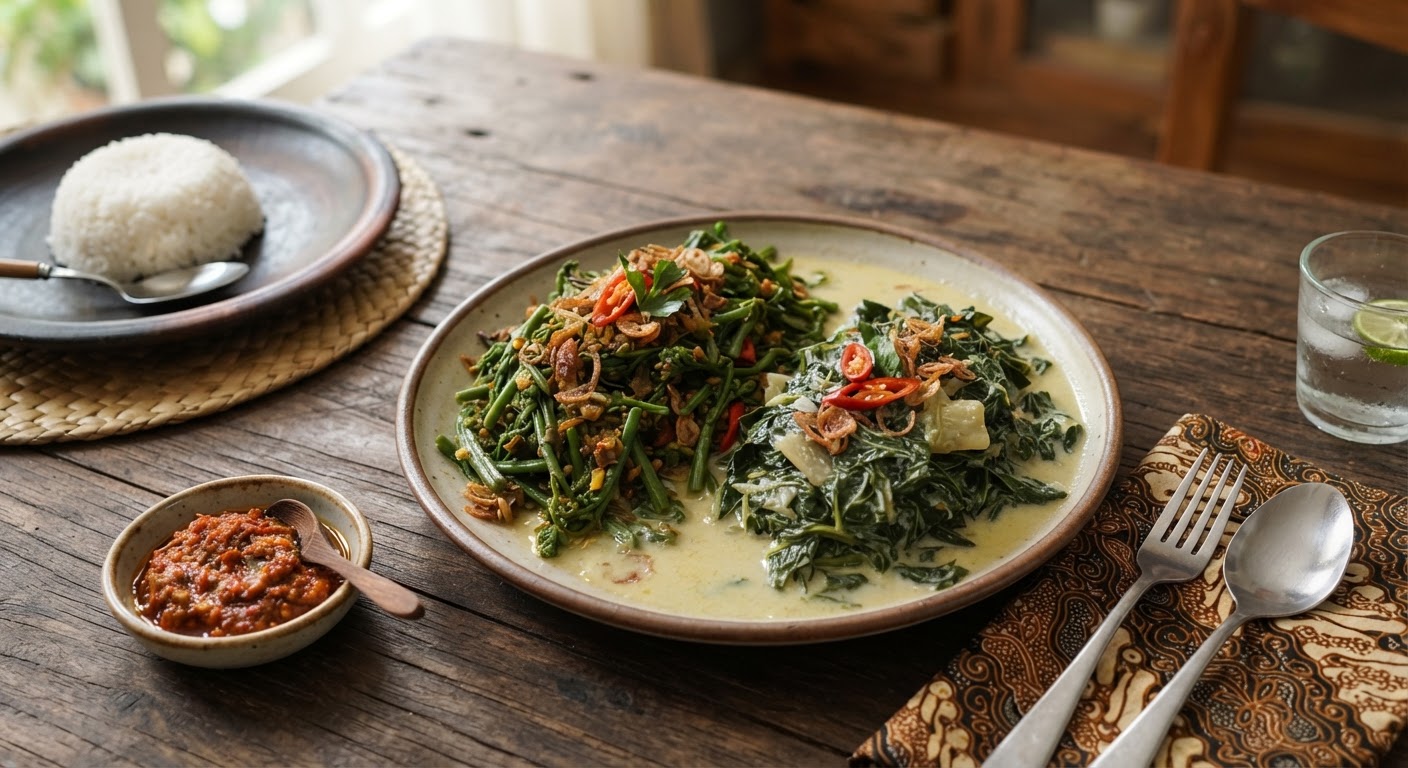
Simple Recipe: Tumis Pakis (Stir-Fried Fern Tips)
This is the gateway dish for Indonesian wild greens. It takes ten minutes and converts fern skeptics.
Ingredients:
- 300g fresh pakis (fern tips), washed and cut into 10cm lengths
- 3 shallots, thinly sliced
- 3 cloves garlic, minced
- 2 red chilies, sliced diagonally
- 1 teaspoon terasi (shrimp paste), toasted
- 2 tablespoons oil
- Salt to taste
- A splash of water
Method: Heat oil in a wok over high heat. Fry shallots and garlic until fragrant, about 30 seconds. Add chili and terasi, stir for another 20 seconds. Add fern tips and toss rapidly. Add a splash of water to create steam. Cook for 2-3 minutes until the ferns are bright green and tender-crisp. Salt to taste. Serve immediately with hot rice.
Simple Recipe: Gulai Daun Singkong (Cassava Leaves in Coconut Milk)
This Padang-style dish transforms tough, slightly toxic cassava leaves into something rich, creamy, and deeply satisfying.
Ingredients:
- 500g cassava leaves, boiled 10 minutes, squeezed dry, and roughly chopped
- 400ml coconut milk
- 2 salam leaves (Indonesian bay leaf)
- 1 stalk lemongrass, bruised
- Salt and sugar to taste
Spice paste (blend together):
- 5 shallots
- 3 cloves garlic
- 3 red chilies
- 2cm turmeric (or 1 tsp powder)
- 2cm ginger
- 2cm galangal
Method: Sauté the spice paste with salam and lemongrass until the oil separates, about 5 minutes. Add the pre-cooked cassava leaves and stir to coat with paste. Pour in coconut milk and simmer for 15-20 minutes until the sauce thickens and the leaves absorb the flavors. Season with salt and a pinch of sugar. Serve with steamed rice.
The Knowledge Gap and Why It Matters
Here’s a hard truth: most Indonesians under 40 cannot identify more than three or four wild edible plants. The knowledge that was universal two generations ago has nearly disappeared in urban and semi-urban communities.
This isn’t unique to Indonesia — it’s happening everywhere as people migrate to cities and supermarket supply chains erase local food knowledge. But Indonesia’s pace of urbanization is particularly aggressive. In 1970, roughly 80% of Indonesians lived in rural areas. By 2025, over 60% live in cities. Each percentage point represents millions of people whose children won’t grow up learning which wild plants are food.
The bright side? Interest is returning from unexpected directions. Young Indonesian chefs are incorporating wild greens into restaurant menus. Social media accounts dedicated to traditional Jamu and foraging are gaining followers. Eco-tourism operators are adding foraging walks to their offerings in Bali, Yogyakarta, and Sumatra.
For English-speaking visitors and expats, engaging with Indonesian wild food isn’t cultural appropriation — it’s cultural appreciation when done respectfully. Learn the local names. Acknowledge where the knowledge comes from. Pay fairly for guided experiences. And share what you learn in ways that benefit the communities that taught you.
FAQ: Edible Wild Plants in Indonesia
Is it legal to forage wild plants in Indonesia?
Foraging on public land for personal consumption is generally tolerated, but national parks and protected areas have strict rules against removing any plant material. Always check local regulations. Private land requires permission — Indonesia’s land ownership system includes customary (adat) rights that may not appear on any official map.
Can tourists forage in Indonesia safely?
Yes, but ideally with a local guide who knows both the plants and the social landscape. Independent foraging without language skills or local knowledge carries real risks — plant misidentification, contaminated harvesting sites, and unintentional trespassing are all genuine concerns.
What’s the easiest wild edible for beginners to identify?
Fern tips (pakis, Diplazium esculentum) are relatively easy to identify once you know what to look for — tightly coiled fiddleheads with smooth, green-to-reddish stalks, growing in wet areas. Buy some from a local market first to learn the appearance and taste before foraging your own.
Are there deadly poisonous look-alikes in Indonesia?
Yes. Several Amanita mushroom species found in Indonesian forests are deadly. The castor bean plant (Ricinus communis), whose seeds are lethally toxic, grows wild throughout Indonesia and could theoretically be confused with other seed-bearing plants. This is why the “learn from locals” rule is non-negotiable for beginners.
Can I grow Indonesian wild edibles at home?
Many of these plants are trivially easy to grow. Cassava and papaya grow from stem cuttings stuck directly in the ground. Pegagan spreads aggressively from a single plant. Genjer needs only a bucket of muddy water. If you have garden space in Indonesia (or a tropical climate elsewhere), you can create your own wild edible garden with minimal effort.
Final Thoughts: Beyond the Plate
Foraging in Indonesia is about more than finding free food. Every plant you learn to identify correctly is a thread connecting you to the oldest human occupation — recognizing and harvesting what the land provides. In a country losing both its forests and its traditional knowledge at alarming rates, every person who learns to identify daun kenikir or salak hutan becomes a small archive of information worth preserving.
Start with the plants in this guide. Learn them one at a time. Ask questions in local markets. Cook with what you find. And when you eat tumis pakis or gulai daun singkong, remember that you’re tasting something people have eaten on these islands for thousands of years.
The knowledge is still alive. It just needs more people who care enough to carry it forward.